Exposing the Big Game

Forget Hunters' Feeble Rationalizations and Trust Your Gut Feelings: Making Sport of Killing Is Not Healthy Human Behavior

Exposing the Big Game

MT Trapping Updates

FUR PRICES DOWN!!!
“That’s right – low, low fur prices.  Bottom of the barrel.  In most cases, fur will sell for far less than what you’ll spend to trap it.”
Why are fur prices going to be so low?  Two words.  China and Russia.  Those two countries basically control the modern world market for wild fur because their citizens purchase the vast majority of the garments produced with the fur we trap.” Prices for dead Coyote, Beaver, Pine Marten, Bobcat, Wolves and Fisher are expected to hold. Trappers are claiming they are simply stockpiling the rest.
Trapping Today’s 2015-2016 Fur Market Update


Photo courtesy Montana Trappers Association, “fur auction, small”.
Reproduced for educational purposes.

TRAPPING DISTRICT CLOSURES
Hopefully  our  monitoring the quota harvest reports  for Montana furbearers have helped spare more unnecessary trapping deaths for Otter and Bobcat.

Bobcat is now closed in Districts 1, 2, 3, i.e. Northwestern, Western and Southwestern Montana. District 3 closed 8 over quota. Historically, over half of the 7 districts, including these three have gone over quota. In 2013/14, i.e. 62 extra bobcats were reported killed in the Districts 1,2,3,5. We especially appreciate FWP taking a proactive stance and closing District 2. In 6 years, from the 2008 through the 2013/14 bobcat trapping season a minimum of 11,062 bobcats were killed in Montana.


It might not seem much to save even one, but it is everything to that one. We don’t know how many might have gotten killed over the quota. Thanks for making those calls and being the voice for Otters, too!

ANOTHER KILLING CONTEST
A repeat of last January predator trapping and hunting killing contest, sponsored by groups such as Montana Trapper’s Association (MTA), but this time instead of for a weekend, it ran from Jan 8 to Jan 17th. We did not accept the MTA request  that we post the flyer fearing it would only draw more attention, more participation to their killing contest. That does not mean we are not following up on  this. Note they do not call it a killing contest but that does not make it less so! More to come.

EXPOSURE OF CRUEL UGLY TRAPPING
The much awaited article,  America’s trapping boom relies on cruel and grisly tool,  by award winner journalist, Tom Knudson, sheds more light on what becomes of millions of animals, annually, and in particular Bobcat, here out West, in the disturbing significant world of trapping. “Every year, 150,000 trappers here capture and kill up to 7 million wild animals, more than any nation on earth. In all, more than 20 species are targeted for their fur, from foxes to raccoons, coyotes to river otters. But it is the spotted, marble-white fur of one animal that has sparked a Wild West-like trapping boom in recent years.” We were honored to help with Tom’s informative investigation and trust exposure and increased awareness will lead to an end of trapping. Be sure to check out the link to the video of the a leghold trap snapping shut on various items.


Credit: Max Whittaker for Reveal

EFFORTS TO PROTECT FISHER
The rare fisher is getting closer to federal protections under the ESA. Legally trapped still in Montana, other Fishers, too, here have fallen victim as “incidental” “non-targets”. In December of 2014, a Fisher was killed in a conibear trap set for Pine Marten in the Bitterroots. More info to come on how you can help. Click to read  “Northern Rockies Fishers One Step Closer to Endangered Species Act Protection.

PETS CONTINUE TO GET TRAPPED IN MONTANA
An Akita was recently caught for days in a leghold trap set for wolves near Alberton, Montana. The dog was reportedly missing for six days!  Solid ice had to be chipped away from the trap to free the dog. The trapper was cited for not checking his wolf traps for the required 48 hours but will he have to pay the vet bills? The dog will most likely lose its leg.

Searching for the perfect Christmas tree, Petty Creek, near Alberton, a Chihuahua,  Dutley, was caught in a leghold trap, and luckily was released quickly apparently uninjured.

A dog was caught in a snare while accompanied fortunately close by its owner. Ghost town in Drummond.

Trap reports for Bracket Creek area north of Bozeman, Flathead national forest, Pleasant Valley……..

For updates see Trap Alerts  on our website.
Pets have us to look out for them but what of the average 60,000 reported wildlife annually trapped and killed in Montana that legally cannot be rescued and helped?

ANIMAL PLANET DOCUMENTARY FOR TRAPPERS?
Just in, Montana Trappers Association says because “of your relentless attacks on trapping” they have signed to do a trapping documentary with Animal Planet.  Imagine what kind of planet animals would succumb to if trappers had their way. It’s incompatible for a show that features the wonderous animals we share this planet with and their sponsors to promote such cruelty and trapping myths.  More to come on what you can do.

DAILY HAPPENINGS
Like, follow us, and invite friends on Facebook and be sure to check out our website www.trapfreemt.org for ongoing educational information, updates and our online store to purchase, i.e. “Ranger” story of a wolf, t-shirts.

Please lend a hand, be our eyes and ears, promote TFMPL, collaborate with us and let us know you how you are willing to do more for wildlife! 

Thank you Friends of Trap Free Montana Public Lands

Activists Move to Sue Operator of a Gray Wolf Fur Farm

An animal rights group argues a Minnesota woman is violating the Endangered Species Act by raising and skinning the protected predators.

(Photo: Animal Legal Defense Fund)
Dec 7, 2015
by David Kirby

The Animal Legal Defense Fund has threatened to sue a private wildlife operation in Minnesota, alleging that its owner kills and skins federally protected gray wolves and sells the pelts for profit.

On Wednesday, ALDF sent a notice of intent to file suit against Teresa Petter, owner of Fur-Ever Wild, whose website describes it as “a working agricultural farm that celebrates our traditional connections to the land and mother nature.

Fur-Ever Wild, located on 100 acres in Eureka Township, Minnesota, charges visitors to get up close not only with wolves but also cougars, bobcats, otters, beavers, lynx, fishers, martens, and badgers.

ALDF will take Fur-Ever Wild to court in 60 days unless Petter agrees not to kill and skin gray wolves, which are listed under the federal Endangered Species Act as threatened in Minnesota.

The Endangered Species Act prohibits the taking of any endangered or threatened species, defining “take” to mean “harass, harm, pursue, hunt, shoot, wound, kill, trap, capture, or collect.” The law, which applies equally to wild and captive animals, allows private parties to file suit to enforce its provisions.

(Photo: Animal Legal Defense Fund)

“Fur-Ever Wild’s wildlife exhibition and fur-harvesting business exploits wolf pups by first using them as an attraction in the company’s petting zoo, then later skinning them for their fur,” Jennifer Robbins, an attorney representing ALDF, wrote in the notice.

“There is broad public support to stop their continual taking of wolves that visitors pay to see…and for whom they donate money or materials believing they are supporting the maintenance of this threatened species,” she wrote in the notice, which was also sent to the Interior Department, which enforces the ESA.

RELATED:  Oregon Wolves Lose Endangered Species Protections

“We got involved in the summer of 2015 after activists notified us of her operations,” said ALDF staff attorney Christopher Berry. “Evidence that we submitted shows that she has skinned wolves in the past.”

Petter has denied killing wolves. In May, she told The Associated Press that the animals were not used for fur unless they “die naturally.”

Reached by phone, Petter told TakePart, “I am not commenting.” When asked why, she replied, “Because someone already burned down one of our buildings.” Asked if the alleged arson was related to the skinning of wolves, Petter said, “Have a nice day” and hung up.

Public records indicate that Fur-Ever Wild has indeed slaughtered wolves for their pelts.

Several license applications Fur-Ever Wild filed with the state “depict the calculated breeding program of protected wolves as the company aimed to acquire a wolf population that could generate consistent replacements for those animals to be killed and skinned for fur,” according to the ALDF notice.

Stop the Use of Cruel Animal Traps

Petitioning Chris Christie, New Jersey State House, New Jersey State Senate, David Burke, David Chanda

Stop the Use of Cruel Animal Traps

Petition by Alex Klinger
Carteret, New Jersey
10,972
Supporters

The wildlife of New Jersey needs our help now! The New Jersey Fish and Game Council (NJFGC) just decided to allow the use of inhumane leghold traps, even though they were already banned in 1984! Gov. Christie and the NJ Legislature have the power to ban them again, so we need to speak up and call on them to veto the use of leghold traps as fast as possible, since many of these animals are being trapped inhumanely for their fur right now.

The traps are designed to clamp onto an animal’s leg when it reaches in for food. Once snared, the animal suffers terrible agony until it dies from blood loss or infection, or is killed by the trapper days later. Proponents say the new leghold design is “humane” because, unlike older traps which snare birds, deer, and other animals, these ones require some degree of dexterity, so they’re limited to raccoons and opossums. Just because the traps snare fewer animals, does not mean these animals suffer less. It’s the wrong use of the word “humane.”

Since the 1984 ban, trappers have used box traps, which don’t harm the animal. But trappers argue that box traps are too cumbersome and uncomfortable. Imagine how uncomfortable it is to be ensnared in steel jaws for days on end. Leghold traps have the clamping force to break bones and, historically, animals have been known to chew off their limbs to attempt escape.

The Humane Society spent nearly 20 years and hundreds of thousands of dollars convincing the NJ Legislature to ban the cruel traps in 1984. State officials acknowledged then that they were inhumane, but they now seem to have forgotten.

These traps are just as barbaric as they were three decades ago. The NJFGC’s decision spits in the face of progress, and if we don’t make some noise, they will get away with it. Please join me in asking Gov. Christie and the NJ Legislature to overrule NJFGC’s wrongheaded decision and protect NJ’s wildlife from needless suffering.

Urgent: Tell Montana Legislators to Reject Bill to Protect Fur Trapping Interests

http://ida.convio.net/site/MessageViewer?dlv_id=37281&em_id=36182.0&printer_friendly=1

In Defense of Animals

On April 7, the Montana Department of Fish, Wildlife and Parks (FWP) House Committee will vote on SB 334, and your voice is urgently needed to defeat this detrimental and deceptive bill aimed at furthering the interests of the Montana’s recreational and commercial trappers and fur dealers.

SB 334 seeks to include furbearing animals under the term “game” animal. This means that the word ‘trapping’would no longer be used, and trapping is then completely subsumed under “hunting” in a sneaky effort to hide a cruel and unnecessary activity that is generally abhorred by the public.

SB 334 would also add three animal species, currently categorized as non-game species—badgers, raccoons and red foxes—to species currently classified as “predators”, so that a fur dealer in Montana could then buy and sell the pelts from these species.

SB 334 was introduced by Rep. Jennifer Fielder, who is on the board of the Sanders County Resource Council, which serves as a front group for militia activity, and she is a strong proponent of transferring federally managed public lands to the state so that privatization and exploitation can ensue. Her husband, Paul Fielder, is a district director of the Montana Trapper Association (MTA), who is heavily lobbying for this bill.

Click here to learn more and take action.

PETA Exposé Shows How a Fur Farmer Kills and Skins Mink

wikimedia commons

http://www.peta.org/blog/the-truth-about-fur-the-harsh-reality-of-mink-farming/

Written by PETA | February 18, 2015

All around the world at fur farms like this one, minks—as well as rabbits, foxes, and other animals—are crammed into barren cages and have the skin ripped off their bodies, all to make fur coats, collars, and trinkets. Fur farmers use the cheapest killing methods available, including suffocation, electrocution, poison, and gas. At this farm, minks are picked up by their sensitive tails and shoved into a box to be gassed. One mink in this video- like many animals killed for their fur- doesn’t die immediately. The farmer then tried to break his neck against the side of his crude wooden “kill box.”

The fur industry would have you believe that fashion justifies such torture, but there’s never any excuse for such barbaric treatment of animals. The farmer in this video casually described the techniques for ripping the bloody pelts off minks’ bodies, snapping the animals’ penis bones and using old pruning shears to cut off their paws.

Do you have friends or family members who still think that fur is in fashion? Remind them that in some countries, even cats and dogs are skinned alive for their fur, which is then mislabeled and sold to unsuspecting consumers in countries all over the world.

Share this video and encourage them to choose only animal-friendly clothing. Join PETA in the fight to help minks and other animals used for fur.

It’s All a Game: New Tags Allow Wolf-Pelt Transport To Canada

USFWS Helps to Market Wolf Pelts: ‏

http://fwp.mt.gov/news/newsReleases/fishAndWildlife/nr_0722.html

Fish & Wildlife

Wed Jan 21 10:57:00 MST 2015

With the recent approval from the U. S. Fish & Wildlife Service, Montana wolf hunters and trappers who harvest wolves will now obtain internationally recognized pelt tags to allow for the export of wolf pelts directly out of country, usually to Canadian fur auction houses.

Montana’s CITES wolf-pelt tags were obtained under the Convention on International Trade in Endangered Species, an international agreement between governments. Its aim is to ensure that international trade in specimens of CITES-listed wild animals and plants does not threaten their survival.

“This is a big change from the past couple of years in terms of hunter and trapper harvest opportunity to sell wolf pelts,” said Brian Giddings, statewide furbearer coordinator for Montana Fish, Wildlife & Parks in Helena.

Any hunter or trapper who harvests a wolf taken during the 2014-2015 season—Sept. 6, 2014 through Feb. 28, 2015—can now have it tagged with a CITES pelt tag.

As a condition of CITES approval, however, no prior season harvested wolf can receive a CITES tag, Giddings said.

Additionally, Montana’s wolf CITES tags cannot be used for any other method of mortality such as road-killed, federal Wildlife Services’ control action, landowner/livestock control, or incidental take. Nor can CITES tags be used for wolves taken on Tribal lands.

Hunters and trappers have strict reporting requirements. Upon the harvest of a wolf, hunters and trappers must call 1-877-FWP-WILD—1-877-397-9453—within 24 hours to file a report. Wolf pelts must be tagged within 10 days of harvest.

State tags issued earlier this hunting and trapping season can be replaced with the new wolf CITES tags by contacting the nearest FWP regional office. Once one receives a wolf CITES tag the old state-issued wolf tag can be removed and discarded.

For more information on CITES wolf-pelt tags contact your nearest FWP office.

To learn more about Montana’s wolf hunting season, visit FWP online atfwp.mt.gov. Click “Hunting Guides” and choose Wolf.

Featured Image -- 7624

Vote in Poll for Coyotes and Foxes

“A group of wildlife conservationists asked Cape Cod National Seashore officials to ban hunting for meat-eating predators such as coyotes and foxes on the 44,000-acre park. Do you support the ban or the hunters?”
Vote in Poll on lower right column here:

Can’t decide whether to cast your vote on the side of the wildlife or the hunters? Here’s an example of a typical coyote hunter’s hateful mentality, sent today as a comment to this blog (and promptly deleted).

It is posted here verbatim sic (“thus was it written”)  for full authenticity:

 “we will shoot them even if there isn’t a contest they kill are livestock witch is are livelihood. we also sell the pelts there is nothing wrong with this. this also helps with other animals such as Deere and elk.”

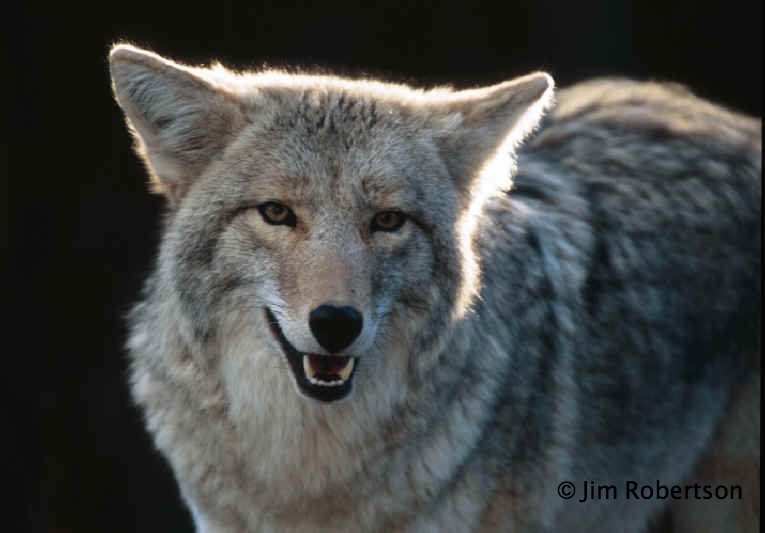
Jim Robertson-wolf-copyright

URGENT: Speak Out Against Proposed Bobcat Fur Farm!

1560594_4506833524906_4474373351013131003_n

Action Alert here: http://www.peta.org/action/action-alerts/urgent-speak-proposed-bobcat-fur-farm/?utm_campaign=Montana+Fur+Farm&utm_source=PETA+E-Mail&utm_medium=Alert

Montana Fish, Wildlife & Parks (FWP) is currently taking public comments on its Schultz Fur Farm Environmental Assessment, which recommends the permitting of a bobcat farm near Roy, Montana, where bobcats would be captive-bred and then sold to the cruel fur industry. Comments are due by August 29, so your voice is needed immediately!

In the wild, bobcats roam vast natural territories that can span 25 square miles, foraging for food, raising their young, and frolicking with family members. These animals are highly sensitive and elusive beings who avoid human contact at all cost. If Larry Schultz’s farm is permitted, bobcats would spend the majority of their short lives in small wire cages commonly seen in the unscrupulous fur industry. Intensive confinement prevents animals from being able to take more than a few steps in any direction or feel the earth beneath their feet. Many animals go insane under these conditions and will mutilate themselves and cannibalize their cagemates. Reportedly, bobcats have killed their young on Schultz’s fur farm in North Dakota.

Please urge the FWP to deny Schultz’s permit. Remind the agency that fur farms are cruel to animals and bad for the environment. And please forward this alert widely!
Action Alert here: http://www.peta.org/action/action-alerts/urgent-speak-proposed-bobcat-fur-farm/#ixzz3AUFFxSfO

Bobcat fur farm wants to move to Montana

GREAT FALLS – The owners of a commercial bobcat fur farm are looking to
relocate from the bustling oilfield region in western North Dakota to a
quieter area in central Montana.

Montana Fish, Wildlife and Park is taking public comments on the proposed
150-foot-by-140-foot animal facility where bobcats would be housed in
separate pens inside the facility near Roy in Fergus County.

Larry Schultz, who owns the business with his wife, says the facility would
raise bobcats for their furs, which would be sold in the commercial fur
industry worldwide.

Schultz says that bobcat fur is used for trim, hats and coats in some
countries.

Schultz says noise and dust from oil drilling near their farm in Arnegard in
western North Dakota isn’t good for raising bobcats.

http://www.kxlf.com/news/fwp-asks-for-public-comment-on-bobcat-fur-farm-prop
osal/

Once-extinct on Olympic Peninsula, fisher population rebounds

538458_532697610088640_841278349_nBy LYNDA V. MAPES  The Seattle Times
August 11, 2014 – 1:04 pm EDT

SEATTLE — Once locally extinct, fishers are bounding all over the Olympic Peninsula.

First released into Olympic National Park in 2008 in an effort to repopulate the native carnivore, they now range from Neah Bay to Ocean Shores, from Port Townsend to Olympia, preliminary data from remote cameras and hair snags confirm.

It’s a spectacular turnaround for an animal believed to be locally extinct for at least 80 years. Over-trapping of fishers for their luxuriant, lush brown coats and loss of the big, old-growth trees in which fishers like to lounge and den caused populations to plummet. The state closed the trapping season for fishers in the 1930s.

The National Park Service with other partners began a relocation effort in 2008, in an effort to bring the animals back. From 2008 to 2010, 90 fishers were moved from central British Columbia to the Sol Duc and Elwha Valleys.

The population today isn’t known, and the question remains as to whether births are keeping pace with losses, building a population that is self-sustaining over the long term.

But the indications from a monitoring effort by federal, state and tribal biologists so far are promising. “I’m cautiously optimistic,” said Patti Happe, chief of the wildlife branch for Olympic National Park.

Tracking in such remote, wild country is tricky. The batteries in radio collars initially fitted to the animals are all dead by now, so biologists in 2013 began utilizing remote, motion-triggered cameras pointed at survey stations, including hair snags, baited with chicken drumsticks. The hair samples allow scientists to analyze fisher DNA to track the growing family tree of the initial, founder population.

Some of the new kits have ranged as far as 43 miles from their mothers’ home territory, and cameras have found fishers using habitat where the radio-collared animals were never tracked, documenting that the fishers continue to gain ground.

Sharp toothed and clawed, fishers are related to minks, polecats and martens. They hunt the small mammals that are abundant in the Olympics.

The cameras mounted to detect fishers also documented a menagerie of teaming wildlife in the Olympics: Some 43 species of animals in 2013 were captured on camera in more than 37,000 images, from spotted skunks to coyotes, cougars, bobcats, raccoons, black-tailed deer, elk, flying squirrels, mountain beavers, snowshoe hares, mice and wood rats. Black bear were the single most frequently spotted animal.

Fishers do face perils in their new home. Cougars, bobcats and coyotes take their toll. Several fishers were apparent road kill, including one carcass recovered along Highway 101 on the outskirts of Port Angeles.

Two fishers were released from live traps by a licensed trapper seeking bobcats.

But with an abundant source of food in the forests, fishers are expected to do well. Wolves are now the only mammal still missing from the original suite of life in the Olympics, after being shot and trapped to local extinction in the early 1900s. Wolves are slowly recolonizing Washington wild lands but are not yet known to have reached the Olympic Peninsula.

Fishers once occupied coniferous forests at low to middle elevations throughout much of the Western U.S. The goal of the relocation program is to restore fishers to the Olympic National Park within 10 years.

Radio-tracking initiated in the first phase of the project documented the fishers’ far-ranging travels, including one female released in the Elwha Valley at Altair campground in January 2008. She was the first animal set loose in a public event, where school children cheered as she sprang to freedom from her carrying box.

Biologists followed her “on the air” thanks to her radio collar for 2½ years, from the Elwha Valley to the northeastern portion of the Olympic Peninsula. She settled down in the upper Dosewallips in the summer of 2008, making it home until March 2009.

After a two-month walkabout in the southeastern Olympics, she cruised back down to the lower Elwha, back where she first sprang from her box. There she stayed through June 2010.

She went off the air in 2014, when the batteries on her collar died. But she is perhaps still out there, rewilding her bit of the Olympics.


Information from: The Seattle Times, http://www.seattletimes.com