Top TWENTY New Names for “Wildlife Services”

Thanks to all of you who contributed to this expanded list…

Top 20 New Names for Wildlife “Services”

20) U.S. Department of Nimrods

19) Federal Bureau of Elmers

18) Fuckin’ Neanderthals

17) Hunters with Badges

16) USDA: United States Destroyers of Animals

15) The “We Hate Wild animals and hate those who defend them” Agency

14) Federal Goon Squad– “If it’s breathing we’ll kill it”

13) Central Unintelligence Agency

12) Department of Corrupt out the Ass

11) WildDEATH Services

10) Wildlife Termination Services

9) Government-issued Animal Abusers

8) Goose-stepping Nazi war criminals

7) Seven Psychopaths

6) Biodiversitybusters

5) The Anti-Predator Project

4) A Bunch of Loathsome Cattle-Barron Butt-kissers

3) Chaos

2) The Animal Abolition Agency

1) Two words: Wildlife Disservices

20130609-185147

Annals of Game Management

The only way humans can get chronic wasting disease is by eating deer So the obvious answer is: Don’t kill and eat deer, people! Meanwhile, hundreds of deer–who didn’t even have CJD–were cruelly mowed down by “game” “managers”!!

Michael Elton McLeod's avatarFirst Light Productions

Three years ago, wildlife biologists from the Texas Parks and Wildlife Department drove into the paddock of James Anderton’s Whitetail Ranch hunting reserve. Using rifles mounted on tripods they killed more than 70 of Anderton’s animals, shooting for hours, working the panicked herd back and forth across the paddock, picking them off one by one.….

    A white helicopter with what appeared to be a forward-looking infrared camera mounted to its nose flew lazy loops over the ranch, scanning for survivors.

    Texas wildlife officials were concerned that animals in the herd might be carrying a highly transmissible killer of deer known as chronic wasting disease (CWD).

    Anderton said the deer had been bought in Arkansas, a state with no documented cases of the disease so far. But he couldn’t provide evidence of the state of origin for every animal because he was locked in prison for wildlife trafficking. The FBI and…

View original post 274 more words

Wildlife Recovery Just a Big Game for “Game” Departments

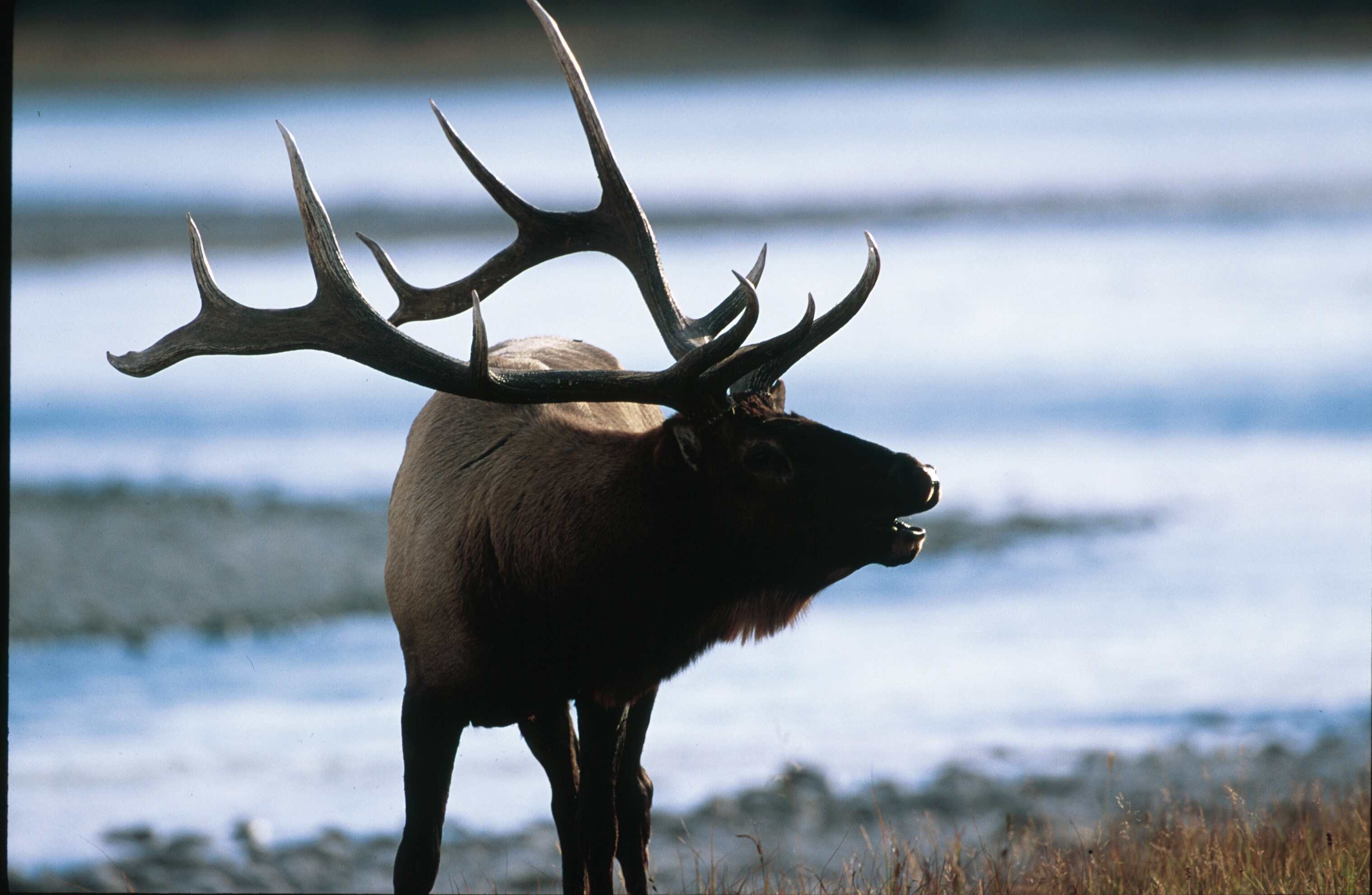
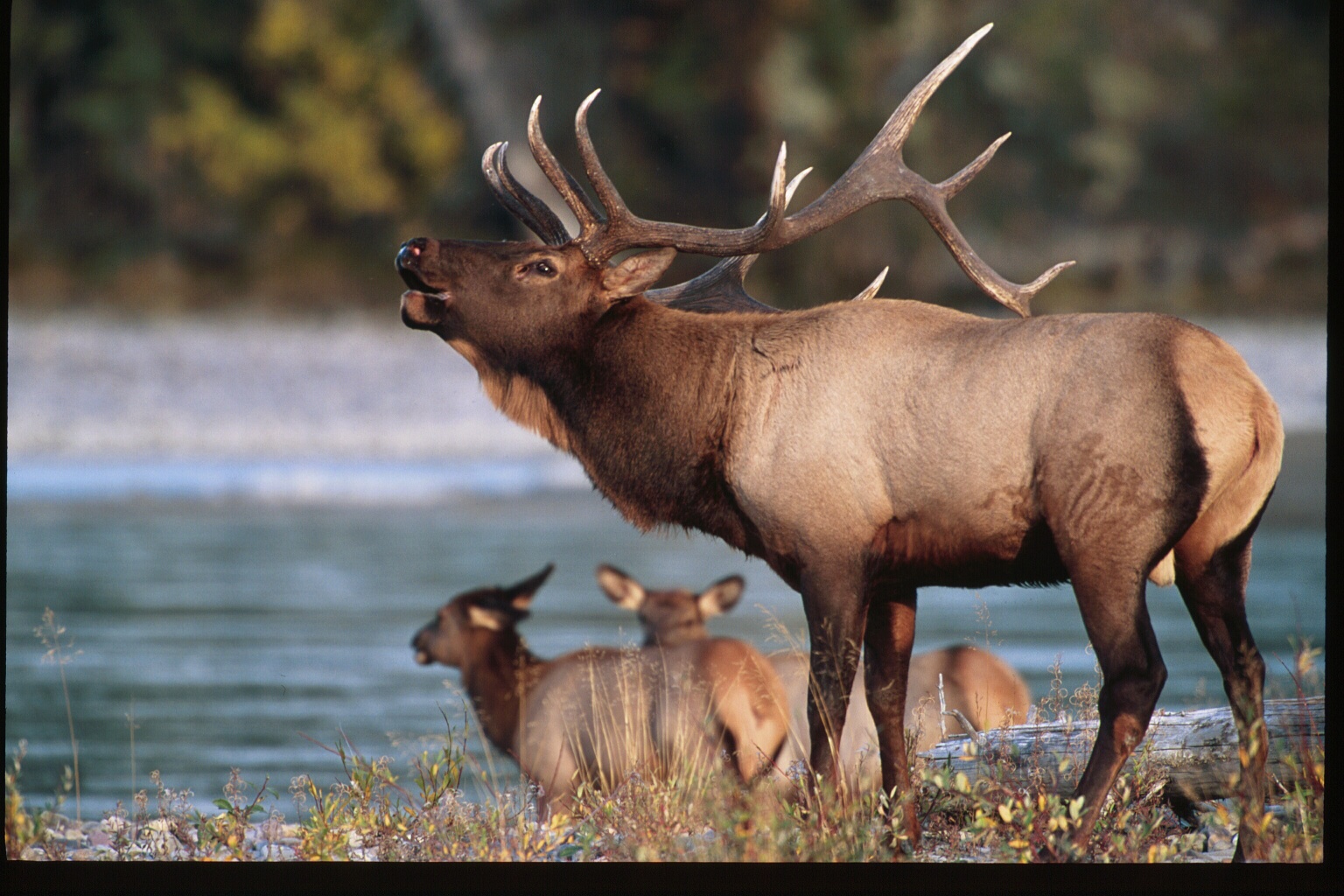
More proof that reintroduction and recovery is all just a big game for state wildlife department managers: Missouri recently reintroduced a mere 100 elk over the past two years, and already they’re talking about implementing a hunting season on them soon.

It seems hunting groups and their “game” department lackeys live by a time-tested formula:

1) Wipe out a species through over-hunting and/or trapping
2) Allow it to recover
3) Open a season and sell tags to kill the animals off again

Lately we’ve seen this formula in action with wolves in the intermountain West and Great Lakes states. In addition to their full-scale assault on wolves, Montana recently started up a hunting season on bison, and they’re already talking about one for grizzly bears the minute they lose federal protection.

Now the recovering elk in Missouri may soon be under fire, as a local paper tells us in the following article entitled,

Elk hunting in Missouri now predicted to start in 2016

Tuesday, July 9, 2013 Supervising editor, Jake Kreinberg

COLUMBIA — The Missouri Department of Conservation now estimates that an elk hunting season in the state will begin in 2016.

The department slowly reintroduced elk from 2010 until earlier this year, trapping about 50 annually in Kentucky and then bringing them to the Peck Ranch Conservation Area in southeast Missouri for observation. The program has since moved to its operational phase, in which the herd will grow only via reproduction.

Elk were common in Missouri before European settlement but had been eradicated from the state by the end of the Civil War. Resource scientist Lonnie Hansen says “about 100” elk are now in the herd following several dying off during relocation and last year’s drought.

“I’d be pleased if we had 125 animals in the herd” by the end of this year, Hansen said.

The department wants at least 200 elk in the herd before it will give any consideration to allowing elk hunting, which might not happen for another three years, Hansen predicted. He previously expected hunting to start in 2015, according to previous Missourian reporting. Whenever hunting begins, it won’t be easy to get a license, as there may be only 30 to 40 available.

“We’d like to see them become part of the natural landscape,” Hansen said about the animals.

Reintroducing elk to the state could be beneficial not only to the ecosystem of Missouri, but also the economy. Joe Jerek, the department’s news services coordinator, said the conservation areas could “expect to see a lot of people” hoping to catch a glimpse of the new herd.

“There are lots of people that just want to see them,” he said. “It brings another large native species back to Missouri.”

According to the department’s website, residents’ interest in reintroducing elk led to a restoration feasibility study in 2000, but that was suspended a year later because of fears of Chronic Wasting Disease the elk could introduce to local livestock.

A method for testing for the disease and continued interest in having elk revived the reintroduction effort in 2010.

[Just who is interested in “having elk,” and for what purpose, the paper didn’t say.]

Wildlife Photography ©Jim Robertson, 2013. All Rights Reserved

Wildlife Photography ©Jim Robertson, 2013. All Rights Reserved

Hunting is Not a Crime, It’s a Sin

After posting yesterday’s blog post, “White Hunter “Perverse Little Creatures from another Planet without any Dignity,” I remembered that there was another good line in the Clint Eastwood film, White Hunter Black Heart:

When Eastwood’s character, John Wilson (the director of a movie being filmed in Africa), announces, “I’m staying till l get my elephant,” Pete Verrill (the movie’s screenwriter) tells him, “You’re either crazy or the most egocentric, irresponsible son of a bitch that I’ve ever met. You’re about to blow this whole picture out of your nose, John. And for what? To commit a crime. To kill one of the rarest, most noble creatures that roams the face of this crummy earth. In order for you to commit this crime, you’re willing to forget about all of us and let this whole goddamn thing go down the drain.”

To which John Wilson answers, “You’re wrong, kid. It’s not a crime to kill an elephant. It’s bigger than all that. It’s a sin to kill an elephant. Do you understand? It’s the only sin that you can buy a license and go out and commit.

“That’s why I want to do it before I do anything else in this world. Do you understand me? Of course you don’t. How could you? I don’t understand myself.”

And neither do we, John.

photo IFAW.org

photo IFAW.org

White Hunter “Perverse Little Creatures from another Planet without any Dignity”

Hoping to hear a good anti-hunting line or two, I watched the Clint Eastwood film, White Hunter Black Heart last night. Though overly focused on Eastwood’s character, John Wilson (a thinly-veiled representation bordering on caricature of the director John Huston), who flies to Africa to shoot a film…but is really more interested in shooting an elephant—literally and lethally. After spotting a large “tusker” bull, Wilson becomes obsessed with getting “My elephant” (as he referred to the noble animal).

As it turns out, it was John Wilson’s sidekick, Pete Verrill (played by Jeff Fahey), the screenwriter on Wilson’s film project (and the stand-in for the director’s non-existent conscience) who voiced the story’s classic anti-hunting line. Looking at the impressive bull elephant (the object of Wilson’s obsession) through binoculars, Pete Verrill remarks, “Oh. I’ve never seen one before, outside the circus or the zoo. They’re so majestic; so indestructible. They’re part of the earth. They make us feel like perverse little creatures from another planet. Without any dignity.”

Though Clint Eastwood has a hard time losing himself in his characters, he was clearly not portraying himself through this director with a big-game trophy-hunter wanna-be fixation. Eastwood himself is a bit too evolved and intelligent for that, as evidenced by his statement to the Los Angeles Times: “I don’t go for hunting. I just don’t like killing creatures.”

ImageProxy

Watch Out Washington Wolves, the “Experts” are Coming

WDFW NEWS RELEASE Washington Department of Fish and Wildlife 600 Capitol Way North, Olympia, WA 98501-1091 http://wdfw.wa.gov/

July 11, 2013

Contact: Wildlife Program, 360-902-2515

[Self-proclaimed] “experts” from three western states to discuss effects of wolves on hunting opportunities

OLYMPIA – Big game managers from Washington, Idaho and Montana will discuss their experiences managing game animals in areas populated by wolves during a live webcast July 18.

The event will take place from 6:30 to 9:30 p.m. via the Washington Department of Fish and Wildlife’s (WDFW) website ( http://wdfw.wa.gov/ ). Viewers will have an opportunity to provide questions via email at july18event@dfw.wa.gov .

Montana and Idaho have been managing wolves longer than Washington and their experience can provide context to inform the department and citizens on how to confront the challenges that lie ahead, said Phil Anderson, WDFW director.

“We’ve been consulting with a number of experts, including our counterparts from other states, since wolves began to reappear in Washington to better prepare us for meeting the many challenges that come with having wolves back in the state,” said Anderson, who will participate in the discussion. “This will give the public an opportunity to hear directly from those who have been involved in wolf management in other areas of the west.”

Jon Rachel, Idaho Department of Fish and Game’s state wildlife manager and Jim Williams, Montana Fish, Wildlife and Parks’ northwest wildlife program manager will discuss the impacts wolves have had on deer, elk and other big game animals in their states. They will also discuss strategies that successful big game hunters have adopted while hunting in their states.

Dave Ware, WDFW statewide game program manager, will describe the status of wolves and big game hunting in Washington.

For those unable to view the live webcast on July 18, it will remain available from the department’s webpage after the event.

copyrighted wolf in water

Be the Wind

Upon awakening from a fitful sleep after a cold, windy night, it occurred to me that birds must have to keep an unconscious death-grip on the branch they’re perched on to hold their place until morning. It must be second nature to them; part of what makes them who they are.
Next the thought came to me that a bird’s nighttime death-grip on a perch is analogous to the death-grip “sportsmen’s” groups, “game” departments and the livestock industry have on our wildlife. Like a trembling bird, fearful for its future, animal exploiters must be afraid that if they loosen their grip, they’ll be blown away.

Well, they’re right.

It’s high time we be the wind that finally breaks loose their death-grip on wildlife once and for all, and for the good of all.

Text and Wildlife Photography ©Jim Robertson, 2013. All Rights Reserved

Text and Wildlife Photography ©Jim Robertson, 2013. All Rights Reserved

Impossible to Imagine

To those of us who care deeply about wildlife issues and the abuse of non-humans, it seems that no matter how many horrors you hear about, there’s always something else happening to animals somewhere we’re shocked to learn. Even after writing a book against hunting and trapping, I guess there are still places my mind doesn’t want to go.

That’s how I felt when I read the article, “Montana, Idaho trappers catching more than just wolves,” in the Ravalli Republic, which I mentioned in yesterday’s blog post, “Stop the Spread of Psychopathy—End Hunting and Trapping.”
Text and Wildlife Photography ©Jim Robertson, 2013. All Rights Reserved

Text and Wildlife Photography ©Jim Robertson, 2013. All Rights Reserved

For a few years my wife and I lived in a house surrounded by a small field on a forested hill above Washington’s Willapa River valley. The field was once an upper pasture of a now long-defunct dairy. We were happy to see it returning to nature. Sword ferns, wildflowers and Douglas fir trees were starting their advance across the expanse of grass, finding soil churned up by moles for their seeds to take root.

Common wildlife there included black-tailed deer, black bear, raccoons, coyotes, field mice and the red-tailed hawks attracted by the latter. Meanwhile, our feeders attracted everyone from squirrels and chipmunks to a varied assortment of birds—Steller’s jays, juncos and chestnut-backed chickadees, as well as flocks of band-tailed pigeons and American goldfinch, the Washington state bird.

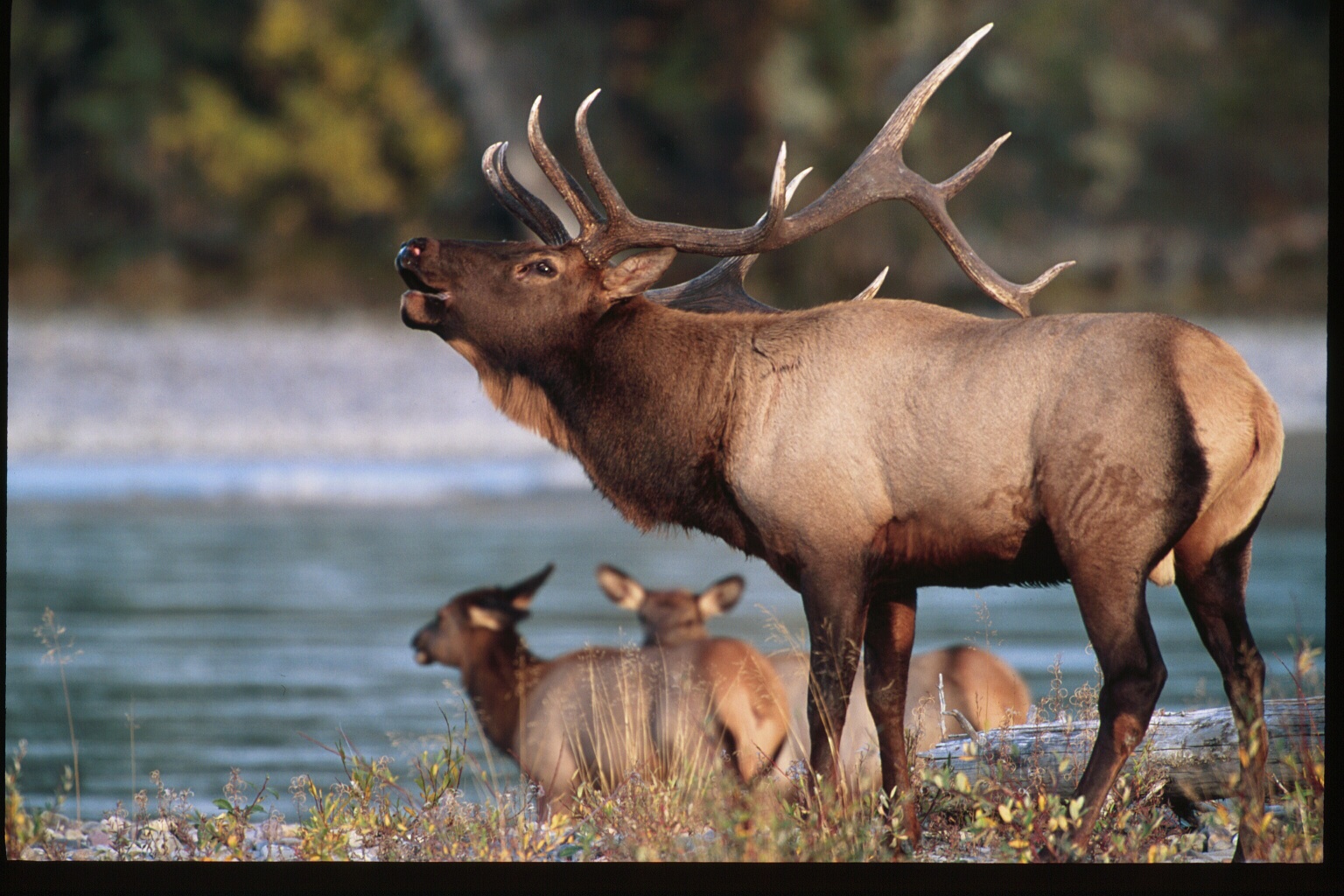
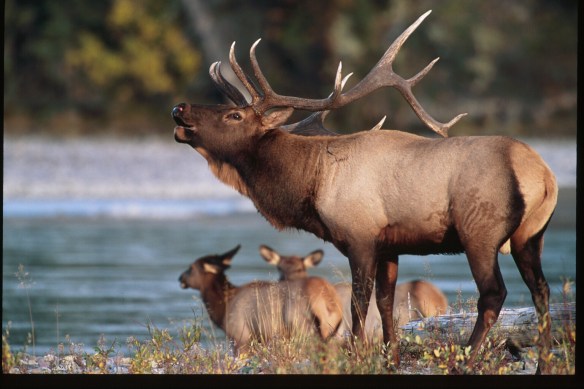
But it was always a special treat to wake up to the sight of the local elk herd bedded down in the upper corner of the field, less than 50 yards from the house.

People often panic at the thought of 20 or 30 large animals competing with their cows for pasture grass, but elk are anything but sedentary grazers—they’re always on the move. Sticking together as a group, they make a circuit around their range through forests and across rivers to find themselves in a new place every day for a week or two, before starting the circuit anew. It was always sad to see them move on from the protection of our posted private property, yet you could almost predict to the day when they’d show up again.

But there was one lone elk cow who seemed to shadow the herd, always a few days behind. We saw her far more often than the herd, and we soon figured out that she was staying nearby in the surrounding forest rather than migrating over the miles-long circuit like the rest of her kind. The reason became obvious—she had a pronounced limp as though barely able to use her right front leg.

When we got a good look through binoculars we saw that her foot was in fact missing! What the hell could have happened to cause that? My first thought was that she caught her leg in some overgrown barbed wire, a familiar threat since “livestock growers” almost never remove unnecessary fencing when they finally quit the business.

Asking around to the locals, their standard reaction was a snicker and a half-assed guess that someone must have shot it off during hunting season. Either scenario seemed remotely possible, but not necessarily all that probable, considering the horse-like size of the animal in question. One bullet or a strand of barbed wire shouldn’t do that much damage.

Twice over the years I’ve found dogs caught in steel-jawed foot-hold traps in other parts of the state (one of them had to have his lower leg amputated) and I started to wonder if the elk might have stepped into a trap set for coyotes (whom the locals hate with extreme prejudice).

I knew that smaller mammals, as well as hawks and eagles, were often unintended victims of trapping; but the thought of an animal as large as a deer or elk being caught in a trap was just too hard to get my mind around. It wasn’t until I read the following lines in “Montana, Idaho trappers catching more than just wolves,” and then saw a photo of a hunter-killed cougar who had earlier lost his toes in a trap, that I suddenly knew for sure—that’s how she lost her foot!: “Trappers reported capturing 45 deer. Twelve of those died. They also captured 18 elk and four moose. One of the elk died.”

The article goes on to quote the Idaho Department of Fish and Game’s state “game” manager, looking out for his cronies while objectifying the animals, “No one wants to catch a deer. It costs them a lot of time.” I don’t even want to try to imagine what an ungulate like that goes through to try to escape a trap—even before seeing an approaching trapper.

Traps are often compared to landmines set for any passing animal. But the difference is that while a landmine blows an appendage off instantly, a steel-jawed trap works its evil slowly—the more its victim struggles to escape, the more damage is done.

In the case of the elk, escape meant not only catching up with the rest of the herd, but also getting away from anyone who might happen by. If determined enough, an animal as powerful as that could eventually pull herself free of a trap’s steel jaws, but freedom would likely come at the expense of a foot.
Text and Wildlife Photography ©Jim Robertson, 2013. All Rights Reserved

Text and Wildlife Photography ©Jim Robertson, 2013. All Rights Reserved

Washington Another Hostile State Wanna-be

It’s clear from the irrational outbursts at a recent WDFW public meeting on wolves that Washington wants to join the ranks of the hostile, hateful anti-wolf states. At least the eastern Washington cattle ranchers do.

Here are some excerpts from an article in an eastern Washington newspaper, the Wenatchee World entitled, “Wolf management will include lethal removal, state officials say.”

(My comments are within parenthesis.)

OKANOGAN — State wildlife officials assured Okanogan County residents Thursday that some problem wolves that kill livestock will be trapped and euthanized this year.

(Is that a threat or a promise?)

“The lethal side of management is controversial, but it is a very real part of management,” Dave Ware told a standing-room-only crowd that included many cattle ranchers. The state Department of Fish and Wildlife game division manager added, “We’re trying to be more aggressive, and we’re trying to be more responsive.”

(By “responsive” he was no doubt speaking to bloodthirsty cattle ranchers, not those who suggest that wolves have their place and should be allowed to live in the state.)

Ware said his agency has also created a wildlife conflict section to stay on top of problem wolves, and has hired someone in Northeast Washington whose only focus will be on wolf conflicts.

(Sounds like some kind of a bounty hunter).

And, they will share radio-collar information about where the wolves are with ranchers who have cattle in the area.

(I knew there was a reason I hated those burdensome radio collars wolves are forced to wear; while the public is led to believe they are for “research purposes,” those collars can actually be used against the wolves by giving their locations to their sworn enemies.)

Still, more than 200 people who crowded into the Okanogan County PUD auditorium for Thursday night’s wolf meeting weren’t satisfied.

(In other words, they were out for blood.)

Some told Wildlife officials they plan to manage wolves their own way — by shooting them on sight.

(You don’t get much more hostile than that.)

An Okanogan County commissioner told them the county is interested in giving jurisdiction over the wolves to the Colville Tribes. Tribal officials last year issued nine permits to kill wolves on the Colville Indian Reservation.

(The Colvilles were the first in the state to initiate a hunting season on wolves.)

Ware said if problem wolves are located east of Highway 97 — where wolves are federally delisted — they’ll consider trapping and killing them.

(Meanwhile, the feds are planning to delist wolves elsewhere across the country—see below.)

It’s a decision that will still be made by Fish and Wildlife Director Phil Anderson, he said, but added, “Lethal removal is going to be part of that management.”

(Of course, “lethal removal” is standard practice for “wildlife managers”).

Ware also said he’s expecting the federal government to include the rest of Washington in the area where wolves are no longer protected.

(No comment).


Text and Wildlife Photography ©Jim Robertson, 2012. All Rights Reserved

Text and Wildlife Photography ©Jim Robertson, 2012. All Rights Reserved


“Game” Laws Are a Slap in the Face to the Majority

After posting “Crippling Animals Should Weigh on One’s Conscience” yesterday, I remembered that I actually do know someone who said he swore off bowhunting after his arrow went clear through a deer, which ran off somewhere far away to die. He was an avid “modern rifle” hunter and Forest Service employee I worked with in Montana.

He certainly wasn’t going to go so far as to quit hunting completely—every time we saw a deer his eyes would glaze over; he was clearly daydreaming about hunting season. I didn’t get the idea he felt all that bad about the deer he mortally wounded—he just thought it was a “waste of meat” to shoot an animal with a weapon that’s not up to the task of outright killing.

Unfortunately, bowhunting is growing in popularity. Because local governments and town councils don’t want people getting shot by stray bullets in parks or other semi-urban areas where “game” animals thrive—yet they don’t want to upset hunters by outlawing hunting—they all-too-often allow bowhunting, just to pacify the bloodthirsty, who in turn are fond of portraying themselves as selfless do-gooders out to save the animals from overpopulation. (Funny that you never hear them mention immunocontraception, or the fact that hunting unnaturally increases ungulate populations.)

A case in point of a city council deciding to allow bowhunting is found in the article I mentioned yesterday with a headline that reads, “Shotguns and bow hunting will be allowed in Ecola reserve.”

Here are a few highlights from that article:

CANNON BEACH — Hunters using either bows and arrows or shotguns with slugs will be allowed to hunt in the Ecola Creek Forest Reserve for the next five years.

Although hunting had been allowed temporarily for bow hunters only during the deer and elk season last fall, the Cannon Beach City Council agreed 4-1 Tuesday night to extend the hunting period five years. The council also decided to allow hunters who use shotguns with slugs as well.
 
The proposed area set aside for hunting in the reserve took up half of the reserve’s acreage… (One city council member) said she supported a public survey taken by a professional survey company that indicated most of the respondents opposed hunting in the reserve. In addition, (Councilmember) Cadwallader said, hunting didn’t meet the definition of the “passive recreation” promised during the campaign to seek voter support for the ballot measure. Using “a firearm on a wild creature in the reserve does not seem to be passive to me,” Cadwallader said.

Herman Bierderbeck, district wildlife biologist for the Oregon Department of Fish and Wildlife, told the council that shotgun slugs had an effective range of 80 yards for killing an elk or a deer. The slugs travel about 150 yards, he said.

Although the council had closed the hearing several weeks ago and didn’t accept public testimony Tuesday night, Cannon Beach resident Ed Johnson told the council he was “very upset” at the decision. He suggested the council submit a referendum to voters.

“I feel like I’ve been slapped in the face,” Johnson said. “You not only included bow hunting, you went further and allowed shotguns.”

“The bottom of my heart aches,” he said. “Guns are not the answer.”

Text and Wildlife Photography ©Jim Robertson, 2012. All Rights Reserved

Text and Wildlife Photography ©Jim Robertson, 2012. All Rights Reserved