Exposing the Big Game

Forget Hunters' Feeble Rationalizations and Trust Your Gut Feelings: Making Sport of Killing Is Not Healthy Human Behavior

Exposing the Big Game

Discarded coronavirus masks clutter Hong Kong’s beaches, trails

HONG KONG (Reuters) – Discarded face masks are piling up on Hong Kong’s beaches and nature trails, with environmental groups warning that the waste is posing a huge threat to marine life and wildlife habitats.

Most of Hong Kong’s 7.4 million people have for weeks been putting on single-use face masks every day in the hope of warding off the coronavirus, which has infected 126 people in the city and killed three of them.

But huge numbers of the masks are not disposed of properly, and have instead ended up dumped in the countryside or the sea, where marine life can mistake them for food, washing up on beaches along with the usual plastic bags and other trash.

Environmental groups, already grappling with the flow of marine trash from mainland China and elsewhere, say the cast-off coronavirus masks have compounded the problem and also raised concern about the spread of germs.

“We only have had masks for the last six to eight weeks, in a massive volume … we are now seeing the effect on the environment,” said Gary Stokes, founder of the environmental group Oceans Asia.

Stokes cited the example of Hong Kong’s isolated and uninhabited Soko islands, south of its international airport.

He said he initially found 70 discarded masks on 100 m stretch of beach and when he came back a week later, there were more than 30 new ones.

“That was quite alarming for us,” he said.


Other beaches around the city tell a similar story, he said.

Densely populated Hong Kong has for years struggled to deal with plastic waste. A culture of eating out, fast food and takeaway has fueled a rising tide of single-use plastic.

Very little rubbish is recycled with about 70 percent of the city’s 6 million tonnes of waste a year ending up in landfill.

“Nobody wants to go to the forest and find masks littered everywhere or used masks on the beaches. It is unhygienic and dangerous,” said Laurence McCook, head of Oceans Conservation at the World Wildlife Fund in Hong Kong.

Conservation groups have been organizing beach clean-ups to tackle the trash.

Slideshow (3 Images)

The masks are made of polypropylene, a type of plastic, and are not going to break down quickly, said Tracey Read, founder of the group Plastic Free Seas in Hong Kong.

“People think they’re protecting themselves but it’s not just about protecting yourselves, you need to protect everybody and by not throwing away the mask properly, it’s very selfish.”
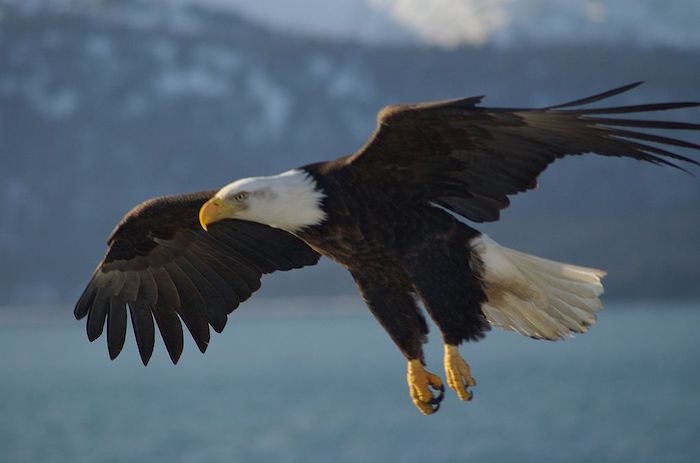
Bald eagles are taking trash from a Seattle landfill and dumping it into suburban yards

It is raining trash in the suburbs of Seattle. Or, rather, bald eagles – around 200 of them – are dropping trash into people’s yards every day, and the suburbanites are not happy.

The trash – including a blood-filled biohazard container that landed in one lucky resident’s yard – is coming from a nearby landfill that takes in two tons of fresh trash a day. The bald eagles pick out the juicy morsels of food found in the landfill, and then discard the junk that they don’t want in the nearby neighborhoods.

According to Popular Mechanics:

The main issue is the open-air landfill in the area, the Cedar Hills Regional Landfill in King County. That landfill was supposed to have been closed years ago, but a proposed expansion has kept it open. In fact, that expansion is meant to keep the landfill exposed until 2040…

Many of the residents want the county to cancel the proposed expansion and finally close the landfill. In the meantime the residents are hoping to implement some sort of anti-eagle measures at the landfill, although it’s not entirely clear what those would look like.

There’s something almost poetic about the American national bird reminding people that the trash they throw in a landfill doesn’t simply disappear. In a way, these birds are a visceral demonstration of the usually hidden consequences of extreme consumption. We create too much trash, and that much trash creates consequences. That could mean eagles dropping biohazard containers in your front lawn, or it could mean nearly 20 tons of plastic washing up on one of the most remote beaches in the world.

Image: by Carl Chapman from Phoenix, usa – Eagle ShotsCC BY 2.0Link

Deadliest plastic trash ingested by seabirds revealed in new study

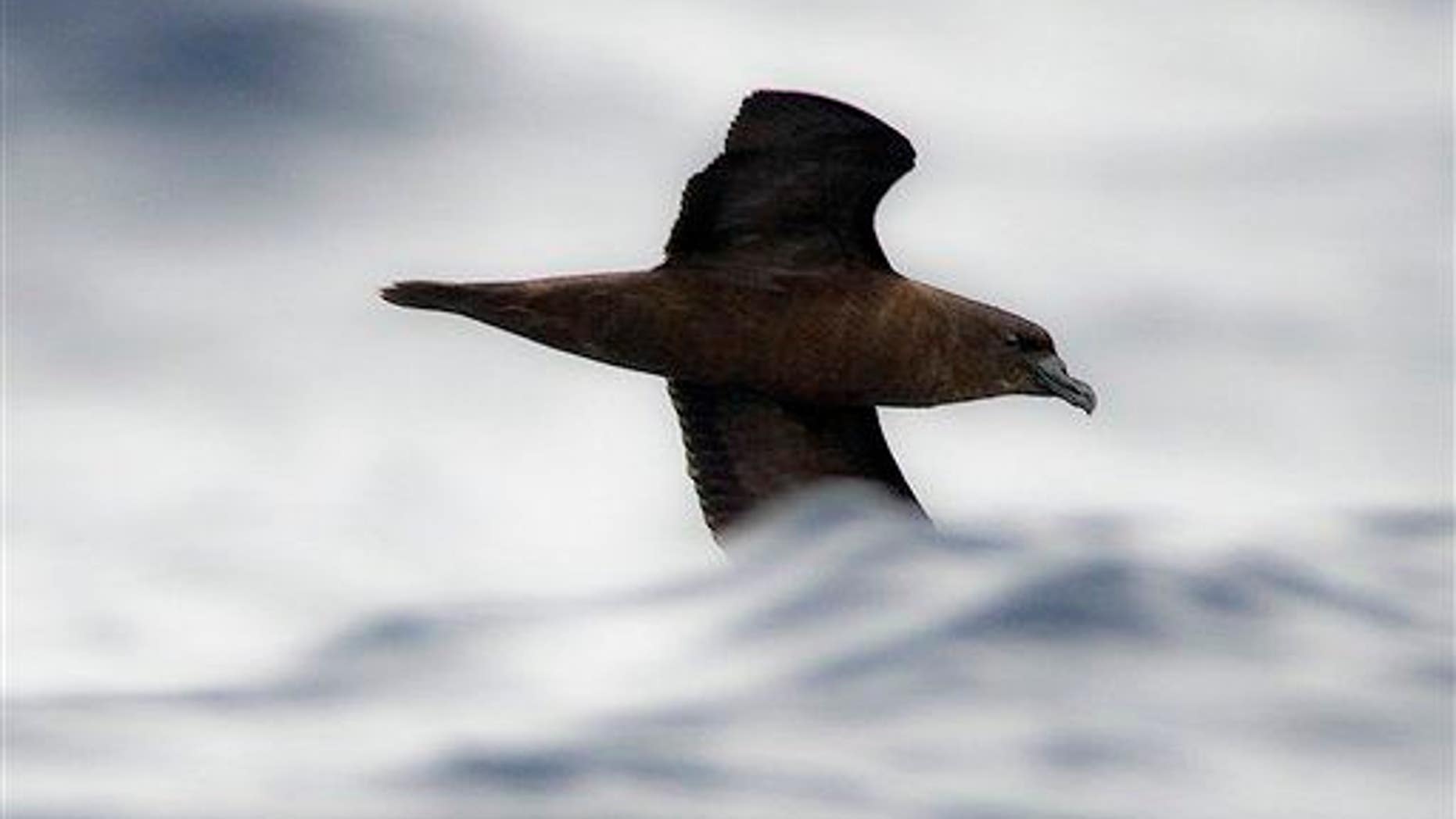
Balloons ingested by seabirds are more deadly to them than hard plastics, a study released last week concluded.

Studying the cause of death of more than 1,700 seabirds, researchers from the Institute for Marine and Antarctic Studies (IMAS) at the University of Tasmania and other organizations concluded balloons are the “highest-risk plastic debris item for seabirds,” a statement regarding the study’s findings, which were published in the journal Scientific Reports on March 1, states.

DUCKS, GEESE IN COLORADO DYING FROM ‘NEW DUCK DISEASE,’ PROMPTING WARNING FROM WILDLIFE OFFICIALS

Of the 1,733 seabirds studied, scientists found that one in three of the birds had ingested marine debris prior to its death.

Though hard plastic typically accounts for the majority of marine debris ingested by seabirds, it is “far less likely to kill than soft plastics such as balloons,” the researchers concluded, according to the statement. In fact, balloons are “32 times more likely to kill than ingesting hard plastics,” they found.

“Among the birds we studied the leading cause of death was blockage of the gastrointestinal tract, followed by infections or other complications caused by gastrointestinal obstructions. Although soft plastics accounted for just 5 percent of the items ingested they were responsible for more than 40 percent of the mortalities,” the study’s lead author and a doctoral candidate with IMAS, Lauren Roman, said in the statement.

LIFE-SIZE TIGER STATUE IN VIRGINIA ALLEYWAY ‘SHOCKS’ PATROLLING POLICE OFFICER

“Balloons or balloon fragments were the marine debris most likely to cause mortality, and they killed almost one in five of the seabirds that ingested them,” she continued, noting researchers hypothesized hard plastic fragments pass quickly through the bird’s gut while soft plastics “are likely to become compacted and cause fatal obstructions.”

The researchers said their findings “have significant implications for quantifying seabird mortality due to debris ingestion, and provide identifiable policy targets aimed to reduce mortality for threatened species worldwide.”

Massive boom will corral Pacific Ocean’s plastic trash

Massive boom will corral Pacific Ocean’s plastic trashPhoto: AP Photo.

https://www.whec.com/news/-massive-boom-will-corral-pacific-oceanrsquos-plastic-trash-/5063246/

September 08, 2018 03:03 PM

SAN FRANCISCO (AP) — Engineers will deploy a trash collection device to corral plastic litter floating between California and Hawaii in an attempt to clean up the world’s largest garbage patch in the heart of the Pacific Ocean.

The 2,000-foot (600-meter) long floating boom will be towed Saturday from San Francisco to the Great Pacific Garbage Patch — an island of trash twice the size of Texas.

The system was created by The Ocean Cleanup, an organization founded by Boyan Slat, a 24-year-old innovator from the Netherlands who first became passionate about cleaning the oceans when he went scuba diving at age 16 in the Mediterranean Sea and saw more plastic bags than fish.

“The plastic is really persistent and it doesn’t go away by itself and the time to act is now,” Slat said, adding that researchers with his organization found plastic going back to the 1960s and 1970s bobbing in the patch.

The buoyant, a U-shaped barrier made of plastic and with a tapered 10-foot (3-meter) deep screen, is intended to act like a coastline, trapping some of the 1.8 trillion pieces of plastic that scientists estimate are swirling in that gyre but allowing marine life to safely swim beneath it.

Fitted with solar power lights, cameras, sensors and satellite antennas, the cleanup system will communicate its position at all times, allowing a support vessel to fish out the collected plastic every few months and transport it to dry land where it will be recycled, said Slat.

Shipping containers filled with the fishing nets, plastic bottles, laundry baskets and other plastic refuse scooped up by the system being deployed Saturday are expected to be back on land within a year, he said.

The Ocean Cleanup, which has raised $35 million in donations to fund the project, including from Salesforce.com chief executive Marc Benioff and PayPal co-founder Peter Thiel, will deploy 60 free-floating barriers in the Pacific Ocean by 2020.

“One of our goals is to remove 50 percent of the Great Pacific Garbage Patch in five years,” Slat said.

The free-floating barriers are made to withstand harsh weather conditions and constant wear and tear. They will stay in the water for two decades and in that time collect 90 percent of the trash in the patch, he added.

George Leonard, chief scientist of the Ocean Conservancy, a nonprofit environmental advocacy group, said he’s skeptical Slat can achieve that goal because even if plastic trash can be taken out of the ocean, a lot more is pouring in each year.

“The plastic is really persistent and it doesn’t go away by itself and the time to act is now,” Slat said, adding that researchers with his organization found plastic going back to the 1960s and 1970s bobbing in the patch.

The buoyant, a U-shaped barrier made of plastic and with a tapered 10-foot (3-meter) deep screen, is intended to act like a coastline, trapping some of the 1.8 trillion pieces of plastic that scientists estimate are swirling in that gyre but allowing marine life to safely swim beneath it.

Fitted with solar power lights, cameras, sensors and satellite antennas, the cleanup system will communicate its position at all times, allowing a support vessel to fish out the collected plastic every few months and transport it to dry land where it will be recycled, said Slat.

Shipping containers filled with the fishing nets, plastic bottles, laundry baskets and other plastic refuse scooped up by the system being deployed Saturday are expected to be back on land within a year, he said.

The Ocean Cleanup, which has raised $35 million in donations to fund the project, including from Salesforce.com chief executive Marc Benioff and PayPal co-founder Peter Thiel, will deploy 60 free-floating barriers in the Pacific Ocean by 2020.

“One of our goals is to remove 50 percent of the Great Pacific Garbage Patch in five years,” Slat said.

The free-floating barriers are made to withstand harsh weather conditions and constant wear and tear. They will stay in the water for two decades and in that time collect 90 percent of the trash in the patch, he added.

George Leonard, chief scientist of the Ocean Conservancy, a nonprofit environmental advocacy group, said he’s skeptical Slat can achieve that goal because even if plastic trash can be taken out of the ocean, a lot more is pouring in each year.