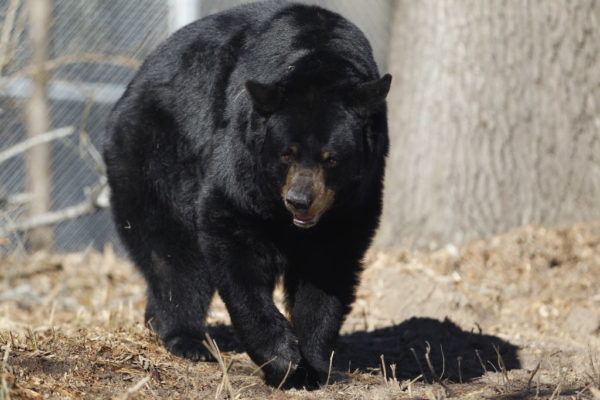
Exposing the Big Game

Forget Hunters' Feeble Rationalizations and Trust Your Gut Feelings: Making Sport of Killing Is Not Healthy Human Behavior

Exposing the Big Game

Changing our diets to save the world

https://www.newsroom.co.nz/2018/03/31/100859/changing-our-diets-to-save-the-world

IN-DEPTH: Can we grow enough food to feed us all in a changing climate? And can New Zealand thrive as a dairy exporter without worsening climate change? Eloise Gibson spoke to IPCC food security and farming experts and found them surprisingly upbeat.

If we’re honest, the question on New Zealanders’ lips at a meeting of top scientists in Christchurch before Easter was a variation of that Kiwi classic: what do you think of New Zealand?

Newsroom specifically wanted to know what the experts thought of New Zealand’s prospects of thriving as a meat and dairy-exporting nation, in a future where people eat less meat and milk.

We talked through the issues with five experts, whose readiness to answer suggested we were not the first to raise it since they reached our shores.

As the rest of New Zealand prepared to gorge on marshmallow and chocolate eggs, they were here with more than a hundred other agriculture and climate scientists considering the much less sweet task of how to feed the world without worsening climate change.

It’s the second meeting of the 120 researchers, who are now about a quarter of the way through drafting the Intergovernmental Panel on Climate Change Special Report on Climate Change and Land.

The report, scheduled for August 2019, will cover desertification, land degradation, food security, sustainable land management and greenhouse gas emissions.

The authors can’t discuss in any detail what the final tome will say, but they can talk about their own research.

Based on their research in climate modelling, food security and farming methods, all of them agreed that eating and farming patterns need to change a lot if we’re to feed more people in our new and altered climate. That means raising fewer livestock and sharing the meat and milk we still eat more fairly between nations.

Right now, people in rich countries over-consume, despite the hefty climate impact of their livestock-heavy habits, says Pete Smith, a climate change and soil professor at the University of Aberdeen. “We can’t have nine or ten billion people consuming the way people do in the Western world,” he says. “But that’s not to say we don’t still have livestock in the system, we certainly do. But we can’t continue at the rate we are,” he says. “Although consumption has to come down, there are still going to be global markets.”

To supply those, choosier markets, New Zealand’s milk and meat must be not only carbon-neutral but meet other standards of human health (including responsible antibiotic use) and not polluting the environment, he says.

Our products must be very good, because they’ll be expensive. A changing climate will raise food prices across the board, but it may hit animal products worse by forcing countries to include the true environmental costs of growing food, our experts said. Still, New Zealand shouldn’t be afraid to boost its price tags.

BEYOND CUTTING COW BURPS

Holding the pre-Easter IPCC meeting in Christchurch signaled global recognition of what most Kiwis know already – that, among developed nations, our greenhouse gas emissions are uniquely skewed towards farming.

Our problem is mostly cows, with their methane-laced burps and gas-producing urine, both of which New Zealand spends millions trying to solve.

But when these researchers talk about the climate costs of food growing; they’re looking much wider than reducing cow burps.

They’re discussing wholesale changes to the food system. “This is first time really that the IPCC has tackled food, as opposed to agriculture, in a big way,” says Tim Benton, who studies food security in his job as Dean of Strategic Research Initiatives at the University of Leeds. “I’m really hoping that, for the first time, people will start to pay attention to the impact our food systems have on climate and the impact climate has on our food systems.”

Globally, agriculture ranks second only to fossil fuels as a source of greenhouse gases.

Smith, from the University of Aberdeen, lists the numbers: “Direct emissions from crops and livestock are about 14 or so percent of global emissions, if you include deforestation it’s 24 percent, and if you add things like transport for moving food around and the embedded emissions in the agri-chemicals, you’re probably talking 30 per cent,” he says. “We can’t meet the Paris targets without it.”

Farming faces a circular problem. Growing food creates a lot of greenhouse gases, and greenhouse gas is threatening the world’s food-producing capability. “If we don’t tackle climate change, the impacts on the food system will be such that there’s no guarantee we could feed 11 billion people at the end of the century,” says Benton.

Even cows are not immune. “Dairy cows really do not like warmer temperatures, it decreases milk production and fertility,” says Cynthia Rosenzweig, a senior climate scientist at the NASA Goddard Institute for Space Studies.

Rosenzweig founded a project called AgMIP, which collates and improves the models researchers use to project climate change’s impact on farming, as well as farmers’ options for adapting. “We add climate models, crop and livestock production, and economists to bring in the demand side from consumers,” she says.

“When we do these rigorous multi-model projections, what we find is that in the mid- and high- latitudes, things could get better for some decades, as those regions warm. But in the lower latitudes, where primarily the developing countries are, food production is projected to decrease. When we take these results and feed them into the economic models, we find that, overall, globally, there’s a decline in production and an increase in food prices,” says Rosenzweig. “We look at the 2020s, 2050s and 2080s and it basically gets progressively worse. It just gets hotter and we get more heavy rainfalls and more droughts, all of which affect agriculture.”

AgMIP used its models to test whether adaptation methods, like planting heat- or drought-tolerant varieties, changing crops, or increasing irrigation or fertilizer could make up for lower yields from climate change in various regions of the world. The answer was usually no, even assuming farm technology keeps improving. “Mostly when you look at different regions the adaptation can compensate for some of the climate effects but not all,” says Rosenzweig. “That means we need mitigation.”

Mitigation, Rosenzweig, Smith and Benton each explained, has to include rearing less livestock, especially our burping cows. “We need to think about what we’re eating and how much. Because large-scale animal production, especially industrial animal production, has a very large carbon footprint,” says Rosenzweig.

None of them suggests everybody goes vegan, because most of us will not, they say.

“It’s just unrealistic to think that everybody is going to give up meat tomorrow,” says Rosenzweig. “So we need to realise there’s probably a pathway of healthy diets that is not no meat at all, but reduced meat consumption.”

Dairy has a lower greenhouse footprint than beef, but it remains considerably higher-emitting than producing vegetable products. Still, no-one expects a quick switch. “New Zealand has an important livestock sector and I don’t think these people are about to start growing carrots tomorrow. It’s about finding pathways to sustainable production,” says Rosenzweig.

Benton agrees. “On an existential basis, I don’t think any country needs to be particularly worried, because we’re talking about changes over a number of years,” he says. “If you look back 30 years, our agricultural industry was very different to what it is today and in 30 years’ time it will be different again.”

Major change is certainly needed, says Benton. Trade rules, subsidies and other policies serve many people too much low-nutrient food, artificially cheaply, he says. “$590 billion dollars around the world is spent on agricultural subsidies that largely support the eight major crops that make up the bulk of our food, and those crops are pretty low in nutrition – rice, maize, soya, sugar, palm oil…,” he says. “Food is easily available, it’s cheap, it’s economically rational to over-consume and throw it away. Increasingly, influential bodies like the UN are coming to the conclusion that our food system’s not working.”

The savings to health and the environment could counterbalance any cost of producing nutritious food more cleanly, says Benton. For example, he says, by 2025 the cost of treating Type 2 diabetes alone is projected to be higher than the economic value in GDP generated by producing all food. “When you consider malnutrition in all its forms through to obesity, cardiovascular disease and various cancers that come from eating the wrong sort of food, about half the world’s population are not a healthy weight,” he says. “We’ve got to the point where we have a super-abundance of food but…calories are really cheap and nutrition is not,” says Benton. “It doesn’t make any sense that the price of food doesn’t reflect the cost of growing food or the healthcare costs caused by food,” he says. “In the long-run, if your crop has an impact on, say, water, that cost needs to be somehow internalized. If food wasn’t subsidized by the environment and health systems, it would be more expensive and then people wouldn’t be able to waste so much and eat so much.”

Benton knows that rising costs will raise an inevitable question, which is, what about poor people, who are already under-nourished? That can be dealt with in other ways, he says.

“[UK] research has found that subsidizing the cost of food through unsustainability amplifies costs so much in the long-run that the correct thing to do is support the poor so they can afford to buy food, it doesn’t make sense to support food systems as a whole to support the poorest in society,” he says.

Another hope is that growing a greater diversity of crops, with less waste, will help build resilience to climate change in countries where sufficient food is hard to come by. But Rosenzweig warns of the need to go slowly, to avoid hurting food supplies. Unlike Benton, she doesn’t believe the world’s mega-food-producers are likely to go anywhere or be pushed out by artisan farmers. But, she says, the giants will get more sustainable, as will medium and small producers. Rosenzweig and Benton agree that food is going to cost more, and that people will eat less livestock products.

“For producing countries like you and Brazil that raises the question of…what you would lose from people buying less produce,” says Benton. “In the long-run, my feeling is that the economics of food production will change so that producing less is still profitable. In the long-run, the food system has to become more transparent and that should make it easier for people to say, ‘I value food that is very healthy or high animal welfare’…and it will be easier to find,” says Benton. “The digital revolution will allow you to visit a farm virtually from anywhere in the world and say ‘I like what that farmer is doing.’”

MARKETING TACTICS

That leaves the question of what people will enjoy sufficiently to spend a small fortune on it.

Smith, from the University of Aberdeen, doesn’t accept the argument sometimes made on behalf of the United States’ feedlot industry (and supported by a few prominent U.S. agricultural scientists) that feedlot meat and dairy is preferable to pasture farming, because of its greater greenhouse efficiency. It’s true, if somewhat counter-intuitive, that products, especially meat, from cows fed grain in feedlots are typically lower in greenhouse gases.

But that’s not the whole story, says Smith. “The feedlot systems need to get their food from somewhere and about 30 per cent of all crops grown on the planet go into livestock feed,” he says. “The more feedlot systems you have, the more land you need to produce those crops. And while it’s true that the greenhouse gas per unit of product is lower for those feedlot systems, that’s as a result of forcing the animal up to slaughter weight much quicker so they’ve had less chance to emit methane. Climate change is not the only game in town, and the over-use of growth hormones and antibiotics [needed to fatten animals faster] is not accepted in many countries,” says Smith.

Annette Cowie, a principal research scientist at the New South Wales Department of Primary Industries, believes that there will always be a place for livestock that can forage for food, such as grass, that people can’t eat, on land where crops can’t grow.

Ruminants like cows have this unique ability. Cowie also sees huge potential for new technologies such as biochar, which can trap emissions in the soil, though she is wary of overblowing the advances farms could make.

But, as Smith explains, New Zealand doesn’t need to eliminate cow burps to claim to be cleaner. He puts only a little store in gas-squashing technologies, like the methane-inhibiting feed supplements New Zealanders are working on, because they’ll never reduce emissions to zero. “The only way is to offset emissions by planting more trees or creating carbon sinks. In the future, you might say, ‘for this litre of milk we made this many greenhouse gases but we’ve created a forest offsetting it domestically’,” says Smith. “You’ve got a great climate, great soil for producing pasture,” he says. “It’s not perfect, at the moment you’ve got over-fertilization and other stuff, but if you can get those issues addressed…New Zealand could be putting its stuff on the international market as the most environmentally-benign dairy products there are,” he says.

Long-term, we shouldn’t be afraid to have fewer cows, producing less, says Smith. “The push toward productivity has not necessarily moved us in the right direction on other measures,” he says. “One of the big issues is, we currently don’t pay farmers enough, and we’ve come to expect very low food prices. When you’re not squeezing every last litre of milk out of the land by over-fertilizing, you can step back and accept maybe 5 percent less milk for a massive environmental benefit,” says Smith. “We, as a society, might decide to pay farmers the difference.”

NEW WORKING ENVIRONMENT

Such a move would be a mighty relief to the farmers Mark Howden works in Australia, where he’s the director of the Climate Change Institute at Australian National University. In a food system that favours maximum production and reliability, climate change is already proving a major headache, he says. Some Australian farmers are doing it tough, though not in every location, says Howden. “What farmers are seeing now in terms of changes in rainfall is different depending where you are. Some farmers are having to, say, move out of wheat farming and into mixed farming with livestock that can handle the dry conditions. “Their options are shrinking and they’re feeling significantly stressed,” he says. “And what farmers are seeing now is very much in line with the projections for the future.”

Meanwhile, at supermarkets: “The demand is for very reliable foodstuffs, with no variation in quality, so the supermarkets can employ their marketing strategies,” he says. “Both of those things are challenged with the increased variability and extremes of climate that we’re already seeing and that will increase in future, so the pressure from the value chain is in the opposite direction to the pressure from climate. That increases stress on farmers,” says Howden.

One tactic that’s already been employed by a few Australian farmers is “hedging” their climate risk by buying farms in at least two different micro-climates. “They can have more than one farm in different regions, so in New Zealand maybe you’d have one in the South Island and one in the North, so it’s unlikely both will be affected in the same way and you can buffer your supply system.” Another strategy is educating consumers “about why there is variability in produce and the importance of seasonal cooking, and that just because an apple has a spot on it, doesn’t mean it’s not okay,” says Howden.

One of the biggest things that Howden recommends that farmers do to reduce stress might not come easily. It involves changing farmers’ minds, not their farming systems. Howden says his work shows it is easier to cope with changes when farmers accept that climate change is happening. “In Australia, farmers are about four times more likely than the average Australian to say they don’t believe in climate change [the figures are 32 per cent versus 7 percent]. Yet when you actually look at what farmers are doing, the vast majority are changing their practices to adjust to a changing climate. There’s a discrepancy between what they’re saying and what they’re doing, and those sorts of discrepancies actually cause stress in their own right,” says Howden. “It stops effective strategic decision-making, because if you’re thinking this is just a few bad years, you’re expecting it to get cooler and wetter again. What we find is that those who take climate change seriously have lower stress levels, because they are empowered to take action.”

When Howden talks to farmers about adapting, their approaches change over the course of a few meetings. “Often they are initially focused on the technical options, so, say, they’re still growing wheat but different varieties. But after a few discussions on climate change, where they end up is that the important thing is having much better strategic business capability and the ability to juggle trade-offs,” he says.

Rosenzweig, the impact modeler, sums up those trade-offs and farmers’ tricky conundrum. “The challenges for agriculture everywhere are to simultaneously be reducing their emissions of greenhouse gases and be adapting to a changing climate,” she says. To do it, they will need our help, and that includes changing our diets. “That’s why there’s a role for people changing what we eat. Because as we go from 6 or 7 billion people to 9 or 10 billion, how are we actually going to do that?” she says.
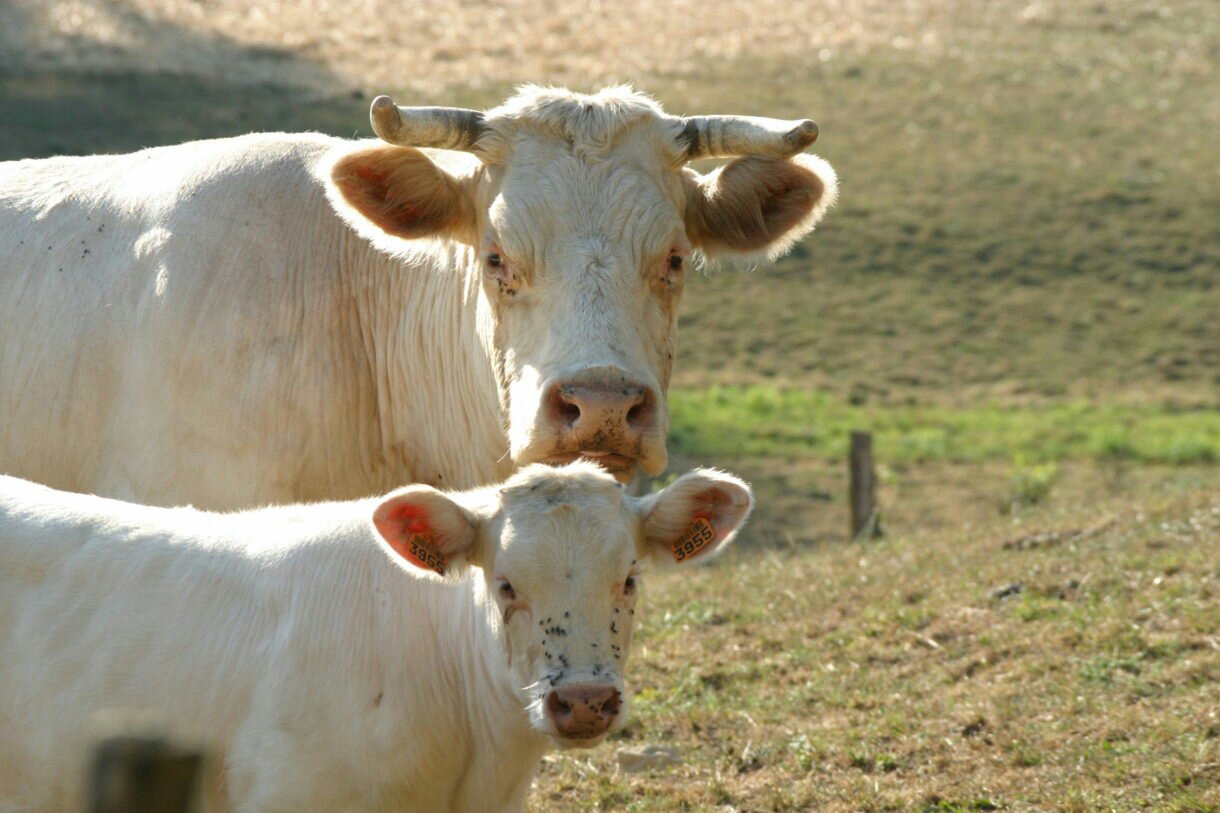
Are Meat Eaters Contributing to Climate Change?

https://www.webmd.com/food-recipes/news/20180328/are-meat-eaters-contributing-to-climate-change#1
By Robert Preidt

HealthDay Reporter

WEDNESDAY, March 28, 2018 (HealthDay News) — Climate change scientists have a beef with all the steaks and burgers Americans are eating.

Beef is a major source of greenhouse gas emissions associated with food production, the researchers said in a new study.

They found that one-fifth of Americans account for nearly half of all U.S. food-related greenhouse gas emissions that contribute to climate change.

And America’s love affair with beef is the main reason, said Martin Heller, the study’s first author.

“Reducing the impact of our diets — by eating fewer calories and less animal-based foods — could achieve significant reductions in greenhouse gas emissions in the United States,” said Heller, a researcher with the University of Michigan School for Environment and Sustainability.

CONTINUE READING BELOW
YOU MIGHT LIKE

“It’s climate action that is accessible to everyone, because we all decide on a daily basis what we eat,” he added.

For various reasons, “the production of both beef cattle and dairy cows is tied to especially high emissions levels,” Heller and his colleagues said in a university news release.

These bovines eat lots of feed that involves use of fertilizers and other substances manufactured through energy-intensive processes. There’s also the fuel used by farm equipment.

“In addition, cows burp lots of methane, and their manure also releases this potent greenhouse gas,” the researchers said.

Heller’s team created a database on the environmental effects of producing more than 300 types of foods. They linked that to data on the diets of more than 16,000 U.S. adults.

The researchers found that on any given day, 20 percent of Americans were responsible for 46 percent of all food-related greenhouse emissions in the country. Those with the greatest impact were linked with eight times more emissions than those with the lowest impact.

Beef consumption accounted for 72 percent of the difference in greenhouse gas emissions between the highest and lowest groups, according to the study.

The researchers only looked at emissions from food production. Emissions from processing, packaging, distribution, refrigeration and cooking of food would likely increase total emissions by 30 percent or more, according to Heller.

Vegan climate letter

Dear Editor,
If a picture is worth a thousand words, then the cartoon at the top right hand corner on page 4 of the March 14, 2018 edition of the Methow Valley News is worth at least that many–depending on how it’s interpreted. In case you missed it, the drawing featured a wide-eyed, fearful pig, fish, cow, goat, bear, deer and other allegedly delectable and destroy-able beings on a cracker, being shoveled into the gaping mouth of a ginormous human head.
Though it’s caption was, “Bite of the Methow,” it seemed to symbolize the ‘Bite of Humanity,’ as in the chunk that meat-eating is taking out of this once vibrant planet.
If you can’t find it in yourself to care about cruelty issues, you might at least consider your food choices in regards to the fact that animal agriculture is the “third-largest source of greenhouse gas emissions, after the energy and industrial sectors,” according to “The Case for a Carbon Tax on Beef” by Richard Conniff in the New York Times, March 17, 2018.
And as Chatham House, an influential British think tank, points out, livestock production is responsible for more greenhouse gas “ than the emissions produced from powering all the world’s road vehicles, trains, ships and airplanes combined.” Conniff adds, “including grazing, the business of making meat occupies about three-quarters of the agricultural land on the planet.”
Call it food for thought, but what you eat is actually affecting our weather these days.
Jim Robertson

As Snow Disappears, A Family of Dogsled Racers in Wisconsin Can’t Agree Why

As Snow Disappears, A Family of Dogsled Racers in Wisconsin Can’t Agree Why

A father and daughter have been running sled dogs for more than 25 years. It’s easier for them to talk dogs than politics, weather than climate.

A version of this story and video were published by The New Yorker.

As dog musher Mel Omernick slipped nylon harnesses over her Alaskan huskies’ lithe bodies, the dogs were already straining with forward momentum. Pogo pressed her paws into the ground below, the sound of her yelps joining with those of the three other dogs that Mel and her husband, Keith, were hooking up to their tuglines. The cries melded with the barking of a hundred other dogs at the Redpaws Dirty Dog Dryland Derby in northern Wisconsin.

It was the first weekend of November, and race participants had come from all over Wisconsin and neighboring states, and as far away as New Hampshire and Quebec, to run their dogs. All year, they had fed and watered and trained and cleaned up after their teams, awaiting the moment they could let their dogs loose across the starting line.

Now the race weekend had finally arrived, though it had gotten off to a rocky start. Once again, the weather was to blame.

Gleason, Wisconsin, locator map

Northern Wisconsin is still a frigid place come winter. But as the state has warmed, the certainty of snow gradually vanished, leaving the traditional winter dogsledding races frequently cancelled for lack of good powder. Organizers responded by adapting the sport itself, from dogsledding to “dryland” racing.

The Dirty Dog Derby was the first of its kind in the area, started in 2006 to extend the racing season into spring and fall so that mushers like Mel and Keith could have more chances to compete, and dogs like Pogo more chances to run. Swapping out sleds, dogs instead pull mushers on unmotorized rigs or a cart with four to 10 dogs or modified bicycles (bikejoring) pulled by two dogs: in some cases, a single musher simply lashes herself by bungee cord to a single dog and runs behind him in an event called canicross. Dryland variations tend to be shorter events, sprints of a few miles instead of the hundreds of miles of the iconic long-distance sled races often associated with the sport.

With snow becoming less reliable, many sled dog racers have turned to dryland racing, with rigs on wheels replacing traditional sleds. Credit: Meera Subramanian

With snow becoming less reliable, many dogsled racers have turned to dryland racing, with rigs on wheels replacing traditional sleds. Credit: Meera Subramanian

In the weeks before their race, the Dirty Dog organizers had been worried they’d have to cancel it if the warm weather they were experiencing into late October—still hitting 70 on some days—continued. Since dogs can’t sweat—the only means they have to release heat from their bodies is through their tongues and the pads of their paws—mushers won’t run their dogs if there’s a risk they’ll get “fried” by overheating.

But by the time the derby arrived on Nov. 4, race organizers were pining for a little heat. The race grounds—and the carefully groomed trails—were blanketed in nearly three inches of snow. The day’s races were cancelled. Mushers kept their spirits up but weren’t finding much humor in the irony: a dryland race, the sport’s creative solution to a paucity of snowfall, cancelled because of snow. Some mushers loaded up their trailers with their pent-up dogs and made their way back home, while others—usually those who had traveled greater distances—hung around, eating chili from the Dirty Dog Diner set up in the open-air lodge and taking shifts by the fireplace as they waited to see if the weather would change.

By the second day, the snow had melted just enough to turn the trails into a muddy, but navigable, quagmire. When the organizers announced early Sunday morning that the race was on, the grounds erupted in excitement and movement. Mel and Keith headed to their truck to get the team hooked up, and soon the dogs were pulling on their lines, amped to do what they seemed born to do: run.

Dogsledding, Without the Sleds

Today, dogsledding is undergoing a transformation. Or threat, depending on your viewpoint.

The first hit came with the advent of snowmobiles in the 1960s, when dogsledding began slipping away as the standard form of transportation for many of the world’s northernmost inhabitants. Instead it became recreational, one of those activities that meld sport, hobby and lifestyle into one expensive, obsessive pastime.

Jan Bootz-Dittmar has been racing dogsleds for four decades and has several sponsors. She took up dryland racing, too, but finds the loss of reliably snowy winters frustrating. Credit: Meera Subramanian/InsideClimate News

Champion sprint musher Jan Bootz-Dittmar has been racing dogsleds for four decades and has several sponsors. She took up dryland racing, but finds the loss of reliably snowy winters frustrating. Credit: Meera Subramanian

Now the ideal image of dogs, humans and a sled careening silently across snow is facing a new challenge as the climate warms and the weather weirds. The Iditarod, a thousand-mile race across Alaska that is the most famous of sled dog races, had to be rerouted two of the last three years as its organizers chased snow-covered terrain. In Wisconsin, since 2001, about one-third of the sled races failed to happen, primarily because of lack of snow.

“I definitely see a trend where things are not like they used to be,” said Jan Bootz-Dittmar, a champion sprint musher on snow and dry land who’s been running dogs for 40 years. Last year, insufficient snowfall caused half of the snow races in Wisconsin to be cancelled.

“That affects me,” she said in the cafe as she munched on potato chips in lieu of lunch, “and it pisses me off.”

The Accidental Life

Mel races drylands, but skijoring is what she loves most: the quiet “shwooosh shwooosh” of her skis gliding through a snow-silenced world but for the sound of her dog’s movement.

She lives in Lincoln County, in north-central Wisconsin, and we were talking in the kitchen of the home she and Keith share, a long green metal building divided into a utilitarian shop and a capacious, wood-ceilinged living space with a wall of windows looking out upon a stand of trees. Her parents’ home lies just beyond. Mel, 40, sees both of her parents nearly daily, but when it comes to dogsledding, she’s closer to her father, Ron Behm, who is approaching 70. The kennel of Alaskan huskies and hounds that was once Ron’s is now cared for by Mel and Keith, and they all train the dogs together.

The length of the frost-free season has increased by as much as three weeks in some parts of Wisconsin since 1971, the state's assistant climatologist said. Credit: Meera Subramanian

The frequency of winter freezes that plunged the thermometer below average has been declining in Wisconsin since the 1980s, and the sport has had to change with the climate. Credit: Meera Subramanian

Father and daughter have been running sled dogs for more than 25 years, since they entered the sport by an accident of canine lust. Mel was still in junior high when the neighbor’s Malamute wandered over and found their Labrador mix, which was Ron’s hunting dog. One lone pup was the result, and they kept him and named him Tiny. He was no bird dog, but Mel and her three siblings kept him running all the time. When the neighbor’s dog got loose again the next year and a litter of four was born, the Behm kids had a team. The family was friends with Jan Bootz-Dittmar, who gave them some harnesses to try out.

Mel and her two younger brothers hooked up Tiny and the team to their red Radio Flyer wagon, and the boys would take turns riding while Mel, who was a gymnast at the time and wanted the exercise, darted in front, leading the dog. As the dogs grew, they swapped out the wagon with an old lawn mower, engine removed. Mel’s older sister Ginnie, daunted by the speed, would cheer them on, snapping photographs. Ron mowed a path through the grass so the children could holler “gee!” for right and “haw!” for left as the dogs learned commands.

Mel’s brother Adam was the first to enter a formal dogsledding race, with Ron joining him a few years later. By the time she was in college, Mel had quit gymnastics and started racing, too. Mel’s mother, Gail, stitched harnesses and kept the mushers supplied with baked goods and the fresh perch she caught while ice fishing, her preferred sport.

Dynamics of Differing

Despite all this family togetherness, there was one crucial split in the Behm household: politics.

At first, Mel told me, she was a Republican because her father was. “I didn’t pay attention to politics,” she said. But that changed when she became an emergency room nurse. Working 12-hour shifts with people in crisis, she suddenly realized that “some of the decisions that politicians were making were affecting my patients.”

She also saw how not just politics but also science affected them, from the medicines she could offer them to how their bodies responded. She saw science in her sport, too, where the principles of genetics were used to breed dogs for speed, endurance and tougher paws.

The family's kennel has 19 dogs, a mix of Alaskan huskies and hounds trained by Mel Omernick; her husband, Keith; and her father, Ron Behm. Credit: Meera Subramanian

The length of the frost-free season has increased by as much as three weeks in some parts of Wisconsin since 1971, the state’s assistant climatologist said. Credit: Meera Subramanian

“I love science,” she said, “and I believe in evolution.” Evolution was one of the science-based subjects she’d argued with her dad about most fiercely when she was in college. “I feel like we’re an example of it, and our sled dogs are too. So, it’s logical. It just makes sense … our planet is changing.”

These were not conversations Mel and Ron had easily, or often. Usually they just avoided politics—and science—altogether, focusing on the thing that bound them, their love of dogs and dogsledding, their family life.

Credit: Meera Subramanian

The world of dog mushers draws racers and trainers from across the political spectrum, and there’s a hesitation to talk about potentially divisive issues, such as climate change. Credit: Meera Subramanian

Within the contained world of dog mushers, there’s a similar hesitation to talk about potentially divisive issues. The entire political spectrum finds representation at the Dirty Dog Dryland Derby, from the young women showing up in a Prius with two dogs tucked in back, to the Trump supporter in a trailer emblazoned with “To the victor the spoils.” But as with Mel and her father, conversations among the mushers veer away from the political, to the point that many mushers don’t even know each other’s leanings or affiliations. Better to talk dogs than politics, and weather before climate. Even Ron, once I pressed him, was adamant that he was a “constitutionalist,” not a Republican. That was a distinction even his own daughter didn’t know.

Just a Blade of Grass

The second weekend in November, a second dryland derby was scheduled. Ron was slated to be a race marshal for that one, known as the Willow Springs Round Barn Fall Rally, and Keith was scheduled to compete; Mel planned to swing by after an all-night ER shift. But the skies stayed heavy most of the week, and, looking at the forecast of more snow, organizers cancelled the race by Tuesday night.

With his weekend freed up, Ron was willing to continue a conversation we’d started earlier in the week about what was happening to the climate and the sport he and his daughter both loved. Instead of race marshaling, he joined me at Mel’s house, laying down his coyote fur cap upon the kitchen table as Mel fixed coffee after her 12-hour shift.

While Mel sees the climate changing around her, her father, Ron Behm, is skeptical of any human role and leans on counter-arguments that have scientists have considered but dismissed as a major drivers of change. Credit: Meera Subramanian

While Mel Omernick sees the climate changing around her, her father, Ron Behm, is skeptical of any human role in climate change and leans on counter-arguments that scientists say aren’t major drivers of the changes. Credit: Meera Subramanian

Sitting side by side, Mel and Ron are two generations delighted in the world. Ron is still fit from his 30 years as a mail carrier, from which he retired in 2012; he now devotes himself to the Wisconsin Trailblazers race dog club, the Lions and a one-acre market garden that he tends with his wife. His white beard is trimmed, and Mel’s blonde hair is cut in a bob that falls in soft curls. They both default to easy smiles, even when their viewpoints clash.

Which they do, when it comes to climate change.

Finding Middle Ground

Mel feels that the winters of her youth are gone. Where was ice skating at Thanksgiving, like she remembers from her grandma’s when she was a kid?

“It always seemed harsh in the winter,” she said. But Ron had an explanation that had nothing to do with climate change. A trick of perception, he said as Mel listened respectfully, since in those days there was none of the high-tech clothing and efficient snow plows of today. He likened it to other mythic stories about one’s childhood, à la walking to school, uphill, both ways. “Probably that was a part of it,” Mel responded, nodding thoughtfully, both of them disagreeing in a way that was unfailingly polite.

There are 19 dogs out in the kennel, but six are allowed in the house, and they periodically came up to Mel and Ron, who stroked their heads. One dog took a brief interest in Ron’s coyote-skin hat—it’s roadkill, Ron told me—before venturing off again.

“One thing about weather,” Ron said, “we can all comment about it, but we can’t change it.” He sees climate changes as cyclical, pointing to the fact that long before humans were contributing any sort of emissions to the atmosphere, the state had “gone through three major warming trends, and also, three major freezing trends.” He mentioned the nearby Ice Age Trail that marks the edge of the last glaciation, 10,000 years ago.

The length of the frost-free season has increased by as much as three weeks in some parts of Wisconsin since 1971, the state's assistant climatologist said. Credit: Meera Subramanian

Dogsledding in Wisconsin has been changing for other reasons as well, including the cost of the sport and loss of sponsorship. Credit: Meera Subramanian

But even as he referred to deep time and geological history, Ron expressed his strong skepticism of science. He trusts the Old Farmer’s Almanac before the weather report. Weather is cyclical, he insisted, listing off a catalog of counter-arguments to climate science that I’ve heard around the country, including from many of the Dirty Dog mushers. The current warming can be attributed to volcanoes, they’ve told me. And sunspots. And solar winds. And the media doesn’t report these things. None acknowledged that climate scientists account for these variables in their studies and readily accept the planet’s natural climate fluctuations.

What the planet has not seen is as rapid a rise in temperatures, predicted to become warmer than they’ve been for millions of years, long before humans settled into their spaces and their sports.

“I still don’t believe that man has been given the ability, no matter how proud they think of themselves, to completely control something that they’re only on its surface for a very short time,” Ron told me.  “We’re here, a blade-of-grass scenario,” meaning that there might be seven billion of us, but we simply cannot have the impact that climate scientists are saying we have.

But while Mel politely agreed with her father that her recollection of colder winters in the past might be a trick of the mind, the truth is, data backs up her belief that Wisconsin winters are objectively milder than they used to be.

Credit: Meera SubramanianMel Omernick enjoys bikejoring with her race dogs when there isn't enough snow to ski with them. Credit: Meera Subramanian

Mel Omernick enjoys bikejoring with her race dogs when there isn’t enough snow to ski with them. She also works as an emergency room nurse, where she sees how politics and science affect all of our lives. Credit: Meera Subramanian

Starting in the 1980s, the frequency of winter freezes that plunged the thermometer below average was declining. By the mid-1990s, when Ron and his kids were running with the Radio Flyer and Tiny’s team, the cold autumnal spikes had nearly vanished. Ed Hopkins, Wisconsin’s assistant state climatologist, told me that winters continue to be highly variable, with lots of snow some years and bare ground others, but he recently tallied up the length of the frost-free season since 1971 and found that in some parts of the state, it’s increased by as much as three weeks.

And Now, a Word from …

Dogsledding in Wisconsin has been changing for the past two decades for reasons aside from weather: the cost of dog food, the difficulty of finding long trail systems unimpeded by development or liability-averse landowners, the cost of fuel for the trucks to haul large teams. And one additional, significant change: the loss of sponsorship. It was sponsorship that had been keeping the races afloat, but sponsors started falling away as early as the late 1990s—often for weather-related reasons.

Dryland races involve plenty of mud, as Jan Bootz-Dittmar is evidence of after a race. Credit: Meera Subramanian/InsideClimate News

Dryland races involve plenty of mud, as Jan Bootz-Dittmar is evidence of after a race. Credit: Meera Subramanian

Ron spoke of one sponsor, the North Star Mohican Casino Resort over in Bowler, Wisconsin, that sponsored a dogsled race with a huge purse. “Then someone says … we can make more money with a polka band,” he said. “Bowler started to bring in live entertainment at the casino, instead of doing the race.”

How infinitely appealing an indoor, climate-controlled event must be for a sponsor. The complete opposite of the iffy one-day mudfest that ended up being the Dirty Dog Derby this year.

“This is a weather sport,” Ron said. “Your sponsors are expecting this much viewing of their product name, and if the weather is not conducive to that, you don’t get the viewership.”

“So if it’s too cold, too windy, rainy,” Mel continued, their conversation fluidly moving between them, “there are no spectators.”

The prizes for the long-distance snow sled races can still be substantial—the Iditarod winner takes home $75,000—but as the purses have shrunk, sprint mushers are lucky if they win enough for gas money home.

Credit: Meera Subramanian

Traditional racing sleds hang on a shop wall near the kennels. Credit: Meera Subramanian

The move from dogsledding to dryland racing to casino polkas is enough to make you wonder if we’re doomed to become an indoor nation, seeking collective escape from an unpredictable world.

Many sports are suffering from the extremes in weather. Just as the sled dogs have their window where they can comfortably and safely compete, so do we two-legged athletes. It’s difficult to play tennis when it’s so hot your sneakers are melting on the court or you start hallucinating that you’ve seen Snoopy, as happened at the Australian Open a couple of years back. A study by the University of Waterloo’s Interdisciplinary Center on Climate Change found that, unless carbon use plummets soon, a third of past Winter Olympics cities will be unable to host the event in the future because they won’t get cold enough. Winter recreation sports are estimated to be a $12 billion industry in the country.

Even snowless races still draw young dog sled racers excited for the thrill of the sport. Credit: Meera Subramanian/InsideClimate News

Even snowless tracks still draw young dogsled racers excited by the thrill of the sport. Credit: Meera Subramanian

Loss of sponsorship and other factors are contributing to the decline in snow mushing in Wisconsin, but the greatest factor seems to be climate change. How long can the sport survive when the specter of uncertain weather is added to all the others? What is the fate of this sport—a healthy, life-affirming sport that people play instead of watch, that involves working in concert with animals instead of against them? Did the founders of the Iditarod think about the double meaning of their tag line, the “Last Great Race on Earth”?

When there isn't enough snow for a sled but too much for a dryland racing cart, Mel and Keith Omernick runs the dogs with an ATV, its motor running. Credit: Meera Subramanian

When there isn’t enough snow for a sled but too much for a dryland cart, Mel and Keith Omernick take the dogs out with an ATV. Credit: Meera Subramanian

Mel and Ron and I had talked enough. There were dogs outside, eager in waiting. Ron donned his coyote fur hat, its tail draped between his shoulder blades as the rest of it blended with the color and cut of his beard. Mel slipped on her Carhartt jacket and we headed out to the kennel where Keith had been setting out the lines to run the dogs with an ATV. It was too snowy for a cart and not snowy enough for a sled, so a motor would have to suffice. The dogs were rowdy with expectation, fervent to bound through the whitened forest, past Ron and Gail’s garden, so recently put to bed, past the neat lines of the neighbor’s fields, crisp in sepia tones.

“I love to watch them run, and run with them,” Mel had said expectantly before we headed out. “To have them pull me and to be part of that team. And we’re out there in nature, whether it’s a beautiful sunny day, 20 below, raining, icing. We’re appreciating what the planet has given us, and God’s blessings that we’re healthy enough to do this.”

She was proving what her father had told me earlier about dog racing. “Nostalgia,” Ron had said, “is a big part of this sport.”

Top photo: Mel Omernick races dogsleds in Wisconsin, but lately the winter races have shiftrf to dirt tracks as the winter snow becomes less reliable. Credit: Meera Subramanian

How plant-based diets can help reduce greenhouse gas emissions by 70 percent

https://www.accuweather.com/en/weather-news/how-plant-based-diets-can-help-reduce-greenhouse-gas-emissions-by-70-percent/70004227

By Jennifer Fabiano, AccuWeather staff writer

Vegan and vegetarian diets are not just the latest trend. According to climate experts, these diets could actually help mitigate the effects of climate change.

“From a greenhouse gas standpoint and a climate standpoint, there are many advantages to a vegetarian diet and a vegan diet,” Rob Jackson, chair of the Department of Earth System Science at Stanford, said.

Transitioning towards a more plant-based diet could reduce food-related greenhouse gas emissions by up to 70 percent, according to the Proceedings of the National Academy of Sciences of the United States of America.

Agriculture fast facts

The agriculture industry has major anthropocentric impacts, which are impacts originating in human activities. Reduction of greenhouse gases is the most prominent effects of vegan and vegetarian diets; others include reduced destruction of rain forests, increased efficiency of food production and cleaner, more abundant water.

Reduction of greenhouse gases

Methane is generated in the guts of animals, according to Rob Jackson. The livestock sector of agriculture emits 37 percent of anthropogenic methane, which has 23 times the global warming potential of carbon dioxide, according to the Food and Agriculture Organization of the United Nation’s “Livestock’s Long Shadow” report.

The livestock sector is also responsible for 64 percent of anthropogenic ammonia emissions, which contribute to acid rain and acidification of ecosystems.

Agriculture’s effect on land

According to the Food and Agricultural Organization of the United Nations (FAO), the livestock sector is the single largest anthropogenic user of land. Livestock production accounts for 70 percent of all agricultural land and 30 percent of the land surface of the planet.

According to Jackson, the most extreme example of animal agriculture’s effect on land is tropical deforestation. Chopping down forests, and especially rain forests, releases carbon dioxide from the trees and soil into the atmosphere.

The greatest amount of deforestation is occurring in Latin America, where 70 percent of previous forested land in the Amazon is occupied by pastures, according to the FAO. About 20 percent of these pastures and rangelands have been degraded through overgrazing, compaction and erosion created by the livestock sector.

MethaneEmissions

A bull stands in its paddock in Neu Anspach, Germany, Tuesday, Nov. 7, 2017. Cattle produce methane gas, which is a potent greenhouse gas. (AP Photo/Michael Probst)

Efficiency of food production

This effect boils down to the logic that we can feed the animals the food we would have eaten or we can eat that food directly, which saves resources and reduces emissions during production.

In addition, a plant-based diet would reduce the amount of land used and the amount of food needed to be produced.

Cleaner, more abundant water

According to the FAO, freshwater shortage, scarcity and depletion are becoming an increasing world problem. Accounting for over 8 percent of global human water use, the livestock sector plays a key role in increasing water use.

In addition to water use, the livestock sector also is a huge source of water pollution. Pollutants come in the form of animal wastes, antibiotics and hormones, chemicals, fertilizers and pesticides and sediments from eroded pastures.

In the United States, livestock are responsible for an about 55 percent of erosion and sediment and 37 percent of pesticide use, according to the FAO.

RELATED: 
Ditch the plastic: How a zero-waste advocate fits years’ worth of trash in a mason jar
Are we doing enough to fight climate change?
How simple lifestyle changes can reduce your carbon footprint, help the environment
Human-induced climate change costs US economy $240B per year, study says

“Even as we green up our energy use, which we’re doing with solar and wind, one area where we are going to massively increase both greenhouse gas emissions and water use is from our diet,” Dana Hunnes, assistant professor in the Community Health Sciences Department, said.

Some argue that other dietary changes, such as purchasing only locally sourced food, can reduce one’s carbon footprint but only to some extent.

According to a Carnegie Mellon study, greenhouse gas emissions associated with food are mainly created by the production phase which contributes 83 percent of a U.S. household’s carbon footprint for food consumption. Transportation as a whole represents on 11 percent of life-cycle greenhouse gas emissions.

The authors of the study suggest that a plant-based diet can be a more effective dietary shift compared to “buying local.”

“Shifting less than one day per weeks’ worth of calories from red meat and dairy products to chicken, fish, eggs or a vegetable-based diet achieves more GHG reduction than buying all locally sourced food,” the study says.

“People are better off eating meat if they can’t get what they need from a vegan diet, but certainly in a country like the U.S. that’s not really the issue,” Jackson said.

Bear expert: flooded dens a threat to bears, not people

Bear expert: flooded dens a threat to bears, not people

Brandon Wade | AP | BDN
File photo of a black bear that was relocated to an animal sanctuary in Texas, courtesy of the Humane Society of the United States.
By Callie Ferguson • 

The bear that mauled a puppy in Dedham last week apparently was one of several forced from its den because January was unusually rainy, according to Maine bear experts.

The bears were flooded out of their winter hibernation spots, said Jennifer Vashon, the biologist who oversees the state’s bear program within the Department of Inland Fisheries and Wildlife.

Last week’s bear-human conflict was the first such weather-related encounter that Vashon can recall. But, she said, having more bears become active early in the year does not put Mainers at much of a risk of running into one of them.

The bear versus dog tangle likely occurred because the dog disturbed a young bear that had recently relocated near a busy roadway and hadn’t fallen back into a deep hibernation, Game Warden Shannon Fish said.

Vashon agreed that the scuffle was a “freak coincidence.”

“I don’t see any reason that the weather is going to cause an increase in encounters between bears and people,” she said.

Heavy flooding from rain occurred earlier than usual, Vashon said. But if early-winter flooding becomes the norm because of climate change, it’s bears that will have to adapt, not people. Bears would gradually become more likely to establish their dens on higher ground, she said.

Last week’s mauling occured when 29-year-old Dustin Gray and his puppy, Clover, unwittingly stumbled upon a bear den in the woods just off of Route 1A in Dedham. Gray said he fought the bear off. Clover is now recovering from puncture wounds.

Near the place the conflict occurred, Fish found a small cave that looked like it had briefly housed a small bear. That led him to conclude the bear had recently moved out of a flooded den.

The National Weather Service does not record rainfall totals for Dedham, but Bangor received 5.53 inches in January, nearly double the its average for the first month of the year. That rain, combined with snow melt, caused widespread flooding, according to NWS meteorologist Mark Bloomer.

Vashon’s colleague, biologist Randy Cross, checked on five dens in a research area affected by the flooding and found that the bears in four dens had already left, she said.

When their dens flood, bears don’t roam around looking for food — or people, whom they tend to shy away from. Instead, they try to find somewhere nearby to resume hibernation, she said.

But, usually, that happens in rainy March — not January. And Vashon said that early-winter flooding could endanger newborn bears.

Cubs are born in January and cannot easily withstand flooding because they are tiny, hairless and vulnerable, she said. But by March cubs are five-pound “furballs” better equipped to cope, she said.

Vashon won’t know until the spring, when the state checks its cub counts, if last month’s heavy rains cost the lives of any newborns, she said.

“But this one year, there’s probably no reason to be concerned,” she said.

Climate change has made January rains more common, a trend that is likely to continue, according to Sean Birkel, a University of Maine climatologist.

But, Vashon said, that just means mother bears will seek out higher ground.

“Bears learn,” she said.

How to Read Between the Lines When Scott Pruitt Talks About Climate Science

Scott Pruitt, the administrator of the Environmental Protection Agency, suggested this week that climate change might not be a danger for humanity.

During an interview Tuesday with KSNV television of Las Vegas, Mr. Pruitt said that rising global temperatures are “not necessarily a bad thing” and that “humans have flourished’’ during times of warming trends. His comments represent a new wrinkle in Mr. Pruitt’s history of questioning the established science of climate change.

At the E.P.A., Mr. Pruitt has championed the elimination of policies intended to mitigate climate change. He also has long expressed doubt about the role of humans in rising global temperatures, despite the scientific consensus that human activity is the dominant cause of climate change.

His recent comments go a step beyond some of his previously stated views, some scientists say.

“I do think how Mr. Pruitt talks about climate tells us something important about how folks on the right view climate,” said Joseph Majkut, director of climate policy at the Niskanen Center, a libertarian think tank that advocates conservative solutions to climate change. Mr. Majkut cited in particular the search for what he referred to as “counter-narratives.”

Here is a selection of Mr. Pruitt’s comments on climate science:

Jan. 18, 2017: Mr. Pruitt’s confirmation hearing

Senator Bernie Sanders: 97 percent of the scientists who wrote articles in peer-reviewed journals believe that human activity is the fundamental reason we are seeing climate change. You disagree with that?

Mr. Pruitt: I believe the ability to measure, with precision, the degree of human activity’s impact on the climate is subject to more debate on whether the climate is changing or whether human activity contributes to it.

During his first appearance before the Senate Environment and Public Works Committee in 2017, as part of his confirmation hearing to be the head of the E.P.A., Mr. Pruitt walked a fine line on the subject. The climate is warming, he told lawmakers. But he also said, inaccurately, that the extent to which humans are responsible is not known.

When pressed by Senator Sanders, a Vermont independent, to offer his view on what is causing the climate to change, Mr. Pruitt responded, “My personal opinion is immaterial to the job.” 

March 9, 2017: Interview with CNBC’s ‘Squawk Box’

CNBC: Do you believe that it’s been proven that CO2 is the primary control knob for climate? Do you believe that?

Mr. Pruitt: “I think that measuring with precision human activity on the climate is something very challenging to do and there’s tremendous disagreement about the degree of impact, so no, I would not agree that it’s a primary contributor to the global warming that we see. But we don’t know that yet. We need to continue the review and the analysis.”

The Squawk Box appearance offers one of Mr. Pruitt’s most definitive denials of established climate science, which holds that human activity is primarily responsible for the rise in carbon dioxide emissions.

The Intergovernmental Panel on Climate Change, the top climate-science body at the United Nations, calls carbon dioxide the biggest heat-trapping force and says that it is responsible for about 33 times more added warming than natural causes.

Mr. Majkut of the Niskanen Center pointed out that some conservatives mistrust authoritative groups like the I.P.C.C., believing they have been “captured by environmental ideology.” By casting doubt on established science, Mr. Pruitt’s words reflect that skepticism, Mr. Majkut said.

A few months later, on NBC’s “Meet the Press,” Mr. Pruitt shifted his stance a bit, acknowledging the role of carbon dioxide as a cause of climate change.

June 4, 2017: Interview with ‘Meet the Press’

Chuck Todd, speaking of climate change: Do you believe that CO2 is the primary cause?

Mr. Pruitt: CO2 contributes to climate change, much like — Methane actually is more potent.

Mr. Todd: You don’t believe that CO2 is the primary cause.

Mr. Pruitt: No, no. I didn’t say that. I said it’s a cause.

Mr. Todd: Primary?

Mr. Pruitt: It’s a cause of many. It’s a cause like methane and water vapor and the rest.

Mr. Pruitt’s evolving statements on climate science represent a form of “political communication,” as opposed to an effort to discuss scientific findings, said Nicole Lee, an assistant professor of communication at North Carolina State University who focuses on how scientists convey the complexity of climate change to the public. “It’s about not wanting to move the conversation to what to do about climate change,” she said.

In late 2017, Mr. Pruitt spoke on the television show “Fox & Friends,” promoting a plan to hold televised debates on climate change science. (Planning for the debates, called “red team-blue team” exercises, is still in the works, he said recently.) In his televised remarks, Mr. Pruitt raised the idea that even if temperatures are rising, it might not be a bad thing for humanity.

September 19, 2017: Interview on ‘Fox & Friends’

Mr. Pruitt: “I mean, with this climate change we know certain things. We know the climate’s always changing. We know that humans contribute to it in some way. To what degree, to measure that with precision is very difficult.

But what we don’t know is, are we in a situation where the next essential threat, is it unsustainable with respect to what we see presently? Let’s have a debate about that.”

Mr. Pruitt also maintained in the same interview that it isn’t possible to measure the degree to which human activity contributes to climate change.

That point is refuted by a sweeping climate-change study issued in November by the E.P.A. and other federal agencies. It is “extremely likely,” the report found, that more than half of temperature rise over the past half-century can be attributed to human activity. “There are no alternative explanations.”

January 31, 2018: Senate Environment and Public Works hearing

Mr. Pruitt: “There are questions that we know the answer to, there are questions we don’t know the answer to. For example, what is the ideal surface temperature in the year 2100, is something that many folks have different perspective on.”

That comment, made before a Senate panel, about knowing the “ideal surface temperature in the year 2100,” has become a recurring talking point. Mr. Pruitt has repeated it several times since.

According to the I.P.C.C., if greenhouse gas emissions continue to increase at their current rate, global temperatures will rise nearly 4 degrees Celsius above preindustrial levels by 2100. The World Bank has found that would mean “a frightening world of increased risks and global instability,” including severe declines in crop yields, the migration of diseases into new regions and significantly rising sea levels.

“Some places will be essentially unlivable,’’ said Michael MacCracken, chief scientist for climate change programs at the Climate Institute, a Washington research group. “It’s a tremendously different world.”

When asked to comment on Mr. Pruitt’s statements or to frame his views on climate change, Jahan Wilcox, a spokesman for the E.P.A., referred to an interview Mr. Pruitt conducted with The New York Times podcast The Daily, where he discussed his position. “Here’s my view on it,” he said in that interview. “There are things we know and there are things we don’t know.”

(Image: Lauren Walker / Truthout)(Image: Lauren Walker / Truthout)

Last December, atmospheric scientist Peter Kalmus ruffled some feathers when he called out 25,000 of his colleagues for flying to the American Geophysical Union’s Fall Meeting.

Being acutely aware of the worsening impacts from anthropogenic climate disruption (ACD) — since it was, after all, his job — Kalmus had already made some dramatic changes in his own life to reflect some of the steps he knew the larger culture needed to take.

In 2010 he quantified his own carbon emissions and realized they were dominated by flying: More than three-quarters of his emissions were from flying alone. So, over the next two years he made an effort to fly less, and began to think of his airplane trips within the context of a warming planet.

To see more stories like this, visit “Planet or Profit?”

“In 2012, I was sitting on a plane — the last flight I’ve taken — and I had this strong, visceral sense that I didn’t belong there, that I didn’t want to continue being part of the problem,” Kalmus told Truthout, speaking for himself (and not on behalf of any institution with which he is affiliated). “Flying felt like a sort of taking from my children. It wasn’t guilt; it was clarity.”

He has not flown again.

And now Kalmus is not alone. He has been joined by a growing number of environmental scientists and academics who are committing to fly less or not at all.

Flying Less

Flying Less, a petition for academics with over 400 signatories, is becoming better known by the day, as is the No-Fly Climate Sci website, where Earth scientists and other academics who don’t fly or fly less are joining together to share their ideas.

Dr. Andreas Heinemeyer is a senior researcher and assistant professor at the Stockholm Environment Institute at the University of York, where she works on carbon cycling and ecosystem services in relation to ACD and land use. ​

“Flying felt like a sort of taking from my children. It wasn’t guilt; it was clarity.”

Like Kalmus, her work has impressed upon her the urgency of our global situation. She told Truthout the situation with ACD is “very urgent” and that real changes are long overdue.

“We should have curbed greenhouse gas levels about 20 years ago,” she explained. “We certainly have created the issue in the first place — all our wealth is based on this overuse of resources in connection with fossil fuel and land use impacts on rising greenhouse gases.”

In addition to the need for government action, Heinemeyer feels we are all obliged to do something about it.

“This includes assessing where we overuse resources and waste energy and limit this excess behavior,” she said. “This requires education but also leadership.”

Christoph Küffer is a professor of urban ecology in Zurich, Switzerland, and a member of No-Fly Climate Sci. He studies the ecology of the Anthropocene and ACD’s impacts on mountain ecosystems as well as restoring green infrastructure and biodiversity in cities.

“Obviously, [ACD] is a very urgent issue,” he told Truthout of his reasons for joining the group. “It affects foremost the weakest, and a small minority of us uses the vast majority of resources.”

Kalmus told Truthout he believes ACD is a far more urgent situation than the average person understands. He explained how it is affecting nearly every aspect of life on Earth.

“It threatens our homes, our livelihoods, our food supply, our geopolitical stability,” he said. “It’s happening faster than we expected. In the scientific community, we’ve had this unfortunate tendency to underestimate rates of change due to under-modeling complex processes such as permafrost methane release and ice sheet disintegration.”

He added that ACD is long-lasting because CO2 will stay in the atmosphere for tens of thousands of years, and the injury to biodiversity will take millions of years to heal.

Kalmus believes it is time for us all to take a step back and think seriously about what we actually need. Do we really need to fly halfway around the world in a matter of hours?

“Or are things like a healthy biosphere, stable climate and reliable food system more important?” he asked. “Is a carbon-rich lifestyle for an elite few worth hundreds of millions of climate refugees tomorrow, and disruption for tens of thousands or even millions of years?”

Kalmus believes that while wind and solar energy are obviously also part of the solution, he does not see the prospect of developing renewables as enough of a fix on its own. Hence, he is taking action to spread consciousness about how we all live.

He told Truthout that his own process of reducing his emissions has been surprisingly fun and satisfying. He wrote about it in his book Being the Change: Live Well and Spark a Climate Revolution.

“At work he studies the physics of clouds in a changing climate, and at home he explores how we can address climate change while living happier, more connected lives,” reads his “About the Author” page. “He lives in Altadena, California, a suburb of Los Angeles, with his wife and two children on 1/10th the fossil fuels of the American average. He enjoys orcharding, beekeeping, and backpacking.”

Is our fast, fossil-fueled lifestyle even that satisfying, or might we be happier if we slowed down a bit?

In our interview, Kalmus said that we all need to be asking ourselves some challenging questions.

“Can we get by with less electricity?” he asked. “If we cut our use in half in the US, we’d only need to build a quarter as much wind, solar and storage to decarbonize our grid. Is our fast, fossil-fueled lifestyle even that satisfying, or might we be happier if we slowed down a bit?”

Kalmus thinks what is required is a cultural shift to bring about the rapid, large-scale change that is our only hope for some mitigation of the impacts of ACD. In addition to institutional action, that cultural shift will require individuals to push the bounds of what society views as normal.

“We need to get to a point where burning fossil fuel is no longer socially acceptable,” he said. “I know we’ll get there, I’m pretty sure I’m on the right side of history here, but the question is how long will it take? Time isn’t on our side.”

Living What They Preach

Küffer, who has managed to go a year without flying, decided to affiliate himself with the No-Fly Climate Sci group because, he says, while humans invented the airplane, the pursuit of “non-flying” is its own form of innovation.

“Innovation happens only if we try, experiment and learn by doing,” he said. “There is a belief in our society that we can have everything together, that we can fly as much as we like and have simultaneously all the benefits of non-flying. But there are opportunity costs. My experience is that non-flying brings lots of benefits.”

Heinemeyer decided to affiliate herself with the no-fly group because of ACD’s impacts on society’s underpinning ecosystem services, including food security.

She does not see her efforts to fly less as an inconvenience.

“It might be an inconvenient truth, but it is quite convenient to stop flying … just do it!” she said. “However, I have to admit that there are some downsides and consequences one has to consider: lower international profile (no conferences over the pond), less involvement in conference attendance overall … and potential issues with promotion.”

However, Heinemeyer has three children and is working to be truthful with them about ACD issues and the urgency of changing their lifestyle, as well as how to do so.

“I feel that I have to live what I preach,” she said.

Kalmus thinks scientists and academics should be taking on the role of “cultural leaders.” He points out that Earth scientists, in particular, have front row seats to multiple, connected Earth system catastrophes unfolding in real time, from dying coral reefs to record-breaking wildfires — and they need to share that perspective with the public.

“We know that this isn’t the ‘new normal.’ It will get steadily worse until we stop burning fossil fuel,” he said. “Doesn’t this knowledge come with some responsibility? Studying climate change isn’t like studying astrophysics: Earth science has revealed a clear and present danger to civilization.”

The scientists behind the no-fly campaigns are not calling for individual change in a vacuum.

Kalmus feels he can’t separate being a scientist from being a concerned, responsible citizen and father. One way to communicate the urgency of the climate emergency, he says, is to live his life like it’s urgent — to model the transition away from fossil fuels.

“I don’t expect every Earth scientist to do this, but I do hope more start to see it this way, because we need all hands on deck,” he said, going on to add that he hopes that as a community, Earth scientists and climate researchers will embrace the seriousness of what their science is telling them. “A good place to start would be to find ways to systematically reduce our flying, like more teleconferencing, more local conferences. Doing this can only enhance our credibility.”

Küffer echoes the belief that “walking the talk” should be part of how credibility is evaluated among scientists and academics.

“As environmental scientists we can’t call upon the world to stop all CO2 emissions within the coming few decades while we ourselves don’t change our habits,” he said. “Maintaining credibility of scientific facts, academia and experts has become a key challenge of the sciences in our time.”

Reflecting on the kind of science that is needed today, Küffer added, “Flying even affects how we do science.”

Heinemeyer wants her colleagues to know that it is indeed possible to fly less, or even to cease flying altogether. Her hope is that her efforts will inspire people. She says she wants to “create a feel for ‘it does matter what I do,’ because simply put, it does — but only if enough of us do it!​”

Too often, Heinemeyer said, people in her research area and institute work on the issue but then ignore the fact that they themselves can also be part of the solution. Many of them refuse to change their own emissions practices.

“Justifying flying by doing good is no good per se, mostly just a simple excuse for not trying alternatives,” she said. “Certainly flying less, if not stop flying, should be part of any research project.”  ​

The scientists behind the no-fly campaigns are not calling for individual change in a vacuum. Kalmus, for example, also points to many ways we can all push for large-scale change, such as voting out those who attack science, and advocating sensible policies such as an annually increasing carbon fee and dividend. However, he also thinks a key tool in the individual toolbox is conspicuous non-consumption: cultural shift through individual change.

“This isn’t a hopeless situation,” he said. “Yes, climate change is here, and it’s a shame we didn’t start dealing with it 10 years ago. I’m not optimistic that we’ll keep global mean surface warming below 2 degrees Celsius. But 3 degrees of warming will be much worse than 2 degrees. And 4 degrees of warming will be much, much worse.”

There are worst-case warming projections that exceed even 4 degrees Celsius, and there are many factors that will continue to drive warming under the current global economic system. However, Kalmus and his colleagues are working to bring their lives in line with Mahatma Ghandi’s code of “being the change” they hope to see in the world. It is a heartfelt and dignified stance in a time of environmental uncertainty, violence and strife.

Copyright, Truthout. May not be reprinted without permission.

Here’s why 60 percent of the world’s saiga antelopes were wiped out in 2015

A burial ground for dead saiga antelopes in Kazakhstan, in 2015.
 Photo: courtesy of the Joint saiga health monitoring team in Kazakhstan (Association for the Conservation of Biodiversity, Kazakhstan, Biosafety Institute, Gvardeskiy RK, Royal Veterinary College, London, UK)

In May 2015, researchers in central Kazakhstan witnessed something really strange: thousands of saiga antelopes began acting a bit weird, becoming unbalanced, and then just plopping on the ground within a few hours — dead. Over the course of just three weeks, more than 200,000 saigas died, or about 60 percent of the global population.

“I had never seen anything like it,” says Richard Kock, a wildlife veterinarian and professor at the Royal Veterinary College in the UK. “It was very concerning because it was so unnatural, outside of the realm of my experience.”

Dead saiga antelopes in the steppes of Kazakhstan, in 2015.
 Photo: courtesy of the Joint saiga health monitoring team in Kazakhstan (Association for the Conservation of Biodiversity, Kazakhstan, Biosafety Institute, Gvardeskiy RK, Royal Veterinary College, London, UK)

The saiga antelopes were later found to be infected with a bacterium that causes blood poisoning and internal bleeding, or hemorrhagic septicemia. Now, a new study shows that unusually wet and hot weather played a key role in causing the outbreak. How exactly that happened, though, remains a bit of a mystery.

Researchers analyzed historical data related to other mass die-offs of saigas from the 1980s, and found that when the outbreaks occurred, it was warmer and more humid than normal, according to a new study published today in Science Advances. That doesn’t bode well for the future of this critically endangered species. A warmer world could make such outbreaks more likely, and if that happens, the saiga antelopes could go extinct.

Saiga antelopes, whose bulbous noses recall the tauntaun creatures in Star Wars, live in the grasslands of central Asia, from Hungary all the way across Mongolia. They’ve been around for thousands of years, since the time of the mammoths, but they’re now at risk of disappearing because of hunting and habitat loss. “Extinctions took out other animals, but the saiga persisted through modern time,” says Kock, one of the authors of the study. With thick furs and unusual noses that warm up cold air before it gets to the lungs, the animals are highly adapted to extreme environments, and being able to survive harsh winters.

A saiga calf.
 Photo: courtesy of the Joint saiga health monitoring team in Kazakhstan (Association for the Conservation of Biodiversity, Kazakhstan, Biosafety Institute, Gvardeskiy RK, Royal Veterinary College, London, UK)

In 2015, as the antelopes got together in the spring to give birth, a sudden disease outbreak wiped out an enormous number of saigas in central Kazakhstan, almost 90 percent of the local population. Such die-offs aren’t unheard of when it comes to mammals called ungulates: the Mongolian gazelle, wildebeest, and white-tailed deer have all experienced mass deaths. But what happened in 2015 was unprecedented, says Kock. In affected herds, 100 percent of animals deceased — an insanely high percentage. “If everything dies, the bacteria doesn’t benefit, the host doesn’t benefit. It doesn’t make biological sense,” Kock tells The Verge.

Conservation scientist Eleanor Jane Milner-Gulland, who’s worked with saiga antelopes for 25 years, says the die-off was traumatic for field biologists. She remembers seeing photos of the lifeless animals spread over the steppes of Kazakhstan: “It was horrible,” Milner-Gulland says. The antelopes had succumbed to a bacterium called Pasteurella multocida, which lives in their tonsils. But somehow, the bacteria seemed to have proliferated to a point where the animals got sick and died.

To understand whether environmental factors were to blame, Kock, Milner-Gulland, and their colleagues analyzed troves of historical data on saiga antelopes, including satellite images and weather records. The animals had died en masse before, with symptoms similar to the 2015 event. In 1981, 70,000 saigas went heels up, or about 15 percent of the population in the Kazakh region of Betpak-Dala. In 1988, 270,000 died, or 73 percent of the regional population. The data showed that in the days leading up to all outbreaks, the humidity was higher than usual, over 80 percent, and the average minimum daily temperatures were also higher than normal, particularly in 2015.

Dead saigas.
 Photo: courtesy of the Joint saiga health monitoring team in Kazakhstan (Association for the Conservation of Biodiversity, Kazakhstan, Biosafety Institute, Gvardeskiy RK, Royal Veterinary College, London, UK)

How exactly those conditions sparked the outbreak isn’t clear, Kock says. It could be that bacteria spread when it’s hot and wet, but to be sure, more research is needed. It’s also not clear whether climate change can be blamed for the 2015 outbreak, according to Kock. Climate models aren’t precise enough to determine whether changes in climate are affecting weather in a very specific region, but the trend is obviously pointing toward the world becoming a hotter place — and that’s concerning.

Global temperatures have already increased by roughly 1.53 degrees Fahrenheit (0.85 degrees Celsius) since 1880, and saiga antelopes are already being affected, Milner-Gulland tells The Verge. In the last 40 years, the areas where the animals go to give birth have already shifted north. And since there seems to be a connection between weather and the outbreaks, more die-offs are expected in the future, Kock says. “The question is, will it cause extinction?” he says. “I think that’s a risk.”

One way to protect saigas is to make sure their populations are strong and healthy, so that if there is an outbreak, more animals can survive. That means limiting poaching, and giving the antelopes enough space to migrate across the grasslands. But saigas are also “really good at recovering,” Milner-Gulland says, and their populations can bounce back quickly: females can have babies when they’re only one year old, and newborns are large enough that they can run and migrate quickly.

So, for these mythological-looking creatures, there’s hope for survival.

https://www.theverge.com/2018/1/17/16900590/saiga-antelope-2015-die-offs-kazakhstan-humidity-heat-climate-change

Saving the world with carbon dioxide removal

 January 8 at 12:29 PM

Steam billows from the chimney of a coal-fired Merrimack Station in Bow, N.H. Jan. 20, 2015. (Jim Cole/AP)

Peter Wadhams is professor of ocean physics in the Department of Applied Mathematics and Theoretical Physics at the University of Cambridge, U.K.

CAMBRIDGE — Limiting global warming to 2 degrees Celsius above preindustrial levels, as the countries of the world committed themselves to do under the Paris climate accord, is impossible without removing carbon dioxide from the atmosphere. Even the Intergovernmental Panel on Climate Change, which set the Paris goals, concedes this. But the panel has neglected to suggest how to do it.

If we want to survive climate change, we must double down in research manpower and dollars to find and improve technology to remove carbon dioxide — or at least reduce its effects on the climate. We now emit 41 billion tons of carbon dioxide per year. The current level of carbon dioxide in the atmosphere is already high enough to bring about a warming of more than 2 degrees after it has worked its way through the climate system, so if we want to save the Paris accord, we must either reduce our emissions to zero, which is not yet possible, or combine a significant emissions reduction with the physical removal of about 20 billion tons of carbon dioxide from the atmosphere per year indefinitely.

As I outline in my book, “A Farewell to Ice,” this is because we have a carbon dioxide “stock-flow” problem: temperature rise is closely associated with the level of the gas in the atmosphere (the stock), but we are only able to control the rate at which new gas is emitted or removed (the flow). Carbon dioxide, unlike methane, persists in the atmosphere for hundreds of years, so even if we reduce our emission rate, the level of the gas will keep going up. At the moment, measurements show that this carbon level increase is exponential — it is accelerating.

Currently, the best way to save our future is to remove carbon dioxide through direct air capture, a process that involves pumping air through a system that removes carbon dioxide and either liquefies it and stores it or chemically turns it into a substance either inert or useful. Enterprising researchers have already developed systems that work by passing air through anion-exchange resinsthat contain hydroxide or carbonate groups that when dry, absorb carbon dioxide and release it when moist. The extracted carbon dioxide can then be compressed, stored in liquid form and deposited underground using carbon capture and storage technologies.

The challenge here is to bring the cost of this process to below $40 per ton of carbon removed, since this is the estimated cost to the planet of our emissions. At the moment, most methods cost more than $100 per ton, but there are dramatic developments which promise great improvement. Three companies have opened pilot plants — Global Thermostat (United States), Carbon Engineering (Canada) and Climeworks (Switzerland).

Climeworks is the trendsetter. After building a small plant which fed absorbed carbon dioxide into a greenhouse, they have opened a small-scale commercial plant in Iceland. This is aimed to remove 1,000 tons of carbon dioxide from the air per year and pump the carbon dioxide, with water, down into basalt rocks underground, using Iceland’s abundant geothermal power as a source of energy. Here the carbon dioxide is literally turned to stone — it mineralizes rapidly because of the type of rock and the pressure. The carbon dioxide, turned to stone, is out of the planet’s energy system for millions of years. This is an enormous breakthrough.

Even in Houston, the home of the oil industry, climate innovation is taking place. In October, using an approach called the Allam cycle, a company called NET Power opened a plant that burns natural gas to produce power, but it captures all the carbon dioxide produced because the carbon dioxide is itself the working fluid — a new concept. This is not carbon drawdown but is a totally renewable energy source based on a fossil fuel.

In theory, cooling air so as to liquefy its carbon dioxide content could also be used to remove it. This could involve setting up plants on high polar plateaus such as Antarctica or Greenland but has yet to be investigated.

A compelling criticism of carbon removal is that it discourages us from even trying to reduce our carbon dioxide emission levels and instead shifts our focus to unproven “emit now, remove later” strategies. It doesn’t help that the unfortunate reality is that as a global population, especially in the West, we are reluctant to give up the comforts and conveniences of a fossil fuel world. Climate change will not wait for us to become more enlightened.

Effective and impactful carbon dioxide removal operations will need to be in place by around 2020. To keep global temperature rise within acceptable limits, we’ll need to remove half the current human emissions, which means extracting about 20 billion tons of carbon dioxide each year, indefinitely. If we can manage this, we can save our society and our children’s futures. After all, if carbon dioxide is the chief cause of climate change, its removal would be our salvation.

This is an exciting time. The Iceland and Houston plants show us that man’s ingenuity, when turned loose on the problem of getting carbon dioxide out of the atmosphere, can achieve success and maybe save the world from the plight into which our misapplied technology of the past has cast us. We just need to spend more — a lot more — on helping this process along. If we don’t, then in 20 or 30 years, the world will be a different and much nastier place than it is now.

This was produced by The WorldPost, a partnership of the Berggruen Institute and The Washington Post.