Friday, January 05, 2018By Dahr Jamail, Truthout | Report
It’s Colder in Florida Than Alaska: Climate Disruption Hits Home With a Chill
1

Friday, January 05, 2018By Dahr Jamail, Truthout | Report
 A man walks on the snow-covered boardwalk during a snowstorm on January 4, 2018, in Atlantic City, New Jersey. A “bomb cyclone” winter storm has caused every East Coast state from Maine to Florida to declare at least one weather advisory, winter storm watch, winter storm warning or blizzard warning. (Photo: Mark Makela / Getty Images)
On January 2, it was colder in Jacksonville, Florida (38 degrees) than it was in Anchorage, Alaska (44 degrees, which tied a record high for that city).
What is wrong with this picture, in addition to the obvious?
Since December 27, at least a dozen people have died from Arctic-cold temperatures that have covered much of the United States, as wind-chill and freezing advisories were issued by the National Weather Service from the border of Canada down to southern Texas, and from Montana all the way across to Maine.
What’s causing the chaotic temperatures? To understand them, we need to look at the globe’s northernmost regions. The Arctic’s extremely cold air is usually trapped within a circular weather pattern known as the Polar Vortex. Prior to anthropogenic climate disruption (ACD), that weather pattern was intact and strong, which kept the Arctic’s freezing cold air trapped in the Arctic.
But now, thanks to ACD along with natural variability, that weather pattern is changing, and possibly for good.
As global weather patterns are becoming increasingly disrupted by ACD, the polar vortex is being weakened, which is allowing the freezing air to flow out of that region and head south across Canada — and as far down as southern Texas this week.
The total area of global tree cover lost last year was equivalent to the area of the country of New Zealand (approximately 73.4 million acres). This was a staggering 51 percent increase over the previous year’s loss. The University of Maryland study that provided this data cited ACD-driven forest fires and deforestation as the two leading causes, and noted that the wildfires were responsible for the massive spike in coverage loss compared to the previous year.
That phenomenon used to be extremely rare, but is becoming increasingly common as ACD impacts intensify. What is also rare is how long this intense cold snap across the US is lasting — 10 days now and counting.
On Tuesday, for example, Boston tied its seven-day record for the most consecutive days at or below 20 degrees. Meanwhile, during the last week of December more than 1,600 cold temperature records were either tied or broken across the US, making it the second coldest week on record for the country.
As cold as it has been throughout many of the 48 contiguous states, Alaska and other parts of the Arctic are seeing record-warm temperatures.
In addition to the January 2 record in Anchorage, temperatures across the Arctic on that same day were more than 6 degrees warmer than normal.
A study published by the American Meteorological Society in September 2017 found that, since 1990, the polar vortex has weakened and meandered more than it had before. The study also reported that the weakening of the vortex was most likely being set in motion by a rapidly warming and melting Arctic region, which was resulting in colder winters across Europe — and occasionally the US.
On December 28, President Donald Trump tweeted:
In the East, it could be the COLDEST New Year’s Eve on record. Perhaps we could use a little bit of that good old Global Warming that our Country, but not other countries, was going to pay TRILLIONS OF DOLLARS to protect against. Bundle up!
Jason Furtado, a University of Oklahoma meteorology professor, told the Associated Press that it is important not to confuse weather with climate. Weather is something that occurs over a period of a few weeks or less in one region, whereas climate occurs over a period of years or decades and is global.
“A few cold days doesn’t disprove climate change,” Furtado said. “That’s just silly. Just like a couple down days on the stock market doesn’t mean the economy is going into the trash.”
Over the last year, there have been approximately three record high temperatures set across the US for every record low temperature.
Furthermore, the last for years have been the four hottest years ever recorded for the planet.
More than 97 percent of climate scientists agree that ACD is real, and that the prime driver of it is CO2 and other greenhouse gas emissions stemming from human activity. Of the less than 3 percent of climate scientists who doubt or dispute that fact, the vast majority have been shown to be funded by the fossil fuel industry.
Copyright, Truthout. May not be reprinted without permission.
Dahr Jamail, a Truthout staff reporter, is the author of The Will to Resist: Soldiers Who Refuse to Fight in Iraq and Afghanistan (Haymarket Books, 2009), and Beyond the Green Zone: Dispatches From an Unembedded Journalist in Occupied Iraq (Haymarket Books, 2007). Jamail reported from Iraq for more than a year, as well as from Lebanon, Syria, Jordan and Turkey over the last 10 years, and has won the Martha Gellhorn Award for Investigative Journalism, among other awards.
His third book, The Mass Destruction of Iraq: Why It Is Happening, and Who Is Responsible, co-written with William Rivers Pitt, is available now on Amazon.
Dahr Jamail is also the author of the book, The End of Ice, forthcoming from The New Press.
Ben Houlton spends a lot of time thinking about what’s on your dinner plate.
“If you take a steak and ask the question, ‘What’s been put into making that appear on my plate?’, you can trace it back all the way to the fertilizer that’s used to grow the food and then the grains which are used to feed the animals,” said Houlton.
As director of the John Muir Institute of the Environment at the University of California, Davis, Houlton studies how food production affects the environment and creates greenhouse gases. Nearly every step that goes into food production has some impact on global warming, and it adds up: Agriculture and land use is responsible for nearly a quarter of all global greenhouse gas emissions.
A lot of people count calories, or try to cut carbs from their diet — the next step could be cutting carbon from your diet. Take that steak on your plate: Eating an average-sized steak for dinner has a comparable carbon footprint to driving about three miles in a standard gas-powered car. Get a large steak with some sides, and you easily double the impact.
“We have to think about the methane that’s being released from animals and rice paddies and areas where we’re growing food. And we have to consider the nitrous oxide gas that’s being produced from the fertilizers we’re feeding to the microbes that live in the soil. And you add all of that together, and you get a better understanding of global climate impacts of our food system,” said Houlton.
Houlton’s work on nitrogen modeling and the often-overlooked climate effects of fertilizers has helped improve global comprehension of just how much our food system impacts global warming, and lets lawmakers craft more targeted and effective agricultural policies.
His research has also crystallized for him that we can’t just wait for better policies and futuristic technology to swoop in and save the day: This is one area where we have the power as individuals to make a significant impact on climate change right now.
“It’s very easy to get depressed, to feel sad about all the changes that are happening and feel like you can’t contribute to the solution,” said Houlton. “Well, here is a shovel-ready opportunity.”
The power of choice
Maya Almaraz, a postdoctoral researcher who works with Houlton at UC Davis, said she wishes she had a magic wand that could make everyone understand just how powerful their food choices can be.
“A lot of people feel really helpless when it comes to climate change, like they can’t make a difference,” said Almaraz. “What our research is showing is that your personal decisions really can have a big impact.”
Different foods have vastly different carbon footprints. Swap your steak for fish, for example, and you get an eight-fold reduction in emissions. And if you’re game to switch that to beans or lentils your emissions drop to near zero. It really gets interesting when lots of us start making similar changes.
“What we’re finding is that reducing your meat intake can actually offset the emissions from all of our cars and even double that,” said Almaraz. “It’s not really something that you write into the Paris climate agreement. It’s something we have to decide on every day.”
Eating our way out of climate change
But to make a dent in something on the scale of global warming, where time isn’t on our side, are drastic measures required? Do we all have to give up that steak — or (shudder) bacon — and switch to a vegan diet to save the planet?
While only around six percent of the U.S. identifies as vegan, according to one recent survey, Americans are starting to embrace some vegetarian habits: Per capita beef consumption has been declining since the 1970s, dropping off steeply in the last decade according to USDA data, and the meat alternatives industry is growing rapidly. Even so, the U.S. still has one of the highest per capita meat consumption rates in the world, and meat is deeply ingrained in American culture — in short, we’re not all going vegan anytime soon.
“We’re not saying you should go cold turkey — although eating turkey alone might be a good option, better than eating red meat,” said Houlton. “What we are saying is consider moderating the amount. Maybe, instead of having meat two times a day, have it once a day. If each of us take baby steps, we’ll find that we can go a mile pretty quickly.”
While Houlton’s climate models find that a vegan diet reduces your carbon footprint more than any other dietary choice, a Mediterranean diet is really close.
“Our studies are showing that the Mediterranean diet — which is rich in nuts and beans and has a lot of fish, maybe chicken once a week, maybe red meat only once a month — if everyone were to move toward it, it’s the equivalent of taking about a billion or more cars of pollution out of the planet every year,” said Houlton.
To put that in perspective, Houlton’s models show that global adoption of a Mediterranean diet could help reduce global warming by up to 15 percent by 2050.
The Mediterranean diet has additional benefits. Previous studies have found that a Mediterranean diet can reduce the incidence of Type 2 diabetes, heart disease and other chronic diseases. Multiple studies have linked the Mediterranean diet to increased overall longevity.
The takeaway, according to Almaraz, is that the focus should be on reduction.
“Eliminating 90 percent of your meat intake is more important than eliminating all of your meat intake,” said Almaraz.
Houlton’s advice is to feel empowered: consumer choice can change trends almost overnight. He also thinks you should feel selfish, but in a good way.
“Put your health first. Be really selfish about your health. Make healthy choices in terms of the food you’re putting into your body and watch the planet repair itself at the same time.”
Watch the video above featuring Ben Houlton and Maya Almaraz to learn more about how simple, everyday food choices can take a bite out of climate change.
Learn more about how the food we eat and the food we waste affects climate change, and what we can do about it, at climate.universityofcalifornia.edu.
Saturday, December 09, 2017By William Rivers Pitt, Truthout | Op-Ed
 (Photo: Chase Dekker Wild-Life Images / Getty Images)
In my worst post-apocalyptic imaginings, there is a place in my mind where a ravenous sea has encroached over every surface, ankle to knee to thigh to belly to throat. On a lone and desolate promontory clings one last living human who shrieks into the maelstrom a final defiance even as the pitiless rain clogs his throat: “In the church of climate alarmism, there may be no heresy more dangerous than the idea that the world will benefit from warming.”
His name is Jeff.
Not “may benefit,” mind you. “Will benefit.” The power of positive thinking meets the end of everything. And in conservative circles, many of the denials that climate disruption is really happening are now being seamlessly replaced with guarantees of coming greatness.
It gets better.
“Polar melting may cause dislocation for those who live in low-lying coastal areas, but it will also lead to safe commercial shipping in formerly inhospitable northern seas,” says Jeff Jacoby in his Boston Globe article titled, “There Are Benefits to Climate Change.”
Istanbul. San Francisco. Helsinki. Philadelphia. Dublin. New Orleans. Venice. Perth. Bangkok. Edinburgh. Honolulu. New York. Oslo. Lisbon. Los Angeles. San Diego. Hong Kong. Miami. Tokyo. Sydney. Washington. Copenhagen. Vancouver. Barcelona. Mumbai. Nagoya. Tampa. Shenzen. Guayaquil. Khulna. Palembang. Tampa. Kochi. Abidjan. Boston.
Low-lying coastal areas, all.
Cities, housing hundreds of millions of people, home to countless architectural wonders, each in itself a living history in mortar and stone and stucco and steel, wreathed in treasure and art of infinite value and absolutely, positively not waterproofed … all happy fodder before the prospect of new commercial shipping lanes.
One must ask: Shipping to whom? From where? All the places to park the ships will be underwater. When all those cities fall to the sea, there will be no commerce because civilization itself will be crumbling. In its stead, there will be starving wet survivors on the run to high ground and Jeff Jacoby’s boats happily puttering along plying their wares to people who died below the water line before the good news about climate change could properly cheer them.
“Shifts in climate are like shifts in the economy,” writes Jeff, as if he has seen such seismic shifts before. “They invariably spell good news for some and bad news for others.” According to him, all the new warm weather will keep people from freezing to death, which is a good thing.
Yet Jacoby somehow missed the explosion of diseases that will come with widespread excessive heat. He missed the massive ecological die-offs on land and in the ocean that will be caused by high heat. He missed the crop disasters that will be caused by high heat. He missed the population displacement that will make our current refugee crisis seem like a longer than usual walk in the park by comparison. And then there is the methane bomb waiting to detonate once the northern permafrost finally melts from all this fortunate heat.
“The effects of climate change,” concludes Jacoby, “range from the obvious (lower heating bills) to the subtle (more habitat for moose and endangered sharks). Territory formerly deemed too forbiddingly cold will grow more temperate — and valuable. Delicacies from lobster to blueberries may become more plentiful. Bottom line? Global warming will bring gains as well as losses, upsides no less than downsides. Climate science isn’t a good-and-evil morality tale. Climate discourse shouldn’t be either.”
There it is, folks. The bridge from climate change denial to acceptance, long deemed unpassable, has been traversed by none other than Boston’s own mini-Rush Limbaugh. Mr. Jacoby has dutifully hauled water for every bad conservative idea since the Hawley-Smoot Tariff Act, but here, he is road-testing what to do when denial and obfuscation are no longer viable tactics. It’s as if he’s deploying an evil version of the “Stages of Grief.” Last comes acceptance … but with a catch.
One can go on only so long denying the obvious before something has to give. Here, Jacoby accepts the premise that climate change is upon us, but rather than face the grim and dangerous reality of it, he chooses instead to look on the bright side. Sure, Republicans colluded with the energy industry for decades to deny the threat of climate change so their friends could get rich and now we’re all going to suffer for it, but blueberries! Heat bills! Lobster, so you can pretend to be rich!
Jacoby and other conservatives who now accept climate change have opened a window into our future. He and the people he represents will fight as hard as they can to get what they want — which is the loot, always the loot, the loot every single time — until the moment comes when they sound foolish even to themselves. When that happens, they will turn on a dime and begin talking up the advantages to be found in the disasters they have created. Jacoby shows them the way by moving from “it’s not real” to “no big deal” in one sideways shuffle, locating the financial upside — valuable new land! — and managing to sound like a scold all at once.
When the harrowing effects of the GOP tax plan begin bleeding all over Main Street, when the true nature of Donald Trump’s relationship with Russia is revealed, when the attacks on Medicare and Social Security wreak havoc on the lives of elderly Americans, when all the lies no longer have a place to hide, this will be the new gospel, preached from the promontory by the likes of Jeff and his friends.
God help us all.
Copyright, Truthout
In the hills above the Pacific Ocean, the world crossed a terrifying tipping point this week.
As holiday music plays on the radio, temperatures in Southern California have soared into the 80s, and bone-dry winds have fanned a summer-like wildfire outbreak. Southern California is under siege.
As the largest of this week’s fires skipped across California’s famed coastal highway 101 toward the beach, rare snowflakes were falling in Houston, all made possible by a truly extreme weather pattern that’s locked the jet stream into a highly amplified state. It’s difficult to find the words to adequately describe how weird this is. It’s rare that the dissonance of climate change is this visceral.
That one of California’s largest and most destructive wildfires is now burning largely out of control during what should be the peak of the state’s rainy season should shock us into lucidity. It’s December. This shouldn’t be happening.
The Thomas fire is the first wintertime megafire in California history. In a state known for its large fires, this one stands out. At 115,000 acres, it’s already bigger than the city of Atlanta. Hundreds of homes have already been destroyed, and the fire is still just 5 percent contained.
In its first several hours, the Thomas fire grew at a rate of one football field per second, expanding 30-fold, and engulfing entire neighborhoods in the dead of night. Hurricane force winds have produced harrowing conditions for firefighters. Faced with such impossible conditions, in some cases, all they could do is move people to safety, and stand and watch.
“We can’t control it,” firefighter and photographer Stuart Palley told me from a beach in Ventura. “In these situations, you can throw everything you’ve got at it, tanker planes dropping tens of thousands of gallons of flame retardant, thousands of firefighters, hundreds of engines, you can do everything man has in their mechanical toolbox to fight these fires and they’re just going to burn and do whatever the hell they want. We have to learn that.” As we spoke, another wall of flames crested a nearby ridge, reflecting its orange glow off the sea.
The Thomas fire isn’t the only one burning right now. At least six major fires threaten tens of thousands of homes and have forced hundreds of thousands of people to flee in recent days. “California fires enter the heart of Los Angeles” read one New York Timesheadline, a statement so dire it could double as a plot synopsis in a nearby Hollywood movie studio. Million-dollar mansions in Bel Air were evacuated, and the 405 freeway, one of L.A.’s busiest, was transformed into a dystopian hellscape during the morning commute. Ralph Terrazas, the Los Angeles fire chief, called the conditions the worst he’s seen in his entire 31-year career. “There will be no ability to fight fires in these kinds of winds,” said Ken Pimlott, the state fire chief. Shortly after these statements, state officials sent an unprecedented push notification to nearly everyone in Southern California, ominously warning millions of people to “stay alert.”
For years, climate scientists have warned us that California was entering a year-round fire regime. For years, climate campaigners have been wondering what it would take to get people to wake up to the urgency of cutting fossil fuel emissions. For years, we’ve been tip-toeing as a civilization towards a point of no return.
That time is now.
The advent of uncontrollable wintertime megafires in California is a turning point in America’s struggle to contain the impacts of a rapidly changing climate. Conditions that led to the Thomas fire won’t happen every year, but the fact that they’re happening at all should shock us.
As California-based scientist Faith Kearns writes in Bay Naturemagazine, “The admission that our best efforts may not always be enough opens a small window to shift how we think about disasters.”
The sirens are wailing, the long-feared scenarios are coming true. The era that scientists have warned us about for decades is here. There’s no denying the facts anymore: What’s happening right now in California is a climate emergency.
Historically, the Santa Ana fire season in Southern California peaks in October, at the end of the long summer dry season, just as the first snows of the winter start to appear in the Sierras. With the right conditions, the dense, cold air further inland gets funneled toward the coast, warming and drying as it quickly descends toward the sea, waiting to transform an errant spark into a raging inferno.
These are the Santa Ana winds, and they’ve been happening here for millennia. What’s different now, of course, is there are millions of people living in the area, for all the reasons people want to live in Southern California. The seasons are changing, too. Increasingly, those two facts are becoming incompatible.
There’s a whole series of links between climate change and this week’s fires. Ten years ago, scientists warned of possible lengthening of the Santa Ana fire season, and the data bear that out. Fire season is more than a month longer now, and 13 of the state’s top 20 fires in history have happened since 2000. This year’s “rainy” season has also been suspiciously absent so far, with Los Angeles rainfall 94 percent below normal since October. Right now, the atmosphere over the West Coast is the driest in recorded history. There’s no rain in the forecast for at least the next two weeks – the current fires could last until Christmas. Combine that with more people wanting to live in harm’s way – more than a million more people live in Southern California compared to 2000 – and it’s no wonder wildfire seasons are becoming increasingly catastrophic.
This year was the most expensive wildfire season in U.S. history, but money isn’t really the issue here. It’s the daily terror that fills residents as they look up and see a blood red sky and wonder if their home will make it through the night. It’s the rush on breathing masks as air pollution values spike above the top of the scale. It’s the realization that what you thought was normal, isn’t anymore.
In Houston, Puerto Rico, and Los Angeles, Americans are feeling the urgency of climate change not in weather data and distant news reports, but in their pulse rate.
Climate change is no longer some abstract concept, some line on a graph, some strongly-worded scientific consensus statement. Climate change is terrifying. It’s families fleeing a fire with only a moment’s warning to collect their photo albums. It’s single mothers using an axe to break a hole in the roof of their house as floodwaters rise into the attic of their home in the backyard of the oil industry’s capital city. It’s an entire island destroyed and forgotten, buried in a frenetic news cycle.
A new study this week that examines the recent performance of climate models, provides a hint that the ones showing the quickest rise in global temperatures have generally been the most accurate so far. Increasingly, that rise will accelerate, say the models, unless the world institutes a sharp reduction in emissions. Should we continue on a business as usual pathway, the new findings show a 93 percent chance that global warming will exceed what was previously considered a worst-case scenario by 2100.
A baby alive today has a good chance of living to the year 2100. The people of the future are real people, you can already meet them. Their climate futures are increasingly tangible. That climate change is now a California emergency doesn’t necessarily fate the region to uninhabitability, it provides an opportunity for a radical rethink. If we bungle this opportunity, all indications are that things can definitely get a lot worse.
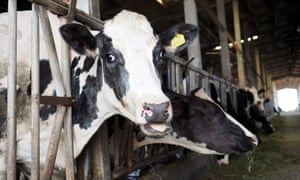
Our collective minds are stuck on this idea that talking about food’s environmental impact risks taking something very intimate away from us. In fact it’s just the opposite. Reconsidering how we eat offers us hope, and empowers us with choice over what our future planet will look like. And we can ask our local leaders – from city mayors to school district boards to hospital management – to help, by widening our food options.
On Monday and Tuesday, the city of Chicago is hosting a summit for the Global Covenant of Mayors for Climate and Energy to discuss climate solutions cities can undertake. Strategies to address and lower food’s impact should be front and center.
Animal agriculture is choking the Earth, and the longer we turn a blind eye, the more we limit our ability to nourish ourselves, protect waterways and habitats, and pursue other uses of our precious natural resources. Raising livestock for meat, eggs and milk generates 14.5% of global greenhouse gas emissions, the second highest source of emissions and greater than all transportation combined. It also uses about 70% of agricultural land, and is one of the leading causes of deforestation, biodiversity loss, and water pollution.
On top of this, eating too much meat and dairy is making us sick, greatlyincreasing our risk of heart disease, type 2 diabetes, several major cancers (including breast, liver and prostate) and obesity. Diets optimal for human health vary, according to David Katz, of the Yale University Prevention Research Center, “but all of them are made up mostly of whole, wholesome plant foods”.
So what gives? Why can’t we see the forest for the bacon? The truth can be hard to swallow: that we simply need less meat and dairy and more plant-based options in our food system if we’re to reach our climate goals.

This can start with individual action. Five years ago, our family felt hopeless about climate change, and helpless to make meaningful change. But when we connected the dots on animal agriculture’s impact on the environment, coupled with the truth about nutrition, we took heart because it gave us something we could actually do.
To create change at the scale needed, this will take more than individual choice – we need to get climate leaders on board about the impact of food. Cities and counties have used their buying power to transition fleets from diesel to electric, and we need to do the same with how we purchase food. We have done this in our own community, moving the lunch program of Muse School, in Calabasas, California, and the Avatar movie set to plant-based menus. Scaling up initiatives like these can make a big difference: if the US reduced meat consumption by 50%, it’s the equivalent of taking 26 million cars off the road. We think that’s damn hopeful.
Decision-makers on all levels can make it easier for us to eat better, by expanding access to food options that are good for our health, affordable, and climate-friendly. Nationwide, cities and school districts have adopted food purchasing policies that include environment, health and fair labor standards. The city of Chicago is a recent adopter of this Good Food Purchasing Program, and so the solutions-focus of the summit is the perfect place to discuss how food can move us toward climate goals. In the same breath that we discuss fossil fuels, we should be talking animal ag, or we’re missing a big part of the problem – and a big part of the solution.
Yes, food is inherently personal. It’s the cornerstone of holidays, it fuels high school athletes and long workdays, and it nourishes nursing mothers and growing children. And yes, Americans love meat and cheese. But more than that, we love our majestic national parks, family beach vacations and clean air and water for our children and grandchildren.
As individuals, we can make choices on how to better nourish our families, and as citizens, we can encourage local leaders to make choices that will allow us to enjoy our land and natural resources now and in the future.
• James Cameron is a film-maker and deep-sea explorer. Suzy Amis Cameron is a founder of Muse School and Plant Power Task Force.
.
UK could cut food emissions by 17% by sticking to a healthy diet
04.12.2017 | 8:00pm
The UK could shed close to a fifth of its greenhouse gas emissions from food production if every Briton stuck to a healthy diet based on government guidelines, a new study concludes.
The authors find that, in the UK, a switch from the “average diet”, which is rich in meat and dairy, to a nationally recommended diet, which includes more fruit, vegetables and nuts, could cause food-related emissions to fall by up to 17%.
And if other wealthy countries, including the US, Canada and Australia, swapped their current eating habits for a state-endorsed diet, their emissions could decline by between 13 and 25%.
The new research “provides a valuable indication that we and the planet could be healthier together,” a scientist tells Carbon Brief.
Food production contributes to climate change in a number of ways. Farm machinery and transport cause CO2 to be released, crop fertilisers emit nitrous oxide and methaneis released by livestock and rice paddy fields. Agriculture also contributes to warming indirectly through deforestation.
In total, the production of food accounts for around 20% of the UK’s total greenhouse gas emissions, according to a 2014 study. Across the world, agriculture accounts for close to 30% of all emissions.
Researchers have suggested a number of ways in which countries can lower their emissions from agriculture. These include eating less meat and dairy, choosing more environmentally friendly crops and cow fodder, and reducing food waste.
However, new research, published in the Proceedings of the National Academy of Sciences, explores an alternative option. The study investigates how a switch from our current eating habits to a healthy diet based on government recommendations could help to lower our emissions.
Most countries offer their citizens a “nationally-recommended diet”. In the UK, Public Health England, Public Health Wales, the Scottish Public Health Network and Northern Ireland’s Public Health Agency are responsible for providing healthy eating guidelines.
Public Health England’s Eatwell Guide suggests that the average person should “eat less often and in smaller amounts”, with the goal of sticking to 2,000 calories a day for women and 2,500 calories a day for men. The guide also suggests we should eat less red and processed meat and consider choosing low–fat alternatives to dairy.
These guidelines are aimed at helping us eat healthily rather than lowering our environmental footprints, says the study’s lead author Professor Paul Behrens, a researcher in energy and environmental change at Leiden University in the Netherlands. He tells Carbon Brief:
“Although dietary choices drive both health and environmental outcomes, these diets make almost no reference to environmental impacts. We find that following a nationally recommended diet in high-income nations results in a reduction in greenhouse gases.”
For the study, the researchers first gathered information on the average diet of 37 countries from the Food and Agricultural Organisation of the United Nations (FAO). They then collected healthy eating guidelines from the national organisations tasked with providing dietary advice in each country.
To calculate the environmental impact of both the average and state-recommended diets, they collected data on emissions, “eutrophication” and land use from a “supply and use” database called EXIOBASE. Eutrophication is the buildup of nutrients in lakes and rivers as a result of fertiliser run-off.
The total greenhouse gas emissions (top), eutrophication levels (middle) and land occupied (bottom) as a result of different types of food production of each country studied is shown on the graph below.
Countries are organised from low-middle income (left) to high-income (right), while colour is used to identify different foods, including meat (red), fish (blue), dairy (green), grains (purple), vegetables, fruits and nuts (VFN; orange) and other types of food (yellow).
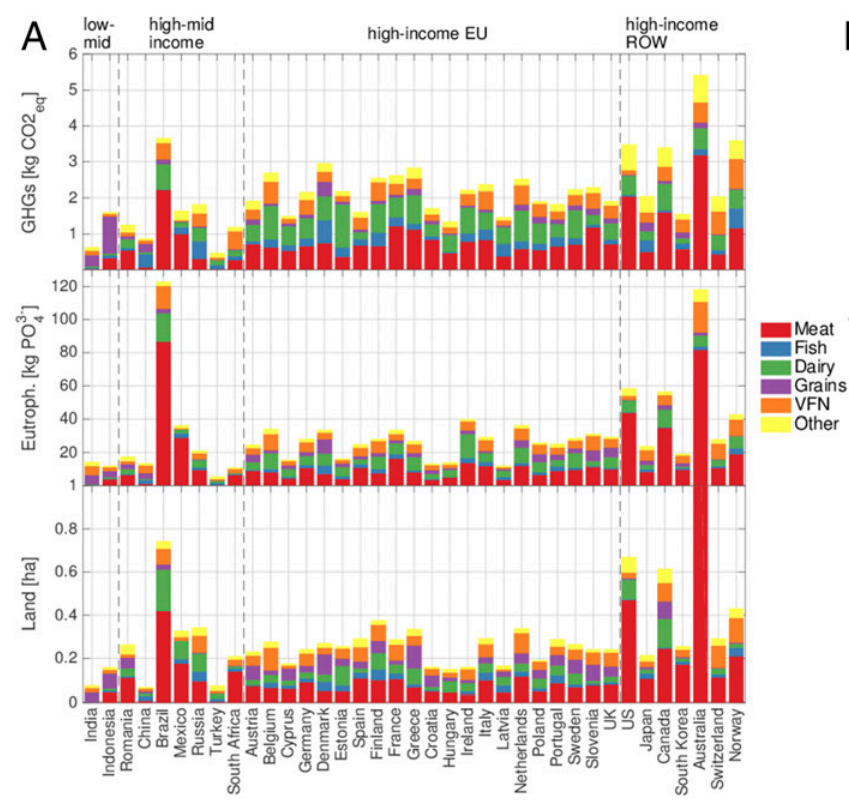
Total greenhouse gas emissions (top), eutrophication levels (middle) and land occupied (bottom) as a result of different types of food production in 38 countries. Countries are organised from low-middle income (left) to high-income (right), while colour is used to identify different foods, including meat (red), fish (blue), dairy (green), grains (purple), vegetables, fruits and nuts (VFN; orange) and other types of food (yellow). Source: Behrens et al. (2017)
The analysis shows how the emissions derived from average diets increase with income, with animal products accounting for an average 70% of emissions in high-income countries, such as the UK and the US.
Brazil and Australia are notable exceptions to this finding. This is likely due to both the amount of meat in the diet and a national taste for grass-fed beef in both countries, which has significantly higher methane emissions than grain-fed beef, Behrens explains.
To work out the environmental impact of switching to a healthy diet, the researchers subtracted state-recommended diet data from the average diet data for each country.
The results are shown on the chart below, which shows the net change (black dot) in emissions (top), eutrophication levels (middle) and land use (bottom) when this subtraction is applied. Bars above the dotted line indicate a rise in emissions while bars below the line show a drop in emissions.
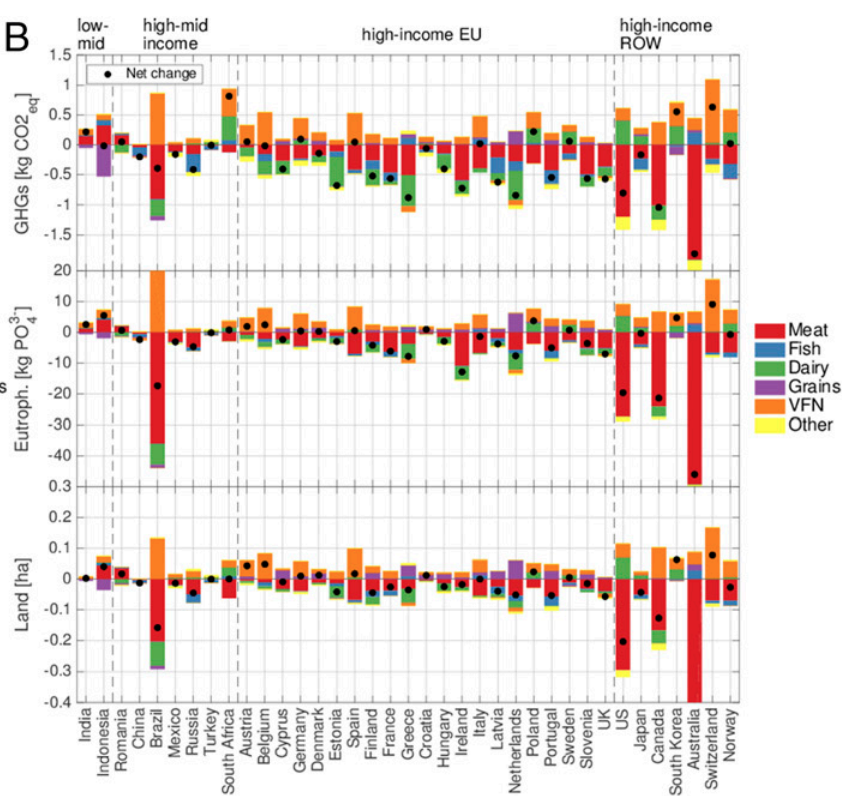
Net change (black dot) in greenhouse gas emissions (top), eutrophication levels (middle) and land occupied (bottom) as a result of a change from an average diet to a nationally–recommended diet in 38 countries. Countries are organised from low-middle income (left) to high-income (right), while colour is used to identify different foods, including meat (red), fish (blue), dairy (green), grains (purple), vegetables, fruits and nuts (VFN; orange) and other types of food (yellow). Source: Behrens et al. (2017)
The chart illustrates how, in most countries, a switch to a state-recommended diet could cause a large reduction in emissions from meat (red) and dairy (green), and a smaller increase in emissions from fruit, vegetables and nuts (orange).
Emissions from a UK government-recommended diet are estimated to be 29% lower than emissions from the UK average diet. However, when the impact of food waste is considered in the analysis, this figure falls to 17%, Behrens explains:
“Food waste is over a third once you take into account production, processing and domestic food wastes. If you include all the emissions from food production, then the difference in the diets becomes smaller because you are still wasting a lot of food.”
In other high-income countries, including the US, Canada and Japan, a switch to a nationally-recommended diet could cause emissions to fall by between 13% and 25%, the analysis finds.
And in high-middle income countries, including China, Brazil and Mexico, a swap to a state-recommended diet could cause a drop in emissions of between 9% and 21%.
However, in India and Indonesia, a switch to a nationally endorsed eating plan could cause a small rise in overall emissions from food production. This is because, in both of these countries, authorities recommend including more meat in the diet. These recommendations have likely been made in response to relatively high levels of malnutrition in some communities in these countries, Behrens says.
Despite the findings, it is clear that the average Briton is still far from sticking to the government’s recommended diet. In 2015, only 26% of adults ate the recommended five portions of fruit and vegetables a day, according to government statistics (pdf).
However, “we are starting to see change happening in the right places,” says Behrens, pointing to a rise in popularity of vegetarian and vegan diets. Around 2% of the UK’s population consider themselves to be vegetarian, according to a government survey. Behrens says:
“Major obstacles will be related to similar issues with any social and cultural change, and that is the inertia of existing habits. Some social issues can change very very quickly once the right conditions are in place. These sorts of diets are increasing steadily in the population, but usually these social changes reach a tipping point, when change happens relatively quickly, for example, the legalisation of gay marriage surprised many with its speed.”
The research shows that “simply eating what governments say we should for our health would reduce the food system’s impact on climate change,” says Tim Benton, a professor in population ecology at food security at the University of Leeds, who was not involved in the study. He tells Carbon Brief:
“Of course, much about the food system would have to change were the world to adopt sustainable, healthy, eating patterns: the crops grown, the way they are grown, and the subsidies and economics, as well as the retail environment. Nonetheless, this paper provides a valuable indication that we, and the planet, could be healthier together.”
LORRAINE CHOW OF ECOWATCH ON BUZZFLASH AT TRUTHOUT
 (Photo: Judd McCullum / Flickr)As someone who writes about the environment on a near-daily basis, the fact that a large chunk of Americans (about one in eight) reject the near scientific consensus of climate change can be a tough pill to swallow.
But after a year of record-breaking heatwaves, massive wildfires in the west, and a string of destructive hurricanes, it appears that my fellow U.S. citizens are waking up to the realities of our hot, new world, according to the latest nationally representative survey from the Yale Program on Climate Change Communication and the George Mason University Center for Climate Change Communication.
The poll, which has tracked Americans’ attitudes about climate since 2008, revealed an uptick in Americans’ concern about climate change, including “substantial increases” in the certainty that the global phenomenon is happening and currently harming people in the U.S.
The survey, based on the replies of 1,304 adults between Oct. 20 to Nov. 1, showed that seven in ten participants think climate change is happening—an increase of eight percentage points since March 2015. The good news is that those who think global warming is real outnumber climate deniers by more than 5 to 1.
One of the most significant findings is that roughly one in five (22 percent) Americans are “very worried” about climate change—the highest levels since the surveys began, or about twice the number that said they were “very worried” from the March 2015 poll.
Four out of ten Americans also said that they have personally experienced the effects of global warming, and the issue is also personally important for two out of three Americans.
“That’s probably because they perceive direct climate impacts,” as environmental scientist Dana Nuccitelli pointed out in the Guardian, citing how 64 percent of survey participants said that global warming is affecting the weather.
“Americans also connecting the dots to specific extreme weather events,” he pointed out.
Indeed, scientists have noted that extreme weather can be made all the more frequent and destructive due to climate change.
Here are the key findings from the survey:
• Seven in ten Americans (71 percent) think global warming is happening, an increase of eight percentage points since March 2015. Only about one in eight Americans (13 percent) think global warming is not happening. Americans who think global warming is happening outnumber those who think it is not by more than five to one.
• Americans are also becoming certain global warming is happening—47 percent are “extremely” or “very” sure it is happening, an increase of 10 percentage points since March 2015. By contrast, far fewer—seven percent—are “extremely” or “very sure” global warming is not happening.
• Over half of Americans (54 percent) understand that global warming is mostly human-caused. By contrast, one in three (33 percent) say it is due mostly to natural changes in the environment.
• Only about one in seven Americans (15 percent) understand that nearly all climate scientists (more than 90 percent) are convinced that human-caused global warming is happening.
• More than six in ten Americans (63 percent) say they are at least “somewhat worried” about global warming. About one in five (22 percent) are “very worried” about it—the highest levels since our surveys began, and twice the proportion that were “very worried” in March 2015.
• Two in three Americans feel “interested” in global warming (67 percent), and more than half feel “disgusted” (55 percent) or “helpless” (52 percent). Fewer than half feel “hopeful” (44 percent).
• Nearly two in three Americans (64 percent) think global warming is affecting weather in the U.S., and one in three think weather is being affected “a lot” (33 percent), an increase of eight percentage points since May 2017.
• A majority of Americans think global warming made several extreme events in 2017 worse, including the heat waves in California (55 percent) and Arizona (51 percent), hurricanes Harvey, Irma, and Maria (54 percent), and wildfires in the western U.S. (52 percent).
• More than three in four Americans (78 percent) are interested in learning about how global warming is or is not affecting extreme weather events.
• More than four in ten Americans (44 percent) say they have personally experienced the effects of global warming, an increase of 13 percentage points since March 2015.
• Four in ten Americans (42 percent) think people in the U.S. are being harmed by global warming “right now.” The proportion that believes people are being harmed “right now” has increased by 10 percentage points since March 2015.
• Half of Americans think they (50 percent) or their family (54 percent) will be harmed by global warming. Even more think global warming will harm people in the U.S. (67 percent), the world’s poor or people in developing countries (both 71 percent), future generations of people (75 percent) or plant and animal species (75 percent).
• Most Americans think global warming will have future impacts, causing more melting glaciers (67 percent), severe heat waves (64 percent), droughts and water shortages (63 percent), floods (61 percent), and other impacts over the next 20 years.
• Two in three Americans (67 percent) say the issue of global warming is either “extremely” (12 percent), “very” (19 percent), or “somewhat” (37 percent) important to them personally, while one in three (33 percent) say it is either “not too” (19 percent) or “not at all” (14 percent) important personally. The proportion that say it is personally important has increased by 11 percentage points since March 2015.
• Nearly four in ten Americans (38 percent) say they discuss global warming with family and friends “often” or “occasionally,” an increase of 12 percentage points since March 2015. However, more say they “rarely” or “never” discuss it (62 percent). Additionally, half of Americans (51 percent) say they hear about global warming in the media at least once a month, and one in four (25 percent) say they hear people they know talk about global warming at least once a month.
• More than half of Americans (54 percent) say they have thought “a lot” (22 percent) or “some” (32 percent) about global warming. Fewer say they have thought about global warming just “a little” (32 percent) or “not at all” (14 percent).
• Few Americans are confident that humans will reduce global warming. Nearly half (48 percent) say humans could reduce global warming, but it’s unclear at this point whether we will do what is necessary, and one in four (25 percent) say we won’t reduce global warming because people are unwilling to change their behavior. Only five percent say humans can and will successfully reduce global warming.
• Large majorities of Americans think of global warming as an environmental (78 percent), scientific (71 percent), agricultural (66 percent), severe weather (65 percent), health (62 percent), economic (60 percent), or political issue (60 percent). Fewer think it is a moral (41 percent), national security (29 percent), poverty (28 percent), social justice (26 percent), or religious issue (nine percent).
CORVALLIS, ORE. — In November of 1992, more than 1,500 scientists put their signatures on an extraordinary document titled “World Scientists’ Warning to Humanity,” imploring global leaders to save the planet from environmental disaster.
Now, 25 years later, more than 15,000 scientists have signed an updated version of that historic plea, saying “time is running out.”
“World Scientists’ Warning to Humanity: A Second Notice,” published Monday in the international journal BioScience, charts the progress — or lack thereof — on the issues highlighted in the original document and renews the call for urgent action.
Lead author William J. Ripple, a distinguished professor of ecology at Oregon State University, said he was astounded by the level of support he and his seven co-authors received for their manuscript.
“I initially sent it out to 40 of my colleagues,” he recalled. “After 24 hours there were 600 scientists who signed it. Within two days, there were 1,200. . There were so many people signing that our website crashed a couple of times.”
By the time the paper was ready for publication, the authors had received the endorsement of 15,364 fellow scientists from 184 countries.
The original “Warning,” published by the Union of Concerned Scientists, was a sort of environmental distress signal that began with this chilling statement: “Human beings and the natural world are on a collision course.”
It went on to lay out a number of alarming trends, including a growing hole in the atmospheric ozone layer, depletion and pollution of freshwater resources, overfishing in the ocean, widespread deforestation, crashing wildlife populations, increasing greenhouse gas emissions, rising global temperatures and soaring human population levels.
“A great change in our stewardship of the earth and the life on it is required,” the authors declared, “if vast human misery is to be avoided and our global home on this planet is not to be irretrievably mutilated.”
As the manifesto’s 25th anniversary approached, Ripple and his co-authors examined the available data to determine whether any progress had been made on key global environmental issues since 1992. By most measures, they concluded, humanity gets a failing grade.
“Especially troubling is the current trajectory of potentially catastrophic climate change” from burning fossil fuels and other human-caused factors, the article states. It also calls attention to a drastic loss of biodiversity that the authors call a “mass extinction event.”
Charts included with the paper chronicle a number of other disturbing developments over the past quarter-century, including a 28.9 percent reduction in the abundance of all vertebrate wildlife, a 62.1 percent increase in carbon dioxide emissions, a 167.6 percent increase in global average temperatures and a 35.5 percent rise in the global population — an increase of 2 billion people.
On the plus side, the researchers note a number of positive trends.
Perhaps the biggest environmental success story of the past 25 years has been the significant recovery of the ozone layer since the 1987 Montreal Protocol sharply curtailed the use of damaging chlorofluorocarbons, or CFCs, in aerosol sprays and other applications.
Other encouraging signs include reductions in extreme poverty and hunger, a slowdown in deforestation in some parts of the world, the rapid growth of the renewable energy sector and a sharp drop in birth rates in certain regions as women and girls obtain greater access to education.
Nevertheless, the authors conclude, urgent measures are required to avert disaster. They call on the scientific community, the media and ordinary citizens to pressure their governments to “take immediate action as a moral imperative to current and future generations of human and other life.”
They also call for change at the individual level, asking people to voluntarily have fewer children and consume fewer resources, from fossil fuels to meat.
“Humanity is now being given a second notice, as illustrated by these alarming trends,” the scientists warn. “We are jeopardizing our future by not reining in our intense but geographically and demographically uneven material consumption and by not perceiving continued rapid population growth as a primary driver behind many ecological and even societal threats.”
While it’s unusual for academics to speak out so strongly, Ripple said he and his colleagues couldn’t stand idly by while cascading global environmental crises continued to worsen.
“I’m feeling more concerned all the time. I wanted to write this because I think it’s important for scientists to reach out and show some leadership on global issues,” he said.
“If we don’t take an active part, who will? Should we just rely on the politicians to do it?”
 A dirt berm is maintained along the coast of Utqiaġvik, the northernmost city in Alaska, in an effort to slow seawater intrusion from increasingly severe Arctic storms. (Photo: Dahr Jamail)
As the summer Arctic sea ice melts and continues to recede further, the fragile coastline resting atop thawing permafrost is made more vulnerable to the warming waters of the Arctic Ocean, and the waves are given room to grow larger by the vanishing ice.
This past August, every time I walked to the shore in Utqiaġvik, the northernmost point in the US and only 1,300 miles from the North Pole, a large bulldozer was busy maintaining a large dirt barrier that perilously separated the northern edges of the village against the steadily encroaching, increasingly turbulent seas. It is a full-time job, because, as I would soon learn from the president of the Ukpeaġvik Iñupiat Corporation that owns and runs a large portion of the village, the berm requires rebuilding from storms past, ongoing maintenance, and then building back up in preparation for coming storms.
One evening I walked to the coast as large sets of waves, sent from a windstorm out at sea, rolled onto and up the beach. Many of them were large enough to crash against the flanks of the 25-foot berm. As they did, the water jetted up into the air, colored dark brown from the fresh soil that had just been dumped onto the berm. As the waves pulled back into the ocean, they carried with them large clumps of fresh dirt that rolled down the beach into the shallow waters of the Chuchki Sea.
To see more stories like this, visit “Planet or Profit?”
Only rows of the very top portions of older canvas bags filled with soil remained atop portions of the beach, remnants of previous attempts to stop the sea’s relentless march towards the village. Soil from the newest iteration, the large berm, actively covered and rendered impotent the old barrier. In another place on the beach were the top corners of large metal tanks, rusting as they lay side by side in a row, protruding above the sand … for now.
Where I stood, the sea was already washing directly against the manmade barrier. The first row of houses in the village was barely 15 meters from the back of the berm. Not far behind them stood government buildings, the police station, tribal offices. One hundred meters south of me along the coast, larger homes stood atop a bluff that was about five meters tall. A dirt road separated the homes from the edge of the bluff. Waves were already splashing against the bottom of the bluff, as they rolled over the tops of mostly buried sandbags.
The motor of the front-loader rumbled as it scooped up shovelfuls of dark soil from a large pile that had been carried from a gravel pit a half a kilometer inland. Black exhaust smoke billowed from the top of the front-loader as it quickly carried another load of soil to the berm where it slowed and allowed its blade to tip down. Out tumbled another load of future seabed. Underneath it, unseen, methane was already bubbling up to further heat the atmosphere and render these efforts laughable.
More: http://www.truth-out.org/news/item/42413-scientists-warn-of-ecological-armageddon-amid-waves-of-heat-and-climate-refugees
Increased Methane Levels?: Cows Are to Blame, Says New Study
Who is to blame for increased methane levels in the earth’s atmosphere: humans, or cows? For years, the question was posed tongue in cheek by skeptics of human-caused global warming. Methane is a hydrocarbon, which, at room temperature and normal pressure, appears as a colorless, odorless gas. It is also the main component of natural gas. In recent years, atmospheric methane levels have become a concern for environmentalists, who note that global methane levels have increased from roughly 1750 parts per billion in the early 2000s to 1830 parts per billion today. A new study claims to have found the source of the missing methane emissions: cows.
“Our results suggest that livestock methane emissions, while not the dominant overall source of global methane emissions, may be a major contributor to the observed annual emissions increases over the 2000s to 2010s,” conclude researchers in a new study published by Carbon Balance and Management, an academic journal.
The new study reevaluates estimates of the methane emissions produced by livestock in the U.S., finding that previous studies had underestimated these emissions by as much as 11 percent. Even more curiously, the researchers found that the largest increases in livestock methane emissions were in the northern tropics. The results of the study have the potential to impact how environmentalists and policy-makers treat agriculture when dealing with the problem of greenhouse gases.
The study used data from the U.S. EPA when considering the impacts of livestock raised around the world. As a result, it is one of the most comprehensive studies of the impact of livestock on global warming done to date.
The study showed that livestock played a large role in the increased methane levels observed recently. Cattle and other ruminants that break down food in the first of four stomachs, naturally produce methane as a product of digestion. While this has long been understood as a fact of biology, its impact on the environment has not been so fully studied. Increased consumption of meat in China and other parts of the world has increased the impact of methane emissions from livestock.
Using data from 2006 Intergovernmental Panel on Climate Change report, the researchers found that the report failed to account for changes in livestock breeding and management. In recent years, cattle have been bred to be larger and also, manure has been stored in open pits, which release methane into the air as they decay. Accounting for these two changes, global estimated emissions from livestock digestion went up 8.4 percent, while estimates for manure management went up 36.7 percent.
Methane has been a focus for environmentalists in recent years, after studies showed that atmospheric levels were increasing. Methane is released both by cows themselves and also by fermenting piles of manure, which release the gas as part of their natural decay process. Although the gas is naturally occurring, environmentalists are concerned about methane levels, believing the gas to be 25 times more potent as a warmer than carbon dioxide.
The study has the potential to significantly alter major industries in the U.S. For oil companies, methane is serious business. The gas is often found alongside deposits of oil. In many areas, these pockets of natural gas had been deemed not economically feasible to extract. As a result, for years, many companies had vented, or released, this methane into the atmosphere at drill sites. Since it remained unregulated, and therefore, unmeasured, the full impact of this practice was never realized.
The Obama administration attempted to clamp down on the practice through a rule that would curb the “wasteful release of natural gas” from wells operating on public and Native American lands. The oil industry complained about the decision, saying that it would increase production prices. After the inauguration, the Trump administration has since tried to repeal this rule but encountered resistance from Congress.

 Exposing the Big Game