Exposing the Big Game

Forget Hunters' Feeble Rationalizations and Trust Your Gut Feelings: Making Sport of Killing Is Not Healthy Human Behavior

Exposing the Big Game

Demand Climate Action

From NRDC.org:

As we all reel from the terrorist attacks in Paris, our hearts go out to the victims of this unspeakable violence.

These attacks happened just weeks before hundreds of world leaders gather in Paris for the UN Climate Summit — or COP21.

The UN has announced that the climate summit will continue. World leaders, including President Obama, still plan on attending to lay out their plans for confronting the growing dangers of climate change.

Climate change is a threat to our common destiny — a threat to the global good. With so much at stake, it’s vital that the world works together now to solve the climate crisis.

So please sign the petition to Demand Climate Action from world leaders meeting at COP21 in Paris.

Already, over 150 countries are coming with commitments to act for a clean energy future.

These nations are working together to ensure we keep the planet from heating by another two degrees Celsius. That rise in temperature would be enough to turn our agricultural heartlands into deserts… increase the frequency of extreme droughts and torrential floods… and impact everything from what we eat to where we live.

In short, two degrees changes everything about how we live on this planet.

But when the margin between success and failure is so slim, it also means that one person can make a difference.

So if you’re ready to Demand Climate Action, add your voice here.

When we work together, amazing things happen. Last year, NRDC supporters helped send a record 8 million letters supporting the U.S.’s first-ever limits on climate-wrecking carbon pollution from power plants. Now, President Obama is taking the Clean Power Plan to Paris as the cornerstone of our climate action blueprint.

The progress you’ve helped us achieve puts us on the verge of doing something big and lasting — and now your voice can make a difference globally.

Sign the petition to Demand Climate Action — and we’ll deliver your name and the names of millions of other signers to world leaders in Paris.

Climate change: a survivors’ guide

http://www.theguardian.com/environment/2013/oct/13/climate-change-survivors-guide-global

As warnings of global climate change grow ever more dire, John Vidal offers 10 tips on how to prepare for an apocalyptic future
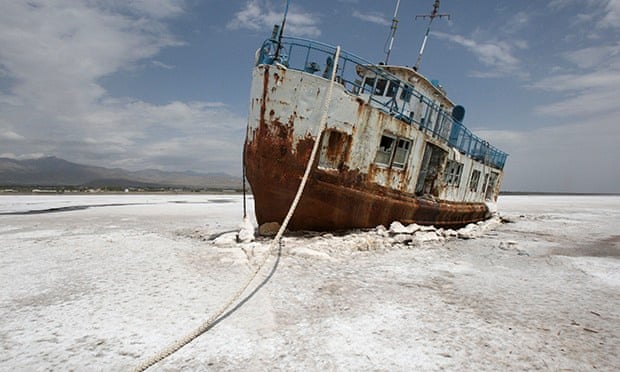
ship stuck on salt flats
Without a paddle … in the parched future, it may be wise to move to somewhere with a good water supply. Photograph: Vahid Salemi/AP

1 Stay cool, dry

Britain is expected to get more extremes of heat and rainfall, so prepare for more severe floods, longer droughts and more powerful storms. No one knows quite what the effect over time will be of a slowing Gulf stream, or the melting of arctic sea ice, but climate scientists confidently expect temperatures to rise up to 4C by 2100. That could mean big shifts in rainfall patterns and a more unpredictable climate. So clear your drains, fix your roof and move to Wales – or at least to somewhere with good water supply. The worst that could happen? Your grandchildren will inherit inexorably rising temperatures that render much of the Earth uninhabitable. Their problem? Yes, but yours, too.

2 Move

Sea levels are rising gradually and by the end of the century could be nearly 2ft higher than they are today. So don’t pass on that beach hut to your children, and expect to lose acres if you live near the coast in East Anglia and other low lying areas. You won’t have to head for the hills for many years, but prepare to view the seaside from behind higher walls and from the dykes that will be needed to protect many coastal towns. By 2100 the map of Britain will be smaller and many cities are likely to be besieged by climate “refugees” arriving from low-lying areas such as Norfolk.

3 Adapt

Climate change is going to be very, very expensive, and the poor, the old and the vulnerable will be the most affected because they are least likely to have the money to move house or adapt. Economists such as Lord Stern and Jim Yong Kim, the new president of the World Bank, expect a 4C temperature rise to result in global economic meltdown – unless countries rapidly shift their economies towards less energy-intensive industries. Stern predicts that warming will knock at least 5% off GDP per year and Kim expects food shortages and conflicts over natural resources and water. Abnormal events such as Hurricane Sandy, which cost $65bn (£40bn) and the 2011-12 US drought, which cost $35bn (£21bn) may be just foretasters of the price to be paid. On the other hand, there’s serious money to be made adapting cities and industries to climate change and reducing emissions.

4 Grow your own

More heat and a longer growing season should make it easier to grow some crops in northern countries such as Britain, Russia and Canada, and more carbon dioxide in the atmosphere theoretically should increase plant growth. But don’t expect climate change to feed the world. You are likely to have to change diets because bigger droughts, flash floods, heatwaves and storms may devastate harvests and reduce the amount of foods available. Countries such as Britain, which depend heavily on food grown abroad, may be able to grow fruit that farmers only ever dreamed about, but there will be less land on which to grow and imported grub will be much more expensive because other climate-affected countries will keep their smaller harvests for themselves. If coral reefs vanish there will be fewer fish in the sea and if the oceans continue to soak up CO2 they will become more acidic. That would be very, very bad, but the scientists say this won’t impact heavily in the next few lifetimes.

5 Take a shower

Don’t take fresh water for granted. Longer droughts are likely to dry up large parts of southern and eastern England, and underground water suplies will be more stressed. We’ve always muddled through heatwaves and droughts, but as temperatures climb, a run of dry winters becomes more and more likely. So prepare for droughts not just once a decade but perhaps every other year. Get used to yellow lawns, taking showers with chums and watering your garden with waste water.

6 Be charitable

Humanitarian groups such as Oxfam expect many more food shortages and natural disasters in countries where even a small shift in the rainfall pattern or increase in temperature is enough to reduce harvests and leave millions more hungry. Worst-case scenarios? A shift in the Asian monsoons is expected to reduce the amount of water in rivers coming off the Himalayas, and because this is needed for nearly a third of the world’s population, there could be disastrous food shortages. Further drying out of the Sahel and African rangelands will force millions of people to move.

7 Get a spanner

Things are going to go wrong much more often, so expect mini-disasters. Cars, trains, roads, and buildings, flood barriers, drains, underground systems, reservoirs, power stations, ports and all are designed for existing temperatures, sea levels and rainfall, and may be overwhelmed in future. Railway lines will buckle more easily, nuclear power stations will get flooded more easily, building cooling systems will be inadequate, flat roofs will leak more and concrete structures will be like ovens. Designers will have to rethink the way things are made.

8 Watch your health

Warmer winters mean fewer deaths among the old, but far more heart and respiratory diseases in the hot summer nights. Even worse, the warmer, wetter conditions will encourage the fungal, algal, tick-and-mosquito-borne diseases we usually only see in the tropics: Dengue fever was detected in France and Croatia in 2010; West Nile virus and Rift valley fever have become common in the US; and a 4C increase in Britain probably means malaria-carrying mosquitoes, and ticks infected with Lyme disease. Equally possibly, the already crumbling system of urban drains is likely to be overwhelmed by extreme weather events, which will discharge pathogens into heavily used rivers and seas, possibly heralding the return of diseases such as typhus.

9 Don’t get angry

Life in many of the world’s cities is already nearly unbearable in some months. The scorching urban nights expected with climate change will be a recipe for social disorder, ill–health and mass grumpiness. If there are water and power cuts, as expected, then get ready for migrations out of urban areas to cooler countryside. Best advice? Stay out of town.

10 Prepare for the big burn

A 4C temperature rise doesn’t sound much, but it is quite enough to kill off trees, wildlife, garden plants, insects, and river life. On the positive side, we may get faster-growing rainforests and enhanced plant growth, but many animals will not be able to adapt to higher temperatures. Don’t expect to grow the same plants in your garden, or see the same trees in the parks. Change will be gradual, but profound.

Oil Lobbyist: We Built the Equivalent of 10 Keystones Since 2010 and “No One’s Complained”


Here’s why the oil industry is not so concerned about the defeat of KXL.

Today President Barack Obama announced his decision, alongside Secretary of State John Kerry and the U.S. State Department, to nix the northern leg of TransCanada’s Keystone XL tar sands pipeline.

The announcement was the culmination of a years-long nationwide grassroots and environmental group fight against the pipeline project which was set to carry hundreds of thousands of barrels of Alberta’s carbon-intensive crude across several heartland states and into Cushing, Oklahoma.

While the Obama White House Keystone XL decision has been celebrated by most environmentalists and criticized by Big Oil and its front groups, the truth is much more complex and indeed, dirty.

That’s because for years behind the scenes – as most media attention and activist energy has gone into fighting Keystone XL North – the Obama Administration has quietly been approving hundreds of miles-long pieces of pipeline owned by industry goliath Enbridge and other companies.

“Keystone XL Clone”

I’ve called one of these patchwork networks of pipelines the “Keystone XL Clone” in my reporting.

That pipeline system does the very same thing the rest of TransCanada’s Keystone Pipeline System at-large also already does, even without the Keystone XL North piece in place. That is, it brings Alberta’s tar sands oil across the heartland of the U.S. and down to the U.S. Gulf coast.

Enbridge’s system is the combination of the following pipelines: Line 3, Line 67/Alberta Clipper, Line 61, Flanagan South and the Seaway Twin.

This probably explains why Enbridge was so confident that it announced it would be spending $5 billion to build holding facilities down in the Gulf just two days before the White House’s Keystone XL decision.

“Enbridge’s Gulf Coast plan calls for three terminals stretching from Houston toward New Orleans at St. James Parish,” explained The Wall Street Journal. “Each could have crude storage tanks, ship docks, pipelines and other infrastructure to allow for both the import and export of U.S. and Canadian crude as well as processed condensate and refined products.”

TransCanada, for what it’s worth, also will have a new tar sands pipeline in place soon too that’s been lost in the celebratory shuffle. As the company announced in its investor call this week, the Houston Lateral pipeline that connects to the southern leg of Keystone XL will open for business during the second quarter of 2016.

“Today’s victory comes at a huge cost. Here in Texas and Oklahoma, we lost on KXL,” activist group Tar Sands Blockade stated over Facebook. “For almost two years now KXL has been pumping roughly 400,000 barrels per day of tar sands direct from Alberta to the Gulf Coast, bringing toxic emissions and daily insecurity to countless families across our region. Today is not a step forward, its more like slowing the rate of moving backwards.”

More: http://usuncut.com/news/we-built-the-equivalent-of-10-keystones-since-2010/

Another unusually warm winter forecast for Alaska

Yereth RosenAlaska Dispatch News

This image shows the July 13-19, 2015, sea surface temperature departure from the 1981-2010 average. The warmer temperatures, indicated in red, are thought to be related to a strong El Nino event. NOAA

For those who loathed or loved last winter’s non-wintery Alaska weather, climate scientists have an important message: There is a good chance of a repeat this winter.

Forces at sea, in the atmosphere and on land, both short-term and long-term, are combining to create what might be a perfect storm of heat for Alaska. That means another much-warmer-than-normal winter is expected for Alaska and northwestern North America.

“You might not want to buy that 70-below parka,” said Rick Thoman, the National Weather Service’s Alaska climate science and services manager and one of the scientists focused on winter even in the warm days of Alaska’s summer.

All of Alaska is likely to be warmer than normal in the next three months, according to the National Oceanic and Atmospheric Administration’s Climate Prediction Center. Probabilities of unusual warmth edge up to 80 percent in the Gulf of Alaska coastal areas. The outlook extending into the next year also predicts warmer than normal temperatures for almost all of the state, with similar heat expected in the Pacific Northwest and the West Coast.

The warmth has multiple sources: persistently high sea surface temperatures, which are expected to linger; a shift into a positive and warm phase of the cyclical Pacific Decadal Oscillation; a powerful El Nino that is developing in the Pacific; and wavy jet-stream patterns that bring warm weather north and cold weather south.

All of that comes on top of long-term warming in Alaska and in the Arctic.

“That’s kind of in the background that everything’s projected onto. Every year, that background gets a little brighter, a little redder,” said Thoman, who prepared the Alaska section of the August/September/October forecast.

Such was the case with Alaska’s extreme winter of 2014-15, with average surface temperatures running above normal by 4 to 10 degrees Fahrenheit from December to February and, in Anchorage, a record-low snowfall.

More Denial, More Problems: UN Predicts Millions of Climate Refugees to Come

Monday, 02 November 2015 00:00
Written by 
Dahr Jamail By Dahr Jamail, Truthout | Report

Cars drive through flooded streets in Miami, Florida, in an undated photo. (Photo via Shutterstock)Cars drive through flooded streets in Miami, Florida. (Photo: Joseph Sohm / Shutterstock.com)

This year continues on pace to become, by far, the hottest year ever recorded. Thus, it is obvious why the dramatic impacts of anthropogenic climate disruption (ACD) are becoming increasingly prevalent and obvious.

A recent NASA report reveals that the ice covering Greenland is melting faster than previously thought. If all the ice in Greenland melts completely, it alone would raise the global sea level by 23 feet.

Global sea level increases due to ACD are already a key factor in why we are seeing so many instances of increased coastal flooding. The record flooding in South Carolina is an example of what scientists have been warning us about for quite some time: ACD is causing more moisture to become absorbed into the atmosphere as it warms, leading to record rainfalls, increasingly powerful storms and, hence, record flooding. What happened in South Carolina, which is now the sixth 1,000-year flooding event to happen in the United States since 2010, provides a clue about the nonlinear abrupt climate disruption the planet is now experiencing.

To see more stories like this, visit “Planet or Profit?”

In fact, a study recently published in the Proceedings of the National Academy of Sciences shows, stunningly, that 400 US cities are already going to be swamped by rising sea levels no matter what mitigation measures are taken to decrease carbon dioxide emissions. The study also showed that New York City could be unlivable for this reason in a matter of decades. (This tool can be used to help you determine the fate of your city, if you live anywhere near the coast.)

The Republican Party in the US is the only party that continues to deny the reality of climate disruption.

The UN recently released a report warning that we will likely see upward of 50 million climate refugees within the next decade. That is the equivalent of taking the entire populations of the 11 most populous US cities – New York City, Los Angeles, Chicago, Houston, Philadelphia, Phoenix, San Antonio, San Diego, Dallas, San Jose and Austin – and doubling them.

I’ve reported in previous dispatches on the massive craters on Russia’s Yamal Peninsula, which scientists have reported are caused by methane explosions from melting permafrost. A recent report warns that more craters are expected to form as the permafrost continues to melt, meaning that huge periodic bursts of methane into the atmosphere will both continue and increase. …

More: http://www.truth-out.org/news/item/33456-more-denial-more-problems-un-predicts-millions-of-climate-refugees-to-come

Drought pushes endangered California salmon to the brink

Justin Sullivan

Fingerling Chinook salmon are dumped into a holding pen as they are transfered from a truck into the Mare Island Strait on April 22, 2014 in Vallejo, California© Provided by AFP Fingerling Chinook salmon are dumped into a holding pen as they are transfered from a truck into the Mare Island Strait on April 22, 2014 in Vallejo, California Chinook salmon were already endangered in California’s Sacramento River, but the record drought parching the western United States has brought the iconic fish even closer to extinction.Chinook, also known as king salmon, need very cold water for their eggs to develop.

If everything goes right, the young salmon hatch and eventually make their way downstream toward the ocean, before later returning to the rivers to spawn and die.

But the migration has dropped off in recent years.

Suggested from Windows Store

StumbleUpon

Best of the web personalized to you

(10,179 Reviews)

StumbleUpon | Surprise Yourself. Escape the ordinary. StumbleUpon takes the boring ol’…

There were 4.4 million juvenile Chinook in 2009 — half the number of four years earlier.

Last year, the number of juveniles passing by the dam in Red Bluff, at the northern end of California’s Central Valley, was just 411,000.

Approximately 95 percent of these winter-run Chinook eggs and juveniles did not survive, according to the US National Oceanic and Atmospheric Administration (NOAA).

“Last year was very difficult for these Sacramento River fish because of the drought and heat,” NOAA spokesman Michael Milstein told AFP.

“This year we had hoped would be better.”

It wasn’t. Although there were more adult fish spawning this year, so far there have been 22 percent fewer juveniles coming downriver, Milstein said.

To date, only 217,000 juveniles have been counted passing through Red Bluff in 2015, versus 280,000 over the same period last year.

The Sacramento Chinook, designated an endangered species in 1994, have been struggling for years, for a number of reasons, but the drought has only exacerbated the problems.

Access to the historical spawning habitat of winter-run Chinook salmon on the Sacramento is cut off by the Shasta and Keswick dams, built in the 1940s.

– ‘Too warm for spawning’ –

Fingerling Chinook salmon swim in a holding pen after they were transfered from a truck into the Mare Island Strait on April 22, 2014 in Vallejo, California© Provided by AFP Fingerling Chinook salmon swim in a holding pen after they were transfered from a truck into the Mare Island Strait on April 22, 2014 in Vallejo, California The remaining habitat, below the dams, is too warm for spawning, so managers release dam water to bring down the temperature and allow the population to reproduce.

“But the drought has reduced the amount (of water) available, both for fish and for other uses,” explained Milstein.

He said rising air temperatures also raise the temperature of the water that remains.

The migration numbers are only preliminary, Milstein said, “but right now the news for these salmon is not good.”

The drought and its impacts are “the type of things we expect to see more often with global warming,” he said.  [Sorry, but this is global warming!]

Some species, like sturgeon in the same rivers, might be able to adapt to the type of temperature changes projected with global climate change, Milstein said.

But other aquatic species up and down the US west coast are facing a fate similar to Sacramento Chinook salmon.

Milstein said many sockeye salmon in Oregon and Washington also did not survive this year due to the warmer waters.

Linking catastrophic wildfires to climate change

Washington’s long summer of fire and smoke

https://www.hcn.org/articles/washingtons-long-summer-of-fire-and-smoke

On Spokane’s west side, the Houston Fire was growing fast. If a wind were to come up and whip flames across a field of weeds, the gate that keeps the world at bay at the entrance to Erika and Andrea Zaman’s lane would do no good. Just in time, Andrea blasted back from the airport, scooped up her sitter and the two kids. The sitter’s mom took them in while firefighters worked hard to turn the blaze away.

This past summer was tense. I live just four miles from what became known as the Houston Fire, and I speculated that its flames might gallop along our street, leaving me little to do but climb a ladder to the roof with a garden hose, wet down the house and hope for the best.

Back in 1902, a wildfire near Yacolt, Washington, ravaged 370 square miles. That fire reigned as the largest in state history until 2014, when the Carlton Complex Fire assailed Brewster and Pateros in the north-central part of the state. At 391 square miles, the Carlton out-burned the Yacolt Fire, destroying 353 homes and causing $100 million in damage.

This year, in yet another symptom of the impacts of climate change, the Okanogan Complex of fires surpassed them both by growing to 400 square miles. Some climate skeptics — the deniers — claim that warming and turmoil are natural. They are willing to finger anything else — oceanic oscillations, volcanic eruptions, even sunspots — as probable triggers. They cite anything outside of human-brewed pollution as a cause. Those who deny we are experiencing anthropogenic climate change want to damn all contradictory opinions, even the newest research from the National Oceanic and Atmospheric Administration.

Meanwhile, every year wildfires in the West start earlier, burn hotter, grow in acreage and last longer. Spent fuels heat the planet, drive regional droughts and cause vaster fires to destroy more trees. The causes are reciprocal. Pollution begets wildfires, which in turn beget more pollution. And yet, ironically, global forests are ideal carbon sinks for renegade carbon. I like to call them absorption organs. Instead of doing their job of “sinking” or absorbing CO2, though, our forests are turning rapidly into ash.

Climate disruption is a kind of ice age in reverse. As the planet warms and polar ice caps melt at hastening rates, weird weather increasingly becomes the norm.

The anthropogenic argument on climate change holds that petrochemicals generate planetary grief — that carbon pollution spreads misery beyond the rural-urban interface where wildfires do most damage. We mine oil and gas under the planet’s surface, we eradicate the cleansing vegetation that surrounds the mines, we refine crude to make ever more-flammable stuff in districts known as cancer alleys, we contaminate the environment in unsustainable ways when we combust that stuff. We are the “weather-makers,” the “future eaters,” in the fine phrases of writer and scientist Tim Flannery.

Aware Americans would like to curtail carbon generation in every way. They would put the brakes on the coal being transported by trains and burnt to make electricity, slow the highly combustible oil being pumped from Midwest fields, limit the homes popping up so far from urban cores and thereby necessitating long commutes, create incentives for carmakers to manufacture models that exceed miles-per-gallon averages in the low 20s.

For weeks on end this summer, assailed by wildfire smoke, we residents of the inland Northwest kept hoping for rain. When at last a summer shower arrived, raindrops atomized the dust and made every parched thing pungent. People fairly spun with bliss; it had been so long, they did not know what they’d been missing.

In the shadow of the Houston Fire, residents returned home the same day. They were luckier than many people have been these last two years. No houses or lives were lost. Andrea, Erika and their children breathed relief, thanked the brave firefighters, kept the windows closed and ran the AC.

A week later, I biked the road that had split the 60-acre burn site. The scent of ash and chemicals tainted the air. One barn had been leveled, another scorched. Bulldozers had punched roads through the forest to give the firefighters access, and barbed wire slumped where posts once held it. On both sides of rural Grove Road, blackened trees and grasslands spread as far as the eye could see, and on the asphalt and the pastures lay red stains from the fire repellant — battle scars from a battle we’ve yet to acknowledge we’re fighting.

Paul Lindholdt is a contributor to Writers on the Range, a column service of High Country News. He lives and bikes in Spokane, Washington, and is a professor of English at Eastern Washington University. His latest book is Explorations in Ecocriticism.

“No Phone, No Lights, No Motor Car; Not a Single Luxury”

Been there, done that—for about 20 years. Oh, I had a motor car, but for 5 or 6 months of winter, I couldn’t get all the way to the cabin with it. Of course, I didn’t mind cross country skiing for the last mile or two.

The verse, “No phone, no lights, no motor car” has been going through my head, ever since hurricane Patricia: https://exposingthebiggame.wordpress.com/2015/10/23/will-gilligan-and-other-distractions-save-us-from-the-reality-of-climate-change/

At first I thought the media was just trying to distract its readers with a link to Gilligan’s Island trivia. But perhaps it was a reminder to potential storm evacuees what they’d have to do without for a while if they stayed for the 200mph winds and torrential rains.

No one in this fully-modern world wants to be left without the essentials, or even “a single luxury.” But at some point in history, people are going to have to learn to live without again. The thought of it should come easier when one considers what a mess all the lights and motor cars have gotten us into so far.

Chances are, the Patricias, Katrinas or Sandys of the future will be no laughing matter. How funny will it be when Gilligan has to add the line, “No hospitals, police, no freeways, no Walmarts” to his theme song next time Nature tries to take us down a couple of notches?

AAfEOTv

Researchers discover a surprising threat to democracy: our brains

How facts backfire

By Joe Keohane

July 11, 2010


 It’s one of the great assumptions underlying modern democracy that an informed citizenry is preferable to an uninformed one. “Whenever the people are well-informed, they can be trusted with their own government,” Thomas Jefferson wrote in 1789. This notion, carried down through the years, underlies everything from humble political pamphlets to presidential debates to the very notion of a free press. Mankind may be crooked timber, as Kant put it, uniquely susceptible to ignorance and misinformation, but it’s an article of faith that knowledge is the best remedy. If people are furnished with the facts, they will be clearer thinkers and better citizens. If they are ignorant, facts will enlighten them. If they are mistaken, facts will set them straight.

In the end, truth will out. Won’t it?

Maybe not. Recently, a few political scientists have begun to discover a human tendency deeply discouraging to anyone with faith in the power of information. It’s this: Facts don’t necessarily have the power to change our minds. In fact, quite the opposite. In a series of studies in 2005 and 2006, researchers at the University of Michigan found that when misinformed people, particularly political partisans, were exposed to corrected facts in news stories, they rarely changed their minds. In fact, they often became even more strongly set in their beliefs. Facts, they found, were not curing misinformation. Like an underpowered antibiotic, facts could actually make misinformation even stronger.

This bodes ill for a democracy, because most voters — the people making decisions about how the country runs — aren’t blank slates. They already have beliefs, and a set of facts lodged in their minds. The problem is that sometimes the things they think they know are objectively, provably false. And in the presence of the correct information, such people react very, very differently than the merely uninformed. Instead of changing their minds to reflect the correct information, they can entrench themselves even deeper.

“The general idea is that it’s absolutely threatening to admit you’re wrong,” says political scientist Brendan Nyhan, the lead researcher on the Michigan study. The phenomenon — known as “backfire” — is “a natural defense mechanism to avoid that cognitive dissonance.”

These findings open a long-running argument about the political ignorance of American citizens to broader questions about the interplay between the nature of human intelligence and our democratic ideals. Most of us like to believe that our opinions have been formed over time by careful, rational consideration of facts and ideas, and that the decisions based on those opinions, therefore, have the ring of soundness and intelligence. In reality, we often base our opinions on our beliefs, which can have an uneasy relationship with facts. And rather than facts driving beliefs, our beliefs can dictate the facts we chose to accept. They can cause us to twist facts so they fit better with our preconceived notions. Worst of all, they can lead us to uncritically accept bad information just because it reinforces our beliefs. This reinforcement makes us more confident we’re right, and even less likely to listen to any new information. And then we vote.Continued…

– See more at: http://www.boston.com/bostonglobe/ideas/articles/2010/07/11/how_facts_backfire/#sthash.cXU28tOf.qzFmPulZ.dpuf

Will Gilligan and Other Distractions Save Us From the Reality of Climate Change?

Regrettably, I recently “upgraded” to Windows 10. Since then, I’ve been subjected toAAfEOTv MSN’s homepage newsfeed- brainwashing. This morning I followed their link to try to learn a little more about global warming’s connection to monster hurricane Patricia coming off the Pacific to treat Mexico to 20” of rain and 200+ mph winds.

Although there was nothing in their article about climate change or its role in making weather events like hurricanes harder for life on Earth these days, there was some heady, potentially depressing news to be had.

But not to worry, the right-hand column of the article (as is growing more commonplace with today’s befuddling hyperbolic media) was rife with links to divert your concern away from anything too upsetting or significant.

Before reaching the end of the short article, the reader could be led astray by diversionary, unrelated stories about comical-yet-evil politicians like Donald Trump or ryanwaxPaul Ryan, or imaginary millionaires Lovie and Mr. Howell.

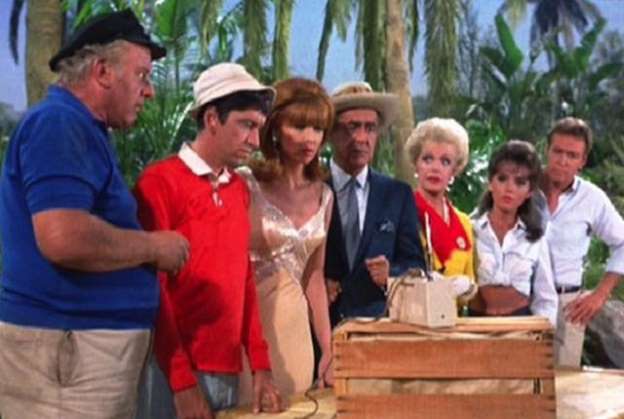
Readers wanting to know just how many millions Mr. Howell is said to have amassed may find the answer by clicking on the deflecting link educating them on “15 Fateful Facts about Gilligan’s Island.”

Hopefully as people in Puerto Vallarta start dying in droves, readers will lose interest in the plight of the famous TV sitcom castaways.

Make no mistake; hurricanes like this are not just the result of naturally-occurring, cyclic “El Nino” events. The oceans have been warming ominously for several years now. The climate is changing fast, folks—we’re treading uncharted waters here.

Now, if I can just get that damn Gilligan’s Island theme song outta my head…

Text and Wildlife Photography ©Jim Robertson, 2015

Text and Wildlife Photography ©Jim Robertson, 2015