Exposing the Big Game

Forget Hunters' Feeble Rationalizations and Trust Your Gut Feelings: Making Sport of Killing Is Not Healthy Human Behavior

Exposing the Big Game

Wildlife managers assessing fire impacts

http://methowvalleynews.com/2015/09/18/wildlife-managers-assessing-fire-impacts/

Scorched landscape threatens many animal species

By Ann McCreary

For a second consecutive year, state wildlife managers are scrambling to assess the damage caused by massive wildfires that scorched four state wildlife areas in north central Washington, including the Methow Valley.

Since mid-August, this year’s record-setting wildfires in Okanogan County have burned more than 505,000 acres, destroyed about 200 residences, and killed three firefighters.

As of early this week the largest fires included the Tunk Block Fire, burning 10 miles northeast of Omak and listed at 167,840 acres and 79 percent contained; the North Star Fire, 25 miles north of Coulee Dam, which had consumed 215,406 acres and was 47 percent contained; and the Okanogan Complex Fire, west of Omak and Okanogan,Featured Image -- 10312which was 133,142 acres and 85 percent contained. The Twisp River Fire, fully contained, burned 11,211 acres in August.

The Washington Department of Fish and Wildlife (WDFW) estimates that wildfires have scorched more than 25,000 acres of wildlife lands maintained by the department for wildlife and outdoor recreation in Okanogan and Chelan counties.

That exceeds the amount of state wildlife land burned by last year’s massive Carlton Complex Fire by about 1,000 acres, said Jim Brown, WDFW regional director for north central Washington.

“Several wildlife areas are completely burned over,” Brown said. “The vegetation that supports deer, sharp-tailed grouse and other wildlife is gone. I’d call it déjà vu, except that this year’s fire took a different path and has aggravated the problems we’ve been working to address since last year.”

This year’s damage to WDFW lands was concentrated in the Scotch Creek Wildlife Area, east of Conconully; the Methow Wildlife Area where the Twisp River Fire burned; the Chelan Wildlife Area, primarily around Chelan Butte; and the Sinlahekin Wildlife Area between Loomis and Conconully, Brown said. In some areas, trained department staff worked alongside regular firefighters to control the blaze.

Those four wildlife areas support thousands of deer, many of which will seek food outside the areas scorched by wildfires, said Matt Monda, WDFW regional wildlife manager. Like last year, the department plans to work with landowners to protect their crops from deer displaced by the fire, he said.

“We are looking at the carrying capacity of habitat for wintering deer,” Monda said. “We know we need to take additional steps to align the herds with available habitat. That effort will involve allowing the habitat to recover and minimizing conflicts between deer and agricultural landowners.”

Drought having impact

The statewide drought, one of the most severe on record, is both causing and compounding the wildfire damage, Monda said. “The drought is going to have an effect on vegetation recovery. That’s why we had the big fires and it’s going to make things more difficult for wildlife.”

Hunting seasons for archers are now underway, and WDFW may draw from its existing list of special-hunt applicants to increase the number of modern-firearms permit hunts in October, Monda said.

Brown said WDFW encourages hunters to take advantage of those hunting opportunities, but recommends that they check local access restrictions before they leave home. Key contact numbers are included on the state governor’s website at www.governor.wa.gov/news-media/washington-wildfire-resources.

In the months ahead, the department will consider setting up localized deer-feeding stations and other measures to protect agriculture crops on a case-by-case basis, Brown said.

“There are a lot of good reasons not to feed wildlife, but we’ll assess each situation on its merits once we have a better idea of the environmental conditions in fall and winter,” he said.

In the meantime, the department will continue to update its damage assessment as a first step toward qualifying for federal disaster relief. Besides burning thousands of acres of wildlife habitat, the fire has destroyed 90 miles of WDFW boundary fencing, several outbuildings, and hundreds of informational signs.

“This fencing serves two purposes: to keep livestock where they’re supposed to be — either on or off wildlife areas — and to identify the boundaries of wildlife areas,” Monda said.

It is very important — and expensive — to restore the lost fencing, he said. “A mile of fence costs many thousands of dollars to replace,” he said.

Also damaged were two of the three pastures in Okanogan County that WDFW leased to livestock producers displaced by last year’s fires.

“We want to help our neighbors whenever we can, but I don’t know whether we’ll have any grazing areas available this year,” Brown said.

Looking ahead to the fall rains, Brown recommends that area landowners promptly assess their own properties to determine whether fire damage has clogged culverts, destabilized slopes, or created other dangerous situations. If so, landowners may qualify for an emergency permit — called a Hydraulic Permit Approval (HPA) — to address risks in or around state waters.

Landowners in north central Washington seeking more information on emergency HPAs can contact WDFW at (509) 754-4624.

“These record-breaking fires will have a major impact on both the wildlife and the human residents of north central Washington for years to come,” Brown said. “The vegetation will eventually grow back and the wildlife will return, but we all need a break from these massive fires.”

“America Is Not a Planet”: The Only Accurate Thing Said About Climate Change at GOP Debate

http://www.truth-out.org/buzzflash/commentary/america-is-not-a-planet-the-only-accurate-thing-said-about-climate-change-at-gop-debate

2015.17.9 BF mellino(Photo: DonkeyHotey)COLE MELLINO OF ECOWATCH FOR BUZZFLASH AT TRUTHOUT

Unlike last month’s GOP primary debate, where climate change was not mentioned at all during the prime time debate and only briefly mentioned in the so-called “happy hour” debate, the topic finally received some airtime at last night’s debate. Held at the Ronald Reagan Presidential Library in Simi Valley, California, the debate was hosted by CNN. Over the course of the three-hour debate, there was one question on climate change. It lasted about four minutes, which is only slightly longer than the amount of time devoted to candidates picking out their secret service names.

“We received a lot of questions from social media about climate change,” says CNN moderator Jake Tapper. One group, NextGen Climate pushed very hard ahead of the debate for the candidates to talk about climate change. They rolled out a three-figure ad campaign ahead of the debate, invoking Ronald Reagan’s “Common Sense” speech to urge CNN moderator Jake Tapper to ask candidates how they would address climate change—specifically what their plans are to get the country to 50 percent renewables by 2030.

More: http://www.truth-out.org/buzzflash/commentary/america-is-not-a-planet-the-only-accurate-thing-said-about-climate-change-at-gop-debate

Ocean warming puts fish, orcas in peril

http://www.dailyastorian.com/Local_News/20150910/salmon-nightmare-ahead-pending-ocean-warming-puts-fish-orcas-in-peril?utm_source=Daily+Astorian+Updates&utm_campaign=f6f6c5539f-TEMPLATE_Daily_Astorian_Newsletter_Update&utm_medium=email&utm_term=0_e787c9ed3c-f6f6c5539f-109860249
It’s too early to say for certain, but this year’s warm weather could have a big impact on future salmon runs as well as the animals that rely on the fish for food.
LONG BEACH, Wash. — Oregon and Washington will experience two big El Niño-like events in combination this year, scientists and fishery managers say. This has never happened before and the events could have major impacts on commercial and recreational fisheries — and ocean species from salmon to orcas — for years to come.

One of these events is a true El Niño — a big one — and brings with it the likelihood of less precipitation and warmer temperatures in the Pacific Northwest.

The other event, the “Blob,” is a warm expanse of water that has persisted off the West Coast for more than a year and only resembles El Niño.

It is an anomaly, a mystery. Formed by a completely different set of circumstances, it has brought about similar results as an El Niño. Scientists believe it could be one reason why Washington has experienced such unusually mild weather since spring 2014. It has certainly warmed the water off the West Coast, driving various ocean species farther north in search of cold water and drawing tropical species to the area.

So there is what everyone knows: The ocean is unusually warm right now and has been for the last two years. When El Niño arrives in full force, the ocean will likely continue to be warm. And warm water is never good for salmon.

Then there are the questions no one can answer yet.

Oregon and Washington are already beginning to see the effects of this big El Niño cycle, though the event itself has yet to arrive in full here in the North Pacific. When the Blob and El Niño meet — as scientists believe they will — what will happen?

And, after this year’s drought, record-breaking heat, massive toxic algal blooms off the West Coast and no snowpack in the mountains, what will life in the ocean look like next year?

Bill Peterson, an oceanographer with National Oceanic and Atmospheric Administration Fisheries, has a guess: “It’s going to be a nightmare, is what I suspect we’re going to see. … It’s kind of beyond our experience and all we can say is it’s not going to be good.”

Delicate chains

Heat up the ocean and many West Coast species begin struggling almost immediately.

Coho salmon, for example, have been “acting strange” this year, said Doug Milward, ocean salmon fishery manager for the Washington Department of Fish and Wildlife. He and others believe the fish are staying out in deeper water, waiting until the very last minute to enter Washington’s river systems where they will spawn. They are waiting for cooler water.

Sockeye, among the first salmon to run from the ocean to rivers and streams, were in trouble early on this season.

In July, more than a quarter million sockeye, approximately half of the 500,000 sockeye expected to return from the ocean, were dead or dying in the Columbia River and its tributaries due to warm water temperatures.

Meanwhile, salmon that were ocean-bound this spring and the ones that will head out next spring will face unknown conditions when they return several years later, but biologists say they are going into conditions that do not favor their survival; warm temperatures mean the salmon’s regular food sources may not be thriving either. The fish leaving next spring, reared in these conditions, may be even worse off. As for fish laid as tiny eggs in stream and river beds this year — no one knows.

Young salmon were certainly in trouble this summer, though. The warm temperatures led to outbreaks of bacterial diseases in hatcheries, killing off hundreds of thousands of young fish in Washington, Oregon and California.

Trouble for orcas?

Beyond salmon, biologists worry what this all could mean for the ocean species that rely on these fish for food.

Orcas often visit the communities near the Columbia River, but this year it seemed like people were spotting them constantly — NOAA wildlife biologist Brad Hanson says the number of sightings are probably not much higher than any other year; people are just paying more attention.

But, he added, salmon are an important part of an orca’s diet, likely one big reason why orcas flock to the region.

“With this year, with the drought occurring coastwide, it certainly is going to have an impact down the road. If not in the next couple of years, certainly in three or four years,” said Hanson, who was the chief scientist for a NOAA killer whale research cruise this spring. “… We are going to enter a period here in the not too distant future where we’re going to have reduced (salmon) run sizes. So the question is: How will the whales respond?”

Orcas must eat continuously. They can’t starve for extended periods of times the way other ocean mammals can, such as gray whales, living off fat reserves.

Orcas eat many kinds of fish, so Hanson and other biologists believe the large mammals could travel elsewhere for food. As the salmon change where and when they travel, the orcas might follow.

Still, Hanson added, if orcas are eating fish other than salmon, as the data suggests, how abundant is this other prey?

“It’s going to be critical for us to monitor that as best we can in the coming years,” he said.

Inland troubles

In the meantime, salmon fishing has been strong this summer. The Buoy 10 sport fishery near the mouth of the Columbia River ended with record catch rates, surpassing last year’s total catch within the opening weeks. Commercial fishing on the ocean has been brisk and conditions near shore have been normal, or as normal as the ocean, a shifting, swirling black box, ever is.

“When I look at this, I don’t see the warning signs I saw in the ’90s,” Milward said.

In the early ’90s, it was quickly becoming obvious that they were fishing on a very small pool of fish and that there were issues in the wide world beyond: climate shifts and damaged freshwater habitat.

“It’s been a wonderful fishing year in the ocean where I manage,” Milward said.

But it is in the areas beyond his management where he begins to worry.

From a human point of view, communities in Oregon and Washington had a beautiful spring and summer, the best longtime locals can remember.

For many, though, the summer’s beauty was marred by massive wildfires and drought. And with no snowpack to fuel streams and rivers in Washington and little rain, streams and rivers are running at an all time low. In June, the Washington Department of Ecology reported that the state’s snowpack was at zero percent of normal. Though there was still snow at higher elevations and in the glaciers, rivers and streams did not receive the boost they’d normally get from melting snow high in the mountains.

State and tribal fishery managers went into the summer worried about the effects of low-flow conditions on salmon-bearing streams and rivers in the Columbia Basin, conditions that can hamper fish passage and lead to high water temperatures (adding another stress on fish already stressed from their migration inland from the ocean). High temperatures and low flow can lead to less oxygen and put salmon more at risk of bacterial or fungal infection.

“I mean, those fish in the ocean now have no idea that we had no snowpack in the winter and no rain in the summer,” Milward said. The salmon are headed toward areas where “their native stream looks more like a creek than river.”

Red light, green light

Each year, Peterson and other NOAA scientists gather information that informs how fisheries will be run in the next season. They look at more than a dozen different indicators of ocean and fish health. They look at what is in the water, and they note what is missing. For each indicator, they put a red light or a green light next to it. Just like with traffic signals, green light means go. In the 1998 El Niño, all the indicators were red: Stop! In 2008, everything was green. In years where there’s a mix of red and green, it means, Peterson said, “basically we don’t know what’s going on (in the ocean).”

This year, he and state and federal fishery managers are ready for everything to come back red.

“I’m guessing redder than anything we’ve seen before,” Peterson said.

But the ocean is vast, he added, and scientists’ predications have been wrong before. “This could be an environmental disaster, or a blip on the screen that we forget in a couple of years.”

This year, sockeye — the salmon that had half of its total run wiped out by warm water when returning to the Columbia River and its tributaries — found other places to spawn. They ran up streams they’d never used before, streams where the water was still cold, where their young might survive.

To Peterson, salmon are a metaphor for resiliency.

“If you think about what they’ve put up with for the last 50 years and we still have them,” he said. “… They will find a way.”

A Giant Glob of Deadly Algae Is Floating off the West Coast

A Giant Glob of Deadly Algae Is Floating off the West Coast

From the air, the Pacific algal bloom doesn’t look like much of a threat: a wispy, brownish stream, snaking up along the West Coast. But it’s causing amnesia in birds, deadly seizures in sea lions, and a crippling decline in the West Coast shellfish industry. Here’s what you need to know about it, from what this bloom has to do with the drought to why these toxins could be a real threat to the homeless.

“These are the highest levels of toxicity we’ve ever seen,” says one expert.

What’s causing it? The culprits are single-celled, plant-like organisms called pseudo-nitzschia, a subset of the thousands of species of algae that produce more than 50 percent of the world’s oxygen through photosynthesis. They’re a hardy variety usually found in cool, shallow oceans, where they survive on light and dissolved nutrients, including silcates, nitrates, and phosphates. “They’re sort of like the dandelions of the sea,” says Vera Trainer, who manages the Marine Biotoxin Program at the Northwest Fisheries Science Center in Seattle. “They’re always there in some low numbers, just waiting for nutrients to be resupplied to the ocean’s surface.” In most years, blooms in the eastern Pacific are contained near “hot spots” that dot the West Coast—relatively shallow and sheltered places like California’s Monterey Bay or the Channel Islands. They usually flare up in April or May as trade winds cycle nutrient-rich waters from offshore depths to the coast in a process called “upwelling,” but they fade after only a few weeks.

Why is it sticking around so long? The jury’s still out, but scientists are beginning to get a clearer idea. These past few years have been “incredibly weird” in the northeast Pacific, says Nate Mantua, a research scientist at the National Oceanic and Atmospheric Administration’s Southwest Fisheries Science Center in Santa Cruz. He points to the same “ridiculously resilient ridge” of high pressure that’s been causing the historic drought in the western United States: This pressure also resulted in a pool of exceptionally warm water in the Pacific (known as “the blob”), with little weather to disperse it. Those conditions, along with prevailing winds and colder currents that ferry nutrients back to the coast, seem to be supplying the algae with a seemingly endless feast.

That makes the source of this bloom different from its cousin in the Gulf of Mexico, where fertilizers flowing from as far as Iowa are feeding a zone of algae that’s as large as New Jersey. “We’re seeing them in relatively pristine waters of the US West Coast,” Trainer explains, though she adds runoff and sewage discharge may be playing some role in the blooms off Southern California.

So just how big is this thing? Bigger than researchers have ever seen: a patchy stream that stretches from Southern California up along the Alaskan coast. The hot spot blooms that appear each spring are merging for the first time, Trainer explains. Though the combined mass has ebbed and flowed over the past four months, it hasn’t let up; her team finds algae each time they journey out to sea, with no signs of abatement soon. And it’s also unusually potent. “These are the highest levels of toxicity we’ve ever seen,” says Raphael Kudela, a professor of ocean sciences at the University of California-Santa Cruz. “It’s a truly extraordinary phenomenon.”

Levels of chlorophyll, viewed from space, indicate where algae is present in the waters of the Pacific. NOAA

How deadly are these “dandelions”? The algae produce a compound called domoic acid, a type of amino acid that leads to a condition commonly known as “amnesic shellfish poisoning” in humans. Shellfish and some small fish, like sardines and anchovies, feed on the algae and concentrate the toxin in their flesh. When animals further up the food chain—like birds—eat those fish and shellfish, the domoic acid seeps into the bloodstream and eventually the brain, where it attacks cells in the hippocampus, the brain’s command center for memory and learning. The result: amnesia-stricken birds that will repeatedly fly into windows, and sea lions that writhe on the shore, plagued by seizures. Both are symptoms of rapidly firing neurons in the hippocampus, which will eventually burn out and kill the animal. Beaches have been littered with dead fish, birds, and sea lions up and down the Pacific coast since May—all the way up to Alaska, where NOAA is investigating the deaths of fin whales in connection with the toxin.

More: http://www.motherjones.com/environment/2015/08/heres-everything-you-need-know-about-deadly-algae-california-coast


Climate change denier Rupert Murdoch just bought National Geographic, which gives grants to scientists

Climate change denier Rupert Murdoch just bought National Geographic, which gives grants to scientists

The National Geographic magazine has been a nonprofit publication since inception in 1888, but that ends today. The long-running American publication becomes very much for-profit under a $725 million dollar deal announced today with 21st Century Fox, the entertainment company controlled by the family of Rupert Murdoch.

Murdoch is a notorious climate change denier, and his family’s Fox media empire is the world’s primary source of global warming misinformation. Which would be no big deal here, I guess, were it not for the fact that the National Geographic Society’s mission includes giving grants to scientists.

Or had you forgotten? Here’s a refresh for you, a fun little interview with Murdoch on his climate change views.

From today’s deal coverage in WaPo:

The partnership, which will also include the National Geographic cable channel and the National Geographic Society’s other media assets, will be called National Geographic Partners. Fox will own 73 percent of the partnership, and Washington-based National Geographic Society will own the balance. Fox will pay $725 million to the Society for its stake in the partnership. This will push the Society’s endowment to more than $1 billion.

Let the “National Geographic Covers Designed by Rupert Murdoch” Photoshop Wars begin.

More coverage: New York Times, Variety.

20-year Nat Geo vet Declan Moore becomes CEO. Gary Knell, president-CEO of the Society, will serve as the first chairman. Buried in the press announcement:

“The value generated by this transaction, including the consistent and attractive revenue stream that National Geographic Partners will deliver, ensures that we will have greater resources for this work, which includes our grant making programs that support scientists and explorers around the world,” Knell said. “As media organizations work to meet the increasing demand for high quality storytelling across multiple platforms, it’s clear that the opportunity to grow by more closely aligning our branded content and licensing assets is the right path. We now will have the scale and reach to continue to fulfill our mission long into the future. The Society’s work will be the engine that feeds our content creation efforts, enabling us to share that work with even larger audiences and achieve more impact. It’s a virtuous cycle.”

So Rupert Murdoch will be to some large extent controlling a $1 billion organization whose stated mission includes giving grants to scientists.

Rupert Murdoch is a raging asshole, but he is also a very much on-the-record climate change denier. A climate change denier with now even more power and influence over science grants in the United States.


Bill Nye Depressed by Tar Sands’ ‘Extraordinary Exploitation’ of Environment

| September 3, 2015

Bill Nye recently took a trip north to the Alberta tar sands while filming his new science documentary and he did not mince words about the state of Canada’s crude oil reservoir.

View image on Twitter

The Alberta tar sands. Before and after. Please share…. pic.twitter.com/vuOz5j4eDO

Wildfires take toll on hunting season

No mention of how fires are effecting wildlife…

http://www.usatoday.com/story/news/nation-now/2015/09/04/wildfires-take-toll-hunting-season/71741134/

Molly Trotter, KREM-TV 9:51 a.m. EDT September 5, 2015

SPOKANE, Wash. — Wildfires have burned almost one million acres in Washington, leaving destruction in its wake. One of lesser known impacts of the fires is the toll on the hunting season.

There are several closures that hunters will have to deal with across Washington and Idaho from the numerous blazes.

“This is an unprecedented drought year.” Washington Department of Fish and Wildlife’s Madonna Lures said. “We have unprecedented fires burning and people fighting them and people losing their lives and their homes over them.”

Both the Idaho Fish and Game and Washington Department of Fish and Wildlife have made several closures. A lot of private land in the panhandle in Idaho has been closed from fears of fires sparking from gun fire.

Several popular forest roads are closed so Idaho and Washington are working with hunters to find an agreement on which lands they can hunt on.

“Outdoor recreation is great but we got to use common sense then,” Lures said.

The cooler weather has helped contain wildfires and improve the dry conditions. It has not improved them enough for Washington and Idaho to open up all the closed lands and forest roads for hunting. It needs to last a little longer for that to happen.

700 Walrus Seen Near Shell Oil Rigs in Arctic as Obama Visits Alaska

 August 31, 2015 10:39 am 

James MacCracken, supervisory wildlife biologist, U.S. Fish and Wildlife Service said in an Aug. 28 press conference call, “We are getting reports from Shell daily” of walrus near the ships and rigs and the talley so far is “700 walrus” seen by observers. When asked if all operations around the walrus by Shell are within the guidelines set by Interior Department regulation, MacCracken said, “Yes.” This is the first confirmation that protected sea mammals are swimming through the Burger oil leases which Shell just got permission to deep drill. Observers, paid by Shell, are required by Shell’s permit to perform drilling and other activities which might disturb or injure sea mammals. More information to come on this.

First aerial views of thousands of Pacific walrus hauling out Aug. 23 on Alaska Arctic shore.  Photo credit: Gary Braasch / World View of Global Warming
First aerial views of thousands of Pacific walrus hauling out Aug. 23 on Alaska Arctic shore. Small detail of telephoto image of 2015 haul out. Photo credit: Gary Braasch / World View of Global Warming

The press conference was also the first direct acknowledgement by the U.S. agencies in charge of studying and protecting the mammals that a new haul out had begun—nearly a week after the event actually started and only three days before President Obama begins his tour of Alaska focusing on rapid climate change. Gary Braasch made the first photos of the haul out at about 7 p.m. on Aug. 23, after seeing on USGS maps of locations of geotagged walrus that several were stationary in the Point Lay area.

Thousands of Pacific walrus coming ashore in northwest Alaska as sea ice melts recedes from habitat. Photo credit: Gary Braasch / World View of Global Warming

Obama Is a Climate Hypocrite. His Trip to Alaska Proves It.

By Eric Holthaus

Was574466
The dangerous gulf between Obama’s words and actions on climate change is growing wider. Above, a home in the the Alaskan village of Shishmaref is destroyed by beach erosion in 2006. The entire village is facing evacuation because of global warming.

Photo by Gabriel Bouys/AFP/Getty Images

On Monday morning President Obama headed to Alaska—the front lines of climate change—for a trip the White House is calling “a spotlight on what Alaskans in particular have come to know: Climate change is one of the biggest threats we face, it is being driven by human activity, and it is disrupting Americans’ lives right now.”

Problem is, those words fall flat when compared with Obama’s mixed record on climate. The widely publicized trip comes at a delicate moment for the president. Barely two weeks ago, his administration gave Royal Dutch Shell final approval to drill for oil offshore Alaska’s northwest Arctic coast—not exactly the sort of thing you’d expect from someone who professes to be “leading by example.”

ADVERTISING

The leases that allow Shell to drill in the Arctic were awarded by the George W. Bush administration, and the president had limited options to block them. Still, as ThinkProgress notes, Obama could have outright canceled Shell’s lease, or begun a process to declare the region a marine protected area, making future leases nearly impossible. Neither of these actions would be easy to do, but either would have sent a powerful message to industry: Starting now, climate change concerns trump energy exploration, period.

Climate activists vociferously opposed the approval of Shell’s permit: Last month a group of protesters in kayaks briefly blockaded an Arctic-bound Shell support ship while it was in a Portland, Oregon, port. In recent days Hillary Clinton, the leading Democratic candidate for president, has also voiced her opposition.

One progressive activist group, Credo Action, has called the unfortunate juxtaposition of Obama’s words and actions his “Mission Accomplished” moment, in reference to Bush’s declaration of victory in the Iraq war. I agree.

…  For many environmental activists, Obama’s approval of Shell’s Arctic drilling permit is the icing on an extremely hypocritical cake.

More: http://www.slate.com/blogs/the_slatest/2015/08/31/obama_trip_to_alaska_stark_difference_between_rhetoric_and_action_on_climate.html

Record-Breaking Wildfires, Greenland Melting and Earth’s Hottest Month Ever

The following article from Truthout.org covers all that I was going to go over in Part 2 of Global Warming: the Future is Now, so here’s this instead:
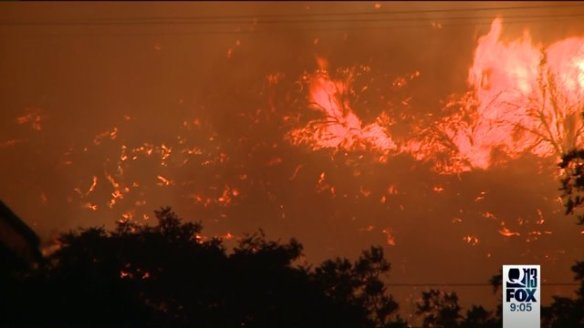
Featured Image -- 10312

Dahr Jamail | The World on Fire:

The US is now officially in the worst wildfire season in its history, as almost 7.5 million acres across the country have burned up since spring.

Articles about ACD’s impacts are now being published in more mainstream outlets, carrying titles that include verbiage like “the point of no return,” and it is high time for that, given what we are witnessing.

A recently published study by the UK-US Taskforce on Extreme Weather and Global Food System Reliance revealed that “major shocks” to worldwide food production will become at least three times more likely within the next 25 years due to increasingly extreme weather events generated by ACD. One of the coauthors of the report warned of a “very frightening” future due to the synthesis of ACD and food demands from a constantly growing global population.

Meanwhile, July officially became the hottest month ever recorded on the planet, setting 2015 on course to easily become the hottest year ever recorded.

This month’s dispatch is replete with evidence of our growing crisis, including record-breaking amounts of ice being released from Greenland, more species under threat of extinction, and millions of acres of the planet burning up in wildfires across North America alone.

Earth

A trove of papers recently released in the journal Science have warned that the planet’s forests are all under major threat of being annihilated, due to the ever-expanding human footprint, coupled with ACD. The introduction to the studies reads: “These papers document how humans have fundamentally altered forests across the globe and warn of potential broad-scale future declines in forest health, given increased demand for land and forest products combined with rapid climate change.”

Speaking of which, another recent report, this one coming from the Center for Global Development, showed that the planet is on a trajectory to lose an amount of tropical forest land equivalent to the size of India by 2050.

Meanwhile, geologists with the US Geological Survey and researchers from the University of Vermont recently showed that Washington DC is, quite literally, sinking into the sea. “It’s ironic that the nation’s capital – the place least responsive to the dangers of climate change – is sitting in one of the worst spots it could be,” senior author of the paper, Paul Bierman, said. “Will the Congress just sit there with their feet getting ever wetter?”

At the moment, the answer to his question is obvious: The lawmakers that frequent our capital city are making no bold moves to address that city’s flooded future.

Food production, as aforementioned, is being dramatically undermined by ACD. In Nigeria, the country’s ability to feed itself is rapidly diminishing due to higher temperatures and shifting rainfall patterns. At least half the farmers there had been unable to even plant their crops at the time of this writing.

Animal species continue to bear the brunt of ACD all over the globe as well.

A recent study showed that in the UK, ACD is generating severe droughts that have placed several species of butterflies there at risk of extinction.

Another report showed how a disease spreading rapidly across the planet’s tadpole populations is now threatening the global frog population. Scientists who authored the report warn that this is further evidence of the sixth great extinction event the earth is now experiencing.

Another dismaying development: The ever-shrinking area of sea ice is deleteriously impacting the Arctic’s walrus population. This season could see another dramatic beaching event like that of last summer, in which 35,000 walruses dragged themselves out of the sea and onto a beach due to lack of sea ice.

Meanwhile, the ongoing drought in California has caused an “emergency situation” for trees in that state, as lack of water is causing unprecedented die-offs. The drought there is also wiping out several of the native fish populations, of which many are expected to disappear within the next two years if the drought persists.

Lastly in this section, unprecedented heat coupled with an intense drought has caused “glacial outbursts” on Washington State’s Mount Rainier. “Outbursts” occur when large pools of ice-melt form within the glaciers, then plunge from within the glacier, sending torrents of silt-filled water, boulders and trees down the slopes of the mountain, wiping out anything in its path.

While these outbursts have happened periodically throughout history, they are expected to increase in both frequency and severity as ACD progresses.

Water

As usual, circumstances on the water front continue to worsen around the planet.

In the Pacific Northwestern region of the US, over a quarter million sockeye salmon heading up the Columbia River have either died or are in the process of dying due to warmer water temperatures. Biologists warn that at least half of this year’s returning fish will be wiped out, and ultimately as much as 80 percent of the total fish population could perish. Both Oregon and Washington states have already instituted closures of sport fishing due to the warmer waters and drought conditions persisting in both states.

In the Eastern Pacific Ocean, a giant bloom of toxic algae that is a threat to the health of both ocean species and humans alike spans from southern California all the way up to Alaska. Researchers are linking the size and intensity of the bloom to ACD. The bloom is already killing off sea lions that inhabit the coast and is still not showing signs of going away. Researchers said it was the largest bloom they had ever seen.

A report showed how ACD is in the process of rapidly reversing a natural phenomenon of 1,800 years of ocean cooling, while another study revealed that ocean acidification will continue and likely worsen, even if carbon sequestration and cleanup efforts were to begin in an immediate and dramatic fashion.

Back on land, droughts around the globe continue to make headlines.

One in Puerto Rico, that continues to worsen, has caused that country’s government to extend its dramatic water rationing measures, which have now been ongoing for weeks.

A study published in Geophysical Research Letters unequivocally linked California’s severe drought to ACD, saying that ACD has already “substantially increased” both the frequency and intensity of future droughts.

More news around the California drought emerged, showing that the river that runs through San Jose, the 10th largest city in the US, has dried up completely, severely harming fish and wildlife dependent on the water for their survival.

NASA released findings showing that California’s Central Valley, where the bulk of all the farming in the state takes place, is literally sinking, due to how much groundwater is being drawn out to compensate for the drought conditions. It is yet another destructive feedback loop: ACD has caused the drought to be far more severe than normal, which has caused humans to over-pump groundwater, leading to the sinking of the land.

The world’s glaciers are in peril. A disturbing report has shown that they have shrunk to their lowest levels ever witnessed in the history of record-keeping. They are melting at an accelerating rate – two to three times faster than the 20th century average melt rate.

As if to punctuate the findings of the report, the world’s fastest-melting glaciers, located in Greenland, recently lost the largest amount of ice on record in just a 48-hour period.

As a result of the incredible melting rates of glaciers, snowpack and ice fields around the globe, sea levels are now rising faster than ever.

Thus, as recently released research shows, global communities and cities located on river deltas – which includes over a quarter of a billion people – are at risk and will have to relocate.

Fire

Given the extensive record-breaking drought that has afflicted most of the western US, the fact that this summer’s fire season came in with a roar came as little surprise. Hardly halfway through the summer, fires across California, Washington, Colorado and in Glacier National Park in Montana were making headlines.

By early August, nearly 10,000 firefighters in California alone were battling at least 20 wildfires that had already forced more than 13,000  people to evacuate their homes.

Shortly thereafter, thousands of wildfires were raging across drought-plagued California, and before the middle of the month, a staggering 300,000 new acres were burning each day up in Alaska, where fires had scorched over 6 million acres thus far in the year, and hundreds of fires continued to burn. That makes this year already the second-largest wildfire season in Alaska’s history, with more of the summer remaining.

Reports have emerged warning of the impact of the fires upon Alaska’s permafrost: They have removed millions of acres of the tundra and forest that previously protected the frozen ground.

In early August, the US Forest Service announced that for the first time in the history of that department, it needed to spend over half of its entire budget on fighting wildfires.

Despite this, given the record-breaking drought conditions across the west, large numbers of the fires were left to burn out of control, due to high winds, dry conditions, and lack of fire-fighting capabilities and resources.

Air

In case anyone had any doubt about how hot the planet is already becoming, the Iranian city of Bandar Mahshahr experienced a heat index of 165 degrees in August, nearly setting a world record for heat index measurements, which factor in humidity along with temperature.

In July, incredibly hot temperatures in Tajikistan caused a rapid melting of glaciers, which triggered flooding and mudslides that generated nearly 1,000 ACD refugees.

Meanwhile, across the Middle East in August, more than 20 people died and nearly 100 had to be hospitalized due to incinerating heat that baked the region, along with intense humidity levels. Basra, Iraq, saw 123 degrees, and the Iraqi government had to instate a four-day “holiday” so people wouldn’t feel obliged to work in the stifling heat.

Lastly in this section, a recent report stated that Texas will likely see a dramatic escalation in heat-related deaths and coastal extreme storm-related losses in the upcoming decades due to escalating ACD impacts.

Denial and Reality

There is never a dull moment in the “Denial and Reality” section.

Democratic Party candidate Hillary Clinton’s stated plan to address abrupt ACD, which amounts to federal subsidies for solar panels, was immediately labeled as “silly” in early August, just after Clinton’s plan was announced, by leading climate scientist James Hansen, who headed NASA’s Goddard Institute for Space Studies for more than three decades.

“You cannot solve the problem without a fundamental change, and that means you have to make the price of fossil fuels honest, “Hansen said of her plan. “Subsidizing solar panels is not going to solve the problem.”

During a recent forum, Republican presidential candidate Ted Cruz went on the record expressing full-on denial of ACD, saying that the debate about ACD was a “device” used by liberals to appeal to “environmentalist billionaires and their campaign donations.”

On another front, builders in San Francisco are moving forward with plans to construct major bay-front developments of office space and homes worth more than $21 billion, in areas that are extremely susceptible to flooding – despite dire warnings of imminent sea-level rise.

On the bad news front for the deniers, however, a recent study showed there is absolutely no link between sunspot activity and ACD … a fabricated argument the deniers enjoy trotting out to try to “disprove” reality.

More bad news for the deniers comes, once again, from the Pope, who set up an annual Catholic Church “day of care” for the environment. The Pope said the day would be a chance for the world’s 1.2 billion Catholics to “thank God for the wonderful handiwork which he has entrusted to our care, and to implore his help for the protection of creation as well as his pardon for the sins committed against the world in which we live.”

And Catholics aren’t the only faith leaders working to do something to address ACD.

Islamic religious and environmental leaders from around the world recently issued a call to rich countries, along with those that are oil producers, to end all fossil fuel use by 2050 and to begin rapidly ramping up the institution and use of renewable energy sources.

The Islamic leadership, which issued “The Islamic Climate Declaration,” said the world’s 1.6 billion Muslims have “a religious duty to fight climate change.”

The final blow to ACD deniers in this month’s dispatch comes from none other than the US Department of Defense, which issued a report to Congress that said that ACD poses a “present security threat” that is not only a “long-term risk,” but poses immediate short-term threats as well.

http://www.truth-out.org/news/item/32556-the-world-on-fire-record-breaking-wildfires-greenland-melting-and-the-hottest-month-ever-recorded-on-earth