Exposing the Big Game

Forget Hunters' Feeble Rationalizations and Trust Your Gut Feelings: Making Sport of Killing Is Not Healthy Human Behavior

Exposing the Big Game

Scientists shocked by Arctic permafrost thawing 70 years sooner than predicted

  • Ice blocks frozen solid for thousands of years destabilized
  • ‘The climate is now warmer than at any time in last 5,000 years’
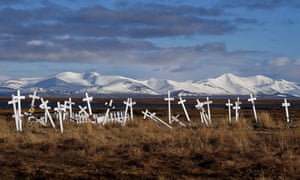
A cemetery sitting on melting permafrost tundra at the village of Quinhagak on the Yukon Delta in Alaska.The scientists’ findings offer a further sign of a growing climate emergency.
 A cemetery sitting on melting permafrost tundra at the village of Quinhagak on the Yukon delta in Alaska. The scientists’ findings offer a further sign of a climate emergency. Photograph: Mark Ralston/AFP/Getty Images

Permafrost at outposts in the Canadian Arctic is thawing 70 years earlier than predicted, an expedition has discovered, in the latest sign that the global climate crisis is accelerating even faster than scientists had feared.

A team from the University of Alaska Fairbanks said they were astounded by how quickly a succession of unusually hot summers had destabilised the upper layers of giant subterranean ice blocks that had been frozen solid for millennia.

“What we saw was amazing,” Vladimir Romanovsky, a professor of geophysics at the university, told Reuters. “It’s an indication that the climate is now warmer than at any time in the last 5,000 or more years.“

With governments meeting in Bonn this week to try to ratchet up ambitions in United Nations climate negotiations, the team’s findings, published on 10 June in Geophysical Research Letters, offered a further sign of a growing climate emergency.

The paper was based on data Romanovsky and his colleagues had been analysing since their last expedition to the area in 2016. The team used a modified propeller plane to visit exceptionally remote sites, including an abandoned cold war-era radar base more than 300km from the nearest human settlement.

Diving through a lucky break in the clouds, Romanovsky and his colleagues said they were confronted with a landscape that was unrecognisable from the pristine Arctic terrain they had encountered during initial visits a decade or so earlier.

The vista had dissolved into an undulating sea of hummocks – waist-high depressions and ponds known as thermokarst. Vegetation, once sparse, had begun to flourish in the shelter provided from the constant wind.

Torn between professional excitement and foreboding, Romanovsky said the scene had reminded him of the aftermath of a bombardment.

“It’s a canary in the coalmine,” said Louise Farquharson, a postdoctoral researcher and co-author of the study. “It’s very likely that this phenomenon is affecting a much more extensive region and that’s what we’re going to look at next.“

Scientists are concerned about the stability of permafrost because of the risk that rapid thawing could release vast quantities of heat-trapping gases, unleashing a feedback loop that would in turn fuel even faster temperature rises.

With scientists warning that sharply higher temperatures would devastate the global south and threaten the viability of industrial civilisation in the northern hemisphere, campaigners said the new paper reinforced the imperative to cut emissions.

“Thawing permafrost is one of the tipping points for climate breakdown and it’s happening before our very eyes,” said Jennifer Morgan, executive director of Greenpeace International. “This premature thawing is another clear signal that we must decarbonise our economies, and immediately.”

Atmospheric CO2 hits record high in May 2019

NOAA reports that carbon dioxide in Earth’s atmosphere continued its rapid rise in 2019, reaching the highest recorded levels in 61 years of observation last month.

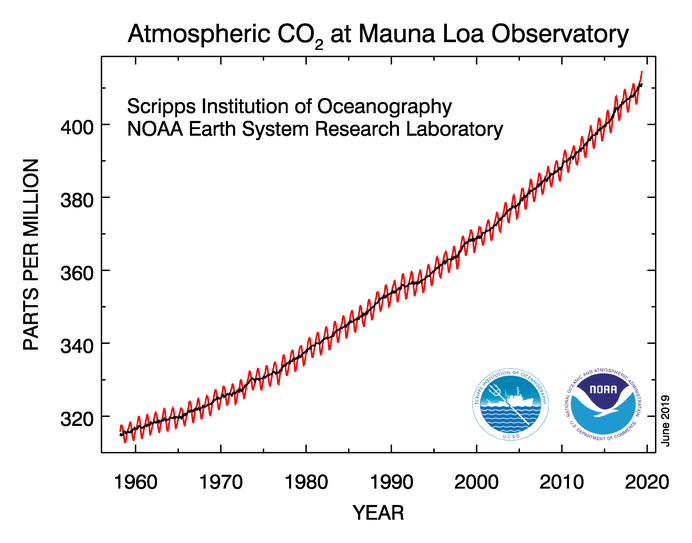
Much of what you see online from those who question human-caused global warming comes in the form of opinion articles – op-eds – usually not written by a scientist and expressing an opinion not affiliated with that publication’s editorial board. So watch for that, and watch for the authors’ affiliations (often, you can easily see their political agenda). What we’re talking about here is not opinion. It’s data, gathered by scientists at Mauna Loa Observatory in Hawaii, which has been monitoring the atmosphere and collecting data related to atmospheric change since the 1950s. In this world’s-longest data set, the highest carbon dioxide (CO2) concentration in Earth’s atmosphere yet measured was recorded last month (May 2019). The data were announced on June 4, 2019.

An increase in carbon dioxide – CO2 – contributes to global warming, according to climate scientists. The 2019 peak value in May 2019 was 3.5 ppm higher than the 411.2 ppm peak in May 2018 and marks the second-highest annual jump on record.

NOAA said in its annoucement:

Atmospheric carbon dioxide continued its rapid rise in 2019, with the average for May peaking at 414.7 parts per million (ppm). That’s not only the highest seasonal peak recorded in 61 years of observations on top of Hawaii’s largest volcano, but also the highest level in human history and higher than at any point in millions of years.

Read more: How do scientists know that Mauna Loa’s volcanic emissions don’t affect the carbon dioxide data collected there?

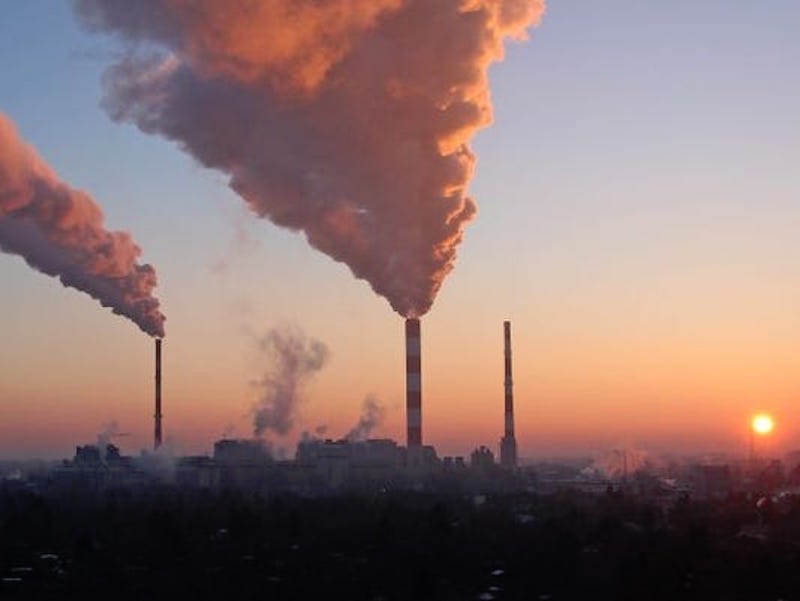
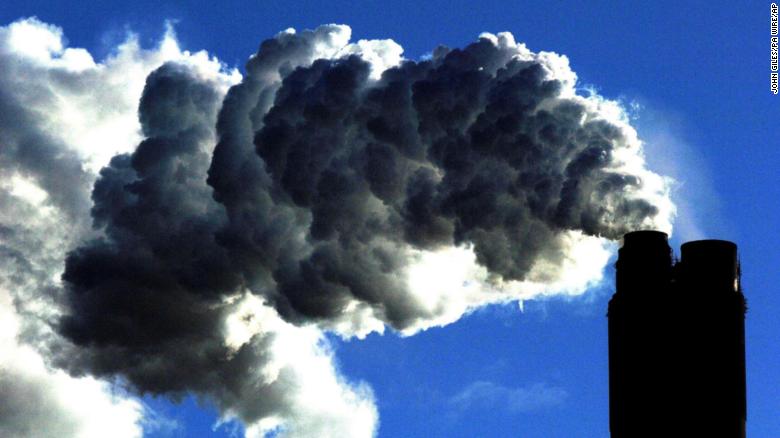
Smoke billowing from two tall, thin smokestacks as sun sets at dusty horizon.

Nearly all climate scientists agree that increases in atmospheric CO2 – the result of the burning of oil, gas and other fossil fuels – is to blame for rising global temperatures. Pieter Tans, senior scientist with NOAA’s global monitoring division, told USA Today:

Many proposals have been made to mitigate global warming, but without a rapid decrease of CO2 emissions from fossil fuels they are pretty much futile.

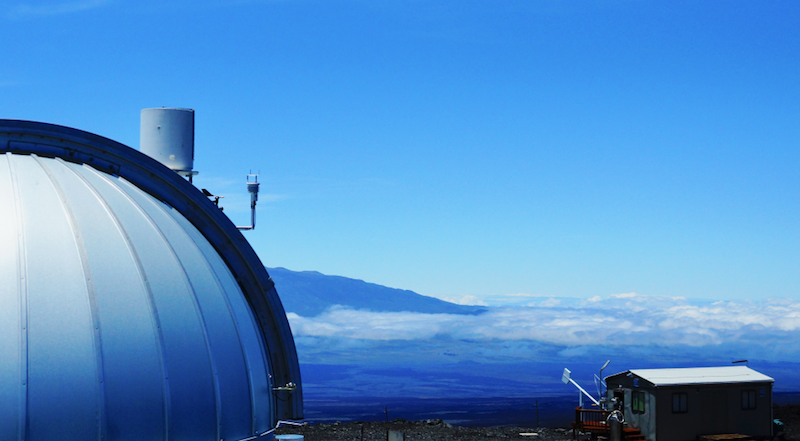
White observatory dome against blue sky background.

Not only is the concentration of CO2 in the atmosphere increasing every year, said NOAA, but the rate of increaseis also accelerating. NOAA said:

The early years at Mauna Loa saw annual increases averaging about 0.7 ppm per year, increasing to about 1.6 ppm per year in the 1980s and 1.5 ppm per year in the 1990s. The growth rate rose to 2.2 ppm per year during the last decade. There is abundant and conclusive evidence that the acceleration is caused by increased emissions, Tans said.

Tans added:

It’s critically important to have these accurate, long-term measurements of CO2 in order to understand how quickly fossil fuel pollution is changing our climate. These are measurements of the real atmosphere. They do not depend on any models, but they help us verify climate model projections, which if anything, have underestimated the rapid pace of climate change being observed.

NOAA pointed out that the highest monthly mean CO2 value of the year occurs in May, just before plants start to remove large amounts of the greenhouse gas from the atmosphere during the Northern Hemisphere growing season.

Bottom line: The highest yet measured concentration of atmospheric carbon dioxide (CO2) was recorded in May 2019, at the Mauna Loa Observatory in Hawaii.

What would life be like in a zero-carbon country?

London (CNN)Drastic restrictions on almost every aspect of people’s lives, from the cars they drive, the way they heat their homes, to the fridges they buy — even the food stored in them. That is the reality of what awaits us in 2050 if a UK government pledge to cut greenhouse emissions to “net zero” is to be met.

If it can do it, the country will become the world’s first major economy to stop contributing to climate change.
But the goal is extremely ambitious — the roadblocks massive.
Net zero means the amount of greenhouse gases emitted into the atmosphere is no more than the amount taken out.
By setting the target, the government is doing what it promised to do. Under the 2015 Paris Climate Accord, the UK and almost 200 other countries pledged to work together to keep global warming in check.
The agreement seeks to keep temperatures to 1.5 degree or at the very least to “well below 2 degrees” above pre-industrial levels.
Cutting emissions is a non-negotiable part of that plan. To keep the warming under 1.5 degrees, global carbon emissions need to reach net zero by 2050. For the “well below 2 degrees” scenario, the deadline moves back to 2070.
That puts the UK at the more ambitious end of the range — and under pressure to deliver concrete policies very, very soon.
The “net zero” target means the country must slash domestic emissions as much as it can. A report by the Committee on Climate Change, the advisory body that recommended the target, gives a glimpse of what that future will look like.
Petrol and diesel vehicles will need to be phased out and replaced by electric or hydrogen powered ones by 2035. Consumption of beef, lamb and dairy must be cut by 20% by 2050. No houses built after 2025 will be connected to the gas grid. The owners of older buildings will need to switch their heating system to a low carbon one by around 2035.
There are issues with the plan. Some sectors are more difficult, or even impossible, to rid of emissions. Agriculture is one example.
“The methane created by livestock is a much more powerful greenhouse gas than carbon dioxide … so we will have to reduce meat consumption, but it’s unlikely that we will reduce livestock to zero,” said Bob Ward, policy and communications director at the Grantham Research Institute on Climate Change and the Environment, which is part of London School of Economics.
Aviation and shipping are other sectors where low-carbon alternatives don’t yet exist. “They are quite high carbon sectors, they are rapidly growing, and the decarbonization pathway is more uncertain for them,” said Barny Evans, renewable energy expert at WSP, a sustainability consultancy.
UK's emission reduction targets are among the most ambitious in the world.

Planting trees is part of the plan

Emissions that can’t be cut, like the ones created by belching animals, must be offset for the country to reach the net zero target. Trees take carbon out of the atmosphere through photosynthesis, so planting more of them is one way to do this.
But growing more trees is not always practical. Britain is a small island and space is limited, so the government wants the option of paying other countries to plant trees instead.
Groups like Greenpeace and Friends of the Earth are sounding the alarm about that idea. They worry that being able to pay someone else to act could undermine UK’s domestic efforts.
“This type of offsetting has a history of failure and is not, according the government’s [own] climate advisers, cost efficient,” said Doug Parr, the chief scientist at Greenpeace UK.
Another way to offset emissions is by storing greenhouse gases underground or under the sea. But scientists are still figuring out how exactly to do that in a cost-effective and safe way.

Price tag for survival: £1 trillion

Reaching net zero will cost about £1 trillion ($1.3 trillion), a price that for some, is simply too much. One vocal critic is Danish political scientist Bjorn Lomborg, who called the net zero policy “pointless” because the UK is only responsible for around 1% of global emissions. He argues the cost of the plan will far exceed its benefits, and advocates for more investment into research and development instead.
But for Ward, and an overwhelming majority of climate scientists and climate economists, the numbers do add up.
“The only reason why people think that cleaner living is more expensive is because they are forgetting about the hidden costs of our current reliance on fossil fuels,” Ward said.
“People are paying for the impacts of climate change through increased risks of coastal flooding, increased risk of land flooding, increased risk of droughts, increased risk of heatwaves,” he added.
The investments required to get to net zero will be around 1% to 2% of GDP each year, according to the Climate Change Committee. But dealing with the consequences of unchecked warming — rising sea levels, for example — would be way more expensive, it said.

Too little too late?

There are also those who argue the UK and other countries should move much faster. Extinction Rebellion, which recently staged major protests in central London and pushed the UK parliament to declare a climate emergency, wants the net zero target to be set for 2025.
Swedish schoolgirl and climate activist Greta Thunberg has been striking outside the Swedish Parliament every Friday precisely because she believes the Swedes, with their target of net zero by 2045, should move faster. She is also questioning the way reductions are calculated.
While the urgency is undeniable, the Climate Change Committee and other experts say a quicker action could hurt the economy — and the people.
“I hope we can get to net zero earlier and I hope the Extinction Rebellion will continue to push for that, but we’ve got to do this whilst improving the quality of people’s lives,” Ward said.
“We have more than 20 million homes in the UK that have gas central heating … if you were to stop that now, rip up their gas central heating without knowing what you are going to replace it with, you will kill people. Because there will be people who will freeze to death,” he added.
“There is a socio-economic and politic dimension to this. We need to make sure we all benefit,” Evans added.

What government?

Experts mostly welcomed the plan announced by Theresa May. But they were quick to point out that a sweeping announcement by an outgoing Prime Minister who has failed to deliver on her own promise to take the UK out of the European Union, and a complete transformation of one of the world’s biggest economies are two quite different things.
Especially when the country is struggling to meet even its existing target of 80% reduction by 2050.
“The government has to recognize it needs to do more … and whoever is prime minister must bring forward new policies that will strengthen the emission reductions, otherwise we won’t get there,” Ward said.
Brexit is another major roadblock on the way to net zero. Apart from consuming the energy of government and paralyzing the parliament, Brexit could also cause a massive hit to the British economy.
Energy transition is a key part of the plan.

Most economists expect the UK to slump into recession if it crashes out of the EU without a deal. The decarbonization plan will only work if companies are willing to invest in innovation, and a struggling economy isn’t the best environment to attract investors.
But the public, at least in Britain, is becoming more aware of climate change — and the potentially damning consequences of failing to act on it.
According to opinion polls by YouGov, the number of Brits who think the climate is among the top three most pressing issues the country is facing has been growing steadily. The trend was noticeable in recent European and local elections in which Green parties posted big gains.
“The UK has not suffered, in the same way as the United States, from any major party denying the science … it’s not a question of whether we should act, it’s about the best way in which to act,” Ward said.

As Polar Ice Cap Recedes, The U.S. Navy Looks North

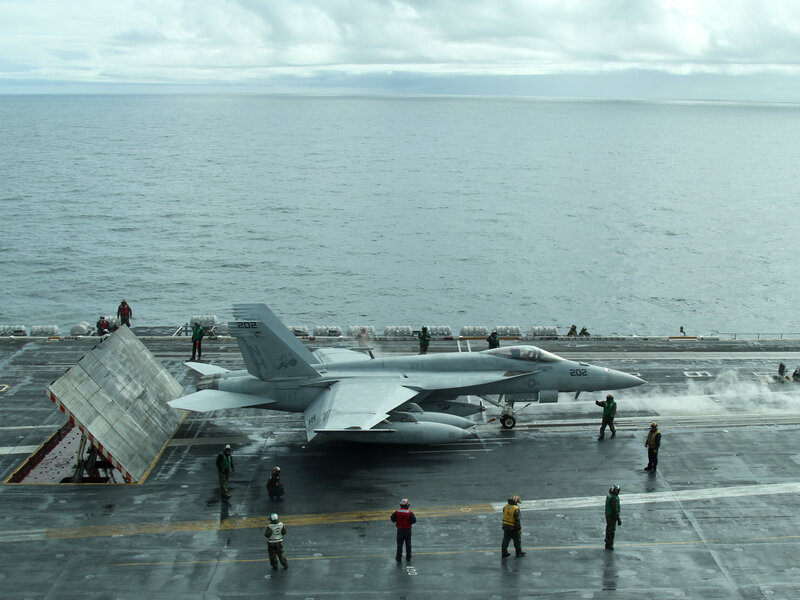
An F/A-18 Super Hornet gets ready to fly off the USS Theodore Roosevelt in the Gulf of Alaska.

Zachariah Hughes/Alaska Public Media

The U.S. Navy is looking north.

As climate change melts ice that has long blocked the region off from transit and industry, the military is figuring out how to expand its presence in the waters of the high north, primarily off the coast of Alaska.

Driving the push is that much of the commercial activity and development interest in the region is coming from nations that the Pentagon considers rivals, such as Russia and China.

The Navy’s presence in Alaska has waxed and waned over the years. The state has abundant Army and Air Force assets, with the Coast Guard spread throughout. The Navy runs submarine exercises beneath the sea ice off Alaska’s northern coast.

But until last year, no U.S. aircraft carrier had ventured above the Arctic Circle in almost three decades. The USS Harry S. Truman took part in naval exercises in the Norwegian Sea last October, the first such vessel to sail that far north since 1991.

And for the first time in a decade, this May, an aircraft carrier strike group — led by the USS Theodore Roosevelt — sailed to Alaska as part of Northern Edge, a biennial large-scale military exercise that brings together personnel from all the military branches — airmen, Marines, soldiers, seamen and Coast Guardsman. The Navy always participates, but this year, it was out in force.

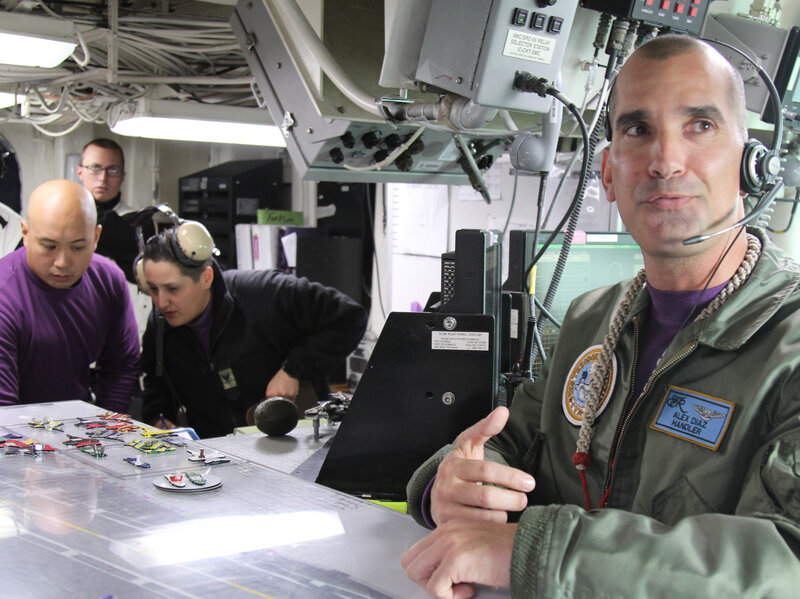
Lt. Cmdr. Alex Diaz oversees traffic on the USS Theodore Roosevelt flight deck.

Zachariah Hughes/Alaska Public Media

Rear Adm. Daniel Dwyer commands the nine ships in the Roosevelt strike group. Speaking on an observation deck several stories above the flight deck, he said climate change is adding a new urgency to training like this one as marine activity increases in Arctic waters.

“You see the shrinking of the polar ice cap, opening of sea lanes, more traffic through those areas,” Dwyer said. “It’s the Navy’s responsibility to protect America through those approaches.”

The Defense Department views the threat of military conflict in the Arctic as low, but it is alarmed by increasing activity in the region from Russia and China. A 2018 reportby the Government Accountability Office on the Navy’s role in the Arctic notes that abundant natural resources like gas, minerals and fish stocks are becoming more accessible as the polar ice cap melts, bringing “competing sovereignty claims.”

Defending U.S. interests in the Arctic

As the Roosevelt cruised through the Gulf of Alaska, F/A-18 Super Hornets took off and landed at a brisk clip. Each takeoff is a full-body experience for those on deck, shaking everything from one’s shoes to teeth. Planes are launched by a steam catapult system powered by the ship’s nuclear reactors.

Some of the jets flew more than 100 miles toward mainland Alaska and continued on past mountain ranges to sync up with Air Force and Marine Corps counterparts operating in the airspace around Eielson Air Force Base near Fairbanks. Then they returned to the Roosevelt. The whole trip lasts about four hours.

For the first time in a decade, an aircraft carrier strike group — led by the USS Theodore Roosevelt — sailed to Alaska as part of Northern Edge, a biennial large-scale military exercise.

Zachariah Hughes/Alaska Public Media

To land, the Super Hornets suddenly dropped out of the sky dangling a hook that snagged at wires bringing them from full speed to full stop in 183 feet. It looked less like a car braking and more like a roller coaster slamming still to give riders one last jolt.

“We are catching anywhere from six to 25 aircraft on this recovery,” crackled a voice over a loudspeaker on the deck. “I’m not sure yet [how many]. If they show up on the ball, we’re gonna catch ’em.”

The deck was coordinated chaos, with crew members and aircraft rotating through intricate maneuvers like a baroque ballet, billows of steam from the launch equipment periodically billowing past.

The deck crews are referred to as “skittles” because they wear uniforms that are color-coordinated to match their jobs. Much like the candy, most of the rainbow is represented. Greens take care of takeoffs and landings. Reds handle ordnance. Purples deal with fuel and are referred to as “grapes.”

The Navy says that given what is expected of it in the region, crews are trained and equipped to carry out their missions as well as any other nation’s navy.

“Regardless of the conditions: day, night, good weather, bad weather, flat seas, heavy seas, it’s the same procedure every time,” Dwyer said of the jets taking off below just as a helicopter set down on the flight deck.

A shifting focus to the “high north”

Speaking at this year’s Coast Guard Academy commencement, national security adviser John Bolton said the military will play a part “reasserting” American influence over the Arctic.

“We want the high north to be a region of low tension, where no country seeks to coerce others through military buildup or economic exploitation,” Bolton told graduates.

The Trump administration is expected to unveil a new Arctic strategy sometime this month.

Forecasters anticipate diminishing ice will reliably open up northern sea lanes, thus cutting down the time and cost moving freight from Asia to Europe but causing a rise in vessel traffic.

The military is candid that the warming climate is opening up transit routes that sea ice has long locked in. Right now, though, the U.S. naval presence is minimal.

F/A-18 Super Hornet is launched by a steam-powered catapult off the USS Theodore Roosevelt during naval exercises in the Gulf of Alaska.

Zachariah Hughes/Alaska Public Media

“If you’re gonna be a neighbor, you have to be in the neighborhood,” said Vice Adm. John Alexander, commander of the Navy’s 3rd Fleet, which is responsible for the Northern Pacific, including the Bering Sea and Alaskan Arctic.

“We’re going to have to ensure that there’s free and open transit of those waters,” Alexander said.

But the Navy faces major impediments to expanding its presence in a maritime environment as harsh as the Arctic. According to the GAO report, most of the Navy’s surface ships aren’t “designed to operate in icy water.”

The authors note that Navy officials have stated that “contractor construction yards currently lack expertise in the design for construction of winterized, ice-capable surface combatant and amphibious warfare ships.”

After years of study, the Defense Department has yet to pick a location and design for a strategic port in the vicinity of the Arctic that can permanently accommodate a strong Navy presence.

And even if the military can operate in the Arctic, it still has to get there. For now, the region’s waters are solidly frozen over for much of the year. According to the Coast Guard, Russia has more than 40 icebreakers, including three new gargantuan nuclear-powered vessels designed to ply sea lanes along the northern sea route. The U.S. military, by contrast, has just two working icebreakers.

This story comes from American Homefront, a military and veterans reporting project from NPR and member stations.

Tell the Democratic National Committee: Hold a climate debate

Target: Democratic National Committee

The next president of the United States must be prepared to take bolder, faster climate action than any leader has before. But the media is still ignoring the issue, giving cover to politicians who refuse to take action.

We need to put climate change on the national political stage. One powerful way to do that is through a presidential primary debate dedicated to the issue. Holding a climate-centered debate would highlight the climate crisis at a time when more people than ever are tuned in to national politics – and force candidates to be explicit about their commitments to meet the scale of the crisis.

Voters deserve to know:

  • Which candidates commit to acting on climate change as a “Day One” priority when in office
  • Whether presidential candidates support the Green New Deal or can offer their own climate plan that also meets the scale of the crisis
  • Candidates’ plans for a managed phase-out of fossil fuel production and end to the expansion of fossil fuel extraction
  • How candidates would protect frontline communities and ensure a transition for workers that leaves no one behind
  • How candidates would help communities adapt to the climate impacts already happening
  • Whether candidates believe that fossil fuel companies should pay their fair share of climate costs and how they will make sure it happens

The first two Democratic debates are happening this summer in two cities with deep ties to the crisis. Miami is one of the world’s most vulnerable cities with respect to sea level rise and Detroit, the former center of the global automotive industry, has long struggled with the challenges of deindustraliziation. Either would provide a powerful backdrop for a debate on this complex crisis and its solutions.

In the primary season, unless the DNC prioritizes the issue, we know that news networks and other debate host organizations won’t ask more than one or two token debate questions on climate change. We have to demand that it leads now.

2 more dead gray whales are found in Alaska, bringing the year’s toll to 75 along the US West Coast

By Jay Croft, CNN
water next to the ocean: POINT REYES STATION, CALIFORNIA - MAY 23: A dead Gray Whale sits on the beach at Limantour Beach on May 23, 2019 in Point Reyes Station, California. A thirteenth Gray Whale washed up dead on a San Francisco Bay Area beach as scientists try to figure what is killing the whales. Dozens of Gray Whales have been found dead along the Pacific Coast between California and Washington since the beginning of the year. (Photo by Justin Sullivan/Getty Images)© Justin Sullivan/Getty Images North America/Getty Images POINT REYES STATION, CALIFORNIA – MAY 23: A dead Gray Whale sits on the beach at Limantour Beach on May 23, 2019 in Point Reyes Station, California. A thirteenth Gray Whale washed up dead on a San Francisco Bay Area beach as scientists try to figure what is killing the whales. Dozens of Gray Whales have been found dead along the Pacific Coast between California and Washington since the beginning of the year. (Photo by Justin Sullivan/Getty Images)Two more gray whales were found dead this week in Alaska amid the mysterious surge of deaths within the species this year along the US West Coast, CNN affiliate KTUU reports.
 

That makes seven in Alaska and at least 75 total, in what the National Oceanic and Atmospheric Administration calls an “unusual mortality event,” the station reports.

https://www.msn.com/en-us/news/us/2-more-dead-gray-whales-are-found-in-alaska-bringing-the-years-toll-to-75-along-the-us-west-coast/ar-AACAhWi?ocid=spartandhp

One of the two found near Kodiak Island in the Gulf of Alaska showed signs of killer whale “predation,” KTUU reports.

Two more were discovered this week off Washington state.

Last month, ocean scientists said they were worried about the death rate, the highest in almost two decades. Some of the mammals were underweight, which may mean they could not find enough food in the water, a possible result of climate change, NOAA spokesman Michael Milstein said.

In all of last year, 45 gray whales were found onshore, NOAA said.

Gray whales do most of their eating during summers in the Arctic and migrate to spend half the year in Mexico.

They can reach 90,000 pounds. The species was endangered until 1994.

‘We All Owe Al Gore An Apology’: More People See Climate Change In Record Flooding

Floodwaters from the Arkansas River line either side of a road in Russellville, Arkansas, engulfing businesses and vehicles.

Nathan Rott/NPR

Angel Portillo doesn’t think about climate change much. It’s not that he doesn’t care. He’s just got other things to worry about. Climate change seems so far away, so big.

Lately though, Portillo says he’s been thinking about it more often.

Standing on the banks of a swollen and surging Arkansas River, just upriver from a cluster of flooded businesses and homes, it’s easy to see why.

“Stuff like this,” he says, nodding at the frothy brown waters, “all of the tornadoes that have been happening – it just doesn’t seem like a coincidence, you know?”

A string of natural disasters has hit the central U.S. in recent weeks. Tornadoes have devastated communities, tearing up trees and homes. Record rainfall has prevented countless farmers in America’s breadbasket from planting crops. Rising rivers continue to flood fields, inundate homes and threaten aging levees from Iowa to Mississippi.

And while none of these events can be directly attributed to climate change, extreme rains are happening more frequently in many parts of the U.S. and that trend is expected to continue as the Earth continues to warm.

For many of the people living in the affected areas, the connection feels clear.

A group of friends look at the record-high Arkansas River in Fort Smith, Arkansas. “It’s part of history now,” says Savanna Bowling. “We had to come see it.”

Nathan Rott/NPR

“I think climate change is affecting the world right now and we should probably start doing something,” says Lucero Silva, watching the cresting river in Russellville, Arkansas.

“Somebody at my office told me, ‘We all owe Al Gore an apology,'” says Breigh Hardman, standing on a bridge over the Arkansas River in nearby Fort Smith. Gore’s 2006 documentary An Inconvenient Truth spurred both activism around global warming and opposition to it.

“It just tells us we got to come to a conclusion — not to get crazy — about global warming,” says Matt Breiner, watching the river further upstream near downtown Tulsa, Oklahoma.

NPR asked nearly two dozen people in Oklahoma and Arkansas who were experiencing the ongoing flooding about their thoughts on climate change. All of them said they believed that the climate was changing, even if they didn’t directly associate the raining and floods with it, or agree on the cause. (Six people said they believed God was driving the change.)

That aligns with recent polling by the Yale Program on Climate Change Communication and George Mason University, which shows that more Americans are becoming concerned about global warming and believe in its existence, while a smaller majority understand that it’s mostly human-caused.

A follow-up report found that “directly experiencing climate change impacts” was the most common reason given by people who said they were becoming more concerned.

“Most studies do suggest that experiencing an extreme event does effect one’s beliefs about climate change,” says Elizabeth Albright, an assistant professor at Duke University’s Nicholas School of the Environment.

Albright was part of a research team that surveyed communities impacted by heavy rains and flooding in Colorado in 2013. They found that people whose wider communities were significantly impacted were more likely to be concerned about climate change and the risk of future floods.

It’s an imperfect science though.

A study by the University of Exeter last year found thatpolitical identity and exposure to partisan news were more likely to influence people’s perceptions of some extreme weather events, as they relate to climate change.

“Efforts to connect extreme events with climate change may do more to rally those with liberal beliefs than convince those with more conservative views that humans are having an impact on the climate,” said the study’s lead author, Dr. Ben Lyons, in a press statement.

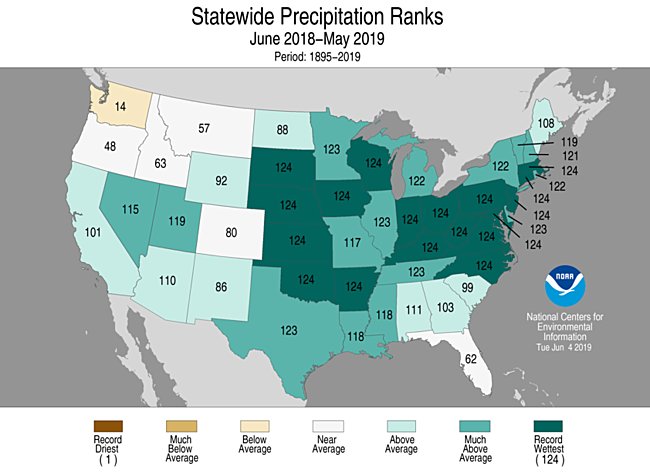
Flooding near Muskogee, Oklahoma, inundated businesses and homes. May was the second-wettest month in U.S. history, according to the National Oceanic and Atmospheric Administration.

Nathan Rott/NPR

Climate scientists and communicators in the largely conservative central Plains still see the ongoing flooding as an opportunity, though.

Marty Matlock, the executive director of the University of Arkansas Resiliency Center, works with rural and urban communities throughout the state and with the region’s massive agriculture industry.

“People are not questioning that things are changing,” he says. “The challenge is how do we motivate people, give [them] a sense that there is an actual opportunity for influencing that change in a positive way.”

Matlock believes that for too long climate scientists have been beating people “with the cudgel of information of science.”

“In a democratic society, if people don’t believe what you say, it doesn’t matter how right you are,” he says.

That doesn’t necessarily mean you need to convince people about the causes of climate change, he says. In some cases, it might be just as important to convince people and community leaders that they’ll need to adapt.

Extreme rains and flooding events are expected to be more common and more severe in America’s heartland, according to the most recent National Climate Assessment.

Joe Hurst, the mayor of Van Buren, Arkansas, a town of about 24,000 people on the Arkansas River, says there do seem to be indications that the climate is changing.

“I don’t know what causes it,” he says. “But all I know is that we’re dealing with a historic flood and now, in my mind, I’m going to be prepared for this unprecedented event to happen now more often.”

A pile of free sandbags in downtown Fort Smith, Arkansas. Volunteers filled them for homeowners and businesses trying to avoid the worst of the flooding.

Nathan Rott/NPR

Claire Heddles, Jennifer Ludden

Earth’s carbon dioxide has jumped to the highest level in human history

https://www.axios.com/earth-carbon-dioxide-level-jumped-to-record-high-f11b5e67-4eec-41f2-86da-9c951e70bad0.html

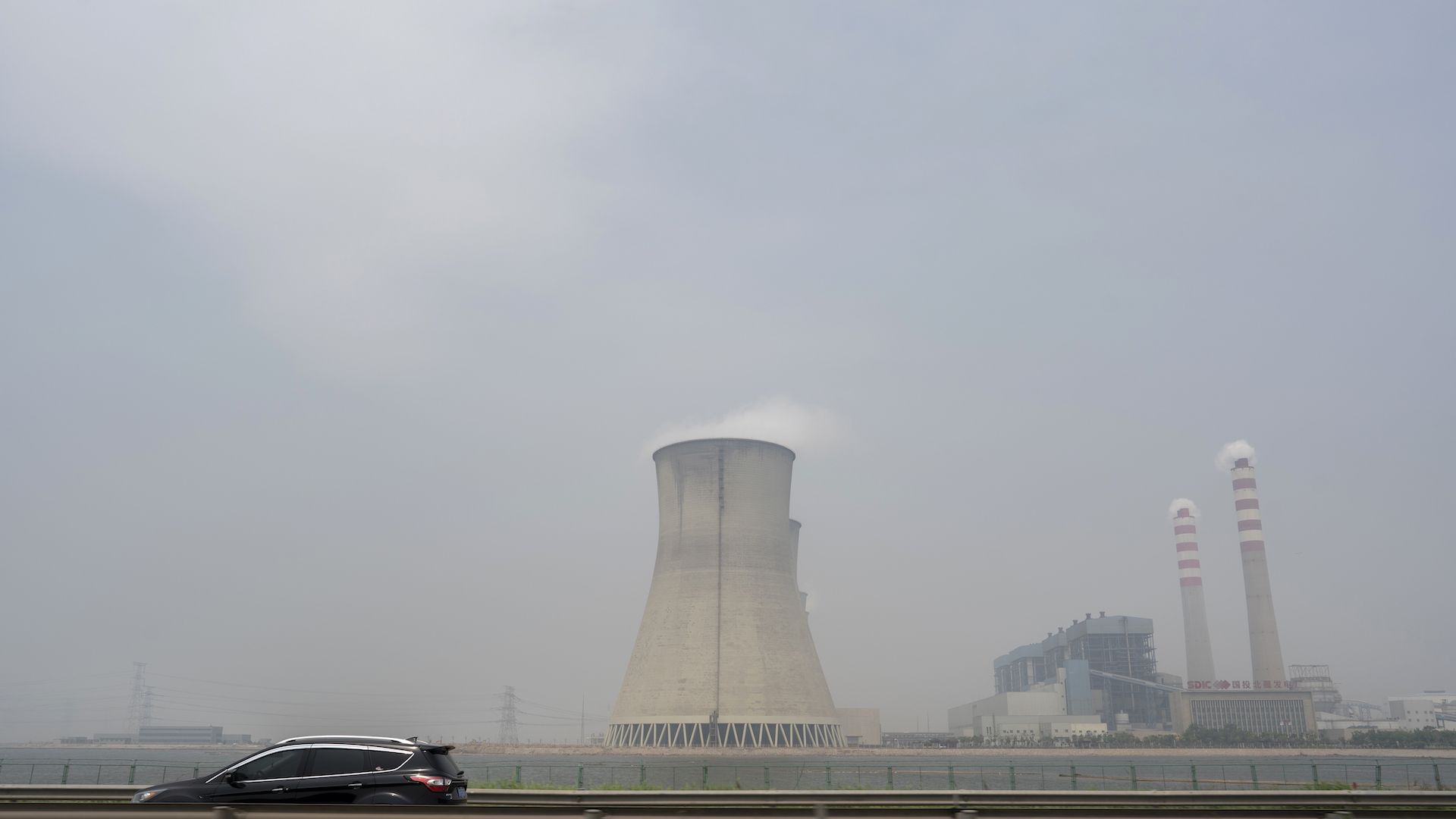
A huge thermal power plant is emitting vapor into the sky, seen from the highway from Tianjin to Beijing.
A thermal power plant located between Tianjin and Beijing. Photo: Zhang Peng/LightRocket via Getty Images

The monthly peak amount of carbon dioxide in the Earth’s atmosphere in 2019 jumped by a near-record amount to reach 414.8 parts per million (ppm) in May, which is the highest level in human history and likely the highest level in the past 3 million years.

Why it matters: Carbon dioxide is the most important long-lived greenhouse gas, with a single molecule lasting in the air for hundreds to around 1,000 years. The continued buildup of carbon dioxide due to human activities, such as burning fossil fuels for energy, is driving global temperatures up and instigating harmful impacts worldwide.

The fact that carbon dioxide levels increased by a near-record amount of 3.5 ppm in just one year illustrates that we’re headed in the opposite direction from what climate scientists have shown is needed to avoid the worst consequences of global warming.

Details: According to Scripps Institution of Oceanography, the average carbon dioxide concentration in the atmosphere recorded at the isolated Mauna Loa Observatory in Hawaii averaged 414.8 parts per million during May, which is the highest seasonal peak since such observations began 61 years ago.

  • The highest monthly mean carbon dioxide value typically occurs in May, before plants take in large amounts of greenhouse gases during the Northern Hemisphere growing season.

The National Oceanic and Atmospheric Administration operates a worldwide greenhouse gas observational network, and its data was close to Scripps’ May year-to-year data.

By the numbers:

  • Readings from NOAA show a seasonal peak of 414.7 ppm, and the second-fastest rate of increase in any year on record.
  • Studies using ice cores and other data on historical carbon dioxide levels show this is unprecedented in all of human history, and likely the highest amount of CO2 in the air during the past 3 million years.
  • The 2019 peak was 3.5 ppm higher than the 2018 monthly peak, which was the second-highest annual jump on record.
  • This continues a 6-year streak of steep global increases in carbon dioxide concentrations.
  • The rate of increase has quickened in recent decades, going from about 1.6 ppm per year in the 1980s to 2.2 ppm per year in the past decade, a trend conclusively tied to human activities.
  • Monthly CO2 values at Mauna Loa first breached the 400 ppm threshold in 2014.
  • Part of the increase since 2018 is thought to be related to an ongoing El Niño event in the tropical Pacific Ocean.

The big picture: Scientists have warned that if the world is to limit global warming to 1.5°C, or 2.7°F, above pre-industrial levels, then sharp emissions cuts have to begin in the next few years, with the world headed for negative emissions by the end of the century.

Background: In the northern fall, winter and early spring, plants and soils give off CO2, which cause levels to rise through May.

What they’re saying: “These are measurements of the real atmosphere,” says Pieter Tans, senior scientist with NOAA’s Global Monitoring Division, in a press release. “They do not depend on any models, but they help us verify climate model projections, which if anything, have underestimated the rapid pace of climate change being observed.”

What’s next: Scientists will announce a new annual figure for 2019 in early 2020, but the monthly peak is considered to be an important climate indicator.

Go deeper: Earth’s carbon dioxide level slips past another ominous milestone

Extreme weather in Midwest could impact your grocery bill

By OpinionFOXBusiness

The extreme weatherOpens a New Window. and record flooding that has been hammering the Plains and Midwest will likely impact everyone’s walletOpens a New Window..

Eight states along the Mississippi have been hit by the longest stretch of flooding since the Great Flood of 1927. Across the grain belt, farm fields are flooded. This is already having a big impact on grain prices as farmers can’t get into the field to plant, leading to the slowest pace of grain planting in recorded history.

MORE FROM FOXBUSINESS.COM…

According to the USDA, only 58 percent of the corn crop was planted as of May 26, compared to 90 percent at this time last year. Soybean planting is also well behind, as only 29 percent of the soybean crop was planted, below the average of 66 percent. Now it looks like over 6 million acres will go unplanted.

Because of this slow pace, grain market sentiment has shifted from fears of an oversupply due to the U.S.-China trade war, to now thoughts of shortages in just a few weeks. If the U.S. does not get its crop planted, there is a real risk of a global shortfall of grain.

Feed costs could rise dramatically, and eventually that will mean higher food costs on everything from meats, breads, pastas and poultry. But it is not just food prices that will rise. Floods are already impacting gasoline prices.

Just when you thought it was safe to go back to the gas pump, the floods are pushing gasoline prices higher. As a direct result of the floods, we are seeing prices in ethanol, a major gasoline additive, spike by over 10 percent in just a few weeks.

That has happened not only because the cost of corn is rising, but also because ethanol plants have slowed production and the flooding has shut down multiple pipelines and some ethanol producing plants.

Oil supply to refineries has been constrained as flooding has shut down major pipelines, even impacting the country’s biggest oil storage hub in Cushing, Oklahoma. The Ozark pipeline that is an artery out of Cushing was shut down this week due to the floods. This all translates to higher prices.

Yet, at the same time the floods are having a dampening effect on demand. Diesel demand is a far cry from what it could have been because farmers cannot get into the field to plant. If the rain doesn’t stop soon, those acres may never get planted and that expected bump in diesel demand may be gone forever.

CLICK HERE TO GET THE FOX BUSINESS APPOpens a New Window.

Gasoline demand may fall short of expectations as well. Memorial Day travelers may have stayed home as bad weather and flooding ruined many plans. So, while we are definitely seeing upward price pressures because of the damage to the supply side, the price spike may be delayed because of the hit to the demand side.

Phil Flynn is senior energy analyst at The PRICE Futures Group and a Fox Business Network contributor. He is one of the world’s leading market analysts, providing individual investors, professional traders, and institutions with up-to-the-minute investment and risk management insight into global petroleum, gasoline, and energy markets. His precise and timely forecasts have come to be in great demand by industry and media worldwide and his impressive career goes back almost three decades, gaining attention with his market calls and energetic personality as writer of The Energy Report. You can contact Phil by phone at (888) 264-5665 or by email at pflynn@pricegroup.com.

It’s Too Late for a Green New Deal; Can Other Radical Plans Work?

We all owe a huge debt of gratitude to those who have articulated the Green New Deal (GND), especially Rep. Alexandria Ocasio-Cortez and the Sunrise Movement. We needed something that focused attention on how serious climate change has become and the need for government action. The GND has shattered the neoliberal insistence upon incremental, market-oriented climate mitigation.

But, considering the emerging climate science and our diminished carbon budget after at least three decades of denial, and with carbon concentration in the atmosphere higher than it has been in 3 million years, it is too late to speed up the slow transition from fossil fuels to renewables with government facilitated renewable building; too late to build renewables under a Keynesian plan that employs all the workers in transition; too late for a transition that makes money and lets us keep living our present lifestyles.

The GND challenged neoliberalism with a “Big Government Plan” for climate mitigation, but as presently envisioned, these policy actions remain completely within a market transition where renewables will only replace fossil fuels by out-competing coal, oil and natural gas.

The GND could greatly speed up this slow transition, but it’s still a plan to let fossil fuels compete for far too long; it still doesn’t regulate production and distribution; it still envisions supplying 100 percent of today’s energy, plus projected growth. The GND is ultimately predicated upon a growing GDP in a business-as-usual scenario where there is enough created wealth to redistribute to marginalized populations.

If it had been implemented in the ‘90s, this carbon-price aided decarbonization, with renewables out-competing fossil fuels, could have worked and largely solved our problem. But now, there is no time and no carbon budget left for such a slow transition; no time for a tapering period or for a carbon price to work its market magic. As Sunrise Movement founder Varshini Prakash told The Guardian, “If there was a free market solution to the climate crisis, we would’ve seen it in the last 40 years.”

It is already possible that we are on the wrong side of a threshold to that cascade of tipping points leading to ”Hothouse Earth” and the destruction of all we love and care about, including the extinction of most species. Fossil fuels are now a potentially lethal toxin already at too high a level in the atmosphere. Fossil fuels must now be kept in the ground. Governments must regulate a scheduled, rapid, managed decline of all fossil fuel production based upon the best science and risk-management expertise.

Instead of a climate mitigation plan that is shoehorned into the economic and political status quo, there is no time to taper-in mitigation to protect the economy: emissions must peak immediately, and substantial emission reduction from the present high of more than 37 billion tons annually must happen immediately.

We don’t have until 2050 for a slow transition. We must cut emissions by half globally by 2030 — and by 65 to 70 percent in wealthy countries like the U.S. and Canada. As climate activist Alex Steffen writes, our emission reduction curve has to bend so steeply that winning slowly becomes the same as losing. Thus, GND decarbonization is a plan to fail.

Of course, like rejecting “Big Government” as a mitigation option, a government-regulated, managed decline affecting long-term international investment is anathema to the business elites who control our governments and many other institutions in our society. They will have to accept the duty of government to regulate in this emergency and join with all other stakeholders in the climate mobilization.

Importantly, instead of a plan offered to consumers to buy their support, climate mitigation should be a responsibility of citizens who recognize their duty to limit damage to future generations. We don’t need urgent action on climate to make life more comfortable and secure for the world’s richest people.

Of course, we will still need mobilization to greatly expand renewable capacity to provide enough energy to keep our society from collapse, and we will need government to stabilize an economy in transition. Still, building renewables at a scale to keep our present economy expanding while reducing emissions is now effectively a pipe dream.

Climate change is a global scale problem requiring more than national solution. What we probably need, along with an improved GND, is a fossil fuel nonproliferation treaty, which could provide broad agreement limiting new fossil fuel infrastructure and finally shifting subsidies from fossil fuels to renewables. Hopefully, such a treaty could be the basis for an international scheduled managed decline, updating the work of energy experts Christophe McGlade and Paul Ekins.

Another idea proposed by climate activists is a new Marshall Plan to coordinate a powering-down transition within trade blocs and to facilitate the transfer of renewable technology to developing countries.

Presently, these proposals are just interesting ideas which have to become reality fast if we are to keep fossil fuels in the ground globally.
Moreover, 100 percent clean energy has problems not always acknowledged. For instance, under an implemented GND, fossil fuel use could increase elsewhere, such as increased extractivism in the Global South for the minerals necessary to build solar and other renewable technologies.

Finally, the GND was crafted as one party’s plan for government action, but it also requires acceptance by several future governments. This relies upon a political swing to dominant Democratic control that is, at best, highly unlikely. There is no time to wait until at least 2020, let alone the more politically likely 2024. Again, mitigation is now a sprint requiring rapid reduction from present peak emission levels that are a huge drain on our shrinking carbon budget.

Effective emission reduction now requires coalition building and/or bipartisan legislation. It requires buy-in from all political parties and the differing demographics constituting our society. Without this unanimity, the systemic changes necessary won’t be possible.

But if we recognize that climate change is an emergency, and stop trying to pretend that we can effectively mitigate slowly, then we can achieve this broad unanimity and move toward real action.

Climate change has been an emergency for at least a decade, as we passed 400 parts per million of carbon in the atmosphere under a governance system that allowed for only minimal emission reduction. The GND initiative has been a big step forward toward needed government action, but because it remains within neoliberal constraints against actually keeping fossil fuels in the ground, it obviously isn’t enough.

In fact, if we don’t progress further and faster, the GND will become part of the predatory delay that will waste our last chance to continue to evolve.