Exposing the Big Game

Forget Hunters' Feeble Rationalizations and Trust Your Gut Feelings: Making Sport of Killing Is Not Healthy Human Behavior

Exposing the Big Game

Criminal charges possible in killing of Cincinnati gorilla

http://www.msn.com/en-us/news/us/criminal-charges-possible-in-killing-of-cincinnati-gorilla/ar-BBtH9Uc?ocid=spartandhp

Reuters
By Ginny McCabe2 hrs ago

  • USA TODAY

    Free

CINCINNATI, May 31 (Reuters) – Police may bring criminal charges over a Cincinnati Zoo incident in which a gorilla was killed to rescue a 4-year-old boy who had fallen into its enclosure, a prosecutor said on Tuesday.

The death of Harambe, a 450-pound (200-kg) gorilla, also prompted the animal rights group Stop Animal Exploitation Now to file a negligence complaint on Tuesday against the zoo with the U.S. Department of Agriculture. The group is seeking the maximum penalty of $10,000.

The group said in its complaint letter that the child’s ability to get past the barrier was proof the zoo was negligent and should be fined for a “clear and fatal violation of the Animal Welfare Act.”

Mounting outrage over Saturday’s killing of the Western lowland silverback, an endangered species, sparked criticism of both the zoo and the child’s parents. Online petitions at change.org drew more than 500,000 signatures demanding “Justice for Harambe.”

Cleveland Police are taking a second look at possible criminal charges in the incident after initially saying no one was charged. There was no indication of whether the investigation would focus on the zoo or the child’s parents.

“Once their investigation is concluded, they will confer with our office on possible criminal charges,” Hamilton County Prosecutor Joseph Deters said in a statement.

Witnesses said the child had expressed a desire to get into the enclosure and climbed over a 3-foot (1-meter) barrier, falling 15 feet (4.6 m) into a moat. Zookeepers took down the 17-year-old ape after he violently dragged and tossed the child, officials said.

A child touches the head of a gorilla statue where flowers have been placed outside the Gorilla World exhibit at the Cincinnati Zoo & Botanical Garden, Sunday, May 29, 2016, in Cincinnati. On Saturday, a special zoo response team shot and killed Harambe, a 17-year-old gorilla, that grabbed and dragged a 4-year-old boy who fell into the gorilla exhibit moat. Authorities said the boy is expected to recover. He was taken to Cincinnati Children's Hospital Medical Center. (AP Photo/John Minchillo)© The Associated Press A child touches the head of a gorilla statue where flowers have been placed outside the Gorilla World exhibit at the Cincinnati Zoo & Botanical Garden, Sunday, May 29, 2016, in… The boy’s mother said on Facebook that the boy suffered a concussion and scrapes but was otherwise fine.

Thane Maynard, director of the Cincinnati Zoo & Botanical Gardens, on Monday stood by the decision to shoot Harambe, saying he was not simply endangering the child but actually hurting him.

Zoo officials were not immediately available for comment on either the negligence complaint or the police investigation but said on Monday the exhibit was safe and exceeded required protocols.

The Gorilla World exhibit has been closed since the incident and will reopen on Saturday.

Looking at the incident through Harambe’s eyes, his former caretaker, Jerry Stones, said in a CNN interview that the breach of his habitat was likely confusing.

“Here is this animal that has this strange thing in his house,” Stones said on CNN. “He knew what adult people were but he’d never been around children. It smells similar, it looks similar but ‘What is it? Do I play with it? Am I supposed to be afraid of it? What do I do?'”

Even Republican presidential candidate Donald Trump jumped into the fray at a news conference, saying, “The way he held that child, it was almost like a mother holding a baby … It was so beautiful to watch that powerful, almost 500-pound gorilla, the way he dealt with that little boy. But it just takes one second … one little flick of his finger.”

In the wild, adult male silverbacks such as Harambe are leaders of groups of gorillas known as troops. They develop the silver patch on their coats as they mature. (Additional reporting by Barbara Goldberg and Gina Cherelus; Editing by Bill Trott)
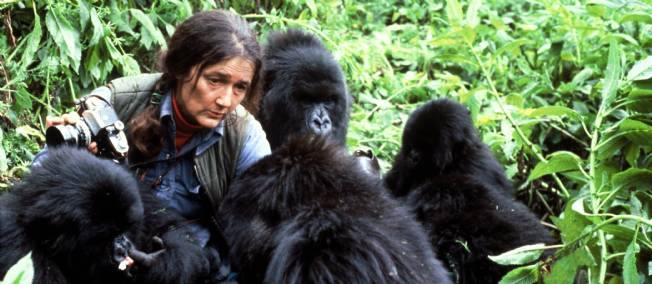
Remembering Dian Fossey–Commentary by Captain Paul Watson

1546263_10152866804715932_4014807999575359152_n

DIAN FOSSEY
January 16th, 1932 – December 26th, 1985

WE SHOULD NEVER FORGET

Commentary by Captain Paul Watson

Twenty-nine year ago today Dian Fossey was murdered at her camp in Volcanoes National Park in Rwanda. She was 53.

Fossey was one of the foremost primatologists in the world while she was alive and along with Jane Goodall and Birutė Galdikas, the group of the three most prominent prominent researchers on primates (Fossey on gorillas; Goodall on chimpanzees; and Galdikas on orangutans) sent by Louis Leakey to study great apes in their natural environments.

On three occasions, Fossey wrote that she witnessed the aftermath of the capture of infant gorillas at the behest of the park conservators for zoos; since gorillas will fight to the death to protect their young, the kidnappings would often result in up to 10 adult gorillas’ deaths. Through the Digit Fund, Fossey financed patrols to destroy poachers’ traps in the Karisoke study area. In four months in 1979, the Fossey patrol consisting of four African staffers destroyed 987 poachers’ traps in the research area’s vicinity. The official Rwandan national park guards, consisting of 24 staffers, did not eradicate any poachers’ traps during the same period. In the eastern portion of the park, not patrolled by Fossey, poachers virtually eradicated all the park’s elephants for ivory and killed more than a dozen gorillas.
Fossey helped in the arrest of several poachers, some of whom served long prison sentences.
In 1978, Fossey attempted to prevent the export of two young gorillas, Coco and Pucker, from Rwanda to the zoo in Cologne, Germany. During the capture of the infants at the behest of the Cologne Zoo and Rwandan park conservator, 20 adult gorillas had been killed. The infant gorillas were given to Fossey by the park conservator of the Virunga Volcanoes for treatment of injuries suffered during their capture and captivity. With considerable effort, she restored them to some approximation of health. Over Fossey’s objections, the gorillas were shipped to Cologne, where they lived nine years in captivity, both dying in the same month. She viewed the holding of animals in “prison” (zoos) for the entertainment of people as unethical.

The killing of so many of her beloved Mountain Gorillas provoked Fossey to take bolder actions and to speak out loudly to those she knew were compromising with the poachers.
While she was alive Fossey was severely criticized by many for her opposition to poaching. The WWF and National Geographic both cut off her funding because she refused to back off from her outspoken and physical opposition to poaching.

According to Fossey’s own letters, the Rwandan national park system, the World Wildlife Fund, African Wildlife Foundation, Fauna Preservation Society, the Mountain Gorilla Project and some of her former students tried to wrest control of the Karisoke research center from her for the purpose of tourism, by portraying her as unstable. In her last two years, Fossey did not lose a single gorilla to poachers. Meanwhile the Mountain Gorilla Project, which was supposed to patrol the Mount Sabyinyo area, covered up gorilla deaths caused by poaching and diseases transmitted through tourists. Despite this the public contributions for gorilla conservation went to these organizations and not to Fossey, although the public often believed their money would go to Fossey and this belief was encouraged by many of these same groups, some of whom blatantly exploited her name. As others became rich from her work.

Fossey wrote that much of the money collected for Gorillas was instead put into tourism projects and as she put it “to pay the airfare of so-called conservationists who will never go on anti-poaching patrols in their life.” Fossey described the differing two philosophies as her own “active conservation” or the international conservation groups’ “theoretical conservation.”

This kind of corruption and disingenuous “conservation” has grown more and more prominent since her death as conservation has become a profitable business for many groups. In other words there are groups that do, and then, there are groups that do “mail-outs.”

Today poaching continues to eradicate large numbers in Africa and threatens many species with extinction.

The same method used to capture gorillas is now used in Taiji, Japan to capture dolphins with entire pods being wiped out to provide “specimens” for display in dolphinariums.

One of the theoretical conservationists Dian Fossey had in mind would be British writer Tunku Varadarajan who wrote in The Wall Street Journal in 2002 that Fossey was a “colourful, controversial, and a racist alcoholic who regarded her gorillas as better than the African people who lived around them.”

My own thought is that perhaps she did think exactly that, and if she did, it is because the mountain gorillas are indeed better than the African people who live around them. In fact they are better than all of humanity who lay waste to nature, war on each other and wage hatred towards our fellow humans and all other species. As for being an alcoholic, considering the death and misery she witnessed, I can well understand her turning to the bottle for solace.

She was a great woman, an influential scientist and a courageous conservationist who sacrificed her life in the cause for which she fought so long and so valiantly for.

I have been fortunate to have met Jane Goodall many times and I consider Birute Galdikas a longtime personal friend. I have always regretted that when I was working with elephant conservation work in East Africa that I did not visit Dian in Rwanda. What I do know is that what she did was inspiring. My friend, the late Farley Mowat wrote the book Virunga about Dian Fossey and confided in me many things about her that the public did not know, things about her past that fired the passion in her heart to do what she did and ultimately made her a legend and a symbol of resistance to human corruption and greed.

A few hours before she was murdered she wrote the following words in her journal:

“When you realize the value of all life, you dwell less on what is past and concentrate more on the preservation of the future.”

Time to Reinvent the Species Again

by Jim Robertson

Love ‘em or hate ‘em, there’s one thing about Homo sapiens that can’t be denied: the species has come a long way from its primate origins—but that’s not necessarily a good thing. From a peaceful plant-eating past, hominids have clawed their way to the top of the food chain, and now the planet’s atmosphere, climate and web of life are all suffering for it.

We’ve evolved so far from the common ancestor we share with chimpanzees and gorillas, that now they’re just a curiosity—side show freaks—to be gawked at between bars or in tiny “habitats” at the neighborhood zoo.

They’re just animals, why should we respect them as our kin? Did they rise from their simple roots, eating from the bottom of the food chain, to become the most successful big-game hunter of all time? Do they carry out wars on a global scale that threaten the very existence of life on Earth? Have they changed the climate for the worse and caused the current extinction spasm? No, only humankind can claim all those achievements.

HumanWeapons_170And we owe it all to eating meat. The transformation from peaceful plant eater to weapon-wielding predator may have made us top dog, but, as they say, it’s lonely at the top. Not only is meat-eating hard on human health, but the carnivorous ways of such a rapidly growing population of conscious-less killers are taking the planet down with them.

We re-invented ourselves once as a species when we climbed down out of the trees and set out across the savannas, spear in hand, in search of “game.” Now it’s time to re-invent ourselves again, for the good of all. It’s not written in stone that humans have to destroy the Earth and all its inhabitants. Reinvention is aspota1 simple laying down our weapons and returning to a more sustainable place lower on the food chain. Trading in our collective ego trip and symbolically returning to the trees may go against human nature, but it’s preferable to self-imposed extinction.