U.S. Fish and Wildlife Service Issues Emergency Closure of Brown Bear Sport Hunting on Kenai National Wildlife Refuge‏

October 25, 2013

FOR IMMEDIATE RELEASE
CONTACT:
Kenai National Wildlife Refuge (907) 262-7021

SOLDOTNA, AK – The U.S. Fish and Wildlife Service (Service) today announces
an emergency closure of sport hunting of brown bears on the Kenai National
Wildlife Refuge (Refuge), effective October 26, 2013 at 12:01 am. The
emergency closure is issued pursuant to federal regulations at 50 CFR 36.42.

Operating under the assumption of lagging indicators, the known
human-caused brown bear mortalities on the Kenai Peninsula in 2013 now
total at least 66 bears. This includes a minimum of 43 brown bears taken
during spring and fall hunting seasons, and 23 bears killed through defense
of life and property takings, illegal takings, agency kills of problem
bears, and vehicle collisions. Total mortalities now represent more than 10
percent of the best available estimate of a total Kenai Peninsula brown
bear population, numbering 624 bears.

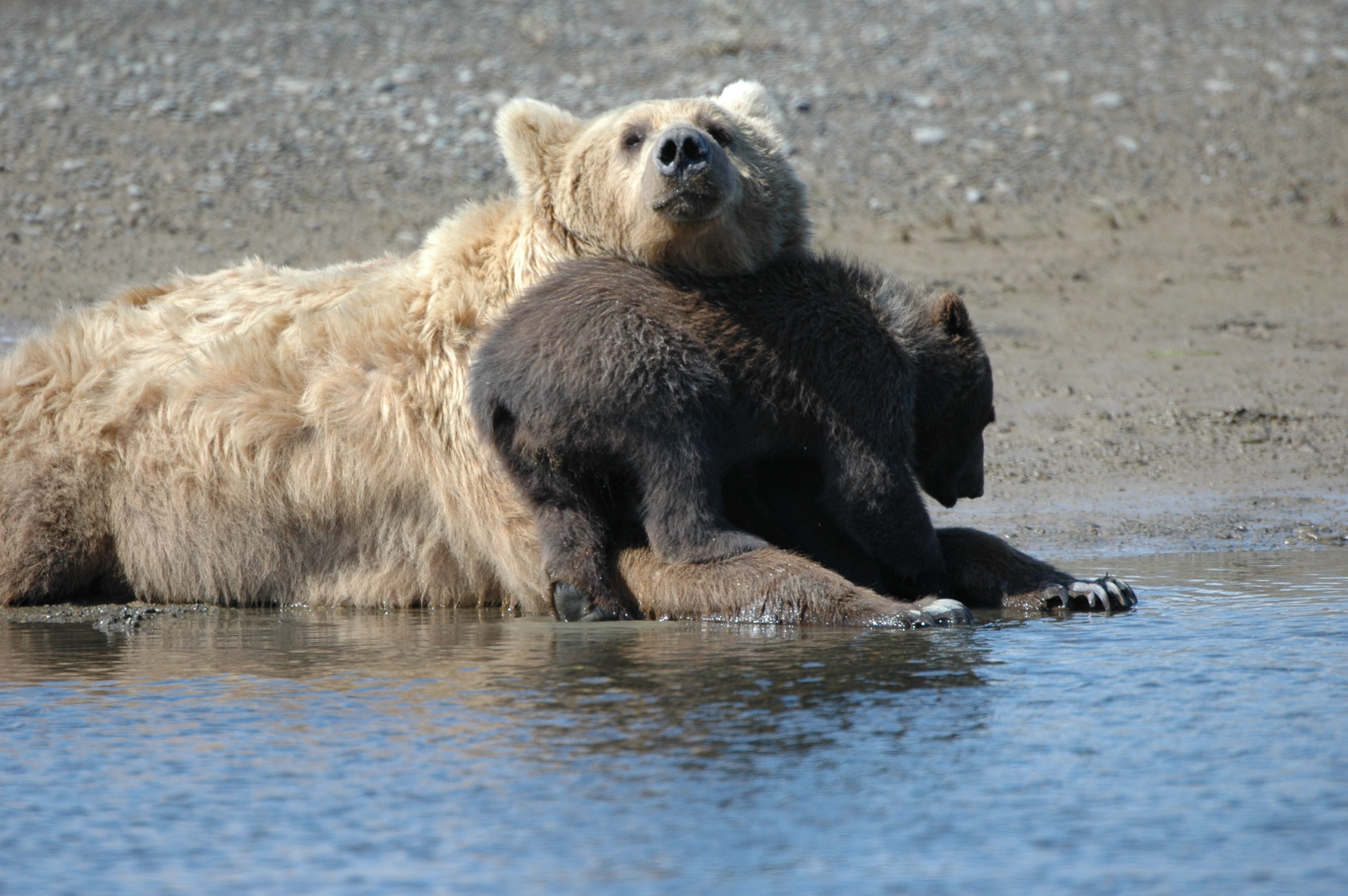
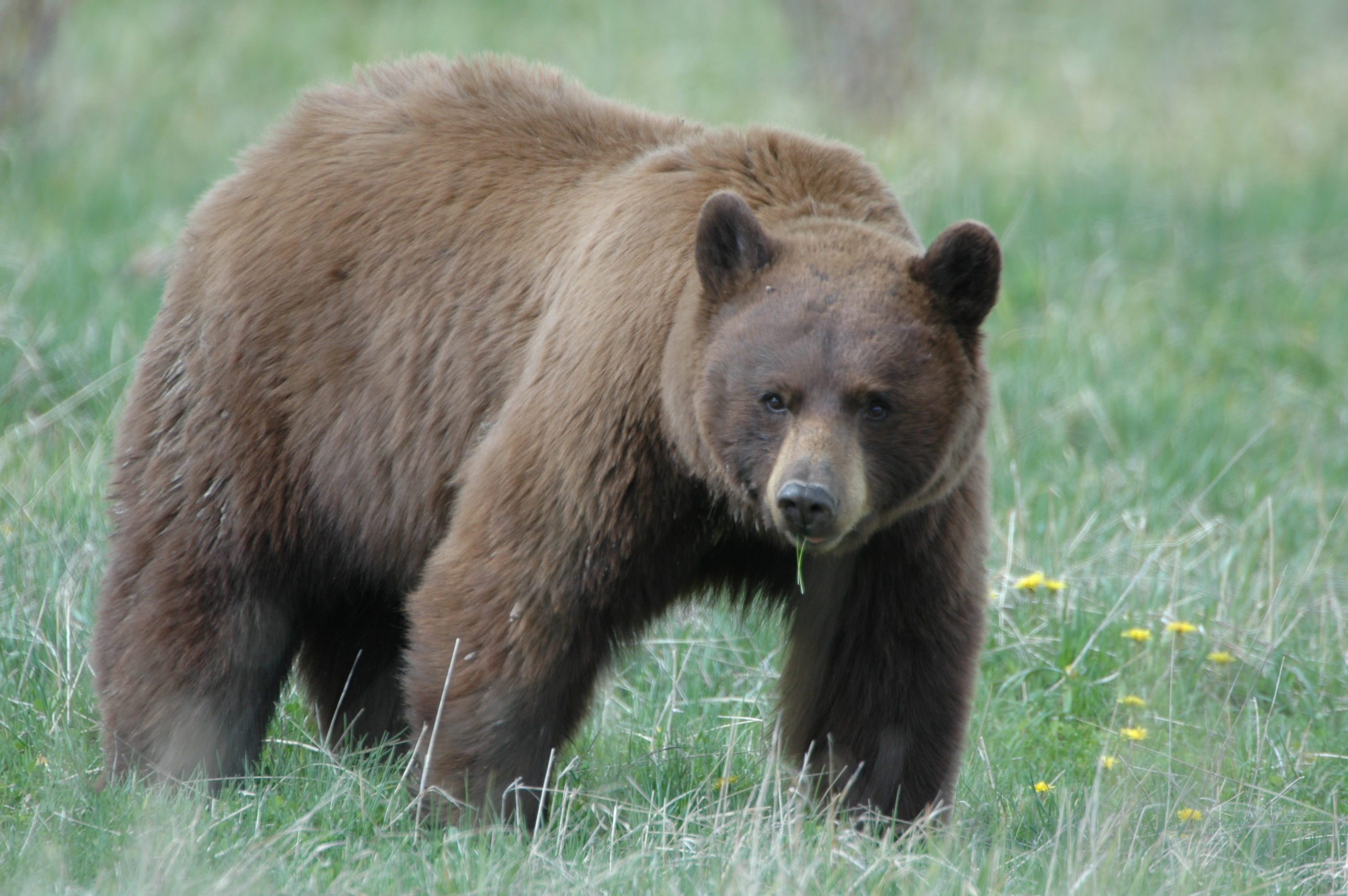
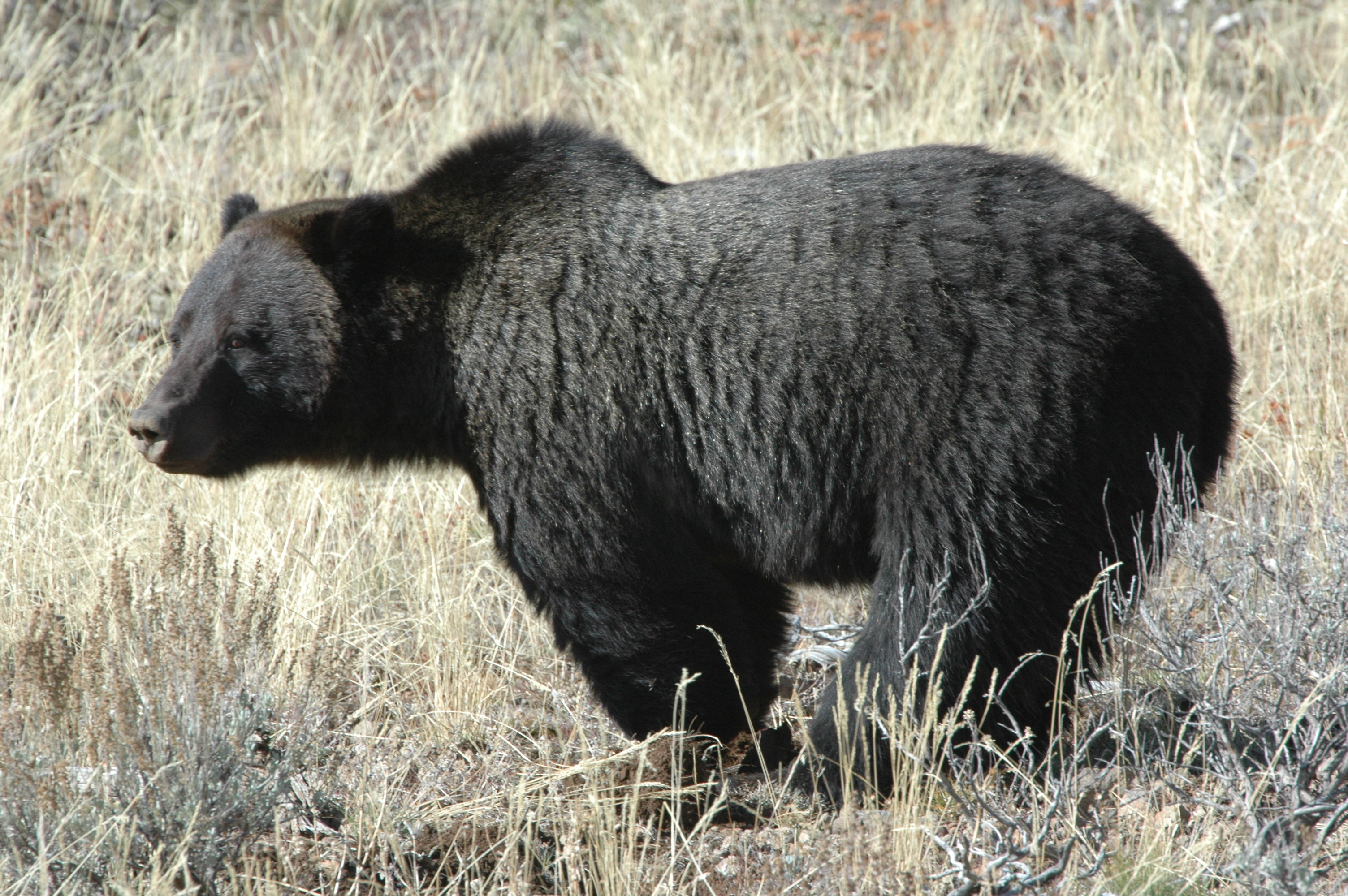
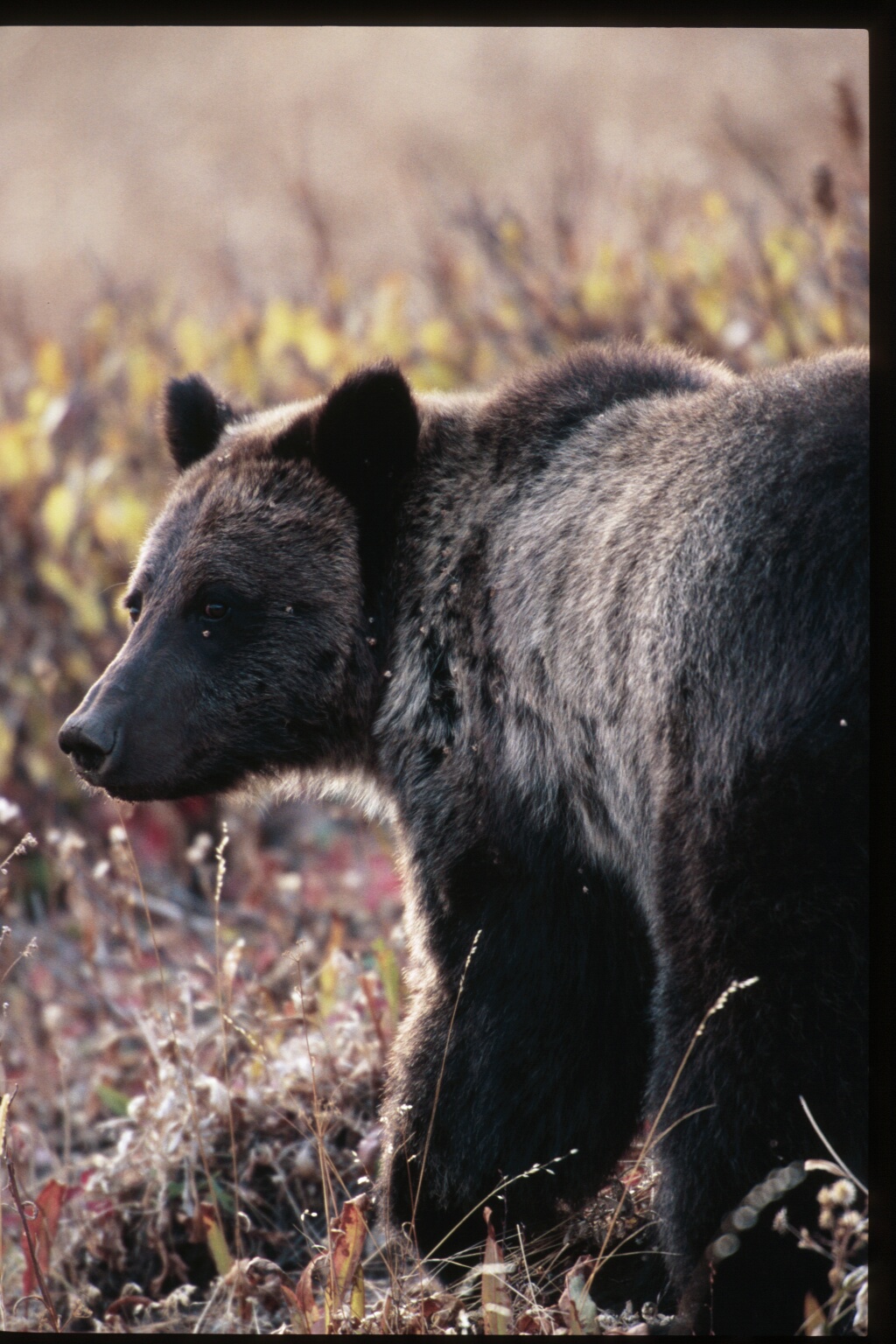
“This level of mortality is not scientifically sustainable,” said Refuge
Manager Andy Loranger in announcing the Refuge emergency closure.

In addition to the total number of mortalities, a high number of
reproductive-age female bears have been killed. Prior to 2013, the Alaska
Department of Fish and Game limited the annual number of human-caused
mortalities of adult female brown bears at 10. At least 22 adult females,
or 33 per cent of all known mortalities, have been killed so far this
year—more than double the previously established limits.

“Survivorship of adult female bears has been shown to be the primary driver
of brown bear population dynamics. Losing so many adult female bears will
have immediate negative impacts on this population,” said Refuge
Supervisory Wildlife Biologist John Morton.

“Kenai brown bears are highly valued by the public for many reasons, and
play an important ecological role,” continued Loranger. “If allowed to
continue this season and into the immediate future, the Service believes
that this level of mortality, which includes a high rate of loss of adult
female bears, will result in a substantial reduction in the Kenai
Peninsula’s brown bear population. This would create a conservation concern
for this population, which in turn would negatively impact hunters and many
other Refuge visitors who value and enjoy viewing and photographing bears.”

Actual human-caused mortalities are higher than the documented number.
“Unreported human-caused mortalities are also occurring at an unknown rate,
and must be considered when identifying sustainable harvest levels,” said
Morton.

While this emergency closure is only temporary under applicable regulations
and will last for 30 days, the Service intends to develop and implement a
longer term brown bear harvest management strategy on the Refuge.

“As it has in previous years, the Service envisions developing and
eventually implementing harvest parameters after appropriate public input
and review, in an effort to ensure that harvests remain sustainable, and
which focus on adequately protecting adult female bears for the healthy
reproduction of the brown bear population on the Kenai Peninsula,” Morton
said.

The Service will hold public hearings in the near future at which this
strategy will be presented to the public. Hearing dates will be released at
a later date.

“We do not take this closure lightly and will work with the Alaska
Department of Fish & Game to develop a strategy to collaboratively manage
brown bear populations that is consistent with the mandates of both
agencies,” said Loranger.
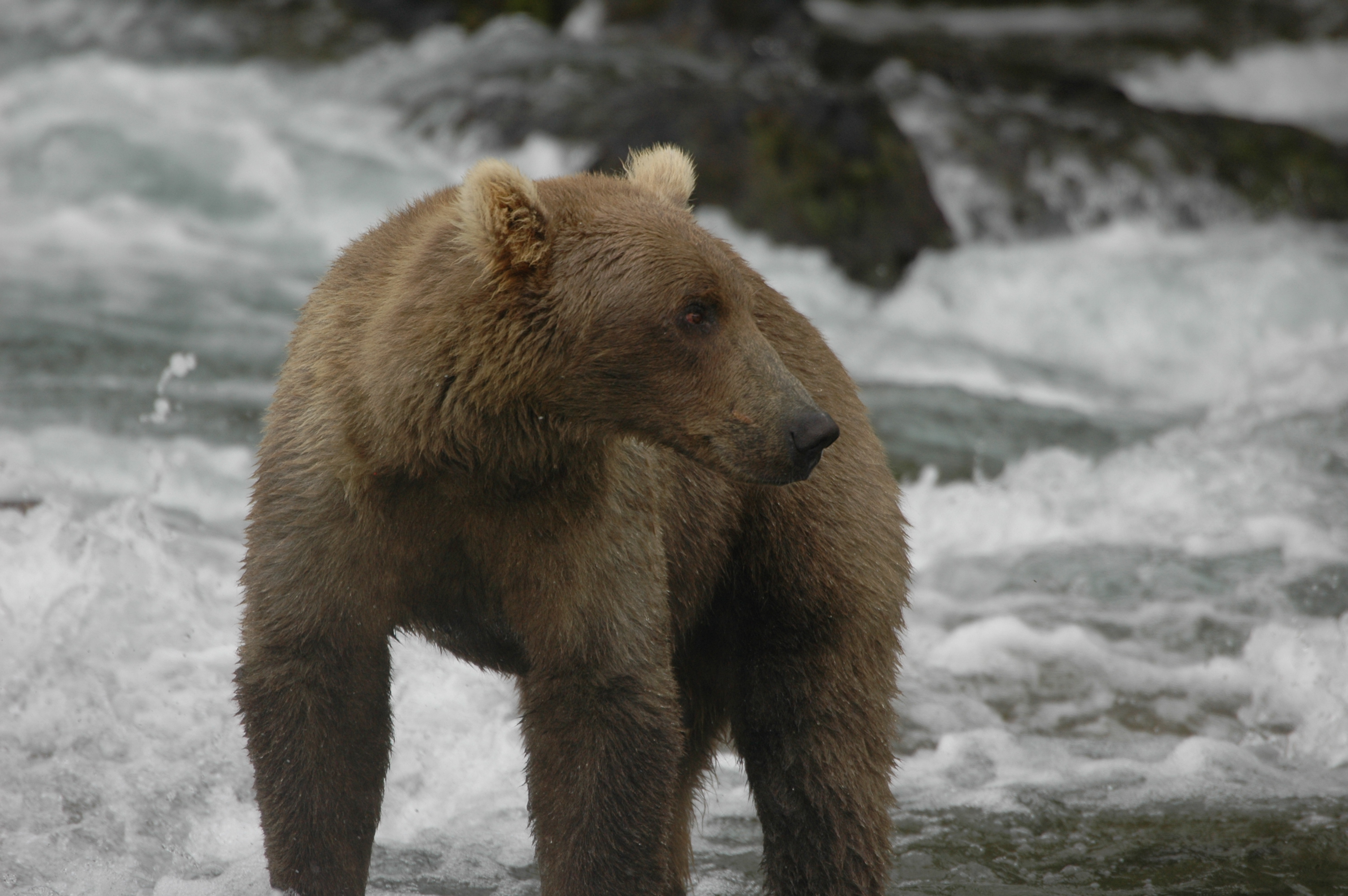
Photo Copyright Jim Robertson

Photo Copyright Jim Robertson

For additional information, please contact the Kenai National Wildlife
Refuge office during regular business hours at (907) 262-7021 .
NHLer’s B.C. Grizzly Kill Offside?

Huffpost 09/30/2013

by Chris Genovali, Executive Director, Raincoast Conservation Foundation

photo copyright Jim Robertson

photo copyright Jim Robertson

Raincoast Conservation Foundation has asked the B.C. Ministry of Forests, Lands and Natural Resource Operations, the entity responsible for managing the trophy hunting of bears in the province, to investigate the killing of a grizzly on the central coast by National Hockey League player Clayton Stoner. As a result, the BC Conservation Officer Service is investigating Stoner’s trophy killing of the grizzly bear in question.

There is widespread concern regarding the circumstances surrounding this particular hunt, including uncertainty as to whether Stoner is technically a B.C. resident. If he is not, then he shouldn’t have been issued a B.C. Resident Hunter Number card nor should he have been allowed to enter the Limited Entry Hunt (LEH) lottery to kill a grizzly.

As the ministry website states, “Participation in the LEH draw is available to any resident of B.C. who legally possesses a B.C. Resident Hunter Number.” To obtain a B.C. Resident Hunter Number and Resident Hunter Number card an individual must provide evidence that he is a resident. The legal definition of a B.C. resident is a person who “is a Canadian citizen or a permanent resident of Canada, whose only or primary residence is in British Columbia, and has been physically present in British Columbia for the greater portion of each of six calendar months out of the 12 calendar months immediately preceding the date of making an application under this Act or doing another thing relevant to the operation of this Act.”

Stoner plays for the Minnesota Wild, a U.S.-based team in the NHL. As such, he is required to live and work in Minnesota the majority of the year. The NHL regular season runs from October through mid-April. That doesn’t count time spent at training camp prior to the regular season or potential participation in the playoffs. Given the length of the NHL season and the fact Stoner plays for a U.S. based team (and has played for U.S. based teams in the NHL, AHL and WHL since 2002), it would seem implausible that he could have been physically present in B.C. for the time required to qualify as a resident.

The investigation by the province raises several troubling questions. Big picture, this event could very well end up calling into question the integrity of the LEH, as well as the B.C. government’s ability to monitor the hunt and enforce their own regulations.

The Conservation Officer Service office in Bella Coola has been closed and moved to Williams Lake. Bella Coola is the only central coast community accessible by road and is the community nearest to where the grizzly bear was killed.  “It’s fortunate that First Nations research technicians were there to observe and record this incident. Stoner’s party, or any hunters conducting potentially illegal activities, would be more likely to encounter aliens from another planet than a Conservation Officer in these remote coastal areas,” said Brian Falconer, guide outfitting coordinator for Raincoast.

In the 2002 Raincoast report “Losing Ground: The decline in fish and wildlife law enforcement capability in B.C. and Alaska,” author and wildlife scientist Dr. Brian Horejsi concluded the following:

Wildlife populations and biological diversity are endangered by chronic underfunding and marginalization of wildlife conservation-oriented enforcement programs in British Columbia and, to a lesser degree, in Alaska. This period of measurable political disinterest and low and declining priority now approaches 20 years in duration. There is little evidence available to the British Columbia or Alaska public to indicate that current enforcement capabilities are sufficient to provide effective compliance with fish and wildlife regulations, a problem being aggravated by escalating and uncoordinated land use activities. In every capability measure examined, capability today is significantly lower than it has been previously. Enforcement and protection staff are presently unable to effect widespread and long-lasting changes in resource user behavior in either Alaska or B.C. While fish and wildlife protection capability in Alaska has slipped…the evidence indicates that B.C. has now crossed the threshold at which protection of fish and wildlife populations and their habitat by enforcement services has effectively and materially been abandoned.

We stand with Coastal First Nations in their call to end the trophy hunting of bears in B.C.’s Great Bear Rainforest. Coastal grizzly bears, in particular, face numerous threats to their survival, including habitat loss and a declining supply of salmon; the additive pressure from trophy hunting exists throughout much of the Great Bear Rainforest, even in many legislated protected areas. This is more than just a “management” issue. It’s also an ethical issue. Bottom line, killing these magnificent animals for recreation and entertainment is a barbaric and anachronistic practice that should be ended on the coast of British Columbia.

Hunters Murder Two Bears, Then Whine About Injuries

Wildlife Photography ©Jim Robertson, 2013. All Rights Reserved

Wildlife Photography ©Jim Robertson, 2013. All Rights Reserved

Alright, I’ve had enough of this one-sided, narcissistic reporting!

Do I have to point out to the AP that their article completely missed the point here by making a hunter the victim of the story? They report that an hour after wounding the bear with an arrow… “The hunter located the wounded bear and shot it twice more with his bow. The bear then ran down the hill and encountered a man who had arrived to assist the hunter.”

WTF? How much suffering does a non-human animal have to go through before her plight is even considered by the media and she’s seen as the victim? Here’s how the AP titled the article:

Injured black bear injures hunter near Thompson Falls

Associated Press

KALISPELL — State wildlife officials say a 150-pound female black bear wounded by a bow hunter bit the arm of the hunter’s companion before succumbing to its injuries.

Fish, Wildlife and Parks spokesman John Fraley says a man was hunting near Thompson Falls on Tuesday when he shot a black bear with a bow and arrow.

The hunter waited for several hours to make sure the bear was dead before he started tracking it. The hunter located the wounded bear and shot it twice more with his bow. The bear then ran down the hill and encountered a man who had arrived to assist the hunter. The bear bit the second man’s arm before it died.

The injured man was treated at the hospital in Plains and released.

FWP says the hunter legally tagged the bear.

….and here’s another article with the same slant, which also ends with a dead bear. Note that the real victim was just out eating berries…

September 11, 2013 at 2:43 PM

Shots from other hunters halted grizzly attack in Alaska

Posted by

ANCHORAGE (AP) — An Alaska grizzly bear wounded by a Rhode Island hunter survived more than 90 minutes before attacking the man and slashing his head.

Alaska State Troopers say John Matson sustained injuries Monday to his head and body. The wounds were not considered life-threatening.

Troopers tell the Anchorage Daily News that Matson was hunting with another hunter and an assistant guide.

Matson shot a bear feeding on berries. The bear rolled into brush but popped out and ran.

The hunters waited about 90 minutes before going into thick cover after the bear.

Troopers say the assistant guide heard Matson scream as the bear attacked. The other men fired shots and the bear ran off.

The men walked about a mile to their camp. Matson was flown Tuesday to Anchorage

NHL Player’s Grizzly Shootout

September 5, 2013 Elana Pisani

(WILDLIFE/ANIMAL CRUELTY) CANADA — Another celebrity joins the likes of GoDaddy CEO Bob Parsons, the Trump sons, and musician Ted Nugent in their lack of civility and sense of entitlement when it comes to wildlife. Hockey player Clayton Stoner is in the news after pictures of him with a grizzly bear corpse he had hunted and killed was posted on social media sites. Stoner held the grizzly bear’s severed head and paws while smiling and posing for the camera. Although Stoner, who plays for the Minnesota Wild, had a legal permit for hunting, his actions and his attitude toward wildlife is appalling to animal rights activists and he makes no apologies. Read the full article for Stoner’s statement and sign the petition to ban grizzly bear hunting in British Columbia. — Global Animal

photo copyright Jim Robertson

photo copyright Jim Robertson

Man Mauled by Grizzly in Alaska was Hunting Guide

Unfortunately these type of stories always seem to end with one or more animals dead…

Photo Copyright Jim Robertson

Photo Copyright Jim Robertson

Man mauled by grizzly in Alaska recounts attack

ANCHORAGE, Alaska (AP) — A man who recently was mauled by a grizzly bear near northern Alaska’s remote Brooks Range said he recognized the animal that left him with broken teeth and a deep gash in his arm from his guide trips.

Jim Tuttle said he and the hunters he guided often spotted the bear, nicknamed Buddy. But the animal was never aggressive toward them until two weeks ago, when Tuttle was walking along a creek and saw it charging.

Tuttle said 16 years of guiding in the area had dulled him to the risks of working in bear country. When the incident occurred earlier this month, he was walking to a caribou carcass by himself, armed only with a pair of trekking poles.

“I am partly to blame. I got complacent, and I paid for it,” he told the Anchorage Daily News (http://bit.ly/19VFd8D ). “I guess I should have had a gun in my hand, safety off, ready to shoot.”

He said the attack northwest of Anaktuvuk Pass lasted less than 15 seconds. When it was over, Tuttle was spitting out broken teeth and needed a tourniquet on his left arm. One of his cheekbones was cracked.

Because of dense fog, Tuttle had to wait 36 hours for a National Guard helicopter to reach him. Following surgery and dozens of stitches, he is recovering at his Anchorage home.

Tuttle suffered nerve damage to the face and wounds to his groin and knee have temporarily hobbled him. A cast on his left wrist has fixed his forearm in place so it can grow back muscle.

Tuttle, 52, said he feels lucky to be alive.

He had flown into the hunting camp in early August, where he planned to stay for two weeks. The camp was 15 miles from the base camp run by his outfitter, Arctic North Guides.

Chris Carrigee, who stayed in Tuttle’s camp with his son before the mauling, said grizzlies were commonly in the area and would eat meat scraps that hunters left behind.

Carigee had taken photographs of his son and Tuttle in front of Buddy with their coffee and oatmeal. He said he didn’t feel there was any danger.

On Aug. 14, after Carrigee and his son left, Tuttle was working with new hunters. The group killed a caribou that morning. They carried some of the meat back to camp and ate lunch before Tuttle returned to the carcass.

He heard the bear coming from behind him. He swung his hiking poles in the animal’s face, but the bear knocked him over and bit him on the arm and hand before walking away.

“I thought maybe I’d get lucky, and she’d leave. No, she turned right back around, and then really chewed and got into where she could bite my face,” Tuttle said. “I said to myself, ‘You’re dead.’

After the bear left, Tuttle made a tourniquet from rope in his backpack, and waited 10 minutes to make sure the bear didn’t return, before limping back to camp.

The hunters called to request a rescue, but the camp was fogged in.

The owner of Tuttle’s outfitting company flew in the following morning during a break in weather with a retired paramedic and medical supplies. But they left Tuttle, believing they couldn’t fly him all the way to a hospital.

At 3 a.m. the following morning, the National Guard helicopter came.

The bear was killed by one of the hunters in Tuttle’s group. Harry Reynolds III, a retired biologist who worked for the Alaska Department of Fish and Game for more than 30 years, said it’s hard to say what made the bear attack. “They’re wild animals,” he said.

———

Information from: Anchorage (Alaska) Daily News, http://www.adn.com

Associated Press

Wolf and Grizzly Count Skewed

Photo copyright Jim Robertson

Photo copyright Jim Robertson

Counting Bears

New York Times Editorial                                               http://nytimes.com

By THE EDITORIAL BOARD

Published: July 7, 2013

There is nothing simple about counting grizzly bears. But counting them accurately will help determine whether they remain on the endangered species list or are delisted. The Interior Department’s Fish and Wildlife Service says there are about 700 grizzlies in the greater Yellowstone ecosystem, more than the 500 it deems essential for a healthy population. But a new study in the journal Conservation Letters calls those numbers into question.

A count is a projection, based on assumptions about the reproductive and survival capacity of grizzlies. The agency assumes that the bears live until they are 30 years old and reproduce at constant rates all along. This is a mathematical convenience, not a biological observation. The study argues that the inaccuracy of previous counts means that biologists know less than they think and concludes that grizzly numbers appear to have increased simply because government biologists are working harder to count the bears.

For these reasons, one federal researcher has said that current estimates are “essentially worthless.” Some biologists argue that a total of 500 bears isn’t nearly enough to guarantee a genetically healthy population. Their natural habitat — high-elevation pine forest — has been devastated by the mountain pine beetle. This has resulted in more frequent contact with humans, which nearly always ends in dead bears.

With some species, the Fish and Wildlife Service has done a good job chronicling and aiding their recovery. But those species do not include top predators like the gray wolf and the grizzly bear. Fish and Wildlife needs to pay close attention to the criticisms of its bear count and bear management plan. It is hard to imagine how a species whose habitat has been devastated and whose numbers are uncertain could be removed from federal protection.


Wolf or Coyote, Which Should You Shoot?

At the bottom of this post is a photo quiz to test your skill at species identification and/or differentiation to go along with this action alert from WildEarth Guardian…..

Poachers [hunters] are shooting Mexican wolves in cold blood and the government is doing almost nothing about it.

Why? Because the Department of Justice has a policy that basically allows the killers to make the excuse that they thought they were shooting at a coyote.

And so anti-wolf forces are just laughing it off.

Sound outrageous?  Well it is.  What’s worse is that it’s now happened dozens of times. With the body count mounting, we said enough is enough. So last week we filed a landmark lawsuit to stop the practice of letting killers get off scot free. Now we urgently need your help!

We need to raise $20,000 in the next 21 days to ensure we can defend wolves in court – thanks to a fellow outraged Guardian, the first 50 gifts will be matched dollar for dollar, up to $10,000! With less than 75 Mexican wolves in the wild we need to act urgently. Please contribute to our Mexican Wolf Protection Fund.

The Department of Justice has decided to simply walk away from enforcing the Endangered Species Act, which strictly prohibits killing of endangered species—no matter the excuse. As a result it’s not only killers of Mexican wolves that have not been prosecuted, but also killers of other endangered species, including Grizzly bears, whooping cranes and California Condors.

Because of its so-called “McKittrick Policy,” the Department of Justice is loathe to charge or prosecute individuals who kill “endangered” species if they claim that they mistook the identity of the animal as their defense.

Since 1998, at least 48 endangered Mexican wolves have been shot, but the government has only pursued two cases! WildEarth Guardians believes it’s time the wildlife poachers are brought to justice, but we need your financial support.

________________

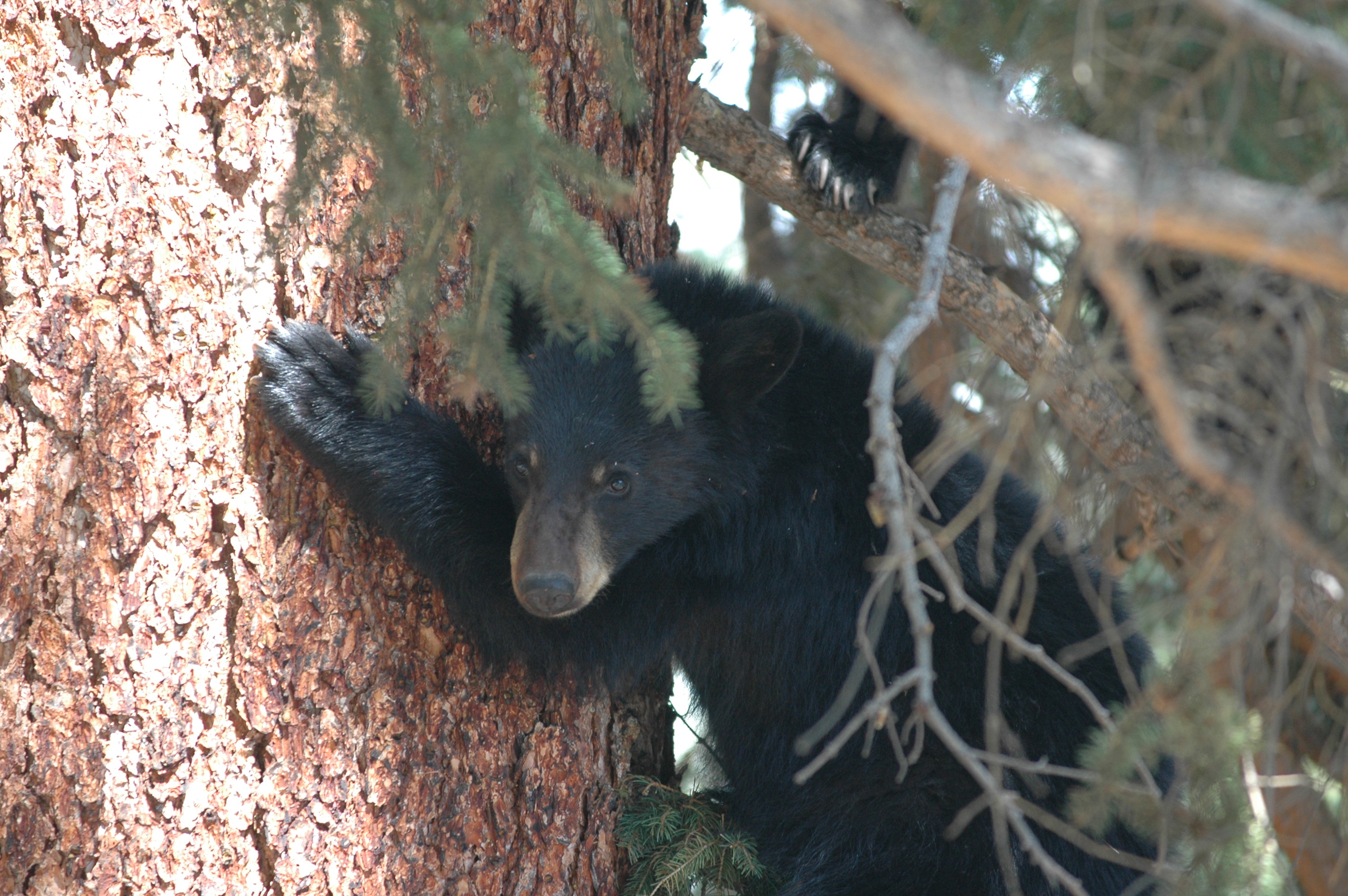
…So, just how hard is it to tell a wolf from a coyote? A black bear from a grizzly? Should hunters be trusted to make that call?

I’ve posted some of my photos below so you can decide for yourself whether coyote hunting should be legal in an area where only 75 individuals of a critically endangered subspecies of wolves exist; or if black bears should be hunted in a grizzly recovery zone.

(Answers at bottom of post.)

Let’s start with an easy one. Choose which is the grizzly bear from the following two photos:

1.

Wildlife Photography Copyright Jim Robertson

Wildlife Photography Copyright Jim Robertson

2.

DSC_0262

So how about these two; same question, (left or right)?

82236aa124e9099856c9b595bcea598c  blue eyed black bear

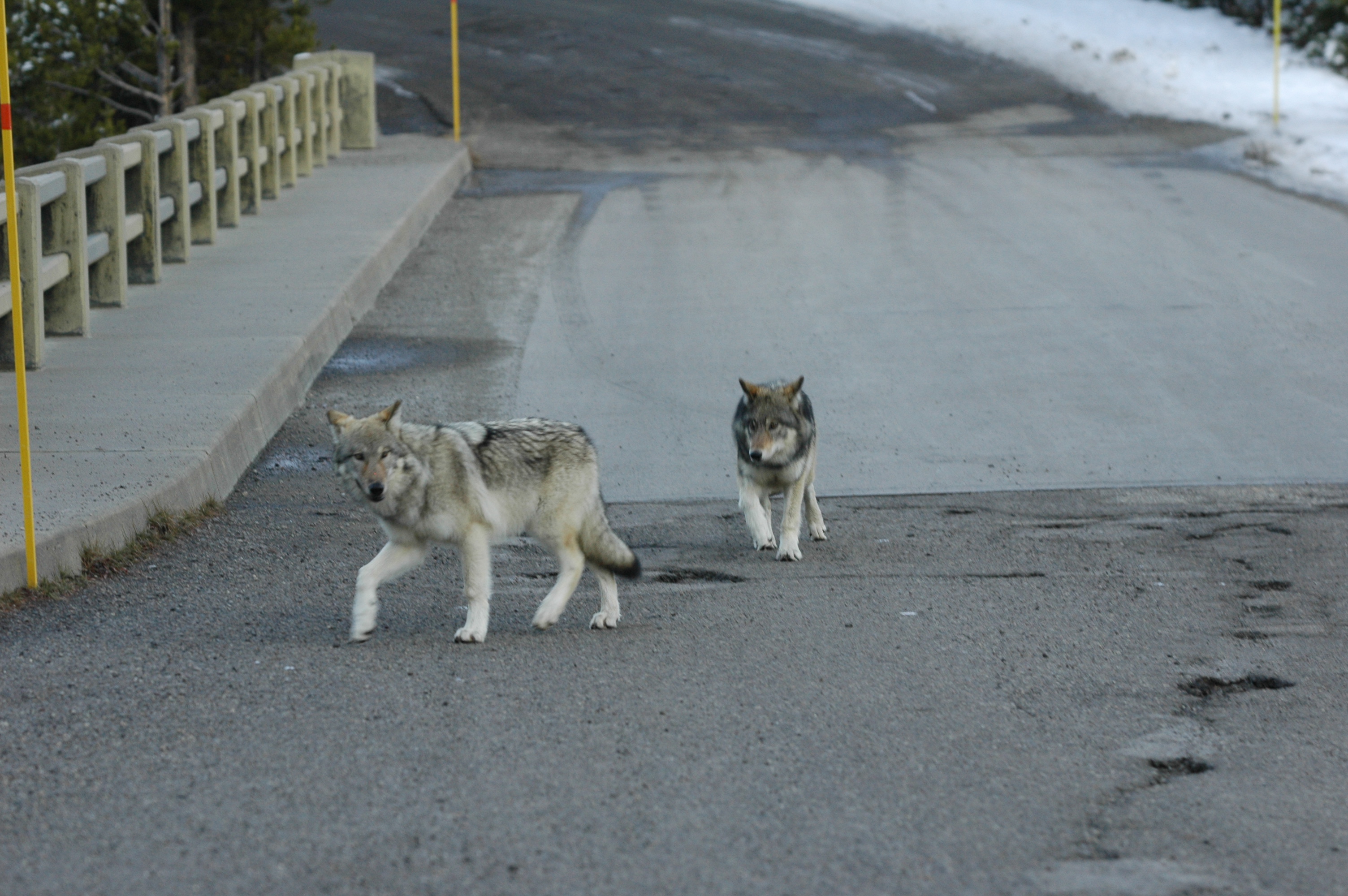
Now, which of these is the wolf?

DSC_0054

DSC_0298

Ok, this last one was a trick question; the two crossing the bridge are young wolves. But you get the point, it’s sometimes hard to tell.

Number 2. is the grizzly, as is the photo on the left below it.

Part of the credo of the alleged “ethical” hunter is, don’t pull the trigger unless you’re dead sure of your target. Better yet, don’t pull it at all; none of these animals deserve to die for your sporting pleasure.


The True Nature of the Grizzly Bear

Here’s another older letter to the editor (this time to small, local paper in Northeast Washington), that I found in my archives…

A couple of months ago I may have sided with the attitude that if grizzly bears come back to the North Cascades on their own, fine, but there’s no need to reintroduce them. But now, after a rash of anti-grizzly letters have appeared in this paper, I’m ready to become one of the champions of their full recovery here. I hope your readers are laughing off the letters from these misguided, close-minded fanatics and will learn for themselves the true nature of the grizzly bear, instead of jumping on the fear bandwagon and turning their backs on this vanishing species.

One of the common misconceptions frequently stated is that these bears are fearless and have no respect for man. This would lead you to believe that grizzlies would soon be wandering the streets of Winthrop. The fact is, grizzlies will avoid man if at all possible and will choose to inhabit the most rugged and remote areas. I worked for years in known grizzly country in Montana and the Selkirk Mountains of Washington and only sighted a grizzly in those areas once (although I saw numerous black bears).

On the other hand I’ve seen scores of grizzlies and have had numerous positive encounters with them in Yellowstone and national parks in Alaska where bear hunting is not allowed. In one case, I came face to face with a large grizzly on a narrow, brushy trail. I rounded the corner and nearly prodded him with my fishing pole before seeing him. The grizzly did not charge, but merely waited until I moved off the trail before he continued on. As John Crawford put it in an article entitled, “Getting along with grizzlies,” “…Confidence devoid of cockiness and a deep basic respect and fondness for grizzlies” should be our attitude if we meet up with Ursus arctos. Crawford goes on to describe other typical bear encounters. In one case, two B.C. trail workers met a grizzly who was running toward them in pursuit of a grouse. The bear did not see the men, but when he got a scent of them, “he reacted as though he’d run into a wall. His front legs stiffened; and mud splattered as his paws pushed out to break.” Then, “the bear turned and walked slowly, sullenly away. As soon as he was out of sight…he broke into a gallop…”

To those people who can’t appreciate living near one of the last wild areas in the lower 48, there are plenty of place to live where you won’t have to face the remote possibility of encountering a wild animal. If we are not willing to allow grizzly bears to exist in the rugged Cascade Mountains, what can we say if elephants are wiped off the African continent, or pandas have joined the dinosaurs?

Text and Wildlife Photography ©Jim Robertson, 2013. All Rights Reserved

Text and Wildlife Photography ©Jim Robertson, 2013. All Rights Reserved

Don’t Be an Ursiphobe

The first half of this post was excerpted from the chapter “Bears Show More Restraint than Ursiphobic Elmers” in my book, Exposing the Big Game: Living Targets of a Dying Sport

An irrational fear of bears dates back to the earliest days of American history and is customarily accompanied by obtuse thinking and quirky spelling. The most famous inscription (carved into a tree, naturally) attributable to Daniel Boone (that guy who went around with a dead raccoon on his head) bragged how he “…cilled a bar…in the year 1760.” The bears Boone killed (and there were many) in North Carolina and Tennessee were black bears, a uniquely American species that, like coyotes, evolved on the Western Hemisphere.

Greatly fearing the grizzly bears they discovered on their voyage up the Missouri River to the Pacific, Lewis and Clark were among the first frontiersmen responsible for leading them down the path to near-extinction. In a May 5, 1805, entry in their journals, Lewis quilled of the “turrible” grizzly, “It was a most tremendous looking anamal and extreemly hard to kill.” Clark and another member of their party pumped the unarmed bear with ten shots of lead before he finally succumbed.

Between 50,000 and 100,000 grizzlies once inhabited the western continental US before incoming settlers shot, poisoned and trapped them out, quickly snatching up prime valley bottoms (the preferred habitat of grizzly bears) for themselves and their livestock. Thus driven into desolate high country, the rare grizzlies who hold on in the lower 48 are allowed only two percent of their historic domain. The current population of 500 is essentially marooned on islands of insufficient wilderness, cut off from one another by freeways, urban sprawl and a network of barbed wire fences that spell “keep out” to any grizzly who knows what’s good for ’em.

In the vein of fables handed down for generations, bear tales have been told, embellished upon, amplified and retold by sportsmen wanting to justify hounding, baiting and just plain killing. As Charlie Russell, author of Grizzly Heart: Living without Fear among the Brown Bears of Kamchatka, tells it:

“Hunting guides describe bears as ferocious, unpredictable and savage predators. They tell one horrifying story after another about people being torn apart. The victims are always those who approached the encounter poorly armed. Then the guides move on to recount countless acts of sportsman bravery: tales of real men stopping huge angry bears just short of the barrel of their guns. They keep it up until their clients are shaking in their boots, barely able to muster the courage to face the dreadful foe.”

Slowly but surely, hyperbolic bear tales are being replaced by the honest truth about bears and folks are waking up to the reality that bears aren’t really out to get them, as evidenced in this recent article from the Calgary Herald:

http://www.calgaryherald.com/Overcoming+fear+grizzlies+survival+species+says+author/8323704/story.html

Overcoming fear of grizzlies key to survival of species, says author

Albertans need to stop being afraid of grizzly bears and learn to live with the animals to protect the threatened species in the province, says the former superintendent of Banff National Park.

Kevin Van Tighem, a fourth-generation Calgarian who worked with Parks Canada for three decades, said it’s time to reconsider how bears are managed in the province.

“If we really want bears to have a future, we need to manage them without fear,” he said in an interview with the Herald about his new book, Bears Without Fear. “We are primarily managing around a risk averse, keep-bears-scared-of-people paradigm.

“I don’t support bear hazing, I don’t support the Karelian bear dog program or the long-distance relocations.”

The strategies are all part of Alberta’s Grizzly Bear Recovery Plan 2008-2013, which was implemented after studies found there were fewer than 700 grizzly bears in the province — a number that led to their status as a threatened species.

All but one of the 15 grizzly bear deaths on provincial land (another two bears were hit and killed by a train in Banff National Park) in 2012 were caused by humans.

In addition, a total of 31 grizzly bears have been relocated by the province after threatening public safety, attacking livestock or damaging property — up from last year’s 24 “problem” bears.

Research shows relocation can triple the mortality of grizzly bears, which has raised concerns among conservationists.

Van Tighem said moving bears out of their habitat is part of the problem, pointing to the relocation of a mother grizzly bear and her three cubs out of Canmore last spring as an example.

“These were totally harmless bears,” he said. “They weren’t scared of people and because they weren’t scared of people, whenever they were surprised by a bicyclist or a dog walker, nothing bad happened. The mother would basically look and say, ‘Well, that’s people. They aren’t scary, so I don’t have to react in a scary way.’

As a result, he said the province took the best possible bears to live around and relocated them because they were worried about what could go wrong.

“We just can’t do that anymore,” said Van Tighem.

Text and Wildlife Photography ©Jim Robertson, 2013. All Rights Reserved

Text and Wildlife Photography ©Jim Robertson, 2013. All Rights Reserved