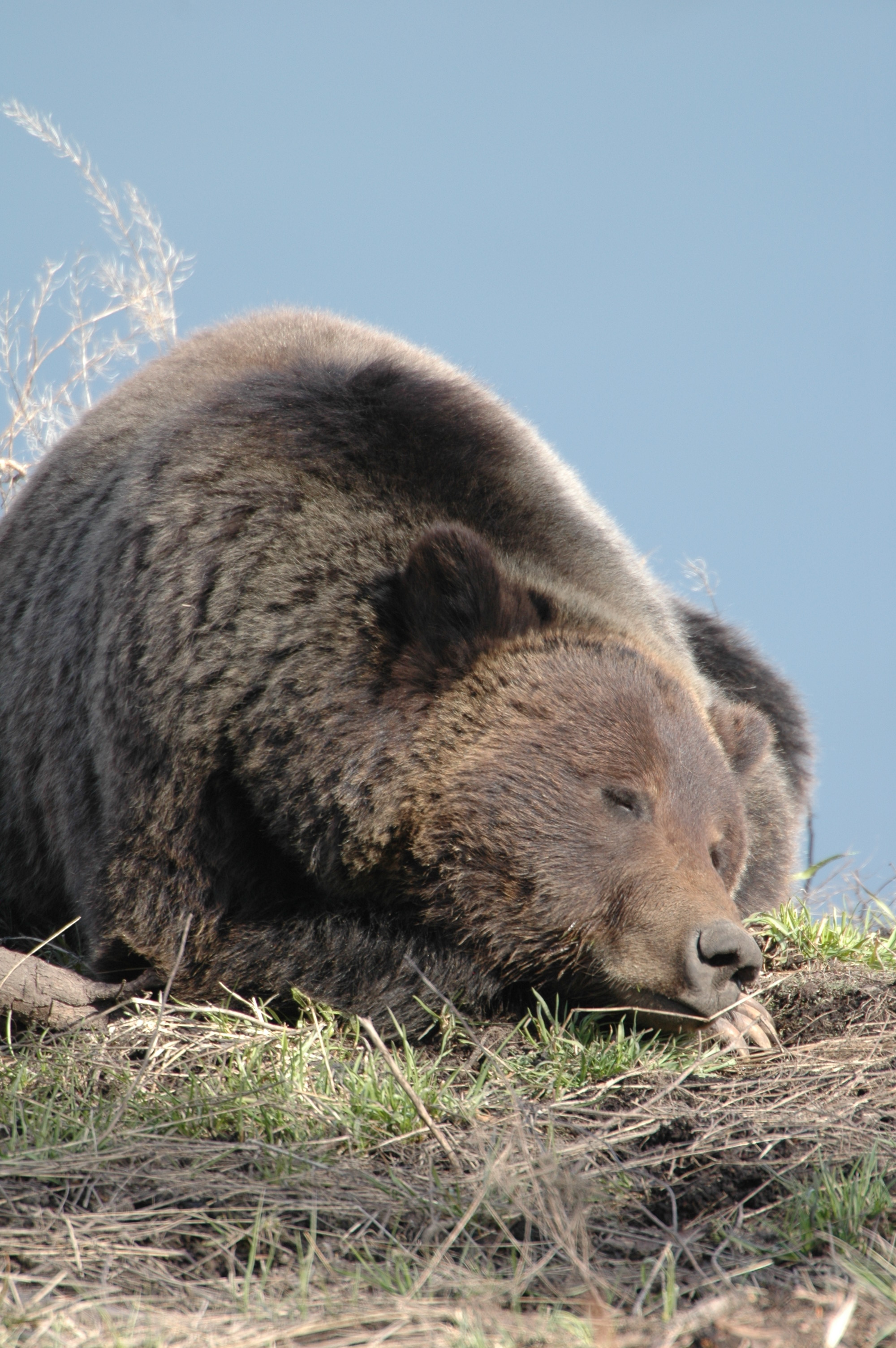
Tell the Calgary Herald NO grizzly bear hunting

According to the Calgary Herald, a “debate” is surfacing (concocted and spurred on by the Herald itself) over whether to resume a hunt on grizzly bears in southwestern Alberta.

The grizzly recovery plan was put in place after studies found there were  fewer than 700 grizzlies left in Alberta, leading the government to declare the  species threatened.

Please vote NO in their poll and share your thoughts with the editorial board Here.

Photo Copyright Jim Robertson

Photo Copyright Jim Robertson

It’s Official: Montana Hates Wildlife

To the casual observer, it would surely seem that Montana hates its wildlife.

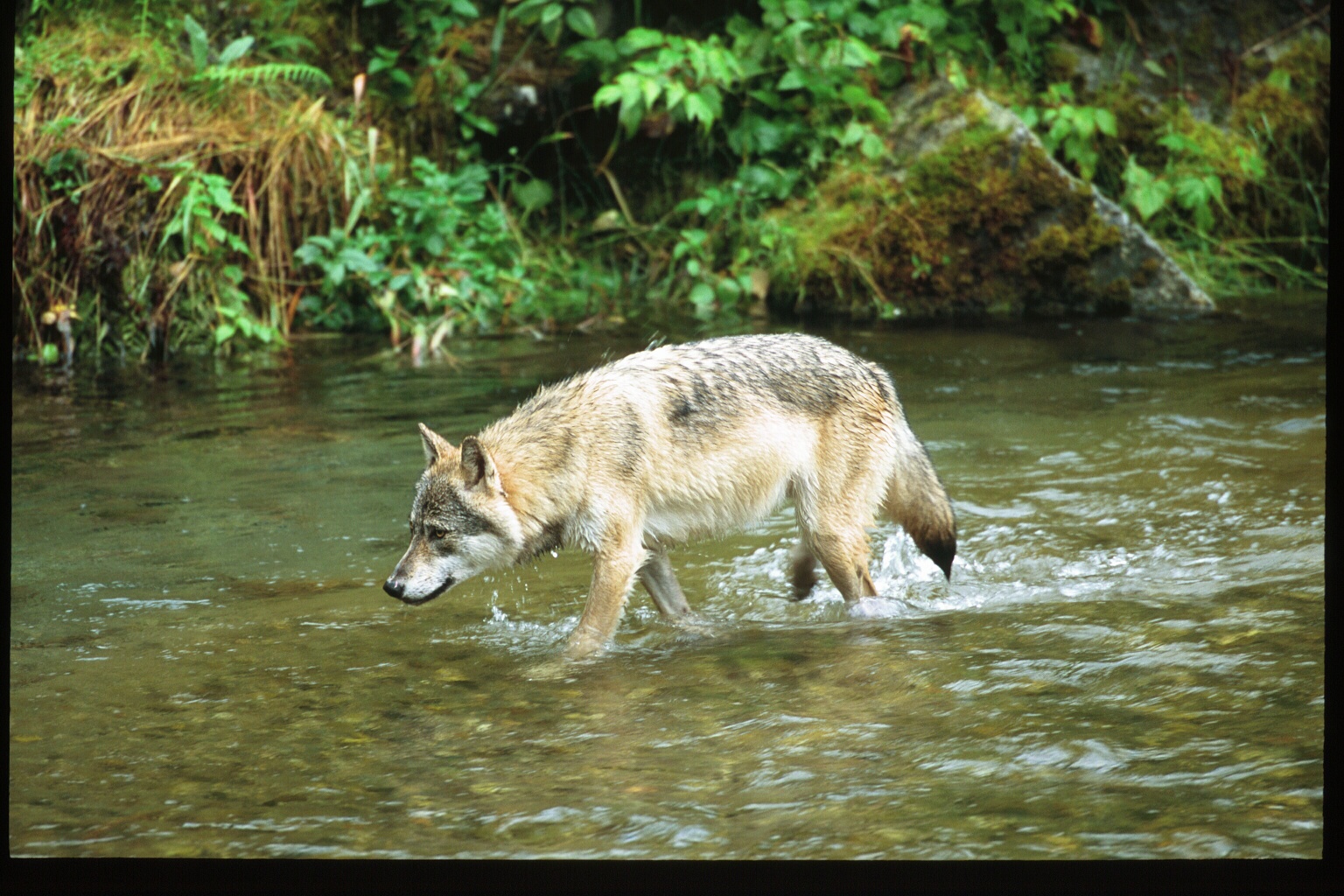
Not only does the state continue to escalate its attack on wolves by prolonging its hunting and trapping season and increasing the per hunter quota even as the number of wolves there drops, but now their state legislature is proposing to eliminate free-roaming wild bison altogether, outside the confines of Yellowstone National Park.

The same Montana politicians who just rushed through a bill to expand the state’s ongoing wolf hunting and trapping are now considering new lethal bills to:

•prohibit reintroduction of wild bison into Montana;

•establish a year-round hunting season for bison, with virtually no limitations;

•authorize private landowners to shoot on sight any bison that wandered onto their property;

•order state officials to exterminate or move any wild bison that migrate into Montana.

The grizzly bear is soon to come off the federal Threatened Species list, and thereby lose federal protection. You can bet that states like Montana, Idaho and Wyoming—those few places fortunate enough to still support the bears in their wilderness areas—are planning to add trophy hunting of grizzlies to their long hit list of “big game” species as soon as (in)humanly possible.

But to hear them tell it, Montanans don’t hate all wildlife. They love having out of control populations of ungulates around to “harvest” between shopping trips to WalMart. As long as their Fish, Wildlife and Parks department provides them with huntable populations of “surplus” elk, deer and pronghorn, those token other species—the wolves, grizzly bears and bison—can stay in the national parks, “where they belong.”

Photos Copyright Jim Robertson

Photos Copyright Jim Robertson


Snaring’s About the Sickest

In Alaska, bears—in addition to wolves—are routinely hunted, trapped and shot from planes under the deathly ill-advised notion that eliminating those animals leaves more moose or caribou for more hunters to slay. What the Alaska state Board of “Game” can’t seem to figure out is, as the number of hunters goes up, the quantity of moose goes down, simple as that. Will we have to see an Alaska devoid of bears and wolves before the game players finally figure out who’s to blame?

But if anything could be sicker than aerial gunning for bears, it’s snaring them. Bear snaring is a recent addition to Alaska’s long history of animal abuse and exploitation; this new act of depravity was allowed “experimentally” for the first time in 2008.

In the following excerpt from an article, posted January 12, 2012 in the Anchorage Press, Bill Sherwonit dared to imagine just what snaring is really like for its victims:

Picture this: An adult female grizzly bear is roaming forested lowlands on the western side of Cook Inlet when she gets a whiff of ripe, decaying flesh. Sensing an easy meal, the bear follows her nose to a large tree. Several feet above the ground, a bucket partly filled with rotting guts and skin has been attached to the tree; placed on its side, the open-lidded container faces outward, inviting inspection. The grizzly stands and sniffs around the cavity, then sticks her right paw into it. When the paw hits the bottom of the pail, it triggers a metal snare that closes around the animal’s foot. Feeling the pinch of the trap, the grizzly pulls back. As she does, the metal loop tightens.

Two cubs have followed her to the bait. Now, sensing their mother’s agitation, they too become upset. One begins to bawl. This only deepens the adult bear’s determination to free herself. With her free paw she swats and tears at the bucket and tree and she pulls even harder against the snare, which begins to cut through the animal’s thick fur and into her flesh. Now the embodiment of rage, the adult grizzly roars and snaps her jaws, thrashes about. The cubs wail louder.

Eventually exhausted by her struggles, the grizzly mom slumps against the tree, while the whimpering cubs huddle together nearby. More time passes and the trapped grizzly resumes her fight for freedom. The cubs again cry in panic.

It goes like this for hours. A day might pass before the trapper-called a “snare permittee” by state wildlife officials-comes to check the snare, even longer if he’s delayed for some reason. When he does show up, the grizzly mom goes berserk. Depending on their age and personalities, the cubs might charge the person, run off, or huddle in fear. These two retreat into nearby bushes.

The trapper could legally shoot the cubs, now in their second year, but he chooses to ignore the small, frightened bears and heads for their mom. He takes aim, fires his gun, and kills her…

The cubs remain in hiding. Without their mother, it’s more likely they will starve than survive the summer.

Even five years ago, the idea was unimaginable: trap and shoot Alaska’s bears so that human hunters might kill more moose.

Okay, that’s not entirely true. Always trying to come up with new ways to rid Alaska’s landscape of competitors for moose and caribou meat, at least a few predator-control proponents, Ted Spraker among them, were looking toward Maine, then the only state to allow the snaring of bears. The retired Department of Fish and Game biologist worked nearly three decades to increase kills of wolves and bears, primarily to benefit sport hunters.…

Stomach churning stuff—those “snare permitees” must be as callous as they come. I’m just glad Sherwinot saved me the heartache of making the imaginary journey myself this time.

The late, Canadian naturalist and author, R D Lawrence, wrote:

“Killing for sport, for fur, or to increase a hunter’s success by slaughtering predators is totally abhorrent to me. I deem such behavior to be barbaric, a symptom of the social sickness that causes our species to make war against itself at regular intervals with weapons whose killing capacities have increased horrendously since man first made use of the club—weapons that today are continuing to be ‘improved’.”

Contact in for the Alaska Board of Game can be found here: https://exposingthebiggame.wordpress.com/2013/01/31/stop-bear-snaring-and-wolf-trapping-adjacent-to-denali/

Wildlife Photography ©Jim Robertson, 2013. All Rights Reserved

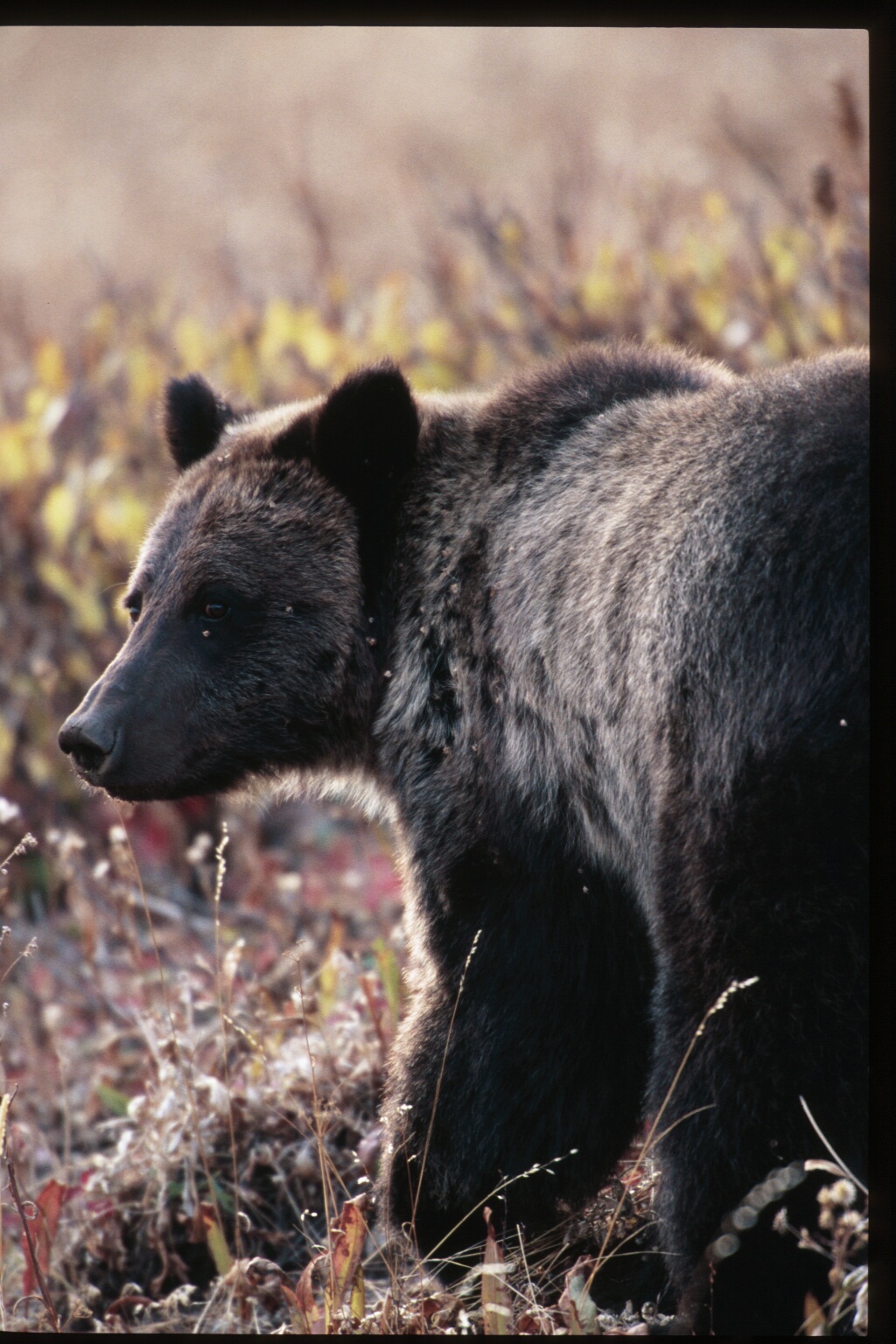
Wildlife Photography ©Jim Robertson, 2013. All Rights Reserved

Nature Doesn’t Need a Manager

When I started into college, I wanted to go into wildlife management. 

Okay, I know what you’re saying to yourself: “Wait…what?” “WTF?”  “Wildlife doesn’t need a manager!” “What the hell was he thinking?!”

Clearly, I didn’t know what I was getting into. I knew I loved animals and wanted to work around wildlife, but what I didn’t realize was that about the only work in that field was in some game department promoting hunting, or in the vile Wildlife “Services” department, killing off animals by the droves in horrible ways.                                                         

I had enrolled in a small, rural college where the same teacher taught every class in the wildlife curriculum. In an obvious plug for the local logging industry, he started off each class (no matter which course he was teaching) with the mantra, “Clear cuts are good for wildlife,” at which point I would raise my hand and ask, “What about wolves or wolverine or grizzly bears who prefer wilderness and try to avoid people whenever possible?” To that he would rephrase his spiel and say, “Clear cuts are good for deer.” 

It didn’t take long before I realized that wildlife “management” had an agenda, a higher purpose—to serve the hunting industry. Not, as I had imagined, to serve wildlife or to promote the balance of nature. No, quite the opposite, in fact.

Although it had been well established by then that the way to ensure healthy populations of ungulates was to maintain healthy populations of natural predators, “game” managers continued to make the same mistake that Aldo Leopold, known as the father of wildlife management, made in 1926. In a Sand County Almanac, Leopold reveals a regrettable experience that many people still haven’t learned from:

“We saw what we thought was a doe fording the torrent, her breast awash in white water. When she climbed the bank toward us and shook out her tail, we realized our error: it was a wolf. A half-dozen others, evidently grown pups, sprang from the willows and all joined in a welcoming melee of wagging tails and playful maulings. What was literally a pile of wolves writhed and tumbled in the center of an open flat at the foot of our rimrock.

“In those days we had never heard of passing up a chance to kill a wolf. In a second we were pumping lead into the pack, but with more excitement than accuracy…When our rifles were empty, the old wolf was down, and a pup was dragging a leg into impassable side-rocks. We reached the old wolf in time to watch a fierce green fire dying in her eyes. I realized then, and have known ever since, that there was something known only to her and to the mountain. I was young then, and full of trigger-itch; I thought that because fewer wolves meant more deer, that no wolves would mean hunters’ paradise. But after seeing the green fire die, I sensed that neither the wolf nor the mountain agreed with such a view.”

Unfortunately, Aldo Leopold’s eventual understanding of wolves’ necessary place in a healthy ecosystem came too late for at least one New Mexico pack. Judging by the vehemence with which today’s hunters are targeting wolves, it’s plain to see that wildlife management still hasn’t come very far in its grasp of nature’s mechanisms.

Richard Leaky, author of The Sixth Extinction, points to the folly of trying to manage wildlife, “It is far better to understand and accept the world of nature in its infinite variety and its infinitely complex processes, acknowledging the near futility of attempts to control them, than to imagine through ignorance that it is possible to do so.”     

Hyder wolf photo
Copyright, Jim Robertson