Washington state considers importing B.C. grizzlies to re-establish bears in North Cascades

The translocation of bears is likely years away as Washington state and B.C. officials are in the early stage of talks about how that would work, and the province said First Nations have to be consulted first.

Updated: October 15, 2019

The U.S. has dusted off a plan to repopulate the North Cascades area of Washington state with grizzly bears by translocating dozens of Canadian grizzlies to the U.S.

The U.S. parks and fish and wildlife departments are accepting public comments about its environmental impact statement on a grizzly bear restoration plan that could see dozens of young, mostly female, bears flown into North Cascades National Park.

Conservationists in both countries support the plan to establish a grizzly bear population in the vast park that’s on the other side of the border from Manning Park, and where the last sighting of a grizzly was in 1996.

“It would be great,” said Joe Scott, international program director for Conservation Northwest. “It would be a wonderful conservation success story for both the U.S. and B.C.”

The approval process in the U.S. would take at least another year and it would take several years of gradually introducing the bears stateside, about 25 bears over five to 10 years, before the grizzlies ideally would be self-sustaining, he said.

The bears would likely be imported from B.C. because the bears should be from a similar ecosystem (berry eating as opposed to salmon eating, for instance) and would likely be flown in by copter to ensure that they’re delivered a “fair distance from humans, for obvious reasons,” said Jack Oelfke, chief of natural and cultural resources for North Cascades National Park.

He said conservationists and the public have been supportive of bringing grizzlies back to the North Cascades. But some are opposed, such as the ranching industry.

B.C. government has had a representative on one of the U.S. committees contributing to the recovery plan in the past, and supports efforts to restore grizzlies to Washington state.

The province and the state are in the “early planning stages” to determine if grizzlies can be translocated from B.C., and B.C. First Nations have to be consulted, a spokesperson from the B.C. Ministry of Forests, Lands, Natural Resource Operations and Rural Development said in an email.

The ministry said, generally, the province’s grizzly bear population is healthy and stable at around 15,000 bruins.

“The province will be collaborating with Indigenous Peoples in the near future to draft a provincial grizzly bear management plan,” it said.

“We do have bears to spare,” said Nicholas Scapillati, executive director of the Grizzly Bear Foundation. But not in Canada’s North Cascades grizzly bear population unit, where it’s estimated fewer than 10 bears live.

Two years ago, B.C. Auditor General Carol Bellringer, in a report on B.C.’s grizzly bear conservation efforts, said one of the goals of the province’s conservation strategy was to lead the way in international recovery efforts, but that the U.S. was leading the way. The report also said, “it may be that recovery actions have been too little, too late” for the North Cascades’ grizzly population in Canada.

Scapillati said the bears would likely have to come from elsewhere in B.C. If the U.S. recovery plan was successful, it could help the North Cascades’ population recover in Canada, conservationists said.

The U.S. grizzly recovery study was first announced in 2014, halted in 2017, and then restarted last year. The Americans have until Oct. 24 to comment on the plan.

https://vancouversun.com/news/local-news/washington-state-considers-importing-b-c-grizzlies-to-re-establish-bears-in-north-cascades?fbclid=IwAR2wcv3BBfx8oXg0f0tJ5iUSvsh03sKZQ5leP22pHVAEBe-3OD5lsYhDg9Y

Grizzly experts want research into emaciated bears photographed on B.C. coast

Photos of bears concerned scientists, who said they could be suffering due to a poor salmon return. There could be other explanations.

Starving bear walks along the riverside in Thompson Sound on the west coast. Photo: Rolf Hicker. ROLF HICKER / PNG

SHAREADJUSTCOMMENTPRINT

Grizzly experts disturbed by photos of emaciated bears in Knight Inlet are calling for research to determine why they are suffering.

Photos of a sow and two cubs taken by wildlife photographer and tour guide Rolf Hicker raised alarms for some scientists, who said the bears were likely suffering due to an abysmal Pacific salmon return this year. Federal fisheries experts have pointed to climate change as the main reason for the poor return, and salmon are crucial to coastal grizzly bears’ diets.

Longtime grizzly researchers say a salmon shortage is the most obvious explanation for why the bears in Hickers’ photos are suffering, but said there could be other factors.

Dr. Ken Macquisten, a wildlife veterinarian and managing director for the Grouse Mountain wildlife refuge, said he was shocked by the photos. Had only a single bear been suffering, he would have questioned whether it had broken teeth or an intestinal blockage.

“But multiple bears would tend to point to some common reason, and a lack of food would be top of the suspect list, in my mind,” said Macquisten, who is a director for the Grizzly Bear Foundation.

Starving grizzly bear in Hoeya Sound. Photo: Rolf Hicker ROLF HICKER / PNG

Macquisten said grizzly bear researchers are concerned about B.C.’s salmon supply. The fish are crucial to west coast bears during their hyperphagic stage before hibernation, when an adult will eat 50,000-60,000 calories of food and gain three to four pounds each day. They are omnivores and also typically eat whitebark pine nuts, insects and berries.

But if they don’t eat enough before hibernation, they will wake up early and be forced to search for food during winter when it is scarce, he said. They could die of starvation.

“Because they can range over large areas, typically the bears will be able to go to somewhere else where the food is, so it’s a bit surprising why these (photographed) bears are in such a state,” he said. “Either they haven’t been able to find food over a wide area or they haven’t been moving.”

But Macquisten urged caution before drawing the conclusion that a salmon shortage is to blame, and said he hopes someone will locate one of the suffering grizzly bears to determine the exact cause.

The Ministry of Forests, Lands, Natural Resource Operations and Rural Development said provincial biologists can’t confirm why the sow in Hicker’s photo appears to be in such poor shape.

The biologists don’t know its history and whether age, dental issues, injuries, or providing for cubs contributed to its state, the ministry said in an emailed reply to questions.

“The number of bears on the coast are stable to increasing and this often means more competition for resources,” the ministry said. “If salmon runs in the area are lower than expected, this will have an added effect and bears may have to travel further to find food.”

Government representatives are working with the Mamalilikulla First Nation to monitor the welfare of wildlife in the area.

The B.C. government has estimated 15,000 grizzly bears are in the province and said roughly 340 die each year of human-related causes. Of the 56 grizzly populations in B.C., nine are classified as threatened.

Dr. Cole Burton, an associate professor in the Department of Forest Resources Management at the University of B.C., also called for research into whether a poor salmon return and climate change are impacting the wellbeing of some bear populations.

“If we’re concerned about grizzly bears and how they might be responding to these changes, then we should try and support some more study on that, some more monitoring that’s tied to our management actions,” Burton said.

He wouldn’t jump to the conclusion, from the photos, that the suffering grizzly bears represent more widespread suffering, he said.

“It’s certainly consistent with these ideas around a reduction in salmon,” said Burton, who is the Canada Research Chair in Terrestrial Mammal Conservation. “But on its own, I don’t think it provides much evidence of the bigger-picture trends.”

Burton said that grizzly bear populations in B.C. are generally doing okay, but not thriving, mainly due to habitat loss caused by development and roadbuilding.

The government’s ban on grizzly bear trophy hunting in 2017 may have increased the number of bears’ competing for food, Burton said. Prior to the ban, an average of 297 grizzly bears were legally killed by hunters annually, according to provincial data.

“I’m not saying that that’s what we’re seeing here, but certainly we would want to know about the population,” Burton said.

Clayton Lamb, a PhD candidate and Vanier Scholar at the University of Alberta, has been working with grizzly bears for six years and is currently researching their population dynamics.

A poor salmon run is a “reasonable” explanation for the sow to be malnourished, Lamb said. But when salmon populations are low, grizzlies tend to move elsewhere in search of berries, and he wondered whether the bears in the photographs have that option.

“I think a couple of pictures don’t give us that larger population context,” he said.

Lamb said climate models for grizzly populations in B.C.’s Interior suggest that berries and other diet staples could, in fact, become more abundant as the climate changes.

“As far as food and climate change for bears, it’s not immediately concerning,” he said. “There’s undoubtedly going to be winners and losers in climate change, and I think it just so happens that some of those key berry species are going to be winners.”

Bryce Casavant, a former conservation officer who is now conservation policy analyst with non-profit conservation organization Pacific Wild, said Hicker’s photos serves as a reminder that human behaviour can have an impact on wildlife.

“What we do know is there is food scarcity, currently, within the Great Bear Rainforest and coastal regions of B.C., which is causing problems for grizzly bears,” said Casavant, a PhD candidate at Royal Roads University.

“Salmon runs have declined, their ability to access natural food sources has decline. Habitat loss is a serious contributing factor to grizzly bear population recovery and stability.”

B.C. First Nation feeds hungry grizzlies 500 salmon carcasses

‘I’m hoping it’s not too little too late,’ says Mamalilikulla First Nation chief councillor

The Mamalilikulla First Nation delivered salmon to grizzly bears in their traditional territories where they are known to feed. (File pictures/Canadian Press)

When Richard Sumner saw how emaciated the grizzly bears were in his neck of the woods, he knew something had to be done.

Sumner, chief councillor of the Mamalilikulla First Nation, says the creeks and streams on the nation’s territory, which  encompass the islands off the northeast coast of Vancouver Island between Alert Bay and Knight Inlet, are no longer rich with salmon, and resident bears are starving and travelling outside traditional hunting grounds in a desperate effort to find food.

So the Mamalilikulla people fed them.

The nation’s Guardian Watchmen Manager, Jake Smith, had a local hatchery donate approximately 500 salmon carcasses and members of the nation took the fish to estuary areas where grizzlies are known to feed.

“I’m hoping it’s not too little too late,” said Sumner in a phone interview on CBC’s On The Island, adding there are many other areas of British Columbia where bears that depend on salmon are hungry.

Migrating for meals

He said grizzlies are starting to travel between all the small islands in the area and are even making their way over to Vancouver Island in search of fish, something that rarely happened in the past.

“The lack of salmon is not a natural thing,” said Sumner, who blamed human activity such as deforestation and over-fishing for reducing salmon stocks to perilous levels.

Climate change resulting in warmer ocean temperatures has also been cited by marine scientists as a major factor in dwindling salmon stocks.

Sumner said while he understands humans should not interfere with wild animals, the Mamalilikulla people are the stewards of their territory and according to Sumner, the alternative was to watch the bears die.

“We just hope we can get enough bulk on them to last the winter,” said Sumner.

Some of the 400 members of the Mamalilikulla nation are suffering too.

“Nobody has any fish in their freezer or any canned fish for the winter,” he said. “It’s been a real disastrous year.”

Sumner does not know if more fish will be available for future deliveries.

Sumner said he is meeting Thursday with a bear biologist and provincial authorities to discuss the issue further.

To hear the complete interview with Richard Sumner, see the audio link below:

Fort Nelson residents want grizzly bear gone but conservation officer says it’s ‘not too much of a concern’

‘It’s just sightings; there’s no conflict involved that we’ve been made aware of,’ says officer

The grizzly bear seen in Fort Nelson, not pictured here, is around three years old, weighs 300 pounds and has a brown coat with silver tips. (Jacques Boissinot/The Canadian Press)
28
comments

Fort Nelson resident Linda Mould wants to see the B.C. Conservation Officer Service take action because of a grizzly bear that’s been spotted over the past few weeks.

She’s not the only one either. Social media in the northern Interior community has been abuzz with bear sightings and conservation officer Jeff Clancy said he’s been getting upwards of three phone calls a day about it.

“Right now, it’s just sightings. There’s no conflict involved that we’ve been made aware of,” he said.

However, Mould, 66, who has lived in the area for more than 60 years, said bears are not common in the community and she is worried about the danger the grizzly poses to children.

Social media in Fort Nelson has been abuzz with grizzly bear sightings. Collet Nadon snapped this photo on September 2 of a bear footprint on a trail near Fort Nelson Secondary School. (Photo by Collett Nadon)

“There are numerous people that have their children in school that they are not allowing them to stand outside to take the bus,” said the grandmother of nine.

“They’re severely limited as to what they’re able to do outside right now, because the parents are afraid of this grizzly bear that’s lurking on the outskirts. So, if something’s not done, which I’m quite confident nothing will be done, these kids are basically being held hostage prior to winter even starting.”

People in the area have been talking about bear sightings since the end of August. Mould believes that if a grizzly bear was wandering in a larger city like Vancouver, it would have been removed by now.

“Grizzly bears are not normal to Fort Nelson and all we’re doing is just keeping an eye on them,” she said.

“I just really wish that the COs would take us a little bit more seriously and understand and appreciate that our fear is honest. Just because we have not been educated in the way of the bear does not mean that we don’t have respect for them and are afraid of them,” she added.

Monitoring the situation, says conservation officer

Clancy has seen the bear and describes it as a 300 pound, three-year-old grizzly with a brown coat and silver tips on its back.

Up until now, the bear has mostly been seen on large rural properties on the outskirts of the community, chowing down on fruit and grass, he said.

When Clancy saw the bear and approached, he said it took off.

“It still has its fear of humans which is good. You know it doesn’t show any signs of habituation,” said Clancy.

“It does seem to have some sort of food condition habits right now. It is coming back to the same location, but nothing that’s causing any concern.”

They are currently monitoring the bear and have set out traps for it. “If we can capture it, then we will relocate,” said Clancy.

He added that for those who are concerned it is just him monitoring a large area of northern B.C. as a conservation officer, RCMP officers in the area are also trained to respond if there is an incident with the bear.

However, they have no plans to put it down.

“A unique sighting of a grizzly bear hanging around some rural properties is not enough to euthanize a bear. And I am pretty sure the majority of the public in British Columbia would agree with me on that,” said Clancy.

“It’s just unfortunate that he’s kind of found a nice comfy home next to some residences close to Fort Nelson.”

Daybreak North
Roaming grizzly bear not a threat to Fort Nelson residents, CO says
00:00 10:08

A 300-pound grizzly bear has been seen wandering around a rural Fort Nelson neighbourhood for nearly a month, eating apples and lawn cuttings. The local conservation officer says it’s not a threat, but not everyone feels safe. 10:08

Subscribe to Daybreak North on CBC Listen or your favourite podcast app, and connect with CBC Northern British Columbia on FacebookTwitter and Instagram.

Male grizzly bear killed on Trans-Canada Highway

https://www.cochranetoday.ca/local-news/male-grizzly-bear-killed-on-trans-canada-highway-1674171

A 275-kg male grizzly bear was struck on killed on the Trans-Canada Highway.

A large male grizzly bear was struck and killed on the Trans-Canada Highway on provincial lands last week.

Provincial wildlife officials say a large 275-kg male grizzly was reported dead in the highway ditch on Wednesday evening (Aug. 28) near Jumpingpound Creek – the third large male grizzly to be killed in that area in the past five years.

“It’s a real drag because we’re trying to reduce mortality, and highway mortality is problematic,” said Jay Honeyman, human-wildlife conflict specialist with Alberta Environment and Parks.

“The volume of traffic these days on the Trans-Canada is quite heavy, even during the week and in the evenings,” he added.

“It’s really challenging for bears to cross that highway without having some kind of an incident. I guess it’s not a surprise that we’re having these incidents with all the traffic.”

Historically, Alberta is estimated to have had between 6,000 and 9,000 grizzly bears. Grizzlies once ranged across the whole of Alberta, across Saskatchewan and into Manitoba.

When extensive DNA research determined Alberta’s population had dipped to about 700 individuals, the grizzly bear was declared a threatened species in Alberta in 2010. The count is being updated.

Most grizzly bear deaths are caused by humans, including poaching, being mistaken for a black bear during the black bear hunting season, self-defense and accidents such as being struck on roads.

In those years, more than half of the human-caused grizzly bear deaths were due to poaching and accidental deaths on roads and railway. There have been 57 known poaching cases and 63 accidental in the past 10 years.

The Alberta Wilderness Association has concerns about the ongoing high numbers of human-caused grizzly bear deaths.

“Human-caused mortality continues to be a problem,” said Joanna Skrajny, a conservation specialist with AWA.

“Human contact and human incursion into grizzly bear wildlife habitat is the main reason why they are dying.”

Skrajny said the fact that three large make grizzlies have died in that area of the Trans-Canada Highway in the last few years suggests an obvious start is a study to determine if a crossing structure may be warranted.

“In situations where we keep coming into contact with grizzlies and they keep dying, we have to reassess what we’re doing,” she said.

AWA is waiting on an update of the status of the grizzly bear population in Alberta, as well as updated grizzly bear mortality numbers for 2018 and 2019.

Skrajny said high numbers of human-caused mortality could mean it’s hard for a grizzly bear population to regulate itself.

“It means we’re not doing a good job of keeping their habitat safe,” she said.

“Even if grizzly bears are coming in from B.C. where some of the numbers are higher, they’re coming here to die in the end and that means we’re not doing our job properly.”

In addition to bears dying on provincial lands, two grizzly bears have died in Banff National Park this summer.

A male grizzly was struck and killed by a semi-trailer on Highway 93 South just after midnight on June 4, about one kilometre south of the Trans-Canada Highway heading up the hill towards Storm Mountain.

On June 22, Parks Canada was forced to kill an injured and emaciated young female grizzly bear. It’s believed a vehicle struck the bear on the highway 10 days earlier. The yearling, its sibling and mother were on the wrong side of the fence meant to keep wildlife off the highway.

“We’ve also had a couple of confirmed strikes where we don’t know if the bear survived or not,” he said.

Hayden man attacked by grizzly last year makes Animal Planet television debut tonight

https://www.spokesman.com/stories/2019/sep/04/hayden-man-attacked-by-grizzly-last-year-makes-ani/

UPDATED: Wed., Sept. 4, 2019, 7:50 p.m.

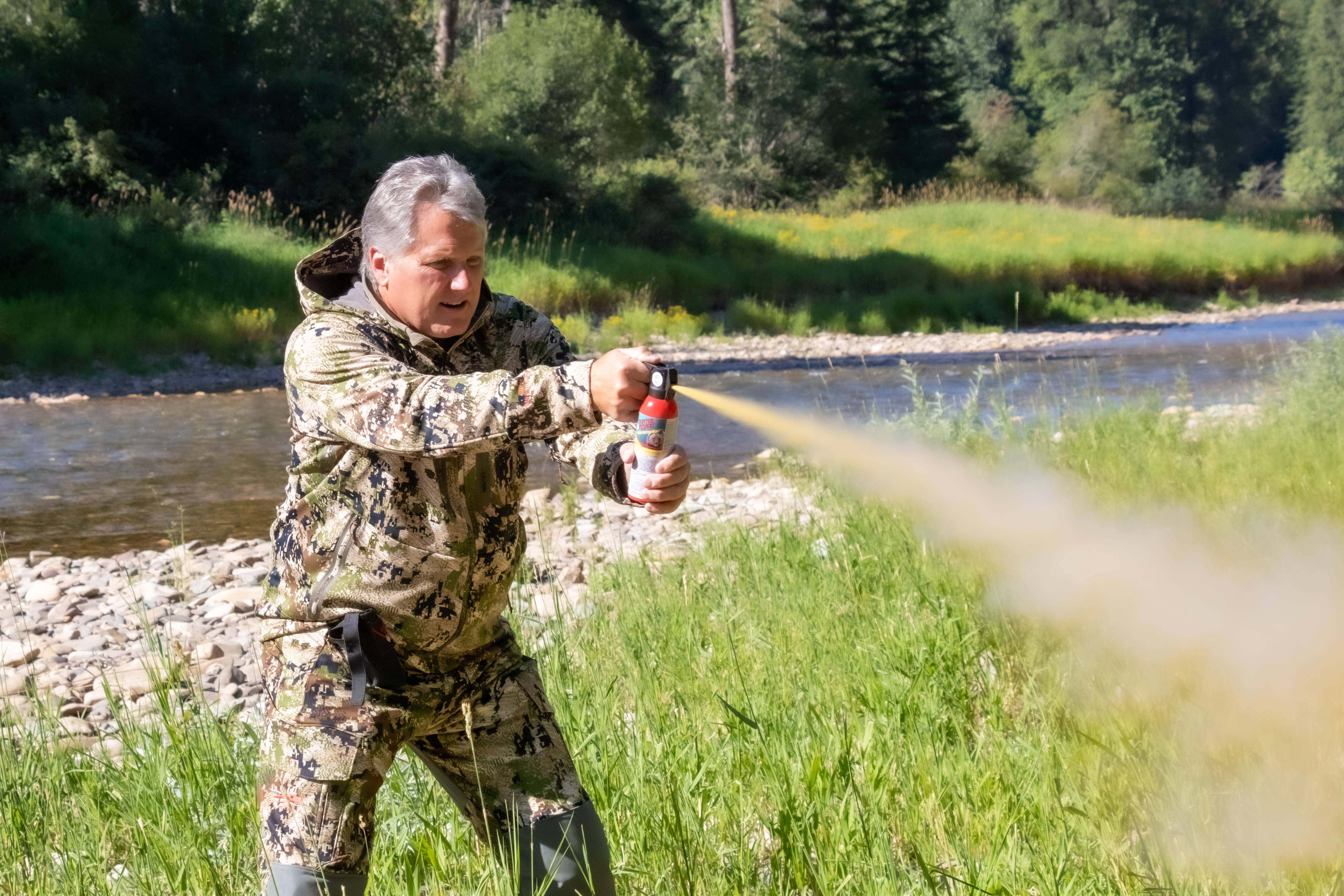
After being attacked by a grizzly bear last October,  Bob Legasa has started working with Counter Assault. Here he is pictured demonstrating how to use the company’s bear spray. Legasa’s story will be featured on Animal Planet’s “I was Prey” on Wednesday. (Bob Legasa/Freeride Media / COURTESY OF FREERIDE MEDIA)
After being attacked by a grizzly bear last October, Bob Legasa has started working with Counter Assault. Here he is pictured demonstrating how to use the company’s bear spray. Legasa’s story will be featured on Animal Planet’s “I was Prey” on Wednesday. (Bob Legasa/Freeride Media / COURTESY OF FREERIDE MEDIA)

Nearly a year ago, Bob Legasa was bloody and broken in the Montana backcountry, the unfortunate recipient of the maternal fury of an adult grizzly bear.

“It certainly was something I hope I don’t have to endure again,” Legasa said this week. “As far as the emotional and physical aspect of it, I’m lucky that I didn’t get mauled. That I wasn’t being rag dolled and tossed around. It was short and sweet. Or fast and vicious.”’

Tonight, Legasa will relive his Oct. 13 experience on national television. The Hayden resident’s story will be featured on Animal Planet’s “I Was Prey” show.

This is what happened: As Legasa and his partner, Greg Gibson, walked through tall sagebrush – between 6 and 8 feet – they startled a grizzly bear cub and its mother.

The mother bear tackled Legasa. Gibson, of Sandpoint, sprayed the bear with bear spray. The bear dropped Legasa, but not before breaking his arm with her mouth and clawing his face. She then started to charge Gibson. Gibson sprayed the bear again and she retreated.

Covered in blood and nearly blind from the spray, which had blown into their faces, both men hiked out.

In February, Legasa traveled to New York for an interview for Animal Planet’s show. Legasa, who owns his own outdoors media company, said he hesitated when first asked to participate. He worried that the show would overdramatize his experience or put an “anti-hunting” spin on it.

After being attacked online by hard-core vegans last year, he wondered if appearing on a television show would again make him a target. Ultimately, he decided to do it, reasoning that it provided him a good platform to spread a few important messages.

“Hunting has been in a weird limelight lately,” he said. “It seems like there are more people that are understanding hunting … but then there are also … some activist groups that are really going hard on trying to cut down or stop hunting.”

1 / 3

In February, Hayden resident Bob Legasa was interviewed by Animal Planet for their show “I was Prey.” Last fall, Legasa was attacked and injured by a mother grizzly bear while bowhunting for elk in Montana. The episode featuring Legasa will air Wednesday Sept. 4, 2019. (Animal Planet / COURTESY)

Legasa hopes to emphasize on the show that he hunts for many reasons. He loves being in the mountains and the challenge of stalking prey. He enjoys the pride and accomplishment of killing an animal that provides food for him and his family.

Showing the diverse reasons people hunt is a job many hunters are increasingly taking upon themselves. Only 5% of Americans 16 years and older hunt, according to a U.S. Fish and Wildlife Service study published in 2017. Fifty years ago, 10% of Americans 16 years and older hunted. Those decreased numbers mean that fewer people, especially in urban areas, know anyone who hunts.

“I was hoping that I could at least get a positive message across in that respect,” Legasa said.

In addition to burnishing the reputation of hunters, Legasa hopes to reiterate the importance of carrying bear spray, for hunters and nonhunters alike. Since his attack, he’s done promotional and testimonial work for Counter Assault bear spray, “preaching that bear spray works.”

“It should be the first line of defense,” he said. “It just gives you a better option than shooting.”

In Legasa’s case, if the two hadn’t had bear spray, they would have been out of luck. Because the bear was on top of Legasa, Gibson wouldn’t have been able to safely shoot the bear with his handgun.

With hunters and hikers heading to the hills this fall, that message couldn’t be more important.

As for Legasa, he’s mostly recovered from the attack last year. While he still has some residual pain from where the bear broke his arm, it hasn’t slowed him too much. Emotionally, he said the fallout has been minimal. Although recently, he did have his first bear-related dream.

“It wasn’t a nightmare, but there was a bear running at me,” he said. “It made me think for a second.”

That won’t stop him from hunting this year. In a week, he’s again heading to Montana for 12 days of bow hunting for elk.

“I’m going to get back on that horse and ride,” he said. “This is in my DNA. Being in the mountains is good for my soul. I’m just counting the days until I get back out there.”

Grand Teton National Park Visitors Playing With Fire By Feeding Bears

Some Grand Teton National Park visitors reportedly were feeding bears this week/NPS file

Some visitors at Grand Teton National Park in Wyoming are playing with fire by feeding bears. For now, park staff have temporarily closed the Signal Mountain Summit Road and surrounding area.

What species of bears were being feed by several visitors this past Tuesday evening wasn’t known, but park visitors and staff were bluff charged by a female grizzly with two cubs along the Signal Mountain Summit Road.

“Feeding wildlife is irresponsible, dangerous, and illegal, and we take these incidents very seriously,” said acting Superintendent Gopaul Noojibail. “Please share any information about the feeding of wildlife immediately to a nearby park ranger, visitor center, or by calling Park Watch at 307-739-3677.”

If you have a video of visitors feeding bears, share it with National Parks Traveler atnews@nationalparkstraveler.org or by attaching below as a comment.

Bears are protective of their feeding areas, which include ripening berry patches. All visitors are required to maintain a distance of at least 100 yards from bears and always carry bear spray, as well as make noise and travel in groups.

Bears that obtain human food may lose their natural fear of humans and become dependent on human food. As a result, they may become aggressive toward people and have to be killed. The maximum penalty for feeding park wildlife is a $5,000 fine and up to one year in jail.

Bears, both grizzlies and black, are extremely powerful and dangerous animals.

Every visitor who comes to Grand Teton has the unique opportunity to view bears in their natural habitat. With that opportunity comes the responsibility to protect themselves and the bears, say park staff. It is up to everyone to keep bears wild and alive. Please report any bear activity or human-bear interactions to a nearby park ranger or visitor center.

The proper storage of food items and responsible picnicking are vitally important in bear country. Picnickers should only have immediate use items out so that if a bear approaches, food items can be quickly gathered and the opportunity for the bear to receive a food reward is removed. Visitors should store food and scented items in bear-resistant food lockers that are located throughout the park or in a hard-sided vehicle. Do not burn waste in fire rings or leave litter in campsites.

Grizzly and black bears thrive in Grand Teton National Park and the John D. Rockefeller Jr., Memorial Parkway. Visitors may encounter a bear anywhere and at any time. Some of the most popular areas and trails pass through excellent bear habitat.

Comment period reopened for grizzly restoration proposal

Comment period reopened for grizzly restoration proposal

Draft plan for N. Cascades still under review

If you’ve never commented about the possibility of reintroducing grizzly bears into the North Cascades, or have already commented but have something more to say, now’s the time.

The National Park Service (NPS) and the U.S. Fish and Wildlife Service (USFWS) said last week that they are reopening the public comment period on the Draft North Cascades Grizzly Bear Restoration Plan/Environmental Impact Statement (Draft EIS) for 90 days, through Oct. 24.

The action revives an on-and-off process that began in 2014 under the Obama administration, to consider if and how grizzlies should be reintroduced to an area that was once their native habitat and which now supports only a few of the animals.

A draft EIS on the restoration plan was released in early 2017, followed by public comment periods and public meetings, including one in Winthrop in February 2017. More than 126,000 comments and correspondence have been received on the draft EIS. The overwhelming majority supported the reintroduction proposal. In late 2017, the process was put on hold.

In August 2018, the Department of the Interior, NPS and USFWS said they intended to further evaluate input about the proposal, which meant that completion of a final EIS was further delayed. At that time, the federal agencies did not provide a timeframe for further evaluation.

Fourth District Congressman Dan Newhouse said last week, in a press release, that “I remain opposed to the transfer of grizzly bears to the North Cascades on behalf of my constituents, who would be directly affected. Introducing an additional apex predator to an area that is populated by families and livestock is extremely concerning, but I am glad the Department of the Interior is seeking real, local public comments on this issue. I encourage the people of Central Washington to make their voices heard loud and clear so the Administration will end this misguided proposal once and for all.”

Long-time habitat

A study by the NPS, released in 2018, turned up a significant body of evidence showing that grizzly bears roamed the North Cascades for thousands of years.

The EIS proposes three alternatives for re-establishing a population of 200 grizzly bears in the North Cascades Ecosystem (NCE), which includes 9,800 square miles in Washington state and another 3,800 square miles in British Columbia. The area includes the Okanogan-Wenatchee National Forest (including the Methow Valley Ranger District), North Cascades National Park, Ross Lake National Recreation Area, Lake Chelan National Recreation Area and Mt. Baker-Snoqualmie National Forest.

In addition to the three proposals to restore grizzlies to the North Cascades, the draft EIS includes a required “no action” alternative that would maintain the status quo.

Although the actual number of grizzlies in the NCE is not known, it is “highly unlikely that the area contains a viable grizzly bear population,” the original draft EIS stated. There have been only four confirmed detections of grizzly bears in the greater NCE in the past decade, all of which occurred in British Columbia and may comprise only two bears. There is no confirmed evidence of grizzly bears in the U.S. portion of the NCE since 1996, according to the draft EIS.

The alternatives, as summarized in a newsletter from FWS and NPS, are:

• Alternative A – Continuation of Existing Grizzly Bear Management (no action).

• Alternative B –  Ecosystem Evaluation Restoration. NPS and FWS would implement an ecosystem evaluation approach to grizzly bear restoration, providing for release of up to 10 grizzly bears at a single remote site on NPS or U.S. Forest Service lands in the NCE over two consecutive summers. The bears would be monitored for two years to evaluate habitat use and instances of conflicts with humans. In the fourth year a decision would be made regarding how restoration would proceed during subsequent years. That could involve repeating the release of an additional 10 bears, or a decision to transition to Alternative C.

• Alternative C – Incremental Restoration. Five to seven bears would be released into the NCE each year over a period of five to 10 years, with a goal of establishing an initial population of 25 grizzly bears. Bears would be released at multiple remote sites on national park and forest lands, After an initial population of 25 grizzly bears has been reached, additional bears would likely be released every few years. This alternative would be expected to achieve the goal of 200 grizzly bears within 60 to 100 years.

• Alternative D – Expedited Restoration. The lead federal agencies would expedite grizzly bear restoration by releasing additional grizzly bears into the NCE over time, until the restoration goal of 200 bears is reached. This alternative would be expected to achieve that goal within about 25 years.

How to comment

Comments previously submitted on the Draft EIS during the public comment period that was open from Jan. 12, 2017, through April 28, 2017, will be considered. You can view the Draft EIS online, and offer comments on it, at parkplanning.nps.gov/grizzlydeis. You can also mail or hand-deliver comments to: Superintendent’s Office, North Cascades National Park Service Complex, 810 State Route 20, Sedro-Woolley, WA 98284.

Comments will not be accepted by fax, email, or any other way. Bulk comments in any format (hard copy or electronic) submitted on behalf of others will not be accepted.

Can We Feel Secure about De-Listing the Grizzly?


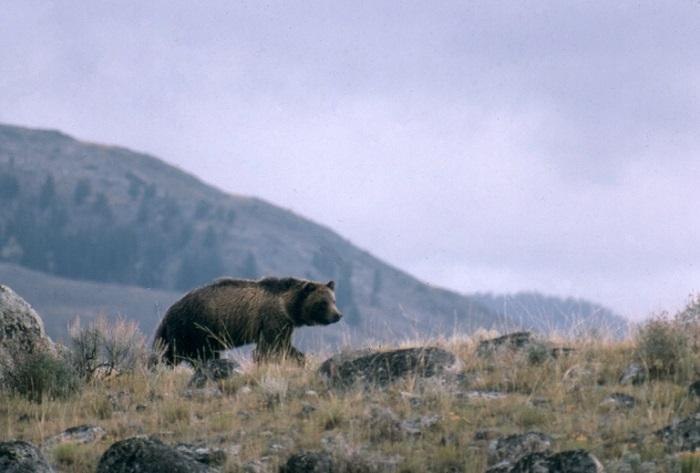
Yellowstone grizzly. Photo: US Fish and Wildlife Service.

We’ve recently seen reports that the grizzly population is growing, expanding its range, and getting into trouble when its expansion takes it up against the human population. True enough, but it’s only part of the story.

A recent federal Biological Assessment on grizzlies’ current situation says the human population in Montana has also grown, and “at a relatively high rate during the past few decades, and growth is expected to continue.”

What we see here is a collision course for two expanding populations, with consequences for the future of bears – and much else.

Grizzlies have seen this sort of thing before. “The death knell for the grizzly in the Southwest was tolled not by a church bell but by a train whistle,” Arizona biologist David Brown explains in his book, The Grizzly in the Southwest. The trains brought “an ever-increasing influx of settlers, who eventually penetrated to the remotest corners of the region.”

Grizzlies will likely see something similar this time around. The Biological Assessment says “Increasing residential development and demand for recreational opportunities can result in habitat loss, habitat fragmentation, and increases in grizzly bear-human conflicts.”

The Assessment does admit that, “These impacts are likely to intensify.” But doubt surfaces when the Assessment claims that, “appropriate residential planning…can help mitigate these impacts.”

Alas, “appropriate residential planning” is left vague, undefined, amounting to little more than wishful thinking, even though the Assessment admits that development “has the potential to have cumulative adverse effects on the NCDE grizzly bear population.”

The Assessment claims that, “Monitoring of population status will provide a mechanism to identify areas of concern so that appropriate preventive or corrective actions can be taken.” Again, the appropriate actions are left undefined, leaving a big hole in hope for lasting grizzly recovery. And it’s far from clear how monitoring the situation leads to these undefined actions.

On the climate front, the Assessment claims that impact on habitat made of plant species or plant communities “ is not possible to foresee with any level of confidence.” But the closely related Draft Grizzly Bear Conservation Strategy says, “Most grizzly bear biologists in the U.S. and Canada do not expect habitat changes predicted under climate change scenarios to directly threaten grizzly bears.”

These expectations omit important evidence on climate and habitat.

For just one example of evidence on climate effects on habitat, scientists have found that “suitable days for plant growth disappear under projected climate change.”

That said, even if risks for habitat wouldn’t threaten grizzlies directly, a 2008 article in Science reported that “Direct effects of climatic warming can be understood through fatal decrements in an organism’s performance in growth, reproduction, foraging, immune competence, behaviors and competitiveness.”

A 2013 article in the Journal of Animal Ecology confirmed that analysies, reporting that, “  … organisms have a physiological response to temperature, and these responses have important consequences …. biological rates and times (e.g. metabolic rate, growth, reproduction, mortality and activity) vary with temperature.”

These important risks go unmentioned in the Assessment and Draft Conservation Strategy.

So, how bad can heat’s impact get? The authors of a report in the distinguished science journal Nature conclude that, “Our results suggest that it doesn’t make sense to dismiss the most-severe global warming projections.”

The Assessment mentions drought as a factor in fire, but omits mention of evidence that drought can force wildlife into (expanding) human-dominated areas. All in all, risks from heat and drought are largely and wrongly omitted from the Assessment or the Draft Conservation Strategy.

Given these documents’ vagueness and omissions, it’s not easy to feel secure about proposals delisting the grizzlies of the lower-48 states.

More articles by:

Grizzly bears put back on endangered list in Greater Yellowstone Ecosystem

The U.S. Fish and Wildlife Service (USFWS) announced on Tuesday that it has reinstated grizzly bears on the list of endangered and threatened wildlife in the Greater Yellowstone Ecosystem (GYE).

In a press release from the USFWS, the service said on June 30, 2017, it announced the establishment of a population of GYE grizzly bears and determined those bears no longer met the definition of threatened. USFWS subsequently removed the GYE population of grizzlies from the list of threatened and endangered wildlife.

Six lawsuits were filed in federal court against that move. A federal judge in Montana ordered USFWS to put the bears back on the list in a September 2018 court order. The relisting announced Tuesday was taken to comply with the order, according to USFWS.

Grizzly bears remain protected under the Endangered Species Act in the five other ecosystems where they are primarily found: the Northern Continental Divide Ecosystem, the Cabinet-Yaak Ecosystem, the Selkirk Ecosystem, the North Cascades Ecosystem, and the Bitterroot Ecosystem.

The relisting of GYE grizzlies as endangered stops any plans for a grizzly bear hunt in Montana, Idaho, or Wyoming.