Winter Olympics shines spotlight on dog meat trade in South Korea


by MARTIN ROGERS  |  USA TODAY SPORTS

 
2.5 million dogs are bred each year in South Korea for human consumption.
Combating the dog meat trade in Korea
2.5 million dogs are bred each year in South Korea for human consumption.
USA TODAY SPORTS

PYEONGCHANG, South Korea – As the Winter Olympics approach this week, figure skater Meagan Duhamel still shudders to think the dog she rescued from South Korea might have ended up on someone’s dinner plate.

Duhamel, a Canadian, is a contender with Eric Radford in the pairs competition and heads to Pyeongchang in search of gold, as well as another dog that she can save from slaughter.

Nami Kim, a prominent campaigner based outside Seoul,

Nami Kim, a prominent campaigner based outside Seoul, has sent more than 1,200 rescued dogs to the United States through her Save Korean Dogs program.
NAMI KIM

Eating dog meat is common and legal in Korea, as well as many parts of Asia, and is mainly eaten by older people. Dotted around the country are thousands of restaurants serving “gaegogi” dishes that, according to folklore, have strengthening and medicinal properties.

“It is just sad because when the world is watching the Olympics little is known or spoken about the (Korean dog meat trade),” Duhamel told USA TODAY Sports. ”There are hundreds of dog meat farms tucked away and nobody is talking about this. The buzz will be about the Olympics.”

More: Go behind the scenes at the 2018 Winter Olympics Athletes Village

More: Lindsey Vonn’s Olympic dreams driven by need for speed

According to The Associated Press, restaurants “nearly in the shadow of the Olympic Stadium” are still selling dog meat meals. According to the Humane Society International, around 2.5 million Korean dogs are killed for their meat each year.

The Korean government, realizing the issue is sensitive for foreigners, has offered money to restaurants if they stop serving dog meat during the Games and has requested that signs advertising the meals be covered up or removed.

“This is an Olympics story,” Marc Ching, a Bay Area activist who founded the Animal Hope and Wellness Foundation, said. “I am half Korean. Koreans are very proud of hosting the Olympics. Why this has to be tied to the Olympics is that the government itself is actually paying to hide this from the world. Maybe if … they just said ‘this is part of our culture,’ it would be different.”

In this photo from December, dog meat menus that explained

In this photo from December, dog meat menus that explained the dishes in English, Chinese and Japanese, are seen at Young Hoon Restaurant in Pyeongchang.
AHN YOUNG-JOON, AP

Animal rights activists claim that dogs, as well as cats, in the meat trade are subjected to horrific conditions and insist nothing is being done to end the practice. That is despite Korean President Moon Jae-in being a dog lover who recently adopted a pet saved from a dog meat farm. Campaigners are determined to use the Olympics to raise awareness and hope that support from athletes and international pressure may spark a change in legislation.

However, it is a difficult subject and, perhaps understandably, some athletes prefer not to speak out about something that is both culturally sensitive and controversial.

More: Vomiting illness spreads at Winter Olympics

More: Go behind the scenes at the Athletes Village

“Every country and every culture has different traditions and we are always respectful of those,” American ice dance skater Alex Shibutani said. “I can’t speak too much because I’m just not familiar with their culture.”

According to Ching, the issue is less about the consumption of dog meat, and more about the stomach-turning practices that are used to slaughter the animals.

“In Korea they usually put a noose around the dog’s neck and take them out back, hang them and beat them,” Ching said. “Another method is they just smash their head open. Sometimes they do electrocution. They shock them and burn them or de-fur them. With electrocution many times they are still alive. It is terrible.”

In many parts of Asia, dogs are often tortured and beaten before they are killed as it is believed that the adrenaline makes the meat more tender. Korean farmers defend their right to keep dogs packed in cages and to treat them as any other animal being raised for human consumption.

“How can we sell (them) when we’re training and communicating with them individually?” Kim Sang-young, president of the Korean Dog Farmers Association told the Hankyoreh news site. “They’re just livestock. We raise them with affection so they don’t suffer, but the purpose is different.”

On Monday, USA TODAY Sports sent a message requesting comment to the official press office email account of the Pyeongchang organizing committee and to Nancy Park, spokesperson and director of international media relations for the 2018 Olympic organizing committee.

USA TODAY Sports received a reply from the news desk of the organizing committee, with its “official statement on dog meat consumption.”

The statement read: “We are aware of the international concern around the consumption of dog meat in Korea. This is a matter which the government should address. We hope that this issue will not impact on the delivery or reputation of the Games and the province and we will support the work of the province and government on this topic as needed. Also, dog meat will not be served at any Games venue.”

Ben, a rescue from South Korea, was fostered by the

Ben, a rescue from South Korea, was fostered by the Peck family in Irvine, Calif.
LANA CHUNG PECK

Pets stolen for meat

Nami Kim, a prominent campaigner based outside Seoul, has sent more than 1,200 rescued dogs to the United States through her Save Korean Dogs program. Several have been fostered by a family in Irvine, Calif., Lana Chung Peck, her husband Kevin and their two young children.

Chung Peck said that the mental scars of mistreatment run deep. When the dogs first arrive they are often unaccustomed to positive human interaction. That was the case with their current foster, a Jindo named Julie.

“She would be frightened of anything in front of her,” Chung Peck said. “Any human, any dog, any sudden movement.”

“At first the dogs who come are almost feral,” Kevin Peck added. “They don’t want to walk, don’t want to be touched. But within weeks they are almost like a puppy.”

Four years ago, dog protection became a major issue during the Winter Olympics, with the plight of the strays of Sochi touching the hearts of visitors. Gus Kenworthy, a slopestyle silver medalist in freestyle skiing, rescued several animals. So did members of the United States hockey team. Kenworthy did not respond to a request for comment for this story.

The Korean dog farming industry tries to draw a distinction between dogs as pets and dogs as food, but Ching says some dogs that end up in restaurants are stolen from family homes. Ching has rescued dogs from slaughterhouses and found microchips embedded in them.

He also highlighted the enduring popularity of “gaesoju,” a potion manufactured by boiling a dog whole, in a pot mixed with herbs. Ching says that because the dog’s intestines are not removed, fecal matter remains inside them. He and Nami Kim also say that dogs are kept in such poor conditions that many of them are dying and terribly sick.

“It takes a truly disgusting mind to treat dogs in this way,” renowned dog trainer and author Tamar Geller, who trained Oprah Winfrey’s pets, said. “Receiving such cruelty is not just a torture of a dog’s body but also its mental state. Some of these animals know nothing but fear from the start to the end of their lives.”

Olympics highlight issue

Internationally, the issue of Korean dog meat has not been widely publicized. The Olympics, however, has a habit of bringing things to the fore.

“It’s an industry that – even in Korea – the vast majority of the population is against,” actress and animal rights campaigner Pamela Anderson said via email. “Removing the signs is great but I’d like to see them remove the restaurants altogether. If you’re visiting Korea for the Olympics, they do have some great vegan restaurants.”

Duhamel, meanwhile, is focused on trying to achieve her Olympic ambition but hopes that her stance will encourage more people to adopt. Olympic visitors may also be able to volunteer to transport dogs back to North America, such as Duhamel is doing with Toronto-based Free Korean Dogs.

At first she thought her current dog’s name Mootae, had some symbolic significance as he had been rescued by a Buddhist monk. In actual fact, Mootae just means “not big.”

The issue, for those who care about it, is anything but small. Duhamel is deeply conscious of Korea’s cultural differences, even though “it is so removed from our reality.”

But eventually the matter bothered her so much that she decided to take action. And whether she wins gold or not, she will be taking something precious back home.

View|9 Photos
Olympic flame begins journey from Greece to South Korea for 2018 Games


Originally Published 5:15 a.m. PST Feb. 7, 2018

Updated 7:08 a.m. PST Feb. 7, 2018

To save the planet, scientists figured out how to fix cow farts–The secret to “climate-friendly” cattle

http://www.popsci.com/climate-cow-fart

By Marlene CimonsNexus Media 4 hours ago

cows

Moo-ve over, methane

Pixabay

Raising cattle contributes to global warming in a big way. The animals expel large amounts of methane when they burp and fart, a greenhouse gas many times more potent than carbon dioxide. U.S. beef production, in fact, roughly equals the annual emissions of 24 million cars, according to the Union of Concerned Scientists. That’s a lot of methane.

Researchers think there may be a better way. Rather than ask people to give up beef, they are trying to design more climate-friendly cattle. The goal is to breed animals with digestive systems that can create less methane. One approach is to tinker with the microbes that live in the rumen, the main organ in the animals’ digestive tract. These tiny organisms enable fermentation during digestion and produce the methane released by the cattle.

Scientists in the United Kingdom last year found that a cow’s genes influence the makeup of these microbial communities, which include bacteria and also Archaea, the primary producers of methane. This discovery means cattle farmers potentially could selectively breed animals that end up with a lower ratio of Archaea-to-bacteria, thus leading to less methane.

Pexels

Cattle raised for beef

Pexels

“The methanogens — or Archaea, which produce methane — are totally different from bacteria, so we could determine their abundances in the rumen samples,” said Rainer Roehe, professor of animal genetics at Scotland’s Rural College. Roehe studied the composition of microbes in sample animals and established that the host animals’ genes were responsible for their makeup. “The higher the Archaea-to-bacteria ratio, the larger the amount of methane emissions,” he said.

His study, which appeared in PLOS Genetics, recently won the journal’s prestigious genetics research prize. The journal called the work “the first step toward breeding low-emission cattle, which will become increasingly important in the face of growing global demand for meat.” The research identified specific microbial “profiles,” that is, combinations of microbes, which could help determine which cattle digest their feed more efficiently, and emit less methane.

“These can then be used as selection criteria to mitigate methane emissions,” Roehe said. “The selection to reduce methane emissions would be permanent, cumulative and sustainable over generations as with any other trait, such as growth rate, milk yield, etc. used in animal breeding.” This, over time, “would have a substantial impact on methane emissions from livestock,” Roehe said.

U.S. methane emissions by source. Enteric fermentation (i.e. cow farts) is the second-largest source of methane emissions.

U.S. methane emissions by source. Enteric fermentation (i.e. cow farts) is the second-largest source of methane emissions.

Environmental Protection Agency

He predicted the approach not only would reduce the environmental footprint of beef production, but it would also enable farmers to produce meat more cost effectively. It also likely would improve animals’ health and improve the quality of meat, since rumen microbial fermentation enhances the production of omega-3 fatty acids, he said.

He and his colleagues tested 72 animals — eight descendants from each of nine sires — in order to predict the effect of their genes on the microbial community, Roehe explained. “The only common factor of these progenies was its genes inherited from its sire,” he said.

“Archaea and bacteria are available in the rumen of all ruminates,” he said. “What we determined are the abundances of these Archaea and bacteria in the rumen of each animal and then calculated their ratio, which was correlated to methane emissions.”

cow

Cows aren’t great for the planet

Pexels

They analyzed the samples and found that inherited genes “influenced significantly methane emissions [and] the Archaea-to-bacteria ratio,” he said. They determined that more than 80 percent of the methane emissions could be explained by the “relative abundance” of 20 genes, he said. Even with different diets and different breeds of cattle, the outcome remained the same. “That means that the animals’ genetics shapes the composition of its own microbial community,” he said.

There also likely are biological factors involved, including salvia production, which influences pH in the rumen — “and thus the living conditions of the rumen microbial community” — the physical size, structural differences and contraction of the rumen, which affects the rate at which digested food passes through the rumen, and even “crosstalk” between rumen microbes and other cells, he said.

In practice, breeders would need rumen samples from many animals to determine their genetic makeup. While the research still is in the experimental stages, Roehe said, “we are working with breeding organizations together to prove the efficiency of the system under practical conditions.”

Marlene Cimons writes for Nexus Media, a syndicated newswire covering climate, energy, policy, art and culture.


Ignorance was bliss; time to go vegan

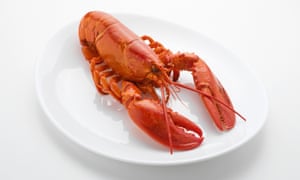
‘Lobsters have a long childhood, an awkward adolescence and feel pain.’
‘Lobsters have a long childhood, an awkward adolescence and feel pain.’ Photograph: Getty Images/Image Source

Iwas in the local fish shop buying my dinner when another customer in front held up two live lobsters that he had just bought. He needed some advice about what to do with them. “I’m going to boil one today,” said he, “but how long can I keep the other before I boil it? Will it last two days?”

There were the poor lobsters, held aloft, waving their arms about in a frenzy. Did they know what awaited them? Horrible. I suddenly remembered those Buddhist monks who saved hundreds of lobsters in July – bought them, carefully untied their claws and set them free again. They probably knew that lobsters “have a long childhood and awkward adolescence” and feel pain. So that cheered me up a bit – not all humans are greedy, heartless bastards. But it means no more lobsters for me, and perhaps I should cut out fish, too, and be a proper vegetarian. Or even a vegan, because once you start on this road, there’s no way back.

And it’s difficult, because I was brought up eating meat. Lovely tasty stews, roast dinners, bacon for breakfast, and shellfish. My mother cooked it all, in defiance of Jewish dietary laws and her own ferociously kosher mother. But those were more innocent and ignorant times, when we didn’t know about how dairy cows suffer, or eat such gigantic chunks of everything; when there was no Twitter, Facebook and endless campaigns against eating, boiling and torturing dogs, pigs and more or less anything that moved, and we just thought animals wandered freely around fields or spacious pens and didn’t miss their children, or mind being slaughtered, or feel anything much. And we didn’t yet know that the planet was almost totally buggered.

“This is a middle-class activity,” says Fielding harshly. “And remember, you live in Islington. People will mock.” Who cares? I’m not claiming to be saintly. I have lapses; I eat Olivia’s heavenly roast chicken, pretending to myself that I’m just being polite. Daughter’s making more effort than me, often turning to tofu. Perhaps the next generation will do better than us, and save the world. If they still have time.

In Defense of Our Misanthropy

There’s a difference between hate and disdain. It may be subtle, but not imperceptible. The word “hate” conjures up images of one wanting to see someone or something die a slow, painful death; but you can disdain something and simply want it to go away and leave others alone.

After learning of the works of the late natural history author John A. Livingston through a comment from reader Rosemary Lowe to my 2013 blog post entitled, “The Roots of My Misanthropy,” I finally found a used copy of the out of print book, One Cosmic Instant: Man’s Fleeting Supremacy.

From the opening pages, I was taken aback by how much Livingston’s attitude towards mankind reflected my own. Here’s a quote from one of his chapters on evolution:

“To regard the present condition—a monoculture of one dominant species of large mammal—as the inevitable result of a ‘master plan’ is to reveal ignorance and insensitivity. Like other hyper-specializations, the arrogant human brain will eventually be dealt with.”

In some circles, Livingston might be regarded as a touch misanthropic (or worse), but it’s clear to me that his disdain for humanity stems from a deep love for non-human nature. The problem with people pigeonholing essential words like misanthropy is they tend to oversimplify it as an unfounded hate, rather than a justifiable disdain.

In my earlier post, “The Roots of My Misanthropy,” (one of several on the subject) I stated:

“My misanthropy is not aimed at individuals per se, but at an entire misguided species of animal with an arrogance so all-consuming that it views itself as separate—and above—the rest of the animal kingdom.”

(While at the same time destroying habitats, sparking a mass extinction and changing the very climate that once made this a wondrous planet—ultimately to render it uninhabitable.)

“It’s not like humans can’t afford a little resentment once in a while, there are entire religions built specifically on the worship of mankind and its father figure—the maker made in the image of man. But sometimes someone needs to step back and see this species in perspective…

“Ever since hominids first climbed down out of the trees and started clubbing their fellow animals, humanoids have been on a mission to claim the planet as their own. No other species could ever live up to man’s over-inflated self-image; therefore they became meat. Or, if not meat, a servant or slave in one way or another.  If their flesh isn’t considered tasty, they’re put to use as beasts of burden, held captive for amusement, or as literal guinea pigs to test drugs and torturous procedures for the perpetual prolongation of human life. Those who don’t prove themselves useful are deemed ‘pests’ and slated for eradication.”

And on this same topic, guest-blogger for “Those Vegan Hedonists: A Veganism, Spirituality, and Philosophy Blog,” Kimberly Steele wrote, “If there is an afterlife for me, it will be the ecstasy for a brief second before my brain dies of never having to come back to our doomed planet or our stupid race; an instant of knowing I loved my fellow animals and lived every day like I meant it.”

To further prove that I’m not just a hateful curmudgeon, here’s what I blogged on August 14, 2014 in a post entitled,  “Save the Earth, Pray for a Pandemic”:

“I don’t mean to sound like some hateful misanthrope who wants to see humanity suffer for all its crimes against the environment. Rather, my misanthropy stems from a profound love of nature and a will to save non-humans from the cruelty and exploitation they’re routinely subjected to by the one species fully capable of causing a mass extinction. Indeed, the species Homo sapiens is currently in the process of putting an end to the most biologically diverse period the Earth has ever known—the Age of Mammals, a class which the human race must reluctantly finds itself included in.

“Being nothing more than mere mammals themselves, humans are ultimately at the mercy of Mother Nature’s self-preserving tactics. And what better way to reign in an errant child than with a major global pandemic that takes down only humans? Let’s face it; humans are never going to reverse the ill-effects of climate change willingly. Oh, world leaders sometimes give it lip service, but they almost never mention the parallel scourge of overpopulation. It seems it’s hard to be “green” and keep 7,185,322,300 (as of this writing) people fed, clothed, sheltered and transported in the manner they’re currently accustomed to.

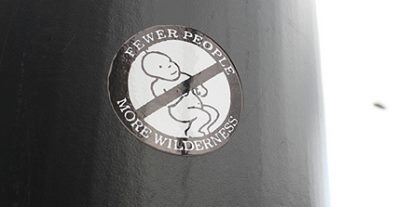
“If people want to come out of this alive, they’re going to have to make some serious lifestyle changes. That means no more oil-dependent cars, trains, jet airplanes, no more Walmarts full of plastic trinkets built with coal power in Chinese factories, then sent overseas in gargantuan container ships. No offshore oil wells, no fracking, no tar sands pipelines; no freeways, no commuter traffic, no immensely-popular sporting events selling factory-farmed hot dogs by the billions. No people by the billions, for that matter. No more breeding until humans have figured out how to live alongside the rest of the Earth’s inhabitants without wiping them out or making slaves out of them.

“No more! Starting right now! No false-starts or baby steps. Time to change or be changed!

“It’s not just the politicians who lack the will to do what it will take to soften the blow of climate change. But while humans debate their role in causing relatively dependable weather systems to go topsy-turvy worldwide, Nature is poised to unleash a pandemic or two from her bag of tricks and take care of the human problem herself. I’m not talking about Ebola, that’s too slow and nasty.

“When Nature gets serious, I’m hoping it’ll be quick and painless for all.  By the time humans know what hit ‘em, there’ll be no one left to test the experimental vaccine on the animals, who’ll be too busy inheriting the Earth anyway.”

Hate or disdain, who but an optimist could see the upside of a major pandemic after all?

00-intro

We Owe It to the Earth

safe_image

The cat’s been under the weather for the past few days—sleeping a lot, acting a bit lethargic, not wanting to go out as much as usual. It wouldn’t have seemed like such a panic situation, but this was the same cat who was poisoned a few months ago by ingesting second hand d-Con. The country vet noted that Caine had a fever, but was encouraged that his body was fighting off whatever kitty-virus he’d picked up.

An analogy can be made here with human beings, of course in the role of the virus and the Earth as the hearty body with a strong urge to survive trying to fight us off. As tempting as it is to chalk this epoch off as one big human screw-up—sit back and watch the fireworks, so to speak—we owe it to the Earth to give way and allow her every advantage in her effort to shake off the disease that’s got her down.

While it might be hard to swallow that humans will eventually do the right thing, it would be hasty to underestimate the self-healing powers of our planet herself. All we’d need to do is quit adding to the problem by bringing more humans mouths into the fray and change our hedonistic, carnivistic ways. Otherwise, the Earth will inevitably rear up and scream, “Enough!” Life on Earth has survived more adversity than we can dish out. The question is, do humans want to still be a part of the living planet once the Earth is through with her healing?

264431_455824994498980_1177070538_n

Hey Guys, We Should Chill Out on Eating Chicken

From a self-serving, hedonistic site called “Munchies”…

http://munchies.vice.com/articles/hey-guys-we-should-chill-out-on-eating-chicken/

Written by

Kirsten Stamn

Assistant Editor

June 8, 2014

The news as of late has been pretty doom-and-gloom—downright apocalyptic, in fact. We’ve got stories flooding our inboxes and feeds filled with gruesome statistics about catastrophically rising sea levels, terrible wildfires, and devastating droughts. It’s been dominating the national conversation, not just because it’s bringing up those recurring childhood nightmares spurred on by The Day After Tomorrow, but also because it’s affecting our food supply. We’re already seeing staples like pork,beef,fish,shrimp—evenbananas andlimes—become decimated by disease or climate change, causing prices to climb. So American consumers have started to lean more heavily on an already reliable food source: chicken. Too bad our beloved poultry is facing its own issues.

Enter our old friend, bird flu (which the poultry industry really wishes we wouldn’t call it). Having previously been the subject of mass hysteria worldwide, it’s recently flown relatively under-the-radar despite being endemic in six countries around the world: Bangladesh, China, Egypt, India, Indonesia, and Vietnam. There have been multiple outbreaks in Asia this year—Japan has culled a ton of chickens thanks to an outbreak,China is sorry it infected Taiwan,South Korea’s got it, evenNorth Korea isn’t able to isolate itself from this disease—and theUS had a small scare in late April when the disease broke out in a Californian quail farm. It’s even somehow infected penguins in Antarctica. This is a disease that mutates rapidly (producingseveral strains that are fatal to humans) and alsospreads like wildfire. In fact, it’s so adaptable that many researchers havepaused in experimenting with the virus in case it triggers a pandemic. (Their worries are valid: The virus is onlyfive strains away from being tailored to preying on humans.) But not everyone has stopped. There are still those whocontinue to adapt the virus in order to study its mutation process, despite the international uproar it’s caused in the science community.

While scientists are busy playing with a ticking time bomb, the chicken industry has been busy creating the perfect conditions (i.e., overcrowded factory farms) for this virus to take off. (Reps from the USDA’s Animal and Plant Health Inspection Service did not return calls.) When an infected migratory bird somehow enters a facility—often through holes in fencing—it can set off a massive chain reaction. And humans who come in contact with infected birds—whether factory farm workers or customers—can get the disease, too: One of the reasons Asia has the most human fatalities thanks to the H5N1 virus isdue to their live poultry markets, where customers get up close and personal with their potentially infected future dinner. Mmm.

Regardless, it doesn’t look like industrialization is going to change its habits anytime soon. Chicken consumption is rising thanks to both a culturally instilled meat-heavy diet and the fact that beef and pork prices are suddenly skyrocketing. And according to David Harvey from the USDA office, it’s going to keep rising: Forecasts for 2015 indicate that Americans will be eating 39.275 billion pounds of chicken, a healthy 847 million pounds more than what we’re going to be eating in 2014. To top it off, the chicken industry is actually raising its prices because (a) demand is high now that the competition is down, and (b) to compensate for those pesky bird flu losses. Overall, the industry’s sales are down slightly, yet its margins are increasing. Let’s take a moment to process that.

I’m very happily a carnivore; I eat chicken at least once or twice a week. But right now, veggies are starting to sound pretty damn good.

264431_455824994498980_1177070538_n


I’d Love to Change the World

I’ve been told that I’m not helping anything by being vegan; that I wasn’t going to be able to stop all the horrible things going on by taking a stand against animal consumption.

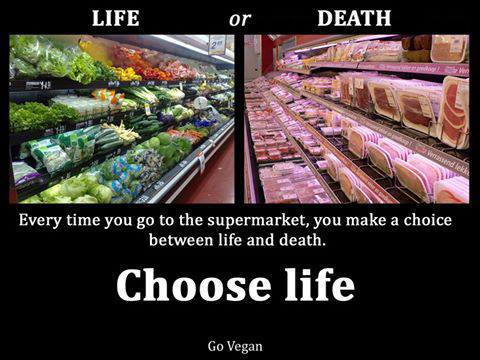
10151358_495324630593354_7512005859880238928_nThat’s a depressing thought, especially if you’re aware of the current holocaust happening all around us. Humans are slaughtering 6 million animals per hour. 20,000 more will die in the time it takes you to read these sentences! That’s a holocaust of farmed animals every 60 minutes. And that’s not counting fish, lobsters, shrimp, oysters, clams, krill or other sea life. But I’m not fooling myself, I know it would take a concerted, allied effort to stop these atrocities.

Even if I never saw positive results from promoting veganism in my short lifetime, there are other reasons for not eating animals. For me, veganism is about choosing not to add to the suffering our fellow Earthlings endure every day for the human appetite; it’s a form of dissent against the extreme cruelty millions of animals undergo so humans can have their steak and eat it too.

Veganism is my protest against the insanity of factory farming; against the existence of battery cages, cattle feedlots, industrialized dairies, veal crates, hog farming, commercial fishing, whaling, sealing, fur trapping, bow hunting, predator control, contest hunts, culling, derby killing and every other form of exploitation our species inflicts on the non-humans citizens of the world.

I might not be able to change the world, but at least I don’t have to be complicit in institutionalized animal cruelty. Non-human animals might hold little value to most people, but the laissez-faire acceptance of brutality and suffering will eventually come back on Homo sapiens and help facilitate the demise of the species.

In the immortal words of Woodstock headliners, Ten Years After:

“I’d love to change the world

But I don’t know what to do

So I’ll leave it up to you”

why

Human “Progress”

Rosemary commented: “We are seeing a longing for so-called ‘traditional’ ways of life, a manic nostalgia for something that really never was–except it was a less crowded world.”

To which I replied: I’ve thought that same thing many times. The only reason human life ever seemed to be in any kind of harmony with the rest of nature is that there were a LOT fewer of us. Sorry, but there’s no way an ever-growing population of humans can hope to be sustainable.

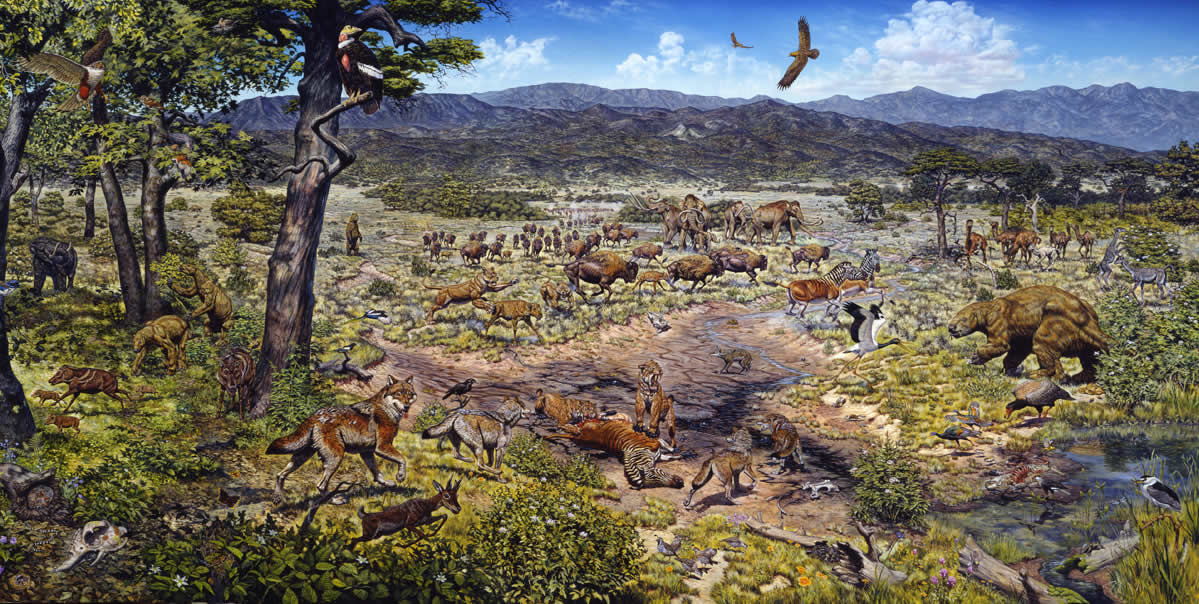
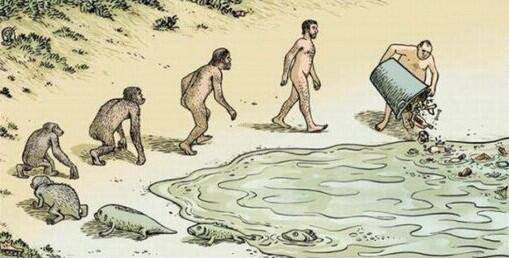
Here is a simple yet accurate depiction of human evolutionary “progress.”

1527138_271312873037188_1829199472_n