
Yesterday’s blog post, “Man I Wish You Were Never Born,” took to task the whole of the human race for the fact that Homo sapiens doesn’t just kill other animals to fill their bellies, they destroy them in droves out of spite, to eliminate the competition…or just for fun. That post received across-the-board praise from readers committed enough to the cause to take a sober view of the only species ever to fly to moon, invent a god or cause a mass extinction.
But do I dare take it a step further and examine the origins of the overexploitation of non-humans when doing so means questioning the nearly universally-held tenant that certain groups of people shall remain blameless, even genetically incapable of wrongdoing? Well, just to prove that I’m an equal opportunity misanthrope and my compassionate misanthropy is colorblind, I’m going to come right out and say that contrary to popular belief, the hunting practices of stone-age people were extremely cruel and often had a staggering impact on wildlife populations.
Ever since the first hominid shunned our primate predecessor’s plant-eating lifestyle and sank its teeth into the flesh of another animal, our hairy fore-bearers have been scratching their heads, and armpits, trying to devise deadlier weapons than their neighbors. The simple, sharpened stick, later recognizable as the spear, reigned for over a hundred centuries before the atlatl propelled the human predator to a higher level of planetary destruction. With that new technology, localized over-hunting—then early mass extinctions—followed the spread of Homo sapiens to every corner of the earth. Later, of course, gunpowder unleashed a firestorm the likes of which the world had never known.
So, why bring this up? Why not let people have their illusions about their peaceful origins and the notion that any humans were ever harmonious in their animal exploitation? Because belief in fantasy only fuels the case for hunting and delays the day we finally move beyond it as a species.
Harvard biological anthropologist Richard Wrangham and author Dale Peterson address revisionist history in their 1996 book, Demonic Males: Apes and the Roots of Human Violence. In a chapter titled “Paradise Imagined” they write: “Many of us who…absorbed the ideas of anthropologists like Margaret Mead, find deeply comforting their evocation of paradise and their notion that human evil is a culturally acquired thing, an arbitrary garment that can be cast off like our winter clothes.” The chapter goes on to challenge this fallacy with examples of human ill-behavior throughout the ages and concludes with: “To find a better world we must look not to a romanticized and dishonest dream forever receding into the primitive past, but to a future that rests on proper understanding of ourselves.”
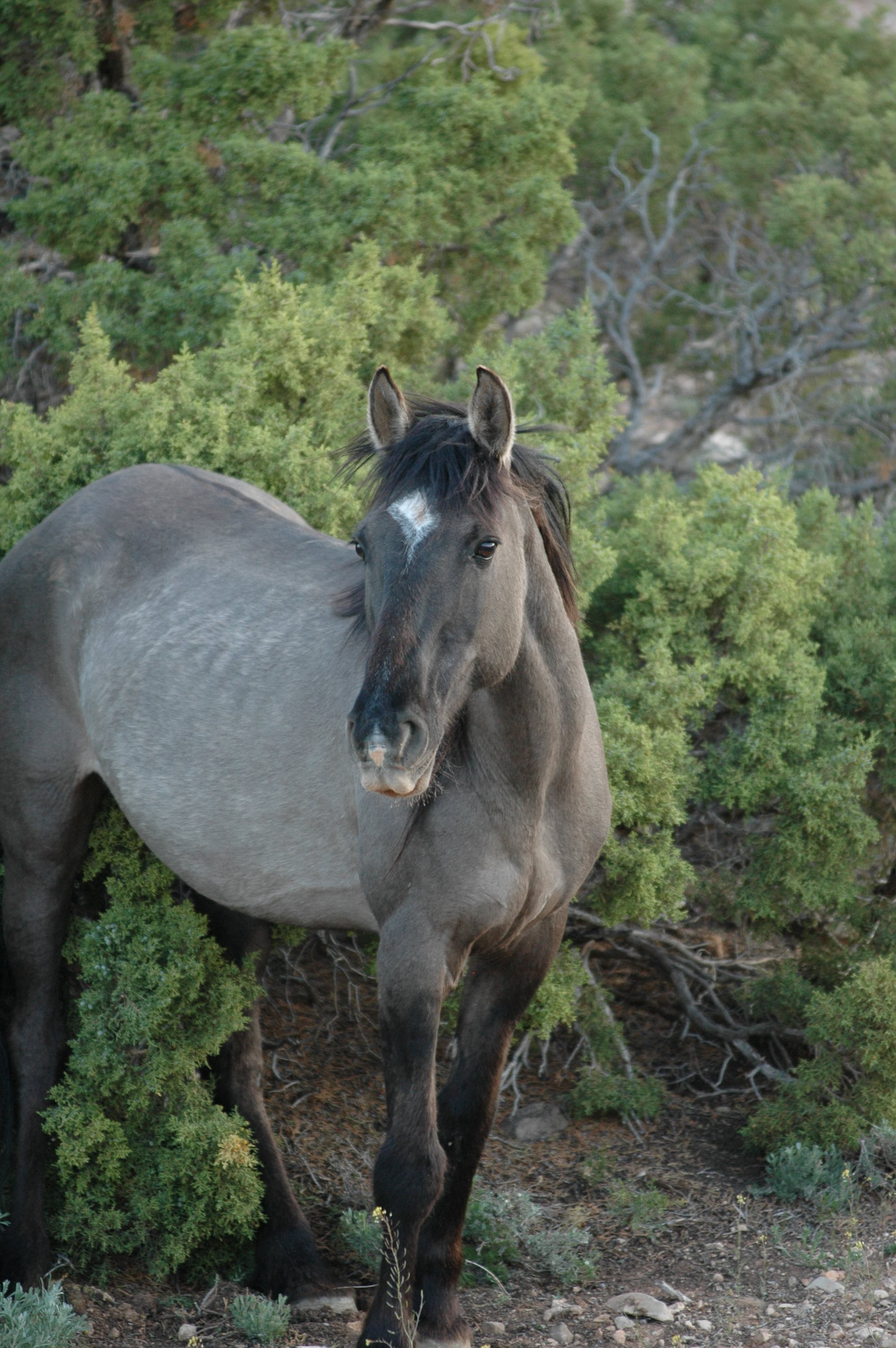
Some folks find it painful to accept that pioneering Paleo-Indians, the predecessors of Native Americans, actually drove aboriginal animals like horses over cliffs by the thousands and ultimately to an early extinction. Now, Washington’s Yakima tribe wants to send their wild horses (brought back to the continent and inadvertently released by early Spaniards) to modern-day slaughterhouses, like the introduced cows they raise on their reservations.
A Seattle news article entitled, “Yakamas Urge Feds to Consider Horse Slaughter,” quotes Yakama Nation Chairman, Harry Smiskin, who said in a March 29 letter to President Barack Obama and Agriculture Secretary Tom Vilsack: “We don’t understand why it is OK to slaughter many animals in this country – certainly the White House and the USDA have meat on their cafeteria menus every day – but for some reason horses are considered sacrosanct.” One of the absurd excuses Smiskin presents for pushing horse slaughter plants is that they are a “humane” way to deal with unwanted horse herds. I’m sorry, but being crowded into a windowless building of an industrial slaughterhouse that reeks of blood and reverberates with the sound of saw blades cutting bone and the cries of terrified animals being butchered alive is anything but humane for domestic cows—let alone wild horses!
This is just the latest instance of an autonomous Washington State tribe undermining federal protections for animals. The Makah mocked the Marine Mammal Protection Act by blasting a grey whale to death with a 50 caliber rifle, the Colvilles instated the first and only wolf hunt in the state since wolves started to make a comeback and now the Yakimas are pushing back advancements made for wild horses.
Ironically, the captains of animal industry are using our politically correct attitudes toward Native Americans to further their agendas and squelch the perception that any other species besides Homo sapiens has intrinsic value. After all, only a misanthropist or an animal rights extremist would dare to question the stated objective of an American Indian.
Text and Wildlife Photography ©Jim Robertson, 2013. All Rights Reserved


 Exposing the Big Game