Exposing the Big Game

Forget Hunters' Feeble Rationalizations and Trust Your Gut Feelings: Making Sport of Killing Is Not Healthy Human Behavior

Exposing the Big Game

Vote could see all hunting banned from National Trust land

CHARLOTTE CROSS ITV NEWS REPORTER

A controversial motion to ban all hunting activity from National Trust land could cause many hunts across the country to collapse, campaigners say.

Anti-hunt activists argue the move, if successful, would help stop illegal hunting by taking away huge swathes of land hunts are able to access – but pro-hunt supporters vigorously deny any illegal activity, and warn it risks the loss of a traditional British country sport.

Members are being urged to cast their votes for or against the proposal before midnight on Friday (October 13), when postal and online voting will close.

The motion will then go before the Trust’s annual general meeting on October 21.

Fox hunting has been illegal since 2005
Fox hunting has been illegal since 2005. Credit: PA

Hunting live animals with hounds has been illegal since the Hunting Act came into force in 2005.

To try to preserve the tradition, hunts were allowed to continue provided they followed scent-based trails instead.

But foxes are still killed by hunts. They claim this is accidental, and say it only happens when a live fox crosses the trail which has been pre-laid for the hounds.

Animal rights campaigners, however, accuse the hunts of deliberately breaking the law. They argue that trails are rarely, if ever, genuinely laid – it is merely a smokescreen allowing them to continue as they always did.

The motion to ban hunts from National Trust land was put forward by former teacher Helen Beynon, from Wigston in Leicestershire.

She told ITV News she only became aware that hunting still took place in January, when a friend invited her to a demonstration against the Atherstone Hunt in Staffordshire at New Year.

Brian May joined an anti-hunt protest outside Parliament in 2015.
Brian May joined an anti-hunt protest outside Parliament in 2015. Credit: PA

I couldn’t believe this was allowed to happen on National Trust land. I’ve just become more and more passionate about it as the months have gone by and I’ve learned more.

I don’t think a charity which claims to be about conservation and protecting wildlife should be allowing dozens of hounds at a time to be let loose over their land, where there’s a risk they could kill animals living there.

– HELEN BEYNON, CAMPAIGNER

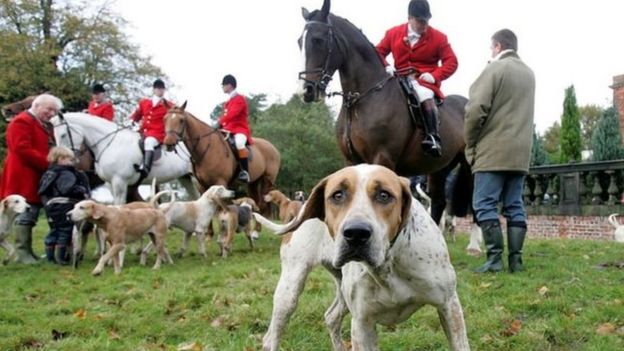
Hunts are still allowed, but must follow scent trails instead of live animals.
Hunts are still allowed, but must follow scent trails instead of live animals. Credit: PA

Polly Portwin, head of the hunting campaign for the Countryside Alliance, dismissed the allegation that trail hunting was a cover for illegal hunting as “simply untrue”.

“There’s no illegal fox hunting intentionally. Hunts go out to trail hunt – they lay a trail in accordance with the Hunting Act 2004, and the intention is to go out and follow that line, and hunt within the law,” she said.

While accidents do happen, she said, huntsmen are very diligent and always try to call hounds back when they’re aware there is a live fox in the area.

Well-meaning hunt monitors and hunt saboteurs can often make this more difficult by mimicking the huntsman’s horn or calls, confusing the hounds.

She said the motion, if voted through, could completely remove the amount of land available for some hunts – particularly those in rural areas of the north of England.

With some packs, you’d question the viability of them if they lost access to the National Trust land. It’s a huge part of some of their countries.

It’s a big community thing as well, a lot of people – particularly in rural areas – would be vastly affected. This threatens to take away something which is very dear to them.

– POLLY PORTWIN, COUNTRYSIDE ALLIANCE

A huntsman holds up a fox killed by the Durham Hunt in 2005, before the ban came into force.
A huntsman holds up a fox killed by the Durham Hunt in 2005, before the ban came into force. Credit: PA

Despite being illegal for 12 years now, hunting with hounds remains a hot political talking point.

A vote to relax the fox-hunting ban in England and Wales was due to be held in 2015, prompting protests. That was shelved when the SNP confirmed it would take part, making defeat almost certain.

And similar protests were held earlier this year, after Theresa May pledged her support for holding a free vote on repealing the ban.

The National Trust, which boasts more than five million members, issued 79 licences to 67 hunts last year.

It has revamped its rules for licensing in response to Mrs Beynon’s motion, and has advised its members to vote in favour of the new licensing terms instead of a ban.

If the motion is rejected, members will have to wait three years before they can propose it again.
Animal rights group, Native Americans to meet in Atascadero to oppose hunting amendment

https://pasoroblesdailynews.com/animal-rights-group-native-americans-meet-atascadero-oppose-hunting-amendment/76052/
“California Fish and Game Commission meets in Atascadero, allowing GPS
tracking on hunting dogs is on the agenda”

“Randal Massaro, President of Union Members for the Preservation of
Wildlife, said that the GPS collars are approved hunters will have “no
incentive to keep up with their dogs in wildlife habitat and terrain
when they can sit in vehicles and watch a screen indicating their
dogs’ ranging one to seven miles, or more.” Massaro also said the
devices violate Fish and Game codes that require dogs be kept under
control.
“Roger Dobson, President of the Northern California organization
Protect the Wolves and member of the Washington Cowlitz Tribe said,
“It is inhumane treatment of both the dogs and the wildlife to let
dogs run loose where there are real predators that have to eat. No
hunter is going to be able to get to any dog fast enough to save that
dog from another predator.”

Animal-rights group wants Arizona voters to ban hunting of mountain lions, bobcats

http://tucson.com/news/local/animal-rights-group-wants-arizona-voters-to-ban-hunting-of/article_cc140fd3-be4a-5a03-a7c9-c53fc51ff297.html

  • By Howard Fischer Capitol Media Services
  • Updated 
Mountain lions
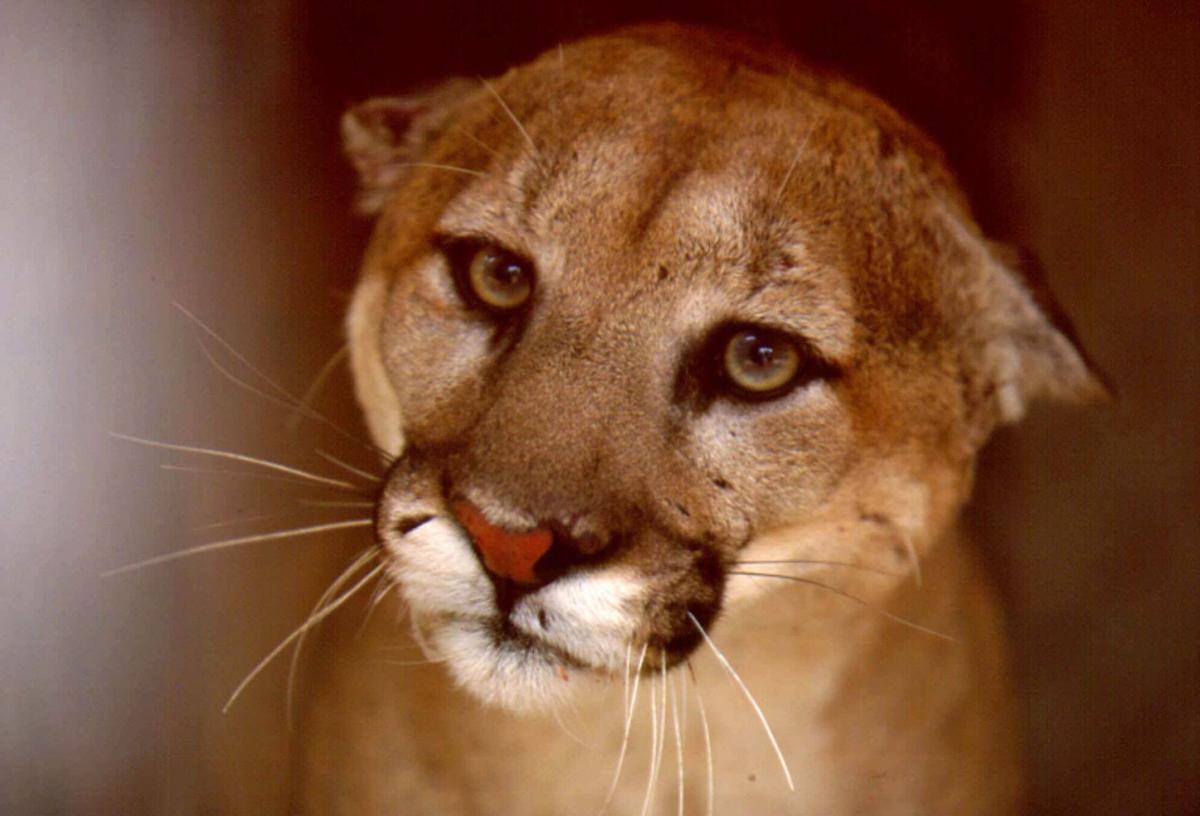
The hunting of mountain lions and other big cats is largely considered trophy hunting.

George Andrejko / Game And Fish Department

PHOENIX — Saying there’s no reason for “trophy hunting” of mountain lions, the Humane Society of the United States is moving to get Arizona voters to outlaw the practice.

The group’s proposal for the 2018 ballot would make it illegal to pursue, shoot, snare, net or capture any “wild cat.” That specifically means bobcats and mountain lions.

As written, the ban also technically would apply to jaguars, lynx and ocelot. But those already are protected as endangered species.

“People no longer really tolerate trophy hunting,” said Kellye Pinkleton, the Humane Society’s state director. “People are not shooting them, hounding them, trapping them for subsistence.”

But Kurt Davis, a member of the Arizona Game and Fish Commission, said the number of mountain lions killed each year — about 360 in 2015, the most recent number available — simply keeps the population in check and ensures that prey species, including bighorn sheep and pronghorn antelope, are not decimated.

Davis said he sees the proposed initiative as part of an effort to ban hunting entirely.

Pinkleton responded: “We do not have any blanket opposition to hunting.”

Backers of the ban on hunting big cats have until next July to gather 150,642 valid signatures on petitions to get the issue on the ballot.

The Humane Society and its local affiliate have a track record with voters. In 1994 they succeeded in getting Arizona voters to approve a ban on the use of leg-hold traps on public lands by a margin of close to 3-2.

Pinkleton noted that initiative laws have since been tightened by the Republican-controlled Legislature, with a ban on paying circulators on a per-signature basis and a requirement that petition papers be in “strict compliance” with all election laws.

But she said her organization and other allies should be able to raise the $3 million to $5 million it will take to force a public vote.

If it gets that far, it could be difficult to defeat. Davis said Arizona has a higher percentage of urban residents than any other “inland” state, meaning people less likely to go hunting.

That means the Game and Fish Commission and hunters will need to make their case that the practice should not be outlawed.

Davis said it comes down to science.

He estimated there about about 2,500 mountain lions in Arizona.

Each year the state issues more than 10,000 tags to hunt mountain lions. Davis said the commission’s experience is that, given the difficulty to actually kill one, that keeps the population in the 2,000 to 3,000 range, which he said is ideal.

Pinkleton disagreed. “The science doesn’t back up their claims,” she said.

She said the initiative would still allow killing of mountain lions in cases where they were endangering humans or killing other animals, whether a rancher’s cattle or the bighorn sheep that have been reintroduced into the Pusch Ridge Wilderness Area near Tucson.

The difference, she said, is that only the actual lions causing the problem could be hunted, versus simply telling hunters they can go out and shoot them in the area to cut down on the population.

Davis said such an approach makes little sense.

He said a 1990 initiative banning the killing of mountain lions in California now results in more of the big cats being killed by state officials to protect other species than were taken by hunters.

Pinkleton said there’s a good reason why the Arizona initiative would outlaw only the killing of wild cats.

“These essentially are killed for trophies or for fur,” she said, and for “bragging rights” about killing a lion.

“This is not deer or elk where communities are using the whole animal, whether for the meat or whatever,” she continued. “This is not a subsistence animal.”

Davis takes exception to pushing the initiative as a ban on hunting “trophy” animals.

“The notion of ‘trophy’ is a political notion that they’ve tested and polled,” with no actual legal basis, he said.

If the test of “trophy hunting” is whether hunters actually eat what they kill, that would include the hunting of coyotes, Davis said.

Beyond that, he said the initiative ignores that hunting is “a tool used by our state’s biologists … to manage our state’s wildlife.”

“Thank god … that you have hunters, both men and women sportsmen, that are willing to go out and be part of the management tools to maintain healthy populations of all of our species,” he said.

Bobcats, which Davis said number “in the thousands” in Arizona, are a different situation. They are classified the same as coyotes, raccoons and skunks, which can be hunted at all times without a special permit.

According to the Game and Fish Department, 1,300 bobcats are killed each year, on average.

Part of the debate is likely to involve methods used by some hunters.

“If a pack of dogs chases a mountain lion into a tree, and they are shot, that is not a fair chase,” Pinkleton said.

Davis countered, “That’s one of those issues that you see and hear, and it creates an emotional response.” But he said that doesn’t necessarily make it wrong.

“The traditions of using hounds to pursue lions is something that existed in our country since its foundation,” he said. Anyway, Davis said, only a “small number” of people have the ability to use dogs. “I don’t,” he said.

The numbers from the Game and Fish Department suggest that the use of dogs does make a big difference, however: Out of 324 mountain lions killed in 2015 by hunters, 247 of those were with the use of dogs.

Poaching suspects left lengthy digital trail for investigators to follow

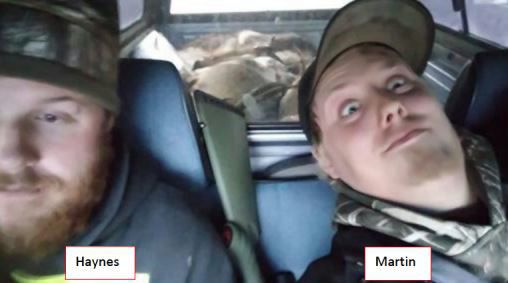
William Haynes and Erik Martin
William Haynes, left, and Erik Martin pose for a selfie in Haynes’ pickup truck. The image was sent from Martin to his girlfriend on November 19, 2016, according to case reports. In the back of the vehicle, multiple deer can be seen. According to case reports, the deer were illegally killed in Oregon and transported across state lines to Washington.

Washington Department of Fish and Wildlife case report

For individuals who apparently got a thrill by stalking and illegally killing wild animals, William J. Haynes and Erik Christian Martin did a poor job of covering their own tracks.

The suspected poachers unwittingly provided law enforcement officers with a huge cache of evidence, allowing Washington Department of Fish and Wildlife investigators to build a massive case against them and five other members of an alleged poaching group.

Based on case reports reviewed by The Daily News, there’s little sign the men ever thought about getting caught.

Instead, the 23-year-old Longview residents are suspects in an investigation into the killing of more than 50 animals including deer, elk, bears and bobcats in two different states. Along the way, they left a digital trail of shocking evidence for Fish and Wildlife investigators to follow.

The painstaking task required two Fish and Wildlife officers and a sergeant, who spent a majority of the past winter and early spring diligently retracing the suspects’ bloody steps.

Investigators were also assisted by more than 30 officers from multiple agencies, including the Cowlitz County Sheriff’s Office.

“We’ve used a lot of our manpower in this region in Western Washington to accomplish this case,” Fish and Wildlife Sergeant Brad Rhoden said in an interview.

Rhoden said he doesn’t want intense interest in the case to lead to a negative perception of honest hunters.

“I don’t want anybody to view the majority of our hunters in Washington as these types of individuals,” he said. “I don’t think there’s a sportsman out there who would say this is OK.”

Haynes is facing 61 separate charges in Skamania County District Court, including 26 charges of first-degree illegal hunting of big game. All of the charges are related to the use of dogs while hunting, which is illegal in Washington without a special permit that’s only granted in specific instances. Haynes was previously convicted of second-degree unlawful hunting of big game in Cowlitz County on Oct. 3, 2013. As a result, all of Haynes’ big game charges could be considered Class C felonies, which are punishable by up to five years in jail and a $10,000 fine.

Martin, who does not have any previous violations, is facing 28 separate charges for gross misdemeanors.

In addition to Haynes and Martin, three other suspects have been named in the investigation.

They are Joseph Allen Dills, 30, of Longview; Eddy Alvin Dills, 57, of Longview; and Bryan Christopher Tretiak, 31, of Morton. All of the suspects are awaiting preliminary appearance hearings in Skamania County later this month. Two female suspects were named in the case reports but no charges have been filed against them yet.

Dills, who has bear claws and dog paws tattooed on his left arm, pleaded guilty in Wahkiakum County District Court in 2008 to second-degree unlawful hunting of big game and second-degree criminal trespassing. He’s now facing 64 separate charges, including four first-degree unlawful big game hunting charges for the illegal use of dogs.

Had Haynes and Martin known that the contents of their phones would result in so many charges, it’s possible they may have opted not to document such a staggering number of alleged illegal hunting activities.

A mountain of evidence

Based on case reports, it’s not clear if Haynes or Martin thought twice before agreeing to allow two Oregon State police officers to look through their devices on December 3, 2016.

According to reports, the troopers had stopped the men after recognizing Haynes’ Toyota pickup as the same vehicle that appeared in several images captured by Oregon Department of Fish and Wildlife game cameras. The motion-activated cameras were set up in response to past illegal big game hunting activity in the Mount Hood National Forest during the months of November and December.

Upon questioning, Haynes and Martin confessed to illegally killing two buck deer and a silver gray squirrel, according to reports. The two men admitted to taking only the heads of the two deer and the entire squirrel back to a house in Longview, leaving the rest of the animals to rot.

At this point, Senior Trooper Craig Gunderson requested that Washington Fish and Wildlife Sergeant Brad Rhoden assist with recovering the illegally transported deer heads.

When Rhoden arrived, Gunderson informed him that Haynes and Martin had consented to having their cell phones searched. According to reports, it was at this point that the true scale of the ensuing investigation began to emerge.

An initial look through the devices revealed numerous photos of antlered deer skulls, dead bull elk, and — perhaps most disturbing — bear hunting with the use of dogs.

Gunderson seized the phones as evidence and obtained a search warrant to have a forensic analysis performed on the devices.

On Dec. 16, 2016, Rhoden met with Gunderson and several other officers to transfer evidence from the analysis.

The contents of Haynes’ phone provided hundreds of photos and videos documenting a pattern of brutal killings on more than 20 separate occasions.

In some cases, bears were still alive as Dills’ dogs gnawed on their flesh, Rhoden said.

Martin’s phone also held numerous photos and videos of the unlawful harvest of big game.

In addition to incriminating photos, videos and text messages, the evidence included crucial metadata which allowed investigators to pinpoint exactly where the illegal killings occurred using GPS coordinates.

Investigators could not have retraced the suspects’ steps if Haynes had not granted his phone’s camera permission to access its GPS location data.

“What was most difficult about this case is that we had to pore through so many records,” Rhoden said.

Theresa May: I’m in favour of fox hunting

http://www.bbc.com/news/election-2017-39861011?SThisFB

  • 9 May 2017

Media captionTheresa May is asked about her views on fox hunting

Theresa May has indicated she will allow Conservative MPs a free vote on whether to bring back fox hunting.

The PM, who says she has always been in favour of fox hunting, said it was up to Parliament to take the decision.

Tony Blair’s Labour government introduced the Hunting Act, which bans the use of dogs to hunt foxes and wild mammals in England and Wales, in 2004.

Tory Sir Roger Gale, seeking re-election in North Thanet, said many young party members were anti-hunting.

Mrs May was asked why she was committed to bringing back fox hunting during an election event in Leeds.

She replied that this was a situation “on which individuals will have one view or the other, either pro or against”.

“As it happens, personally, I’ve always been in favour of fox hunting and we maintain our commitment – we had a commitment previously – as a Conservative Party to allow a free vote and that would allow Parliament to take a decision on this,” she said.

Her comments followed a Daily Mirror report that it had seen a leaked email from Conservative peer Lord Mancroft, chairman of the Council of Hunting Associations, in which he outlined how a Conservative landslide at the general election could result in changes.

According to the newspaper, Lord Mancroft wrote: “A majority of 50 or more would give us a real opportunity for repeal of the Hunting Act.

“This is by far the best opportunity we have had since the ban, and is probably the best we are likely to get in the foreseeable future.”

HuntingImage copyrightAP

The peer reportedly said Mrs May had offered assurances that the party’s manifesto would include a pledge to give MPs a free vote on repealing the act – something her predecessor David Cameron had also offered in 2015, but which had not yet happened.

Sir Roger Gale, president of Conservative Animal Welfare, said he would oppose any attempt to repeal the Hunting Act.

He said he understood there were around 30 to 50 anti-hunt Conservative MPs in the last Parliament, with the potential for the 2017 intake to have similar views.

“I cannot see many Conservative votes for fox hunting in marginal seats we are hoping to win,” he said.

He believed a “huge amount of parliamentary time and effort” had already been spent on the issue, with the existing law “probably as good as we can get” given the difficulty in satisfying everyone.

“We have more than enough to occupy parliamentary time with Brexit and all that follows,” he said. “In my view, it’d be folly to waste further time on the issue.”

Countryside Alliance chief executive Tim Bonner said the act had “failed”, adding that he would wait and see what was contained in the Conservative manifesto.

“The case of hunting and the case against the Hunting Act remains strong – and we will continue to make the case to politicians of all parties,” he said.

More Cougars Fair Game? Groups Protest WA Hunting Quota

http://www.publicnewsservice.org/2015-09-28/animal-welfare/more-cougars-fair-game-groups-protest-wa-hunting-quota/a48310-1

Public News Service – WA | September 2015

September 28, 2015OLYMPIA, Wash. – Gov. Jay Inslee is being asked to intervene in a dispute between the state Fish and Wildlife Commission and eight groups advocating for Washington’s cougar population. The commission decided this spring to increase the percentage of cougars that can be hunted in some areas. The groups contend that defies the state’s own research about balancing the cougar population to minimize conflict with people and livestock.

Bob McCoy, a Washington volunteer with the Mountain Lion Foundation, explains cougars stake out wide-ranging territories and killing more of them creates conflict among the remaining males, and leaves cougar kittens without mothers. “It’s increasing the hunting to a point that it will end up with a younger population of cats,” McCoy says. “They’re the ones that are usually looking for territories, so they’re the ones we suspect are most likely to be causing problems.” The groups say the state spent about $5 million and more than a decade on research that found a hunting quota of 12 to 16 percent satisfies hunters without doing permanent damage to the cougar population. The Fish and Wildlife Commission has raised the quota to 17 to 21 percent, primarily in northeastern Washington. The groups say the commission got pressure from ranchers concerned about predators.

The ranchers aren’t allowed under Washington law to kill wolves, but Tim Coleman, director of the Kettle Range Conservation Group, says that shouldn’t be a justification for killing more cougars. “The two predators will keep each other in check, and we know that from experience, and we also know that their habitat is based on prey availability,” says Coleman. “Nature achieves a balance between the two species. But what the commission’s plan is, is unnatural.” The groups also contend the hunting quotas were increased without sufficient chance for public comment. The governor has about a month to rule on the appeal. Chris Thomas, Public News Service – WA – See more at: http://www.publicnewsservice.org/2015-09-28/animal-welfare/more-cougars-fair-game-groups-protest-wa-hunting-quota/a48310-1#sthash.xZ508T69.dpuf

Washington: Urge Gov. Inslee to Protect Cougars

https://secure.humanesociety.org/site/Advocacy?cmd=display&page=UserAction&id=7042&autologin=true&s_src=sh_fb

<!–
Replace this text and uncomment out to include a photo caption –>

Last spring, the Washington Fish and Wildlife Commission increased cougar-hunting quotas from 50 to 100 percent in areas where wolves also reside. These hugely-increased quotas will allow trophy hunters to devastate Washington cougars. Even worse, the Commission changed Washington’s wildlife policy without giving the public any notice of this change or an opportunity to comment.

The Humane Society of the United States and our conservation colleagues asked the Commission to reverse their unscientific course of action that will harm cougars, but they ignored us. Now, we need you to join us in our formal appeal to Gov. Jay Inslee to protect Washington’s iconic cougars from over-persecution by trophy hunters.

TAKE ACTION
Please call Gov. Inslee’s office today at 360-902-4111 and ask him to reverse this harmful decision made by the Fish and Wildlife Commission.

After making your call (please do not skip that crucial step!), fill in and submit the form below to send a follow-up message. Legislators receive a lot of email; be sure to edit your message so it stands out.

Share to Facebook Twitter

Meat is murder? Rockers go head to head over animal rights

http://www.theguardian.com/music/2015/jul/10/meat-is-rockers-go-head-to-head-over-animal-rights

In the past 24 hours, Paul McCartney has condemned proposals to bring back fox hunting, and Dr (yes, Dr!) Brian May of Queen has been on Newsnight, delivering a passionate and sweary tirade against the bloodsport.

It seems as though righteous hunt-based indignation is the new rock’n’roll. Which is somewhat counter to the genre’s origins as an excuse for all-purpose carnage and desecration. Musicians, and fans, are forced to take sides. You see, rock has conflicting impulses when it comes to our furry friends. From the start, rock’n’roll was primordial, raw, its prime movers born to be wild. But there are many artists, from Macca to Morrissey, who oppose this stance.

Take, for example, Metallica. Last year there was a 10,000-strong petition to ban the metal act from headlining Glastonbury due to frontman James Hetfield’s support for bear hunting. More surprisingly, Bryan Ferry caused a stir at a music awards ceremony when, amid boos and jeers, the Roxy Music crooner applauded his “brave son” Otis for his pro-hunt antics after he stormed the House of Commons in 2004 (indeed, he is still actively involved in lobbying for fox hunting’s return). I say “more surprisingly” with regard to Ferry, because he belongs to rock’s effete wing. You can’t imagine him tucking into a plate of red meat, let alone bestriding the corpses of albino deer.

Unlike retrograde moustachioed axeman Ted Nugent. You can imagine Nugent biting into the hide of a live albino deer while it’s still roaming the forest. The 70s rocker recently defended Kid Rock, who was criticised for killing a cougar. The Nuge responded to complaints from Peta by posing over the carcass of an African lion and posting a spirited (and grammatically suspect) defence of trophy hunting.

Kid Rock (right) with a cougar carcass.
Kid Rock (right) with a cougar carcass. Photograph: Facebook

And who could forget Jerry Lee Lewis, who I interviewed this week. Sex metaphor or not, rock’s carnivorous urges are made plain in the words of one of his songs, the Meat Man: “Plucked me a chicken in Memphis … Mama, I still got feathers in my teeth”.

Then there’s the aforementioned Smiths frontman at the other end of the scale. Moz is notoriously, militantly vegetarian. In 2010, Mr Meat Is Murder wrote an open letter decrying David Cameron – a Smiths fan, to add insult to injury – as someone who “hunts and shoots and kills stags, apparently for pleasure”, and the royal family, especially the Queen (not guitarist May, the other one), who “annually signs off on the terrorising slaughter of adult Canadian brown bears in order that her guards are supplied with fancy hats”. He also took the opportunity to rechristen Ferry’s son Odious Ferry.

Terrible puns aside, is there an essential contradiction in rock’n’rollers – supposedly synonymous with destruction and teenage rampage – siding with things ethical, moral and good? And can a clean, pure, meat-averse friend of the furry make a credible rock noise? Rock should be savage – but can it embody the feral while denying its primal urges?

Paul McCartney Condemns British Government Over Fox Hunting

Queen guitarist Brian May also criticizes Tory party ahead of July 15th vote that could revive “cruel and unnecessary” sport

By July 10, 2015

Paul McCartney has spoken out about the British government’s impending amendment that will once again open the door for fox hunting in England and Wales. In a statement, the bassist and longtime animal rights activist called the sport “cruel and unnecessary” and threatened that, by passing the bill, the conservative Tory party “would lose support from ordinary people and animal lovers like myself.”

“The people of Britain are behind this Tory government on many things, but the vast majority of us will be against them if hunting is reintroduced,” McCartney said. In 2004, the British government placed stricter restrictions on fox hunting, which was practiced legally for sport for nearly five centuries until the legislation passed. However, current Prime Minister David Cameron revealed in March he hoped to repeal the ban as long as the fox hunts were “appropriate” and done “efficiently,” The Guardian reports.

McCartney isn’t the only rocker to argue against renewing fox hunts: On July 9th, Queen guitarist Brian May appeared on BBC’s Newsnight to slam the amendment, which will be put to a vote on July 15th. “There is no justification for the hunting of foxes on the grounds of control of foxes,” May said. “They breed them to hunt; it’s all about people out there trying to catch foxes for fun. They like causing pain and this is what Cameron is endorsing.”

May appeared on Newsnight to debate fox hunting with a member of the Countryside Alliance, a group May called “a bunch of lying bastards.” Things only became more contemptuous from there.

Read more: http://www.rollingstone.com/music/news/paul-mccartney-condemns-british-government-over-fox-hunting-20150710#ixzz3fWMuehoH
Follow us: @rollingstone on Twitter | RollingStone on Facebook

Briton Backsliding Too?

http://news.yahoo.com/british-parliament-vote-fox-hunting-164039017.html

London (AFP) – Britain’s House of Commons will vote on the highly contentious issue of fox hunting next week, with critics claiming Wednesday that it could be a first step towards lifting an 11-year ban.

Prime Minister David Cameron, who has admitted hunting with hounds in the past, is expected to vote next Thursday in favour of the move which would give more freedom to “flush out” foxes with dogs.

Hunting foxes with dogs has been banned across Britain since 2004 but Cameron’s centre-right Conservatives pledged to make it legal in their manifesto for May’s general election, which they won.

The issue is highly divisive in Britain, where critics often argue that hunting is a cruel pursuit for wealthy landowners and supporters say it is part of rural life and helps control a troublesome fox population that can kill livestock.

Drag hunts, where dogs follow an artificial scent instead of a fox, are still allowed and have continued across Britain in winter months.

Next week’s vote will be on a technicality which would make the law the same across England, Wales and Scotland and is not about lifting the overall ban.

In England and Wales, a farmer can currently only use two dogs to “flush out” a fox, or remove it from its hole so it can be shot, while in Scotland, farmers can use an unlimited number of dogs.

Robbie Marsland, director of the League Against Cruel Sports campaign group, said the vote was “nothing but sneaking hunting in through the back door”.

“By amending the Hunting Act like this, the government are deliberately and cynically making it easier for hunts to chase and kill foxes, and harder for them to be convicted when they break the law,” he added.

The Countryside Alliance, a pressure group in favour of hunting, stressed the move would mean that traditional hunting remains illegal.

Following media reports of the vote, Cameron’s spokeswoman would only confirm that it would come before parliament’s summer recess on July 21.

Asked how the prime minister would vote, she said Cameron had “made clear several times that he believes in the freedom to hunt.”

She added that the government stands by its commitment to repeal the ban on hunting eventually.