And We Call Ourselves Civilized?

In agreeing with President Obama’s plan to strike Syria, Representative Nancy Pelosi was quoted as saying we must respond to actions “outside the circle of civilized human behavior.” Nice to hear that the U.S. Government thinks it has the moral authority to respond to such actions. While they’re at it, I can think of a whole lot of other actions which should be considered “outside the circle of civilized human behavior” that are desperately in need of responding to.

I’m referring, of course, to the innumerable abuses of non-human animals by humans—many that go on every day right here in the U.S. of A. I’m afraid if I were to try to list all the instances of human mistreatment of other animals which should fall outside the “circle of civilized human behavior,” the pages would fill the halls of justice, spill out onto the streets and overflow the banks of Potomac River in an unending tsunami of savagery.

So here’s just a partial list…

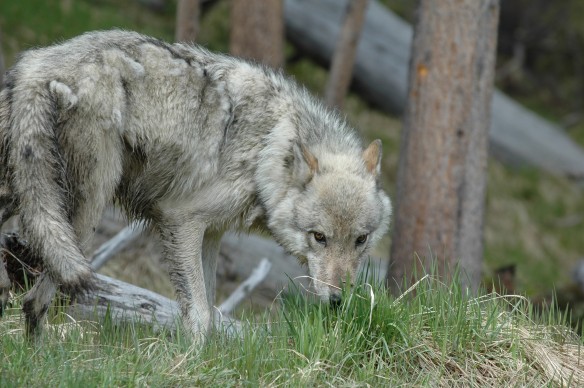
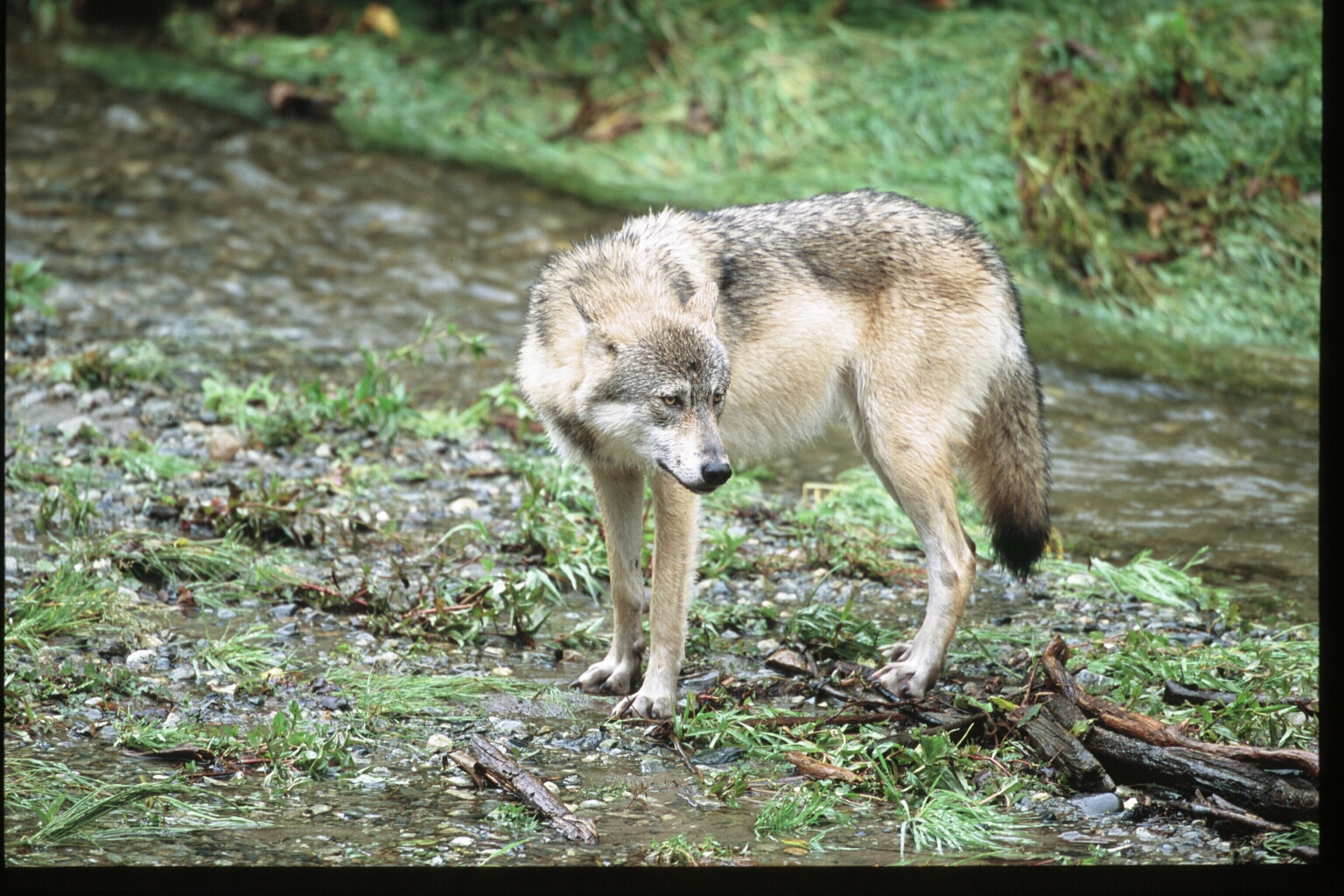
Wolf Hunting—No sooner did grey wolves begin to make a comeback in the Lower 48 than did the feds jerk the rug out from under them by lifting their endangered species protections and casting their fate into the clutches of hostile states. Now, hunters in Wyoming have a year-round season on them while anti-wolf fanatics in Montana have quadrupled their per person yearly kill quota.

Trapping—Only the creepiest arachnid would leave a victim suffering and struggling for days until it suits them to come along for the “harvest.” Yet “law abiding trappers” routinely leave highly sentient, social animals clamped by the foot and chained to a log to endlessly await their fate.

Hound-Hunting—“Sportsmen” not content to shoot unsuspecting prey from a distance of a hundred yards or more sometimes use hounds to make their blood-sport even more outrageously one-sided.

Bowhunting—Those who want to add a bit of challenge to their unnecessary kill-fest like to try their luck at archery. Though they often go home empty-handed, they can always boast about the “ones that got away”… with arrows painfully stuck in them.

Contest Hunts—Prairie dogs, coyotes, and in Canada, wolves, are among the noble, intelligent animals that ignoble dimwits are allowed to massacre during bloody tournaments reminiscent of the bestial Roman Games.

Horse Slaughter—After all that our equine friends have done for us over the centuries, the administration sees fit to send them in cattle trucks to those nightmarish death-camps where so many other forcibly domesticated herbivores meet their tragic ends.

Factory farming—Whether cows, sheep, pigs, chickens or turkeys, the conditions animals are forced to withstand on modern day factory farms fall well outside even the narrowest circle of civilized human compassion. To call their situations overcrowded, inhumane or unnatural does not do justice to the fiendish cruelty that farmed animals endure each and every day of their lives.

Atrocious conditions are not confined to this continent. Chickens in China (the ancestral home of some new strain of bird flu just about every other week) are treated worse than inanimate objects. Bears, rhinoceros and any other animal whose body parts are said to have properties that will harden the wieners of hard-hearted humans are hunted like there’s no tomorrow. And let’s not forget the South Korean dog and cat slaughter, or Japan’s annual dolphin round up…

Far be it from me to belittle the use of chemical weapons—my Grandfather received a purple heart after the Germans dropped mustard gas on his foxhole during World War One. I just feel that if we’re considering responding to actions “outside the circle of civilized human behavior,” we might want to strike a few targets closer to home as well. Or better yet, reign in some of our own ill-behaviors so we can justifiably call ourselves “civilized.”
Text and Wildlife Photography ©Jim Robertson, 2013. All Rights Reserved
Text and Wildlife Photography ©Jim Robertson, 2013. All Rights Reserved

Maine’s bear hunting practices back in the crosshairs

Wildlife Photography ©Jim Robertson, 2013. All Rights Reserved

Wildlife Photography ©Jim Robertson, 2013. All Rights Reserved

Almost 10 years after failing to abolish baiting and other methods, animal-welfare activists want to revisit the debate: Are these cruel or are they viable wildlife management tools?

By  Deirdre Fleming dfleming@mainetoday.com Staff Writer

Bear hunters in Maine again find themselves in the sights of animal-welfare advocates who contend that some of their practices are inhumane.

Less than 10 years after Maine residents voted down a divisive referendum effort to abolish the use of bear hunting with bait, dogs and traps, the debate has re-emerged.

As hunters prepare for the first day of bear season Monday, sportsmen, politicians and animal-rights advocates are gearing up for a renewal of the referendum battle that spiked passions on both sides in 2004.

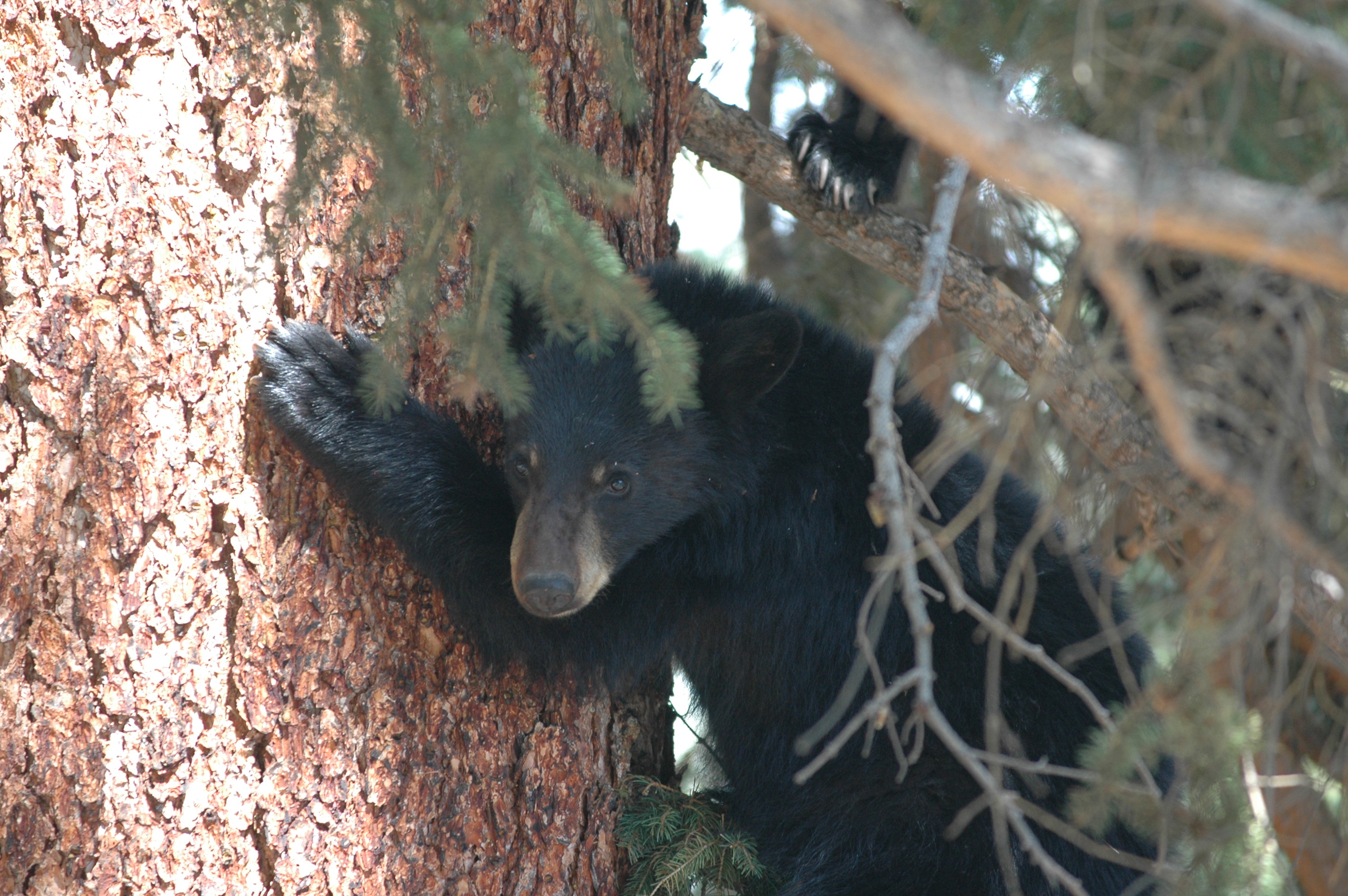
Bear-baiting involves placing food in the same location repeatedly for about a month before the season opens in hopes a bear will get in the habit of visiting the site regularly. Hunters also use dogs wearing radio collars to force a bear up a tree and keep it there until the hunter tracks it down electronically. Traps such as wire foothold snares are also used to hunt bears.

Supporters of banning the practices say they are cruel and give hunters an unfair advantage.

Opponents argue that the practices are vital to keeping the state’s bear population in check. If they are banned, the population will explode, and conflicts between bears and people will become commonplace, even in developed areas, they say.

Maine has one of the largest black bear populations in the lower 48 states, according to the Department of Inland Fisheries and Wildlife, and is the only state to allow all three controversial practices.

A coalition led by the Maine chapter of the Humane Society of the United States, called Mainers For Fair Bear Hunting, is behind the ballot initiative. It aims to collect as many as 80,000 signatures next month to get a referendum question on the 2014 ballot. The Secretary of State’s Office is still drafting language on the referendum question.

In 2004, voters rejected the referendum question seeking a ban on the three hunting practices by a margin of 53 percent to 47 percent. Each side spent more than $1 million on the campaign.

Those backing a ban on the practices said last week they think they’ll win this time.

“This is a last resort (after trying several times without success in the Legislature). But with the additional 10 years of experience, we’re confident we can win on the ballot,” said Katie Hansberry, director of the Maine chapter of the Humane Society.

Maine hunters expected the issue to resurface, and that it would involve another expensive ballot fight.

“I think we knew they’d be back,” said David Trahan, director of the Sportsman’s Alliance of Maine. “(The Humane Society is) a nationwide group. And (it) raises a lot of money.”

MAINE A FOCAL POINT

Proponents say the three controversial bear-hunting methods give hunters an unfair advantage and that trapping or shooting a bear over bait is inherently cruel.

Maine is a focal point in the debate over bear-hunting practices because it is the only state where all three are allowed.

Robert Fisk, director of the Maine Friends of Animals, which led the 2004 effort to ban the hunting practices, said the public is more familiar with the issues today, and that gives ban supporters an advantage.

“I believe we have an excellent chance of winning this time. The opposition’s alarmist strategies and scare tactics that were prevalent in 2004 can be exposed this time around. People are much more aware of animal protection issues than they were 10 years ago,” Fisk said.

Proponents say they have data and experiences from other states where the Humane Society successfully banned the use of these bear hunting methods, and that much of the Maine public was educated on the issue in 2004.

More: http://www.onlinesentinel.com/news/maines-bear-hunting-practices-back-in-the-crosshairs_2013-08-25.html


Some Cold Hard Facts about Wisconsin Wolf Hunting

Facts about Wisconsin Wolf Hunting:

  • The state of Wisconsin’s wolf hunting season began at an hour before dawn today, October 15th, and runs non-stop until the end of February.
  • Wisconsin received more than 20,000 applications for just 1,160 permits, some from as far away as Florida, Texas, and California. (Meanwhile, in Minnesota, wildlife officials have set a quota of 400 wolves and awarded 6,000 permits.)
  • State rules allow hunters to slay wolves by a crude assortment of methods and with a callous array of sadistic devices, including luring with bait, strangulation by snaring and slow-death in steel-jawed leg-hold traps.
  • In addition, the state had planned to allow hunters to start using hounds to hunt wolves beginning Nov. 26, when their deer season ends. But Dane County Judge Peter Anderson issued a temporary injunction against the use of dogs on Aug. 31, after humane societies and environmental groups sued. (Though Wisconsin currently does not allow the use of hounds for hunting wolves, they do allow hounding for bears, raccoons and many other undeserving species).
  • Kurt Thiede, the Wisconsin Department of Natural Resources* (DNR) lands division administrator, has issued a statement in support of the use of hounds: “We … have learned from other states that harvesting a wolf can be difficult. The use of dogs is a key way to increase hunter success. We will continue to work with the court to remove the injunction on the use of dogs….” (*Note to Mr. Thiede and the rest of the DNR: Wolves are not a “resource,” they are intelligent, sentient beings. Also, killing them is not “harvesting,” it’s murder!)
  • Wolves were once abundant in Wisconsin, numbering around 5,000 in the 19th century, before they were hunted and trapped to extinction.
  • Wolves have recently been shown to contribute to a greater diversity of understory plants, as well as improved deer herd and trout stream conditions, but the Wisconsin DNR has decided to allow hunters and trappers to kill 201 wolves this year alone.
  • Today the wolf population is growing and DNR estimates that the state could support 700 to 1,000 wolves. Yet they speculated that “this level may not be socially tolerated” and therefore have decided to limit the state’s wolf population to only 350 individuals. Of course, hunters and trappers are all-too eager to help…

Again, the injunction on the ‘hounding’ is only in place UNTIL DEC 20TH

Voice your objections to the use of hounds for wolf hunting and tell the court that hounding is not acceptable! Tell the governor and the legislators that the Wisconsin wolf hunt is exceptionally savage and will give the state a black eye. Please continue to put pressure on the governor’s office, the legislators, and the tourism department:

Governor Scott Walker

govgeneral@wisconsin.gov

608-266-1212

115 East Capitol

Madison, WI 53702

Wisconsin residents can find contact info for your legislators here: www.wisconsin.gov/state/core/government.html

You may also want to tell the tourism department that you will be unable to bring your family to Wisconsin for any future vacations, as you do not patronize the wolf killing states:

Wisconsin Dept. of Tourism

1-800-432-8747 or 608-266-2161

201 West Washington Ave.

P. O. Box 8690

Madison, WI 53708-8690

tourinfo@travelwisconsin.com

Text and Wildlife Photography ©Jim Robertson