| A Humane WorldKitty Block’s Blog |
| July 21, 2020 |
Pup paralyzed after brutal beating demonstrates urgency for Iowa to make animal torture a felony
3

| A Humane WorldKitty Block’s Blog |
| July 21, 2020 |
| A Humane WorldKitty Block’s Blog |
| By Kitty Block and Sara Amundson |
| A Humane World Kitty Block’s Blog HSUS.org |
| By Kitty Block and Sara Amundson |
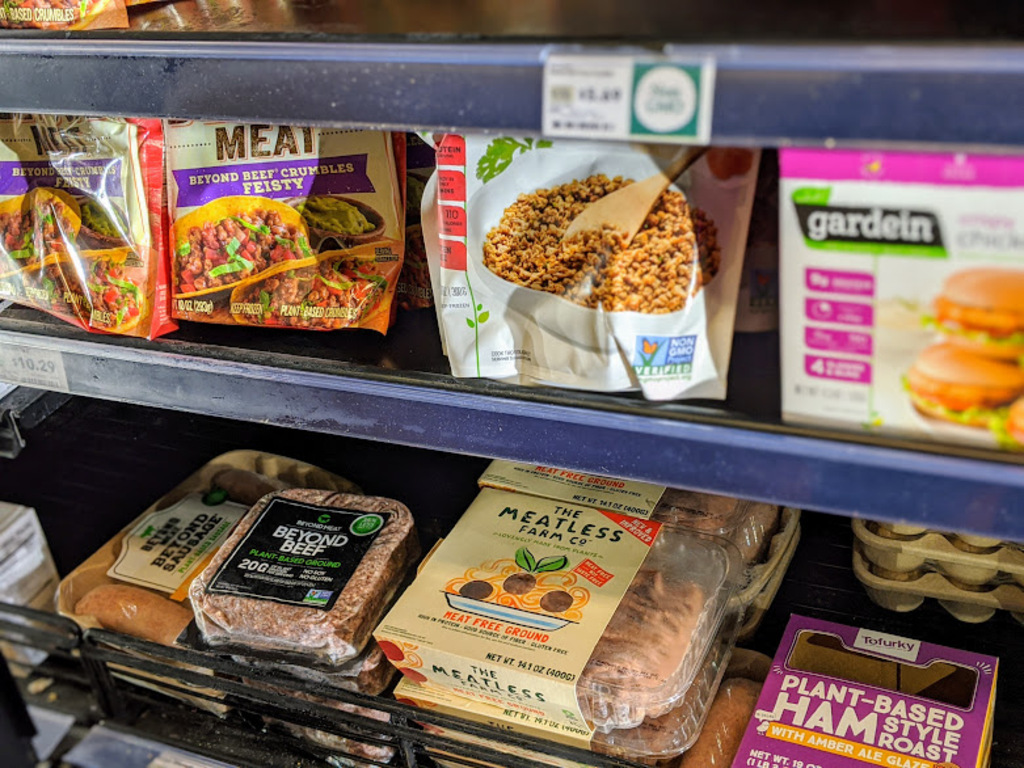
With growing awareness of the benefits of eating more plant-based foods for animals, the planet and our health, so many people are reducing their reliance on animal products in favor of plant-based alternatives.Photo by Amy Webster/The HSUS
Last year, when KFC launched a new, plant-based chicken at one of its Atlanta locations, it sold out within five hours, with lines wrapped around the block to try it. According to the New York Times, sales of the plant-based boneless wings and nuggets in a single day equaled sales of its popular, animal-based popcorn chicken in an entire week, leading the company to declare it a “Kentucky Fried Miracle.”
KFC went on to test the plant-based chicken at an additional 70 locations in North Carolina and Tennessee in February 2020, again with great success. This is amazing, and it shows the scope of the large market that exists for meatless meat products all over the United States. So we have been hopeful that KFC will offer its meatless chicken at franchises nationwide.
The moment is just right for anyone looking to venture into plant-based foods, including plant-based meats, which are innovative, protein-packed foods that mimic the texture and taste of meat. With growing awareness of the benefits of eating more plant-based foods for animals, the planet and our health, so many people are reducing their reliance on animal products in favor of tasty plant-based alternatives. According to a 2019 Gallop poll, “[f]our in 10 Americans have personally tried plant-based meats.” And a 2020 Yale survey found that, “more than half of Americans (55%) say they are willing to eat more plant-based meat alternatives.”
Plant-based meats are so popular, in fact, that in March 2020, sales of such meats jumpedby an astounding 264%.
Many fast food chains like Burger King, Carl’s Jr., White Castle, Del Taco and Dunkin’ already offer plant-based options, with tremendous success. After launching the Impossible Burger, Jose Cil, who is the CEO of Restaurant Brands (the parent company of Burger King), noted that the offering was “one of the most successful product launchesin Burger King’s history.” After debuting a Beyond Meat breakfast sandwich at more than 9,000 Dunkin’ locations in 2019, Dunkin’ CEO David Hoffman said he was “happy with [Dunkin’s] first venture into” plant-based menu offerings, and said the company is discussing more plant-based options in the future.
KFC already has gotten a taste of this success, not just here in the United States but also globally. In April, the company debuted plant-based chicken nuggets at three locations in China and they were such a hit that they sold out at a Shanghai KFC within an hour of launching. KFC Canada partnered with Lightlife, a plant-based protein company, to make a fried “chicken” sandwich and plant-based “popcorn chicken,” which also sold out. In the United Kingdom, KFC sold one million plant-based chicken sandwiches throughout January 2020, which is the equivalent of one plant-based sandwich sold every three seconds.
We applaud KFC for its success with plant-based options and thank the company for its foresight in creating them. And today, we have one friendly request for the company: please launch these delicious meatless options nationwide so customers around the country can enjoy them.
Given the market for meatless meats today, which research shows extends well beyond vegans and vegetarians, this is a decision the company would not be likely to regret. You can lend your voice to continue such positive progress. Please click here to let KFC decision makers know just how much support exists for plant-based offerings.
|
|
||
Dr. Anthony Fauci has called wildlife markets “a superhighway” for transmission of disease. Above, a wildlife market in Indonesia. Photo by Dog Meat Free Indonesia The World Health Organization is calling on nations to end wildlife markets because of the high risk they pose for the spread of pathogens like the coronavirus that can jump from animals to humans. This week, David Nabarro, a medical doctor and the special envoy on COVID-19 and special representative of the United Nations secretary general for food security and nutrition, told the BBC that 75 percent of emerging infections come from the animal kingdom. “This is dangerous. We have similar concerns about bushmeat. Really, be very, very careful when you’re basically eating wild animal meat or killing wild animals. All these things are higher risk,” he said. Nabarro’s statements on behalf of the WHO, which has 192 member countries, including China, Indonesia, Thailand, Malaysia and Vietnam—where many of these markets exist—came this week even as media reports circulated about wildlife markets beginning to reopen in China. The WHO does not have the authority to require governments to close down such markets, but, Nabarro said, “what we have to do is offer advice and guidance, and there’s very clear advice from the Food and Agriculture Organization and WHO that said there are real dangers in these kinds of environments.” In recent weeks, Elizabeth Maruma Mrema, the United Nations’ acting head of biodiversity, and Dr. Anthony Fauci, director of the U.S. National Institute of Allergy and Infectious Diseases, have made similar calls to end live wildlife markets around the globe. Fauci has called wildlife markets “a superhighway” for transmission of disease. The Humane Society family has been urging the WHO to take a stand against wildlife markets and we are pleased to see the global health body do so. Earlier this month, Humane Society International along with 240 organizations around the globe, sent a letter to the WHO urging it to recommend a permanent ban on wildlife markets and the use of wildlife in traditional medicine to governments worldwide. The Humane Society Legislative Fund lobbied support for a letter co-signed by nearly 70 U.S. Senators and Representatives to the WHO, the Organization for Animal Health and the Food and Agriculture Organization of the United Nations, urging them to take aggressive action to shut down live wildlife markets and ban the international trade in wildlife that is not intended for conservation purposes. Earlier this month, HSI released a white paper detailing scientific evidence of the link between COVID-19 and the wildlife trade that has been sent to 188 governments worldwide. HSI also sent an open letter to governments around the world asking them to ban wildlife trade (including wildlife markets), transport and consumption. While we have expanded our efforts to move lawmakers and global organizations to take action because of the urgency created by the coronavirus pandemic, this is not a new fight for us. We have been calling for the closure of wildlife markets for many years now not only due to animal welfare concerns but because these markets often trade in endangered and at-risk animals or exploit captive bred animals. Wildlife markets are filthy, crowded places where sick, injured and scared animals are displayed in small cages. Once purchased, they are often slaughtered on-site, creating a perfect breeding ground for transmission of disease from animals to humans. Moreover, many of the animals traded and killed at the markets are threatened with extinction. In fact, global wildlife experts say trade in live wild animals is one of the biggest threats to the survival of some species. Health authorities have long cautioned the world about the risks these markets pose to human health: wildlife markets have been implicated in the spread of several disease outbreaks in recent years, including Severe Acute Respiratory Syndrome (SARS), bird flu, Ebola and Middle Eastern Respiratory Syndrome (MERS). The novel coronavirus pandemic was traced to a wildlife market in Wuhan, China. Now, we hope to see decisive permanent action from key nations to end the wildlife trade and its connections to pandemic risk. China in February announced a ban on wildlife consumption as food, but it has not yet codified that ban into law. This week, the Wall Street Journal reported that Chinese authorities are offering tax breaks to the multibillion-dollar animal products industry for the export of wild animals. Around the world, the trade in wildlife continues. The United States, where hundreds of thousands of wild animals are imported and commercially traded each year, is a WHO member state, and we urge the federal government here, as well as state governments, to crack down on the wildlife trade to minimize the likelihood of another pandemic. This trade causes tremendous suffering to millions of animals each year and now, with the novel coronavirus sickening nearly two million people worldwide and killing more than 120,000, the writing is on the wall. The wildlife trade is rife with dangers, and the sooner we put an end to it, the safer the world will be. The post World Health Organization says nations should end wildlife trade appeared first on A Humane World. Related Stories |
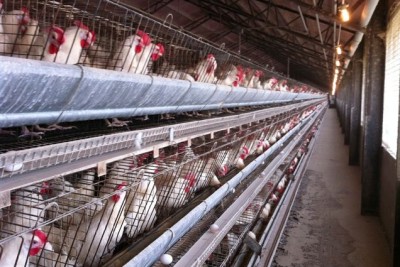
Influenza spreads within factory farms directly from animal to animal or by way of workers, flies, manure, and rodents. When thousands of animals are tightly confined it creates a recipe for disaster, in which potential pathogens can recombine and generate viral forms with the ability to infect people.
Today the Humane Society of the United States filed a federal lawsuit challenging the response plan for Highly Pathogenic Avian Influenza (or “bird flu”) of the United States Department of Agriculture. The response plan, produced by the Animal Plant Health Inspection Service, is shortsighted and dangerous.
For years, the HSUS has been warning USDA and the factory farm industry of the imminent threat of a pandemic resulting from zoonotic pathogens — diseases transmitted from animals to humans—that are closely associated with the intensive confinement of animals.
Influenza spreads within factory farms directly from animal to animal or by way of workers, flies, manure, and rodents. When thousands of animals are tightly confined it creates a recipe for disaster, in which potential pathogens can recombine and generate viral forms with the ability to infect people.
While the COVID-19 pandemic likely resulted from a wildlife market and the wildlife trade,prior deadly and costly outbreaks of pathogenic illness in the global food chain have been linked to farm animals. For instance, a 2003 bird flu outbreak came from infected chickens and the 2009 H1N1 swine flu outbreak that sickened nearly 60 million people was linked to U.S. pig farms.
Five years ago, seeing the threat of potential disease outbreaks based on farm animal to human transmission, we asked APHIS to consider how its Highly Pathogenic Avian Influenza control plan could help prevent the development and spread of bird flu. The HSUS suggested a plan that would incentivize producers to give animals room to move naturally, instead of the industrialized norm which often involves cramming birds into cages. Giving animals more space would reduce the risk of mutation and spread of disease. But APHIS went in another direction, with a plan that essentially subsidizes the extreme confinement of animals that causes the threat in the first place.
During a typical outbreak of zoonotic disease, APHIS’s response is often to slowly suffocate and cook millions of conscious birds to death through a method called ventilation shutdown. This involves shutting down a facility’s entire ventilation system causing carbon dioxide and heat to build up. The animals’ bodies are piled up and burned or dumped together. This entire process releases fluids and gases, like dioxin—a toxin linked to cancer, liver and immune system damage, birth defects, and reproductive problems.
Under the APHIS plan, the companies that stuffed these animals in cages or warehouses are to be reimbursed with taxpayer dollars and allowed to continue cruelly confining birds so that this wasteful, cruel and self-defeating cycle can begin again. Between 2014 and 2016 more than 50 million birds (egg laying hens, chickens raised for meat, turkeys and others) were killed across more than a dozen states in an effort to contain a bird flu outbreak. This did as much as three billion dollars’ worth of damage to the U.S. economy, and APHIS spent over $900 million cleaning up the mess it describes as the most serious animal health disease incident in history.
An outbreak response plan that indemnifies factory farms in this way isn’t just cruel; it represents a threat to human health. As our lawsuit makes clear, the USDA’s approach foolishly props up practices that threaten not just Americans but countless others around the globe with more frequent and more life-threatening pandemics.
We advise a better direction. Our federal government should require producers to agree to end their intensive confinement of chickens in cages and shift to cage-free systems that give the birds dramatically more space and ability to engage in healthy, natural behaviors. Preventing outbreaks is far cheaper than trying to contain them, and investments in prevention pay off a whole lot more than the perpetuation of a failed and dangerous paradigm like intensive confinement. Bringing an end to government response plans that reimburse the perpetrators of such reckless practices would be a good start.
The lawsuit was prepared and filed by pro bono counsel at the law firm Shearman & Sterling, LLP and the HSUS’s Animal Protection Litigation team.
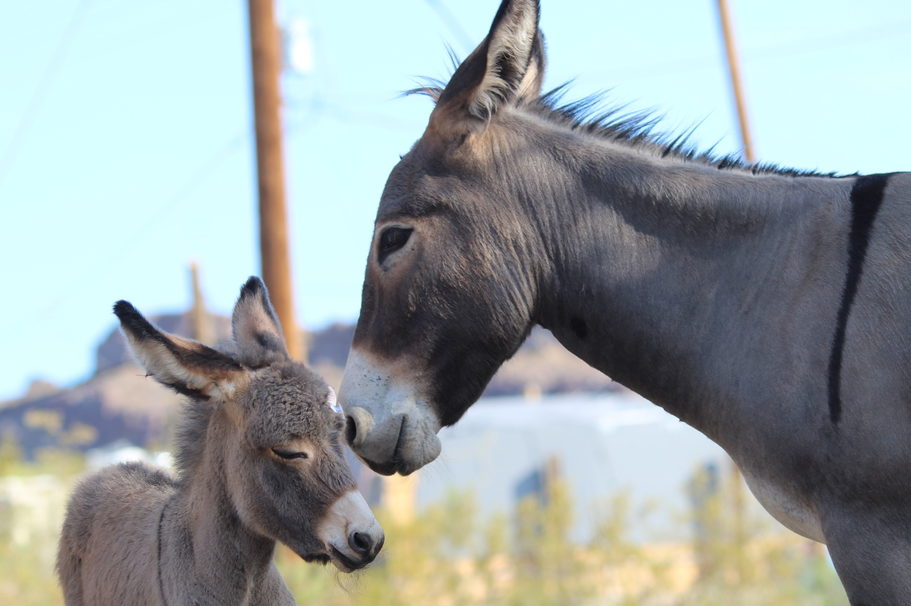
The funding package provides an additional $21 million to the Bureau of Land Management’s Wild Horse and Burro Program—funds that can only be accessed after the agency submits a comprehensive plan on how it will implement an aggressive, non-lethal program. Photo by Grace Kahler/The HSUS
President Trump has just signed into law the omnibus appropriations package with major victories for animals, including horses and burros, companion animals, marine mammals and animals in zoos and research facilities.
The package, comprised of two bills (H.R. 1865 and H.R. 1158) funding all federal agencies for Fiscal Year 2020, was passed by the House on Tuesday with bipartisan votes of 297-120 and 280-138, respectively, followed by Senate votes of 71-23 and 81-11 yesterday. The wins for animals in the package include:
We are grateful to the many congressional champions of these provisions with whom we worked over the past year, to House and Senate leadership for keeping the process on track, and to all the legislators who voted for these measures. We also thank President Trump for signing both appropriations bills, helping us create a brighter future for animals in 2020 and beyond.
Sara Amundson is president of the Humane Society Legislative Fund.

As an animal activist, I truly want to celebrate any step forward for animals. On one hand, it makes me very happy that President Trump signed the Preventing Animal Cruelty and Torture (PACT) Act into law yesterday. (And yes, it’s difficult for this diehard liberal to admit that Trump actually did something good, but even a broken clock is right twice a day).
The legislation, which passed the Senate unanimously – something truly remarkable in these divided times – expands on the 2010 Animal Crush Video Prohibition Act and increases the punishment for instances of animal cruelty, making them felony crimes.
The new law was heralded by many in the animal protection movement. Kitty Block, the president and CEO of The Humane Society of the United States, had this to say: “PACT makes a statement about American values. Animals are deserving of protection at the highest level. The approval of this measure by the Congress and the president marks a new era in the codification of kindness to animals within federal law. For decades, a national anti-cruelty law was a dream for animal protectionists. Today, it is a reality.”
Now, like I said, I agree that this is a positive step. But I’d be remiss if I didn’t point out that this new law completely ignores 99 percent of the animal cruelty that routinely takes place every single day in the United States.
According to The Washington Post, the PACT Act “outlines exemptions for humane euthanasia; slaughter for food; recreational activities such as hunting, trapping and fishing; medical and scientific research; ‘normal veterinary, agricultural husbandry, or other animal management practice’; and actions that are necessary ‘to protect the life or property of a person.’”
Of course animal cruelty to dogs and cats by private citizens should be dealt with severely. But what about the billions of animals tortured each year on America’s factory farms? Or how about the tens of thousands of animals, including dogs and cats, who are tested on and mistreated in laboratories?
Can we actually say we’re cracking down on animal cruelty when we still allow SeaWorld to keep cetaceans captive and force them to perform? Or permit insanely cruel practices like fur trapping and bow hunting?
My objective is not to trash Ms. Block or even President Trump on this issue (though Trump’s record on animals is pretty abysmal), but merely to point out that animal cruelty is still animal cruelty, even when it’s done for money or recreation or sport. In fact, we should take those cases of abuse even more seriously because they affect so many more animals. One sick fuck torturing his dog is abhorrent, but what about a business that tortures thousands in a laboratory or a puppy mill?
As society’s view of what constitutes animal cruelty evolves, so will our laws. But, in the meantime, it’s the animals who needlessly suffer day in and day out. Sadly, the PACT Act leaves the overwhelming majority of those animals no better off than they were before.
—
Main image: Anna Moneymaker / The New York Times
—https://veganista.co/2019/11/26/americas-new-animal-cruelty-law-ignores-99-of-animal-cruelty/
Washington Gov. Jay Inslee has just signed into law the strongest protections for egg-laying hens ever passed in any state legislature. This historic win will benefit approximately eight million hens each year, freeing them from cage confinement by the end of 2023. The measure builds upon our previous work in states like California and Massachusetts where voters have passed transformational ballot measures against the cage confinement of farm animals in recent years.
Washington’s new law phases out the production and sale of eggs from caged hens, regardless of where the eggs were produced.
In a typical cage facility, each bird has less space than the dimensions of an iPad on which to live her entire life. While cage-free does not equal cruelty-free, this measure will significantly reduce the birds’ suffering. In addition to banning cages and requiring more space per bird, the law also mandates that hens be provided with vital enrichments, including scratch areas, perches, nesting and dust bathing areas.
The HSUS has spearheaded the passage of this law and others in a dozen states — from Florida to Ohio to Arizona — to eliminate extreme confinement. These successes bolster the work we have done with some of the largest food corporations in recent years, both in the United States and globally, to end cruel cage confinement practices by their suppliers. As a result, lawmakers and corporations are increasingly realizing that the future is cage-free.
In Washington, we partnered with Democratic and Republican legislators, key stakeholders in the agricultural sector, and other leading animal protection groups to ensure the bill’s success. It is a remarkable illustration of how good people in all walks of life can come together to create lasting and transformational change for animals. The HSUS will continue to work with lawmakers, non-government organizations, volunteers, donors and other members of the public to continue paving the way toward this more humane reality.
Let’s take a moment to celebrate today’s remarkable win for animals. But let’s also keep in mind that billions of farm animals around the world are still suffering in cruel cages. The laws in Washington, California and Massachusetts set a great precedent for other states and countries to follow, and further support corporate policy commitments reforming how farm animals are raised. Let’s keep the momentum going as we work toward the day when no farm animal is locked in a cage.
BOSTON — An unlikely alliance between animal protection groups and hunters is driving a proposal for stiffer penalties for those who poach deer, turkey and other wild game.
Under the proposal, which is being considered by the Legislature’s Joint Committee on the Environment, Natural Resources and Agriculture, violators would face hefty new fines, license suspension and jail time for multiple offenses.
Massachusetts has become known as a “paradise” for poachers because of its outdated game laws and paltry fines that do little to deter illegal hunting, trapping and fishing, according to one animal protection advocate.
“Illegal hunting and fishing damage conservation efforts, affect future generations of wildlife, create challenges for law enforcement and threaten our state economy,” said Rep. Lori Ehrlich, D-Marblehead, a primary sponsor of the bill in the House of Representatives.
“This is a proposal that will preserve the rights of law-abiding hunters while protecting our wildlife and natural resources.”
Backed by 70 lawmakers, the bill has strong bipartisan support in the House and Senate. Local co-sponsors include Reps. Ann-Margaret Ferrante, D-Gloucester; Paul Tucker, D-Salem; Linda Campbell, D-Methuen; Brad Hill, R-Ipswich; as well as Senate Minority Leader Bruce Tarr, R-Gloucester, and Sen. Joan Lovely, D-Salem.
The proposal also would add the Bay State to the Interstate Wildlife Violator Compact, a national database that shares information about suspected poachers and the suspension of hunting, fishing and trapping licenses.
Massachusetts is one of only two states, including Hawaii, that hasn’t joined the pact.
Animal protection groups say joining the pact would help change the state’s reputation as a safe haven for poachers.
“Right now, we’re unfortunately known as a paradise for poachers,” said Stephanie Harris, Massachusetts state director for the Humane Society of the United States.
“They know they can come here and poach animals and not face consequences, even if they’ve been convicted of illegal hunting in their own state.”
Under the pact, hunters who have been convicted of poaching or had their licenses revoked elsewhere would be prevented from getting one in Massachusetts.
Hunting groups, which seldom side with animal protection organizations on proposed legislation, are onboard with the tougher fines and penalties.
Under current game laws, the vast majority of poaching offenses carry as much weight as a parking ticket.
Some fines haven’t been updated in more than a century.
“Many of the fines for poaching are too low, which isn’t a deterrent,” Ehrlich said. “They’re basically letting willful offenders off with a slap on the wrist.”
Under the proposed changes, fines for killing a deer or turkey out of season or without a hunting license would rise from a low of $300 to a high of $3,000 per offense.
Violators could also face up to six months in prison.
Illegal killings of a bird of prey, which are protected species, will cost poachers up to $10,000 for multiple offenses, including up to a year in prison.
The proposal also adds smaller animals that now bring no fines for poaching.
Poaching a raccoon, rabbit or gray squirrel could cost you $50 per animal.
Last year, lawmakers increased fines for commercial and recreational fish poaching as part of a $2 billion environmental bond bill signed by Gov. Charlie Baker.
In the past three years, state environmental police have reported 2,242 wildlife and hunting violations, including hunting without a license and hunting on wildlife refuges or on other lands where it’s off limits, according to the state Office of Energy and Environmental Affairs.
Police made 183 arrests for illegal hunting during that period and issued more $63,000 in fines, according to the state agency.
Supporters of the tougher sanctions say poaching is rampant in the state’s forests and parkland and is mostly unpunished.
Wildlife officials estimate that for every animal harvested legally, at least one other is poached.
A similar plan was approved by the Senate last year but wasn’t taken up by the House before the end of the legislative session.
Christian M. Wade covers the Massachusetts Statehouse for North of Boston Media Group’s newspapers and websites.
 Exposing the Big Game