‘Radical animal rights movement’ gets new foe

1532152_10152389925128376_1669396415833666282_n

http://news.yahoo.com/radical-animal-rights-movement-gets-192320330.html

By Michael Beckel 21 hours ago

An Iowa-based organization dedicated to combating “the radical animal rights movement” and led by a former Missouri Republican senator’s chief of staff has launched a new super PAC, according to paperwork filed with the Federal Election Commission.

The Protect the Harvest Political Action Committee told the elections regulator that it “intends to raise funds in unlimited amounts” to call for the election or defeat of federal candidates.

Which politicos will be targeted, however, is still unclear.

Neither the super PAC’s treasurer, Brian Klippenstein, nor its attorney, Mark Roth, responded to requests for comment from the Center for Public Integrity.

Super PACs are legally allowed to solicit unlimited contributions to produce political advertisements — so long as their spending is not coordinated with any candidates’ campaigns.

Klippenstein currently serves as the executive director of Protect the Harvest, a 501(c)(4) “social welfare” nonprofit established in 2011 to educate the public about “the benefits of farming, ranching and hunting” and to advocate “for the right to conduct such activities.”

The nonprofit may engage in politics, although federal law mandates that influencing elections may not be its primary purpose.

On its website, Protect the Harvest warns that “the animal rights movement in America, led by the Humane Society of the United States, has evolved into a wealthy and successful attack group determined to end the consumption of meat, threaten consumer access to affordable food, eliminate hunting, outlaw rodeos and circuses and even ban animal ownership (including pets) altogether.”

That’s “baloney,” said Joe Maxwell, the Humane Society of the United States’ vice president of outreach and engagement. He said his organization is “leading efforts to ensure that we have good stewards of the land and the animals on our farms.”

Protect the Harvest, Maxwell asserted, is “nothing but a front group” that is “in bed with industrialized agriculture.”

There’s more to this story. Click here to read the rest at the Center for Public Integrity.

Action Alert: Don’t Let Abusers Cover Up Cruelty!

https://secure.humanesociety.org/site/Advocacy?cmd=display&page=UserAction&id=6478

Kentucky: Don’t Let Abusers Cover Up Cruelty!

Just a few weeks ago, The Humane Society of the United States exposed horrific cruelty at a major Kentucky pig factory; including pigs locked into cages so small they couldn’t turn around and mother pigs being fed the remains of their diseased piglets. But instead of cleaning up their act, the state’s big meat producers are now trying to silence whistleblowers. The industry and its backers in the legislature are trying to sneak through an “ag-gag” law aimed at criminalizing anyone who exposes food safety violations or animal abuse on factory farms. Even worse, they have attached this poisonous provision to a formerly pro-animal bill.

TAKE ACTION
Please call your legislators right away and ask them to oppose this undemocratic effort. Look up your legislator’s phone number here. You can simply say: “I am outraged that an ag-gag provision was sneakily attached to HB222. I urge you to stop the ag-gag provision, which would threaten animals and consumer safety.”

After making your phone call (please do not skip that crucial step!), personalize and submit the letter in the form below to automatically send a follow-up message to your legislators and Gov. Steve Beshear.

528340_567504966609338_1448023408_n

HSUS Activists oppose sport hunting of mountain lions

http://journalstar.com/niche/neighborhood-extra/news/activists-oppose-sport-hunting-of-mountain-lions/article_7fd9ba8e-95d3-5096-9f47-ad9aed6d5c17.html
4 hours ago

Nebraskans asked state lawmakers to further strengthensnrsslion state animal protection laws during Humane Lobby Day on Monday (Feb. 24).

Participants urged state lawmakers to support legislation pertaining to several animal-related issues, including penalties for animal abandonment and neglect and prairie dog population management. Advocates urged against passage of a bill that would permit the sport hunting of mountain lions. The Humane Society of the United States sponsored Humane Lobby Day.

The Humane Society of the United States is the nation’s largest animal protection organization, rated the most effective by its peers. Since 1954, The HSUS has been fighting for the protection of all animals through advocacy, education and hands-on programs.

HSUS rescues and cares for tens of thousands of animals each year, but its primary mission is to prevent cruelty before it occurs. More details may be found at humanesociety.org.

(At Least) Michigan’s first wolf hunt will no longer include trapping

By Keith Matheny
Detroit Free Press staff writer

Michigan’s first-ever wolf hunt this fall and winter will no longer include trapping, after the state Natural Resources Commission rejected the use of steel-jaw leg traps on private and public land as part of the hunt.

The commission, for the second time in two months, approved a wolf hunt on July 11 for three zones of the Upper Peninsula. The second approval came in light of the passage of Public Act 21, a bill by Republican state Sen. Tom Casperson of Escanaba allowing the commission to designate animals as game species — a bill critics say was designed specifically to circumvent a petition drive to put the wolf hunt to a public vote.

The hunt approved in May allowed steel-jaw leg traps. But trapping was removed in the second approved hunt.

“The primary reason was just looking at starting conservatively with our approach in how we move forward with implementing public harvest of wolves as a management tool,” said Adam Bump, the Michigan Department of Natural Resources’ fur-bearing animal specialist.

But Jill Fritz, state director of the Humane Society of the United States, which is spearheading a second petition drive to try to repeal Casperson’s bill, suspects a different motive for dropping trapping from the hunt.

“It’s to make it more public-friendly, because they know Michiganders are horrified by the thought of this still-recovering species writhing and dying in traps,” she said.

Wolves were all but eradicated in much of the country by the 1930s. Michigan and other Great Lakes states lost almost all of their wolves by the end of the 1950s.

In 1973, Congress enacted the Endangered Species Act and officially protected the wolf that same year, sparking a resurgence in the wolf population. Michigan’s Upper Peninsula was known to have three wolves as recently as 1989. The population today stands at 653 wolves. The wolves have made an even more substantial recovery in Wisconsin (834 wolves) and Minnesota (3,000).

The U.S. Fish and Wildlife Service removed wolves from the federal endangered species list in January 2012, and several states, including Michigan, began planning for wolf hunting seasons.

Wisconsin and Minnesota established their initial wolf hunts last year, and trapping proved by far a more effective means of harvesting wolves than firearms hunting. In Minnesota, wolf takes by rifle were about 4% successful, compared with about 25% through trapping.

Michigan’s season will begin Nov. 15 and run through December, or until 43 wolves are harvested. Bump said the number was established with firearm hunting in mind.

“Our expectation is even with just hunting we will be able to achieve our targeted harvest,” he said.

Tony Hansen, spokesman for the Michigan United Conservation Clubs, said the coalition is disappointed that trapping was removed.

“It’s a viable, effective and scientific method to control wildlife populations,” he said.

Bump said the DNR will continue to use traps as necessary to take problem wolves throughout the year, and trapping will be reconsidered as part of the hunt in future years.

“The department’s position is trapping is a humane and effective wildlife management tool,” he said.

Nancy Warren, an Ontonagon County resident and Great Lakes regional director of the nonprofit National Wolfwatcher Coalition, is opposed to trapping — and the hunt in general.

The state is establishing the hunt to reduce conflicts between wolves and humans, such as wolves coming into towns or preying on cattle or pets. But Warren said the state’s own data on wolf depredations show the vast majority are occurring on one farm in her county, whose owner, John Koski, has been criticized for his actions and inaction that may contribute to wolf attacks on his livestock.

“When you take that farm out of the equation, there is no need for a wolf hunting season in this unit,” she said. “The truth is, some people want a hunting season; they want to kill wolves out of hatred, and they are using this as an excuse.”

Wolf hunting licenses go on sale starting Aug. 3 until Oct. 31, or when 1,200 licenses are sold. The licenses are $100 for Michigan residents and $500 for nonresidents and are available at authorized license agents, a number of DNR offices statewide or online at http://www.michigan.gov/huntdrawings.
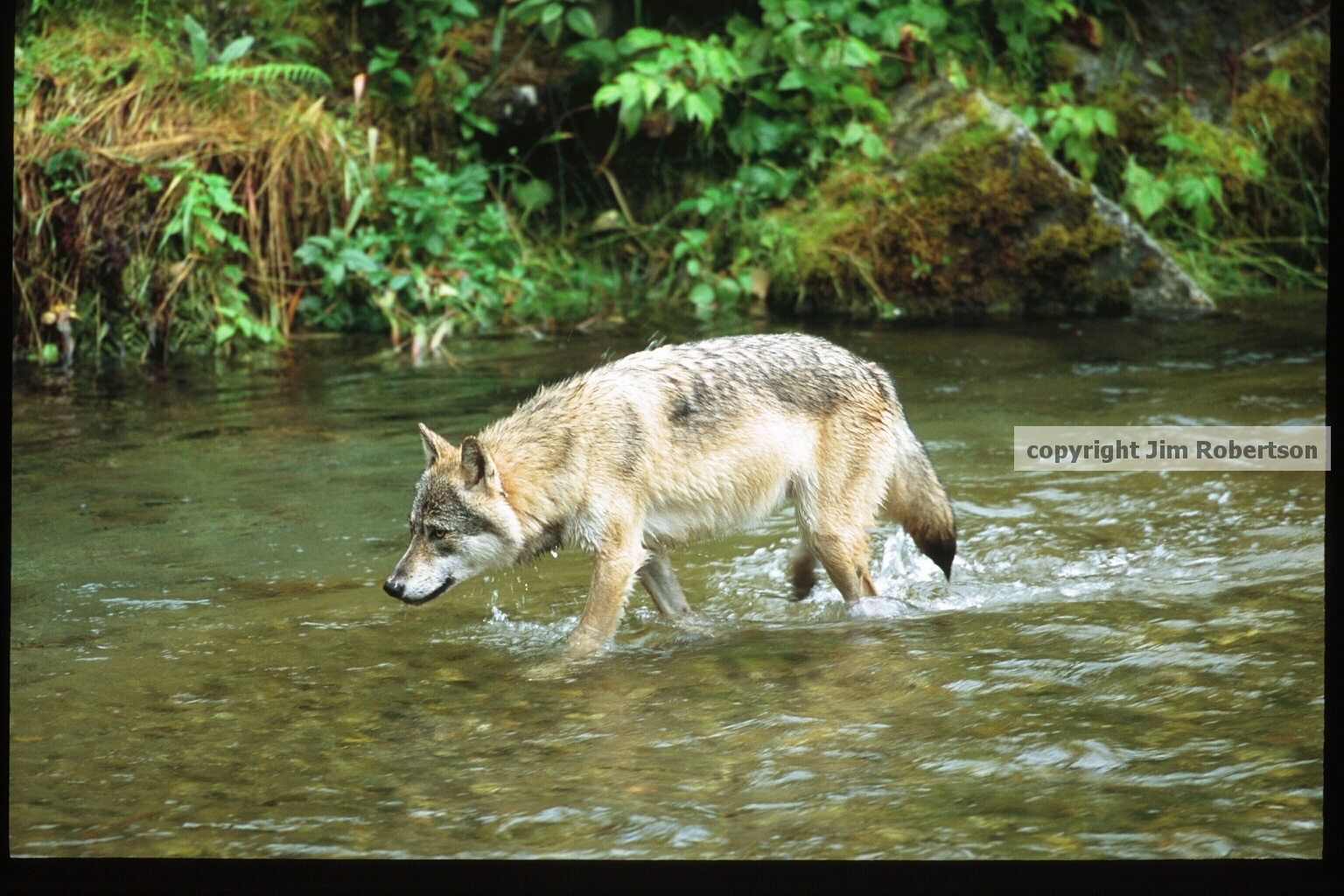
copyrighted wolf in water

Upper Peninsula wolf hunt approved, again, by Michigan’s Natural Resources Commission

http://www.mlive.com/news/index.ssf/2013/07/wolf_hunt_michigan.html

by Fritz Klug

The Michigan Natural Resources Commission has again voted to allow a wolf hunt in parts of the Upper Peninsula this fall.

The commission voted 5 to 1 on Thursday to designate wolves as a game species and allow the hunt, starting in mid-November. While the wolves will be hunted this fall, an opposition group is working to block any future wolf hunting in the state through a second planned voter referendum.

“Managing wildlife through science is far better than managing wildlife through ballot questions, which some organizations support for Michigan,” said NRC Chair J.R. Richardson. “The conservative public harvest proposal approved by the NRC ensures the long-term presence of wolves while providing a valuable tool for managing conflicts between wolves and human populations.”

The NRC vote comes after a new law approved by the Michigan Legislature which gave the NRC the authority to establish new game species. While the NRC voted to allow the hunt earlier this year, it needed to vote again under terms of the new law. In May, the commission voted 6-1 to allow the hunt.

Members of the NRC are appointed by the governor.

The hunt will be limited to 43 wolves in three separate areas of the UP in an attempt to decrease population in those specific areas. There are an estimated 658 wolves in Michigan’s UP overall.

Supporters of the hunt say wolves are causing problems in the Upper Peninsula. There are reports of wolves killing livestock and pets. Residents also said wolves have become increasingly comfortable around humans and fear that they may attack small children.

Those opposed to the hunt, however, question if the wolf population — which was once endangered — could handle a hunt. They also say wolves are a natural resource and voters should decide if there should be a hunt.

“The voters of Michigan—not politicians and bureaucrats—should have their voices heard on whether our state’s fragile wolf population is needlessly hunted for trophies,” said Jill Fritz of Keep Michigan Wolves Protected, who is the state director for The Humane Society of the United States.

The organization Keep Michigan Wolves Protected has organized petition drives to get the wolf-hunting question on the 2014 ballot.

The group collected 250,000 signatures aimed at overturning the previous state law that allowed a wolf hunt. But the Legislature’s approval of a newer law made that effort moot, and opponents now would have to mount a second petition drive aimed at overturning the newer law — enacted earlier this year.

Earlier this month, the group submitted new language to stage a second petition drive aimed at banning wolf hunting in Michigan. Tomorrow, the Board of State Canvassers will meet and consider the ballot language.

“It would be extremely difficult” to finish the petition drive by the November vote, said Fritz.

During the meeting, several members of the public spoke against the wolf hunt.

The first referendum seeks to overturn Public Act 520 of 2012. The new referendum would seek to overturn Public Act 21 of 2013. Both measures could make the November 2014 ballot.

The Upper Peninsula is home to an estimated 658 wolves. That’s up from roughly 500 in 2008 and approximately 200 in 2000. The state counted just three wolves in 1989.

The thee zones for the fall hunt are:
1.A portion of Gogebic County including the city of Ironwood.
2.Portions of Baraga, Houghton, Ontonagon and Gogebic counties.
3.Portions of Luce and Mackinac counties.

There will be 1,200 licenses available for over-the-counter purchase starting Aug. 3. The hunt will begin Nov. 15.

Hunters will be required to report a killed wolf by phone on the day the wolf is killed. Once the target number of wolves are killed in a specific hunting zone, that unit is closed to hunting. Licensed hunters will be required to check daily by phone or online to determine whether any management units have been closed.

The War on Wolves: Who Are the Real Predators?

Michael Markarian, of the HSUS Legislation Fund, wrote the following on their “Animals and Politics” page:


The Chicago Tribune weighed in with an editorial this weekend on the Obama Administration’s latest in a series of proposals to strip recovering gray wolves of their federal protections—leaving the fate of wolves to the blood lust of hostile state politicians and trophy hunting and ranching interests. More than 1,000 wolves have been killed with painful steel-jawed leghold traps, hound hunting, and other methods since Wisconsin, Minnesota, Idaho, Montana, and Wyoming legalized hunting seasons—including storied Yellowstone National Park wolves whose packs had been studied for decades, but were gunned down in their GPS collars over the park border.

WolvesAs if that wasn’t bad enough, Montana officials now propose lengthening the wolf hunting season and increasing the bag limit. It’s alarming to Yellowstone administrators who say it places more of the park’s wolves in jeopardy when they step over the border into Montana—putting the Department of the Interior in the awkward position of handing wolf management to the states and then watching from the sidelines as they kill the very descendants of the wolves reintroduced to the park 17 years ago. And just last month, Wisconsin raised its quota to 275 wolves which, when combined with other forms of human-caused wolf mortality, likely will result in 50 percent of the entire wolf population in the state being killed—despite the fact that Wisconsin voters oppose wolf hunting by a more than eight-to-one margin.

You’d think the pogrom for wolves in the Northern Rockies and Great Lakes regions would cause the Obama Administration to pause before adding to the carnage. But the U.S. Fish and Wildlife Service has announced its plans to drop endangered species protections for the gray wolf population in virtually all of the lower 48 states, with the exception of about 75 wild Mexican wolves in Arizona and New Mexico.

Some states have set up sound, capable management plans for wolves—such as Washington, which this year passed legislation to create a state gray wolf conflict account to be used for mitigation, assessment, and payments for injury or loss of livestock caused by wolves. But many others have taken a regressive, dangerous approach. The Utah legislature even handed out hundreds of thousands of taxpayer dollars to a private group to advocate for killing wolves. Instead of hoping for the best from a patchwork of state authorities subject to varying degrees of political power exerted by ranching and hunting interests, the federal government should be overseeing and working with the states and driving the nation toward full recovery of wolves.

The Tribune is urging concerned citizens to submit comments to the U.S. Fish and Wildlife Service by visiting this web site before the September 11 deadline, and urging the agency to keep protections intact for one of America’s most ecologically valuable creatures.

Meanwhile, in Michigan, state politicians are so dead-set on killing wolves that they pulled a fast one on voters who gathered more than 250,000 signatures to place the question of wolf hunting on the ballot. Michigan lawmakers passed a second bill, signed into law by Gov. Rick Snyder, to subvert a vote of the people and allow wolf hunting, after their first bill was the subject of a citizen referendum. They want to take the power to decide wildlife issues away from the state’s voters, and put it in the hands of seven unelected bureaucrats—paving the way to kill wolves and other protected species.

But Michigan citizens are fighting back against this undemocratic power grab, and have launched a second referendum campaign to stop the trophy hunting and trapping of wolves and restore the right of Michigan voters to weigh in on critical wildlife issues. With the bodies of wolves piling up around the country, Michigan citizens are taking a stand for these rare and majestic treasures. You can join them by visiting the Keep Michigan Wolves Protected campaign.

America’s Top 10 Threats to Trapping; or, The enemy of my enemy is my friend

525140_440817092654544_311118433_n

http://www.ussportsmen.org/trapping/americas-top-10-threats-to-trapping-2/

Posted on August 22, 2012

Courtesy of the U.S. Sportsmen’s Alliance/ http://www.ussportsmen.org.

There are many forces in America working to end trapping and wise wildlife management. Here are a few of those anti-trapping groups:

1- Sierra Club—this group’s board of directors has let America know it opposes any and all trapping—period. The official Sierra Club statement reads: “The Sierra Club considers body-gripping, restraining and killing traps and snares to be ecologically indiscriminate and unnecessarily inhumane and therefore opposes their use.” This position earns this group a No. 1 spot.

2- PETA—best known for being wackos, this group opposes fur, trapping and anything non-vegan. PETA also wanted to “trap” and euthanize problem hogs in Florida to prevent them from being hunted.

3- Humane Society of the United States—this radical animal rights group lists trapping as wildlife abuse. This group is currently being sued for violation of federal racketeering laws.

4- American Society for the Prevention of Cruelty to Animals (alias ASPCA)—states openly on its website that “The ASPCA is against the use of leg-hold or body gripping traps to capture wild animals because of the pain and distress that they cause.” The group also opposes hunting.

5- Defenders of Wildlife—this group opposes wolf hunting and trapping, and launched an aggressive on-line campaign to skew an Idaho wolf trapping survey in its favor. D o W reported it had 39,000 followers overwhelm the Idaho Game and Fish Commission’s website.

6- Born Free USA—this radical animal rights group labels trapping as “barbaric” and has a trapping victims fund to help cover veterinarian costs for animals—including wildlife—caught in traps. It distributes a free “How to Organize an Anti-Trapping Campaign” booklet through its Animal Protection Institute group.

7- In Defense of Animals—opposes trapping and has created a “furkills” website to promote the group’s propaganda—and to collect funds. The group also encourages followers to create a display in their local public library to display leaflets, posters, and books about the cruelty involved in trapping or leg-hold traps.

8- Animal Welfare Institute: Opposes trapping and is pushing the Refuge from Cruel Trapping Act in Congress to end trapping on national wildlife refuges. Filed a lawsuit in 2008 to stop coyote and fox trapping in Maine under the guise of protecting Canada lynx.

9- Center for Biological Diversity: has campaigns underway to stop wolf trapping and hunting in Montana, Wyoming and Idaho, and another in New Mexico to save Mexican gray wolves. Some of the group’s “urgent letters of action” also includes requests for donations to end trapping.

10- Footloose Montana—works to oppose wolf trapping and the management of these large predators in Montana while other wildlife species, like elk, dwindle in numbers at the hands, or paws, of wolves. Also works to end trapping on public lands.

As you can tell, trappers and hunters need to work together to overcome these radical forces…

Keep Michigan Wolves Protected launching second petition drive

http://www.mlive.com/politics/index.ssf/2013/07/keep_michigan_wolves_protected.html

Keep Michigan Wolves Protected launching second petition drive after new law blocked original effort

wolf.jpeg
(AP File Photo/DNR)

LANSING, MI — A coalition supported by the Humane Society of the United States is gearing up for a petition drive aimed at banning wolf hunting in Michigan — again.

Keep Michigan Wolves Protected said Tuesday that it has filed petition language with the Secretary of State. If the petition form is approved, the group will begin efforts to collect more than 225,000 voter signatures to place a second measure on the 2014 ballot.

The coalition previously collected more than 250,000 signatures for a separate ballot referendum seeking to block wolf hunting in Michigan. The Board of Canvassers certified those signatures, estimating at least 214,000 were valid.

But legislation sponsored by Sen. Tom Casperson, R-Escanaba, and signed into law by Michigan Gov. Rick Snyder essentially sidestepped the effort by giving the Natural Resources Commission the authority to establish a new game species. The NRC had voted to establish a fall wolf hunt in three areas of the Upper Peninsula and is expected to vote again this month under the new law.

“That bill was deliberately introduced and passed to scuttle our first referendum effort to remove wolves from the valid species list for hunting,” said Jill Fritz of Keep Michigan Wolves Protected, who is the state director for The Humane Society of the United States.

“We just want Michigan voters to be able to have a say in protecting wildlife, and that was taken away from them. They’re going to go out there, collect signatures, and get their voice back.”

The old referendum seeks to overturn Public Act 520 of 2012. The new referendum would seek to overturn Public Act 21 of 2013. Both measures could make the ballot, and Fritz said she will encourage voters to reject both laws.

Supporters of a wolf hunt appear equally determined.

They say wolves are causing problems in the Upper Peninsula, killing livestock and pets while becoming increasingly comfortable around humans. State law allows farmers, ranchers and dog owners to kill wolves who attack on their property, but residents say those measures are inadequate.

Some local governments have approved resolutions indicating that “overpopulation of wolves is threatening the tourism, recreation and business industries in the Western U.P.,” noting that “this situation has become a public safety issue for our citizens.”

Michigan is the sixth state to authorize a wolf hunt since federal protections were removed over the past two years in the western Great Lakes and Northern Rockies, according to the Associated Press.

The Upper Peninsula is home to an estimated 658 wolves — down from 687 a couple of years ago, but up from roughly 500 in 2008 and approximately 200 in 2000. The state counted just three wolves in 1989.

Jonathan Oosting is a Capitol reporter for MLive Media Group.