Exposing the Big Game

Forget Hunters' Feeble Rationalizations and Trust Your Gut Feelings: Making Sport of Killing Is Not Healthy Human Behavior

Exposing the Big Game

One of the largest banks issued an alarming warning that Earth is running out of the resources to sustain life

Beijing smog
A paramilitary officer in Beijing wears a mask after a red alert was issued for heavy air pollution in 2016.
 Jason Lee/Reuters
  • The planet is running out of resources, HSBC warned in a new note.
  • Earth Overshoot Day — the point in a year at which our demand for natural resources exceeds what the planet can renew — occurred on August 1, just seven months into 2018.
  • HSBC said companies and governments are not “adequately prepared” for climate effects.

One of the world’s largest banks says the planet is running out of resources and warns that neither governments nor companies are prepared for climate change.

The world spent its entire natural resource budget for the year by August 1, a group of analysts at HSBC said in a note that cited research from the Global Footprint Network (GFN).

That means that the world’s citizens used up all the planet’s resources for the year in just seven months, according to GFN’s analysis.

“In our opinion, these findings and events show that many businesses and governments are not adequately prepared for climate impacts, nor are they using natural resources efficiently,” the HSBC analysts said in the note.

Many banks and asset managers have started factoring climate risks into their decision-making — a move spurred in part by former New York City Mayor Michael Bloomberg. But it’s far less common to see multinational banks sound the alarm about climate change so explicitly in their equity research.

To calculate Earth’s natural resource budget, GFN considers the demand for natural resources — which includes food, forests, and marine products — as well as humans’ effects on the environment from factors like carbon emissions. The combined total is designed give a comprehensive picture of humanity’s global footprint.

Earth Overshoot Day , the point in a year at which we use up a year’s worth of resources, has been steadily moving forward in time since GFN first started tracking it. In 1970, we “overshot” Earth’s resource budget by only 2 days — Overshoot Day fell on December 29, according to HSBC. That date has been pushed up by almost five months since then.

HSBC’s note also warned about extreme events resulting from heat, including the wildfires in Scandinavia and broken temperature records around the world.

“As scientists work on attribution analysis for specific events — the general consensus is that climate change is making these events more likely to occur and more severe,” HSBC said.

The predicted effects of climate change are starting to become real.Wildfires have torn through California in recent years, and they’re part of a worsening trend related to rising global temperatures. Other consequences include increased frequency of hurricanes and flooding, melting ice sheets , and greater numbers of heat waves .

Recent studies have shown that global temperatures by the year 2100 could be up to 15% higher than the highest projections from the Intergovernmental Panel on Climate Change.

According to HSBC, extreme events have severe economic and social costs.

“In our view, adaptation will move further up the agenda with a growing focus on the social consequences,” the analysts said.

SEE ALSO: On August 1, we’ll have consumed more resources than the Earth can regenerate in a year — here’s how you can reduce your ecological footprint

More: HSBC Climate Change Earth Overshoot Day Environment

Long-Lasting Civilization May Be a Pipe Dream

Long-Lasting Civilization May Be a Pipe Dream

Humanity’s cherished hope that we are building a long-lived civilisation may be nothing more than a pipe-dream. Human endeavour, two scientists argue, may carry within it the seeds of its own destruction.

The two astrophysicists have turned one of the great questions in science into a way of examining the down-to-earth consequences of global warming, the pollution of the oceans with indestructible polymers, and the wholesale destruction of species in the last 300 years.

They put an innocent question: if there had been an advanced technological and industrial civilisation on Earth several hundred million years ago, how could anyone know? What marks would have been left by a race of intelligent reptiles with motorised transport, housing estates, international trade and an arms race?

In what they call the Silurian hypothesis – a reference not to the geological period long before the first creatures crawled from the sea onto the empty continents, but to a 1970 episode of the British television serial Dr Who – they turn to the only testbed available to contemporary Earthlings: the evidence of the Anthropocene, the geologists’ name for a new era that could be considered to have commenced with the Industrial Revolution.

If some alien or distant-future civilisation set out to study the Earth’s geological record, what signs would humans have left in the strata?

And almost immediately, their study confronts a paradox. “The longer human civilisation lasts, the larger the signal one would expect in the record. However, the longer a civilisation lasts, the more sustainable its practices would need to have become in order to survive,” they write in the International Journal of Astrobiology.

But the more sustainable a society, the smaller the footprint its agriculture, manufacture or energy generation would have made, and the smaller the signal in the geological record.

So the researchers, Adam Frank from the University of Rochester, New York and Gavin Schmidt, director of the Nasa Goddard Institute for Space Studies, set out to calculate the future signature of long-vanished human society.

Signs of change

They conclude that the burning of fossil fuels has already changed the carbon cycle in a way that would be recognisable in records of carbon isotopes. Global warming – a consequence of that fossil fuel combustion – would be detectable in the rocks.

Global agriculture would be signalled by increases of erosion and sedimentation rates over time, and plastic pollutants would be detectable for perhaps billions of years. And all-out thermonuclear war – were it to happen – would leave behind some unusual radioactive isotopes.

“As an industrial civilisation, we’re driving changes in the isotopic abundances because we’re burning carbon,” said Professor Frank. “But burning fossil fuels may actually shut us down as a civilisation. What imprints would this or other kinds of industrial activity from a long-dead civilisation leave over tens of millions of years?”

The latest study is not the only one to contemplate the paradox of a self-destroying civilisation. Last year an Arkansas mathematician considered the silence of the extraterrestrials.

Nothing heard

For 40 years, humans have been listening for the noise of other intelligent civilisations in the galaxy, and have heard nothing. Maybe, he suggested in the same journal, modern humans are typical of technological civilisations, and destroy either their planet, or themselves, almost as soon as they exploit technology.

Perhaps, he suggests, a technological civilisation that lasted for millions of years would not be typical.

The latest study, in essence, pursues the same logic. Human advance for the moment is not sustainable. The people of the Anthropocene have already tipped 12 billion tonnes of indestructible plastics into landfills, and created a technosphere that totals about 30 trillion tonnes. And by 2050, humans will have built another 25 million km of roads.

“You want to have a nice, large-scale civilisation that does wonderful things but that doesn’t push the planet into domains that are dangerous for itself, the civilisation,” said Professor Frank. “We need to figure out a way of producing and using energy that doesn’t put us at risk.”

Near-term Human Extinction: Part II, Feedbacks 21-49

Climate-Change Summary

21. Extreme weather events drive climate change, as reported in the 15 August 2013 issue of Nature (Nature, August 2013). Details are elucidated via modeling in the 6 June 2014 issue of Global Biogeochemical Cycles. Further data and explanation are presented in the 27 April 2015 online issue of Nature Climate Change.

Explaining Extreme Events of 2014 from a Climate Perspective” was published by the Bulletin of the American Meteorological Society in their December 2015 issue and draws on conclusions from 32 international teams of scientists who investigated 28 separate weather events. Findings of this report, released on 5 November 2015, include the following: “Human activities, such as greenhouse gas emissions and land use, influenced specific extreme weather and climate events in 2014, including tropical cyclones in the central Pacific, heavy rainfall in Europe, drought in East Africa, and stifling heat waves in Australia, Asia, and South America.”

According to a paper in the 13 June 2016 issue of the Proceedings of the National Academy of Sciences, atmospheric aerosols strengthen storm clouds, thus leading to extreme weather. An abundance of aerosol particles in the atmosphere — constantly added via industrial activity — can increase the lifespans of large storm clouds by delaying rainfall, making the clouds grow larger and live longer, and producing more extreme storms.

For many years, scientists have cautioned that individual weather events couldn’t be attributed to climate change. Now, however, specific extreme weather events can be attributed to climate change. A 200-page, March 2016 report from the National Academies of Science, Engineering, and Medicine examines the current state of science of extreme weather attribution, and identifies ways to move the science forward to improve attribution capabilities.

22. Drought-induced mortality of trees contributes to increased decomposition of carbon dioxide into the atmosphere and decreased sequestration of atmospheric carbon dioxide. Such mortality has been documented throughout the world since at least November 2000 in Nature, with recent summaries in the February 2013 issue of Nature for the tropics, the August 2013 issue of Frontiers in Plant Science for temperate North America, and the 21 August 2015 issue of Science for boreal forests. The situation is exacerbated by pests and disease, as trees stressed by altered environmental conditions become increasingly susceptible to agents such as bark beetles and mistletoe (additional examples abound).

One extremely important example of this phenomenon is occurring in the Amazon, where drought in 2010 led to the release of more carbon than the United States that year (Science, February 2011). The calculation badly underestimates the carbon release. In addition, ongoing deforestation in the region is driving declines in precipitation at a rate much faster than long thought, as reported in the 19 July 2013 issue of Geophysical Research Letters. An overview of the phenomenon, focused on the Amazon, was provided by Climate News Network on 5 March 2014~. “The observed decline of the Amazon sink diverges markedly from the recent increase in terrestrial carbon uptake at the global scale, and is contrary to expectations based on models,” according to a paper in the 19 March 2015 issue of Nature. Finally, according to a paper in the 1 July 2016 issue of Global Biogeochemical Cycles, the 2010 drought completely shut down the Amazon Basin’s carbon sink, by killing trees and slowing their growth.

Tropical rain forests, long believed to represent the primary driver of atmospheric carbon dioxide, are on the verge of giving up that role. According to a 21 May 2014 paper published in Nature, “the higher turnover rates of carbon pools in semi-arid biomes are an increasingly important driver of global carbon cycle inter-annual variability,” indicating the emerging role of drylands in controlling environmental conditions. “Because of the deforestation of tropical rainforests in Brazil, significantly more carbon has been lost than was previously assumed.” In fact, “forest fragmentation results in up to a fifth more carbon dioxide being emitted by the vegetation.” These results come from the 7 October 2014 issue of Nature Communications. A paper in the 28 December 2015 online issue of the Proceedings of the National Academy of Sciences indicates Amazon forest could transition to savanna-like states in response to climate change. Savannas are simply described as grasslands with scattered trees or shrubs. The abstract of the paper suggests that, “in contrast to existing predictions of either stability or catastrophic biomass loss, the Amazon forest’s response to a drying regional climate is likely to be an immediate, graded, heterogeneous transition from high-biomass moist forests to transitional dry forests and woody savannah-like states.”

The boreal forest wraps around the globe at the top of the Northern Hemisphere. It is the planet’s single largest biome and makes up 30 percent of the globe’s forest cover. Moose are the largest ungulate in the boreal forest and their numbers have plummeted. The reason is unknown.

Dennis Murray, a professor of ecology at Trent University in Peterborough, Ontario, thinks the dying moose of Minnesota and New Hampshire and elsewhere are one symptom of something far bigger – a giant forest ecosystem that is rapidly shrinking, dying, and otherwise changing. “The boreal forest is breaking apart,” he says. “The question is what will replace it?”

Increasing drought threatens almost all forests in the United States, according to a paper in the 21 February 2016 online issue of Global Change Biology. According to the paper’s abstract, “diebacks, changes in composition and structure, and shifting range limits are widely observed.”

For the first time scientists have investigated the net balance of the three major greenhouse gases — carbon dioxide, methane, and nitrous oxide — for every region of Earth’s land masses. The results were published in the 10 March 2016 issue of Nature. The surprising result: Human-induced emissions of methane and nitrous oxide from ecosystems overwhelmingly surpass the ability of the land to soak up carbon dioxide emissions, which makes the terrestrial biosphere a contributor to climate change.

An abstract of a paper to be published in the April 2016 issue of Biogeochemistry includes these sentences: “Rising temperatures and nitrogen (N) deposition, both aspects of global environmental change, are proposed to alter soil organic matter (SOM) biogeochemistry. … Overall, this study shows that the decomposition and accumulation of molecularly distinct SOM components occurs with soil warming and N amendment and may subsequently alter soil biogeochemical cycling.” In other words, as global temperatures rise, the organic matter in forests appears to break down more quickly, thereby accelerating the release of carbon into the atmosphere.

23. Ocean acidification leads to release of less dimethyl sulphide (DMS) by plankton. DMS shields Earth from radiation. (Nature Climate Change, online 25 August 2013). Plankton form the base of the marine food web, some populations have declined 40% since 1950 (e.g., article in the 29 July 2010 issue of Nature), and they are on the verge of disappearing completelyaccording to a paper in the 18 October 2013 issue of Global Change Biology. As with carbon dioxide, ocean acidification is occurring rapidlyaccording to a paper in the 26 March 2014 issue of Global Biogeochemical Cycles. Acidification is proceeding at a pace unparalleled during the last 300 million years, according to research published in the 2 March 2012 issue of Science. Over the past 10 years, the Atlantic Ocean has soaked up 50 percent more carbon dioxide than it did the decade before, measurably speeding up the acidification of the ocean, according to a paper published in the 30 January 2016 issue of Global Biogeochemical Cycles. Not surprisingly, the degradation of the base of the marine food web is reducing the ability of fish populations to reproduce and replenish themselves across the globe, as reported in the 14 December 2015 online edition of the Proceedings of the National Academy of Sciences.

Diatoms, one of the major groups of plankton, is declining globally at the rate of about one percent per year, according to a paper in the 23 September 2015 issue of Global Biogeochemical Cycles.

The Southern Ocean is acidifying at such a rate because of rising carbon dioxide emissions that large regions may be inhospitable for key organisms in the food chain to survive as soon as 2030, according to a paper in the 2 November 2015 online issue of Nature Climate Change.

A paper in the 26 November 2015 issue of Science Express indicates millennial-scale shifts in plankton in the subtropical North Pacific Ocean that are “unprecedented in the last millennium.” The ongoing shift “began in the industrial era and is supported by increasing N2-fixing cyanobacterial production. This picoplankton community shift may provide a negative feedback to rising atmospheric CO2.” One of the authors of the papers is quoted during an interview: “This picoplankton community shift may have provided a negative feedback to rising atmospheric carbon dioxide, during the last 100 years. However, we cannot expect this to be the case in the future.”

Further research on primary productivity in the ocean was published in paper in the 19 January 2016 issue of Geophysical Research Letters. Referring to the Indian Ocean, the abstract concludes, “future climate projections suggest that the Indian Ocean will continue to warm, driving this productive region into an ecological desert.”

For the first time, researchers have documented algae-related toxins in Arctic sea mammals. Specifically, toxins produced by harmful algal blooms are showing up in Alaska marine mammals as far north as the Arctic Ocean — much farther north than ever reported previously, according to a paper in the 11 February 2016 issue of Harmful Algae. The abstract indicates, “In this study, 905 marine mammals from 13 species were sampled including; humpback whales, bowhead whales, beluga whales, harbor porpoises, northern fur seals, Steller sea lions, harbor seals, ringed seals, bearded seals, spotted seals, ribbon seals, Pacific walruses, and northern sea otters. Domoic acid was detected in all 13 species examined and had the greatest prevalence in bowhead whales (68%) and harbor seals (67%). Saxitoxin was detected in 10 of the 13 species … These results provide evidence that … toxins are present throughout Alaska waters at levels high enough to be detected in marine mammals and have the potential to impact marine mammal health in the Arctic marine environment.”

24. Jellyfish have assumed a primary role in the oceans of the world (26 September 2013 issue of the New York Times Review of Books, in a review of Lisa-ann Gershwin’s book, Stung! On Jellyfish Blooms and the Future of the Ocean): “We are creating a world more like the late Precambrian than the late 1800s — a world where jellyfish ruled the seas and organisms with shells didn’t exist. We are creating a world where we humans may soon be unable to survive, or want to.” Jellyfish contribute to climate change via (1) release of carbon-rich feces and mucus used by bacteria for respiration, thereby converting bacteria into carbon dioxide factories and (2) consumption of vast numbers of copepods and other plankton.

25. Sea-level rise causes slope collapse, tsunamis, and release of methane, as reported in the September 2013 issue of GeologyIn eastern Siberia, the speed of coastal erosion has nearly doubled during the last four decades as the permafrost melts. And it appears sea-level rise has gone exponential, judging from Scribbler’s 4 May 2015 analysis. Considering only data through 2005, according to a paper published 28 September 2015 in the Proceedings of the National Academy of Sciences, the 500-year return time of floods in New York City has been reduced to 24.4 years.

26. Rising ocean temperatures will upset natural cycles of carbon dioxide, nitrogen and phosphorus, hence reducing plankton (Nature Climate Change, September 2013). Ocean warming has been profoundly underestimated since the 1970s according to a paper published in the online version of Nature Climate Change on 5 October 2014. Specifically, the upper 2,300 feet of the Southern Hemisphere’s oceans may have warmed twice as quickly after 1970 than had previously been thought. According to a 22 January 2015 article in The Guardian, “the oceans are warming so fast, they keep breaking scientists’ charts.”

Another indication of a warming ocean is coral bleaching. The third global coral bleaching event since 1998, and also the third in evidence, ever, is underway on Australia’s Great Barrier Reef. According to Australia National News on 28 March 2016, a survey of the Great Barrier Reef reports 95% of the northern reefs were rated as severely bleached, and only 4 of 520 reefs surveyed were found to be unaffected by bleaching.

27. Earthquakes trigger methane release, and consequent warming of the planet triggers earthquakes, as reported by Sam Carana at the Arctic Methane Emergency Group (October 2013)

28. Small ponds in the Canadian Arctic are releasing far more methane than expected based on their aerial cover (PLoS ONE, November 2013). This is the first of several freshwater ecosystems releasing methane into the atmosphere, as reviewed in the 19 March 2014 issue of Nature and subsequently described by a large-scale study in the 28 April 2014 issue of Global Change Biology. Release of methane from these sources in the Arctic and Greenland, according to the 20 May 2012 issue of Nature Geoscience, “imply that in a warming climate, disintegration of permafrost, glaciers and parts of the polar ice sheets could facilitate the transient expulsion of 14C-depleted methane trapped by the cryosphere cap.”

The mechanism underlying methane release in these systems is poorly understood. If sunlight drives the process, as suggested by a paper in the 22 August 2014 issue of Science, then amplification is expected over time as ponds and lakes are increasingly exposed.

Water bodies within Africa’s interior are adding significantly to the overall release of greenhouse gases into the atmosphere, according to a paper in the 20 July 2015 online edition of Nature Geoscience. Specifically, “total carbon dioxide-equivalent greenhouse-gas emissions [are] … about 0.9 Pg carbon per year, equivalent to about one quarter of the global ocean and terrestrial combined carbon sink.”

Large water bodies beneath deserts could profoundly worsen the situation. According to a paper published in the 28 July 2015 issue of Geophysical Research Letters, a large carbon sink or pool lies beneath the Tarim basin in Xinjiang, China. The hidden pool of water stores “more carbon than all the plants on the planet put together. While more water may sound like a good thing, researchers believe that if this carbon were to escape into the atmosphere, we would be in serious, serious trouble.” Specifically, the senior authored explained in an interview: “It’s like a can of coke. If it is opened all the greenhouse gas will escape into the atmosphere.”

A paper in the 29 October 2015 issue of Limnology and Oceanography also addresses the issue of methane release from lakes. A write-up for the general public titled, “Global Warming Will Progress Much More Quickly Than Expected, Study Predicts” includes this line: “The findings suggest we have a ‘vicious circle’ ahead of us in which the burning of fossil fuels leads to higher temperatures, which in turn trigger higher levels of methane release and further warming.” This is a fine explanation for a self-reinforcing feedback loop.

A study published in the 17 November 2015 edition of Nature Geoscience shows that lakes in the northern hemisphere will probably release much more carbon dioxide due to global climate changes. The investigation, based on data from more than 5,000 Swedish lakes, demonstrates that carbon dioxide emissions from the world’s lakes, water courses, and reservoirs are equivalent to almost a quarter of all the carbon dioxide produced by burning fossil fuels.

Citing two recent journal articles, a paper in the 19 November 2015 issue of Yale Environment 360 concludes, “the world’s iconic northern lakes are undergoing major changes that include swiftly warming waters, diminished ice cover, and outbreaks of harmful algae.” The lakes include Lake Baikal, “the deepest, largest in volume, and most ancient freshwater lake in the world, holding one-fifth of the planet’s above-ground drinking supply. It’s a Noah’s Ark of biodiversity, home to myriad species found nowhere else on earth.”

Further support for the importance of streams and rivers as sources of atmospheric methane comes from a paper published in the November 2015 issue of Ecological Monographs~. The headline of the write-up for the general public tells the story: “Greenhouse gas emissions from freshwater higher than thought.”

paper in the 23 November 2015 issue of Journal of Geophysical Research: Biogeosciencesfound, according to the abstract: “A sediment upwelling at the end of the thaw season likely contributed to these [methane] emissions. We suggest that, unlike wetlands, shallow seasonally ice-covered lakes can have their highest methane emission potential in the cold season, likely dominating the spring methane release of subarctic landscapes with high lake coverage.” In other words, as with methane release from the Arctic Ocean, methane release is abundant during the cold season. According to a paper in the 16 June 2016 online issue of Geophysical Research Letters, “Our findings indicate that permafrost below shallow lakes has already begun crossing a critical thawing threshold approximately 70 years prior to predicted terrestrial permafrost thaw in northern Alaska.”

As reported in the 16 December 2015 issue of Geophysical Research Letters: “In this first worldwide synthesis of in situ and satellite-derived lake data, we find that lake summer surface water temperatures rose rapidly (global mean = 0.34°C decade−1) between 1985 and 2009.”

paper in the 4 January 2016 online edition of Nature Geoscience finds, “lakes and ponds are a dominant methane source at high northern latitudes.” “By compiling previously reported measurements made at a total of 700 northern water bodies the researchers have been able to more accurately estimate emissions over large scales. They found that methane emissions from lakes and ponds alone are equivalent to roughly two-thirds of all natural methane sources in the northern region.

According to a paper in the 1 February 2016 issue of Nature Geoscience, ponds less than a quarter of an acre in size make up only 8.6% of the surface area of the world’s lakes and ponds, yet they account for 15.1% of carbon dioxide emissions and 40.6% of diffusive methane emissions.

29. Mixing of the jet stream is a catalyst, too. High methane releases follow fracturing of the jet stream, accounting for a previous rise in regional temperature up to 16 C in less than 20 years (Paul Beckwith via video on 19 December 2013).

30. Research indicates that “fewer clouds form as the planet warms, meaning less sunlight is reflected back into space, driving temperatures up further still” (Nature, January 2014)

31. “Thawing permafrost promotes microbial degradation of cryo-sequestered and new carbon leading to the biogenic production of methane” (Nature Communications, February 2014). According to a paper in the 21 October 2015 issue of the Proceedings of the National Academy of Sciences,: “The observed DOC [dissolved organic carbon] loss rates are among the highest reported for permafrost carbon and demonstrate the potential importance of LMW [low–molecular-weight] DOC in driving the rapid metabolism of Pleistocene-age permafrost carbon upon thaw and the outgassing of CO2 to the atmosphere by soils and nearby inland waters.”

32. Over the tropical West Pacific there is a natural, invisible hole extending over several thousand kilometers in a layer that prevents transport of most of the natural and man-made substances into the stratosphere by virtue of its chemical composition. Like in a giant elevator, many chemical compounds emitted at the ground pass thus unfiltered through this so-called “detergent layer” of the atmosphere.Global methane emissions from wetlands are currently about 165 teragrams (megatons metric) each year. This research estimates that annual emissions from these sources will increase by between 17 and 260 megatons annually. By comparison, the total annual methane emission from all sources (including the human addition) is about 600 megatons each year. (Nature Geoscience, February 2014)

33. “Volcanologist Bill McGuire describes how rapid melting of glaciers and ice sheets as a result of climate change could trigger volcanoes, earthquakes, and tsunamis” (13 February 2014 issue of The Guardian. According to a paper published online in the 5 February 2015 issue of Geophysical Research Letters, “underwater volcanoes defy expectations and erupt in bursts rather than a slow pace.

34. Deep ocean currents apparently are slowing. According to one of the authors of the paper, “we’re likely going to see less uptake of human produced, or anthropogenic, heat and carbon dioxide by the ocean, making this a positive feedback loop for climate change.” Because this phenomenon contributed to cooling and sinking of the Weddell polynya: “it’s always possible that the giant polynya will manage to reappear in the next century. If it does, it will release decades-worth of heat and carbon from the deep ocean to the atmosphere in a pulse of warming.” (Nature Climate Change, February 2014; model results indicate “large spatial redistribution of ocean carbon,” as reported in the March 2014 issue of the Journal of Climate)

35. Increased atmospheric carbon dioxide causes soil microbes to produce more carbon dioxide (Science, 2 May 2014)

36. Reductions in seasonal ice cover in the Arctic “result in larger waves, which in turn provide a mechanism to break up sea ice and accelerate ice retreat” (Geophysical Research Letters, 5 May 2014). Further corroboration is found in the 27 March 2015 issue of Geophysical Research Letters.

37. A huge hidden network of frozen methane and methane gas, along with dozens of spectacular flares firing up from the seabed, has been detected off the North Island of New Zealand (preliminary results reported in the 12 May 2014 issue of the New Zealand Herald). The first evidence of widespread active methane seepage in the Southern Ocean, off the sub-Antarctic island of South Georgia, was subsequently reported in the 1 October 2014 issue of Earth and Planetary Science Letters.

38. As reported in the 8 June 2014 issue of Nature Geosciencerising global temperatures could increase the amount of carbon dioxide naturally released by the world’s oceans, fueling further climate change

39. As global-average temperature increases, “the concentrations of water vapor in the troposphere will also increase in response to that warming. This moistening of the atmosphere, in turn, absorbs more heat and further raises the Earth’s temperature.” As reported in the paper’s abstract: “Our analysis demonstrates that the upper-tropospheric moistening observed over the period 1979–2005 cannot be explained by natural causes and results principally from an anthropogenic warming of the climate. By attributing the observed increase directly to human activities, this study verifies the presence of the largest known feedback mechanism for amplifying anthropogenic climate change.” (Proceedings of the National Academy of Sciences, 12 August 2014According to a July 2015 report in Skeptical Science, “water vapor feedback roughly doubles the amount of warming caused by CO2. So if there is a 1°C change caused by CO2, the water vapor will cause the temperature to go up another 1°C. When other feedback loops are included, the total warming from a potential 1°C change caused by CO2 is, in reality, as much as 3°C.

40. Soil microbial communities release unexpectedly more carbon dioxide when temperatures rise (Nature, 4 September 2014). As a result, “substantial carbon stores in Arctic and boreal soils could be more vulnerable to climate warming than currently predicted.”

41. “During the last glacial termination, the upwelling strength of the southern polar limb of the Atlantic Meridional Overturning Circulation varied, changing the ventilation and stratification of the high-latitude Southern Ocean. During the same period, at least two phases of abrupt global sea-level rise—meltwater pulses—took place.” In other words, when the ocean around Antarctica became more stratified, or layered, warm water at depth melted the ice sheet faster than when the ocean was less stratified. (Nature Communications, 29 September 2014) Robert Scribbler refers to AMOC as “the heartbeat of the world ocean system.” As reported in the 23 March 2015 online issue of Climatic Change, the slowing of the AMOC is “exceptional” and is tied to melting ice in Greenland. This twentieth-century slowdown apparently is unique, at least within the last thousand years.

42. “Open oceans are much less efficient than sea ice when it comes to emitting in the far-infrared region of the spectrum. This means that the Arctic Ocean traps much of the energy in far-infrared radiation, a previously unknown phenomenon that is likely contributing to the warming of the polar climate.” (Proceedings of the National Academy of Sciences, November 2014)

43. Dark snow is no longer restricted to Greenland. Rather, it’s come to much of the northern hemisphere, as reported in the 25 November 2014 issue of the Journal of Geophysical Research. Eric Holthaus’s description of this phenomenon in the 13 January 2015 edition of Slate includes a quote from one of the scientists involved in the research project: “The climate models need to be adding in a process they don’t currently have, because that stuff in the atmosphere is having a big climate effect.” In other words, as with the other major self-reinforcing feedback loops, dark snow is not included in contemporary models.

44. The “representation of stratospheric ozone in climate models can have a first-order impact on estimates of effective climate sensitivity.” (Nature Climate Change, December 2014)

45. “While scientists believe that global warming will release methane from gas hydrates worldwide, most of the current focus has been on deposits in the Arctic. This paper estimates that from 1970 to 2013, some 4 million metric tons of methane has been released from hydrate decomposition off Washington [state]. That’s an amount each year equal to the methane from natural gas released in the 2010 Deepwater Horizon blowout off the coast of Louisiana, and 500 times the rate at which methane is naturally released from the seafloor.” (Geophysical Research Letters, online version 5 December 2014)

46. “An increase in human-made carbon dioxide in the atmosphere could initiate a chain reaction between plants and microorganisms that would unsettle one of the largest carbon reservoirs on the planet — soil” (Nature Climate Change, December 2014 )

47. Increased temperature of the ocean contributes to reduced storage of carbon dioxide. “Results suggest that predicted future increases in ocean temperature will result in reduced CO2 storage by the oceans” (Proceedings of the National Academy of Sciences, January 2015)

48. According to a paper in the 19 January 2015 issue of Nature Geoscience, melting glaciers contribute substantial carbon to the atmosphere, with “approximately 13% of the annual flux of glacier dissolved organic carbon is a result of glacier mass loss. These losses are expected to accelerate.”

49. According to a paper in the 20 April 2015 online issue of Nature Geoscience, ocean currents disturb methane-eating bacteria. “We were able to show that strength and variability of ocean currents control the prevalence of methanotrophic bacteria”, says Lea Steinle from University of Basel and the lead author of the study, “therefore, large bacteria populations cannot develop in a strong current, which consequently leads to less methane consumption.”

Healing the Earth Holistically

Our planet is sick–you can call it a biodiversity crisis, the Sixth Mass Extinction, or the un-weaving of the great web of life–and its getting sicker by the minute. That’s why a holistic approach to healing this once vibrant and thriving heavenly body is the only sure way to save her.

While environmentalism usually addresses stand-alone issues (like what color to paint the town so the bats aren’t kept awake), it seems “conservation” isn’t called into play these days until a species of plant or animal is on its last legs.

For example, the re-introduction of locally nearly extinct grizzly bears to Washington’s North Cascades—hailed by the Secretary of the Interior Ryan Zinke as a “conservation success story”—is practically a too-little-too-late band-aid sort of tactic employed long after destructive human activities like hunting, trapping and even poisoning have pretty much wiped them out, and subsequent human expansion has gobbled up their habitat.

I hate to tell Secretary Zinke, but “conservation” is something you should do before a species is down to its last estimated or imagined 10 individuals. Admittedly, I did come across some enormous tracks and scat in an avalanche chute in a trail-less valley within the heart of the North Cascades that, having not seen its maker, I attributed to either Bigfoot or a grizzly bear. But that was over 35 years ago, and I haven’t heard of too many sightings of either of them since then.

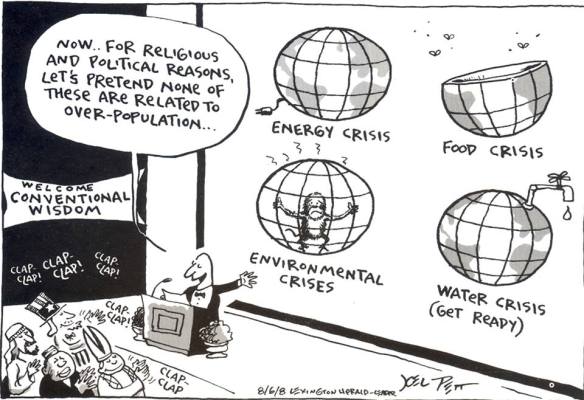
Single-issue actions and single-species, feel-good fixes only address small parts of the much bigger picture—first we need to curb the expansion of the one species at the root of all the Earth’s most pressing problems—namely, us.

Undeniably, Homo sapiens would have to go by the way-side for all the other life here on this planet to once again flourish, but that seems a small price to pay for finally putting things right and atoning for the many trespasses of the past. If humans are anywhere near as smart as they see themselves (or make themselves out to be), they’ll act now to right these countless wrongs and simply decline to reproduce, thereby eventually eliminating the one species that currently has this place so off-kilter and out of whack. With our species bowing out of the competitive breeding picture, it will take only a few lifetimes before the Earth is back on track to claim once again her living crown of glory.

Oh, I know it ain’t gonna happen, since humans will never willingly relinquish the Earth to its rightful owners. You’re more likely to see Bigfoot and a grizzly bear on unicycles juggling leprechauns, but we can always have pipe-dreams, can’t we?

Enjoy your ignorance people, because when we finally snap out of it, it’s going to be a rude awakening.

“We are a plague on Earth:” David Attenborough: ‘If We Don’t Limit Our Population Growth, the Natural World Will’

IN BRIEF
  • The famed British naturalist warns that our current rate of population growth is unsustainable and will ultimately have devastating consequences for the human race.
  • He recommends several ways to combat this problem, emphasizing a need to give women political control of their bodies and investing in sex education worldwide.

“A PLAGUE ON EARTH”

David Attenborough, renowned British naturalist and TV presenter, has some pretty scathing words for humanity: “We are a plague on Earth.”

Attenborough made that statement to the Radio Times back 2013, but it’s far from the only time he’s shared his controversial views on population growth. Attenborough has made it clear that he believes that at the rate humans are growing we will soon be unable to feed or house ourselves. It’s an uncomfortable truth, but one that needs to be faced, especially for anyone who agrees with Attenborough that humans have become a plague on this planet — a relentless force of destruction tearing its way through a world shared with other creatures.

“It’s coming home to roost over the next 50 years or so. It’s not just climate change; it’s sheer space, places to grow food for this enormous horde,” he said in that same interview. “Either we limit our population growth, or the natural world will do it for us, and the natural world is doing it for us right now.”

The rapid growth of our population is making it very difficult for the world to address several serious environmental challenges. What’s needed is a real discussion about the reality of overpopulation. Too many people, combined with insufficient methods of creating and distributing resources, ultimately leads to loss of life and resources.

“We can’t go on increasing at the rate human beings are increasing forever, because Earth is finite and you can’t put infinity into something that is finite,” Attenborough said in a story published by The Independent.

TOO LITTLE, TOO LATE?

Despite all his efforts to bring awareness to the subject of overpopulation, Attenborough sternly warns that simply acknowledging these eventualities is not enough — we must act. He believes that controlling our population is dependent on investing in sex education globally, giving women more political control over their bodies, and implementing other voluntary means of population control in developing countries.

“The only straw of comfort or of hope, and even that is pretty fragile, is that wherever women are given political control of their bodies, where they have the vote, education, appropriate medical facilities and they can read and have rights and so on, the birth rate falls, there’s no exceptions to that,” Attenborough says.

Putting more emphasis on women’s reproductive rights and empowerment, as well as providing universal access to birth control and education, will ultimately give people an opportunity to make informed family planning choices. Our only hope of living on this planet for a long time into the future is making sure we start planning for it now.

Latest About The VHEMovement

A major goal of our web site is to advance the population-awareness movement, which seems to have become stalled, and may have slipped back to where it was more than 35 years ago. Progressive population awareness groups advocate a one-child average and two maximum, but few, if any, dare to advocate zero procreation. Environmental groups, with the notable exception of The Center for Biological Diversity, avoid the controversial topic, preferring to work on consequences of our excessive breeding. Scientists acknowledge population’s effects, but also decline to include it in their suggested solutions.

Several online forums for sharing and discussing ideas related to voluntary human extinction are available in English, French, and Spanish.

On April 8, 2010, French TV, Global Arte, broadcast a 2:16 minute anti-natalist, pro-planet video which included VHEMT. (in French) “Les anti-natalité font leur buzz”

Giving a talk, “Thank you for not breeding”, on February 16th, 2010, Les presented the VHEMT concept at Oberlin College and Conservatory, sponsored by Oberlin Animal Rights.

Les participated in a panel titled,“Human Population Density: Patriarchy’s Influence, Positive Signs, and Reproductive Freedom.” at the 26th annual Public Interest Environmental Law Conference in Eugene, Oregon March 9th, 2008. The panel also included Kelpie Wilson, Environmental Editor for TruthOut and author of Primal Tears, and Richard York, Associate Professor of Sociology at the University of Oregon and co-editor of the journal Organization and Environment.

Q: How do I join?

Being VHEMT is a state of mind. All you have to do to join is make the choice to refrain from further reproduction. For some, this is an easy decision to make. For others, it’s a moot issue. But for many, joining The Movement means making a monumental personal sacrifice.

The Voluntary Human Extinction Movement is not an organization, so no membership dues go to officials in offices. We are millions of individuals, each doing what we feel is best. Join with other VHEMT Volunteers and Supporters.


Q: How do I order bumper stickers (car stickers), buttons (badges), T-shirts, and back issues of These EXIT Times?

These items are readily available by postal mail from These EXIT Times, or online from CafePress.


Next category: BIOLOGY AND BREEDING

Guy McPherson: ‘My Work, and Why I Do It’

https://guymcpherson.com/2017/02/my-work-and-why-i-do-it/#more-13668

The difference between stupidity and genius is that genius has its limits~ Albert Einstein 

People often ask why I speak and write about abrupt climate change leading to near-term human extinction. If we can’t fix it, why bother knowing? It’s unclear who we are or what it means to fix this particular predicament.

Actually, people more frequently send me hate mail accusing me of profiting by lying about our demise than asking questions with civility. It’s analogous to claiming a fire lookout gets paid by the number of fires she spots.

I wish. I wish I were lying. I wish I were profiting. I’m not.

I have no idea why I am compelled to defend my conclusions, all of which are supported by abundant evidence. I suppose my inner teacher believes I can overcome profound, willful ignorance with evidence. This thought alone indicates my unrepentant optimism regarding the human condition.

Few people accuse their oncologist of profiting after she issues a fatal diagnosis. Once the patient recovers from the shock, he sometimes thanks the honest doctor. And if said medical doctor misunderstands the evidence and offers an incorrect, hopeful diagnosis, then filing a legal claim of malpractice is warranted. Indeed, it’s expected in the United States, the most litigious society in the history of the planet.

I pursue and promote the truth, based on evidence. The evidence comes primarily, and almost exclusively, from the very conservative refereed journal literature. I’m not referring to my truth, a notion rooted in the naively postmodern palaver that we each have our own truth, and that each version of the truth is equally valid. Nor am I referring to the evidence-free religious concept of Truth rooted in patriarchy.

My detractors include unscientific people afraid to face evidence, lovers of the omnicidal heat engine known as civilization, and others who lack the credentials necessary to collate and organize relevant evidence. Few people turn to their plumber for advice about cancer. Yet many people seek and believe diagnoses about climate change from wholly unqualified sources.

I’m routinely accused of horrible intentions and terrible acts. There is no supporting evidence. None is needed when the hate is spewed online from a culture dominated by willfully ignorant, small-minded people with questionable intelligence writing for an audience with similar talents. I won’t even venture into the topic of trolls paid to promote disaster capitalism at every cost.

Were I better-known, I suspect I’d make the list of finalists among the most-hated people in the world. It’s a goal, in any event.

That’s a joke, fools and trolls. If I don’t point it out, every time, it’ll be turned against me.

As I’ve been saying for years, people are stupid. Most of ’em, most of the time.

Among the offenders are offensively ignorant and ill-informed, office-bound modelers who inexplicably believe field observations ought to fit models, rather than the reverse. Among the worst offenders are armchair prognosticators with video cameras and the ability to post online their ever-changing opinions unattached to evidence. Field observations and refereed journal literature are anathema to those who promote the dominant narrative. The latter notably include the folks who benefit from the omnicidal heat engine affectionately known as civilization.

The best critique of my work is a three-year-old series of ad hominem attacks disguised as a blog post. It was written by a self-proclaimed science educator without a Ph.D. degree. No thought is given to his lack of credentials, his motives, the unprofessional quality of his analysis, or the dated nature of his work. Other critics post on blogs or selfie videos, presumably to counter the hundreds of journal articles on which I rely.

My work relies upon evidence. It is rooted in reason. I am a rationalist. Contrary to the cries from my critics, ever eager to attack the messenger rather than evaluate the message, I am not mentally ill. The entire culture is insane. The inmates, who are operating the asylum, believe they are the sane ones.

I’ve been deemed insane since voluntarily leaving my high-pay, low-work position at a major research university. Taking action based on principle, rather than money, seems crazy to people afflicted with a bad case of the dominant paradigm.

In contrast to my critics, I do not benefit from my work in any way. It has cost me thousands of dollars for every dollar I’ve received in return. It has cost me the ability to do what I love. It has cost me everybody I loved from my former life.

I am motivated by evidence, as I wrote two years ago. In presenting the results, in simple language, I make the evidence accessible to the public. For this, I am insulted. My work is disparaged. I am attacked incessantly.

My attempts to respond kindly sometimes fail, although I can and do distinguish between being nice and being kind. In contrast to the mass of humans I encounter, I recognize niceness and kindness are sometimes mutually exclusive.

The essay linked above from two years ago is sufficient. It lacks discussion of my inner teacher, constantly struggling to get out. I’ve written and spoken extensively about that topic. No further elucidation is warranted.

Indeed, no further elucidation is warranted regarding my extensive body of work. None will suffice for those who deny evidence. I will continue my attempts to disengage from discussions operating strictly within an evidence-free zone, recognizing that such a step will nullify nearly every prospective conversation.

Hatred will continue to flow my way not because of evidence, but rather due to the opposite: It is more comfortable to deny evidence than to ponder one’s own death. The processes of cultural “dumbing down” and acceptance appreciation of ignorance and stupidity have led to our demise. How could it have been otherwise?


I’m tentatively scheduled to tour Ontario, Canada, in November 2017 with possible support from Sudbury, Hamilton, Montreal, and Ottawa. If you’d like to throw your hat into the ring, please send a message to booking@crawfordsattractions.com. To keep costs down, as part of this tour I am seeking hosts and venues in and near Burlington, Vermont.

I’ve received recent requests for a workshop focused on emotions rather than evidence. Such a workshop is described here. It is available in your hometown and also in Belize.

I’m booking guests at the mud hut. For details, click here.

The next episode of NBL radio will air at 3:00 p.m. Eastern on Tuesday, 7 March 2017 at PRN.fm. Thanks for your patience.

Thanks to Crawford’s Attractions for initiating a fund-raising campaign in support of speaking tours. It’s here. We’re also seeking volunteers to support my speaking tours this year. Details are provided beneath the “Coming Events” tab atop the page. If you are able to help, please send a message to booking@crawfordsattractions.com

______

Could abrupt climate change lead to human extinction within 10 years?

http://www.straight.com/news/868051/could-abrupt-climate-change-lead-human-extinction-within-10-20-years

  • null
2 of 2
  • There’s been a dramatic reduction in Arctic sea ice in recent years, which could trigger nonlinear climate change.NATIONAL OCEANIC AND ATMOSPHERIC ADMINISTRATION

One of the world’s most outspoken climate-change Cassandras is U.S. conservation biologist Guy McPherson.

A professor emeritus of natural resources and the environment at the University of Arizona, he’s warned that sharply rising methane emissions are going to create a catastrophe in our lifetimes.

McPherson, author of Going Dark, has even predicted the near-term extinction of many species, including human beings, by the middle of 2026.

It’s because of something called abrupt climate change, also known as nonlinear climate change.

This results when feedback loops caused by rising atmospheric greenhouse gas levels cause the climate system to rapidly transition to a different mode, occurring on a scale that human or natural systems cannot adapt to.

In the first two decades after methane is released into the atmosphere, it’s about 85 times more powerful as a heat-trapping gas than carbon dioxide.

Large amounts of methane are stored in “clathrates”, which are chemical substances along the Arctic continental shelves storing methane molecules.

McPherson and coauthor Carolyn Baker addressed this in their 2014 book, Extinction Dialogs: How to Live with Death in Mind.

On his website, McPherson criticizes scientists, who know about this problem, for not doing nearly enough to educate the public. He also blames politicians and the leaders of corporations and nongovernmental organizations for not raising the alarm.

“Worse than the aforementioned trolls are the media,” MacPherson writes. “Fully captured by corporations and the corporate states, the media continue to dance around the issue of climate change. Occasionally a forthright piece is published, but it generally points in the wrong direction, such as suggesting climate scientists and activists be killed (e.g., James Delingpole’s 7 April 2013 hate-filled article in the Telegraph). Leading mainstream outlets routinely mislead the public.”Author and former professor Guy McPherson fears that methane releases could lead to the demise of humankind.

Writer says jet stream changes are having an effect

A recent post on the Arctic News blog by its editor, Sam Carana, has even declared that human extinction could occur within a decade. Carana cites “the decreasing difference in temperature between the Equator and the North Pole causes changes to the jet stream, in turn causing warmer air and warmer water to get pushed from the North Atlantic into the Arctic”.

“Warmer water flowing into the Arctic Ocean in turn increases the strength of further feedbacks that are accelerating warming in the Arctic,” Carana writes. “Altogether, these feedbacks and further warming elements could trigger a huge abrupt rise in global temperature making that extinction of many species, including humans, could be less than one decade away.”

At the root of this extinction prediction is methane, which is being released from sea floors along continental shelves in the Arctic as a result of melting ice.

The Counterpunch website has an article by Dave Lindroff explaining how this could rapidly increase the average global temperature by three degrees Celsius over pre-industrial times.

Lindroff suggests this would be “enough to actually reverse the carbon cycle, so that plants would end up releasing more carbon into the atmosphere rather than absorbing it”.

This is what abrupt climate change looks like.

McPherson has maintained that abrupt climate change could even result in the average global temperature soon rising four degrees Celsius over pre-industrial times. Many scientists warn that increases of just two degrees will cause enormous havoc; four degrees is unfathomable.

“As we’ve known for years, scientists almost invariably underplay climate impacts (James Hansen referred to the phenomenon at “scientific reticence” in his 24 May 2007 paper about sea-level rise in Environmental Research Letters,” McPherson writes on his website. “And in some cases, scientists are aggressively muzzled by their governments.”

McPherson challenged by science blogger

Not everyone subscribes to McPherson’s views.

Geoscience educator Scott K. Johnson maintains on his blog that McPherson has falsely interpreted data that doesn’t indicate an exponentially growing release of methane from the East Siberia arctic shelf.

Actual measurements of methane in the atmosphere don’t show any such sudden, accelerating spike, and climate scientists don’t believe anything like this ‘clathrate gun’ scenario is underway,” Johnson writes.

He adds that methane levels are always higher above the Arctic, which is why global averages are what scientists rely on.

“So when McPherson claims that ‘the clathrate gun has fired‘, he does so without any evidence whatsoever,” Johnson insists. “Rather, he relies on elementary mistakes made by a blogger who doesn’t appear to understand the science. Not data. And not published research. Not only do climate scientists not think that such a thing is underway, most don’t think it’s likely to be a worry this century.”

McPherson has fired back on his blog, accusing Johnson of being paid to produce evidence that backs the status quo, clinging to preconceptions, and ignoring the work of legitimate scientists.

Johnson retorted on his blog that McPherson “is aware of my criticism of his argument, but has declined to consider the problems I pointed out (instead choosing to accuse me of being paid to disagree with him, which would be news to my bank account)”.

Late last year, the U.S. National Snow & Ice Data Center reported that the extent of Arctic and Antarctic sea ice reached record lows in 2016 for the month of November.

Both areas were tracking two standard deviations from the norm for that time of year.

Clearly, something terribly wrong is taking place in these areas, as well as in Greenland, where ice is melting more quickly than previously forecast.

If it’s an indication of abrupt climate change, we will all have to be prepared to rethink our futures.

Prof’s prediction – human extinction in 10 years

http://www.nzherald.co.nz/the-country/news/article.cfm?c_id=16&objectid=11756300

By Simon Waters

STEADFAST: Guy McPherson ... humanity will become extinct within a decade.
STEADFAST: Guy McPherson … humanity will become extinct within a decade.

He’s been labelled a crackpot and has received plenty of hate mail.

But retired professor Guy McPherson stands by his controversial claims that humans will cease to exist within 10 years.

He explains his reasoning at a free public lecture in Whanganui on Thursday. The talk, Abrupt Climate Change, takes place at the Davis Lecture Theatre starting at 6pm.

Mr McPherson is a retired professor of conservation biology from the University of Arizona.

He blames climate change and the impacts already unleashed by human activity for his extreme prophecy. And it’s too late to change the apocalypse that is to come, he says.

“I can’t see humans existing within 10 years. We can do nothing to stop the planet becoming too hot to grow food and support life. It is already happening and we have less than a decade left.”

Starvation, dehydration, disease, and exposure will lead the way, he said.

Mr McPherson is out of step with mainstream climate science. Although it is widely accepted that unchecked climate change could threaten the human species at some point in time, most scientists say switching from reliance on fossil fuels to renewable energy will save the worst impacts and enable humanity to survive.

Professor James Renwick, a climate scientist at Victoria University, agrees that climate change is possibly the “biggest issue humanity has ever faced”, but adds “though certainly humans won’t all die off in 10 years or even 1000 years.”

Mr McPherson cites scientific data including tipping points, positive feedback systems and exponential growth to back up his claims.

“Other scientists are specialists. They focus on a narrow topic. They do not consider the entire Earth system in their work,” Mr McPherson said.

“Climate change and its impacts are here. Expect superstorms, extreme heat, high humidity, and increased spread of deadly diseases. Plants and non-human animals will die in ever-larger numbers. Civilisation will fail, leading to greatly exacerbated impacts.”

Mr McPherson said he was not concerned that his message might alarm or distress people. “I’m a teacher. I relay evidence. I cite science. I’m not relying on a belief system.”

He says he has been labelled an extremist and worse, and regularly receives hate mail.

“I’ve been accused of many things, extremist included. I’m merely connecting a few dots based on the work of other scientists. In a culture characterised by willful ignorance and the inability to think critically, these accusations are to be expected.”

He said many people were liberated by his message. “Knowing they’ve been subjected to lies, they appreciate the truth and they act as if time is short.”

Wanganui Chronicle