Exposing the Big Game

Forget Hunters' Feeble Rationalizations and Trust Your Gut Feelings: Making Sport of Killing Is Not Healthy Human Behavior

Exposing the Big Game

Who is holding up the war on global warming? You may be surprised

Who is holding up the war on global warming? You may be surprised
© Getty Images

The good news is that the American public finally appears to accept that global warming is a problem. The bad news is that a substantial percentage of the public is unwilling to pay much to do anything about it. At first glance these may seem to be contradictory messages. But the public may be reacting to the initial symptoms of a warming planet rather than the dire consequences envisioned by the scientific community if global warming remains unchecked.

This explanation is supported by recent findings that a majority of Americans believe that the weather-related disasters we have been experiencing are becoming more severe and that the main culprit is a warmer global climate. But what the public foresees for the future is unclear. The outlook may be unambiguous to climatologists. But does the public buy into what the science shows about the implications of failure to reduce greenhouse emissions?

If the answer to this question is “no,” then it may help explain why a substantial share of the public gives such low priority to efforts to address longer-term climate change risk. Many people simply do not yet believe that continued procrastination will likely have catastrophic consequences for society and the environment. Perhaps a well-paid opposition has been more successful in sowing doubt than we had feared.

But in any event, if the adage “to see is to believe” plays a dominant role in shaping public attitudes, we are in trouble. Due to lags in the climate system, it will take decades for many of the effects of today’s emissions to play themselves out. By then, we will likely have committed the planet to much of the damage we fear the most.

Most troublesome is that, if the public is fixated on what they can see on a given day, season or year, they will be vulnerable to the machinations of those who see cold snaps as confirming that global warming is a ruse. They argue that short-term deviations are explained by the natural variability in local weather.

For example, a U.S. senator once brought a snowball on to the Senate floor as proof that climate change is a hoax. That year (2015) turned out to be the hottest in recorded history until that time.

So, what has the public seen to date? The government provides an exhaustive accounting of deaths, direct economic losses and other impacts for natural disasters whose frequency and intensity are associated with climate warming. Those disasters include heat waves, severe storms, hurricanes, droughts, floods, wildfires, famines and sea level rise. Accounts of such events are also increasingly reaching the public eye, either when people look out their kitchen windows or when they turn on the evening news. What is stunning is how fast damages have risen over the past four decades.

So what can we do? Much has been written about the need for better communication and better education. Those are no-brainers. But there is other work to be done, including addressing this fundamental question: What is driving current public attitudes about climate change? That’s where we need to focus more of our resources. Good natural science is critical, but so is research into the behavioral science behind the public’s attitudes.

Public opinion isn’t the only barrier to action. Lawmakers need to play a far greater role in combatting this existential challenge. They naturally carefully judge the mood of the public, with eyes on polls that reflect their electability. When a sufficient fraction of their constituents tilt towards action, they will be happy to jump to the front of the parade. Hopefully, when that finally happens it will not be too late.

Five bears killed after coming too close to elementary school in Penticton, B.C.

Animals drew dozens of complaints since the summer, says conservation officer

These five bears travelled together in a pack in the Okanagan city of Penticton, B.C., before being put down by conservation officers on Thursday. (Submitted by Tobe Sprado/Conservation Officer Service)
comments

Five bears were destroyed by conservation officers in Penticton, B.C., Thursday after the group ventured too close to an elementary school.

Tobe Sprado, an inspector for the Okanagan region with the B.C. Conservation Officer Service, says the service has received 44 complaints about these particular bears since August.

“We were hoping that we’re going to be able to coexist with these bears,” Sprado said. “But things had escalated over that period of time.”

Sprado said the bears were attracted to garbage and fruit, and were starting to cause property damage.

On Wednesday afternoon, things escalated after one of the bears charged a person out walking.

“That [was] an aggressive behaviour that definitely put these bears more on our radar,” Sprado said.

“Then when they entered into the vicinity of the elementary school, we ended up making the decision to put down all five bears.”

The children and teachers were kept inside until the bears were shot dead.

Bears can cause problems in towns and cities as they look for food to eat before winter hibernation. (Submitted by Rachel Rowbottom)

Unusual grouping

Sprado said the bears would travel together in a pack, unusual for black bears. The group comprised three adult male bears and two females who were sub-adults.

“It wasn’t your typical sow with the cubs at all … [it’s] a bit of an anomaly from what we’re used to dealing with,” he said. “They could be a bunch of siblings.”

Sprado said his team was emotionally drained and frustrated by the turn of events.

It comes a little over a week after six bears were shot in the space of three days in the area of Lake Okanagan Resort northwest of Kelowna. In that case, the bears were eating garbage that hadn’t properly been secured and had lost their fear of humans.

An undisclosed company near Kelowna was fined $230 and ordered to improve the way it stores its garbage.

Sprado implored people to safely secure bear attractants like garbage, fruit, as well as pet food, bird feeders, barbecues and compost.

The truth about bovines, badgers and the spread of TB

Convention held that humans had caught tuberculosis from cattle – but the DNA record tells a different story
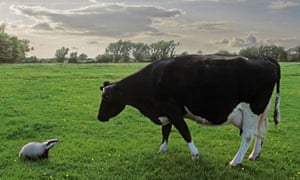
Badger and cow
 The UK’s proposed large-scale cull of badgers to control the spread of TB in cattle has been postponed. Photograph: Natural Visions/Alamy

Mycobacteria and TB have been in the news a lot recently. In fact, one particular species has been hogging the limelight: Mycobacterium bovis. As its name suggests, it likes to infect cows, but as we’re recently all too aware, it’s quite happy in badgers too.

There are about 120 species of mycobacteria. They’re rod-like bacilli with a thick, waxy cell wall. The “human” member of the Mycobacterium family (using this word conversationally, as Mycobacterium is of course a genus, not a family, taxonomically) is M tuberculosis. From its point of view, it’s very successful. From our point of view, it’s the most important bacterial disease that afflicts us, causing about one-and-a-half million deaths a year.

This is how TB is caught: you breathe in tiny droplets of fluid containing just a few bacilli. In your lungs, your own immune cells move in and swallow up the bugs – but this is exactly what they want. Inside the immune cell, the bacilli replicate and pile up. More immune cells pile in. If you’re lucky, the bacilli are held tight in this lump, this tubercle. If you’re unlucky, the bugs get out and the disease spreads – through your lungs (and you start coughing up droplets with bacilli in, ready to infect someone else), through your whole body, even getting into your bones.

But this isn’t the story written in the DNA of the bacilli. In 1999, an early genetic study cast doubt on the ancestor-descendant relationship between the bovine and human forms of TB. More studies confirmed the new story. If anything, the ancestor of both human and bovine forms must have been closer to the human form – with its larger chromosome. It’s even possible that cows caught TB from us (or at least, from another mammal that had caught “human” TB).

Using molecular clocks to date the age of M tuberculosis, looking for the last common ancestor of current versions of the bug, is problematic, and has produced a great range of dates from 15-40,000 years ago. All of these easily predate farming. However, this date is likely to just record a population crash in TB, probably because of a crash in the numbers of its host. Humans (and their ancestors) could have been suffering from TB for hundreds of thousands of years before then.

Earlier this year, filming for BBC2’s Prehistoric Autopsy series, I visited Göttingen, and the lab of Professor Michael Schultz. He showed me a fascinating fossil, a piece of a Homo erectus skull, found in a travertine tile factory in Turkey. Scientific articles can be dry, stuffy things, but the one in which Michael described the fossil includes this fantastic quote: “Given the nature of its discovery in a factory workshop, the hominin was unfortunately reduced to a standard rough-cut tile thickness of 35mm.”

Despite the rough treatment of the fossil, the bone was very well preserved, and on the inner surface of the skull, Michael showed me clusters of small pits – things that just shouldn’t be there in normal bone. They were quite clearly pathological, and Michael believed that the best explanation for them, given their appearance and their position inside the skull, was meningitis caused by M tuberculosis. Here was evidence for a human ancestor suffering from TB, half a million years ago.

Back to the present, and TB has scarcely been out of the news for the past few weeks. The Great Badger Cull has become one of the hottest political potatoes of the year. So what is the scientific evidence? Well, it seems pretty clear that badgers do help spread bovine TB. But that also seems to be where the certainty ends. Bovine TB in the UK has been going up and up – but how much of that is due to better diagnosis? And could culling badgers really help to reduce it? A study published in the journal Nature in 2006 showed that culling badgers reduced the rates of TB among cattle in the area where the cull took place – but increased it in neighbouring areas. In 2011, based on the results of previous trials, scientists advised the current government that culling 70% of badgers in large areas could result in a 16% reduction in bovine TB. For the government, that was enough.

But some scientists are now concerned that the cull – particularly if carried out by free shooting, which hasn’t been trialled, or if targets are missed – could make matters worse.

For this winter, the badgers are safe. Like Caesar presiding over a bizarre gladiatorial contest, environment secretary Owen Paterson granted the badgers a stay of execution, at the eleventh hour. There are just too many of them to make a 70% cull achievable this late in the year.

So the debate continues. It’s an argument about science, politics and economics. It centres on protecting food animals from harm, just as our ancestors have done since farming first got started. But, to me, it also raises interesting questions about how we see ourselves and other animals. It’s about how much we see ourselves as a “dominant” species, entitled to subjugate the needs of other animals beneath our own. It’s about how much room we demand as a human population (with a taste for milk and beef) and how much room we’re prepared to make for wildlife.

And let’s not forget, if it hadn’t been for us, cattle and badgers might not have had TB in the first place.

It’s Not Just Fires. Your Phone Is Also Destroying The Amazon.

“You could drop a nuclear bomb on the forest, and it would be better than mining it.”

Last updated on August 31, 2019, at 12:00 p.m. ET

Posted on August 31, 2019, at 11:37 a.m. ET

Cris Bouroncle / AFP / Getty Images

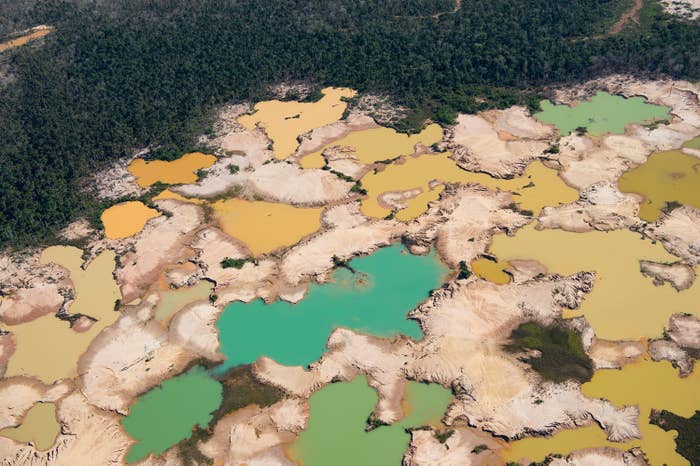
An aerial view over a chemically deforested area of the Amazon jungle caused by illegal mining activities in the river basin of the Madre de Dios region in southeast Peru, on May 17, 2019, during the ‘Mercury’ joint operation by Peruvian military and police ongoing since February 2019.

The wildfires ripping through the Amazon have drawn the world’s attention to the destruction of the “lungs of the planet.” Many scientists believe cattle ranchers clearing land caused the flames, spurring groups around the world — including the government of Finland — to call for a boycott of Brazilian beef. But to boycott all of the products damaging the Amazon, you’d have to do much more than give up steak. You’d have to toss out your phone, laptop, wedding band, and anything else with gold in it.

“There’s no way to get the gold out without destroying the forest. The more acres you cut down, the more gold you get. It’s directly proportional,” Miles Silman, the cofounder of Wake Forest University’s Center for Amazonian Scientific Innovation (CINCIA), told

“There’s no way to get the gold out without destroying the forest.”

Fueling that demand is not just the world’s appetite for gold bars and jewelry — the largest categories for which gold is used — but also high tech. Tiny electrical currents are constantly running through your iPhone, Alexa speaker, and laptop — and carrying those currents is gold, a fantastic conductor of electricity that’s also resistant to corrosion. While there isn’t much gold inside a single device — an iPhone 6, for example, contains 0.014 grams, or around 50 cents’ worth — in the aggregate, the amount is staggering. According to market researcher Gartner, over 1.5 billion smartphones were sold last year, with 1.3 billion of them being Android devices. It was followed by 215 million iOS devices.

So the tech industry, which consumes nearly 335 tons of gold yearly, will only need more and more of the metal. “There’s a gold rush in the Amazon right now that’s just like the gold rush that happened in California in the 1850s,” said Silman.

According to a 2018 CINCIA study, artisanal mining, or small-scale mining conducted by independent miners, have uprooted nearly 250,000 acres of rainforest in the Madre de Dios region of Peru, where Silman focuses his work. Another study, by researchers at the University of Puerto Rico in 2015, found that approximately 415,000 acres of tropical forest across South America has been lost to gold mining. A map compiled by environmental group Amazon Geo-Referenced Socio-Environmental Information Network shows 2,312 illegal mining sites in 245 areas across six countries, which the group called an “epidemic.”

And just as the California gold rush gave rise to a lawlessness that took generations to tame, the tech industry’s suppliers can’t always meet demand and sometimes turn to the Amazon’s illegal mining economy.

Afp / AFP / Getty Images

An artisan miner shows a piece of gold after extraction and processing on May 6, 2008 in El Ingenio, Peru, 420 kms south of Lima. Artisan mining accounts for the livelihood of more than 40 thousand Peruvian families, though almost 15% of the nation’s gold production comes from this activity. Since the 1980s many extracting camps have been converted into small mining towns lacking basic services and containing high levels of pollution.

Miami Herald investigation in 2018 detailed how a handful of traders from Southern Florida–based precious metals company NTR Metals bought $3.6 billion of gold from outlaw mines across South America. NTR Metals has since been shut down and the traders arrested. The company was a subsidiary of Elemetal, a major US gold refinery that supplied Tiffany & Co. and other consumer brands, like Apple, which said it stopped working with the supplier, in corporate disclosures for the year 2017 and 2018.

Apple is far from the only tech giant that sources gold from the Amazon region. A review of corporate disclosures by BuzzFeed News found that Amazon (the company), AppleSamsungSony, and Google list refiners Asahi and Metalor as suppliers. In turn, these firms, based respectively in Switzerland and Japan, buy some of their gold from South American mines. According to the Herald, those companies buy from brokers, who source their gold from a range of legal and illegal mines in the region.

Companies like Alphabet, the parent company of Google, are aware of the impacts of gold mining in the Amazon, and have taken steps to address it. A Google company spokesperson pointed to its conflict minerals policy, and says it relies on third party audits to ensure that smelters are in compliance. Samsung, Sony, and Amazon did not return a request for comment. Apple told BuzzFeed News all its gold refiners participate in third party audits. “If a refiner is unable or unwilling to meet our standards, they will be removed from our supply chain,” an Apple spokesperson said it a statement. “Since 2015, we’ve stopped working with 60 refiners of gold for this reason.”

Dirty gold doesn’t just end up in electronics. A 2015 report by Ojo Publico reported that companies with ties to the London Bullion Market Association — an organization that determines the international price of gold — acquired precious metal from illegal mining camps in Peru, Bolivia, and Brazil.

“A part of the problem with gold is that it all goes into one melting pot. So you can have a bar of gold where some of it comes from responsible sources, some of it comes from illegal sources, but it looks like one bar of gold,” said Sarah duPont, president of the Amazon Aid Foundation.

That illegal and dirty gold extraction takes a toll on the environment and the humans who mine it. Compared to soybean farming or cattle ranching, the mining industry clears fewer acres of forest from the Amazon.

However, according to Silman, the carbon emissions of mining can make the industry’s environmental footprint between three to eight times as big as the surface acres lost to mining might suggest. In addition to uprooting trees and other plants, miners dig two to four meters deep into the ground, where soil is rich in carbon. That soil can be thousands of years old, and gold mining liberates that carbon back into the atmosphere, killing nutrients in the dirt that are vital to plants in the rainforest.

“If you think about an Amazonian forest, there’s nothing you do that’s worse to it than alluvial mining.”

“The growth rates around the mines are so slow because you’ve washed everything that’s good out of the soil,” Silman explained.

Gold mining also transforms the landscape in another way: “1 out of every 5 acres converted by mining can’t be reforested because it’s converted into a body of water. So it ends up looking like Minnesota, with thousands of lakes all across the landscape,” said Silman. “If you think about an Amazonian forest, there’s nothing you do that’s worse to it than alluvial mining. You could drop a nuclear bomb on the forest, and it would be better than mining it.”

On top of the environmental devastation, mercury, used as an amalgam to retrieve gold from the dirt, contaminates the region’s water and food supply. According to the US National Institute of Health, artisanal and small-scale gold mining is the leading source of mercury released into the environment. Researchers have found high levels of mercury, which has serious health effects on the nervous, digestive, and immune systems, in people living along the Brazil–Venezuela border, the Madre de Dios area of Peru, and in Suriname.

Joao Laet / AFP / Getty Images

Aerial view of the Esperanca IV informal gold mining camp, near the Menkragnoti indigenous territory, in Altamira, Para state, Brazil, in the Amazon basin, on August 28, 2019.

Despite the dangers, gold mining in the Amazon region is unlikely to slow down. Brazilian president Jair Bolsonaro has loosened the country’s environmental laws and is working to open up more of the Amazon to mining. Bolsonaro fired the head of the country’s agency that tracks deforestation, after a report that some 1,330 square milesof Amazonian forest in Brazil had been lost since the president took office in January — a 39% increase over last year.

What can be done? According to Kevin Telmer, executive director of the Artisanal Gold Council, an organization working to professionalize and train the sector, the environmental problem is linked to that of extreme poverty.

Banning small-scale mining would not be effective, according to Telmer: “People have asked the miners to leave for 40 years and they haven’t. What [bans] do is drive the economy into the black market.”

“What’s needed really is sustainable economic pathways for those individuals who are currently pursuing illegal mining,” said Payal Sampat, the mining program director at Earthworks, a nonprofit that started a campaign called No Dirty Gold in 2008. Sampat added that buying vintage jewelry and holding on to electronics for longer is a good way for consumers to cut down on their gold consumption.

Silman, the CINCIA researcher, agrees. Legally placed mines, he said, are at least confined to a small area, instead of thousands of mines sprawled across a landscape. Taxing mining operations could also help money flow back into job placement and other programs: “There was $3 billion made out of Madre de Dios, and a lot of it flowed through mafias. There’s a little over 100,000 people living in that land, and they would have had $300 million of tax revenue,” he said.

The formalization and professionalization of the sector can help miners be more productive, and be less impactful on the environment, too, Silman said: “Once you do all these things, at least you can get some good from mining, and you still don’t destroy all the opportunities for the future that rely on biodiversity.”

Over 250 Archaeologists Show Evidence Humans ‘Transformed’ Earth Long Before 1900s

BEN MARWICK & ERLE C. ELLIS, THE CONVERSATION
30 AUG 2019

Examples of how human societies are changing the planet abound – from building roads and houses, clearing forests for agriculture and digging train tunnels, to shrinking the ozone layer, driving species extinct, changing the climate and acidifying the oceans.

Human impacts are everywhere. Our societies have changed Earth so much that it’s impossible to reverse many of these effects.

Some researchers believe these changes are so big that they mark the beginning of a new “human age” of Earth history, the Anthropocene epoch.

committee of geologists has now proposed to mark the start of the Anthropocene in the mid-20th century, based on a striking indicator: the widely scattered radioactive dust from nuclear bomb tests in the early 1950s.

But this is not the final word.

Not everyone is sure that today’s industrialized, globalized societies will be around long enough to define a new geological epoch. Perhaps we are just a flash in the pan – an event – rather than a long, enduring epoch.

Others debate the utility of picking a single thin line in Earth’s geological record to mark the start of human impacts in the geological record. Maybe the Anthropocene began at different times in different parts of the world.

For example, the first instances of agriculture emerged at different places at different times, and resulted in huge impacts on the environment, through land clearing, habitat losses, extinctions, erosion and carbon emissions, forever changing the global climate.

This is a tough question because archaeologists tend to focus their research on a limited number of sites and regions and to prioritize locations where agriculture is believed to have appeared earliest.

To date, it has proved nearly impossible for archaeologists to put together a global picture of land use changes throughout time.

Global answers from local experts

To tackle these questions, we pulled together a research collaboration among archaeologists, anthropologists and geographers to survey archaeological knowledge on land use across the planet.

We asked over 1,300 archaeologists from around the world to contribute their knowledge on how ancient people used the land in 146 regions spanning all continents except Antarctica from 10,000 years ago right up to 1850.

More than 250 responded, representing the largest expert archaeology crowdsourcing project ever undertaken, though some prior projects have worked with amateur contributions.

Our work has now mapped the current state of archaeological knowledge on land use across the planet, including parts of the world that have rarely been considered in previous studies.

Even when these data are shared by archaeologists, they use many different formats from one project to another, making it difficult to combine for large-scale analysis.

Our goal from the beginning was to make it easy for anyone to check our work and reuse our data – we’ve put all our research materials online where they can be freely accessed by anyone.

Earlier and more widespread human impacts

Though our study acquired expert archaeological information from across the planet, data were more available in some regions – including Southwest Asia, Europe, northern China, Australia and North America – than in others.

This is probably because more archaeologists have worked in these regions than elsewhere, such as parts of Africa, Southeast Asia and South America.

Our archaeologists reported that nearly half (42 percent) of our regions had some form of agriculture by 6,000 years ago, highlighting the prevalence of agricultural economies across the globe.

Moreover, these results indicate that the onset of agriculture was earlier and more widespread than suggested in the most common global reconstruction of land-use history, the History Database of the Global Environment.

Our survey also revealed that hunting and foraging was generally replaced by pastoralism (raising animals such as cows and sheep for food and other resources) and agriculture in most places, though there were exceptions.

In a few areas, reversals occurred and agriculture did not simply replace foraging but merged with it and coexisted side by side for some time.

The deep roots of the Anthropocene

Global archaeological data show that human transformation of environments began at different times in different regions and accelerated with the emergence of agriculture.

Nevertheless, by 3,000 years ago, most of the planet was already transformed by hunter-gatherers, farmers and pastoralists.

To guide this planet toward a better future, we need to understand how we got here. The message from archaeology is clear. It took thousands of years for the pristine planet of long ago to become the human planet of today.

And there is no way to fully understand this human planet without building on the expertise of archaeologists, anthropologists, sociologists and other human scientists.

To build a more robust Earth science in the Anthropocene, the human sciences must play as central a role as the natural sciences do today.The Conversation

Ben Marwick, Associate Professor of Archaeology, University of WashingtonErle C. Ellis, Professor of Geography and Environmental Systems, University of Maryland, Baltimore CountyLucas Stephens, Research Affiliate in Archaeology, Max Planck Institute for the Science of Human History, and Nicole Boivin, Director of the Department of Archaeology, Max Planck Institute for the Science of Human History.

https://www.sciencealert.com/archaeologists-are-arguing-about-exactly-when-we-started-the-anthropocene

Fossil Records Indicate Early Humans Hunted 25-Foot Giant Paramecium And Other Mega-Protista To Extinction

[WARNING! This is another piece of satire–this time by the Onion. There were never any giant one-celled creatures (except on Star Trek), but if there were you can bet that humans would have hunted them to extinction…]

SPOKANE, WA—Confirming long-held suspicions about the diminutive size of modern-day bacteria, paleontologists at Gonzaga University engaged in an intensive study of the fossil record announced Friday that they had found overwhelming evidence supporting the theory that early humans hunted the 25-foot paramecium and other mega-Protista to extinction. “According to our findings, early humans would routinely hunt giant amoeba, feasting on their cytoplasm and utilizing all organelle parts in the making of tools and garments,” said head researcher Dr. Lorraine Logan, clarifying that the building-sized bacteria had no natural predators, rendering them easy targets for early man armed with rudimentary flint hunting weapons. “My team uncovered the fossilized remains of a masta-paramecium whose cell wall had been pierced with almost two dozen arrows and whose Golgi apparatus had been painstakingly removed with obsidian knives, presumably to fashion into rope and bowstrings. We can also say with some certainty that early man harvested the mega-Protista’s cilia, which grew to impressive lengths in their prehistoric form.” Researchers also found a fossilized paramecium containing fragments of human bone, suggesting that the single-huge-celled organisms regularly fought back.


Impossible Burger Approved To Be Sold In Stores

After receiving regulatory approval from the FDA, the plant-based Impossible Burger has been approved to be sold in supermarkets nationwide, offering an option for environmentally conscious consumers looking for a burger substitute. What do you think?

“It’s like we’re living in the future: an agency that approves the safety of food!”

ARUN TUCKER • TONTINE ARRANGER

“This is pointless until someone invents a vegetarian bun.”

SABRINA HARMON • WISHBONE SPLITTER

“Wow, if you told me 20 years ago that one day we’d be eating plants, I would have called you crazy.”

CORDELIA MERCADO • SHOE REHABILITATOR

Cancerous growth in human numbers is paralleled by human excess in all sectors of human behavior

By Donald A. Collins | 14 June 2019
Church and State

(By Lawrence Ruiz – Own work, CC BY-SA 4.0)

As Lawrence Summer eloquently noted in his June 13th WSJ op ed,

Martin S. Feldstein was a great economist who changed the world through research, teaching, public service, hundreds of op-eds in these pages over 40 years, and leadership of the National Bureau of Economic Research.

Marty, who died Tuesday at 79, didn’t lack for recognition. He earned the American Economic Association’s John Bates Clark medal and then its presidency, chairmanship of President Reagan’s Council of Economic Advisers, numerous honorary degrees, and memberships in prestigious scholarly and policy groups.

It was all well-deserved and has been well-chronicled in his obituaries. For me, though, Marty’s death isn’t merely the loss of an economics superstar; it is the loss of a mentor and friend who, through his teaching, generosity of spirit and example, made possible everything I have been able to achieve professionally. Countless others can say the same about him, in their own ways.

The Journal also published on the same page an article which contained excerpts from four of Feldstein’s earlier op eds. You can read those here.

However, it was the last one, written on March 21, 2019 less than a month before he died that prompts this op ed.

He opined:

The most dangerous domestic problem facing America’s federal government is the rapid growth of its budget deficit and national debt.

According to the Congressional Budget Office, the deficit this year will be $900 billion, more than 4% of gross domestic product. It will surpass $1 trillion in 2022. The federal debt is now 78% of GDP. By 2028, it is projected to be nearly 100% of GDP and still rising. All this will have very serious economic consequences, and the CBO understates the problem. It has to base its projections on current law—in this case, the levels of spending and the future tax rules and rates that appear in law today.

Those levels don’t match realistic predictions. Current law projects that defense spending will decline as a share of GDP, from a very low 3.1% now to about 2.5% over the next 10 years. None of the military and civilian defense experts with whom I’ve spoken believe that will happen, given America’s global responsibilities and the need to modernize U.S. military equipment. It is likelier that defense spending will stay around 3% of GDP or even increase in the coming decade. And if the outlook for defense spending is increased, the Democratic House majority will insist that the nondefense discretionary spending should rise to match its trajectory….

Lawmakers don’t like to cut spending, but they have to do something. Otherwise the exploding national debt will be an increasing burden on our children, economic growth and our future standard of living.

Limits! Something our finite planet’s inhabitants are constantly ignoring whether it be in spending beyond our capacity or polluting our environment as so eloquently observed by many experts or in adding human numbers who can’t be taken care of! The Population Connection’s June 2019 article citing the opinion of E.O. Wilson that “Runaway population growth (is) at epicenter of environmental problems.”

You can read his full article again here.

How long before the Armageddon predicted above occurs? I guess the human lottery game being played by all of us leaves that question for the future. Having 7 great granddaughters I truly care for their future. But the trend toward a dangerously attacked planet, our only home, has been well documented by the numerous articles on this website and others over the years. At 88 I expect to learn by 2025 that that there will be 8 billion of us which will mean world population has grown 4 times in my lifetime.

Former US Navy officer, banker and venture capitalist, Donald A. Collins, a free lance writer living in Washington, DC., has spent over 40 years working for women’s reproductive health as a board member and/or officer of numerous family planning organizations including Planned Parenthood Federation of America, Guttmacher Institute, Family Health International and Ipas. Yale under graduate, NYU MBA. He is the author of From the Dissident Left: A Collection of Essays 2004-2013.

From the Dissident Left: A Collection of Essays 2004-2013

By Donald A. Collins
Publisher: Church and State Press (July 30, 2014)
ASIN: B00MA40TVE
Kindle Store

The Origin of “Limits to Growth” – Interview with Dennis Meadows

UN biodiversity report: What extinctions mean for humanity | DW News

Vatican control of World Health Organization population policy: An interview with Milton P. Siegel

Catholic Church – Unethical Obstruction of Family Planning

Be sure to ‘like’ us on Facebook

World’s population could swell to 10.9 billion by 2100, U.N. report finds

The growth will increase humanity’s footprint on the planet, which could exacerbate hunger, poverty and climate change, experts say.
Image: India

A crowded railway station in Hyderabad, India. A new report projects that India will become the world’s most populous country by about 2027, surpassing China. Mahesh Kumar A. / AP file

Animals Are Becoming Nocturnal To Avoid Interacting With Humans

BY 

https://www.greenmatters.com/news/2018/06/18/ZiFOnK/animals-nocturnal-interference?fbclid=IwAR30NLVgFn09EaK1ViaesbwsB6MQ8-pXYzJG3mjjTOZtPQZxGnQKlTm8-8A

On Thursday, ecologists at the University of California, Berkeley, released a study published in Science Magazine that indicates animals are adjusting their habits to avoid the stresses of human encroachment on their habitat.

According to the research from Kaitlyn M. Gaynor, Cheryl E. Hojnowski, Neil H. Carter, and Justin S. Brashares, human population growth is having a profound influence on the way animals go about their business—specifically, when they choose to go about their business.

It seems that a number of mammalian species have become nocturnal in an effort to avoid us.

Scientists admit that this probably works for the animals, but could have potential “ecosystem-level consequences” we don’t yet fully understand.

It’s been acknowledged in the past that mammals have been adjusting to the presence of humans by moving less, retreating to remote areas, and spending less time looking for food, according to Phys.org, who spoke with Gaynor, the leader of the study. All these altered behaviors contribute to overall stress in the animals.

Gaynor’s study indicates that even things like camping and hiking could be having a negative effect on wildlife.

“It suggests that animals might be playing it safe around people,” said Gaynor. “We may think that we leave no trace when we’re just hiking in the woods, but our mere presence can have lasting consequences.”

The research was a cumulative meta-analysis of 76 studies of 62 species from six continents. That analysis revealed an increase in the nocturnality of animals in response to disturbance from humans by an average factor of 1.36.

It didn’t matter what continent they looked at, the findings were fairly consistent across species, habitats, and the activities of humans in the area, from hunting to farming.

While this shows remarkable adaptability in the animals, scientists warn “such responses can result in marked shifts away from natural patterns of activity, with consequences for fitness, population persistence, community interactions, and evolution.”

Some of the animals in the study included Tanzanian lions, otters in Brazil, coyotes in California, wild boars in Poland, and tigers in Nepal, showing a remarkable diversity of animal behavior changing across environment and species.

But it’s not necessarily all bad. There are animals that can be suited to life as night owls.

“Humans can do their thing during the day; wildlife can do their thing at night,” added Gaynor.

This would allow humans to share the environment with “many other species that are just taking the night shift while we’re sleeping.”

The comprehensiveness of the data is remarkable to other scientists, as this sort of information hasn’t been so exhaustively compiled before. Ecologist Marlee Tucker of Goethe University Frankfurt in Germany, helped with some aspects of the study, and remarked how it changed her perspective on the effect humans have on other living creatures.

“It’s a little bit scary,” she said. “Even if people think that we’re not deliberately trying to impact animals, we probably are without knowing it.”