
Fair Warning
Image
3

May 3, 2014
It has been brought to my attention that some Canadians aren’t nearly as nice as I had thought.
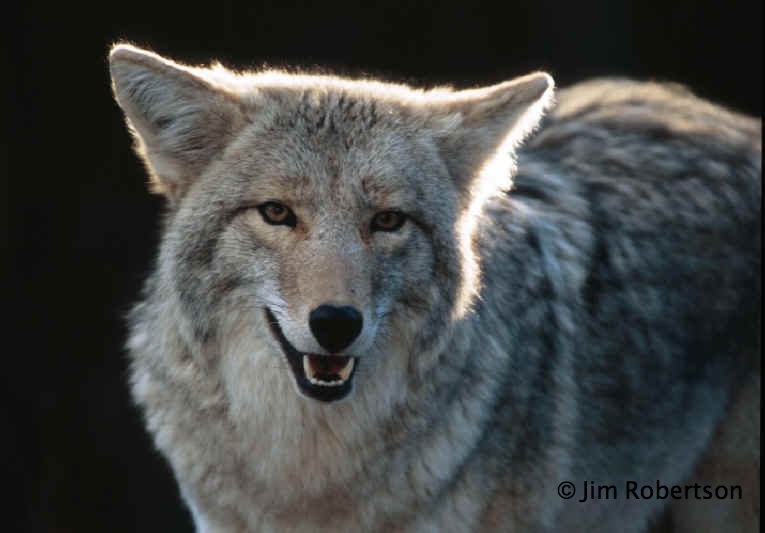
Oh, the humans of that neighborly nation are every bit as affable as we’ve always believed. But I’m here to warn you that giant Canadian wolves are a far different matter.
I was reading a letter to the editor the other day in which a worried gentleman from the USA insisted that the wolves who have been reintroduced into the United States are actually Canadian wolves.
“These are not timber wolves like we had here years ago,” the guy warned. “These are Canadian wolves that are three and four times as big.”
That gets my attention. The wolves we used to have were about the size of a collie. Four times that would be a wolf about the size of a pony. How would you like to bump into something in the forest that resembles a pony with fangs?
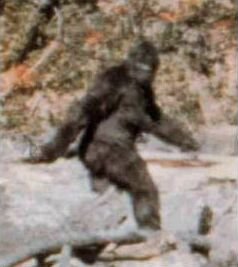
Every few years, I see letters to the editor like that, (sometimes warning me against Bigfoot at the same time). I get curious and take a look at the latest reports on the Internet to see how many humans those cruel critters have killed recently.
For about the last 50 years, the figures are a grand total of eight fatal attacks on humans in Europe and Russia. But oddly enough, there have been no wolf-induced deaths of humans in North America in the past half century. And if you remember your third-grade geography you will know that North America includes Canada.
So if anything, wolves are less likely to kill us than cougars, bears and giant Canadian tsetse flies. So what’s going on here? The problem isn’t that big hulking Canadian wolves are killing people left and right. The wolves haven’t killed anybody on this continent for decades.
But they have killed plenty of elk and sheep and calves, and that’s a legitimate problem for hunters and ranchers.
Isn’t it enough for a hunter or a rancher to warn people of actual, normal-sized wolves without trying to scare the pants off everybody?
I sometimes sit and watch our two cats romping around the house, practicing their predatory ways. If house cats are ever bred up to dimensions three or four times larger than their present size, muscle them out of the house and call the Royal Canadian Mounted Police.
But beware lest the Mounties are riding Canadian-sized wolves.
However that’s probably not going to happen. If there really are Canadian wolves three or four times the size of our former wolves, then we are in deep trouble.
If our original wolves were four feet long, two feet tall and weighed 100 pounds, then the giant Canadian wolves would be 15 feet long, eight feet tall, 400 pounds and much too fond of human flesh.
But I will grant those among you who are personally terrified of wolves that maybe there is something in the water up there that should concern everyone in North America, including Mexicans.
This whole business worries me. I have friends in Canada. And that agitated letter writer makes me wonder about my friend Greg, a Canadian newspaper editor, who has been astute enough to carry this column for years. I have corresponded with Greg though I have never met him in the flesh. But now I wonder about the possibility of everything being massively bigger up there — mountains, salmon, wheat production and maybe even Greg.
Please don’t tell me he is three to four times larger than newspaper editors down here, though that may be true of his great heart. After all, he is a Canadian.
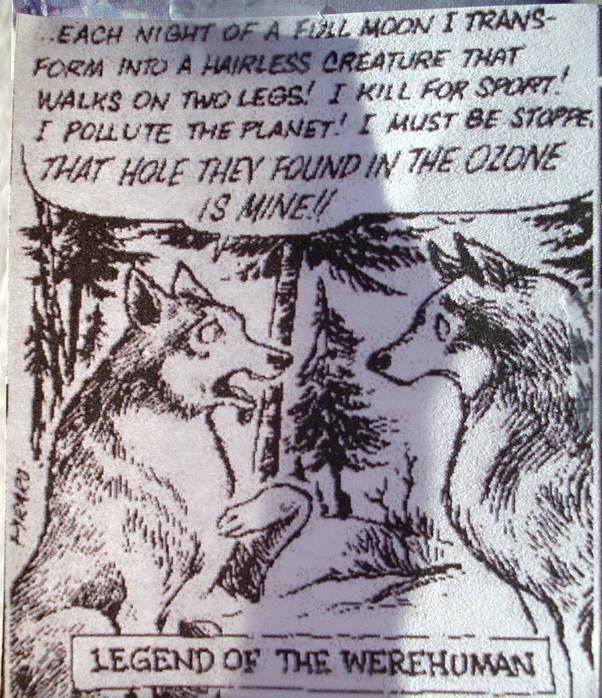

DRAFT Management Plan for Humans (Homo sapiens) in British Columbia
By Ken S. Lupus et al., B.C. Ministry of Wild Wolves
(EXECUTIVE SUMMARY)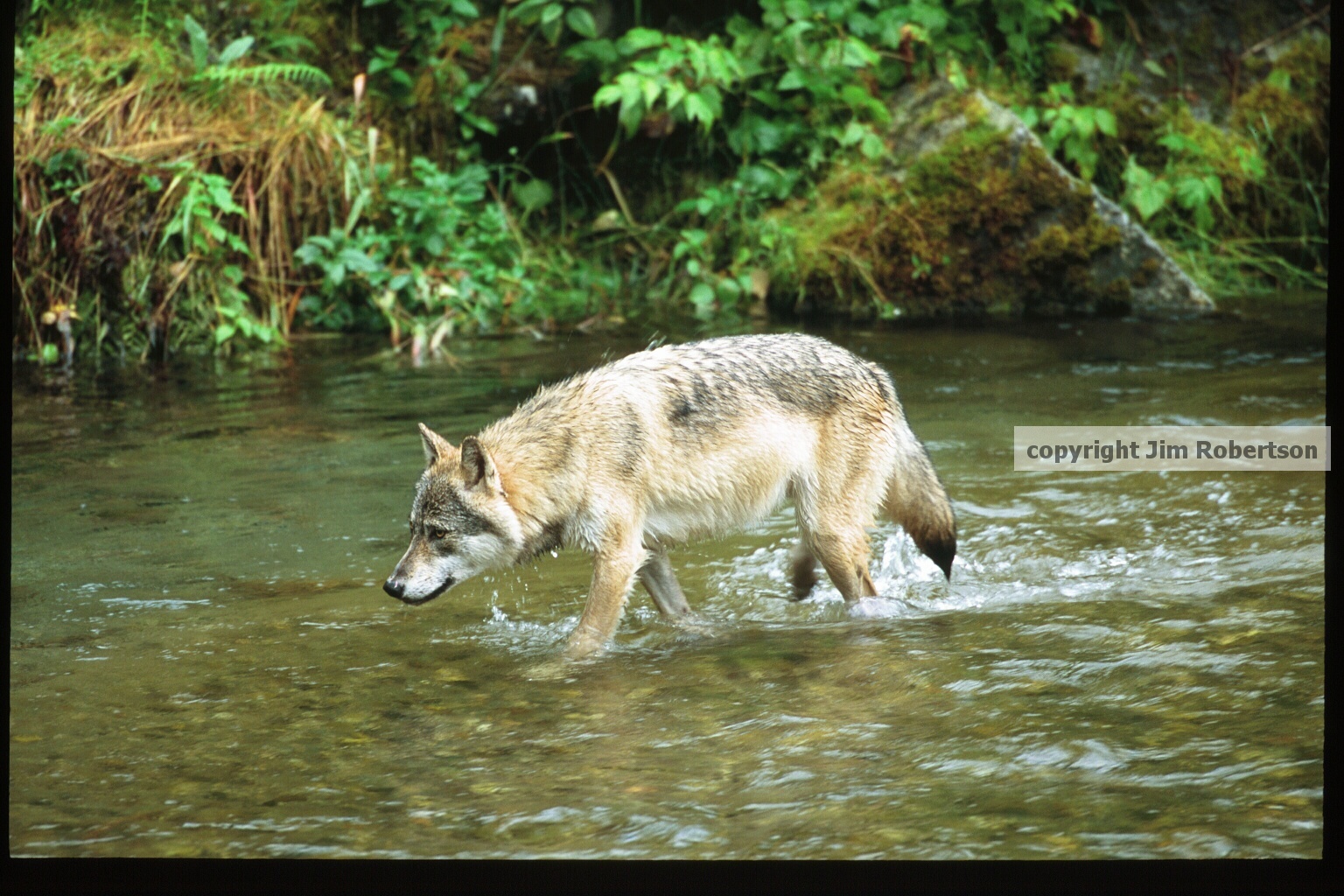
We model the structure of our plan after the B.C. government’s “Draft Management Plan For The Grey Wolf In British Columbia.” Although our plans are fundamentally different in how we decide to treat one another, we similarly assert that this document is premised on the best available scientific information. (Note: we consulted with Raincoast biologists and
large carnivore experts Drs. Chris Darimont and Paul Paquet).
Notably, however, our management plan for humans draws upon an additional and important dimension that shapes policy in advanced civilizations: commonly held ethical values.
As the province did, we begin with some straightforward conservation context. Based on their rapidly increasing numbers and range, humans have been categorized as not at risk by the Lupine Committee of Categorizing Other Animals We Have Never Harmed. We note, however, on the other hand-
and despite thousands of management plans by humans -global biodiversity is severely threatened as a result of human activities.
According to information shared by human sources, Homo sapiens play a very important role in maintaining so-called “game” populations, raising livestock among us wolves in formerly wild landscapes, and saving animals like caribou from rapid extinction due to resource extraction activities. On the other hand, some hunters, livestock groups and government-industrial complexes behind these ostensibly noble acts also comprise a significant threat to wolf safety and welfare. Accordingly, our plan must strike a balance to manage humans for conservation while minimizing conflicts with wolves.
We likewise adopt the same four management objectives stated by our simian colleagues, though with modified details. Topping this list is to ensure a self-sustaining population of humans throughout the species’ range. We suppose that we will have to accept this inevitability. We suspect, however, that this spells trouble for us. If human behaviour remains unaltered – and caribou continue to dwindle and ranchers continue to believe that some god created landscapes with only their cows in mind – we expect a future of increasing conflicts.
Our plan’s second objective is to provide for non-consumptive use of humans. Why not? No harm in setting up some eco-tourism by us wolves to partake in some human-watching. We need not look further than Yellowstone National Park, and Algonquin Park to know that humans can make a mint with sustainable wolf-based eco-tourism.
Unlike the province’s anachronistic seat-of-the pants wolf management plan, however, which was designed by more wanton predators, we have no plans for so-called “consumptive” use of humans. Although humans would be easy pickings, we are just not known to do this. And really, why would anyone kill something for any other reason than to eat?
For sport or for trophy? No thanks. Surely no advanced society would ever condone or endorse that sort of behaviour. Nor
would any real hunter. That just leaves a bad taste in our mouths (and to put how awful that is in perspective, we often eat poop).
Perhaps the most important part of our “Draft Management Plan For Humans In British Columbia” is to minimize the threat to wolf safety caused by humans. Whereas wolves pose a very limited threat to humans, the opposite is certainly not true. For instance, the B.C. government says that approximately 1,200 of us wolves were killed deliberately in 2010 by hunters and trappers for sport, trophy or profit.
While human “wildlife managers” are quick to point out that we wolves can replenish our numbers, even amidst such persecution, our concern is the suffering imposed on us. Imagine the pain when the hot metal of bullets shreds our viscera (or worse, our limbs) or the agony inflicted when one of
us is tormented by a leg-hold trap. Clearly, any management plan should address suffering among highly sentient animals.
Unfortunately, our plan to minimize threats to wolf safety has no details. Given all the technological advantages humans have acquired to use against wolves like high-powered rifles, helicopters, deadly poisons, traps, snares and explosive devices, predator calls to lure us and more, they simply have
the upper hand.
Finally, and again mirroring the B.C. government’s wolf management plan, our fourth objective is to control specific populations of humans where their activities are likely preventing the recovery of a species at risk (e.g.,
endangered populations of caribou). Whereas humans have hatched some vicious scapegoating campaigns and lethal plans for us as last ditch efforts to save caribou from logging or oil and gas extraction, we have yet to find successful methods to control these industries. We therefore appeal to our human friends within B.C. for help.
To conclude, we turn to history to muse about the future. It has taken decades to expunge, in part, the nonsense about wolves portrayed in human generated fairy tales (and not just children’s stories, but also adult constructs such as the perversely and ironically named “North American Model of Wildlife Conservation”). How many more decades will it take to do the same in provincial management plans for wolves?
This article was co-authored with Raincoast Conservation Foundation science director Dr. Chris Darimont and Raincoast senior scientist Dr. Paul Paquet.
Believing the spin that “hunters are an endangered species,” trophy-hunter hunting group, the Sahara Club, a conservation group dedicated to preserving the hunter herd for future generations of trophy-hunter hunters to harvest, auctioned off a chance to hunt an aging, expendable hunter to raise funds for their cause. Taxidermy services will also be awarded to the winning bidder. Proceeds will be used to enhance hunter habitat for the species known taxonomically as Homo huntsman horribilis and will go towards funding more logging roads to allow access for their trucks and four-wheelers, as well as building more conveniently located gas station/mini-marts, taverns and mobile home parks.
Biologists blame a long history of inbreeding for the decline in hunter fertility and viability. When asked about the ethics of hunting down and killing this unfortunate individual, a Sahara Club spokesman stated, “Overall I think it will be a good thing. While it may bad for this individual hunter, it is in the interest of conservation of the hunter species.” If the auction idea proves to be a success, the group plans to hold similar events for loggers, ranchers, commercial fishermen and other resource extractors also said to be endangered species by industry spin doctors.
Individuals chosen to be hunted down and harvested can thank the Safari Club for recently coming up with the idea of auctioning a rhino trophy hunt on an endangered black rhinoceros.
______________________
(This has been another installment in EtBG’s “Headlines We’d Like to See.”)
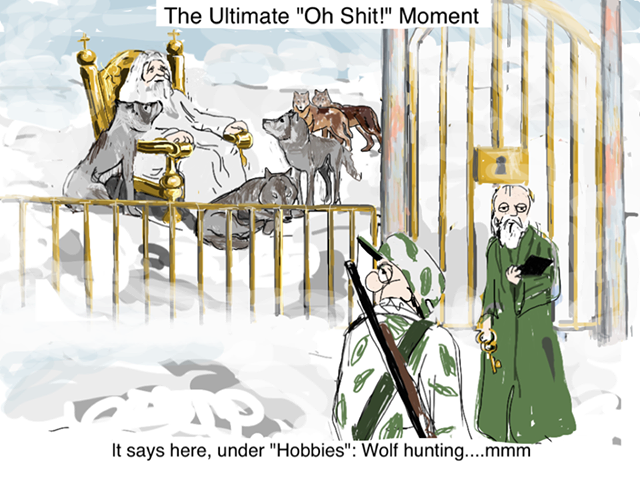
Whereas sport hunters in Idaho are currently holding a contest hunt on not only coyotes but also this year on an until-recently endangered species—gray wolves—with $1,000.00 cash prizes being awarded for the most coyotes and the largest wolf killed; Whereas a federal court judge denied an injunction by environmental groups to stop the killing and allowed the misguided atrocity to proceed; Whereas it seems anyone who wants to can declare a derby hunt on any species they see fit; Whereas turn-about is fair play and two can play at that game, we proudly announce the…
First Annual
2-Day Coyote and Wolf-Hunter Hunting Derby
Salmon Idaho
December 28th and 29th, 2013
Trophies and Prize Money to Winners
1st Place—$1,000. Wolf-Hunter Prize and Trophy (Largest male wolf-hunter, by weight/girth)
1st Place—$1,000. Coyote-Hunter Prize and Trophy (Most coyote-hunters bagged)
Door Prizes Plus
$10.00–$20.00 pots for Largest Male Coyote-Hunter, Largest Female Coyote-Hunter, Most Female Coyote-Hunters, PLUS Youth Prizes for 10-11 year olds and 12-14 year olds!
Entry Fees
$20.00 per hunter-hunter
Brought to you by
Idaho for the Rights of Wildlife, true sportsmen against hunter’s “rights”


 Exposing the Big Game