Exposing the Big Game

Forget Hunters' Feeble Rationalizations and Trust Your Gut Feelings: Making Sport of Killing Is Not Healthy Human Behavior

Exposing the Big Game

Conservation agent shares notes on coyote hunting season

Editor`s Special! 1 year only $26

Conservation agent shares notes on coyote hunting season
Coyotes have always been a predator on the landscape which either generates curiosity from individuals intrigued by their mournful cries and yips in the the night, or the aggravated farmer having to deal with the loss of livestock due to coyote predation.MDC

Sarah Ettinger-Dietzel Iron County Agent Missouri Department of Conservation

The temperate days of fall have left, and the cold winter season is in full swing in Missouri. With the end of another successful Missouri deer season, many hunters change their focus from large game to the small game variety. One such critter is the coyote.

Coyotes have always been a predator on the landscape which either generates curiosity from individuals intrigued by their mournful cries and yips in the the night, or the aggravated farmer having to deal with the loss of livestock due to coyote predation.

The characteristics of coyotes are very distinctive with the upper parts being a light gray or dull yellow, with their outer hairs tipped black. The backs of the ears are often a reddish to yellowish color around the muzzle. The iris of the eye is tawny and both sexes look very much alike.

Coyotes may be taken by hunting, and pelts and carcasses may be possessed, transported, and sold in any numbers throughout the year. Except during the daylight hours from April 1 – 19.

A recent change to occur in coyote hunting regulations occurred in the fall of last year. The Missouri Department of Conservation (MDC) revised regulations regarding coyote hunting. The change came in response to citizen requests to the Regulations Committee to use night vision, infrared, thermal imagery equipment, or artificial light to hunt coyotes and from landowners to allow their authorized representatives to use night vision, infrared, or thermal imagery equipment without prior approval from a conservation agent to address damage caused by feral hogs.Top ArticlesWatch Now: Elephants enjoy the snowfall in Arizona, andmore of today’s top videosWatch Now: Elephants enjoy the snowfall in Arizona, and more of today's top videosREAD MOREChicago bank robber nabbed after allegedly demanding $10,000, handing photo ID to tellerREAD MOREPhotos: Notable Deaths in 2021READ MOREREAD
The regulations allow properly licensed hunters to use artificial light, night vision, infrared, or thermal imagery equipment in conjunction with other legal hunting methods to pursue and take coyotes. A small game hunting permit is required for this season, unless you are a landowner of at least five contiguous acres and hunting are on your property then you are not required to have a small game permit.

This revision became effective Nov. 30. The first inaugural season will begin this coming Feb. 1 and will go through March 31. It should also be noted that property owners and their representatives can still use night vision, infrared, thermal imaging equipment, or artificial light to kill coyotes or other wildlife causing property damage at any time of the year with written authorization from a conservation agent.

The standard regulations still apply during this new season. Hunters may still use electronic calls and dogs in the pursuit of coyotes. Poisons, tranquilizers, chemicals and explosives may not be used. Motor driven transportation cannot be used to take, drive or harass wildlife and you may not take wildlife from or across a public roadway.

As always, we hope that everyone gets the opportunity to get outside and enjoys Missouri’s great outdoors. For more information on nuisance and problem species, contact your local Conservation Agent or visit us at the MDC website at https://short.mdc.mo.gov/Z5L.
Animal Advocates Push for Vt. Coyote Hunting Regulations

The groups point to an incident this weekend, described by a homeowner as “extremely traumatic,” as one reason why new hunting rules are needed

A conflict this weekend between hunters and property owners in northeastern Vermont has reignited calls from animal advocates for more regulations.

Groups including Protect Our Wildlife and the Vermont Coyote Coexistence Coalition have been regularly advocating for Vermont to follow the lead of Massachusetts and set a formal season on the killing of coyotes.

Their multi-year campaigns added a new supporter after a scene that played out Saturday morning in the backyard of Diana Hansen of Craftsbury.

“It was, particularly for me, extremely traumatic,” Hansen told necn Tuesday.

Otto Warmbier’s Parents Respond to Trump

[NATL] Otto Warmbier’s Parents Respond to Trump

Fred and Cindy Warmbier responded to President Donald Trump’s claim that North Korean Leader Kim Jung Un was unaware of the mistreatment of their son during the 17 months he was detained in the North Korea.

(Published Friday, March 1, 2019)

Hansen said a hunter set his dogs on a coyote, and they chased the animal into Hansen’s backyard — biting and bloodying the coyote as her young children watched from a rear window, horrified.

“It was incredibly disturbing to see that kind of violence happening,” Hansen said.

The mom said the coyote pursuit also caused around $500 in damage to the family’s greenhouse when the dogs and their target climbed on the greenhouse, puncturing its plastic with their claws.

It is legal to hunt coyotes with hounds year-round in Vermont, but animal advocacy groups often criticize the practice.

“The use of hounds in hunting is really concerning,” said Barry Londeree of the Humane Society of the United States.

The Humane Society, along with Protect Our Wildlife and the Vermont Coyote Coexistence Coalition, wants to see tighter regulations in the state, including a specific hunting season for coyotes.

Hyundai, Kia Recalling Half a Million Vehicles

[NATL] Hyundai, Kia Recalling Half a Million Vehicles

Hyundai and Kia are recalling more than 500,000 cars over concerns of engine fires.

(Published Thursday, Feb. 28, 2019)

Londeree said the animals have an important role in the ecosystem, including preying on rodents like mice and rats.

“They shouldn’t be subject to year-round hunting with no limits,” Londeree said of coyotes.

For a response to the advocacy groups’ calls for a defined hunting season on coyotes, with limits, necn sought an interview with the Vermont Department of Fish & Wildlife.

One Dies, One Injured in Coyote Hunting Accident


Daviess County – One man is dead and another in a hospital.. after an accident while they were hunting this afternoon.
It happened just before three in Daviess County.
The sheriff’s office says that 40 year old Mervin Knepp of Montgomery, Indiana and 18 year Lavon Wagler of Plainville were coyote hunting.
That’s when their hunting dogs ran a coyote into an oil well pump housing.
The two men went to the machinery to retrieve the dogs when the pump started running.
Wagler was taken to the hospital for surgery on his leg.
Knepp was pronounced dead at the hospital.


Pastor shot, killed while hunting in Taylorsville

Shooter says he thought victim was coyote

  • By Shawn Taylor staylor@statesville.com

A 26-year-old Taylorsville man died Monday night after he was shot by another man while hunting.

Coyote hunter accidentally shot to death by neighbor, deputies say

http://www.wsoctv.com/news/local/coyote-hunter-accidentally-shot-in-alexander-county/703214724

By: Dave Faherty

Updated: 

Deputies said the victim, Seth Marsh, was in a wooded area along Ed Burgess Road near Highway 16, just north of Taylorsville, when he was shot with an AR-15.

(Seth Marsh)

Officials said Marsh was using an electronic coyote caller and set up on the ground near a tree when a neighbor heard the caller and fired two rounds at what he believed was a coyote, striking Marsh twice in the chest.

Authorities said the neighbor immediately ran over to help Marsh and called 911.

Marsh died a short time later at a hospital in Wilkes County.

Officials said Marsh was wearing camouflage when he was shot. Authorities said he was also wearing an orange hat, but a hooded sweatshirt was covering it.

Investigators seized the neighbor’s weapon and returned to the location of the shooting Tuesday to canvas the area with metal detectors.


Wildlife officers said the accidental shooting is a reminder about the importance of gun safety.

“Whenever you point a weapon and pull that trigger, know where that bullet is going before you aim and shoot,” Sheriff Chris Bowman said.

“We’re looking at, ‘Did the suspect identify the target, or did he just shoot at movement?'” Chad Starbuck, with the North Carolina Wildlife Resources Commission, said.

Deputies said Marsh, a father of two young children, was a preacher at a church in the northern part of the county.

“It’s sad to say that he will not see his little boy play sports or get to see his daughter walk down the aisle one day,” church member Coy Pearson said.

Deputies said they are hoping to wrap up the investigation by Wednesday and meet with the district attorney to determine if any charges are warranted in the case.

NC hunter using a coyote call is shot by another man


http://wncn.com/2018/02/19/nc-hunter-using-a-coyote-call-is-shot-by-another-man-sheriff-says/

Published: 

TAYLORSVILLE, N.C. (WBTV) — A man was shot Monday evening in what Alexander County investigators are saying may have been a hunting accident.

MORE NEWS: Animal control officials receiving worried calls about coyotes in Orange County

The incident happened just after 6 p.m. in a wooded area along Ed Burgess Road, which is off of Highway 16 north of Taylorsville.

A man hunting coyotes used a coyote call. Another man nearby heard the call, got a rifle and shot toward the sound.

The man hunting was hit by the gunfire. He was taken to an area hospital.

As of 8 p.m., there was no word on his condition.

Deputies said they were investigating to make sure the evidence matched up with the story.

No names or possible charges have been released.

Man Who Shot Two Dogs Ordered to Take Hunter Safety

A Dane County judge ordered an Evansville man who was charged with shooting two dogs to complete a hunter safety program.

35-year-old Kurt Rausch said he mistook the two dogs for coyotes, which he was hunting at night. The judge imposed and stayed a six-month jail sentence that Rausch will not have to serve if he completes the hunter safety program. Additionally, Rausch must pay a $2,500 fine.

According to reports, the judge said the case was “emotionally charged” and touched on the stupidity of night hunting. She noted she received about four-dozen letters regarding this case, more than any other case she has provided over.

Deanna Clark, the owner of the two dogs that were shot by Rausch and also a veterinarian in Lake Mills, said she was training the dogs around 6 p.m. that night in January 2016 for skijoring, a sport where dogs pull a cross-country skier. Both dogs were wearing reflective vests but were running loose. Rausch had set up a coyote call on public land and shot both dogs as they emerged from the underbrush.

Assistant District Attorney Paul Humphrey told the court Raush violated the cardinal rule of hunting and safety: know your target and what’s behind it. The dogs lived and despite the considerable vet bills, Clark told the court she didn’t want restitution or Rausch to be punished. Instead, she wants the Legislature to end hunting at night on public lands.

Feds investigating shooting of a possible gray wolf in Marshall County

4A 3 col color WOLF.jpeg
Britton-area man Mike Werner shot and killed this animal that may be a gray wolf. Officials with the U.S. Fish and Wildlife Service are investigating the case, according to a state conservation officer. (Courtesy photo)

A Britton-area man is caught up in a federal investigation after shooting an animal that may be a gray wolf.

Mike Werner said he was hunting coyotes by a slough near Clear Lake in Marshall County on Jan. 13 when he shot and killed what he thought was a bigger, dark coyote that came up behind him about 100 yards away.

Immediately after shooting the animal, Werner said he realized it was much larger than a coyote and resembled a wolf.

Officials with the U.S. Fish and Wildlife Service are investigating the case.

Casey Dowler, a conservation officer with the state Game, Fish and Parks Department in Marshall County, said the animal is being tested at a federal lab.

Dowler would not give anymore information on the case since there is an active federal investigation into the shooting of the animal.

GFP Conservation Officer Supervisor Mike Klosowski said harvesting, trapping or recreational hunting of wolves is illegal.

Klosowski said any case involving gray wolves falls under the management of the U.S. Fish and Wildlife Service. He said GFP has no wolf management authority at this time.

“So when we have an incident where a gray wolf is killed by a member of the public, we’d likely respond to the call, do a preliminary investigation then pass it off to Fish and Wildlife Service,” Klosowski said. “Then they would do any kind of prosecution on their end, or not prosecute on their end.”

Klosowski said gray wolf sightings are uncommon in northeastern South Dakota, but transient wolves do come through the state from time to time.

“To the east we have Minnesota. Northern Minnesota has a healthy population of gray wolves,” he said. “Then when you go out west near Yellowstone National Park, you have a very healthy population of wolves out there too.”

He explained that wolves are known to venture away from their pack to start their own pack in a new territory.

 Although gray wolves have not established populations in South Dakota, the species is still illegal to kill in the state.

Klosowski said if the U.S. Fish and Wildlife Service were to prosecute someone for killing a gray wolf the case would go to court.

Knowing that wolves are protected under the Endangered Species Act and in South Dakota, Werner said he left the animal where it was shot and called the local game warden.

Werner said the animal had an old trapping injury on its foot, where it was missing a couple toes and part of its foot pad.

On another foot, the animal had a trapping device. Werner believes the animal was trapped and was able to break free of the chains that kept him immobilized.

Werner said if the lab testing results show the animal to be a dog-coyote hybrid, he will be able to take the animal home.

Officials with the U.S. Fish and Wildlife Service were unable to comment on the ongoing investigation.

Coyote hunter injured in shooting accident

http://elkodaily.com/news/local/coyote-hunter-injured-in-shooting-accident/article_be1527c9-506e-59f4-8808-dde91cfab640.html

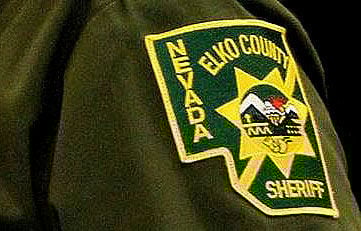
Elko sheriff patch
ELKO – Detectives with the Elko Sheriff’s Office responded to a report of a person being accidentally shot in a hunting accident Saturday morning at South Fork Road and Jiggs Highway.

When detectives arrived on the scene, the ambulance was present and had treated the victim of the shooting. Kevin Vella was one of four hunters pursuing coyotes that morning when Jamie Salazar accidentally shot Vella, according to Elko County Sheriff’s Office preliminary reports.

 “What happened is the four were set up to hunt the coyotes and calling them in,” said Undersheriff Ron Supp. “The coyotes then started to come behind [Salazar] and he took a shot. The two other guys were in line with him, but he didn’t know where [Vella] was.”

All four hunters were reportedly wearing camouflage during the incident, which occurred around 9 a..m.

Salazar shot Vella with a .223 caliber rifle, and reported the incident to the Elko Sheriff’s Office. Vella sustained injuries to his arm.

The investigation is ongoing as detectives continue to collect statements and evidence.

Advocates say hunting coyotes is cruel – and doesn’t control the population

  • An ambassador Eastern coyote checks out its surroundings during a “creatures of the night” presentation at New Hampshire Audubon in Concord on Tuesday, Sept. 20, 2016. (ELIZABETH FRANTZ / Monitor staff) ELIZABETH FRANTZ » Buy this Image


Monitor staff

Sunday, September 24, 2017

In the past four decades, coyotes have moved into New Hampshire from the west, becoming a routine part of the landscape, and now some advocates think we shouldn’t be hunting them quite as much.

Linda Dionne, who openly speaks against hunting and trapping as part of a Manchester group called Voices for Wildlife, has petitioned the New Hampshire Fish and Game commissioners to change the rules, closing the coyote season from March 31 to Sept. 1, when pups are being raised.

The group argues that allowing hunting while young coyotes are being raised is cruel and increases the chances that a litter could be left to starve. They also say the coyote’s relentless expansion throughout North America has shown that hunting doesn’t work to control a species that is traditionally seen as a nuisance.

Their request was denied in a letter from Fish and Game Executive Director Glenn Normandeau.

“New Hampshire’s existing firearms season provides landowners and farmers with maximum flexibility in dealing with possible conflicts associated with coyotes,” Normandeau wrote, giving one of five reasons he listed for not opening the rule-making process. “The protection and promotion of agricultural interests and the protection of individual property rights have often been noted by the legislature to be priority interests of the state.”

Coyotes can be hunted during the daytime all year round in New Hampshire, as is the case in most neighboring states, and hunted at night from January through March. Trapping season is limited to winter.

The Voices of Wildlife group said it would continue to raise the issue.

“The firearm’s season is for recreational hunting. Having a closed recreational hunting season would not impact the resolution of possible conflicts associated with coyotes. Nothing would change regarding property owners being allowed to use lethal measures to handle an individual conflict,” the group wrote in response to Normandeau.

“The coyote is here to stay and that is a well-known fact. As one good conservationist in New Hampshire put it, ‘We have been at war with the coyote for about a hundred years now, and the coyote won.’ What we are arguing is that it is cruel to kill coyote parents when they are rearing their young, and that it is unnecessary.”

Coyotes are, in some ways, a great success story for wildlife rehabilitation, returning an alpha predator to many ecosystems. Yet it is a success that has occurred entirely in the face of human opposition.

Coyotes are members of the canine family, along with dogs, foxes and wolves, and are not native to New England. They originated in the Rocky Mountain region of the U.S., but have been expanding throughout North America for at least a century, filling an ecological niche left by the elimination of wolves, cougars and other large predators.

The first verified account of a coyote in New Hampshire was in Grafton County in 1944, according to state records, but they only began to spread throughout the state in the 1970s and are now widespread. About 5,000 are thought to live in New Hampshire.

The coyote population can expand relatively quickly because females are willing to travel long distances from where they were born before making dens and having pups, unlike the females of many other carnivore species. This allows a breeding population to get established quickly in new territory.

More importantly, they are generalists that will eat almost anything and can adapt to life in many circumstances, from the deep woods to suburbia to the most urban of areas. Coyotes are now found all along the East Coast from Maine to Florida, even on islands like Nantucket and deep in cities like Boston and New York.

Although details are still being studied, it appears that during their eastward expansion the western coyote interbred with some domesticated dogs and with red wolves, which are larger than coyotes but smaller than gray wolves. As a result, the eastern coyote is larger and distinct from the western coyote, to the point that they are sometimes considered a distinct breed.

Most states allow coyotes to be hunted all year round. Massachusetts allows coyote hunting from October to March, while Vermont and Maine allow it all year round. All states have limits on night hunting and on trapping, if the latter is allowed at all.

Out West, where the coyote’s reputation as a livestock killer persists, many states even allow coyote-hunting contests, which award prizes for the most kills in a short period.

Some biologists argue that, counterintuitively, extensive hunting is one reason that coyotes have spread so quickly throughout North America.

Chris Schadler, a conservation biologist, wildlife advocate and author of a book about coyotes called Becoming Wolf: The Eastern Coyote in New England, argued before the Fish and Game commission that year-round hunting actually increases the number of coyotes.

As she explained it, coyotes are pack animals, living in small groups that are dominated by a matriarch, usually the oldest female, who is the only female that has pups.

These packs can undergo a process known as “responsive reproduction,” in which the number of young produced increases when the pack is pressured. This is particularly true if the matriarch is killed, which indirectly gives all the other females in the pack permission to have their own litters – meaning that a successful hunt might result in a larger pack next year.

The issue of coyote hunting came up at the last legislative session, when a bill was debated that would have extended the nighttime hunting of the animals, beyond the current January-through-March limit. The measure died in committee.

(David Brooks can be reached at 369-3313 or dbrooks@cmonitor.com or on Twitter @GraniteGeek.)