Texas Teen Kills His Elder

By now you’ve probably read, or heard on the news, something to the effect of “Texas teen ‘bags’ an 800-pound record alligator.” The Texas Parks and Wildlife Department say the alligator was between 30 and 50 years old. [That’s right, the animal was older and wiser than the young human who hooked and shot him.]

Typical of the media’s coverage of the atrocity is the following article from the Seattle Times:

A Houston-area high school senior has bagged a 14-foot, 800 pound alligator – the heaviest ever certified in Texas – on his first alligator hunt. [Great, he’s a trophy hunter for life now, no doubt.]

Texas Parks and Wildlife Department officials say 18-year-old Braxton Bielski bagged [“BAGGED”? Here the press are being about as disrespectful of the animal as the murderous kid] the record gator last week at Choke Canyon State Park, about 90 miles south of San Antonio.

The agency says in a statement that Braxton shot the giant reptile after hooking it on a line using raw chicken as bait. [They call it a “hunt” but the poor animal was hooked in the water like a fish, only later to be shot by the mighty human “hunter.”]

Bielski’s father, Troy Bielski, won a Parks and Wildlife drawing for a five-day permit to hunt in the Daughtry Wildlife Management Area. The Houston police officer says his son had been dreaming of hunting alligators for years. [Serial killers fantasize for years before murdering their victims too.]

I posted this article to my Facebook page yesterday; it received these fitting comments:

“For absolutely no significant purpose whatsoever. Sickening. This is what young people are taught through so many societal avenues – that no other living creature matters, except them and those like them. Not even other human beings. Humans are raising a whole bunch of Sociopaths and Psychopaths. Very Frightening.”

“Sick–go into its habitat–bait a hook–then shoot it from a boat when it comes up…”

“Wow, this is something to be proud of? There will probably never be an 800 lb alligator on this planet again, so good for this little asshole, he got the last one. I’m sure the killer of the last wolf, bear, cougar….will be just as proud of himself.”

Need I say more?

It’s not so surprising to hear about Syrian rebel leaders eating human hearts when this kind of treatment of other living things is taught to today’s youth.

796px-gator34

Don’t Be an Ursiphobe

The first half of this post was excerpted from the chapter “Bears Show More Restraint than Ursiphobic Elmers” in my book, Exposing the Big Game: Living Targets of a Dying Sport

An irrational fear of bears dates back to the earliest days of American history and is customarily accompanied by obtuse thinking and quirky spelling. The most famous inscription (carved into a tree, naturally) attributable to Daniel Boone (that guy who went around with a dead raccoon on his head) bragged how he “…cilled a bar…in the year 1760.” The bears Boone killed (and there were many) in North Carolina and Tennessee were black bears, a uniquely American species that, like coyotes, evolved on the Western Hemisphere.

Greatly fearing the grizzly bears they discovered on their voyage up the Missouri River to the Pacific, Lewis and Clark were among the first frontiersmen responsible for leading them down the path to near-extinction. In a May 5, 1805, entry in their journals, Lewis quilled of the “turrible” grizzly, “It was a most tremendous looking anamal and extreemly hard to kill.” Clark and another member of their party pumped the unarmed bear with ten shots of lead before he finally succumbed.

Between 50,000 and 100,000 grizzlies once inhabited the western continental US before incoming settlers shot, poisoned and trapped them out, quickly snatching up prime valley bottoms (the preferred habitat of grizzly bears) for themselves and their livestock. Thus driven into desolate high country, the rare grizzlies who hold on in the lower 48 are allowed only two percent of their historic domain. The current population of 500 is essentially marooned on islands of insufficient wilderness, cut off from one another by freeways, urban sprawl and a network of barbed wire fences that spell “keep out” to any grizzly who knows what’s good for ’em.

In the vein of fables handed down for generations, bear tales have been told, embellished upon, amplified and retold by sportsmen wanting to justify hounding, baiting and just plain killing. As Charlie Russell, author of Grizzly Heart: Living without Fear among the Brown Bears of Kamchatka, tells it:

“Hunting guides describe bears as ferocious, unpredictable and savage predators. They tell one horrifying story after another about people being torn apart. The victims are always those who approached the encounter poorly armed. Then the guides move on to recount countless acts of sportsman bravery: tales of real men stopping huge angry bears just short of the barrel of their guns. They keep it up until their clients are shaking in their boots, barely able to muster the courage to face the dreadful foe.”

Slowly but surely, hyperbolic bear tales are being replaced by the honest truth about bears and folks are waking up to the reality that bears aren’t really out to get them, as evidenced in this recent article from the Calgary Herald:

http://www.calgaryherald.com/Overcoming+fear+grizzlies+survival+species+says+author/8323704/story.html

Overcoming fear of grizzlies key to survival of species, says author

Albertans need to stop being afraid of grizzly bears and learn to live with the animals to protect the threatened species in the province, says the former superintendent of Banff National Park.

Kevin Van Tighem, a fourth-generation Calgarian who worked with Parks Canada for three decades, said it’s time to reconsider how bears are managed in the province.

“If we really want bears to have a future, we need to manage them without fear,” he said in an interview with the Herald about his new book, Bears Without Fear. “We are primarily managing around a risk averse, keep-bears-scared-of-people paradigm.

“I don’t support bear hazing, I don’t support the Karelian bear dog program or the long-distance relocations.”

The strategies are all part of Alberta’s Grizzly Bear Recovery Plan 2008-2013, which was implemented after studies found there were fewer than 700 grizzly bears in the province — a number that led to their status as a threatened species.

All but one of the 15 grizzly bear deaths on provincial land (another two bears were hit and killed by a train in Banff National Park) in 2012 were caused by humans.

In addition, a total of 31 grizzly bears have been relocated by the province after threatening public safety, attacking livestock or damaging property — up from last year’s 24 “problem” bears.

Research shows relocation can triple the mortality of grizzly bears, which has raised concerns among conservationists.

Van Tighem said moving bears out of their habitat is part of the problem, pointing to the relocation of a mother grizzly bear and her three cubs out of Canmore last spring as an example.

“These were totally harmless bears,” he said. “They weren’t scared of people and because they weren’t scared of people, whenever they were surprised by a bicyclist or a dog walker, nothing bad happened. The mother would basically look and say, ‘Well, that’s people. They aren’t scary, so I don’t have to react in a scary way.’

As a result, he said the province took the best possible bears to live around and relocated them because they were worried about what could go wrong.

“We just can’t do that anymore,” said Van Tighem.

Text and Wildlife Photography ©Jim Robertson, 2013. All Rights Reserved

Text and Wildlife Photography ©Jim Robertson, 2013. All Rights Reserved

Hunters Say the Darndest Things

One of the hunter trolls who reads this blog (to see how the enlightened, humane people think) just reared his ugly head in comment to the post “Top 10 Retorts to Hunter Fallacies” (soon to be 20…). He unimaginatively cited yet another one of the most common excuses hunters use to justify killing innocent, inoffensive animals for sport:

11) “You do realize that even if you are a vegitarian [sic] you killed the plants you eat. So plants can’t feel pain but all other animals can?”

Well, yes, that’s right, in fact. Apparently the guy hasn’t heard that animals (presumably including him) have a central nervous system and a brain—two things lacking in plants which spare them the experience of feeling pain when stepped on or fear when they’re about to be eaten. There must be something about being consciously aware that he can’t relate to.

His comment went on, “You stand up for the rights of helpless animals but then kill some plants probably eating them while they are still alive you sick sick people.” (Ahem…look who’s talking. Does that mean he doesn’t eat potatoes with his meat?) According to his (il)logic, those who ascribe to a raw food diet are eviler than any hunter or trapper. But of course, his reasoning runs counter to both science and common sense.

For a grand finale, he ends with, “Or how about the irony of wasteing [sic] valuable resouces [sic] so that you could put this on the internet, think of all the distructive [sic] mining that was done to generate electricty [sic] so you could put this on the internet. Have a nice day.”

A good point—I promise not to waste any precious resources answering to his comments in the future. Of course any hunter who makes a statement such as his must surely see the irony in the fact that they just wasted time and resources trolling and commenting to a blog with a policy of not approving hunters’ comments without making a mockery of them.

Text and Wildlife Photography ©Jim Robertson, 2013. All Rights Reserved

Text and Wildlife Photography ©Jim Robertson, 2013. All Rights Reserved

Top 10 Retorts to Hunter Fallacies

Hunters’ arguments and rationalizations for their sport are so repetitive and predictable that, to save valuable time and precious mental energy, it might help to have your responses printed out ahead of time like flash cards, and kept at the ready in your back pocket. Here, then, are the Top 10 Retorts to Hunter Fallacies you’re most likely to hear the next time you debate a sportsman. (I would apologize to David Letterman, but this isn’t meant to be a joke.)

10) Hunting is”sustainable.”                                              
In today’s world of 7 billion people? Never mind, that’s a joke if I’ve ever heard one.
Do we really want to encourage 7 billion humans to go out and kill wildlife for food as if wild animal flesh is an unlimited resource? The only way hunting could be sustainable for humans these days is if we drastically reduced our population…and killed off all the natural predators. Overhunting has proven time and again to be the direct cause of extinctions, from the passenger pigeon to the Eastern and the Miriams Elk. Now wolves in the Rockies and Great Lakes are being hunted and trapped to oblivion—for the second time.

9) Animals kill other animals, so we can too.
That’s an example of what’s known as the naturalistic fallacy—the notion that any behavior that can be found in nature is morally justifiable. But wolves and other natural predators need to hunt to survive, humans don’t—for them it’s nothing more than a thrill kill. Human beings have moved beyond countless other behaviors such as cannibalism or infanticide, so why can’t some people tear themselves away from hunting?

8) Humans have teeth like carnivores                                                                     Human beings have mostly flat teeth, designed primarily for chewing plant-based foods, as our primate cousins do. Our canines, or “fangs,” are teensy compared to those of gorillas, who are strict vegetarians and only show them to appear fierce. Also, our intestinal tract is long to allow for the slow digestion of high-fiber foods, while true carnivores have short intestines as needed to process meat and dispose of the resulting toxic wastes quickly.

7) Wild game meat is health food.
All animal flesh is rife with cholesterol throughout, and the protein in animal flesh is acidic, causing bone calcium losses as it is metabolized. According to the American Dietetic Association, a diet high in animal products has been linked to obesity, diabetes, colon and other cancers, osteoporosis, kidney stones, gallstones, diverticular disease, hypertension and coronary artery disease. New studies have found that another culprit in causing heart disease may be a little-studied chemical that is burped out by bacteria in the intestines after people eat meat.

6) Hunting is needed to control animal populations.
You’d really have to have no understanding of or faith in Mother Nature to make such a claim—she was doing a fine job of taking care of her own before Man came along and appointed himself “manager” and “game” keeper. No niche goes unfilled for long before some natural predator finds it and fixes a “problem”…if we allow them to. Besides, hunting animals like deer makes them breed more, resulting in more deer, not fewer.

5) If we don’t kill deer they’ll become a traffic hazard.
Two words: Slow the fuck Down. (Sorry, that was four words.)
More animals are hit by cars during hunting season than any other time of year, usually when fleeing from bloodthirsty sportsmen with guns.

4) Hunting teaches respect for wildlife and an appreciation for nature.
Ha! That’s like a serial killer claiming his crimes foster a respect for women. Tracking down and shooting something does not equal respect. Try using a camera or binoculars if you really want to respect them.

3) Hunting is a “manly” sport.
First of all, hunting isn’t even a sport—Sport is generally recognized as an activity based in physical athleticism or physical dexterity. Sports are usually governed by rules to ensure fair competition. A sport is played by two equally matched, or at least equally willing, sides. According to SportAccord, the second criteria determining if something is a sport: it be in no way harmful to any living creature. And anyway, real men respect animals (see above).

2) Hunting licenses pay for wildlife refuges.
In truth, hunting licenses pay for hunter playgrounds, not true wildlife refuges. Take a look at how many “refuges” have been opened up to hunting; or just try to close an area to hunting for the sake of wildlife and hear the nimrods wail. If hunters hadn’t hijacked all the refuges, more bird watchers, hikers and others who truly appreciate nature would gladly pay for a pass to frequent those places. Furthermore, non-consumptive wildlife watchers contribute far more to local economies than do hunters.

1) Hunting keeps kids out of trouble.
Sticking a gun in a child’s hand and telling him or her to shoot Bambi is likely to leave lasting psychological scars, whether it’s PTSD or a heart calloused for killing.

Bonus fallacy) God put Animals here for us to use.
Don’t flatter yourself.

Text and Wildlife Photography ©Jim Robertson, 2013. All Rights Reserved

Text and Wildlife Photography ©Jim Robertson, 2013. All Rights Reserved

Chronicling the End, Part 1

The End. Everybody has one. Some are nicer than others. The end is not necessarily a bad thing, just an inevitability. What goes up must come down, but the end of one era can be a new beginning for another. Not all endings are unwelcome.

For instance, while the NRA and the Safari Club view the end of hunting as a bad thing, it would actually spell the beginning of a more agreeable era for wildlife—a time when human beings treat animals with respect and compassion, rather than objectifying and maltreating them.

Just as the end of winter brings the promise of spring, the end of the Anthropocene age will bring hope for new life to flourish.

Now, rumor has it there are those who think I’m too negative when referring to the future of humankind. But although I’m a realist when it comes to the future of our species (or rather, the lack thereof) I don’t secretly hope for the violent demise of humanity. If I hope for anything, it’s that people will learn to accept new ways of living lightly on the planet that include eschewing meat, treading softly rather than stomping out gargantuan carbon footprints everywhere, and of course, voluntarily reducing our population in a big way.

Barring that—and if Homo sapiens continues on the currently charted course—then I’m afraid to say I feel the species’ days are numbered. Call me Malthusian (as detractors call Paul Ehrlich for his theories outlined in The Population Bomb), but I’d have to say Thomas Malthus was far ahead of his time when he published the essay, Principle of Population in 1798, wherein he wrote:

“The power of population is so superior to the power of the earth to produce subsistence for man that premature death must in some shape or other visit the human race. The vices of mankind are active and able ministers of depopulation. They are the precursors in the great army of destruction, and often finish the dreadful work themselves. But should they fail in this war of extermination, sickly seasons, epidemics, pestilence, and plague advance in terrific array, and sweep off their thousands and tens of thousands. Should success be still incomplete, gigantic inevitable famine stalks in the rear, and with one mighty blow levels the population with the food of the world.”

It’s hard to believe that Malthus saw all that as far back as 1798. Even harder to believe is that his predictions have not yet come true. The only two things preventing a “Malthusian catastrophe” are technology and mechanization—neither of which I have much faith in. Now, before you go accusing me of being negative, a pessimist or worse, a misanthropist, at least give me credit for seeing the silver lining in every instance. Why, just today I spotted the following article sharing the uplifting news that “Bird flu brings windfall for businesses”…

BEIJING, April 22 (Xinhua) — A new strain of bird flu that has been spotted across China has brought vegetable dealer Xu Jialiang mixed feelings.

For Xu, who has been selling veggies for 20 years in Wuhan, capital of central China’s Hubei Province, the virus is a cause for concern, but also a commercial opportunity.

“Cabbage that was once left to rot has become a hit,” said Xu, adding that he recently sold more than 50 tonnes of cabbage in a single day, double the amount he was selling just two months ago.

“People have become more reluctant to eat poultry, so vegetables have become much more popular,” he said.

The Wuhan municipal bureau of commodity pricing said vegetable prices have surged since the end of March.

The first human H7N9 infection was reported in late March. A total of 102 cases have been reported to date, resulting in 20 deaths.

The poultry-raising industry, restaurants that sell poultry and even producers of shuttlecocks, which are made using bird feathers, have been impacted by the virus.

Figures from the China Animal Agriculture Association showed that direct economic losses for broiler chicken breeders have exceeded 3.7 billion (593 million U.S. dollars).

However, other sectors have been boosted by the virus’s arrival. In addition to vegetable vendors, sellers of traditional Chinese medicine (TCM) have also profited.

At the Zhangshu TCM Wholesale Market, a major TCM market in east China’s Jiangxi Province, the purchase price of processed isatis root surged from 13 yuan per kilo to 22 yuan after health experts claimed that the root can prevent infection.

Lei Da, head of the purchase department at Zhangshu Tianqitang TCM Co., Ltd., said processed honeysuckle, which some have claimed can prevent bird flu, sold out after the infections were reported.

Lei said the company is watching the status of the epidemic closely to decide whether it will increase its stores of the two items.

Insurance companies are also using the virus as an opportunity to boost income. Ping An Insurance, one of China’s largest insurance companies, is selling bird flu insurance that offers 20,000 yuan in compensation if an insurant is confirmed to have become infected. Other companies, such as Taikang Life and Sinosafe Insurance, are also offering bird flu insurance.

However, health experts say poultry products are still safe to eat as long as they are purchased through regulated channels and are thoroughly cooked.

Li Lanjuan, an academic with the Chinese Academy of Engineering, said the virus is sensitive to high temperatures, ultraviolet rays and several kinds of sanitizer.

She ate chicken meat in front of reporters last week to dispel public worries.

“The virus will be killed in two minutes after the temperature reaches 100 degrees Celsius or half an hour if the temperature is 60 degrees Celsius,” said Li.

If Mr. Malthus were here today I’m sure he’d agree that the act of eating Chinese chicken (even if purchased through regulated channels) is one of those “vices of mankind” and an active and able minister of depopulation. …

Consider this the first installment of a new series which will chronicle the ways in which humans are instigating their own undoing. I’m considering starting a new blog and/or book “Chronicling the End,” depending on the feedback I receive. If you like the idea, “Like” this page, or leave a comment below…

Text and Wildlife Photography ©Jim Robertson, 2013. All Rights Reserved

Text and Wildlife Photography ©Jim Robertson, 2013. All Rights Reserved

“Ethical Killers”? A Fresh Face Can’t Mask the Ugliness of Hunting

There’s another tedious article out about the resurgence of hunting thanks to “foodie” hipsters–this time in the Vancouver Sun. (What the fuck’s a “foodie” anyway? It sounds like some kind of baby-talk, or something I might say to my dog at feeding time, as in: “Eat your foodie, Honey.”)

A twenty-first century revival of hunting makes no sense, but the media gobbles it up (especially when they can find a pretty young huntress to pose for their articles). How they think they killing can ever be “ethical” is beyond me.

As a fellow blogger rightly pointed out, “I know gun advocates actively court women. I can’t help but think that with all of these so-called trends, there’s a well-financed ‘social media’ campaign being leveraged against animals and for the benefit of profits. Both the meat industry and the gun industry have found a portal through which they can access these demographics: food. They all think they’re being rebellious hipsters, back to the earth, but I suspect the reality is much closer to them being a stat on a page in a back room planning session about how to tap this generation as apologists for cruelty.”

These “hipsters” are either clueless or in denial of the fact that human population is unsustainably increasing out of control. How can a resurgence of hunting in this century be considered “sustainable”? Do they think they live in a bubble? How long before the growing number of hunters correlates to a major drop in wildlife populations? And how long before the hipsters are backing the killing of wolves so there’s more “game” for them to bring back home to Vancouver?  Not for them to worry about, as long as B.C. continues it’s current rate of wolf-killing—an issue conveniently avoided in this article:

8239082

Ethical killers: Hipster hunters take up guns as part of sustainable food movement

The sustainable food movement is helping to reverse a 30-year decline in the popularity of hunting

By Randy Shore, Vancouver Sun

Kesia Nagata is uncomfortable buying commercially produced meat. “It looks all flabby and grey and not at all appealing,” she says. As a Buddhist-raised, recovering vegetarian, the grisly reality of feed lots, slaughterhouses and the shrink-wrapped denial represented by the neatly packaged meat in her grocery store weighs on her soul.

So Nagata – a 22-year-old filmmaker – is learning to hunt. So is her brother, Kai. Both are in their 20s, raised a stone’s throw from Commercial Drive.

“We were vegetarian growing up, so hunting was never really on the radar when we were kids,” she said. “My parents were trying to make a choice about minimizing evil, both nutritional and ethical.”

Not a lot of the animal protein available met their standard. The environmental impact of what she calls “industrial meat” is enough to put Nagata off her feed.

“I want my meat to be grass-finished, and killed as ethically as possible,” she said. “As much as I firmly believe in the necessity of animal protein and saturated fats, the commercial stuff is all toxic.”

B.C. is experiencing a hunting resurgence, fuelled in part by interest from young urbanites like Nagata and her brother, according to hunting instructor Dylan Eyers of Vancouver-based EatWild BC.

“I’ve done courses for years for friends and colleagues,” said Eyers, who is also a park ranger.

“For the past few years, I’ve been concentrating on urban folks from Vancouver who want to explore hunting.”

Eyers’ Vancouver classes attract a startling variety of people – from young men hoping to reclaim a family hunting tradition to urban farmers, vegetable gardeners, hipsters, artists, musicians and foodies looking for a sustainable and ethical way to feed themselves. “A few people roll up in monster trucks, but others ride over on their bikes,” he laughed. “That seems to be a new thing.”

GROWING TREND

Growth in the number of graduates from the Conservation Outdoor Recreation Education course required for hunters in B.C. and annual hunting licence sales over the past eight years are beginning to reverse a 31-year decline in hunting’s popularity between 1982 and 2003.

Western Canada’s hunting and conservation magazine, Outdoor Edge, is full of readers’ snapshots of hunters displaying their prey. But sprinkled among the bearded bushmen and camo-clad weekend warriors are rifle-wielding women and teen girls.

The number of women graduating each year from CORE has been rising steadily – to 1,725 in 2012 from 791 in 2004 – faster even than the number of men.

“We are seeing a lot more women get into hunting,” said Jesse Zeman, vice chairman of the B.C. Wildlife Federation. “The image of hunting is really changing.”

Nagata completed CORE last summer, and was on a crew filming a hunting workshop near Cache Creek, both run by Eyers. About 40 per cent of the people who attend EatWild BC hunter training are women, he said.

“My CORE class was mostly women and two teenagers, one was a girl just graduating high school,” Nagata said.

For many young hunters, Eyers is a bridge, supplying guidance that was traditionally passed from one generation to the next.

“There’s definitely been a break in that connection,” he said, adding that having an experienced mentor is essential for beginners.

Eyers starts every CORE class with a meet and greet, where students talk about their motives for taking up hunting.

“I’d say 70 per cent of them talk about being more aware of where their food comes from, and they have concerns about the meat they are buying and they want to be responsible for how those animals are treated,” he said. “People are gardening more, they want to eat organic, and I think hunting is an extension of that.”

Folksinger Ben Rogers faced a steep learning curve after taking hunting training last year with Eyers.

Although his great-grandfather, grandfather and father were all hunters, Rogers’ father quit hunting when the family moved to North Vancouver. Ben, now 28, never had the benefit of his father’s experience in the field.

And it showed, at first. “I got skunked during duck season,” he said. “It was a trial. I went in blind and didn’t know what to do – didn’t know how to call ducks, didn’t know where to go to get them. I was learning everything from scratch.”

Goose season was kinder and, with the benefit of instruction from experienced hunters, Rogers filled his freezer.

“There’s a lot to learn if you want to be successful. Hunting takes a lot of knowledge and skill,” he said.

Like a lot of hunters, Rogers likes to share his kills, preparing elaborate meals for his friends.

“That’s the reason I do it,” he said.

“It makes sense to hunt for food from the abundance we have, especially animals that have lived their lives in the wild.”

FLAVOURFUL EPIPHANY

Leung Man completed his hunting class last year at the age of 38 as a logical extension of his passion for vegetable gardening, canning, fishing and foraging.

Born and raised in Vancouver, he had no family hunting tradition, but felt like something was missing.

He has taken up the sport with two friends around his age who share his passion for food. “I have started doing things I used to do as a kid, eating from the garden, fishing and foraging for mushrooms, and my friend who is Italian started making salami,” said Man, who is also learning to butcher whole animals.

“Hunting makes sense as part of a DIY foodie lifestyle. There’s a lot of satisfaction that comes from being able to grow or prepare your own food, and you end up with something that tastes great and I know it’s a lot better for me.”

Man confesses he was “blown away” by the flavour of the elk stew Eyers served at his hunting field skills workshop.

“I think the way that we raise food animals is unhealthy, and it’s a really industrialized process,” he said. “An animal that lives in the forest has a fuller, more natural life and diet.”

On their first hunting trip, the friends bagged and ate their first grouse. It was an epiphany.

“We skinned the grouse and we were about to put it on the grill, and I took a whiff and it had the most incredible aroma. It smelled really herbal and kind of nutty,” he said. “You can’t get anything like that at the store. It wasn’t gamey, it wasn’t tough. It had a really full flavour. It was fantastic.”

Nagata’s first hunting experience opened her eyes to the depth of knowledge and skill required to harvest wild game.

“There was a realization of how many layers there are to it,” she said. “Even walking through the bush with the intention of hunting changes the landscape – you just notice everything. It really changed the outdoors for me. I have always loved the outdoors, but I never liked hiking.”

Stalking game switched on a previously unused part of Nagata’s brain.

“I realized this is how I want to be outside,” she said. “It was like something had been missing.”

PSYCHOLOGICAL HURDLE

Most new hunters worry they won’t have the resolve to skin and gut a large animal in the bush, but before you can even try you have to find your prey.

To find your prey usually requires an intimate knowledge of the terrain, the movements of animals in that environment, their feeding habits and other tendencies.

To hunt deer, you also have to be able to identify the species, its gender and the number of points on its antlers – in the worst case – through binoculars, in the brush, in poor light, at a distance of 200 metres or more.

Only then can you pull the trigger.

Killing an animal is another big psychological hurdle.

“I’m an animal lover, so I know it’s going to be hard no matter what,” Nagata said. “But I really want to get the skills and knowledge to do this properly and not be totally traumatized by it.”

Nagata, her brother and two close friends – all inexperienced hunters – saw four deer on their first trip, but none that were legal to shoot.

“We were nowhere close to being able to kill anything,” she admitted. “I guess I’m still just a poser.”

Nagata aspires to take a deer or an elk, when her skills allow it.

“After eating game, even the best beef tastes like garbage,” she said. “When people ask, I tell them that game tastes like meat and everything else tastes like it is trying to be meat. I could live very happily eating elk and salmon.”

Hunting for wild game is an essential element in Nagata’s vision for living lightly upon the earth, which includes sustainably harvested meat, wild fish and homegrown vegetables. She recently moved to a farm in Langley.

“Given the state of the world, I think it’s really important to learn to do these things properly,” she said. “My whole family is hilariously apocalyptic. A lot of our lifestyle choices and justifications for things hinge on peak oil or disaster. You never know.”

Even if the apocalypse never comes, Nagata is eager to opt out of human civilization as it is currently practised, especially the industrial-scale food business.

OPTICS AND ETHICS

Hunting is an endeavour that comes with baggage, and it suffers at times from its duality.

Dreams of splendid meals built around healthy, sustainably harvested wild protein – the goal of the vast majority of hunters – are a sharp contrast to widely circulated, jarring images of blood-soaked trophy kills, animals brought down simply for sport, a fur rug or antlers.

Vancouver Canucks forward David Booth ignited a vitriolic public debate last year when he published pictures of his kills – a mountain goat and a bear that was lured to the kill site – on social media.

Eyers, by contrast, integrates hunting training with gourmet wild game dinners and sausage-making workshops to keep the conversation about hunting firmly focused on food.

“I never want to be in a position of having to defend a David Booth, because that’s not what I’m about,” he said. “What he does is a completely different thing.”

Based on the sales of species permits issued by the government, the number of hunters who shoot trophy animals is dwarfed by the group that hunt for food – deer, elk, moose and game birds.

The CORE course, although required of all who would hunt, is not focused on hunting, but rather on conservation, outdoor safety, ethics, the idea of fair chase, and, especially, accurate wildlife identification.

There is one inescapable truth – that hunting requires you to kill. After a lifetime of eating meat from animals slaughtered in a factory a thousand kilometres away, pulling the trigger and seeing an animal drop to the ground is a sobering experience.

“You need to think of yourself as a predator, part of the natural environment,” Eyers said.

He explains the ways of animals without the anthropomorphic hue of Disney animal stories.

“Animals don’t die of disease and old age in the wild,” he explained. “When they are weakened or aging, they become prey for predators. Nearly every animal that lives is eaten alive in the end.”

Eyers encourages his students to treat killed game with reverence. He performs his own personal ritual to thank his prey each time he kills.

When Eyers’ students finally harvest their first animal, they feel changed by the experience.

“There’s nothing easy about taking the life of an animal. But once you do, it gives you an appreciation for that life and what it provides for you, which is nourishment,” said Rogers, now a successful goose hunter. Even though Rogers had used guns before, it took time to learn how to shoot moving targets. And that was after many fruitless weeks of not really having anything to shoot at.

When he eventually got the chance, Rogers didn’t over-think, and had no concerns about gutting his prey.

“People tend to overestimate the barriers in hunting,” Eyers said. “Most people think they will have trouble gutting an animal. But once you get in there, you recognized things – there’s a heart, those are lungs – and it comes pretty easily.”

The far bigger hurdle for urban dwellers is sitting still in the brush for three or four hours with no smartphone, waiting for game to walk into view, Eyers said.

Finding game is a skill set that is easily underestimated.

Many animals survive by being hard to find and quick to escape, and beginner hunters usually come away with little or nothing to show for their time.

Hunters who succeed in the field become a part of a human tradition that stretches back millennia, and they find an unfamiliar part of themselves awakened by the process of hunting, Eyers said.

NUMBER OF LICENSED HUNTERS IN B.C. CLIMBING AFTER YEARS OF DECLINE

After 31 years of steady decline, the number of hunters licensed in B.C. is once again increasing.

Sales of basic hunting licences to B.C. residents peaked during the 1981-82 season at 174,000, before sliding to less than 82,000 in 2003. Stung by recession, the provincial government doubled licence fees in 1982 as a cash grab, according to Jesse Zeman, vice chairman of the B.C. Wildlife Federation. The Conservation Outdoor Recreation Education (CORE) course required for hunters in B.C. was privatized and removed from high school curricula.

“We went from 12,000 CORE graduates in one year to 1,800 the next,” said Zeman. “We lost 84 per cent of our recruitment in one year.” After the number of active hunters bottomed out in 2003, the provincial government launched a hunter recruitment and retention plan with a target of attracting and maintaining 100,000 active resident hunters. Licence fees and permit fees to hunt individual species were slashed. This year, a new class of inexpensive licences will be introduced to encourage teens to take up the sport, mentored by experienced hunters.

The effort is paying off. More than 97,000 basic resident hunting licences were sold last year.

Hunting and angling licences bring in about $12 million a year to government coffers.

About $2.5 million of that is targeted to conservation programs through the Habitat Conservation Trust. Hunting-friendly organizations such as the BCWF and Ducks Unlimited actively promote wildlife conservation, participate in wildlife counts and research, lobby to protect sensitive habitat, and take on restoration and wildlife recovery projects at little or no expense to taxpayers.

BCWF members donate about 300,000 volunteer hours a year to environmental stewardship in B.C., Zeman said. The province’s recruitment program recognizes the hunting community as an essential element of its wildlife management strategy.

Local hunters and hunting tourism generate about $50 million in economic activity each year, mostly in rural communities, according to government figures.

rshore@vancouversun.com

Listen to a podcast on the revival of hunting at vancouversunpodcasts.com


Hunting Conditions Us to Killing

The Following is an Op/Ed I sent to the New York Times in response to a recent article they featured glorifying hunting. For some reason, they didn’t print this—it must not have fit in with their agenda…


Hunting Conditions Us to Killing

I’d like to thank the New York Times for inadvertently giving us a glimpse inside the hunter’s mind, through their recent article, “Hunting your own dinner.” In my book, Exposing the Big Game: Living Targets of a Dying Sport, I spend an entire chapter probing “Inside the Hunter’s Mind” and I’m here to tell you, it’s a dark and disturbing place in there—and no one divulges that better than the hunters themselves. Here are a couple of quotes from hunters waxing poetic on the thrills they get out of killing:

“I had wondered and worried how it would feel to kill an animal, and now I know. It feels — in both the modern and archaic senses — awesome. I’m flooded, overwhelmed, seized by interlocking feelings of euphoria and contrition, pride and humility, reverence and, yes, fear. The act of killing an innocent being feels — and will always feel — neither wholly wrong nor wholly right.”

“You’re the last one there…you feel the last bit of breath leaving their body. You’re looking into their eyes and basically, a person in that situation is God! You then possess them and they shall forever be a part of you. And the grounds where you killed them become sacred to you and you will always be drawn back to them.”

Both quotes were from people who considered themselves hunters—men who stalked and killed innocent, unarmed victims. The first was taken from the aforementioned Times article written by Bill Heavey, an editor at large for the “sportsman’s” magazine, Field and Stream. The second one triumphantly reliving his conquest was none other than the infamous Ted Bundy, as he sat on death row musing over his many murders to the authors of The Only Living Witness.

It seems that, whether the perpetrator is engaged in a sport hunt or a serial kill, the approach is similar. Though their choice of victims differs, their mindset, or perhaps mental illness, is roughly the same.

Even our former cold war enemy seems to be light years ahead of the U.S. in moving beyond the barbarity of hunting. Oleg Mikheyev, MP of the center-left Fair Russia parliamentary party, told daily newspaper Izvestia just what I’ve been saying all along: “People who feel pleasure when they kill animals cannot be called normal.”

Mikheyev entered a draft law to ban most hunting in Russia and expressed his belief that hunting is unnecessary and immoral, regardless of whether one sees it as a sport, a pastime or an industry. According to the bill, forest rangers will still be allowed to hunt but must first pass a psychological test, which Mikheyev points out, “…can help us in early detection of latent madmen and murderers.”

Here in the states, Heavey went on to write, “What ran in the woods now sits on my plate… What I’ve done feels subversive, almost illicit.”

Then why do it?

Though some hunters like Heavey may put on a show of innocuousness by temporarily eschewing guns and choosing to test their skill at bowhunting—arguably the cruelest kill method in the sportsman’s quiver—the typical American hunter sets out on their expeditions in a Humvee or some equally eco-inefficient full-sized pickup truck, spending enough on gas, gear, beer and groceries to buy a year’s supply of food, or to make a down payment on a piece of land big enough to grow a killer garden.

Clearly the motive for their madness is more insidious than simply procuring a meal.

There’s been plenty of discussion about controlling weapons to stave off the next school shooting, but the media has been mute over the role hunting plays in conditioning people to killing. And the New York Times article is a shameful example of the press pandering to the 5 percent who still find pleasure in taking life. Do we really want to encourage 7 billion humans to go out and kill wildlife for food as if hunting is actually sustainable and wild animal flesh is an unlimited resource?

Overhunting has proven time and again to be the direct cause of extinction for untold species, including the passenger pigeon, the Carolina parakeet and the Eastern elk. Meanwhile, hunters out west are doing a bang-up job of driving wolves back to the brink of oblivion for the second time in as many centuries.

Heavey ended his Times article gloating, “I have stolen food. And it is good.” Like serial killers and school shooters, hunters objectify their victims; so insignificant are they to them that hunters don’t even recognize them for what they are—fellow sentient beings. Does somebody have to point out the obvious—he didn’t just steal “food,” he stole a life.

Text and Wildlife Photography ©Jim Robertson, 2013. All Rights Reserved

Text and Wildlife Photography ©Jim Robertson, 2013. All Rights Reserved

Okay, Call Me an Anti

A while back I wrote a post called “Who’s the Real Anti?” wherein I pointed out that hunters are anti-wildlife, anti-wilderness, anti-nature and anti-competition, i.e., they’re anti-cougar, anti-coyote and unquestionably anti-wolf. (At the same time, they’re pro-killing, pro-death, and when it comes right down to it, pro-animal cruelty.)

But after watching the inexplicable rise in popularity of hunting (at least as far as the rapidly-growing number of stupid “reality” T.V. shows, like “Duck Dynasty,” “Swamp People,” “Chasing Tail” or God-only-knows what else, not to mention articles glorifying hunting in every paper or periodical across the country (even the New York Times), I’m ready to admit I’m an all-out anti.

Not only am I anti-hunting, anti-trapping, anti-whaling and anti-sealing, I’m anti any form of bullying that goes on against the innocents—including humans. I am not an apologist for the wanton inhumanity of hunting in the name of sport, pseudo-subsistence or conservation-by-killing. And I’m anti any so-called society that allows or encourages such atrocities.

But although I claim to be a misanthropist, I’m not really across the board anti-human per se. Actually, I’m anti-hate, as well as anti-greed, anti-ignorance, anti-apathy; I’m anti-objectification, anti-manipulation, anti-exploitation, anti-domination, anti- cruelty, anti-brutality; I’m anti-thoughtlessness, anti-selfishness, anti-unkindness, anti-egotism and anti those individuals who regularly exhibit any of these behaviors or embrace these traits.

Text and Wildlife Photography ©Jim Robertson, 2013. All Rights Reserved

Text and Wildlife Photography ©Jim Robertson, 2013. All Rights Reserved

Recreational Shooting Might Just Be Relaxing

Sometimes I get the urge to go out shooting things for sport. You know, recreational shooting, like hunters do, except instead of shooting quail or coyotes or pronghorn or prairie dogs, the targets would be quail or coyote or pronghorn or prairie dog hunters.

There’s probably nothing more relaxing than pecking off quail hunters as they take flight, lying in wait or setting out traps for wolf or coyote hunters, or blasting at prairie dog or pronghorn hunters from a distance of 200 yards or more. Shooting can sure be soothing and killing is the ultimate sport.

Sound like crazy talk? Maybe, but the thing is, while I’m just being facetious about taking lives in the name of a hobby, sport hunters are dead serious.

Text and Wildlife Photography ©Jim Robertson, 2013. All Rights Reserved

Text and Wildlife Photography ©Jim Robertson, 2013. All Rights Reserved

Signs I’d Like to See More Of

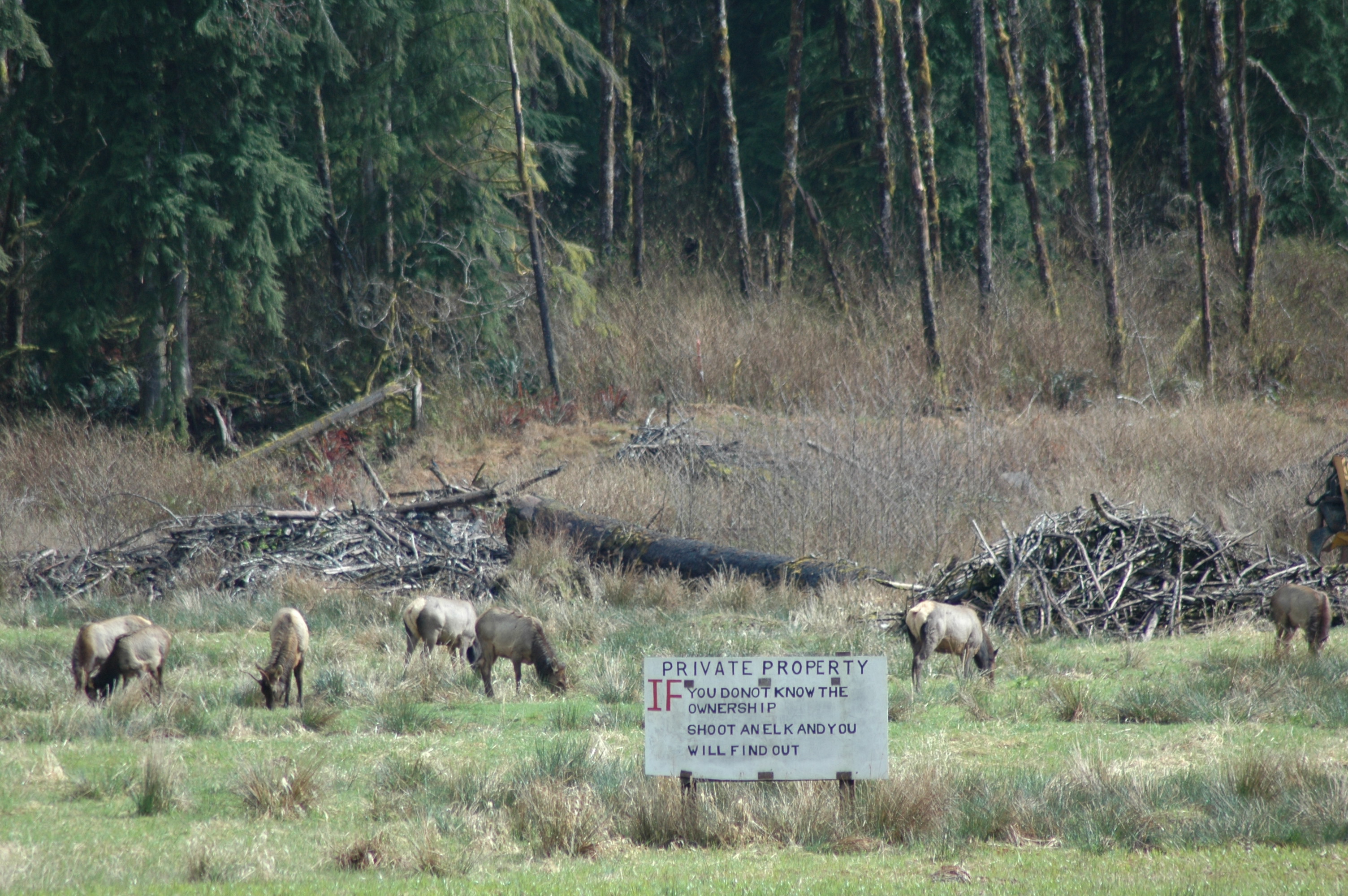
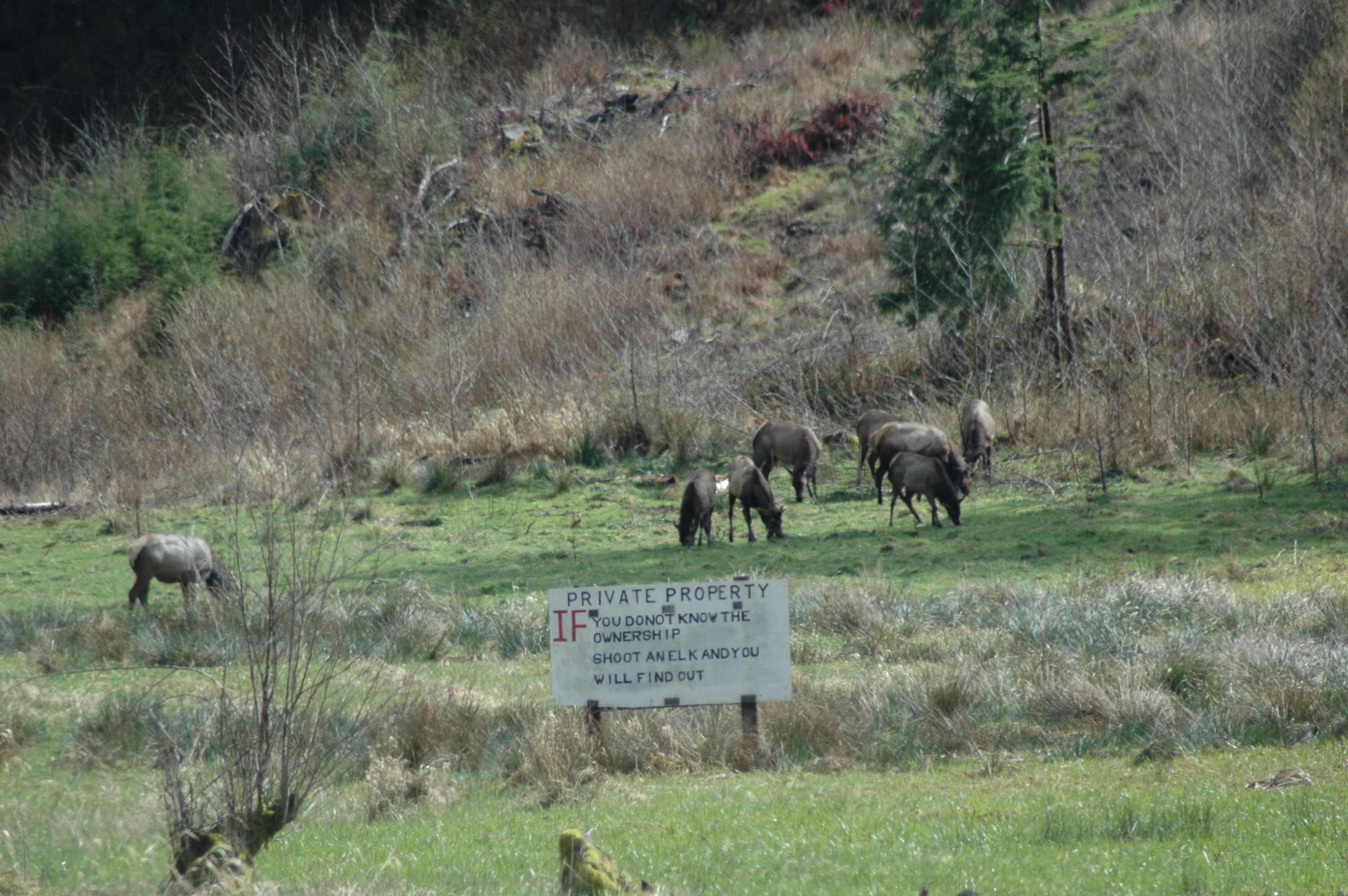
I know that some people have a problem with “Private Property” signs, but there’s no reason to suggest that property owners should not mark their land with “No Hunting” signs. I’d like to see all unnecessary fences taken down or modified so wildlife can pass safely through. But a well-marked piece of private land can serve as a de-facto refuge for our wildlife neighbors—as long as said landowner is not himself a hunter.

Here are some signs I’d like to see more of…DSC_0017

DSC_0026

and of course, this one

734503_607608749267357_1194895074_n