One Park Does Not a Recovered Species Make

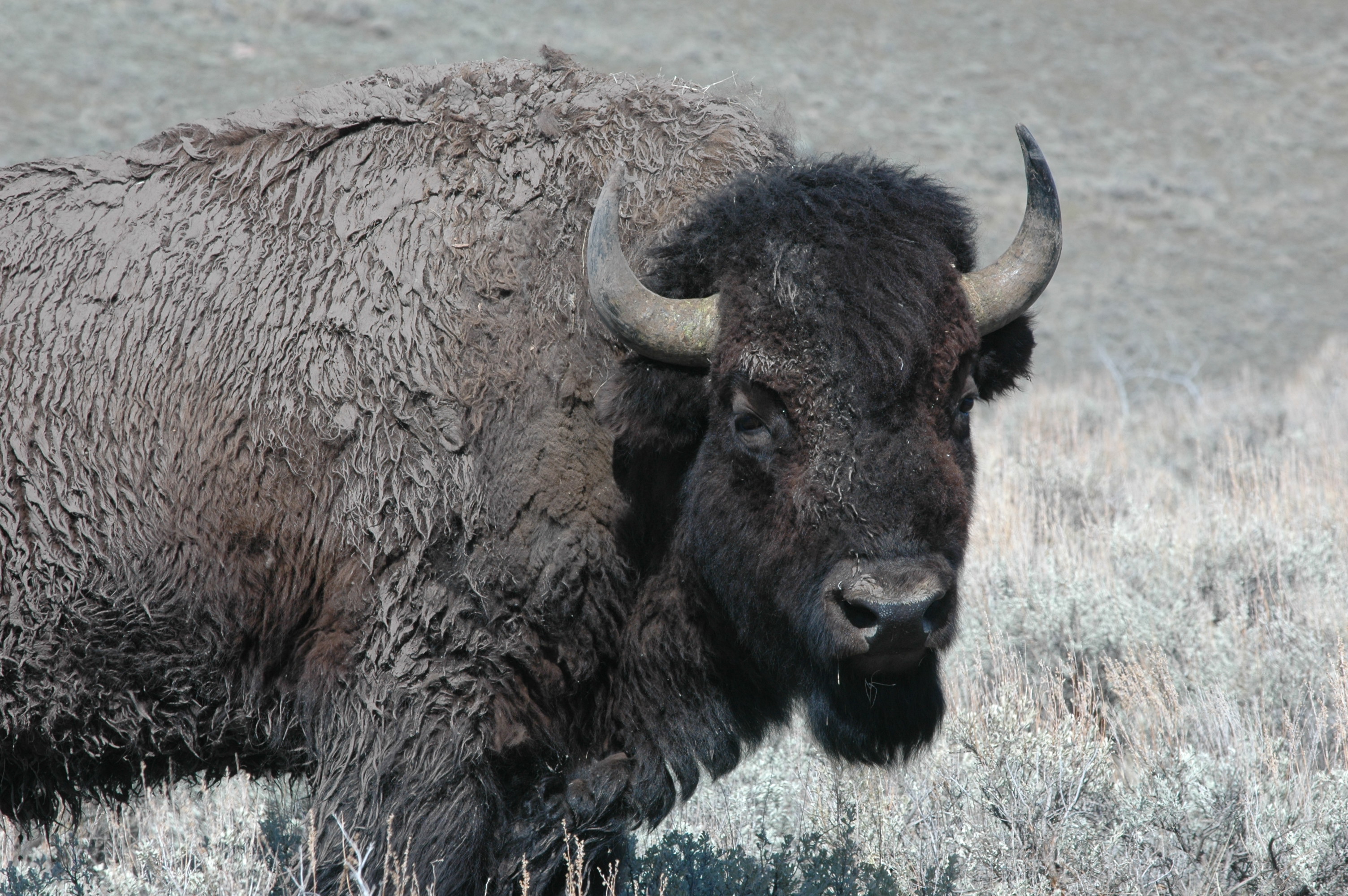
Ignorance must be such sweet bliss for anyone who visits Yellowstone National Park and thinks the wildlife they see there represents fully recovered populations of some of North America’s most endangered species. Sorry to say, one park does not a recovered species make. For all its size, spectacularity and relative biodiversity, Yellowstone is little more than an island in an anthropogenic wasteland to much of its megafauna.

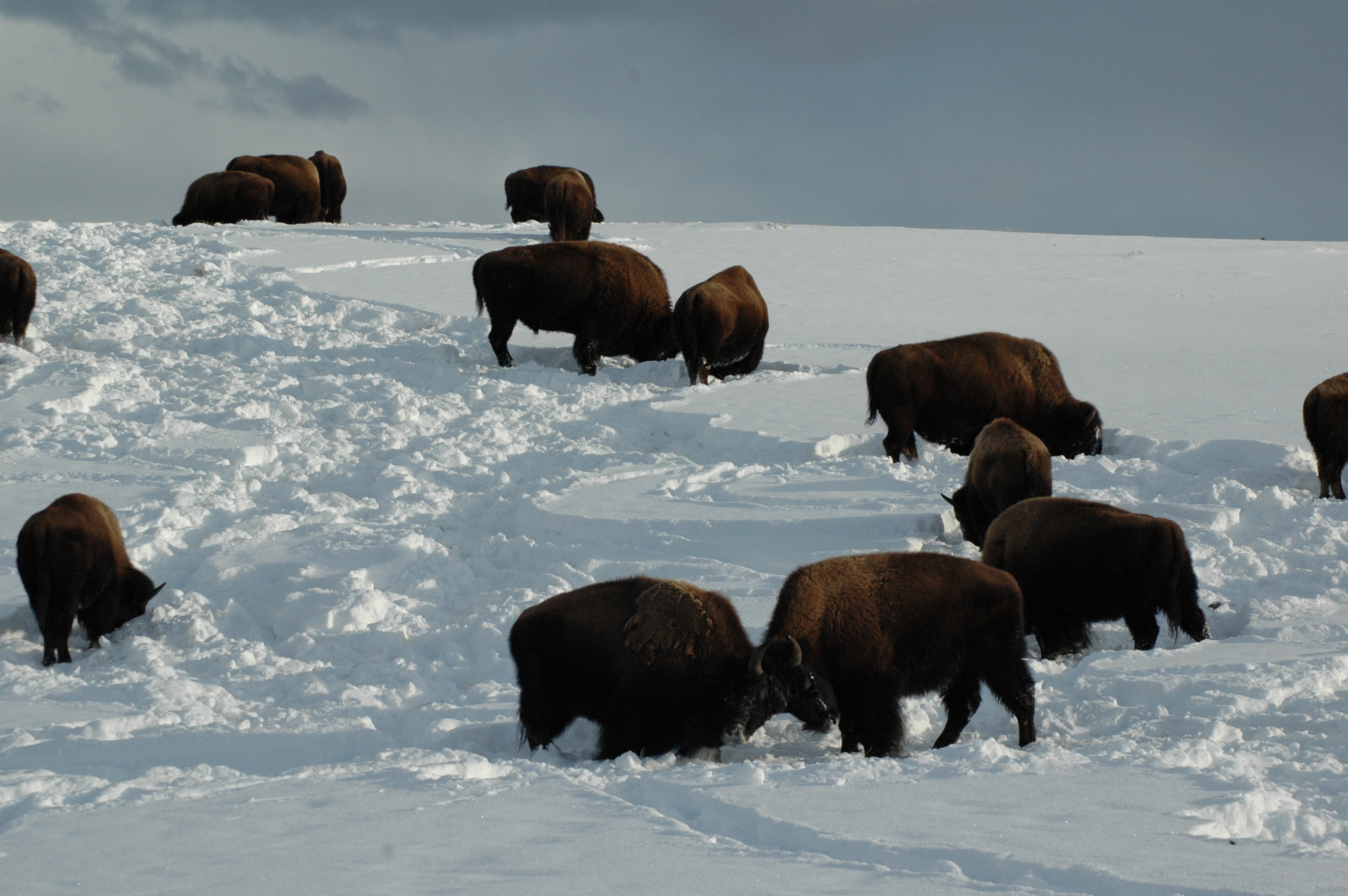
If ranchers and hunters had their way, wolves and grizzlies would be restricted to the confines of the park. Ranchers already have such a death-grip on Montana’s wildlife that bison are essentially marooned and forced to stay within park borders, battling snow drifts no matter how harsh the winter, despite an instinctual urge to migrate out of the high country during heavy snow winters.

Though Yellowstone is synonymous with the shaggy bovines, bison would prefer to spend their winters much further downriver, on lands now usurped and fenced-in by cowboys to fatten-up their cattle before shipping them off to slaughter.

Yellowstone’s high plateaus are on average well over 5,000 feet in elevation and can hardly be considered prime habitat for the wild grazers. Much of the park actually sits within the caldera of one the world’s largest active volcanoes. Any sizable eruption could release enough toxic gasses to kill off all of Yellowstone’s bison—the last genetically pure strain of the species now left on the continent.

People driving through cattle country on their way to Yellowstone often have no idea just how sterile the open plains they’re seeing really are. Gone are the vast bison herds that once blackened them for miles on end—killed off by hide-hunters, market meat-hunters or by “sportsmen” shooting them from trains just for a bit of fun. Gone are the wolves and plains grizzlies adapted to that arid habitat. And nearly gone are the prairie dogs as well as the ferrets, kit fox, plovers, burrowing owls and a host of others who depended on them for food or shelter.

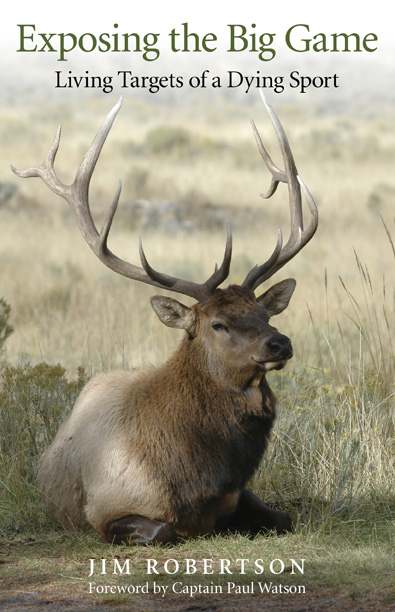
Part of the reason I wrote Exposing the Big Game: Living Targets of a Dying Sport was to remind people about the wild species who once called so much of this continent home. No one’s going be able to claim ignorance on my watch; if I can’t go through life blissfully then neither can anyone else.

The following is an excerpt from one of the book’s two chapters on bison:

Selfless and protective, bison develop lasting bonds in and outside the family, not only between cows, calves and siblings but also between unrelated individuals who grew up, traveled and learned about life together. Juveniles help mothers look after the youngsters and will gladly lend a horn to keep potential predators away from the calves. I have witnessed cooperation among bison families often in the years I’ve spent observing and photographing them. I’ve also seen them put themselves in harm’s way to defend elk from hungry wolves, and even mourn over the bones of their dead.

But in a ruthless act of rabid backstabbing, 1600 bison—who had never known confinement or any reason to fear people—were slain to appease Montana ranchers during the winter of 2008. More than half of Yellowstone’s bison were killed in what was the highest body count since the nineteenth century. 1438 were needlessly and heartlessly shipped in cattle trucks to slaughterhouses (those nightmarish death camps where so many forcibly domesticated cattle meet their ends), while 166 were blasted, as they stood grazing, by sport and tribal hunters. Two winters prior, 947 bison were sent to slaughter and 50 were shot by hunters.

Instead of making amends for the historic mistreatment of these sociable, benevolent souls, twenty-first-century Montanans are still laying waste to them. Spurred on by industry-driven greed for grazing land (veiled under the guise of concern about brucellosis, a disease with a negligible risk of transmission that has never actually been passed from wild bison to cattle), the state of Montana sued to seize control of bison ranging outside Yellowstone. Now their department of livestock has implemented a lethal policy and the US National Park Service is facilitating it. Since the dawn of the new millennium, nearly 4000 Yellowstone bison have been put to death.
Text and Wildlife Photography ©Jim Robertson, 2012. All Rights Reserved

Text and Wildlife Photography ©Jim Robertson, 2012. All Rights Reserved

 

Crippling Animals Should Weigh on One’s Conscience

Other than a stopover at the Anchorage Airport on my family’s flight home from Japan in 1962 when I was two years old, my first trip to Alaska was in 1977. Back then I was still deceived by society’s prevailing norms and under the influence of its contradicting principles regarding fish (as they were aquatic, enigmatic and incapable of voicing their distress, surely they didn’t have the right to be left alone), so I’d taken a summer job in the salmon fishing industry at a dismal settlement on the windswept side of the breathtaking Alaska Peninsula.

Nak Nek was a gloomy ghost town most of the year and a small but hyperactive boom town during the annual fish-kill frenzy, when the tides twice-daily ushered in barge after barge overflowing with mountains of bloody fish bodies. The only thing the village had going for it, to my mind, was its proximity to the spectacular emptiness of Katmai National Monument, which I vowed to visit once the term of my employment was over. Named after one of its many active volcanoes and supporting a hefty population of grizzly bears who congregate at the spawning streams (to which any salmon lucky enough to escape slow death stuck in a gill net feels a desperate yearn to return), Katmai’s best known feature is Brooks Falls.

At the time, grizzlies (or brown bears, as they’re locally known) outnumbered people, and there wasn’t so much as a footbridge across the clear, deep river that connects Nak Nek Lake to Brooks Lake. This was long before the construction of the now-popular tourist boardwalk and viewing platform, complete with bear-proof railings and gates. The only way through the dense black spruce forest and tall-grass marsh to the falls was on a crooked, narrow bear trail.

On the afternoon of my last day of my stay at Katmai, I decided to cast out a line and try to catch one of the many sockeye salmon converging along the edge of Nak Nek Lake, waiting for their turn to head upstream. Right away I hooked one, but before I could bring it ashore, the line broke and the fish swam off trailing a length of fishing line. I felt terrible, imagining it would end up tangled on something and die unable to get to a spawning bed.

But the next morning, while waiting for the float plane, I tied on a new fly and cast out my line once again. This time I was able to land a fish, which turned out to be sweet relief both for me and for the fish. Incredibly, it was the same fish as the day before—this time the hook was stuck in a branch that had the broken line from the day before tangled around it! I unhooked the fish and released it back into the lake to continue its journey, now unfettered by human garbage…

The experience was part of what led me to eventually turn my back on fishing altogether. The reason I bring all this up is, knowing how bad I felt when the fish got away with a hook stuck in it makes me wonder how some hunters can live with themselves when they wound animals with bullets or arrows and watch them run off to suffer and die a prolonged death because of their thoughtless acts.

Bowhunting is notorious for wounding deer, elk or others who can 473851-1234448543-mainlive for months with arrows stuck in them. A recent article about a town on the Oregon Coast deciding to allow bowhunting and hunting with shotguns loaded with slugs, in a forest reserve right outside city limits, quoted a city council member reporting on an all-too-common tragedy, “There are animals that are harvested during rifle season where broadheads are found” (in them). Though he admitted that there’s a higher chance that an elk or deer will be wounded but not killed if hit by an arrow rather than by a slug or a rifle bullet, the bureaucrat did not want to appear softhearted and callously went on to say, “Elk are amazingly tough animals.”

What I want to know is, given that bowhunting has a 50% crippling rate, why aren’t we hearing about more bowhunters turning their backs on the sport? Could it be they lack remorse, guilt, empathy or a normal human conscience?
_______________________

This post includes an excerpt from the book, Exposing the Big Game: Living Targets of a Dying Sport.

Text and Wildlife Photo ©Jim Robertson

Text and Wildlife Photo ©Jim Robertson

For Safety’s Sake, Some Gun Collectors Should Switch to Stamps

According the Associate Press,five people were wounded in accidental shootings at gun shows in North Carolina, Indiana and Ohio on Saturday. That’s five shooting victims—all in one day!

At the Dixie Gun and Knife Show in Raleigh, a 12-gauge shotgun discharged as its owner unzipped its case for a law enforcement officer to check at a security entrance, injuring three people, a state Agriculture Department spokesman said. Two bystanders and a retired deputy sheriff were hit by shotgun pellets and taken to a hospital.

Sheriff Donnie Harrison said that it was too early to know whether the shotgun’s owner might be charged, but that it appeared to be an accident. (But don’t be surprised if the victims are the ones who end of being charged—with failure to wear a bullet proof vest at a public gun show.)

The North Carolina show, which is held at the state fairgrounds (not annually, but four times a year), usually draws thousands of people (some of whom actually survive the event unscathed).

In Indianapolis, police said a 54-year-old man was injured when he accidentally shot himself while leaving a gun show. (He could have saved himself the entry fee if he would have just shot himself before leaving home.)

Emory L. Cozee, of Indianapolis, was loading his .45 caliber semi-automatic when he shot himself in the hand as he was leaving the Indy 1500 Gun and Knife show at the state fairgrounds. Police said that loaded personal weapons aren’t allowed inside the show, but (presumably since the shooting occurred outside the building in the fairgrounds parking lot) no charges will be filed. (After a trip to the emergency room, Cozee is comfy once again.)

And in Ohio, a gun dealer was checking out a semi-automatic handgun he’d just bought when he accidentally pulled the trigger. The gun’s magazine had been removed, but one round remained in the chamber, police said. The afore-mentioned (magic) bullet appears to have ricocheted off the floor and struck the gun owner’s friend in the arm and leg. The (erstwhile) friend was taken by helicopter to a hospital 30 miles north in Cleveland; his condition was not immediately known.

Now I’m not trying to trounce on anyone’s God-given American rights (except the self-allocated “right” to hunt and kill animals recreationally), but for safety’s sake, maybe some of these folks should take up crocheting, knitting or collecting stamps, rather than gun collecting. Once they’ve mastered benign hobbies such as these, if they still feel the puerile need to prove their machismo, they could work back into it slowly, starting with craft shows or canasta tournaments.

Hell, it sounds like playing Russian roulette is probably a safer pastime than attending some of those gun shows.

90823_Pred_ATACS

WTF’s Up w/MFWP?

What the Fuck (WTF) is up with the Montana state wildlife officials these days? Now they want to make it even easier to hunt and trap wolves in their state.

Last year, just after wolves were removed from federal endangered species protection, the Montana Fish, Wildlife and Parks department (MFWP) seemed comparably tame (well, compared to Idaho anyway). Though they wasted no time in implementing the state’s first season on wolves in seventy-some years, at least they spared wolves the torment of trapping.

Ignoring 7,000 letters in support of wolves, this year they added trapping to their wolf assault and upped the original “bag limit” from one to three per trapper—before the season even started. Instead, they’re bowing to the whims and whinings of ranchers, hunters and trappers who have called for an expansion of wolf killing and more liberal rules than the state had last year, when “only” 166 wolves were ruthlessly murdered. MFWP officials responded to anti-wolf, anti-nature, anti-environmental pressure by making the 2012 season longer, eliminating most quotas and allowing wolf trapping for the first time.

The agency is now mercilessly asking for additional measures in the form of a state House Bill, HB 73. Their proposal would let hunters and trappers buy multiple tags; use electronic wolf calls; reduce the price of a non-resident tag from $350 to $50 and eliminate the potentially life-saving requirement that hunters wear fluorescent orange outside of elk and deer season. (Okay, I’ll go along with that last one—who cares if wolf hunters shoot each other?)

“We want to get a wolf bill out of the Legislature so we can implement those things that can potentially make a difference,” said FWP spokesman Ron Aasheim, adding selfishly, “More management flexibility. That’s what we want now.”

The House committee will also take up a second bill by Republican Rep. Ted (oh shit, not another Ted!) Washburn, of Bozeman, which would also limit the total number of wolves allowed to live in the entire state (we’re talking 147,046 square miles) to no more than 250. Washburn’s plan also asks for an Oct. 1-Feb. 28 wolf hunting season and an even longer season for special districts next to Yellowstone and Glacier National Parks!!

No doubt you all remember that fateful day in 2011 when congress lifted federal protections for wolves in Montana and Idaho, handing management over to those openly hostile states.

Meanwhile, the nefarious Montana state wildlife officials are currently opposing federal Threatened Species protection for the depressingly rare wolverine, down to only 35 breeding individuals in the lower 48.

Not many hunters can honestly say that they don’t mind sharing “their” elk, moose or deer with the likes of wolves, cougars or coyotes. But those few who claim to support a diversity of life need to realize that every time they purchase a hunting license and a deer or elk tag, they validate wolf hunting and trapping. To game managers, every action, right down to the purchase of ammo and camo at Outdoor World, is a show of support for their policies—including killing wolves to ensure more deer, elk, moose or caribou for hunters to “harvest.”

A far cry from living up to their laughably undeserved reputation as the “best environmentalists,” hunters are just foot-soldiers carrying out a hackneyed game department program of “harvesting” ungulates and “controlling” predators. It’s an agenda based not on science or the time-tested mechanisms of nature, but on the self-serving wants of a single species—Homo fucking sapiens (HFS). Modern hunting is about as anti-environmental as mining, clear-cut logging, commercial fishing or factory farming.

Text and Wildlife Photography ©Jim Robertson, 2012. All Rights Reserved

Text and Wildlife Photography ©Jim Robertson, 2012. All Rights Reserved

Time to control gun violence—against animals

As predictable as the fact that there will be another mass shooting in this country again sometime is the inevitability that when it happens talk of controlling gun violence will crop up again. The two seem to go hand in hand. The shooting at Sandy Hook Elementary School is a case in point; the media has been rife with talk of controlling gun violence—against people.

But when I saw a recent article about a handgun buyback it hit me: most mass murderers use high-powered rifles—hunting rifles—but the buyback is only for handguns. Why isn’t there a buyback on hunting rifles? Oh, that’s right, hunting is a sacred institution—perpetuated by the likes of Dick Cheney, Ted Nugent and the NRA—no one can touch it. Forget all the violence done to animals, or even to crowds of people, if it means going up against hunting.

Never do you hear a peep about stopping gun violence against non-human animals. It’s as if they are inanimate objects, living targets to practice on. But if we really want to prevent the next school shooting or mass murder of mall shoppers, isn’t it time we address the violence inspired and nurtured by hunting?

90823_Pred_ATACS

Misery-Makers Love Company

The old saying, “misery loves company” has gotten so shopworn it’s become a cliché. But there’s a new saying (I know it’s new because just I thought it up today), a variation on that old one, which goes: “Misery-makers love company.” The point being, those who cause suffering don’t like to think they’re the only ones doing it.

Hunters, for example, are emboldened and find affirmation by recruiting others to take up their “sport.” It’s the same thing motivating trappers to form associations or duck hunters to form clubs. It’s why bowhunters spend so much time in chat rooms, and it’s part of the reason coyote and/or wolf haters hold social events called “contest hunts.”

Meanwhile, meat eaters feel a stronger sense of entitlement when they see so many others blindly munching on corpses. The same holds true for rodeo fans who get confirmation every time ESPN airs yet another calf-tormenting event.

The list could go on and on. As good people everywhere start citing their own examples, the saying, “Misery-makers love company,” is destined to become an overused cliché itself.

Text and Wildlife Photography ©Jim Robertson

Text and Wildlife Photography ©Jim Robertson

Yellowstone Bison Back Under the Gun

Wolves aren’t the only once endangered species being targeted right outside of Yellowstone National Park. Bison, the symbol of our National Park system, have been killed by the thousands in recently imposed state and tribal hunting seasons and by the Montana Department of Livestock, who, with the full blessing of the National Park Service, have rounded up over 5000 migratory park bison since 2008 and shipped them to slaughterhouses (those nightmarish death camps where so many forcibly domesticated bovines meet their ends).

In a ruthless act of rabid backstabbing, 1600 bison—who had never known confinement or any reason to fear people—were slain to appease Montana ranchers during the winter of ‘08. More than half of Yellowstone’s bison were killed in what was the highest body count since the nineteenth century.

Instead of making amends for the historic mistreatment of these sociable, benevolent souls, twenty-first-century Montanans are still laying waste to them. Spurred on by industry-driven greed for grazing land (veiled under the guise of concern about brucellosis, a disease with a negligible risk of transmission that has never actually been passed from wild bison to cattle), the state of Montana sued to seize control of bison ranging outside Yellowstone. Now their department of livestock has implemented a lethal policy and the US National Park Service is facilitating it. Since the dawn of the new millennium, over 5000 Yellowstone bison have been put to death.

The following action alert from the Buffalo Field Campaign includes contact info…

Before wild bison have even begun their annual migration to their winter habitat in Montana, State, federal, and tribal governments — including Yellowstone National Park –are aiming to kill hundreds of wild buffalo this winter through hunting, slaughter, or both. The agencies state that they want to “even the sex ratio” and have placed a heavy target on female buffalo, wanting to kill at least 400 female buffalo that migrate north of the Park into the Gardiner Basin. The herds that migrate north include buffalo from both the Northern and Central herds, which also means that the Central herds (which also migrate west) will be doubly impacted by hunting and slaughter.

Yellowstone National Park states that a “skewed sex ratio” has resulted from years of capture and slaughter operations, which have removed more bulls than cows from the population. In other words the government is saying they will slaughter more buffalo to mitigate the impact of slaughtering so many buffalo. Talk about playing God in Yellowstone.

With these plans aimed to placate Montana’s livestock interests, Yellowstone National Park threatens the buffalo’s immediate survival and evolutionary potential.  Yellowstone’s plans to capture and slaughter wild bison are absolutely contrary to their mission to preserve and protect plant and animal species unimpaired for present and future generations.  The wild bison of the Yellowstone ecosystem make up America’s last continuously wild population. Wild bison are ecologically extinct throughout their native, historic range, and currently number fewer than 4,300 individuals.  Wild bison once teemed across the North American continent in the tens of millions, but today the last remnant herds only exist in and around Yellowstone and are in dire need of protection.

TAKE ACTION!  Tell Yellowstone Superintendent Dan Wenk that you absolutely oppose any capture or slaughter of wild buffalo.  Yellowstone is mandated by law to protect wild bison, not cater to Montana’s cattle politics.  Tell Superintendent Wenk to stop being a puppet for Montana livestock interests, pull out of the draconian Interagency Bison Management Plan, and to stand up for the wildlife that the American people have placed in his care.  Wild bison are a natural, national treasure, the prehistoric and rightful roamers of North America, and we will not stand by and allow Yellowstone or Montana’s cattle industry to jeopardize their future for any reason.

Daniel Wenk, Superintendent

Yellowstone National Park

P.O. Box 168

Yellowstone National Park, WY 82190-0168

(307) 344-2002 phone

(307) 344-2014 fax

Dan_Wenk@nps.gov

DSC_0146


The Infertile Union

So you don’t get the idea I go around unfairly picking on small grassroots groups, here’s an excerpt from my book, Exposing the Big Game: Living Targets of a Dying Sport, wherein I take on the Goliath of all national green groups for siding with hunting…

Sport hunters have enjoyed so much laudation of late they’re beginning to cast themselves as conservation heroes. What’s worse is that many modern, influential green groups are swallowing that blather, hook, line and sinker. Maybe they ought to reread the words of Sierra Club founder, John Muir:

“Surely a better time must be drawing nigh when godlike human beings will become truly humane, and learn to put their animal fellow mortals in their hearts instead of on their backs or in their dinners. In the meantime we may just as well as not learn to live clean, innocent lives instead of slimy, bloody ones. All hale, red-blooded boys are savage, fond of hunting and fishing. But when thoughtless childhood is past, the best rise the highest above all the bloody flesh and sport business…”

Henry David Thoreau, another nineteenth-century nature-lover whose forward-thinking writings were an inspiration to Muir, cautions, “No humane being, past the thoughtless age of boyhood, will wantonly murder any creature which holds its life by the same tenure he does. The hare in its extremity cries like a child. I warn you, mothers, that my sympathies do not make the usual philanthropic distinctions.”

If those dated messages and mockery are lost on twenty-first-century Sierra-clubbers, Edward Abbey’s sentiment should be obvious enough for anyone, “To speak of harvesting other living creatures, whether deer or elk or birds or cottontail rabbits, as if they were no more than a crop, exposes the meanest, cruelest, most narrow and homocentric of possible human attitudes towards the life that surrounds us.”

Early vanguards of ecological ideology recognized Homo sapiens as just one among thousands of animal species on the planet, no more important than any other in the intricate web of life. They also abhorred sport hunting.

But a shocking turn-around is taking place in the current bastardization of the environmental movement. The Sierra Club and other large, corporate green groups are embracing (read: sleeping with) powerful hunting groups like the Safari Club International and the National Rifle Association (NRA). In a transparent effort to appear down-home and therefore more in touch with nature, they’re making the fatal mistake of joining frces with sportsmen whose conservation “ethic” exists only so their preferred prey species can be slain again and again.

The infertile union between super-sized modern green groups and mega-bucks hunting clubs must have been sired by their shared conviction that humans are the most crucial cogs in the wheel of life (or at least the squeakiest wheels in the dough machine). As the only animal capable of coughing up cash when the collection plate comes around, human beings (every last gourmandizing, carnivorous one of them) are the primary concern; their wants must be given priority over those of all other species. Contemporary environmental organizations, seduced by a desire to engage as many paying members as they can get their hands on (regardless of their attitudes towards animal life), must believe blood-soaked money is as green underneath as any.

Forever stagnating in “thoughtless childhood,” members of hunting groups like the NRA live for the day they can register a record-breaking trophy with the Boone and Crocket Club—formed by Roosevelt “to promote manly sport with rifles.” Fund for Animals creator, Cleveland Amory, took issue with the sporty statesman in his anti-hunting epic, Man Kind? Our Incredible War on Wildlife. A benevolent humanitarian for humans and nonhumans alike, Mr Amory wrote, “Theodore Roosevelt…cannot be faulted for at least some efforts in the field of conservation. But here the praise must end. When it came to killing animals, he was close to psychopathic. Dangerously close indeed (think: Ted Bundy). In his two-volume African Game Trails, Roosevelt lovingly muses over shooting elephants, hippos, buffaloes, lions, cheetahs, leopards, giraffes, zebras, hartebeest, impalas, pigs, the not-so-formidable 30-pound steenbok and even (in what must have seemed the pinnacle of manly sport with rifles) a mother ostrich on her nest.

But don’t let on to a hunter your informed opinion of their esteemed idol, because, as Mr Amory points out, “…the least implication anywhere that hunters are not the worthiest souls since the apostles drives them into virtual paroxysms of self-pity.” Amory goes on to say:

The hunter, seeing there would soon be nothing left to kill, seized upon the new-fangled idea of “conservation” with a vengeance. Soon they had such a stranglehold [think: Ted Nugent] on so much of the movement that the word itself was turned from the idea of protecting and saving the animals to the idea of raising and using them—for killing. The idea of wildlife “management”—for man, of course—was born. Animals were to be “harvested.” They were to be a “crop”—like corn.

Fortunately, a faithful few are seeing through the murky sludge spread where green fields once thrived. Sea Shepherd Conservation Society’s Captain Paul Watson (founder and president of about the only group still using the word conservation to mean protecting and saving animals) recently took another in a lifetime of steadfast stands by resigning from his position on the Board of Directors of the Sierra Club. He refused to be a part of their whorish sleeping with the enemy—their pandering to sportsmen by holding a “Why I Hunt” essay contest, complete with a grand prize trophy hunt to Alaska. To think of how many trees were needlessly reduced to pulp for this profane effort when the answer to why hunters hunt was so succinctly summed up in just one sentence by Paul Watson, “Behind all the chit-chat of conservation and tradition is the plain simple fact that trophy hunters like to kill living things.”

Just as the naïve young girl who falls for the charms and promises of a sunny sociopath learns, the hard way, about his hidden penchant for abuse and violence, the Sierra Club and other middle-ground eco-friendly groups may soon learn the dangers of looking for Mr. Goodbar in all the wrong places. How will they divorce themselves from this unholy alliance when the affair goes sour and sportsmen reveal their malicious, hidden agenda by calling for another contest hunt on coyotes or cull on cougars, wolves or grizzly bears to do away with the competition for “their” deer, elk, moose or caribou?

front-cover-low-res6

Sun Tzu: the Art of War For the Wildlife

Like any other technological advancement, the internet is a tool that can be used for good or evil. Social media is a great venue for educating and rallying caring people and amassing an army of kind folks to work together for a positive change.

At the same time, it can also be a meeting place and breeding ground for sick minds sunk so deep in the gutter that hate oozes from every pore. The general public is now well aware of the problem of pedophiles and stalkers trolling the internet, but there’s another malevolence out there they don’t hear much about—mainly because the crimes committed by these psychopaths are legal.

I’m talking about the prideful trophy hunters showing off their kills on Facebook; the sneering wolf hunters and trappers who post their grotesque triumphs on webpages where they know they’ll be viewed by people who are already so distraught that one more image may push them over the edge. It’s part of the game to them, to see who snaps first. Don’t be their next victim.

My advice to those of you who, like me, can’t stand seeing another NRA leader gloating over a dead water buffalo, or country star hunched over a bear he murdered with a bow in a fenced in canned hunting compound, or a wolf-hunting website designed just to turn the stomachs of kindhearted wolf advocates: don’t go there—at least for a day or two. Take some time off if you need to. Hold on to the anger, but try to pace yourself. Wars are not won by those who are blinded by rage or lost in a pit of depression. There’s an art to war; it takes self-discipline and careful strategy to be victorious.

Rome wasn’t toppled by the first invading army; like the decadence of sport hunting, it had to crumble from within first.

Text and Wildlife Photography ©Jim Robertson

Text and Wildlife Photography ©Jim Robertson


On the Death of Hunting

Literally, figuratively and statistically, hunting is a dying sport—it just hasn’t accepted that fact yet. Over the centuries, hunting in this country has been on a slippery, downward slope. It’s gone from being an almost universally practiced, year-round method of meat-gittin’ and “varmint” eradicatin’ (during the pioneering, God-given “Manifest Destiny” days that near-completely brought an end to the continent’s biodiversity) to the desperate, “sportsmen are the best environmentalists” perjury of present day—a laughable last-ditch attempt to stay afloat if you ever saw one.

Whether consciously aware of it or not, hunters, individually and as a well-funded whole, are in the process of grieving the impending demise of their favorite pastime. The question is, which stage of grief are they currently in, and more importantly, when will they finally give up the ghost and leave the animals alone?

If we apply the Kübler-Ross model (a hypothesis introduced by Elisabeth Kübler-Ross in her 1969 book, On Death and Dying, commonly referred to as the “five stages of grief” including denial, anger, bargaining, depression and acceptance) to the death of hunting, it would appear that hunters are somewhere between the first and the middle stage in their emotional journey toward acceptance. Kübler-Ross originally applied these stages to people suffering from terminal illness, later expanded this theoretical model to apply to any form of catastrophic personal loss, which could include job, income, freedom or some other significant life event. To a dyed-in-the-wool nimrod, the death of hunting definitely qualifies.

Known by the acronym DABDA, the five stages of the Kübler-Ross model include:

1)    Denial — “I feel fine.” “This can’t be happening, not to me.”

Denial can be a conscious or unconscious defense mechanism; a refusal to accept facts or the reality of the situation. This feeling is generally replaced with a heightened awareness of possessions that will be left behind after the death—in this case, after the death of their blood sport. For hunters, these possessions might be their beloved weapons, which they covetously cling to with Gollum-like obsession and zeal. Whenever the specter of gun control rears up after a mass school shooting, you can hear them breathlessly whispering, “My precious, my precious.” Denial is usually only a temporary defense for the individual, but some can become locked into this stage…

2) Anger — “Why me? It’s not fair!” “How can this happen to me?” ‘”Who is to blame?”

Once in the second stage, the individual recognizes that denial cannot continue. Because of anger, the person is very difficult to be around due to misplaced feelings of rage and envy. Anger can manifest itself in different ways. For hunters, it’s usually directed toward non-hunters, especially environmentalists or animal advocates, but is often also directed against species they view as competition, such as coyotes or wolves. It is important to remain detached when dealing with a person experiencing anger from grief.

3)    Bargaining — “I’ll do anything for a few more years.” “I will give my life savings if only…”

The third stage involves the hope that the individual can somehow postpone or delay death (or the death of their favorite lethal hobby). Usually, the negotiation for an extended life is made with a higher power in exchange for a reformed lifestyle. Psychologically, the individual is saying, “I understand I will die, but if I could just do something to buy more time…” In the case of hunting, this negotiation is with the non-hunting majority and includes reinventing their persona, trying to sell themselves as “the best environmentalists;” pitching hunting as an admirable part of our heritage and trying to get laws passed to enshrine it; or recruiting women and young children into the fold.

4)    Depression — “I’m so sad, why bother with anything?” “I’m going to die soon so what’s the point?” or in the case of the hunter, “If I can’t have my beloved blood sport, why go on?”

It’s natural for the hunter to feel sadness, regret, fear and uncertainty when going through this stage. It is not recommended to attempt to cheer up an individual (or a hunting organization, such as the NRA or the Safari Club) who is in this stage, as these emotions indicate their acceptance of the situation.

5)    Acceptance — “It’s going to be okay.” “I can’t fight it, I may as well prepare for it.”

In this last stage, individuals begin to come to terms with their mortality or another tragic event, such as the loss of a loved one…or, for the hunter, the long-dreaded ceasefire in the war waged against the animals.

One of the most popular arguments for hunting is, “But humans are carnivores, we’ve always been hunters.” The fact is, human predatory behavior is killing the planet. The only way any of us are going to survive is if we lay down our weapons and return to our plant-eating origins.

Sound radical? Arthur Schopenhauer spelled out his own set of stages that undeniably applies here: “All truth passes through three stages. First, it is ridiculed. Second, it is violently opposed. Third, it is accepted as being self-evident.”

DSC_0056