Ahead of hunting season, wild game processors adapt to CWD’s spread


SharePrint https://cdapress.com/news/2024/oct/05/local-butcher-shops-adapt-as-cwd-raises-concerns-ahead-of-deer-hunting-season/

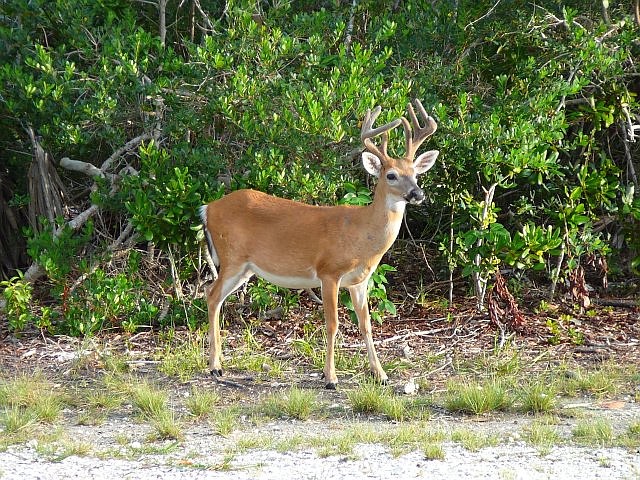
A healthy white-tailed deer.
Idaho Fish and Game

by HAILEY HILL
Staff Writer | October 5, 2024 1:07 AM

This year’s deer hunting season will look a little different for North Idaho wild game processors after cases of chronic wasting disease were confirmed in the Bonners Ferry deer population.  

CWD is a neurological disease found in deer, elk and moose that causes degeneration of the animal’s brain, resulting in emaciation, abnormal behavior, loss of bodily function and eventually death.  

Woods Meat Processing in Sandpoint still plans to process wild game — however, the shop will not accept any carcasses from CWD zones, which are designated by Idaho Fish and Game. Additionally, a negative CWD test is required for harvested, boneless meat.  

ADVERTISING

“If anybody tells you they’re not doing anything different, that’s not a good thing,” said Jody Russell, co-owner of Woods Meat Processing.  

Mike Edgehouse, who operates a mobile meat processing business called Primal Edge Pursuits, believes working exclusively with wild game — and one animal at a time — is what will allow him to avoid potential for contamination.  

“I think those who do both domestic and wild game are in a much tougher position,” Edgehouse said.  

Such was the case for Mountain View Custom Meats, a Coeur d’Alene shop that stopped processing wild game meat two years ago when the first case of CWD was confirmed in Idaho.  

Since the shop is located on private property, owner Kevin Trosclair explained, they did not want to risk CWD prions getting into the property’s groundwater and infecting nearby wildlife and livestock.  

“We decided from a safety standpoint that we don’t want to have that in our shop,” Trosclair said.  

Idaho Fish and Game has designated Units 14, 18 and a portion of unit 1, the portion of Boundary County east of the Selkirk Mountains crest, as CWD Management Zones as of Oct. 1. Fish and Game prohibits the transport of whole deer, elk or moose carcasses out of these zones.  

Mandatory sampling is required for all mule deer and white-tailed deer harvested in units 14, 18, 23, 24, 32A and the same portion of unit 1, according to IFG 2024 CWD Hunting Rules.  

Any-weapon hunting for white-tailed deer opens Oct. 10.

Five Arrested for Illegal Wild Boar Hunting and Meat Transport in Talegaon

The team also seized a substantial quantity of wild boar meat along with the vehicle.

Illegal Wild Boar Hunting

Illegal Wild Boar HuntingThe Bridge Chronicle

Neelam Karale

Published on: 

30 Sep 2024, 10:47 am IST

Pune: The Forest Department arrested five individuals involved in the illegal hunting and transport of wild boar meat near Talegaon Dabhade, on the old Pune-Mumbai highway.

The incident unfolded when the Vadgaon Maval Forest Department received a tip-off about a group transporting wild boar meat in a car. Acting swiftly, the department conducted a raid and apprehended the suspects.

The team also seized a substantial quantity of wild boar meat along with the vehicle, with the total value of the confiscated items amounting to approximately six lakh rupees.

The arrested individuals have been identified as Maruti Shitole and Satyawan Bhoir, both hailing from Kasarsai in Mulshi, and Datta Waghmare, Sanjay Waghmare, and Sitaram Jadhav, all residents of Kade Maval.

Illegal Wild Boar Hunting

Female Leopard Tries to Free Captured Cub; Forest Department Warns Residents

The group was allegedly involved in hunting wild boar, which is a protected species under the Indian Wildlife (Protection) Act of 1972.

https://syndicatedsearch.goog/afs/ads?psid=5134551505&channel=AutoRsVariant&cx=r-10443d5c1ede938a1&fexp=95342163%2C21404%2C17301431%2C17301432%2C17301436%2C17301511%2C17301516%2C17301266%2C72717108&client=pub-0327893541412000&r=m&hl=en&rpbu=http%3A%2F%2Fgoogle.com&rpqp=q&type=3&rs_tt=c&oe=UTF-8&ie=UTF-8&format=r5&nocache=9741727718237790&num=0&output=afd_ads&domain_name=www.thebridgechronicle.com&v=3&bsl=10&pac=0&u_his=1&u_tz=-420&dt=1727718237792&u_w=1536&u_h=864&biw=1521&bih=710&psw=1521&psh=710&frm=0&uio=-&cont=autors-container-0&drt=0&jsid=csa&nfp=1&jsv=678245571&rurl=https%3A%2F%2Fwww.thebridgechronicle.com%2Fnews%2Ffive-arrested-for-illegal-wild-boar-hunting-and-meat-transport-in-talegaon&referer=https%3A%2F%2Fwww.google.com%2F

According to the Forest Department, the accused were caught near New English School on the old Pune-Mumbai highway, where they were attempting to transport the illegally obtained meat.

The Vadgaon Maval Forest Department quickly acted on the intelligence and set up a raid that led to the successful capture of the suspects. The operation was led by Range Forest Officer S.D. Vark, with additional support from Circle Forest Officer Mallinath Hiremth and a team of forest guards.

Illegal Wild Boar Hunting

Pune forest department bans photography of this migratory bird in Lonavala

The raid team included Forest Guards Devle, Daya Dome, Parmeshwar Kasule, Yogesh Kokate, SK More, Krishna Dethe, and Deepak Ubale, along with Forest Attendant Jambhulkar. 

Under the supervision of Chief Conservator of Forests N.R. Praveen, Deputy Conservator of Forests Mahadev Mohite, and Assistant Conservator of Forests Atul Jain, the team managed to prevent further transportation of the meat.

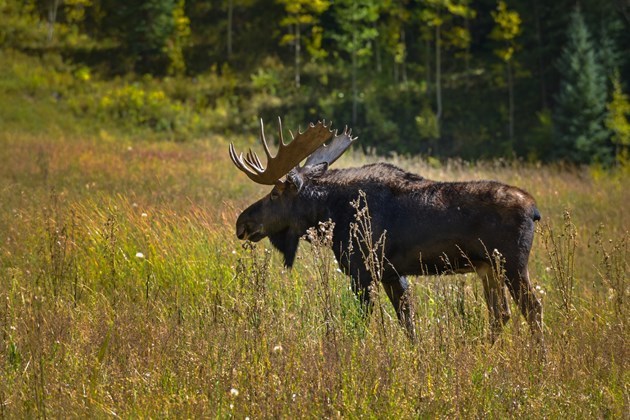
$12,000 fine for illegally hunting moose

Junor returned to a hunting camp on Annie Lake where an agreement was made with a member of a local Indigenous community to attend the kill site and claim the moose was shot under Indigenous harvesting rights

BayToday Staffabout 24 hours ago

bull moose adobestock_93928765 2017
Bull moose. File

Listen to this article

00:01:27

Timothy Junor of Echo Bay, east of the Soo, pleaded guilty to unlawfully hunting a bull moose without a licence and was fined $12,000.

On November 3, 2021, conservation officers initiated an investigation after locating a suspicious moose kill site near the Batchawana River in Norberg Township.

The court heard that on October 18, 2021, Junor was hunting for moose in an old forestry cut block. Junor was part of a larger hunting party that was only licenced to hunt calf moose.

Upon entering the cut block, Junor observed two bull moose running along the hillside and fired a round from his rifle at one of the bull moose, killing it.

Junor returned to a hunting camp on Annie Lake where an agreement was made with a member of a local Indigenous community to attend the kill site and claim the moose was shot under Indigenous harvesting rights, thereby covering up the illegal killing of the moose.

Junor returned to the kill site with the Indigenous person, processed the moose, and transported it back to the hunt camp at Annie Lake. The following day, the Indigenous community member transported the moose to a butcher shop in Thessalon where they again claimed that they shot the bull moose under their Indigenous harvesting rights.

Justice of the Peace Sarah Keesmaat heard the case in the Ontario Court of Justice, Sault Ste. Marie, on June 17, 2024.

Protected eagles targeted in Malta

The Shift Team

September 25, 2024 17:53

A flock of 5 short-toed eagles came under fire along the Victoria lines on Tuesday as members of BirdLife Malta followed the prized birds in an attempt to prevent them from being killed.

The organisation said in a statement the shots at these birds were fired as they attempted to find a resting place for the night, with one bird being filmed as it was shot down at Bingemma, while volleys of shots at these birds were fired along Tas-Santi, Dwejra and Mtarfa into the evening.

Ads by FatChilli

Video footage of the Bingemma incident was passed on to police with a hunter identified as being the same person involved in a separate illegal hunting incident during the closed season last August.

Information about a second, separate incident was also shared with police for further investigation.

The following morning, only two eagles were seen flying out of the northern part of  the island, while searches undertaken by police are believed to have been futile.

“Despite peak migration, only two EPU units are currently operative  around the island, with occasionally a single unit struggling to keep up with  reports of illegal hunting by NGOs,” Birdlife said.

BirdLife Malta said such incidents are a direct consequence of the lack of proper governance of hunting whereby thousands of birds listed in taxidermy collections have gone unchecked for years, with recent allowances in transfers rekindling demand for such birds to become taxidermy specimens.

The organisation added that it was holding Minister Clint Camilleri politically responsible for allowing the opening of a hunting season without the necessary police resources and for allowing a system where a hunter who was caught red-handed hunting illegally is, a month later, persisting in more wildlife crime.

It also remarked on the continuing situation with hunting federations taking no responsibility for their members’ actions.

Short-toed Eagles only appear annually in few numbers between September and  November, and they are highly prized for taxidermy.

“As was the case yesterday, hunters do not hesitate to use the opportunity of an open hunting season for game birds to target protected species. A 3pm hunting curfew to protect such birds of prey on arrival was changed to 7pm  in 2015, effectively allowing hunting to coincide with the arrival of these highly protected species,” Birdlife said.

Poachers target short-toed eagles

By

 Monique Agius

 –

September 25, 2024 4:58 PM

senter
Ritratt Sebastian Pociecha on Unsplash

A flock of 5 short-toed eagles came under fire along the Victoria lines on Tuesday, as members of BirdLife Malta chased the birds in an attempt to prevent them being killed.

Shots at these birds were fired as they attempted to find a resting place for the night with one bird being filmed as it was shot down at Bingemma, while volleys of shots at these birds were fired along Tas-Santi, Dwejra and Mtarfa into the evening.

The bird conservation group said video footage of the Bingemma incident were passed on to police with a hunter identified as being the same person involved in a separate illegal hunting incident during closed season last August.

Information pertaining to a second separate incident was also shared with police for further investigations.

Earlier this morning only two eagles were seen flying out of the northern part of the island, while searches undertaken by police are believed to so far have proven futile.

Despite peak migration, only two Environmental Protection Units within the Police Force are currently operative around the island, with occasionally a single unit struggling to keep up with reports of illegal hunting made by NGOs.

In a statement on Wednesday, BirdLife Malta said such incidents were a direct consequence of the lack of proper governance of hunting whereby thousands of birds listed in taxidermy collections have gone unchecked for years, with recent allowances in transfers rekindling a demand for such birds to become taxidermy specimens.

It also said it held Minister Clint Camilleri, an avid hunter himself, politically responsible for allowing the opening of a hunting season without the necessary police resources, and for allowing a system where a hunter who was caught red-handed hunting illegally, is a month after, persisting in more wildlife crime decimating highly protected species. It also remarked on the continuing situation with hunting federations taking no responsibility for such acts by their members.

Short-toed Eagles only appear annually in few numbers between September and November, and they are highly prized on taxidermy lists by hunters.

A 3pm hunting curfew to protect such birds of prey on arrival had been changed to 7pm in 2015, effectively allowing hunting to coincide with the arrival of these highly protected species.

As attitudes toward wild predators shift, Colorado voters weigh a ban on hunting mountain lions

KEVIN CROOKS
Colorado State University

Published: September 25, 2024

(THE CONVERSATION) Hunting large carnivores is a contentious issue in wildlife management and conservation. It’s on the ballot in fall 2024 in Colorado, where voters will consider Initiative 91, a proposed ban on hunting and trapping of mountain lions, bobcats and lynx in the state.
Wildlife agencies often use regulated hunting as a tool for controlling carnivore populations, reducing their impacts on vulnerable wildlife or minimizing the risk of conflict between carnivores and people, pets and livestock. But scientific studies have questioned how effectively recreational hunting achieves these goals. And public attitudes are shifting as participation in hunting declines.
We direct Colorado State University’s Center for Human-Carnivore Coexistence and Animal-Human Policy Center. Together with our colleague Benjamin Ghasemi, we recently surveyed Colorado residents about their perceptions of hunting mountain lions and black bears in the state.
We found that support for hunting depended on the purpose, with most Coloradans disapproving of hunting for trophies or sport. Gender, age and other demographic factors also played roles.
Meet the neighbors
Mountain lions, also known as cougars or pumas, live primarily in the western U.S. and are legally hunted in all western states except California. Black bears, which live mainly in mountainous and forested regions across the continental U.S., are hunted in the majority of states in which they are found.
The Colorado Parks and Wildlife agency estimates that roughly 3,800 to 4,400 adult mountain lions and 17,000 to 20,000 black bears live in Colorado. They are found mainly in the Rocky Mountains, with the eastern edges of their ranges near more human-populated areas in the Front Range.
According to state data, hunters in Colorado killed 502 mountain lions during the 2022-2023 hunting season and 1,299 black bears during the 2023 season.
Both species come into conflict with people in the state. The most common situation is when bears wander into mountain towns in search of garbage or other foods left by humans. Mountain lions are occasionally sighted in urban areas, and on rare occasions have attacked people.
Varying views of hunting
Our study gathered responses from Colorado residents through two public mail surveys. Samples were weighted to be representative of state population demographics, including age, gender, urbanization level, geographical region and participation in hunting.
Respondents’ views on legal and regulated hunting of mountain lions were evenly split, with 41% approving and 41% disapproving. This was also true for black bears: 46% approved of hunting them, and 46% disapproved.
Large majorities disapproved of hunting either animal for trophies, hide or fur, or for recreation. For mountain lions, 78% of respondents disapproved of trophy hunting; for black bears, 86% disapproved of trophy hunting. People also generally disapproved of hunting either species for meat.
Respondents were more supportive of hunts for other reasons. They approved of hunting mountain lions and black bears to protect human safety by 63% and 57%, respectively. And 56% approved of hunting mountain lions to reduce harm to livestock.
Large majorities disapproved of hunting mountain lions with dogs (88%) or recorded electronic calls (75%). Most mountain lions hunted in Colorado are legally taken with the aid of dogs, which chase and then tree or corner the cats. Using electronic calls to attract the cats was permitted in some parts of western Colorado until 2024, when the practice was banned for hunting mountain lions. It remains legal for hunting other carnivores, such as bobcats and coyotes.
Women, younger people, urban residents and people who identified as or leaned Democratic tended to be less supportive of hunting than men, older people, rural residents and Republicans. A study we published in 2022 on the reintroduction of wolves to Colorado found a similar political split, with stronger support for restoring wolves among people who identified as Democratic than among Republicans.
How to coexist with carnivores?
Although Coloradans were generally supportive of using hunting to reduce human conflict with black bears and mountain lions, studies suggest that it might not be the most effective tool to do so.
For example, a recent experimental study in Ontario, Canada, concluded that increased hunting of black bears did not result in less conflict – particularly during years when the bear’s natural food sources, such as nuts and berries, were limited in the wild. A long-term study on bears in Durango, Colorado, also found that availability of natural foods in the wild, and the lure of human food within the city, were the main drivers of clashes with bears.
Conversely, another study in New Jersey – which is more densely developed than Colorado, so bears may be more likely to encounter people – found that well-regulated hunting of closely monitored black bear populations could help reduce conflict.
Similar to its policy with bears, Colorado uses hunting as a management tool for mountain lions. There is limited scientific evidence that hunting mountain lions may prevent conflict with them. A recent study found that juvenile mountain lions from a hunted site in Nevada tended to avoid developed areas. In contrast, young cats from a site in California without hunting did not show any preference for or against areas with people.
Yet, other correlative studies in Washington, California and Canada have suggested that hunting may make the problem worse. According to these researchers, hunting might disrupt the social dynamics and age structure of mountain lion populations, causing young cats seeking new territory to roam into populated areas, increasing their chances of encountering people.
Overall, we believe that more reliable scientific information is needed to guide carnivore management and test assumptions about how effective hunting is at addressing these problems. Continued focus on proactive, nonlethal strategies to prevent conflict is essential.
Ultimately, promoting coexistence between humans and carnivores is often much more about managing people than about managing predators. Changing human behavior is key.
For example, failing to store garbage securely attracts bears. So does filling bird feeders in spring, summer and fall, when bears are active. Steps to reduce encounters with mountain lions include hiking in groups and making noise; keeping dogs leashed in the backcountry; keeping pets indoors at home; and not landscaping with plants that attract deer, the cat’s main prey.
Big cats on the ballot
Colorado’s Initiative 91 would ban hunting and trapping of mountain lions, bobcats and lynx in the state. It would allow for lethal removal of problem animals to protect human life, property and livestock.
Hunting and trapping of bobcats, mainly to sell their pelts in the fur trade, is currently legal in Colorado. On average, hunters and trappers have killed 880 bobcats annually over the past three years, the majority of which were trapped. Hunting and trapping are currently prohibited for lynx, which are listed as endangered in Colorado and threatened nationally, but the proposed ban would protect them if their populations recover.
Coloradans have voted to limit carnivore hunting in the past. They passed a ballot initiative in 1992 to ban bait, hounds and a spring hunting season for bears, and another in 1996 to ban the use of leghold traps, poison and snares.
Our research adds to growing evidence that public views toward hunting and carnivores are shifting. An increasing share of Americans believes humans should coexist with carnivores and opposes lethal control for human benefit. Studies also suggest that ballot measures like Initiative 91 may become more common as public attitudes evolve and more diverse groups seek to influence wildlife management.
It will be challenging for wildlife managers to adapt to these changing values. Agencies may have to consider more participatory methods that engage diverse stakeholders in decision-making, develop new funding mechanisms that are less reliant on hunting and fishing license fees, and reexamine how and for whom they manage wild animals.
This article is republished from The Conversation under a Creative Commons license. Read the original article here: https://theconversation.com/as-attitudes-toward-wild-predators-shift-colorado-voters-weigh-a-ban-on-hunting-mountain-lions-238265.

Watching This Disabled Hunter Get His First Deer Is The Most Heartwarming Thing You’ll See All Week

Mary Claire Crabtree·

HUNTINGRIFF OUTDOORS

·September 23, 2024

Disabled hunter shoots his first deer with modified trigger

@soggybottomlodge

A moment this young man will never forget.

Last hunting season, this video left the internet in an absolute puddle when they saw a disabled man shooting his first deer.

Meet Will Freeman, an outdoors enthusiast with special needs that most hunters do not face. However, instead of just wishing he could hit the deer stand, Soggy Bottom Lodge in Marengo County, Alabama (a five-star hunting resort) invited Will and his family out to make his dreams come true… taking him out to the field and making sure that Will got a buck.

While most people think that he might have just been in the stand while the deer was shot, think again. With the aid of a special gadget, Will was instructed when it was time to shoot his deer from inside a truck, and he pulled the trigger…or a modified version of one. A contraption attached to the riffle allowed Will to shoot his own gun via an air trigger straw. When Will was ready to pull, he sucked the air from the straw, signaling the weapon to fire.

The result? The takedown of a MASSIVE buck.

While you are watching the video, you can feel the emotion of excitement through the phone screen as Will not only hears all the cheering from outside the truck after the gun was fired but also the excitement from his family knowing that they were able to make their son’s dream come true.

Will has a huge smile on his face, and the video is so emotional. I’m not going to lie… it made me tear up.

Soggy Bottom noted on the video’s caption:

“Best thing ever! Will’s daddy promised him when he was little that somehow, some way, one day, he would get him a deer! Today was that day! What an experience! Kidz outdoors had a contraption when Will sucked the straw; it shot the gun. Will got his first deer today! I wouldn’t take anything for the happiness I saw today.”

Will’s dad flung open the car door, cheering on his son as the whole group was filled with so much excitement and thrill over Will’s buck. I lost it when Will’s dad kissed him and said:

“You got it, buddy. You got it.” 

That is one proud dad.

https://www.tiktok.com/embed/v2/7304175949048728875?lang=en-US&referrer=https%3A%2F%2Fwww.whiskeyriff.com%2F2024%2F09%2F23%2Fwatching-this-disabled-hunter-get-his-first-deer-is-the-most-heartwarming-thing-youll-see-all-week%2F

The videos were swarmed with comments noting viewers’ excitement for Will.

“‘Gone make an old man cry,’ me too, sir. Me too.”

“Not a huge fan of hunting, but I am a huge fan of love. Good stuff.”

“I was doing great until Dad opened the door. That’s one proud daddy.”

“This is AMAZING! Everyone in that truck got to experience buck fever all at once, and that’s a cool thing!”

“Didn’t expect to have tears with my coffee.. ‘best part of waking up is watching will kill that buck.’”

“As a hunter and outdoorsman, this is the coolest thing I’ve ever seen.”

Later on, Will’s mother shared a compilation of the pictures captured from the hunt… including the prized buck that Will got.

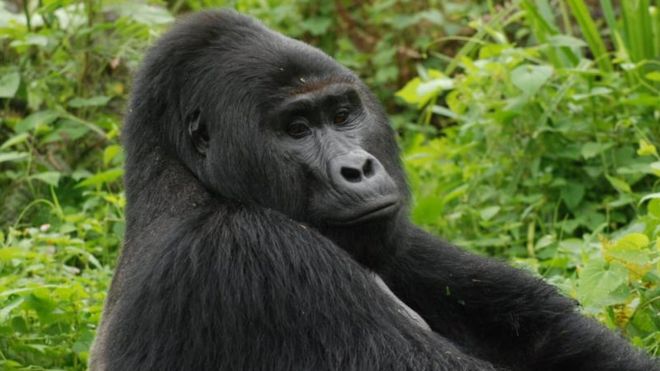
Rafiki, Uganda’s rare silverback mountain gorilla, killed by hunters

RafikiImage copyrightUGANDA WILDLIFE AUTHORITY
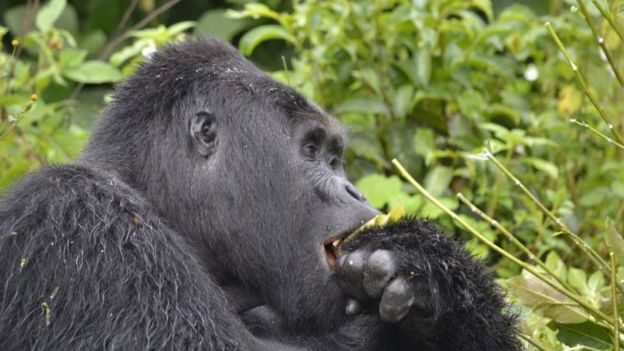
Image captionRafiki was thought to be 25 years old when he died

One of Uganda’s best known mountain gorillas, Rafiki, has been killed.

Four men have been arrested, and they face a life sentence or a fine of $5.4m (£4.3m) if found guilty of killing an endangered species.

Investigations showed that Rafiki was killed by a sharp object that penetrated his internal organs.

There are just over 1,000 mountain gorillas in existence and the Uganda Wildlife Authority (UWA) described Rafiki’s death as a “very big blow”.

The silverback, believed to be around 25-years-old when he died in the Bwindi Impenetrable National Park, was the leader of a group of 17 mountain gorillas.

This group was described as habituated, meaning that its members were used to human contact.

“The death of Rafiki leaves the group unstable and there is the possibility that it could disintegrate,” Bashir Hangi from the UWA told the BBC.

“It has no leadership at this time and it could be taken over by a wild silverback.”

If that happened, the group would not want to come into contact with humans, which ultimately could affect tourism.

Rafiki eating somethingImage copyrightUGANDA WILDLIFE AUTHORITY
Image captionThere are just over 1,000 mountain gorillas left in existence

The mountain gorillas are a popular draw for visitors to the country and the UWA relies on the tourists for revenue.

Rafiki himself was very popular with people who had come to the Bwindi Impenetrable National Park, Mr Hangi said.

He went missing on 1 June and his body was discovered by a search party the following day.

A UWA team tracked a suspect to a nearby village, where he was found with hunting equipment.

He admitted that he, and three others, had been hunting smaller animals in the park and that he killed Rafiki in self-defence when he was attacked, the UWA said in a statement.

The four men are expected to be charged under a wildlife protection law that was passed last year.

Infographic

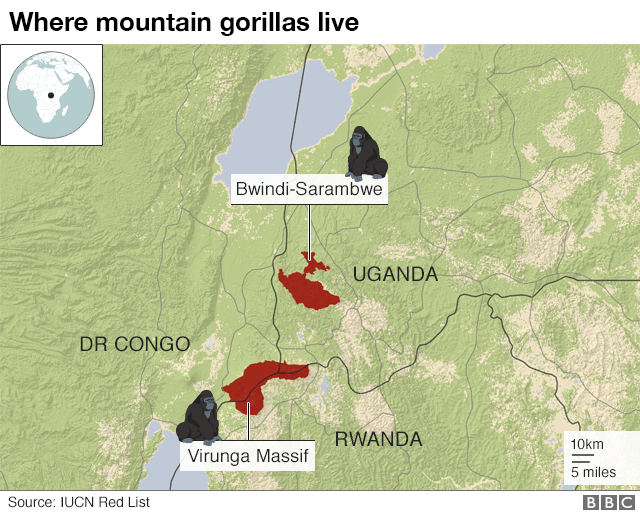
The mountain gorilla species is restricted to protected areas in the Democratic Republic of Congo, Rwanda and Uganda.

They can be found in Uganda’s Bwindi Impenetrable National Park and a network of parks in the Virunga Massif range of mountains which straddle the borders of the three countries.

In 2018, the mountain gorilla was removed from the list of critically endangered species by the International Union for Conservation of Nature, after intensive conservation efforts, including anti-poaching patrols, paid off.

The IUCN now classifies the species as endangered.

Hunting jeopardizes forest carbon storage, yet is overlooked in climate mitigation efforts

https://www.eurekalert.org/pub_releases/2019-05/lu-hjf050619.php

LUND UNIVERSITY

Many wildlife species play a key role in dispersing the seeds of tropical trees, particularly large-seeded tree species, that on average have a slightly higher wood density than small-seeded trees. The loss of wildlife therefore affects the survival of these tree species – in turn potentially affecting the carbon storage capacity of tropical forests.

Forest fauna are also involved in many other ecological processes, including pollination, germination, plant regeneration and growth, and biogeochemical cycles. Empirical studies across the tropics have shown that defaunation (i.e., the human-induced extinction of wildlife) can have cascading effects on forest structure and dynamics.

The sustainability of hunting is questionable in many locations, and particularly larger species are rapidly depleted when hunting supplies urban markets with meat from wild animals.

The study assessed to which extent the link between defaunation and carbon storage capacity was addressed in contemporary forest governance, focusing on a particular mechanism reffered to as Reducing Emissions from Deforestation and forest Degradation (REDD+).

The results show that although higher-level policy documents acknowledge the importance of biodiversity, and sub-national project plans mention fauna and hunting more explicitely, hunting as a driver of forest degradation is only rarely acknowledged. Moreover, the link between fauna and forest ecosystem function were not mentioned in international or national level documents.

Rather than an oversight, this may represent a deliberate political choice to avoid adding further complexity to REDD+ negotiations and implementation. This may be attributed to a desire to avoid the transaction costs of taking on these additional “add-ons” in a negotiation process that has already been complex and lengthy.

“Although biodiversity has moved from a side issue to an inherent feature over the last decade, we show that the ecological functions of biodiversity are still only mentioned superficially,” says Torsten Krause, Associate Senior Lecturer at the Lund University Centre for Sustainability Studies in Sweden.

“At the sub-national level, fauna and hunting were much more likely to be mentioned in project documents, but we still found no explicit mentioning of a link between defaunation and carbon storage capacity”, he adds.

The study demonstrates that defaunation is virtually overlooked in international climate negotiations and forest governance.

“The assumption that forest cover and habitat protection equal effective biodiversity conservation is misleading, and must be challenged,” says Martin Reinhardt Nielsen Associate Professor at the Department of Food and Resource Economics under the University of Copenhagen, Denmark.

“The fact that defaunation and particularly the loss of large seed dispersers through unsustainable hunting have lasting repercussions throughout the forest ecosystem, must be acknowledged and considered in forest governance broadly, or we risk losing the forest for the trees”, he concludes.

###

About the study:

The researchers conducted a desk study searching relevant international decisions on forests by the conferences of the parties to the UNFCCC and recent national REDD+ strategies and program documents. They analysed 49 national REDD+ documents (e.g., national REDD+ strategies, and National Program Documents) in 20 countries, with a focus on Colombia, Ecuador, Nigeria, Tanzania and Indonesia. Finally, the researchers also analysed sub-national REDD+ project documents for verified REDD+ projects in Colombia, Indonesia and Tanzania.

Ban Automatic Weapons so Crazed Lunatics Won’t Kill as Many Innocents per Incident

Did the above title get it right? Isn’t that the ultimate goal that hundreds of thousands of protesters worldwide were hoping for? Wasn’t ‘Bombs, Bows, Poison and Knives would Leave a Lower Body Count’ the sort of message they were hoping to convey?

If not, I’m not sure I get it. I mean, do these good folks think mass killings will stop the day we take machine guns away from the general public? Would that that were true; the problems of school or workplace or Post Office violence would be a quick fix. Don’t get me wrong, I’m no gun-nut, or should I say, ‘shooting sports advocate’. By all means, implement all the gun control measures you think will help.

Unfortunately, the problem goes far deeper than the Sporting Goods section at the local Wal Mart (although that’s a good place to start). As long as people are training their guns on innocent animals, they’ll be potential school shooters. So what’s the answer, ban sport hunting? Perish the thought…

Finally someone’s striking at the root of the problem. In a March 29th article by Kevin Johnson in USA Today https://www.usatoday.com/story/news/politics/2018/03/29/secret-service-mental-illness-stalks-many-suspects-mass-attacks/466251002/?csp=chromepush, entitled, “64% of assailants in mass attacks suffered from symptoms of mental illness, Secret Service report finds” we learn that, “a striking number of suspects linked to violent attacks in schools and other public places last year were stalked by symptoms of mental illness and nearly half were motivated by real or perceived personal grievances, a new Secret Service report has found.” The article goes on, Pakland “school administrators and law enforcement were all warned about Nikolas Cruz’s deteriorating mental state and risk of violence before he allegedly launched the attack that left 17 dead.”

So ban the occasional gun, get the odd kid to a councilor, but as long as we condone unnecessary killing every hunting season, someone’s not going to be safe.