Coronavirus pandemic slowdown has made the oceans quieter, which has been good for whales

Not only has pandemic helped accelerate the end of commercial whale hunting, ambient noise in the world’s oceans is also way down.

https://www.nbcnews.com/news/world/coronavirus-pandemic-slowdown-has-made-oceans-quieter-which-has-been-n1262175?fbclid=IwAR3g4XjkrUxDG3LHB14f8U8m_ffssXXzpmaSLnH_iREuXoKgfV0kD8o75vc

March 28, 2021, 5:00 AM PDT / Updated March 28, 2021, 8:05 AM PDTBy Sarah Harman and Carlo Angerer

HÚSAVÍK, Iceland — Surrounded by snow-covered mountain ranges, this tiny town on Iceland’s north coast has become the “whale capital” of the country — whale watching is its lifeblood.

“It’s probably the most popular activity for visitors, foreign and domestic,” Heimir Hardarson, captain at North Sailing, said.

As one of the pioneers of whale watching in Iceland, Hardarson has taken people onto ocean waters for nearly 30 years to experience a close encounter with some of the largest animals in the world.

“Very mystical creatures,” he said, “floating around in their weightlessness.”
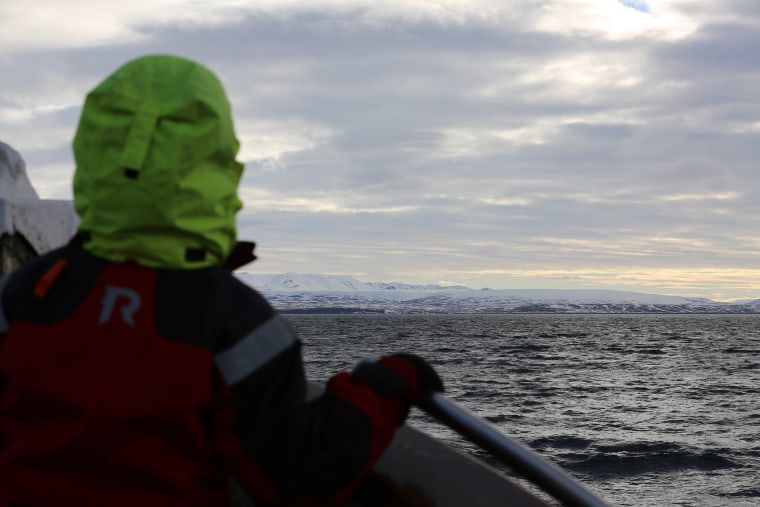
Image:: Captain Heimir Hardarson takes whale watchers out on his boat in Husavik, Iceland.
Captain Heimir Hardarson takes whale watchers out on his boat in Húsavík, Iceland.Carlo Angerer / NBC News

On a recent morning, Hardarson took a handful of visitors on his boat that usually holds 90 passengers to spot humpback and fin whales in Skjalfandi Bay.

Visitor numbers have been hit hard by the coronavirus pandemic. But the global slowdown has actually been good for the whales, as human interference has decreased. Ambient noise in the world’s oceans from cruise ships, sonar and construction is way down.

For more on this story watch TODAY this morning at 8 a.m. ET.

“I think, overall, the pandemic has largely been a positive for whales,” said Ari Friedlaender, a marine ecologist and biologist with the University of California at Santa Cruz.

He is studying how the quieter oceans have affected whales by measuring their stress levels through hormone samples. Friedlaender said animals use acoustics such as whale songs to communicate with one another and locate food. Noise in the environment can interfere with those communications and other critical life functions

“The thought is that as you decrease the amount of human activity and noisy environment, we’re going to see a decrease in the stress hormone levels of these animals,” he said.

Image: Husavik on Iceland's north coast has become the "whale capital" of the country.
Húsavík on Iceland’s north coast has become the “whale capital” of the country.VW Pics / Universal Images Group via Getty file

Friedlaender said stress affects whales similarly to how it has an impact on humans, changing their behavior and ability to perform physically and mentally. Stress can also lead to long-term changes affecting a whale’s overall health and its ability to reproduce.

“The animal may not reproduce as frequently as it would have otherwise,” he said. “If it doesn’t reproduce as frequently, the population doesn’t have the opportunity to grow as quickly, or to maintain its population growth.”

The pandemic has had an even more concrete impact on the whale population off Iceland’s coast: It has helped accelerate the end of commercial whale hunting.

Recommended

WORLDMafia fugitive was living a quiet island life. Then police found his YouTube cooking show.

LATINOIn Mexico, growing outrage over death of Salvadoran woman in police custody

Download the NBC News app for full coverage of the coronavirus outbreak

Iceland is one of only three countries in the world that still allow commercial whaling, the other two being Japan and Norway, and last year two Icelandic whaling companies halted hunting operations due to health restrictions. Operators told local media that social distancing regulations would make the usual processing onboard impossible.

“I’m never going to hunt whales again, I’m stopping for good,” Gunnar Bergmann Jonsson, managing director of the minke whaling company IP-Utgerd, told the news agency Agence France-Presse last year. And demand has continued to fall.

“There’s no need to hunt the whales anymore. There’s no need to eat them,” said Eva Björk Káradóttir, director of the Húsavík Whale Museum. “The young generation born after 2000 don’t really do it.”
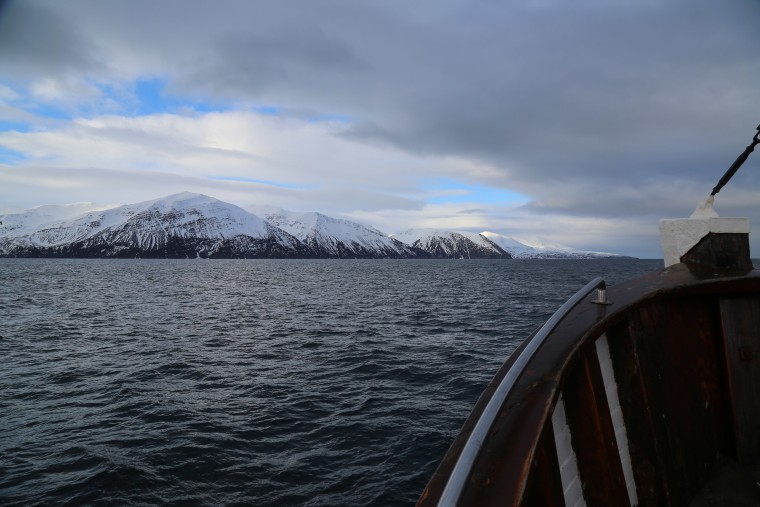
Image: Captain Heimir Hardarson takes whale watchers out on his boat in Husavik, Iceland.
Captain Heimir Hardarson has taken people onto ocean waters for nearly 30 years to experience a close encounter with some of the largest animals in the world.Carlo Angerer / NBC News

In fact, much of the demand for whale meat within Iceland had been from tourists who wanted to try it during their visits, she said. Icelanders have re-examined their relationship to whales in recent decades.

“I think tourism started and we started to get just people from all over the world. We got a new perspective, and it’s just in that time that we realized really that our land is beautiful, our water is good and also that people were interested in whales,” she said.

Hardarson, the captain of the whale watching boat, said that people have stopped eating whale meat for several reasons, including realizing the senselessness of killing an animal that can live for almost a century. And he highlighted another simple reason, as well.

“They are worth way more alive than dead,” he said. “I think there’s going to be no commercial whaling, and in the future. I can see no reason why there should be.”
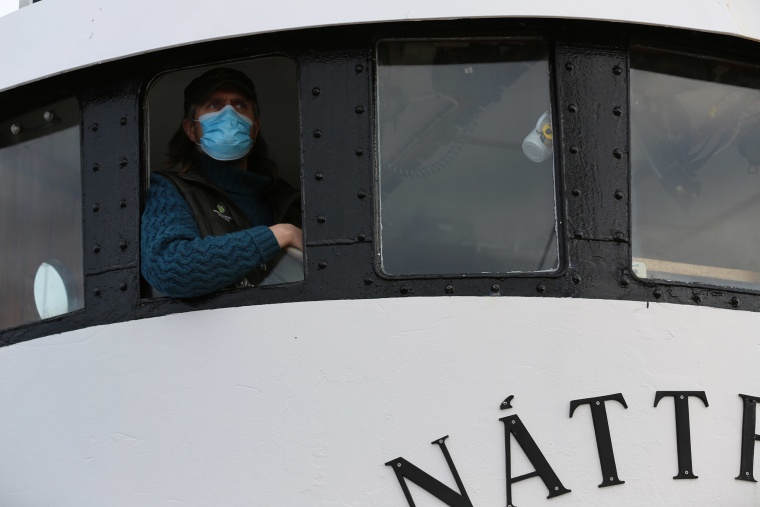
Image: Captain Heimir Hardarson, on his boat in Husavik, Iceland.
Captain Heimir Hardarson said he did not think commercial whaling would take place in the future. Carlo Angerer / NBC News

He acknowledged that animals are also affected by whale watching tours but said the experience helps motivate people to protect them.

“There are threats also connected to whale watching and something you have to keep in mind to try not to overstress or put too much pressure on the resource in this way,” he said. “We are very concerned about this, so we are trying to keep down speed and we are trying to minimize our carbon footprint.”

His hope now is that with tourism growing as Iceland allows vaccinated visitors to enter the country without having to quarantine, whale watching will once again be big business, helping to support the animals and the whole town.

Icelanders Don’t Like Whale Meat—So Why the Hunts?

The whale business isn’t booming, but hunters are reluctant to give up the trade, a new film shows.


When it comes to commercial whaling, Japan is in the limelight. The country has been widely accused of using a scientific research program as a guise for hunting hundreds of whales a year and selling their meat. Last year, an international court agreed that the program isn’t scientific and ordered Japan to shut it down—to no avail.

But while Japan’s whaling program may be the most publicized, Japan isn’t the only nation hunting whales for commercial gain. Iceland does too. Along with Norway, the country openly defies a 1986 moratorium set by the International Whaling Commission (IWC), a voluntary body whose member nations agreed not to hunt medium and large whales for profit.

The solitary minke whale, which isn’t threatened with extinction, falls into this category. So does the endangered fin whale, also called the finback whale. But Icelandic whalers hunt them both anyway. This caught the attention of Jonny Zwick, a filmmaker based in California. His documentary Breach, released on Amazon Prime in November, explores the country’s commercial whaling industry.

How is it that Iceland can even hunt the animals? When the country wanted to rejoin the whaling commission in 2002 after a decade long hiatus, it included a clause in its reentry bid objecting to the commercial whaling ban. This “reservation” to the moratorium is what allows Iceland to whale commercially. Each year, the government sets what’s supposed to be sustainable kill numbers for minke and fin whales.

Pause

Unmute

Current Time 1:57
/
Duration 2:23
Loaded: 0%

Progress: 0%

Fullscreen

WATCH: See the trailer for the upcoming documentary Breach, which examines Iceland’s controversial commercial whaling industry. Video courtesy Side Door Productions

Minke meat largely appeals to tourists who can order it at Icelandic restaurants. But meat from the endangered fin whale isn’t popular at all in Iceland, so it usually gets shipped to Japan—even though there’s not a big market there, either. International trade in fin whale is banned, but another “reservation” to that ban allows Iceland to ship whale meat to Japan.

The film shows that the whale meat business isn’t exactly lucrative, but that hasn’t stopped the country’s lone fin-whaling company, Hvalur, from trying to sell its product. The business has even incorporated whale into beer and luxury dog food, and in 2014 it was forced to take a long and circuitous route to avoid European ports that blocked passage of its ships.

Intrigued by the film, I recently caught up with Zwick to discuss it. He spoke about how Icelanders feel about whaling, what shocked him most about the country’s whaling practices, and what he thinks of Hvalur’s director, Kristjan Loftsson.

How did you get interested in the topic?

My uncle is a marine biologist conservationist. He actually informed me about what was taking place in Iceland. I found it quite shocking that I’d never heard that endangered finback whales, the world’s second largest animal, were being slaughtered for commercial gain there. I decided to go and was pretty shocked by the access that I was granted—and decided that somebody needs to tell this story.

California native Jonny Zwick produced a new documentary called Breach, which examines Iceland’s commercial whaling industry.

PHOTOGRAPH COURTESY JONNY ZWICK 

What kind of story did you want to tell?

I wanted to tell the story from the Icelanders’ point of view because obviously there are a lot of objections to whaling commercially around the world—what we’ve seen in protests in Japan—but I wanted to hear it firsthand from those involved and those who’ve been surrounded by it. When I found out that 52 percent of Icelanders still supported whaling in 2013, I really wanted to hear why.

How would you compare Iceland’s whaling industry with Japan’s or Norway’s, countries that also engage in commercial whaling?

Iceland is the only country in the world to hunt the endangered finback whale, which is very different from the commercial minke whaling that takes place in Norway and Japan. Because it’s a different species—it’s an endangered species.

Iceland’s minke whaling isn’t that prevalent, but Norway is killing a ton of minke whales off the radar, and Japan is completely under the spotlight, which is appropriate because they go down into the whale sanctuaries, and they kill thousands of whales as well, but they’re minke whales and they claim for it to be research. Norway and Iceland openly admit to it being commercial whale hunting, but no one seems to give it much attention.

Whalers in Iceland cut open a fin whale, the second largest mammal, after blue whales. The country sells its meat to Japan.

PHOTOGRAPH BY HALLDOR KOLBEINS, AFP/GETTY IMAGES 

As you filmed the documentary, what surprised you most?

The International Whaling Commission designated a scientific committee that spent a lot of time coming up with this number of 46 fin whales that would be established as a sustainable amount of whales that could be killed each season. The Icelandic government says that it’s adhering to the IWC regulations and rules, yet they have a quota of 154 for fin whales that can be killed every year. It was shocking to me that they’re getting away with this. They’re killing three times the amount that’s supposed to be sustainable.

Has the International Whaling Commission done anything to stop them?

A lot of NGOs and people who’ve been pushing for new legislation have almost given up on the IWC. They really don’t consider the IWC as a body that’s going to do anything about that, so they’re calling on specific governments, rather than even dealing with the IWC.

I was surprised that Iceland’s whaling industry pretty much comes down to one man, Kristjan Loftsson. What do you make of him?

He’s the son of the man who started Hvalur, this whaling company. And it’s really hard for him to let go, and he doesn’t want people telling him what to do with his heritage. At one point, it probably was profitable for Icelanders, for his company. But now it’s been proven as unprofitable, so his motives just become very obvious. And he just has this huge propaganda policy. He gets kids at a really young age to come and start working for him in the whaling stations, and he really tries to ingrain this nationalistic sentiment into them and get everybody on board with continuing his family practice.

The film shows the battle between the whaling and whale watching industries. Can you describe that dynamic?

The whale watching industry brought in about 300,000 people in Iceland last year alone, and Iceland’s entire population is 300,000. So this business is huge, and seeing a whale alive in the wild is more more valuable for somebody going to Iceland than trying it on their dinner plate. But then you have these tourists coming to Iceland, going whale watching, and then getting off the boat and actually trying this whale meat. When you get off the ships it’s advertised as an Icelandic tradition. So there’s just this weird dichotomy and there has to be education there.

Slabs of fin whale meat await packaging at the Hvalfijordur whaling station in Iceland.

PHOTOGRAPH BY INGOLFUR JULIUSSON, REUTERS 

So as you hoped, did you discover why Icelanders support whaling?

It’s a nationalistic thing. They gained independence in 1944, and they want to set their own rules. They consider whales their resources, and they don’t want people telling them what to do with their resources. And they get really heated about it, and they have pride about it.

What do you want this film to accomplish?

The majority of Icelanders may be in favor of whaling, but I believe that’s primarily because they haven’t received any education about whales in their surrounding waters and don’t understand that whaling is not enhancing their economy in any way but rather is hurting it. I want the film to be able to answer questions and educate people about the illegal whale hunting taking place in Iceland. They don’t call it illegal, but it is defiant, and they are breaking international law in the trade of endangered species.

This story has been corrected to reflect that Iceland gained independence in 1944.

This story was produced by National Geographic’s Special Investigations Unit, which focuses on wildlife crime and is made possible by grants from the BAND Foundation and the Woodtiger Fund. Read more stories from the SIU on Wildlife Watch. Send tips, feedback, and story ideas to ngwildlife@natgeo.com.

Iceland to keep hunting up to 2,130 whales over 5 years

February 23, 2019
1 of 2
FILE – In this file photo dated Saturday Aug. 23, 2003, Seagulls mill around in search of food as a whale is hauled onto a fishing boat after it was killed in the Atlantic Ocean off the west coast of Iceland. Iceland’s whaling industry will be allowed to hunt up to 2,130 whales over the next five years, it is revealed Saturday Feb. 23, 2019, under a new rule issued by the Nordic nation’s government. (AP Photo/Adam Butler,FILE)

REYKJAVIK, Iceland (AP) — Iceland’s whaling industry will be allowed to keep hunting whales for at least another five years, killing up to 2,130 baleen whales under a new quota issued by the government.

The five-year whaling policy was up for renewal when Fisheries Minister Kristjan Juliusson announced this week an annual quota of 209 fin whales and 217 minke whales for the next five years.

While many Icelanders support whale hunting, a growing number of businessmen and politicians are against it due to the North Atlantic island nation’s dependence on tourism.

Whaling, they say, is bad for business and poses a threat to the country’s reputation and the expanding international tourism that has become a mainstay of Iceland’s national economy.

The Icelandic Travel Industry Association issued a statement Friday saying the government was damaging the nation’s “great interests” and the country’s reputation to benefit a small whaling sector that is struggling to sell its products.

“Their market for whale meat is Japan, Norway and the Republic of Palau,” the tourism statement said. “Our market is the entire globe.”

Iceland’s Statistics Agency says tourism accounts for 8.6 percent of Iceland’s economic production. In 2016, tourism produced more revenue than Iceland’s fishing industry for the first time.

Iceland has four harpoon-equipped vessels, owned by three shipping companies reported to be running them at a loss or small profit. Last year, the industry killed 5 minke whales and 145 fin whales, according to the Directorate of Fisheries.

Since commercial whale hunting resumed in Iceland in 2006, whaling companies have never killed their full quota. As a result, it’s considered unlikely that all 2,130 whales will be killed under this policy.

The International Whaling Commission imposed a ban on commercial whaling in the 1980s due to dwindling stocks. Japan in December said it was pulling out of the IWC due to its disagreement with that policy. Iceland is still a member of the IWC.

Iceland sets target of 191 kills as country resumes whaling

https://www.theguardian.com/environment/2018/apr/18/iceland-sets-target-of-191-kills-as-country-resumes-whaling

Authorities grant whalers a quota to hunt the endangered fin whale this summer after a two-year pause

Whaling company Hvalur has a quota of 191 kills as Iceland announced it would resume hunting the endangered fin whale this summer.
 Whaling company Hvalur has a quota of 191 kills as Iceland announced it would resume hunting the endangered fin whale this summer. Photograph: Adam Butler/AP

Icelandic fishermen will resume their hunt for the endangered fin whale this year after a two-year pause and have set a target of 191 kills for the season.

An apparent loosening of Japanese regulations on Icelandic exports had made the resumption of the hunting commercially viable again, the country’s only fin whaling company, Hvalur, announced.

The firm also has plans to collaborate with researchers from the University of Iceland to develop medicinal products made of whale blubber and bones, aimed at combating iron deficiency.

Sigursteinn Masson, at the Icelandic branch of the International Fund for Animal Welfare (Ifaw), said: “I’m very disappointed. This decision is not based on real market needs and is not in line with public opinion polls on whaling, which doesn’t belong in modern times.”

Iceland and Norway are the only countries in the world to authorise whaling in defiance of the 1986 International Whaling Commission’s moratorium.

Iceland resumed whaling in 2006 on economic grounds and has defied threats of US sanctions to continue to do so. The US did not invite Iceland, one of the largest fishing nations in the north Atlantic, to the Our Ocean conference in 2014.

Japan hunts whales, but claims it does so for scientific research purposes, although a large share of the whale meat ends up being consumed.

Iceland’s whaling season opens on 10 June and the authorities have granted its whalers a quota of 161 fin whales in 2018, compared to 150 in 2017. In addition, Hvalur’s two ships are entitled to hunt 20% of its unused quota from last year, which means it will be allowed to hunt an 30 additional whales.

During its last hunt in 2015, Hvalur killed a record 155 fin whales, which are the planet’s second largest mammal after the blue whale.

The latest records from the Icelandic institute suggest there are about 40,000 in the north Atlantic ocean, up from 25,000 in 2006.

Iceland has only one other whaling company, IP-Utgerd Ltd, which specialises in hunting minke whales. The meat from the whales is served in Icelandic restaurants, but largely to cater to intrigued tourists.

A poll commissioned in October 2017 by the Ifaw suggested that 35.4% of Icelanders supported the fin whale hunt, compared to 42% in 2016.

The two-year suspension of hunting followed the claims from the Japanese authorities that the Icelandic company had not met Japanese health standards.

The company’s attempts to ship 1,700 tonnes of whale meat to Japan via Angola in 2015 had also been hampered by the reluctance of some foreign ports to allow transit of the meat.

Kristjàn Loftsson told the Associated Press that the company was working with Japanese officials on developing methods to fulfil Japanese standards for fresh meat imports.

Icelandic Ravens In Danger Due To Extensive Hunting

Icelandic Ravens In Danger Due To Extensive Hunting

Icelandic Ravens In Danger Due To Extensive Hunting

News

Icelandic Ravens In Danger Due To Extensive Hunting

Icelandic Ravens In Danger Due To Extensive Hunting

Photos by
USFWS

Published September 7, 2017

Around 3,000 ravens are hunted each year, which has lead to a serious decline in their numbers, reports RÚV.

Ravens are hunted because of the damage they can cause to crops and other bird species due to them feeding on eggs. Unlike many other bird species, however, there is no designated hunting season for Ravens and they can, therefore, be hunted freely all year round.

Kristinn Haukur Skarphéðinsson, a bird expert from the Environment Agency of Iceland said that actions need to be taken to preserve the species.

Needs to be protected

In the late ‘80s there were around 13,000 ravens in the country, but since then the numbers have rapidly dwindled.

“The ravens are threatened because their numbers have declined steadily for decades, and if nothing is done then there will be very few left in the future,” said Kristinn. “They are on the vulnerable list and will probably remain so.”

He claimed that the agency will meet with the Björt Ólafsdóttir, the Minister for the Environment and Natural Resources later in the month to reiterate its view that Icelandic ravens should be protected, if they are to survive as a species.

The mythical bird

Throughout history the raven has been considered the holiest and most revered bird in all of the Nordic countries. Óðinn had two, some of the first settlers used them to find shore and sometimes they were even seen as gods.

But who cares about history and cool animals, right?