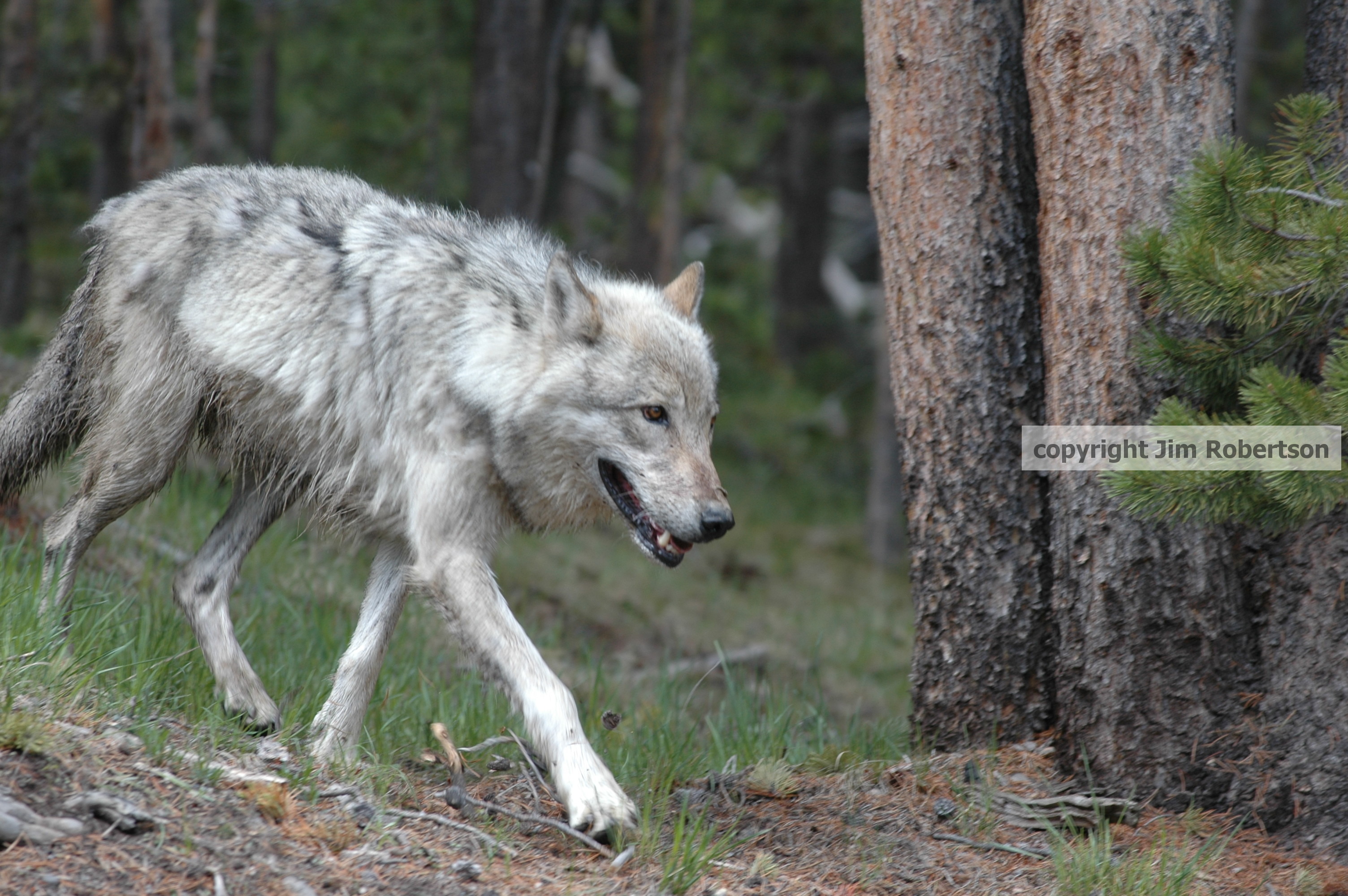
Bill to Fund Killing up to 500 Wolves Survives Committee

http://magicvalley.com/news/local/govt-and-politics/bill-to-fund-killing-up-to-wolves-survives-committee/article_1dbf6eec-87dd-11e3-bbcb-0019bb2963f4.html

January 28, 2014
By Kimberlee Kruesi –

BOISE • Gov. C.L. “Butch” Otter’s proposed $2 million fund to kill as many as 500 wolves barely passed its preliminary vetting Monday by the House Resources and Conservation Committee.

Committee members quizzed sponsors state Sen. Bert Brackett, R-Rogerson, and Rep. Marc Gibbs, R-Grace, on the effectiveness of creating a separate fund — which would come with a five-member oversight board — when the state already funds a predator damage board.

Bracket and Gibbs responded that the proposed expense would keep the focus on wolves instead of splitting resources on the state’s Animal Damage Control Board.

Federal support to control wolves will stop in 2016, Brackett said. In Fiscal Year 2013, the federal government provided $650,000 of the state’s $1.4 million wolf management budget.

If the bill passes, the $2 million would be a one-time appropriation with the livestock industry and hunting license fees contributing $110,000 each year.

“The priority of this whole effort is to keep the wolves delisted,” Brackett said.

Idaho’s wolves were taken off the endangered species list in 2011. Today, the state’s wolf population is estimated to be around 680 animals, according to the Idaho Department of Fish and Game. If it falls below 150, the species will be once more classified as endangered by federal regulators.

The committee repeatedly questioned the need for two boards dedicated to killing predator animals that cause damage to livestock or Idaho’s elk population.

“How is this a more cost-effective approach to start a new board than to put a little more money into Idaho Fish and Game?” asked state Rep. Illan Rubel, D-Boise.

Gibbs countered that a separate board allows the state to be flexible.

The new wolf fund would not pay for livestock killed by wolves but to kill wolves that cause damage, Gibbs said.

“There are no new ways to control wolves being projected or being created by this bill,” Gibbs said. “They are simply subject to the tools we have today, which is sport hunting, trapping and aerial gunning.”

The committee voted 9-8 to move the legislation forward, with the chairman initially declaring the bill failed before Gibbs speaking out he hadn’t voted and provided the “yes” needed for the bill to be printed.

This is the second consecutive year lawmakers have tried to secure funding dedicated wolf control. Last year, Otter vetoed a bill that would have diverted money from Fish and Game to a wolf management fund. The bill was sponsored by Rep. Judy Boyle, R-Midvale, who voted against Brackett’s and Gibbs’ proposal.

Boyle said committee recommendations from the summer of 2013 supported added money to the Animal Damage Control Board for wolf damage.

“I feel like this is a breach of contract of what was promised in that committee,” she said.

Brackett said that while a committee may have submitted recommendations, their bill was based on what the governor wanted.

Idaho’s wolf control management strategies have received criticisms recently after Fish and Game hired a trapper for the first time to kill two packs in the Middle Fork of the Salmon River.

Wolf activists also spoke out against Idaho’s elk management plan during a recent public hearing updating the document.

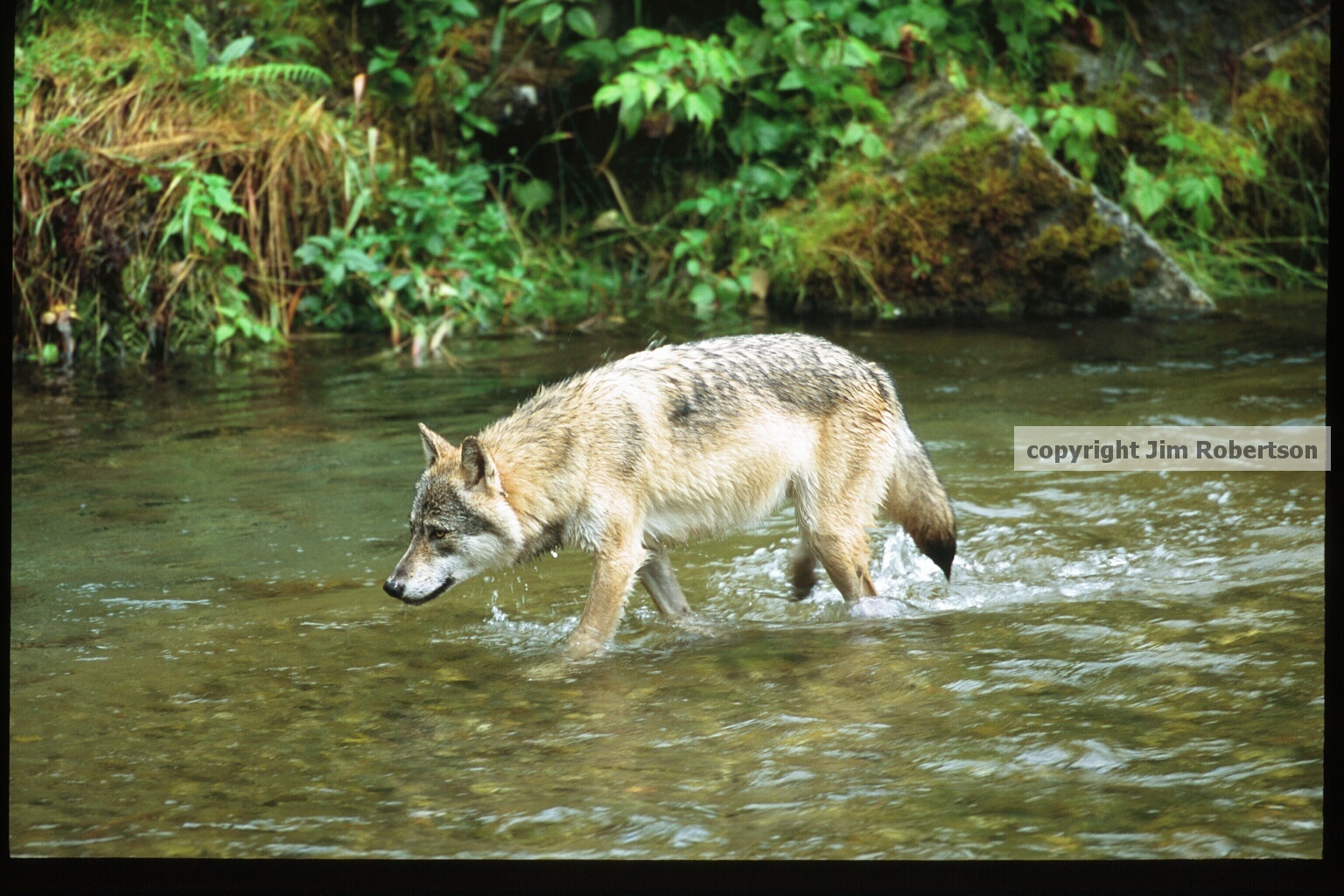
copyrighted wolf in river

What Motivates a Wolf Killer?

Text and Wildlife Photography ©Jim Robertson, 2014. All Rights Reserved

Text and Wildlife Photography ©Jim Robertson, 2014. All Rights Reserved

Killing a wolf is a crime against nature—and the motive depends on the kind of perpetrator. To a trophy hunter, a dead wolf is something to mount on a wall and brag about. By literally possessing the animal, they can relive their kill over and over, remorselessly boosting their flagging self-esteem every time they vacuously gaze at their victim’s lifeless body. For a fur trapper, a dead wolf is just a hide and a chance to play modern-day frontiersman. Although there’s no real frontier left, they consciously choose to revive a bloody, destructive lifestyle—partly for money, but mostly for a sense of identity.

But to a “wolfer,” the kind of person whose central preoccupation is hiring on to rid an area of each and every last wolf he can, a prime sense of greed is the motivating factor.

Sure, a guy like that, such as the wolfer contracted by the Idaho Department of Fish and Game to snuff out the Golden Creek and Monumental Creek packs in Idaho’s Frank Church Wilderness Area, must get an ego boost from being known as a “professional” wolf killer. He no doubt experiences some kind of perverse thrill every time he finds an animal desperately trying to free him-or-herself from one of his leg crushing traps. And he probably even gets off on hearing that his actions are upsetting a lot of empathetic wolf advocates who desperately want him to stop his atrocities. But the main reason the wolfer does the job he does is greed, pure and simple: a selfish lust for power, control and of course, money.

That may not seem like a lot to accuse him of in a country built on the spoils of selfishness and greed. Yes, he is surely evil incarnate, soulless and sick to the core, but as long as someone is paying him to “get the job done”… And who the hell pressed the state into hiring a hit man to eliminate established packs, tormenting individual wolves and disrupting nature’s time-tested order? Ask the Idaho trophy elk hunting syndicate.*

The wolves in the Frank Church Wilderness area weren’t after anyone’s cows or frightening school kids at bus stops, they were just doing what comes naturally to wolves. Killing off apex predators to make it easier for sport hunters has got to be the height of human arrogance.
________________________________
*syn-di-cate (noun) 5) an association of gangsters that controls an area of organized crime

Idaho hunter hired to kill wolves “gets the job done”!

[This answers the question, “How many are left?”]

http://www.oregonlive.com/pacific-northwest-news/index.ssf/2014/01/idaho_hunter_hired_to_kill_wol.html

by Associated Press, January 29th 2014

KETCHUM, Idaho — A professional hunter has been called out of a federal wilderness in central Idaho because he succeeded in killing all the wolves in two packs, a state agency spokesman said.

Idaho Department of Fish and Game spokesman Mike Keckler tells the Idaho Mountain Express in a story on Wednesday that the hunter killed eight wolves with traps and a ninth by hunting.

Gus Thoreson of Salmon started hunting and trapping in the Frank Church River of No Return Wilderness in mid-December as part of a state plan to eliminate wolves to boost elk numbers. The state agency had planned to keep Thoreson hunting through the winter.

“He had been pretty effective early on, but it had been two weeks since he had taken any wolves, so we decided there was no reason to keep him in the area any longer,” Keckler said.copyrighted wolf in river

Keckler said the average size of a wolf pack in Idaho is five wolves, so the agency determined it had reached its goal of eliminating the Golden Creek and Monumental Creek packs. Officials announced Monday that Thoreson was coming out.

Fish and Game Director Virgil Moore’s acknowledgement that Thoreson’s hunt relied on the use of the U.S. Forest Service’s backcountry airstrips and cabin had prompted strong emotions, including from wolf advocates who sued in federal court to force him to quit.

Defenders of Wildlife, Western Watersheds Project and Wilderness Watch filed the lawsuit Jan. 6 asking the judge to stop the plan immediately to give the case time to work through the courts. The environmental groups were joined by Ralph Maughan, a former Idaho State University professor, conservationist and long-time wolf recovery advocate from Pocatello.

They lost their initial bid on Jan. 17 when a federal judge rejected their request for a temporary restraining order. The conservation groups argued that Thoreson’s activities violated the 1964 Wilderness Act and other federal acts.

The groups had appealed that decision to the 9th U.S. Circuit Court of Appeals when the state agency announced the hunter was being pulled out.

“I am happy that the Idaho Department of Fish and Game has relented, but it is unfortunate that so many wolves have been taken in this senseless plan to manhandle wildlife in an area that Congress recognized as a wilderness,” said Ken Cole, National Environmental Policy Act coordinator at the Boise office of Western Watersheds Project.

Wolves were reintroduced to Idaho in the mid-1990s and have since flourished in backcountry regions, including the Frank Church wilderness.

Last year, state game managers estimated Idaho’s wolf population at 683, an 11 percent drop from 2012. The highest total was in 2009, when it estimated 859 wolves were in the state.
___

Information from: Idaho Mountain Express, http://www.mtexpress.com

Never Mind, Idaho Does Suck–Worse Than Ever

[Drop those champagne glasses, Idaho doesn’t deserve praise just yet. Although an Idaho judge decided to halt the slaughter of two packs in the Frank Church wilderness area, some of their lawmakers won’t be satisfied until they’ve killed most of the wolves in the rest of the state!!]…

http://www.nbcmontana.com/news/lawmakers-2m-aimed-to-kill-more-than-500-wolves/24142924

Lawmakers: $2M aimed to kill more than 500 wolves

             Associated Press
POSTED: 3:29 PM Jan 27 2014

BOISE, Idaho –

Republicans promoting Gov. C.L. “Butch” Otter’s proposed $2 million fund to kill wolves say they hope the cash helps eliminate more than 500 of the predators in Idaho, reducing numbers to 150 animals in 15 packs.

Rep. Marc Gibbs of Grace and Sen. Bert Brackett of Rogerson Monday told the House Resources and Conservation Committee the cash set aside with Otter’s proposal will bolster Idaho’s predator arsenal.

Idaho now has about 680 wolves, according to state Department of Fish and Game estimates.

Brackett says the priority is to keep wolves delisted, even with these proposed killings.

He said provided Idaho still has 150 wolves – the minimum required in a 2002 plan approved by the Idaho Legislature – “we’ll have a defensible line of defense” against renewed federal protections.

copyrighted Hayden wolf walking

Victory For Idaho Wolves!

Earthjustice went to court to stop Idaho from exterminating the Golden and Monumental wolf packs in central Idaho’s Frank Church—River of No Return Wilderness.
And we won! The Idaho Department of Fish and Game announced that it is halting its wolf extermination program as of today.
This will stop the wolf killings and restore the natural balance between predator and prey in the Idaho wilderness area.
A howling wolf in the snow. (Judilen / istockphoto)

Idaho “Tough on Wolves”

Here is part of an article entitled “Tough on Wolves” in Spokane’s Inlander: http://www.inlander.com/spokane/tough-on-wolves/Content?oid=2256023

If the education budget is in JFAC’s custody and Medicaid expansion is off the table, what hot topics will the legislators address? My prediction: Guns and wolves will attract a fair amount of attention.

According to the Fish and Game Department, Idaho now has around 680 wolves throughout the state. In 2009, wolf hunting became legal, and the governor announced he wanted to shoot the first one.

Idaho and its predators caught the attention of the New York Times this past December, when a planned coyote and wolf shoot-to-kill derby was scheduled in Salmon. Organizers offered $2,000 to the participants who killed the most animals. The event fell flat when no wolves and only 21 coyotes were bagged by the 230 registered contestants.

Not everyone is happy with Governor Otter’s $2 million budget request to establish a special wolf control board, separate from the Department of Fish and Game. “Control” is another word for “kill.” I, for one, would rather put the $2 million in the public school pot.

The Fish and Game Commission is already actively “controlling” wolves by hiring a lone gunman to eliminate wolves in the 2,367-acre Frank Church River of No Return Wilderness. The Idaho Conservation League has been remarkably tolerant on the wolf issue. But recently its Executive Director Rick Johnson asked, ” If they can’t live in the backcountry, where can they live?”

When 35 gray wolves were released in central Idaho in 1995, schoolchildren gave them names and followed their radio-relayed paths through the wilderness. As they thrived, their names disappeared and the wolves became numbers. As they multiplied, they became pests. Wolves, like coyotes, have always been pests to Idaho ranchers — and to the Idaho legislature.

It’s refreshing to learn about Oregon’s approach to a burgeoning wolf population. Oregon has developed a policy that calls for sheep and cattle outfits to use nonlethal methods to prevent wolves from snatching baby animals, especially lambs. These include simple measures such as keeping herds away from known wolf dens, employing loud noise alarms and scare devices, enlisting protective dogs and human herders, constructing barriers and building fences. Such items add costs but also avoid conflicts.

Consumers could be wooed to pay a little bit more for lambs raised in a certified, nonlethal-to-wolves environment.

The questions the reintroduction of wolves into Idaho has presented are worth pondering. Do we believe game hunting should include animals that we don’t plan to eat? Is there room in our hearts, minds and geographical space for predators other than our own species?
copyrighted wolf in water

With 9 wolves now dead, Fish and Game meeting provides outlet for supporters, detractors

http://www.idahostatesman.com/2014/01/16/2976203/with-9-wolves-now-dead-fish-and.html#storylink=cpy

by Rocky Barker
Stabe Hedges of Boise spoke quietly before a crowd of 150 people and the Idaho Fish and Game Commission on Wednesday.

But he spoke for hunters across Idaho who no longer find it relatively easy to find elk in the place where they have hunted since their youth.

“I know what we used to have here and I know what was lost,” Hedges said.

As Hedges looked around the room, most of the people were there to protest Fish and Game’s elk management plan authorizing the agency to hire a hunter-trapper to eliminate two packs of six wolves in the Frank Church-River of No Return Wilderness. John Robison, public land director of the Idaho Conservation League, asked the people filling the Washington Group Center auditorium for a show of hands for people angry about the killing.

The majority raised their hands.

“Its upsetting to me that so many people support an animal that has decimated the state,” Hedges said.

Despite the great differences in opinions, hunters and animal lovers passionately expressed their feelings about wolves and elk but also listened to each other. The hearing was a far cry from the angry confrontations that have marked past hearings on wolves in Idaho and perhaps reflected the shift since the animal was removed from federal protection and opened to hunting.

“Restoration must include predator harvest on a consistent basis as research indicates that wolf populations can withstand human-caused mortality of 30 to 50 percent without experiencing declines in abundance,” said Grant Simonds, executive director of the Idaho Outfitters and Guides Association.

Boise resident Pam Marcum told the commission to “please have some grit to cancel the wolf eradication.”

And Jen Pierce, a geology professor at Boise State University, read a statement from 15 scientists, including professors at the University of Idaho and Idaho State University, protesting the killing.

“We feel your decision to hire a professional hunter to exterminate two wolf packs in the Frank Church Wilderness does not demonstrate informed management, both economically and ecologically, and contradicts the mission statement of the Idaho Fish and Game,” Pierce said. “Sending in the hunter-trapper prior to the IDFG state elk management meeting on January 16th is also perplexing.”

So far the agency’s hunter-trapper has killed nine wolves in the wilderness area, said Jon Rachael, Fish and Game’s big game manager.

Read more here: http://www.idahostatesman.com/2014/01/16/2976203/with-9-wolves-now-dead-fish-and.html#storylink=cpy

Activists Protest Killing Wolves to Boost Elk Numbers

http://magicvalley.com/lifestyles/recreation/activists-protest-killing-wolves-to-boost-elk-numbers/article_8c3c5232-7e77-11e3-b7f0-0019bb2963f4.html

By BRIAN SMITH

BOISE • Have some “grit” and stop “exterminating” Idaho’s wolves.

That was Pam Marcum’s message to Idaho Fish and Game commissioners Wednesday night.

Marcum’s charge was echoed by numerous other biologists, wildlife advocates and enthusiasts, many of whom questioned the science and ethics behind Fish and Game’s predator management plan.

Many locals complained that the commission was solely focused on boosting elk populations and keeping hunters happy instead of balancing the state’s wildlife. Some said wolves can have a positive impact on the ecosystem, despite hunters’ claims to the contrary.

“Use peer-reviewed science, not political science,” Marcum said.

Several hunters spoke in support of state wolf control. Stabe Hedges said it was upsetting to see so many people supporting an animal that harms Idaho’s economy. He advocated for increased wolf hunting opportunities.

“I personally would like to see the numbers of wolves reduced by 40 or 50 percent,” Hedges said. “I would like to see some of the elk numbers rebound. I hiked 32 miles this year before I saw a single elk, and that’s a vast difference from years gone by.”

The public comment hearing preceded today’s annual commission meeting, which was open to the public.

The commission is set to hear a legislative update and presentations from Fish and Game staff on wildlife such as elk, turkeys, chinook salmon and deer today. Later in the day, it will hear a budget preview and a report on a wildlife collision reduction project.

At 9:35 a.m., the commission is to consider approving its new elk management plan. The plan, last updated in 1999, is a guide for season-to-season management of the state’s many herds.

The plan also addresses changes in elk habitat, how growing elk populations damage crops, and how to more aggressively target predators such as bears, mountain lions and wolves.

Idaho Conservation Leauge’s John Robison said his organization is “deeply concerned” about the elk management plan and its impacts on wolves.

Robison asked for a show of hands from the audience to see who was angered by a recent pack killing at state expense in the Frank Church-River of No Return Wilderness. Most people in the packed room raised their hands.

“We believe that this unprecedented public outcry about this decision should force the commission to stop and reassess its approach on wolves, wilderness and predators,” he said.

The commission also should reduce its wolf-trapping program, said Ken Cole, a National Environmental Policty Act coordinator with the Western Watersheds Project. It should require trappers to check their snares more often, he said.

“These animals should not be out there suffering for more than 72 hours,” he said.

Not so — the areas where wolf trapping is allowed should be expanded in southern Idaho, said Pat Carney, president of the Idaho Trappers Association.

“Instead of the state having to pay trappers to go in and trap these other wolves, it would be better if locals could go in and do it instead of having tax dollars pay for it,” Carney said.

The decision to kill wolves in wilderness areas doesn’t make sense “economically and ecologically,” said Jennifer Pierce, an associate professor of geosciences at Boise State University.

“As scientists who have worked in the Frank Church area for decades, the eradication of large predators from this ecosystem is potentially detrimental to all parts of the ecosystem,” she said. “Was there a science-based rationale for killing wolves in wilderness? If so, what was it?”

copyrighted wolf in river

Seven Wolves Killed In Idaho’s Frank Church Wilderness by Government Hired Trapper

If wolves can’t live in a such a large and inaccessible wilderness area, then where?

http://networkedblogs.com/SEGKp

By Ken Cole On January 8, 2014

Plaintiffs in the case against the wolf killing plan for the Frank Church-River of No Return Wilderness in Idaho have learned that at least 7 wolves have been killed by the Idaho Department of Fish and Game hired trapper as of January 2nd. It is possible that more have been killed but communication with the trapper is conducted only when the trapper calls out using a satellite phone which is kept turned off most of the time.

From the court filing:

Plaintiffs learned from counsel for defendant Virgil Moore that, as of January 2, 2014, IDFG’s hired hunter-trapper had killed seven wolves within the targeted wolf packs, six by trapping and one by hunting, and that more wolves may have been killed as of today. Defendant Moore’s counsel further advised that IDFG’s only means of communication with the hunter-trapper is a satellite telephone in the hunter-trapper’s possession, and that, to preserve the phone’s batteries, the hunter-trapper turns on the phone only when he places a call.

In response, the plaintiffs have filed a second motion for a Temporary Restraining Order (TRO) with an expedited briefing schedule.

acrobat pdfRead Second Motion for TRO

Plaintiffs, represented by Tim Preso of Earthjustice, include Ralph Maughan and three conservation groups—Defenders of Wildlife, Western Watersheds Project, Wilderness Watch, and Center for Biological Diversity. The case, which was filed yesterday, challenges US Forest Service’s approval of the Idaho Department of Fish and Game’s plan to exterminate two wolf packs in the Frank Church-River of No Return Wilderness on the grounds that it violates several laws, management plans, and policies which are meant to protect wilderness characteristics, wildlife, and natural processes within wilderness.

528624c939a88_preview-620

Conservationists Ask Court to Halt Wolf Extermination in One of Nation’s Premiere Wilderness Areas

http://www.thewildlifenews.com/2014/01/07/conservationists-ask-court-to-halt-wolf-extermination-in-one-of-nations-premiere-wilderness-areas/

POCATELLO, Idaho – A coalition of conservationists, represented by the non-profit environmental law firm Earthjustice, today asked a federal judge in Idaho to halt an unprecedented program by the U.S. Forest Service and Idaho Department of Fish and Game (IDFG) to exterminate two wolf packs deep within the largest forested wilderness area in the lower-48 states.

In mid-December 2013, IDFG hired a hunter-trapper to pack into central Idaho’s 2.4-million-acre Frank Church-River of No Return Wilderness to eradicate two wolf packs, the Golden and Monumental packs, in the interest of inflating elk populations for outfitters and recreational hunters. The U.S. Forest Service, which administers the wilderness, approved the extermination program by authorizing use of a Forest Service cabin and airstrip to support wolf extermination activities.

“A wilderness is supposed to be a wild place governed by natural conditions, not an elk farm,” said Earthjustice attorney Timothy Preso. “Wolves are a key part of that wild nature and we are asking a judge to protect the wilderness by stopping the extermination of two wolf packs.”

Earthjustice is representing long-time Idaho conservationist and wilderness advocate Ralph Maughan along with three conservation groups—Defenders of Wildlife, Western Watersheds Project, and Wilderness Watch—in a lawsuit challenging the wolf extermination program. The conservationists argue that the U.S. Forest Service’s approval and facilitation of the program violated the agency’s duty to protect the wilderness character of the Frank Church Wilderness. They have requested a court injunction to prohibit further implementation of the wolf extermination program until their case can be resolved.

Frank Church-River of No Return Wilderness ©Ken Cole

Frank Church-River of No Return Wilderness ©Ken Cole

“Idaho’s program to eliminate two wolf packs from the Frank Church Wilderness Area for perceived benefits to elk hunting is just the most recent example of the state bending over backwards to accommodate the wishes of people who hate wolves,” said Jonathan Proctor of Defenders of Wildlife. “Wilderness areas are places for wildlife to remain as wild as is possible in today’s modern world. If Idaho’s wildlife officials won’t let wolves and elk interact naturally in the Frank Church Wilderness, then clearly they will allow it nowhere. The U.S. Forest Service must immediately prohibit the use of national forest wilderness areas for this hostile and shortsighted wolf eradication program.”

The region of the Frank Church Wilderness where IDFG’s hunter-trapper is killing wolves is a remote area around Big Creek and the Middle Fork of the Salmon River. Even though this region hosts one of the lightest densities of hunters in the state, IDFG prioritized elk production over protection of the area’s wilderness character. The Forest Service failed to object to IDFG’s plans and instead actively assisted them.

“As someone who has enjoyed watching members of the Golden Pack and spent time in the area where these wolves live, I am startled that IDFG thinks it is acceptable to kill them off. If wolves can’t live inside one of America’s biggest wilderness areas without a government extermination program then where can they live?” asked Ken Cole of Western Watersheds Project. “The value of wilderness is not solely to provide outfitters elk to shoot,” Cole added.

acrobat pdfRead the Complaint acrobat pdfRead the Motion for a Temporary Restraining Order (TRO) acrobat pdfRead the Memo in Support of TRO and Preliminary Injunction