Back Off the Wolf Killing Crusade Idaho

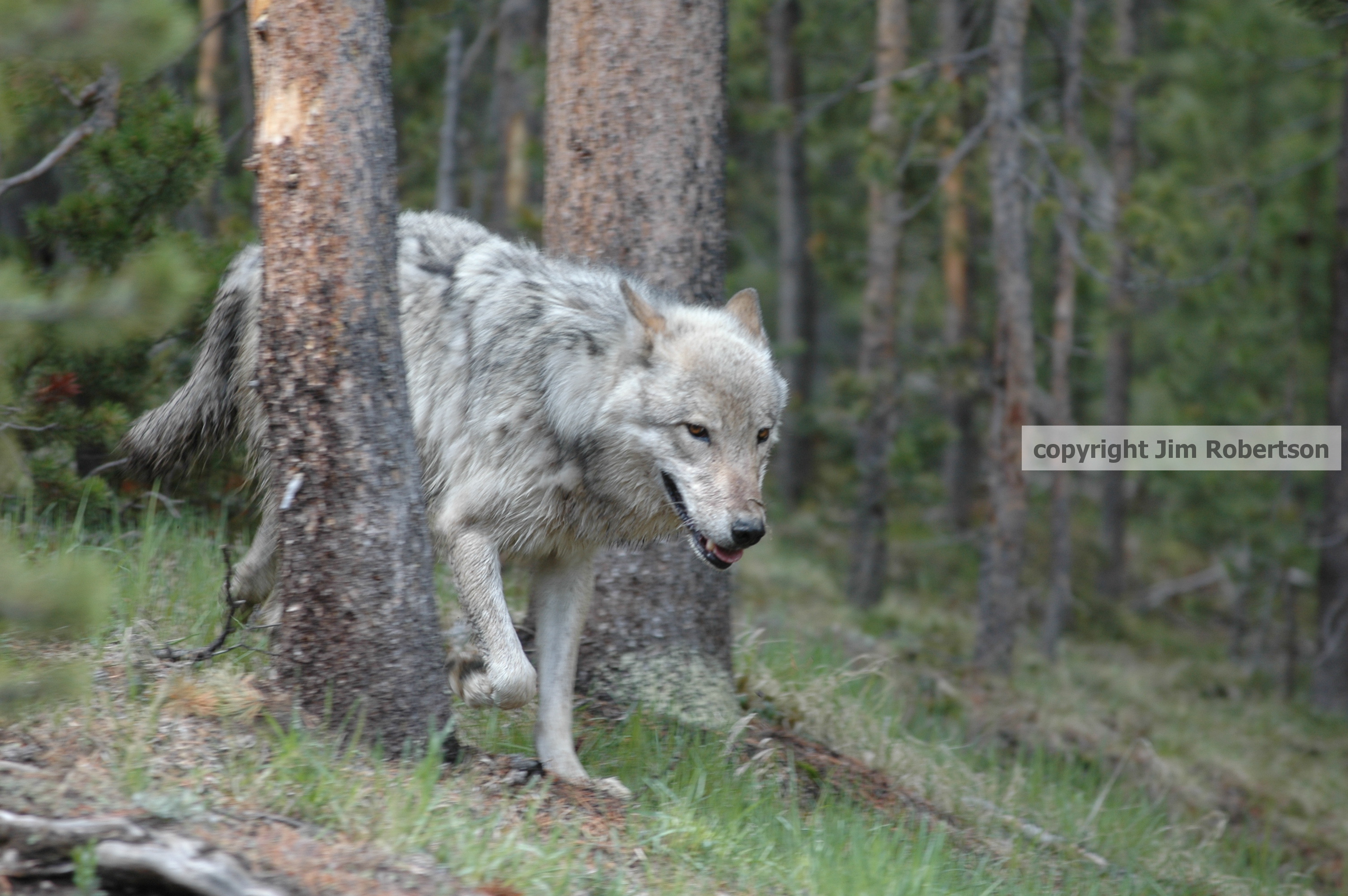
copyrighted Hayden wolf in lodgepoles

Year after year, Idaho demonstrates its intolerance for wolves. Idaho Department of Fish and Game, while tasked with preserving all of Idaho’s wildlife, continues to ratchet up hunting, trapping and snaring pressure on Idaho’s diminishing wolf population.

Around 600 wolves live in Idaho, which is also home to 83 times more coyotes, 33 times more bears, and four-to-five times more mountain lions than wolves. All of these species eat other animals to survive and all sometimes attack livestock. But Idaho reserves its special treatment for wolves alone.

Idaho’s wolf population has fallen consistently since 2009. Every year wolves have been under state management, Idaho has expanded, extended and loosened wolf hunting and trapping regulations. It’s an indefensible notion that “adequate regulatory mechanisms” are in place, as mandated by the Endangered Species Act for the oversight period under state management.

Idaho claimed it would manage wolves like any other species. No Idaho wildlife management authority can honestly defend this position.

Actions by Gov. Butch Otter and the state Legislature indicate they believe IDFG isn’t effective enough in killing wolves. The Wolf Control Board bill, “the wolf-kill bill,” was a priority the governor chose for his January State of the State address. Now, 400,000 taxpayer dollars for killing wolves is likely to be a recurring expense. Legislative sponsors and supporters repeatedly stated their intent to reduce Idaho’s wolf population to 150 wolves and 15 breeding pairs, the federal minimum.

As the state of Idaho and IDFG reach to further extremes to kill more and more wolves, these actions aren’t going unnoticed.

Far beyond the scope of wildlife management, these practices are quickly giving a black eye to Idaho’s reputation across the country. Idaho is not an island. It does not exist in a vacuum. If the state walks far enough out on a limb, the limb will break, bringing Idaho back to earth under an increasingly focused spotlight.

As fewer people take up hunting, those who enjoy Idaho’s nature in a nonconsumptive way steadily increase. IDFG’s one-dimensional revenue stream from hunting and fishing licenses and tag sales cannot keep pace with fiscal challenges. It’s time to realign economic realities with income-generating constituencies.

Recognizing the increasing difficulty of remaining solvent with growing bills, Director Virgil Moore commendably organized the 2012 IDFG Wildlife Summit to modernize the agency. Unfortunately, necessary innovations are still not forthcoming. Instead, the agency continues pursuing scientifically unsupportable programs, such as excessive and expensive lethal wolf removal and expanding trapping.

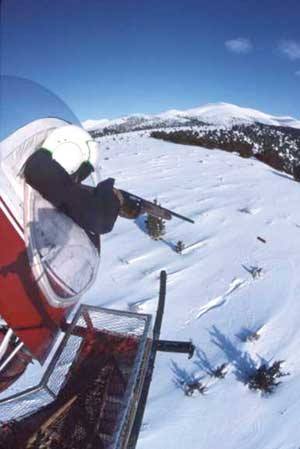
Recently, IDFG conducted its sixth costly wolf eradication action in the Lolo, killing 23 wolves from a helicopter, to artificially bolster a declining elk herd, even though IDFG has acknowledged the decline was precipitated by dramatic changes to habitat and vegetation that support elk.

This spring, IDFG hired a professional hunter/trapper to kill wolf packs in the same designated wilderness where wolves were originally reintroduced. IDFG has also declared another goal – reducing wolf populations by 60 percent in the same wilderness.

Remarkably, as this continues, Idaho’s statewide elk population of 107,000 has been growing since 2010. The presence of wolves equating to poor hunting opportunity is a fallacy. Wyoming, with the third largest wolf population in the West, reported their three largest elk harvests on record in the past four years, with 45 percent success in 2013. Hunters can coexist with wolves while maintaining a robust hunting tradition.

Efforts to kill wolves on Idaho’s wild landscapes, especially in designated wilderness – where wolves belong – will never yield the long-term results the agency desires. IDFG continues burning precious dollars on failing programs, while gaining increasingly widespread negative publicity as the black sheep of the nation. For the sake of our beautiful state and all of its wildlife, let’s hope that Idaho soon corrects course.

Garrick Dutcher is the program director for the Idaho-based national nonprofit organization Living With Wolves.

Read more here: http://www.idahostatesman.com/2014/04/01/3111241/back-off-wolf-crusade-and-dispel.html#storylink=cpy

Idaho Intent on Killing Wolves in the Wilderness

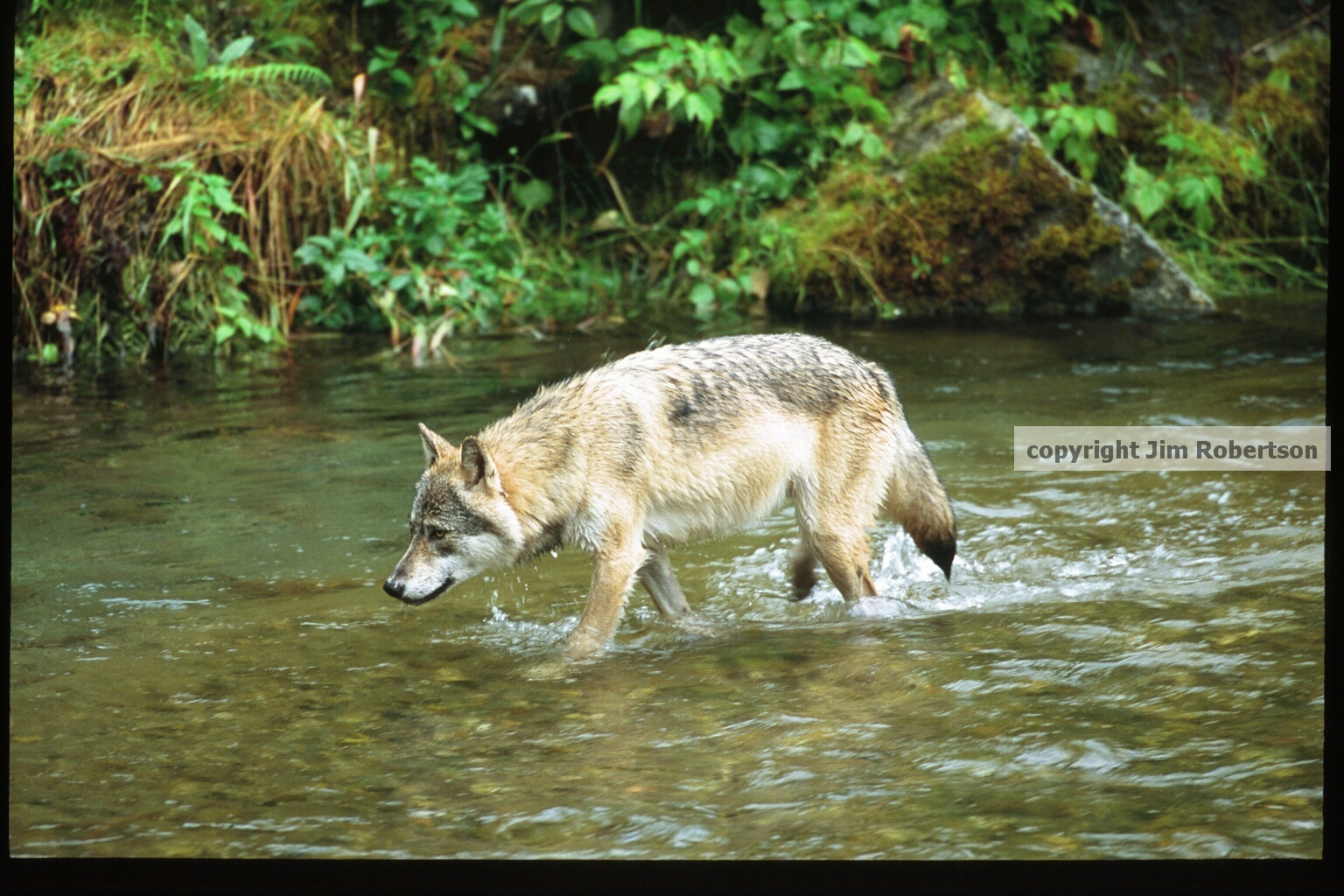
copyrighted wolf in water

By Ken Cole On February 12, 2014
The Wildlife News

New plan aims to reduce population by 60% to please elk hunters

POCATELLO, Idaho – In an effort to inflate elk populations for commercial outfitters and hunters, the Idaho Department of Fish and Game (IDFG) hopes to kill 60 percent of the wolves in the Middle Fork area of central Idaho’s Frank Church River of No Return Wilderness, according to a predator management plan for the area released this week.

IDFG’s plan calls for an intensive program of wolf killing in the largest forested wilderness area in the lower-48 states through several successive years of professional hunting and trapping efforts designed to boost the local elk population beyond the level that can be sustained through natural predator-prey interactions. It comes just weeks after a hunter-trapper hired by the state wildlife agency killed nine wolves in an effort to exterminate two wolf packs in the Middle Fork area. State officials terminated the program in the midst of an emergency court proceeding to halt the program.

Earthjustice is in court to stop the professional extermination of wolves in central Idaho’s Frank Church-River of No Return Wilderness. Last month, Earthjustice filed an emergency motion asking the Ninth Circuit Court of Appeals to preserve the wolves and their vital contribution to the wilderness character of the . Rather than presenting its legal defense to Earthjustice’s argument, IDFG temporarily halted the program until the end of June 2014. Earthjustice will be filing its opening brief later this week in the Ninth Circuit proceeding. Earthjustice is representing long-time Idaho wilderness advocate Ralph Maughan, along with Defenders of Wildlife, Western Watersheds Project, Wilderness Watch, and Center for Biological Diversity in the case.

Statement from attorney Tim Preso of the Northern Rockies office of Earthjustice.
“The state of Idaho has made clear that it intends to double down on its plan to transform the Middle Fork area of the Frank Church River of No Return Wilderness from a naturally regulated wilderness to an elk farm benefiting commercial outfitters and recreational hunters. The only thing that is not clear is whether the U.S. Forest Service will step up to defend the wilderness character of this landscape on behalf of all the American people or instead will, as it has done to date, let Idaho effectively run the area to advance its own narrow interest in elk production. For our part, we intend to do everything we can to obtain a federal court ruling that will require the Forest Service to protect this special place and its wildlife.”

Statement from Idaho resident and long-time conservationist Ralph Maughan:
“By implication our lawsuit aims to protect the entire nationwide Wilderness Preservation System from similar efforts to transform the wild into a bland farm for a few kinds of common animals.”
Statement from Idaho resident and Defenders of Wildlife representative Suzanne Stone:
“It’s clear that IDFG isn’t interested in sustainable wolf recovery. Instead, they’re focused on doing anything they can to kill as many wolves as possible in the state. That’s not responsible state wildlife management any way you look at it. Idaho committed to responsibly managing wolves when federal protections were removed just a few short years ago. Actions like this just further demonstrate that they’re failing to uphold their end of the agreement.”

Statement from Ken Cole of Western Watersheds Project:
“For the idea of wilderness to have any meaning at all, wildlife must be allowed to self-regulate, to seek its own balance, to be wild. Instead, the Idaho Department of Fish and Game insists on heavy handed management of wolves in the Frank Church-River of No Return Wilderness to benefit a tiny minority of the people who use and enjoy the area. The nation’s premier wilderness is not just a recreation area of rocks and ice, it is a thriving ecosystem that should be treated as the treasure it is.”

Statement from George Nickas, executive director of Wilderness Watch:
“The State of Idaho has shown once again it is incapable of being a responsible partner in wilderness administration. It’s high time the Forest Service exert its authority and obligation to protect the public’s interest in Wilderness and wildlife protection.”

“This outrageous plan to slaughter wolves in the lower 48’s largest wilderness in an ill-conceived attempt to increase elk numbers is only the latest example of just how backwards wildlife management has become in Idaho. Already more than 900 wolves have been killed in Idaho during state-sanctioned hunting and trapping seasons. And this unnecessary slaughter will continue unless the courts step in and stop the senseless killing.”

http://www.wildernesswatch.org/newsroom/guardian/Targets_Wolves.html

Idaho’s Wolf-Killing Atrocity Continues

http://www.huffingtonpost.com/noah-greenwald/idahos-wolf-hunting_b_5010249.html

by Noah Greenwald, 03/24/2014

When it comes to killing wolves, Idaho has an appetite that just can’t becopyrighted wolf in river sated.

State lawmakers just approved a bill that sets aside $400,000 to exterminate 500 wolves. Adding insult to injury, the bill takes management away from the state wildlife agency and places it in the hands of a “wolf depredation control board” that will consist solely of members appointed and overseen by Governor Butch Otter, who said in 2007 that he wanted to be the first to kill an Idaho wolf after federal protections were taken away.

Just a few months ago, Idaho sent a bounty hunter into the woods to wipe out two wolf packs and more recently announced plans to kill 60 percent of the wolves in another part of the state.

The slaughter continues and Idaho’s political leaders seem to bask in the carnage they’re leaving behind.

It’s exactly the kind of ugly behavior that we feared when Congress in 2011 stripped Endangered Species Act protections from wolves in the northern Rockies, where some 1,600 wolves have been killed since protections were lifted. And it’s clear, more mass killing is on the way.

This isn’t supposed to be happening. The United States worked for 40 years to return wolves to the American landscape. Canis lupus had been driven to the brink of extinction in the lower 48 states as settlement moved west, ranching moved in and government sponsored programs trapped, poisoned and shot wolves into oblivion.

The Endangered Species Act allowed wolves to begin recovery, at least in a few places like the northern Rocky Mountains and Great Lakes states. After reintroductions in Yellowstone National Park and parts of Idaho, wolves came back. New packs formed. Families were built. Ecosystems, now with a keystone predator back in the mix, began to function like they had historically.

Politicians in Congress, though, pulled the plug and unceremoniously stripped federal protections. We were told that wolves could be responsibly managed by state wildlife agencies in places like Idaho.

Truth is, wolves are being persecuted in Idaho with the same kind of repulsive attitude that nearly drove them to extinction 100 years ago. Only now it’s happening under the official state flag.

And here’s where it gets worse: the U.S. Fish and Wildlife Service now wants to take away federal protections for nearly all wolves in the lower 48 states. And, just like in 2011, we’re being told that wolves will be fine. They won’t be. Wolves today live in just five percent of their historic habitat.

Abandoning wolf protections across the country will not only ensure that wolves never get reestablished in places like the southern Rockies or the Northeast but that any wolves that remain will be subject to the same kind of treatment they’re getting in Idaho.

Idaho may have gone too far this time. The rule removing protections for wolves, which was made law by Congress, specified criteria under which wolves would again receive consideration for Endangered Species Act protection and this atrocious bill may just have crossed the line.

Idaho: Year-round wolf hunting on private land approved

http://www.rgj.com/viewart/20140323/NEWS/303230055/Idaho-Year-round-wolf-hunting-private-land-approved

Mar. 23, 2014 8:58 AM
In this 1987 photo released by the Michigan Department of Natural Resources, a wolf stands in the snow near Ishpeming, Mich.

In this 1987 photo released by the Michigan Department of Natural Resources, a wolf stands in the snow near Ishpeming, Mich.  /  AP/Michigan DNR, Dave Kenyon

LEWISTON, IDAHO

    — Wolf-hunting season will be open 365 days a year on private property in northern Idaho’s Clearwater Region.

The Lewiston Tribune reports that the Fish and Game Commission made the rule change in the last week as part of the Idaho Department of Fish and Game’s 2014 Big Game Hunting Rules Package.

The commission also moved up the opening of wolf-trapping season in the Lolo and Selway zones.

The commission in 2012 approved year-round wolf hunting on private land in the Panhandle Region. Adding the Clearwater Region means wolf hunting on most private land from the Canadian border to the Salmon River is legal in Idaho.

Dave Cadwallader, supervisor of the department’s Clearwater Region at Lewiston, said the change likely won’t greatly increase the number of wolves killed in the region. He said it’s mainly to give private landowners the ability to kill wolves to protect property.

“It gives them an opportunity to help themselves if that is what they need,” he said. “In the end, I don’t think you are going to see an active hunting effort.”

He said the change in the Panhandle Region hasn’t resulted in a large increase in wolves being killed.

The season for hunting wolves on public land varies, but it typically runs from late August to March or June.

The start of wolf-trapping season also changed, moving from Nov. 15 to Oct. 10 in various Idaho hunting units. Cadwallader said the change is intended to kill more wolves in areas where elk herds aren’t doing well.

“A lot of trappers have told us some of the areas we are trying to focus on are extremely difficult to get to in November when the season opens up,” Cadwallader said. “This just facilitates some of that.”

But starting the trapping season earlier could put more pets at risks as people are still recreating in the area. Cadwallader said the agency is working to make the non-trapping public more aware their pets might come across traps. The department is working with trappers to reduce and prevent conflicts with pets, he added.

Another change is that wolf trappers will be able to use road-kill and other salvaged wildlife as bait for wolf traps.

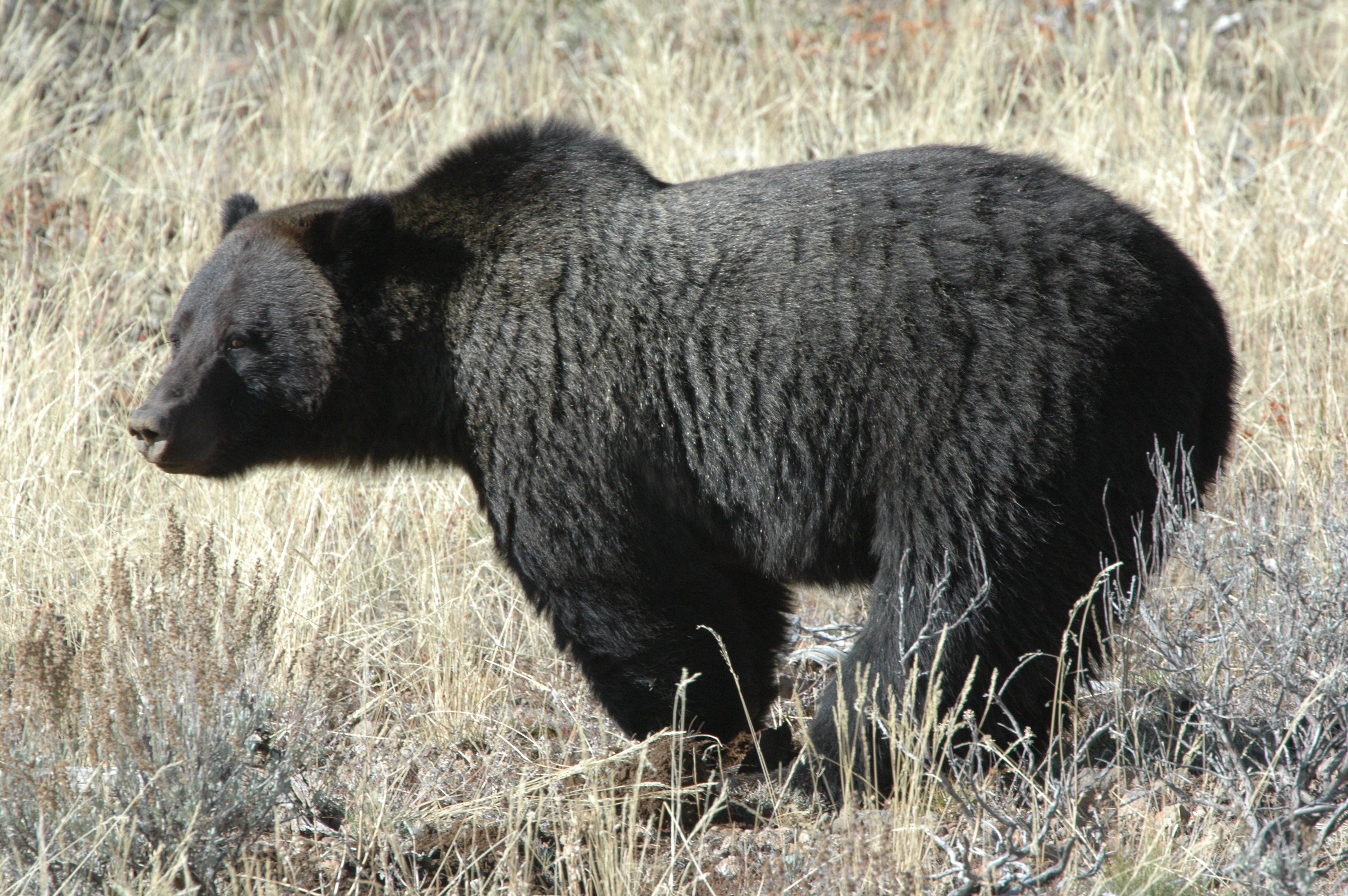
Ethyl the grizzly wandering all around northern Idaho, western Montana

http://missoulian.com/news/state-and-regional/ethyl-the-grizzly-wandering-all-around-northern-idaho-western-montana/article_2aeba658-ad53-11e3-89f1-0019bb2963f4.html?print=true&cid=print

BY DAVID COLE COEUR D’ALENE PRESS

COEUR D’ALENE, Idaho (AP) – The 20-year-old female grizzly Ethyl has become a seeker, a wanderer.

The Montana bear hasn’t been acting her age, and fortunately researchers – with a tracking collar – have been able to document her impressive journey from her home state to North Idaho. They lost track of her exact location in late December, but starting next month they expect to pick up her signal again.

They’re anxious to know where she ended up for hibernation, and where she’ll venture next.

Ethyl first came to the attention of wildlife scientists and researchers through her DNA, said Wayne Wakkinen, a senior wildlife research biologist for the Idaho Department of Fish and Game in Bonners Ferry.

In 2004, a sample of Ethyl’s hair was collected around the South Fork of the Flathead River near Kalispell.

In September 2006, she was first captured after making herself at home in an apple orchard near Lake Blaine east of Kalispell.

She wasn’t threatening people at the orchard, but there are homes around and she was moved and released for her safety and the public’s. Better safe than sorry.

She wore a radio collar for the next six years, hung around her home range and stayed out of trouble, Wakkinen said.

In September 2012, she was picked up after finding her way to another apple orchard near Lake Blaine.

This time, in a bigger move, she was released east of the Hungry Horse Reservoir, with scientists hoping to break her habit of hitting up apple orchards in the fall.

The idea was to give her some quality country to roam around in and stay out of people’s fruit.

Since then she has done some roaming – lots of it, covering thousands of square miles.

*****

In fact, in March of last year, Ethyl was spotted near the mouth of the Blackfoot River east of Missoula.

Throughout last summer she was north of Missoula. In mid-October, she made her way to the Rattlesnake on the north end of the city, and then journeyed west of town to the Nine Mile area west of Missoula.

Her tracking collar was “on the fritz” at this point, but still working enough, sending out some signals of her location, he said.

By the middle of November she had reached North Idaho and the upper reaches of the Coeur d’Alene River to the area of the Magee backcountry airstrip.

On Nov. 24, her tracking collar slipped into battery saving mode and stopped sending signals.

Still, scientists like Wakkinen could track her from the air with a receiver.

“I located her once, straight north of the Shoshone County Airport,” which is in Smelterville, Wakkinen said. She was on Thomas Hill, he said.

That was early December, when she should have been hibernating.

A week later she had moved east toward Osburn, and was hanging out in the upper end of Twomile Creek to the north of Interstate 90.

“Then we just had a bunch of crummy weather and couldn’t fly,” he said.

Though it was well into December, there were indications she still had not settled in for her winter sleep.

Instead, credible reports of her location came in based on sightings, he said.

She had ventured to the south side of I-90, and into the St. Joe River drainage. She was likely somewhere near Avery, he said.

“We don’t know if she denned up there,” he said.

Biologists won’t receive her definite location until April. That is when her tracking collar wakes up from its battery saving mode and her location is transmitted to researchers in Montana. Her collar is due to drop off in October.

Jason Kirchner, a spokesman for the Idaho Panhandle National Forests, said if Ethyl is in the St. Joe Ranger District in the Avery area, she is far outside where Forest Service biologists would expect to find a grizzly.

“Most grizzly we would expect to find would be north of Lake Pend Oreille or the Pend Oreille River,” Kirchner said.

Wakkinen is eager to learn where she has gone and ended up.

A typical female grizzly her age has a range of 60 to 100 square miles, he said.

“She has far exceeded that,” he said. “She’s moving through thousands of square miles.”

Last year was a great huckleberry year, he said, and that might help explain her endurance.

“She was able to keep laying on the calories,” he said.

Regardless, it’s just not normal grizzly bear behavior.

“It’s darn unusual, not unheard of, but certainly unusual,” he said.

Wakkinen said Ethyl’s final move by scientists from the orchard to the east side of Hungry Horse completely took her out of her home range.

“She has just been wandering around ever since,” he said.

*****

She enjoyed the familiarity of her home range for 18 years. She had been tracked for a significant portion of that time period.

She has been quiet while in North Idaho.

While she was around the Silver Valley she behaved well, Wakkinen said.

“She stayed up high and out of trouble as far as we knew,” he said.

He and others were monitoring if she dropped down into any of the towns.

“We did know she was headed this way” last fall, Kellogg Police Chief David Wuolle said. “It’s nothing for me to be alarmed about until it shows up in town.”

There was a rumor she was hibernating near Kellogg High School, which turned out to be false. Closest she got, he heard, was Graham Mountain north of town.

“Which as the crow flies isn’t really that far away,” Wuolle said.

As a lifelong resident of the Silver Valley, he said word gets around from time to time that a grizzly wanders through. But with Ethyl, he’s impressed with just how far she has traveled.

“It kind of makes you wonder what’s on her mind,” he said.

Photo Copyright Jim Robertson

Photo Copyright Jim Robertson

Idaho Passes Bill to Kill Hundreds of Wolves

http://ecowatch.com/2014/03/21/idaho-bill-to-kill-hundreds-of-wolves/

The Idaho Legislature yesterday passed House Bill 470, a bill to create a new lethal “Wolf Depredation Control Board” to administer a fund for widespread killing of wolves in the state. The bill, expected to be signed into law by Gov. Otter (R-ID), sets aside $400,000 in state funds to kill roughly 500 wolves, leaving just 150 in the entire state.

wolfFI
The wolf population in Idaho is under serious threat of dropping near—or even below—minimal recovery levels that Idaho promised to maintain in 2011. Photo courtesy of Shutterstock

The new board will consist of members appointed and overseen by Gov. Otter, who said in 2007 that he wanted to be the first to kill an Idaho wolf after federal protections were taken away. The board will be made up of representatives of the agricultural, livestock and hunting communities. The bill does not require any members of the board to represent the wolf conservation community.

“Political leaders in Idaho would love nothing more than to eradicate Idaho’s wolves and return to a century-old mindset where big predators are viewed as evil and expendable,” said Amaroq Weiss, West Coast wolf organizer at the Center for Biological Diversity. “The new state wolf board, sadly, reflects that attitude. The legislature couldn’t even bring itself to put a single conservationist on the board, so the outcome is predictable: many more wolves will die.”

Congress in 2011 stripped Endangered Species Act protection from wolves in Idaho and Montana. Since then, 1,592 wolves have been killed in those states.

The bill is the latest in a series of anti-wolf actions in Idaho that could ultimately backfire and force the return Endangered Species Act protections for gray wolves in the northern Rocky Mountains. Other commitments made by Idaho, including promises to maintain refugia for wolves in remote areas and wilderness, have been rolled back. The Idaho Department of Fish and Game sent a hunter-trapper into the Frank Church-River of No Return Wilderness this winter to eliminate two wolf packs. It recently announced a new predator-management plan designed to kill 60 percent of the wolf population in the Middle Fork area over the next several years, and contracted with USDA’s Wildlife Services to gun down 23 wolves in the Lolo management zone in February.

“Yet again, Idaho has put a black eye on decades of tireless work to return wolves to the American landscape,” said Weiss. “This bill sets aside $400,000 in state funds to wipe out as many wolves as legally possible in Idaho. Reducing these wolf populations to below even the absolute bare minimum sets a dangerous precedent and ensures that true wolf recovery will be little more than a pipedream in Idaho.”

In combination with mortality from annual hunting and trapping seasons, the wolf population in Idaho is under serious threat of dropping near—or even below—minimal recovery levels that Idaho promised to maintain when wolves in the northern Rockies lost federal protections in 2011. The sponsor of H.B. 470, Rep. Marc Gibbs (R-Dist. 32), says the intent of the bill is to reduce Idaho’s wolf population to as few as 10 packs.

The U.S. Fish and Wildlife Service is required by its own delisting criteria to review the population if changes in Idaho law or management objectives significantly increase the threat to the population. It must then decide whether to reinstate federal Endangered Species Act protections or extend the post-delisting period for federal oversight.

How to Kill a Wolf

[Note: I chose to start this piece part way into it in order to spare the reader the gory detail of its title question.]

An Undercover Report from the Idaho Coyote and Wolf Derby

By Christopher Ketcham

…After digging into the wolf-hate literature featured on Idaho for Wildlife’s website, I wondered whether the residents of Salmon were looking to kill wolves out of spite. They hated these creatures, and I wanted to understand why.

Besides killing wolves, one of the group’s core missions, according to its website, is to “fight against all legal and legislative attempts by the animal rights and anti-gun organizations who are attempting to take away our rights and freedoms under the Constitution of the United States of America.” The website also suggested that media coverage of the event was not welcome. The only way I’d be able to properly report on the derby, I figured, was to go undercover as a competing hunter. So I showed up in Salmon a few days before the event, paid the $20 sign-up fee, and officially became part of the slaughter.

The derby called for hunters to work in two-person teams. In the weeks leading up to the competition I recruited pro-wolf activists Brian Ertz and his sister Natalie Ertz, native Idahoans who have worked for local conservation groups. Rounding out our teams was Brian’s friend Bryan Walker, a gnarled former Marine and an Idaho lawyer who has studied shamanism and claims to have an ability to speak with animals.

The nice old man in the bar, whose name was Cal Black, bought the four of us a round of drinks when we told him we were in town for the derby. Cal had grown up on a ranch near town, and his thoughts on wolves reflected those of most other locals we met. Salmon is livestock country—the landscape is riddled with cows and sheep—and ranchers blame wolves for huge numbers of livestock deaths. Therefore wolves needed to be dispatched with extreme prejudice. The derby was a natural extension of this sentiment.

“Gut-shoot every goddamn last one of them wolves,” Cal told us. He wished a similar fate on “tree huggers,” who, in Cal’s view, mostly live in New York City. “You know what I’d like to see? Take the wolves and plant ’em in Central Park, ’cause they impose it on us to have these goddamn wolves! Bullshit! It’s said a wolf won’t attack you. Well, goddamn, these tree huggers don’t know what. I want wolves to eat them goddamn tree huggers. Maybe they’ll learn something!”

We all raised a glass to the tree huggers’ getting their due. I fought the urge to tell Cal that I live in New York part-time, and that in college Natalie trained as an arborist and had actually hugged trees for a living. Her brother, who is 31 and studying to be a lawyer in Boise, Idaho, had warned me about the risks of going undercover when I broached the idea over the phone. As a representative for the nonprofit Western Watersheds Project, which has lobbied for wolf protections, he’d attended numerous public meetings about “wolf management” in communities like Salmon. “Salmon is the belly of the beast,” he told me. “There is not a more hostile place. It’s Mordor.”

Brian’s former boss at the Western Watersheds Project, executive director Jon Marvel, has received death threats for speaking out in favor of wolves and against the powerful livestock industry. Larry Zuckerman, a conservation biologist for the pro-wolf environmental nonprofit Wild Love Preserve, suspects that it was pro-wolf-hunting residents from Salmon who fatally poisoned his three dogs. Many pro-wolf activists across the American West, especially those who have publicly opposed the ranching industry, have reported similar threats and acts of aggression—tires slashed, homes vandalized, windows busted out with bricks in the night. Idaho for Wildlife’s opinion on the situation is made clear on its website: “Excess predator’s [sic] and environmentalists should go first!”

Prepping for the derby, we disguised ourselves according to the local style: camo pants and jackets, wool caps, balaclavas, binoculars, and heavy boots. When he wasn’t mystically communicating with elk, Walker enjoyed hunting them. He didn’t look out of place in Salmon, carrying his M4 rifle with a 30-round magazine and a Beretta .45 on his hip. He loaned me his bolt-action .300 Win Mag with a folding bipod, while Brian carried a .30-06 with a Leupold scope. Natalie, who is tall and good-looking, was armed only with a camera and played the part of a domesticated wife “here for the party,” as she put it.

At the derby registration the night before the killing was to commence, we were so convincing that the organizers didn’t even bother to ask for our hunting licenses or wolf permits. Instead they suggested spots in the surrounding mountains where we could find wolves to shoot illegally.

From left to right: Bryan Walker, Brian Ertz, and Natalie Ertz

In Wolves and the Wolf Myth in American Literature, S. K. Robisch presents the wolf as a “mystical force in the human mind,” one that for thousands of years has been associated with the purity of bloodlust, the unhinged cruelty of nature. The wolf as mythological super-predator brings terror and chaos, devouring our young, our old, the weak, the innocent, and the foolish, operating through trickery and deceit.

From Matthew 7:15: “Beware of false prophets, who come to you in sheep’s clothing but inwardly are ravenous wolves.” Little Red Riding Hood loses her grandmother to a cross-dressing wolf, and the Three Little Pigs pay the price as well. In the late Middle Ages the Roman Catholic Church declared the wolf an agent of the Devil, or possibly the shape-shifting manifestation of Satan himself. And of course the werewolf, a human turned beast by the contagion of a bite, also lived in the imagination as a demonic figure, killing for sport under the light of the full moon, indiscriminate and lunatic.

In Anglo-Saxon and the Germanic languages, certain words for wolf—warg, warc, verag—were also used to describe bandits, outlaws, and evil spirits. In Swedish, the word varg simply meant “everything that is wrong.” Even Teddy Roosevelt, the conservationist president and lover of the wilderness, referred to wolves as “the archtype of ravin [sic], the beast of waste and desolation.”

In reality, Homo sapiens shares a long and intimate relationship with Canis lupus. The gray wolf was the first animal to be domesticated out of the wild, long before the cow, horse, or goat. Its direct descendant is classified as Canis lupus familiaris, better known as the common dog, which, despite its wide subset of breeds, is almost genetically identical to the wolf. The bear, the tiger, the lion—feared predators of the human race, even today far more dangerous to man than wolves—never came out of the dark to join the fire circles of early hominids. The wolf did, though the humans in its midst became food on some occasions.

It’s theorized that wolves and humans, some 20,000 years ago, hunted the same prey—large herbivores—and, like us, wolves worked in packs. We fed at their kills, and they fed at ours. Antagonism gave way to mutualism, symbiosis, cooperation.

Around 8,000 BC, however, humans began to domesticate livestock and gather in villages. The wolf was no longer our friend, as it stalked and devoured the sheep and cows we now kept as property. Hatred of the beast was born, and it grew in proportion to our divorce from the wild.

Western man, armed with gunpowder and greedy for land, proved from the moment he arrived in the New World to be a more capable beast of waste and desolation, as predators of all kinds—the wolf, the cougar, the coyote, the black bear, the grizzly, the lynx, the wolverine—fell before his march. Wolves were shot on sight, trapped, snared, fed carcasses laced with poison or broken glass, their pups gassed or set on fire in their dens. “Such behavior amazed Native Americans,” writes wildlife journalist Ted Williams. “Their explanation for it was that, among palefaces, it was a manifestation of insanity.”

The sprawling roads, farms, towns, and cities of the young republic completed the job by systematically razing the wolf’s habitat. By 1900, wolves had disappeared east of the Mississippi. By the 1950s, they could only be found in isolated regions of the American West, with perhaps a dozen wolves remaining in the contiguous 48 states, compared with a pre-Columbian population estimated at several hundred thousand.

The point of this slaughter was not to protect human beings, although this remains the enduring perception. Only two fatal wolf attacks on Homo sapiens in North America have been reported during the past 100 years, with perhaps a few more over the course of the 19th century (the records prior to 1900 are uncertain and the stories undocumented, often embellished and tending toward the folkloric). A 2002 study conducted by the Norwegian Institute for Nature Research reviewed the history of wolf predation on humans in Europe, Asia, and the US from 1500 to the present and found that wolf attacks were “extremely rare,” that “most attacks have been by rabid wolves,” and that “humans are not part of their normal prey.” Wolves in the United States died at our hands for the most part because of the ancient grievance: They ate our cattle and sheep, representing viscerally that which could not be tamed.

Then, in 1974, wolves in the United States got a reprieve. The passage of the Endangered Species Act the previous year had cleared the path for Congress to declare the animals endangered, making it illegal to hunt them. Wolves had survived by the thousands in the forests, mountains, and prairies of western Canada, and now, protected from widespread slaughter in the US, portions of the population began a slow march of recolonization, dispersing south from Alberta and British Columbia and into Montana. In 1995, Congress expedited this process by mandating the reintroduction of captured Canadian wolves to the mountains of Idaho and Wyoming.

Thereafter, wolves thrived as never before in our recorded history, and ecologists noted with astonishment the beneficial effects on ecosystems in the West. In Yellowstone National Park, a centerpiece of this reintroduction, wolves pared the overabundant populations of elk, which had stripped the park’s trees and grasses. With fewer elk, the flora returned, and the rejuvenated landscape created habitats for dozens of other creatures: beaver in the streams, songbirds in the understory, butterflies among the flowers.

Such was the perception of success that by 2009 the US wolf population was declared fully recovered. In 2011, when Congress rescinded the wolves’ protected status, scores of biologists, ecologists, and wildlife scientists protested the decision. Critics observed that the removal of Canis lupus from the endangered species list had been accomplished mostly due to the lobbying efforts of the livestock industry. For the first time since 1974, wolves across the Northern Rocky Mountains—in Idaho, Wyoming, Montana—were legally hunted, trapped, and shot with vengeance. The winter hunting seasons decimated whole packs. At the behest of ranchers, the US government joined in the slaughter, dispatching predator-control agents from the federal Wildlife Services.

The view of wolves as vermin bent on stealing ranchers’ livelihood has carried through to the present, though little evidence supports this stigma. The number of cattle and sheep lost to wolves and other predators each year is negligible. In 2010, just 0.23 percent of cattle in the US died from “carnivore depredations” (as wolf attacks on livestock are officially categorized).

And it didn’t matter that aggressive “predator management” has no basis in ecological science. “The myth we’ve been fed is that predators like wolves need to be hunted because otherwise they’ll grow out of control, exponentially,” said Brooks Fahy, director of the nonprofit Predator Defense, in Oregon. “But no scientific study backs this up. Wolves self-regulate if left alone.” Wolf management, Fahy said, “is a form of rationalized madness.”

Proud derby contestants displaying a pair of coyotes

More: http://www.vice.com/read/how-to-kill-a-wolf-0000259-v21n3

Idaho Wolf (Eradication) Fund Won’t Receive $2 Million

528624c939a88_preview-620

http://magicvalley.com/news/local/govt-and-politics/bell-wolf-fund-won-t-receive-million/article_3c9a845e-216c-58fe-935d-a3dbfc9000ca.html

By Kimberlee Kruesi – kkruesi@magicvalley.com

BOISE • A bill asking for $2 million to kill up to 500 of Idaho’s wolves won’t get even half of its requested appropriation, said co-chair of the state’s budget committee.

Instead, an unexpected bailout to make up for missing federal e-rate funds to pay for the Idaho Education Network (IEN) broadband program has taken precedence, said state Rep. Maxine Bell, R-Jerome, co-chair of the Joint Finance Appropriations Committee.

“We have some flexibility when it comes to killing wolves,” Bell said. “We don’t have flexibility with IEN.”

JFAC has already approved $6.6 million out of this year’s budget to make up for past-due payments to Education Networks of America, the state’s contractor on the broadband project. It’s money the federal government was supposed to pay for the state’s school broadband program but never did.

The supplemental appropriations bill passed both houses and now just needs the signature of the governor.

“Frankly, based on our discussions with legal counsel, we are obligated for this piece,” said state Sen. Dean Cameron, R-Rupert, while debating the bill on the Senate floor. “I need to inform you that this is the first half. The second half we are still arguing and discussing and re-discussing what we do for fiscal year 2015.”

Ever since the news was announced earlier this session, multiple lawmakers expressed their frustration with the state’s Department of Administration for extending the contract with the Education Networks of America through 2019 without informing lawmakers that the broadband vendor was not receiving the federal e-rate payments.

JFAC is expected to discuss the future of IEN next week, which includes a $7.3 million request from Otter and the Department of Administration to cover the federal payments for fiscal year 2015, Bell said.

This means that the wolf bill will also be discussed next week, Bell said, but it won’t get the requested $2 million.

“It will probably get less than $1 million or closer to the $400,000 that was requested last year,” she said.

Bell was referring to a recommendation a committee submitted to Gov. C.L. “Butch” Otter last summer on how to fund ongoing wolf control efforts. The recommendation asked for $400,000 annually for five years to kill wolves that preyed on livestock.

Instead, Otter ignored the recommendation and requested $2 million of one-time funding to kill wolves during his State of the State speech in January.

The proposed wolf control bill — sponsored by state Sen. Bert Brackett, R-Rogerson — calls for a five-member oversight board that would manage the requested $2 million. The members would be made up of directors from the state Department of Fish and Game and Department of Agriculture, as well representatives from livestock industry, public at large and sportsmen.

Even if the bill makes it to the governor’s desk, it is up to JFAC to determine the final funding amount, Bell said. Budget writers will also decide if the money should come out of one-time or ongoing funds.

“We weren’t expecting to pay this much to IEN … it’s forced us to change a few things,” Bell said.

Whither the Hunter/Conservationist?

By George Wuerthner On March 5, 2014

Many hunter organizations like to promote the idea that hunters were the first and most important conservation advocates. They rest on their laurels of early hunter/wildlife activist like Teddy Roosevelt, and George Bird Grinnell who, among other things, were founding members of the Boone and Crocket Club. But in addition to being hunter advocates, these men were also staunch proponents of national parks and other areas off limits to hunting. Teddy Roosevelt help to establish the first wildlife refuges to protect birds from feather hunters, and he was instrumental in the creation of numerous national parks including the Grand Canyon. Grinnell was equally active in promoting the creation of national parks like Glacier as well as a staunch advocate for protection of wildlife in places like Yellowstone. Other later hunter/wildlands advocates like Aldo Leopold and Olaus Murie helped to promote wilderness designation and a land ethic as well as a more enlightened attitude about predators.

Unfortunately, though there are definitely still hunters and anglers who put conservation and wildlands protection ahead of their own recreational pursuits, far more of the hunter/angler community is increasingly hostile to wildlife protection and wildlands advocacy. Perhaps the majority of hunters were always this way, but at least the philosophical leaders in the past were well known advocates of wildlands and wildlife.

Nowhere is this change in attitude among hunter organizations and leadership more evident than the deafening silence of hunters when it comes to predator management. Throughout the West, state wildlife agencies are increasing their war on predators with the apparent blessings of hunters, without a discouraging word from any identified hunter organization. Rather the charge for killing predators is being led by groups like the Rocky Mountain Elk Foundation, and others who are not only lobbying for more predator killing, but providing funding for such activities to state wildlife agencies.

For instance, in Nebraska which has a fledging population of cougars (an estimated 20) the state wildlife agency has already embarked on a hunting season to “control” cougar numbers. Similarly in South Dakota, where there are no more than 170 cougars, the state has adopted very aggressive and liberal hunting regulations to reduce the state’s cougar population.

But the worst examples of an almost maniacal persecution of predators are related to wolf policies throughout the country. In Alaska, always known for its Neanderthal predator policies, the state continues to promote killing of wolves adjacent to national parks. Just this week the state wiped out a pack of eleven wolves that were part of a long term research project in the Yukon Charley National Preserve. Alaska also regularly shoots wolves from the air, and also sometimes includes grizzly and black bears in its predator slaughter programs.

In the lower 48 states since wolves were delisted from the federal Endangered Species Act and management was turned over to the state wildlife agencies more than 2700 wolves have been killed.

This does not include the 3435 additional wolves killed in the past ten years by Wildlife Services, a federal predator control agency, in both the Rockies and Midwest. Most of this killing was done while wolves were listed as endangered.

As an example of the persecutory mentality of state wildlife agencies, one need not look any further than Idaho, where hunters/trappers, along with federal and state agencies killed 67 wolves this past year in the Lolo Pass area on the Montana/Idaho border, including some 23 from a Wildlife Service’s helicopter gun ship. The goal of the predator persecution program is to reduce predation on elk. However, even the agency’s own analysis shows that the major factor in elk number decline has been habitat quality declines due to forest recovery after major wildfires which has reduced the availability of shrubs and grasses central to elk diet. In other word, with or without predators the Lolo Pass area would not be supporting the number of elk that the area once supported after the fires. Idaho also hired a trapper to kill wolves in the Frank Church/River of No Return Wilderness to increase elk numbers there.

Idaho hunters are permitted to obtain five hunting and five trapping tags a year, and few parts of the state have any quota or limits. Idaho Governor Butch Otter recently outlined a new state budget allotting $2 million dollars for the killing of wolves—even though the same budget cuts funding for state schools.

Other states are no better than Idaho. Montana has a generous wolf six month long season. Recent legislation in the Montana legislature increased the number of wolves a hunter can kill to five and allows for the use of electronic predator calls and removes any requirement to wear hunter orange outside of the regular elk and deer seasons. And lest you think that only right wing Republican politicians’ support more killing, this legislation was not opposed by one Democratic Montana legislator, and it was signed into law by Democratic Governor Steve Bullock because he said Montana Dept of Fish, Wildlife and Parks supported the bill.

Wyoming has wolves listed as a predator with no closed season or limit nor even a requirement for a license outside of a “trophy” wolf zone in Northwest Wyoming.

The Rocky Mountain West is known for its backward politics and lack of ethics when it comes to hunting, but even more “progressive” states like Minnesota and Wisconsin have cow-towed to the hunter anti predator hostility. Minnesota allows the use of snares, traps, and other barbaric methods to capture and kill wolves. At the end of the first trapping/hunting season in 2012/2013, the state’s hunters had killed more than 400 wolves.

Though wolves are the target species that gets the most attention, nearly all states have rabid attitudes towards predators in general. So in the eastern United States where wolves are still absent, state wildlife agencies aggressively allow the killing of coyotes, bears and other predators. For instance, Vermont, a state that in my view has undeserved reputation for progressive policies, coyotes can be killed throughout the year without any limits.

These policies are promoted for a very small segment of society. About six percent of Americans hunt, yet state wildlife agencies routinely ignore the desires of the non-hunting public. Hunting is permitted on a majority of US Public lands including 50% of wildlife “refuges as well as nearly all national forests, all Bureau of Land Management lands, and even a few national parks. In other words, the hunting minority dominates public lands wildlife policies.

Most state agencies have a mandate to manage wildlife as a public trust for all citizens, yet they clearly serve only a small minority. Part of this is tradition, hunters and anglers have controlled state wildlife management for decades. Part of it is that most funding for these state agencies comes from the sale of licenses and tags. And part is the worldview that dominates these agencies which sees their role as “managers” of wildlife, and in their view, improving upon nature.

None of these states manage predators for their ecological role in ecosystem health. Despite a growing evidence that top predators are critical to maintaining ecosystem function due to their influence upon prey behavior, distribution and numbers, I know of no state that even recognizes this ecological role, much less expends much effort to educate hunters and the public about it. (I hasten to add that many of the biologists working for these state agencies, particularly those with an expertise about predators, do not necessarily support the predator killing policies and are equally appalled and dismayed as I am by their agency practices.)

Worse yet for predators, there is new research that suggests that killing predators actually can increase conflicts between humans and these species. One cougar study in Washington has documented that as predator populations were declining, complaints rose. There are good reasons for this observation. Hunting and trapping is indiscriminate. These activities remove many animals from the population which are adjusted to the human presence and avoid, for instance, preying on livestock. But hunting and trapping not only opens up productive territories to animals who may not be familiar with the local prey distribution thus more likely to attack livestock, but hunting/trapping tends to skew predator populations to younger age classes. Younger animals are less skillful at capturing prey, and again more likely to attack livestock. A population of young animals can also result in larger litter size and survival requiring more food to feed hungry growing youngsters—and may even lead to an increase in predation on wild prey—having the exact opposite effect that hunters desire.

Yet these findings are routinely ignored by state wildlife agencies. For instance, despite the fact that elk numbers in Montana have risen from 89,000 animals in 1992 several years before wolf reintroductions to an estimated 140,000-150,000 animals today, Montana Department of Fish, Wildlife and Parks does almost nothing to counter the impression and regular misinformation put forth by hunter advocacy groups like the Rocky Mountain Elk Foundation or the Montana Sportsmen for Fish and Wildlife that wolves are “destroying” Montana’s elk herds.

I have attended public hearings on wolves and other predator issues, and I have yet to see a single hunter group support less carnivore killing. So where are the conservation hunters? Why are they so silent in the face of outrage? Where is the courage to stand up and say current state wildlife agencies policies are a throw-back to the last century and do not represent anything approaching a modern understanding of the important role of predators in our ecosystems?

As I watch state after state adopting archaic policies, I am convinced that state agencies are incapable of managing predators as a legitimate and valued member of the ecological community. Their persecutory policies reflect an unethical and out of date attitude that is not in keeping with modern scientific understanding of the important role that predators play in our world.

It is apparent from evidence across the country that state wildlife agencies are incapable of managing predators for ecosystem health or even with apparent ethical considerations. Bowing to the pressure from many hunter organizations and individual hunters, state wildlife agencies have become killing machines and predator killing advocates.

Most people at least tolerant the killing of animals that eaten for food, though almost everyone believes that unnecessary suffering should be avoided. But few people actually eat the predators they kill, and often the animals are merely killed and left on the killing fields. Yet though many state agencies and some hunter organizations promote the idea that wanton waste of wildlife and unnecessary killing and suffering of animals is ethically wrong, they conveniently ignore such ideas when it comes to predators, allowing them to be wounded and left to die in the field, as well as permitted to suffer in traps. Is this ethical treatment of wildlife? I think not.

Unfortunately unless conservation minded hunters speak up, these state agencies as well as federal agencies like Wildlife Services will continue their killing agenda uninhibited. I’m waiting for the next generation of Teddy Roosevelts, Aldo Leopolds and Olaus Muries to come out of the wood work. Unless they do, I’m afraid that ignorance and intolerant attitudes will prevail and our lands and the predators that are an important part of the evolutionary processes that created our wildlife heritage will continue to be eroded.

Whither the Hunter/Conservationist?

copyrighted wolf in river