From today, Japan’s whalers are officially permitted to hunt and kill whales following Tokyo’s controversial decision to quit an international ban on commercial whaling. The move triggered upset among environmentalists worldwide.
According to a government decision announced last year, Tokyo is leaving the International Whaling Commission (IWC), which placed a ban on commercial hunting of the endangered species back in 1986. The withdrawal came into effect on June 30. This means that, from that day, Japanese whalers will be able to resume the killing of whales for meat. However, Japan will be restricted to hunting the mammals only in its exclusive economic zone and territorial waters.
ALSO ON RT.COM122 pregnant whales among the 300+ killed by Japan for ‘science’Tokyo’s withdrawal from the IWC takes effect right after the world leaders’ G20 Summit in Osaka. In an open letter published Friday, a number of environmentalist and global welfare organizations urged G20 leaders to condemn Japan’s “cruel assault on whales” and called for an “an immediate end to all commercial whaling.”
“Japan leaving the IWC and defying international law to pursue its commercial whaling ambitions is renegade, retrograde and myopic….” Kitty Block, president of Humane Society International, one of the contributors to the letter, said in a statement.
Whaling is a sensitive issue in Japan, where eating whale meat is a cherished cultural tradition. Japan is not the first country to resume commercial whaling – Iceland and Norway are also openly against the IWC’s ban as well.
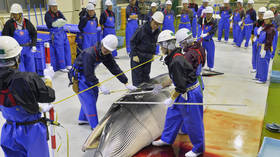
In this June 1, 2019 photo, a whaling vessel departs from Abashiri port in Japan’s northernmost main island of Hokkaido, to take part in the last round of what Japan calls “research” whaling off the Pacific coast ahead of the country’s withdrawal from the International Whaling Commission at the end of June for commercial hunting. (Kyodo)
SAPPORO (Kyodo) — Japan will restart commercial whaling on July 1 in Kushiro, Hokkaido, following a three-decade hiatus after the government announced its withdrawal from the International Whaling Commission in December, a local fishery source said Friday.
A fleet of five vessels belonging to six whaling operators from Abashiri in Hokkaido Prefecture, Ishimaki in Miyagi Prefecture, Minamiboso in Chiba Prefecture and Taiji in Wakayama Prefecture, who have been conducting the last round of Japan’s so-called scientific whaling around Abashiri port since June 1, will embark on the mission.
Whaling operators are making final arrangements with relevant bodies to hold a ceremony the day they set sail from Kushiro, where they will commence their activities for around a week.
Each vessel will then separately fish for Berardius whales off Minamiboso and other areas until around the end of August. They are expected to regather in Kushiro in September before embarking to hunt minke whales until October.
Japan halted commercial whaling in 1988 in line with a moratorium adopted in 1982 by the IWC. But it has hunted whales for what it claims are research purposes ever since, a practice criticized internationally as a cover for commercial whaling.
Japan will hunt whales in nearby waters and within its exclusive economic zone but not in the Antarctic Ocean, where the country has carried out “scientific whaling.”
Around 200,000 tons of whale meat was consumed in Japan each year in the 1960s, but the figure has fallen to around 5,000 tons in recent years, according to government data.
(CNN)As the plumes rise from a brazen attack in the Gulf of Oman, oil brokers and diplomats are panicking about another lurch toward confrontation In the Middle East.
What happened is fairly clear — two tankers were struck as they sailed through this busy and strategic shipping lane — but why it happened and who did it is a lot less easy to explain, not least because it doesn’t appear to benefit any of the protagonists in the region.
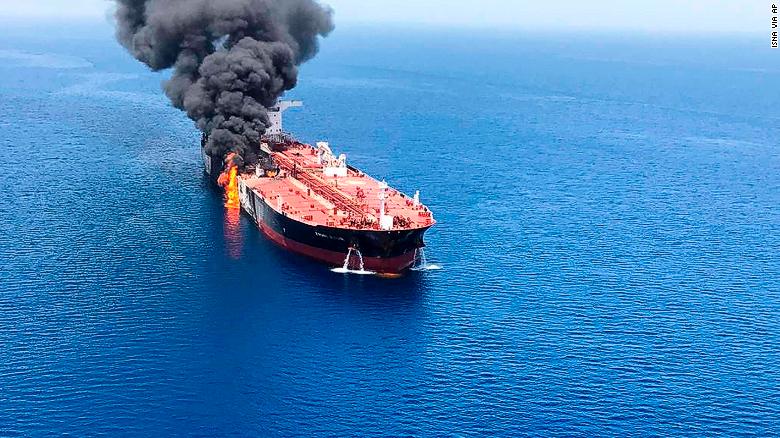
The Japanese owned Kokuka Corageous tanker briefly caught fire when it was twice attacked with “some kind of shell,” its owner said. One of its 21-strong Filipino crew was injured.
The crew of the Bermuda-based Front Altair all escaped unharmed when it too was hit by a blast. The Fifth Fleet’s USS Bainbridge was nearby and responded to a distress call received at 6.12 am local time and then another 48 minutes later. It picked up 21 sailors from the Kokuka and is getting a wider view of the scene from a P8 Navy surveillance aircraft.
A tanker ablaze in the Gulf of Oman, in an unverified image supplied by an Iranian news agency.
With the rescue operation over, questions have turned to why anyone would do this. That’s not as not as straightforward to answer as it looks.
Inevitably, similarities have been drawn between Thursday’s attacks and events a month ago, when four ships were targeted near the Emirati port of Furajah. For that, officials in Washington and beyond pointed the finger at Iran.
But Thursday’s incident is significantly more blatant. Yet the same officials will doubtless blame Tehran again. If and when that happens, we should remember US National Security Advisor John Bolton promised to present evidence to the UN Security Council backing up those previous claims, but has yet to do so.
Who stands to gain?
The Russians like to ask: “Who did it benefit?” when the unexpected strikes, and this question is useful now.
Iran doesn’t appear to have a lot to gain. Say what you like about Tehran’s malicious intent, these incidents heighten the global drumbeat for greater isolation and boosts those who seek to apply military pressure on Iran. Its economy is in a bad condition. Before President Donald Trump pulled the US out of the JCPOA (colloquially known as the Iran nuclear deal), Tehran was at its peak of regional influence. With diminished economic resources, its potency is likely to wane.
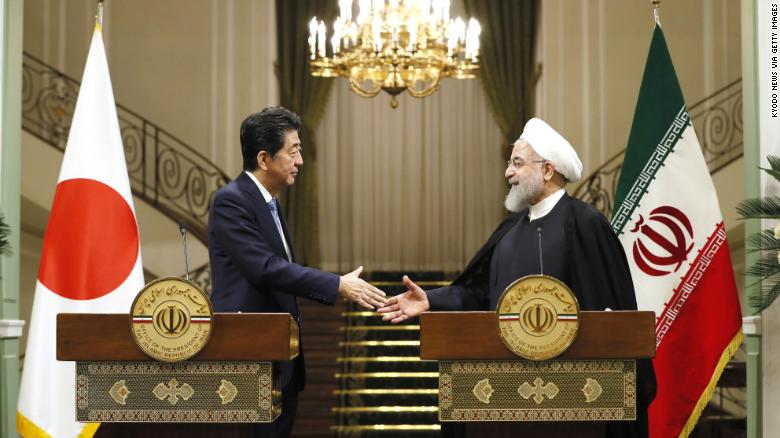
The incidents also came in the middle of a visit to Tehran by Japan’s Prime Minister Shinzo Abe, apparently trying to mediate over the nuclear deal (although Tokyo says he’s not an envoy for Washington). The apparent attacks eclipsed the Abe visit, an unexpected bit of outreach to Iran by someone Trump calls a friend.
Japanese Prime Minister Shinzo Abe, left, and Iranian President Hassan Rouhani shake hands after a joint press conference in Tehran.
You could make a case for Iranian hardliners staging such an attack to derail peace efforts. But Iran’s hardliners — particularly the Revolutionary Guard — are normally a little smarter than to bomb international shipping lanes during a crucial diplomatic meeting. Iran’s chief moderate, Foreign Minister Javid Zarif, was right to point out that “suspicious doesn’t begin to describe what likely transpired this morning.” When one party is so easily blamed, it is likely blameless, or unfathomably stupid.
What else? Reuters has reported that Tehran has been scaling up its remaining petrochemical exports ahead of tightening sanctions. Could it be looking to boost the price of oil? Maybe. But at the same time, the shipping of that same oil is going to be disrupted, so they would likely lose out all the same. It is hard to imagine an Iranian hardliner smart enough to pull this sort of apparent attack off, without also realizing they would get immediately collared.
So what about the conspiracy theory, that Saudi Arabia also seeks confrontation and higher oil prices, and would therefore permit such an attack to further its own agenda? An equally obvious explanation, it’s tough sell, too. And were such a plot uncovered, the damage to Saudi Arabia’s already beleaguered reputation in the Beltway could be terminal.
Some 20% of the world’s oil goes through the Strait of Hormuz, and that includes a lot of Saudi exports. You might argue that at $62 a barrel (the price of Brent crude after Thursday’s incidents caused a 3% spike), oil is quite cheap and can take more of a knocking. But in the long term it’s unlikely the Saudis would want the Gulf’s shipping lanes to be regarded as unsafe.
If this gets worse and the US military finds itself dragged into protecting shipping in Hormuz, Riyadh’s relationship the Trump administration — which sought to get out of foreign entanglements rather than get into them — would be tested.
There are few easy facts here, as there are few easy culprits. But the sense of uncertainty stokes rather than dampens the fears of mismanagement and conflict.
In this photo taken on Sunday, Jan. 5, 2014. three dead minke whales lie on the deck of the Japanese whaling vessel Nisshin Maru.
TIM WATTERS
Peter Singer is an author and professor of bioethics at Princeton University, Laureate Professor at the University of Melbourne and founder of the non-profit organization The Life You Can Save.
On Dec. 26, Japan announced that it was leaving the International Whaling Commission (IWC). Yoshihide Suga, Japan’s chief cabinet secretary, emphasized the cultural significance of the whaling industry for local Japanese communities and said that the IWC had focused too much on conserving whales and not on its stated goal of developing a sustainable whaling industry.
That the IWC has ceased to act in accordance with its original purpose is difficult to deny. The IWC was set up by the International Convention for the Regulation of Whaling, which was agreed to in 1946. The preamble of the convention describes whale stocks as “great natural resources” and indicates that the purpose of the convention is “to provide for the proper conservation of whale stocks and thus make possible the orderly development of the whaling industry.”
That is how the IWC operated for its first 25 years. From the 1970s on, however, attitudes toward whales began to change. Many governments that had previously been members of the IWC because they engaged in whaling and wanted to protect these “resources” from unsustainable overuse instead began to reflect the more positive attitudes to whales of their citizens. As a result, in 1986, the IWC passed a moratorium on commercial whaling, which has been maintained ever since, even though it is today difficult to argue that all stocks of all species of whales are so imperilled that no commercial hunting could be sustainable.
Japan has not openly breached the moratorium; instead, it has got around it by exploiting a loophole allowing the killing of whales for scientific research. Each year, Japanese whaling ships have killed about 300 whales, allegedly for this purpose. The carcasses of the whales were taken to Japan and their meat was sold to the dwindling minority of Japanese who continue to eat whale meat.
In 2010, Australia took Japan to the International Court of Justice, which found that Japan was in fact engaging in commercial whaling, in breach of IWC rules. But Japan simply tweaked the “research program” a little, and went back to killing the same number of whales it had been killing before.
The IWC’s change of purpose was made clear just last September, when at a meeting in Florianopolis, Brazil, member countries voted 40 to 27 for a Brazilian proposal to maintain the ban on commercial whaling, and assert that whaling is no longer a necessary economic activity. For Japan, which sees maintaining its whaling industry as a matter of national pride, that vote would have been the final straw that made continued membership of the IWC pointless.
What we cannot disregard, however, is the fact that the new attitude to whales that has led to the change in the IWC’s purpose is neither a purely emotional response to killing mysterious big animals nor the imposition of Western attitudes on other cultures. It has a solid basis in our improved scientific understanding of whales, and in the moral progress we are making in extending the circle of moral concern beyond our own species. That concern is very much in accord with Japan’s own Buddhist tradition, which teaches compassion for all sentient beings.
We have learned a lot about whales since 1946, We know that they are social mammals with big brains, capable of communicating with each other by various sounds. They bond with their children and with their social group. They live long lives – bowhead whales live much longer than any other mammal; some have been found with 200-year-old ivory spear tips embedded in their flesh. Many other whales live at least 40 years. They appear to be capable of both pleasure and pain – and not only physical pain, but very likely also distress at the loss of a child or one of their group.
Whales are therefore not stocks in the sense in which we as a country may have stocks of coal. Nor are they resources to be harvested like a field of wheat. They are individual beings, with lives of their own that may go well or badly.
In modern commercial whaling, whales are killed by an explosive harpoon fired from a moving vessel at a moving target. That makes it very difficult to hit the whale in the right spot for an instantaneous loss of consciousness. Nor are commercial whalers willing to use enough explosive to be sure of a quick kill, because they want an intact whale carcass, not one blown to bits. Hence harpooned whales typically die slowly and painfully. If we needed to eat whales to survive, inflicting that kind of death on a sensitive social mammal might be defensible. For well-fed people in Japan or other affluent countries, it is not.
Nor is the fact that there are areas of Japan in which whaling is an ancient cultural heritage a sufficient justification for killing whales. In China, the binding of girls’ feet was an ancient cultural heritage, but it maimed women. We should be glad that it is now firmly in the past. Whaling should go the same way.
And perhaps it will. Once Japan leaves the IWC, it will no longer be able to continue whaling in the Southern Ocean under the guise of “scientific research.” Recognizing this fact, Japan has said it will carry out commercial whaling only in its territorial waters and exclusive economic zone (EEZ), which means, roughly speaking, an area of 4.5-million square kilometres around its territory. That’s a large area, but it contains far fewer whales than the Southern Ocean, and if Japan wants to have a sustainable industry, that will place strict limits on the number of whales its ships can kill.
Perhaps instead of feeling dismay at Japan’s departure from the IWC, we should celebrate the fact that the Southern Ocean Whale Sanctuary, established by the IWC in 1994, will now be the true sanctuary for whales that it never could be while Japanese ships were conducting their brutal “scientific research.”
In leaving the IWC, Japan has put itself on the outside, as a nation that is oblivious to the legitimate moral concern of many countries and people, including, as polls in Japan show, its own people. The next generation of Japanese leaders will surely see this as a false step that they will want to reverse.
A minke whale is landed at a port in Kushiro on Japan’s northernmost main island of Hokkaido in 2017. Photograph: Kyodo News/Kyodo News via Getty Images
Japan is facing international condemnation after confirming it will resuming commercial whaling for the first time in more than 30 years.
The country’s fleet will resume commercial operations in July next 2019, the government’s chief spokesman, Yoshihide Suga, said of the decision to defy the 1986 global ban on commercial whaling.
Suga told reporters the country’s fleet would confine its hunts to Japanese territorial waters and exclusive economic zone, adding that its controversial annual expeditions to the Southern Ocean – a major source of diplomatic friction between Tokyo and Canberra – would end.
He said Japan would officially inform the IWC of its decision by the end of the year, which will mean the withdrawal comes into effect by 30 June.
Its decision prompted criticism from conservationists and other nations including the UK and Australia.
The UK’s environment secretary, Michael Gove, said he was “extremely disappointed” by Japan’s move.
He said in a tweet: “The UK is strongly opposed to commercial whaling and will continue to fight for the protection and welfare of these majestic mammals.”
Michael Gove
✔@michaelgove
Extremely disappointed to hear that Japan has decided to withdraw from the International Whaling Commission to resume commercial whaling. The UK is strongly opposed to commercial whaling and will continue to fight for the protection and welfare of these majestic mammals.
Greenpeace disputed Japan‘s view that whale stocks have recovered, noting also that ocean life is being threatened by pollution as well as overfishing.
“The declaration today is out of step with the international community, let alone the protection needed to safeguard the future of our oceans and these majestic creatures,” Sam Annesley, executive director at Greenpeace Japan, said in a statement.
“The government of Japan must urgently act to conserve marine ecosystems, rather than resume commercial whaling.”
It also accused Japan of timing the announcement to avoid criticism.
“It’s clear that the government is trying to sneak in this announcement at the end of year, away from the spotlight of international media, but the world sees this for what it is,” Annesley, said.
“Most whale populations have not yet recovered, including larger whales such as blue whales, fin whales and sei whales.”
Backbench Conservative MP and former foreign secretary Boris Johnson said Japan’s decision was “appalling” and urged it think again.
Astrid Fuchs, programme lead at Whale and Dolphin Conservation, said it was “terrible decision” that could encourage other countries to quit the IWC.
She added: “The oversight that the IWC was having over Japan’s whaling will now be lost. We won’t know how many whales they are catching, we won’t know how they will report it. It might spell doom for some populations. There is an endangered population of Minke whales off Japan, which is already under threat.”
Erik Solheim, a Norwegian diplomat who was the head of the United Nations Environment Programme until earlier this year, said Japan’s decision to leave the international whaling commission was “dangerous”.
In a tweet he called for a global campaign to urge Japan to reconsider.
Japan will start commercial whaling.
Let’s ask Japan to reconsider!
It’s dangerous when nations break out of global agreements and start setting their own rules.https://www.bbc.com/news/world-asia-46682976 …
In a joint statement on Wednesday, Australia’s foreign minister Marise Payne and the environment minister, Melissa Price, said the Australian government was “extremely disappointed” that Japan was withdrawing from the commission and resuming commercial whaling.
“The International Whaling Commission plays a crucial role in international cooperation on whale conservation,” they said.
“The commission is the pre-eminent global body responsible for the conservation and management of whales and leads international efforts to tackle the growing range of threats to whales globally, including by-catch, ship strikes, entanglement, noise, and whaling.
“Their decision to withdraw is regrettable and Australia urges Japan to return to the Convention and Commission as a matter of priority.”
The Australian Marine Conservation Society said the decision to halt the Antarctic hunt would be “welcome and long overdue”. Its chief executive, Darren Kindleysides, called on the Australian government to demand the Japanese fleet left immediately rather than at the end of its normal hunting season in February or March.
“Australians have been fighting for decades to get the whalers out of the Antarctic,” Kindleysides said. “However, it would be a bittersweet victory if it comes with unchecked commercial whaling by Japan in their own waters, and their leaving could damage the future of the IWC itself.”
Wednesday’s announcement had been widely expected after Japan recently failed to win IWC support for a proposal to change the body’s decision-making process – a move that would have made it easier for Japan to secure enough votes to end the commercial whaling ban, which went into effect in 1986 to protect dwindling whale stocks.
Japan argues that the moratorium was supposed to be a temporary measure and has accused a “dysfunctional” IWC of abandoning its original purpose – managing the sustainable use of global whale stocks.
“I support the government’s decision” to withdraw, Itsunori Onodera, a former defence minister who advises the ruling Liberal Democratic Party on fisheries, told public broadcaster NHK. “I have attended IWC meetings several times in the past, and I was struck by their extremely biased views. The IWC has become a dysfunctional organisation.”
Japanese fisheries officials claim that populations of certain types of whale – such as the minke – have recovered sufficiently to allow the resumption of “sustainable” hunting.
It has used a loophole in the ban to hunt a certain number of whales for what it claims is scientific research. Byproduct from the hunts is sold on the domestic market, although Japan’s appetite for whale meat has declined dramatically since the postwar years, when it was an important source of protein.
The country ate 200,000 tons of whale meat a year in the 1960s, but consumption has plummeted to about 5,000 tons in recent years, according to government data.
Japan will join Iceland and Norway in openly defying the ban on commercial whale hunting.
Humans have got a lot to answer for when it comes to interfering with nature. And we can add noisy cargo ships to the rather shameful list of ways we’re affecting the lives of the animals we share the planet with.
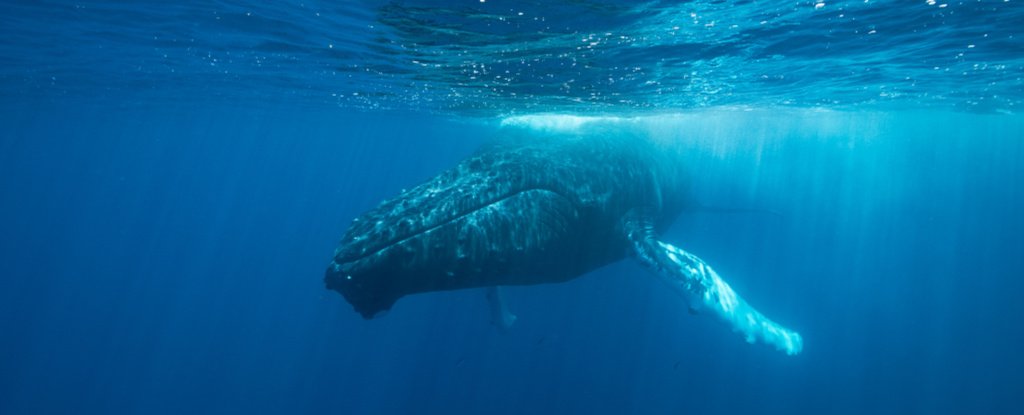
A new study reveals low-frequency hums from this maritime traffic are causing whales to stop their own singing calls, sometimes for up to 30 minutes after ships have passed by.
While the whales weren’t found to be adjusting their calls in any other way, that period of silence is troubling.
The researchers also noted that fewer male humpbacks were singing in the shipping lane areas compared with the surrounding parts of the ocean.
“Humpback whales seemed to stop singing temporarily rather than modifying sound characteristics of their song under the noise, generated by a passenger-cargo liner,” say the researchers.
“Ceasing vocalisation and moving away could be cost-effective adaptations to the fast-moving noise source.”
The research was carried out around the Ogasawara Islands in Japan, and involved 26 male singers in total (females and calves don’t sing) – between one and three calling whales a day.
One passenger-cargo ship passes through the region each day, and because the area is relatively free of traffic, it’s ideal for studying the impact this has in isolation.
Either the male whales reduce the number of singing calls they make, or they shut up completely while the ship goes past, according to the underwater acoustic measurements carried out by the researchers.
We’re still not sure whether or not long-term exposure to the sounds of ships has a negative impact on these whales, but this is a good starting point for future research, says the team.
There seems to be a 500 metre (1,640 feet) buffer around the shipping lane that whales are reluctant to make noise in, the researchers report, though the effects of the passing vessel were noted to have an impact on whales up to 1,200 metres (3,935 feet) away.
The study was carried out across the traditional mating season during 2017, February to July – the calls are used to attract mates, and as a result it’s possible that passing ships are interfering with the social structure of the humpbacks.
“It’s one more bit of evidence confirming that the noise humans make has a negative impact on all sorts of aspects of the life of marine mammals,” Spencer Fire from the Florida Institute of Technology, who wasn’t involved in the study, told CNN.
As the team notes, ambient underwater noise caused by humans continues to rise, with cargo and passenger traffic the main offenders.
Scientists are particularly concerned about how this affects cetaceans (whales, dolphins and porpoises) as they use sound to navigate, to communicate, and to find food.
Also this week, conservationists attending a conference held by the International Maritime Organisation in the UK have called for slower shipping routes to cut greenhouse gas emissions as well as underwater noise pollution.
While this study was carried out in a remote part of the ocean, the consequences on whale calling in a more crowded region could be more severe. Maybe it’s about time we started treading – or sailing – more lightly.
“Responses may differ where ship traffic is heavy, because avoiding an approaching ship may be difficult when many sound sources exist,” note the researchers.
Japan is proposing a slew of rule changes at the International Whaling Commission (IWC) meeting in Florianópolis, Brazil this week that conservationists worry would ultimately lift a 1986 moratorium on commercial whaling.
Other commercial whalers include Norway, which has killed more than 14,000 minke whales, and Iceland, which has killed nearly 1,800 whales in defiance of the moratorium, according to the report.
Previous reports have revealed that the Japanese government has an ultimate goal to resume commercial whaling, even though most of its citizens no longer eat whales. Whaling proponents say that hunting the mammals is part of their culture.
Hideki Moronuki, Japan’s senior fisheries negotiator and commissioner for the IWC, told the BBC that the country is pushing for the “the sustainable use of whales.”
Among its proposals, Japan wants to set up a “Sustainable Whaling Committee” which would create catch-quotas for nations wishing to allow their citizens to hunt healthy whale populations for commercial purposes, according to AFP.
Japan, which says minke and other whale stocks have recovered, will propose setting new catch quotas for species whose stocks are recognized as healthy by the IWC scientific committee.
Japan is also seeking to lower the proportion of votes required to set rule changes to a simple majority of the 89-member IWC, rather than three-quarters.
IWC meeting host Brazil is trying to rally other anti-whaling nations, such ads the European Union, Australia and New Zealand, to sign the “Florianópolis Declaration” that states commercial whaling is a no longer economically necessary and would allow the recovery of all whale populations to pre-industrial whaling levels, according to AFP.
Conservation groups have highlighted significant welfare concerns regarding “inhumane” time to death (TTD) rates after the whales are caught.
Whalers typically use an exploding harpoon to try to kill the animal “instantly”—defined by the IWC as within 10 seconds of being shot.
However, the report from EIA and AWI found that the hunted whales have suffered up to 25 minutes before dying:
Iceland’s TTD data in 2014 claimed that 42 died “instantly” while eight whales had to be shot a second time and their median TTD was eight minutes.
Norway recently collected TTD data for 271 minke whales. The median TTD for the 49 whales not registered as instantaneous deaths was six minutes. One whale had to be shot twice, taking 20-25 minutes to die.
Japan’s minke whales taken in the offshore North Pacific hunt take an average of two minutes to die, while those in the coastal hunt take over five minutes. Antarctic minkes take an average of 1.8 minutes to die.
Whaling opponents are urging the IWC to reaffirm its international moratorium on commercial whaling.
“If Japan gets its way, it would be a massive victory for those rogue whalers who have time and again defied the international ban on commercial whaling and an absolute disaster for the world’s whales,” said Clare Perry, EIA’s Ocean Campaigns leader in a statement received by EcoWatch.
“Many whale species have not yet recovered from massive overhunting in the past, and they are also facing a wide array of mounting existential threats ranging from climate change to marine pollution by chemicals, plastics and noise,” Perry added.
Kate O’Connell, marine wildlife consultant for the Animal Welfare Institute had similar sentiments.
“We’re only just beginning to grasp the vital role whales play in maintaining the health of the world’s oceans,” O’Connell said. “Weakening the ban now would be a fatal mistake, and would open the doors to increased commercial whaling around the world. This cruel and unnecessary industry is a relic of the past that has no place in modern society.”
“All other contracting governments to the IWC must step up to vigorously defend the moratorium from this new assault by Japan and its allies,” O’Connell concluded.
a prominent animal rights group has expressed outrage at Japan’s
controversial whaling program after it emerged that more than 120 pregnant
whales were slaughtered last year during the country’s annual hunt in the
Antarctic Ocean.
Latest figures show that 333 minke Antarctic whales were killed last
summer, 181 of which were females and 122 of which were pregnant.
The annual summer hunt, which lasted 143 days, killed 61 immature males and
53 immature females or 114 in total, according to meeting papers from the
International Whaling Commission’s scientific committee.
Humane Society International senior program manager Alexia Wellbelove
criticized the “cruelty of Japan’s whale hunt.”
A Minke whale is trussed to the side of the Japanese whale hunter Kyo Maru
in this image from 1995 as the boat heads for the factory ship Nisshin Maru
in the Antarctic whale sanctuary. Japan is under fire after it emerged that
it had killed over 120 pregnant whales in the summer of 2017.REUTERS
Japan says the hunting is for scientific research which it describes as
“biological sampling” that allows examination of the Antarctic marine
ecosystem. Whale is allowed to be sold in Japanese food markets.
Harpoons loaded with a grenade are used to target one or two whales in a
school and the carcass is then taken to the Japanese research vessel
Nisshin Maru where the contents of the animal’s stomachs, body parts and
skull are examined.
In November, video showed the brutality of a Japanese whale hunt in an
Australian whale sanctuary, which was only released after five years, after
the Australian government feared that it would harm ties between Canberra
and Tokyo.
The Japanese Embassy has not yet commented and Tokyo insists its program is
carried out “in accordance with the International Convention for Regulation
of Whaling.”
Japan says it will hunt about 4000 whales over the next decade.
Australia’s shadow minister for the environment Tony Burke called on his
country’s government to stop the annual hunt.
“There is nothing scientific about harpooning a pregnant whale, chopping it
up and putting it on a plate. Japan’s position on this is absurd and the
Australian government must not be silent,” he said.
BERLIN – Last year, three of the world’s largest meat companies — JBS, Cargill and Tyson Foods — emitted more greenhouse gases than France and nearly as much as some big oil companies. And yet, while energy giants like Exxon and Shell have drawn fire for their role in fueling climate change, the corporate meat and dairy industries have largely avoided scrutiny. If we are to avert environmental disaster, this double standard must change.
To bring attention to this issue, the Institute for Agriculture and Trade Policy, GRAIN and Germany’s Heinrich Boell Foundation recently teamed up to study the “supersized climate footprint” of the global livestock trade. What we found was shocking. In 2016, the world’s 20 largest meat and dairy companies emitted more greenhouse gases than Germany. If these companies were a country, they would be the world’s seventh-largest emitter.
Obviously, mitigating climate change will require tackling emissions from the meat and dairy industries. The question is how.
Around the world, meat and dairy companies have become politically powerful entities. The recent corruption-related arrests of two JBS executives, the brothers Joesley and Wesley Batista, pulled back the curtain on corruption in the industry. JBS is the largest meat processor in the world, earning nearly $20 billion more in 2016 than its closest rival, Tyson Foods. But JBS achieved its position with assistance from the Brazilian Development Bank and apparently, by bribing more than 1,800 politicians. It is no wonder, then, that greenhouse gas emissions are low on the company’s list of priorities. In 2016, JBS, Tyson and Cargill emitted 484 million tons of climate changing gases, 46 million tons more than BP, the British energy giant.
Meat and dairy industry insiders push hard for pro-production policies, often at the expense of environmental and public health. From seeking to block reductions in nitrous oxide and methane emissions, to circumventing obligations to reduce air, water and soil pollution, they have managed to increase profits while dumping pollution costs on the public.
One consequence, among many, is that livestock production now accounts for nearly 15 percent of global greenhouse gas emissions. That is a bigger share than the world’s entire transportation sector. Moreover, much of the growth in meat and dairy production in the coming decades is expected to come from the industrial model. If this growth conforms to the pace projected by the U.N. Food and Agriculture Organization, our ability to keep temperatures from rising to apocalyptic levels will be severely undermined.
At the November United Nations Climate Change Conference (COP23) in Bonn, Germany, several U.N. agencies were directed, for the first time ever, to cooperate on issues related to agriculture, including livestock management. This move is welcome for many reasons, but especially because it will begin to expose the conflicts of interest that are endemic in the global agribusiness trade.
To skirt climate responsibility, the meat and dairy industries have long argued that expanding production is necessary for food security. Corporate firms, they insist, can produce meat or milk more efficiently than a pastoralist in the Horn of Africa or a small-scale producer in India.
Unfortunately, current climate policies do not refute this narrative, and some even encourage increased production and intensification. Rather than setting targets for the reduction of total industry-related emissions, many current policies create incentives for firms to squeeze more milk from each dairy cow and bring beef cattle to slaughter faster. This necessitates equating animals to machinery that can be tweaked to produce more with less through technological fixes and ignoring all of this model other negative effects.
California’s experience is instructive. Pursuing one of the world’s first efforts to regulate agricultural methane, the state government has set ambitious targets to reduce emissions in cattle processing. But California is currently addressing the issue by financing programs that support mega-dairies rather than small, sustainable operators. Such “solutions” have only worsened the industry’s already-poor record on worker and animal welfare, and exacerbated adverse environmental and health-related effects.
Solutions do exist. For starters, governments could redirect public money from factory farming and large-scale agribusiness to smaller, ecologically focused family farms. Governments could also use procurement policies to help build markets for local products and encourage cleaner, more vibrant farm economies.
Many cities around the world are already basing their energy choices on a desire to tackle climate change. Similar criteria could shape municipalities’ food policies, too. For example, higher investment in farm-to-hospital and farm-to-school programs would ensure healthier diets for residents, strengthen local economies, and reduce the climate impact of the meat and dairy industries.
Dairy and meat giants have operated with climate impunity for far too long. If we are to halt global temperature spikes and avert an ecological crisis, consumers and governments must do more to create, support and strengthen environmentally conscious producers. That would be good for our health — and for the health of our planet.
Eating raw fish can lead to anisakiasis, a disease caused by parasitic worms.
Sushi has a healthy reputation – it can be low fat and high in protein – but a new report serves as a stark reminder that sushi made with raw fish can carry a dangerous parasite. Doctors warn that it’s becoming a greater problem in Western countries as more people eat sushi, and they documented one recent case that serves as a cautionary tale.
The case of a previously healthy 32-year-old man from Lisbon, Portugal, is featured in the medical journal BMJ Case Reports this week. The man was suffering from a bout of stomach pain for more than a week, and experienced vomiting and a fever.
When doctors questioned him about his symptoms and history, he revealed that he had recently eaten sushi.
Doctors performed an endoscopy – a scope test that uses a tiny camera on the end of a long, flexible tube to view the upper digestive system – and discovered he had parasite larvae attached to the lining of his stomach wall.
The culprit: Anisakiasis, a disease caused by parasitic worms.
“It is caused by the consumption of contaminated raw or undercooked fish or seafood,” the authors wrote in their case study.
Photos published with their account of the case show a worm “firmly attached” inside the man’s stomach.
Surgeons used a special device, called a Roth net, to remove the parasite, and the man’s symptoms resolved.
Most cases of the parasite have previously occurred in Japan, but the disease has been increasingly recognized as a problem in the West, the authors wrote.
Patients can have other symptoms too, including nausea, digestive bleeding, bowel obstruction, inflammation of the abdomen and allergic symptoms including itching and anaphalaxis, a severe and life-threatening reaction, according to the U.S. Centers for Disease Control and Prevention.
Dr. Daniel Eiras, assistant professor of infectious diseases at NYU Langone Medical Center, told CBS News that it’s pretty rare to see cases in the U.S. He’s only seen one case about two years ago, in a 45-year-old man.
“He was having reflux and severe abdominal pain. They thought he had a mass in his belly, cancer in his small intestine, so they took out the mass and looked at it under the microscope and it was one of these worms,” said Eiras.
Cases of anisakiasis are probably widely underreported, though, he said, because primary care doctors and pharmacists, the first health care professionals an infected person might consult with, typically aren’t aware of or looking for this type of parasite.
“We don’t do endoscopies on every person with stomach complaints, so we don’t know. Presumably there are many people who get anisakiasis and it gets sloughed out of their digestive system. It doesn’t lay eggs or continuously infect the intestine,” Eiras said.
So, only cases where the parasite actually embeds in the stomach or intestine wall may actually come to light, he explained.
The parasite can crop up in raw or undercooked seafood such as cod, fluke, haddock and monk fish.
Dr. Donald Hensrud, medical director of the Mayo Clinic Healthy Living Program and specialist in nutrition and preventive medicine, told CBS News that pregnant women and people with compromised immune systems, such as HIV patients or individuals taking biologic drugs, should avoid raw or undercooked fish and seafood. They can carry a risk for other illnesses, too.
Don’t eat raw fish at sketchy restaurants, either, Eiras recommended.
“I would not go to a restaurant with a ‘C’ rating in New York largely for this reason. It’s a big red flag when a sushi restaurant can’t maintain an ‘A’ rating, because one of the main things they get rated on is refrigeration. They’re not cooking the fish so that is the only prevention method, keeping it cold,” he said.
The same goes for eating ceviche — a dish made from raw fish and cured in lemon or lime juice — and poke, a Hawaiian raw fish salad that’s increasingly popping up on menus.
When preparing fish at home, cook seafood to an internal temperature of 145 degrees Fahrenheit, the U.S. Food and Drug Administration recommends. The FDA says freezing fish can kill parasites, too.



/arc-anglerfish-tgam-prod-tgam.s3.amazonaws.com/public/JU5NB6XAQNBDBFTN26BEAKZDJY.JPG)





 Exposing the Big Game