Exposing the Big Game

Forget Hunters' Feeble Rationalizations and Trust Your Gut Feelings: Making Sport of Killing Is Not Healthy Human Behavior

Exposing the Big Game

Hunters Debate Whether Cecil Backlash Is Hurting Sport’s Standing

http://www.nbcnews.com/business/business-news/hunters-debate-whether-cecil-backlash-hurting-sports-standing-n413931

“In my opinion, he’s doing more harm to public opinion on hunting than any anti-hunter could ever do,” said Mark Duda, executive director of the public opinion research firm Responsive Management, referring to the Minnesota dentist who shot Cecil with a crossbow after guides allegedly lured lion out of a national park. “And it’s too bad because it hurts … ethical, legal hunters who contribute to conservation and care deeply about wildlife.”

Duda, a hunter whose firm has tracked Americans’ attitudes about hunting for two decades, said the actions of Dr. Walter J. Palmer of Eden Prairie, Minn., suggested he had “read my newsletter on how to talk to the public about hunting, and did everything the exact opposite.”

Zimbabwe Alleges Another American Involved in Illegal Lion Hunt1:58

Not all hunters who spoke to NBC News about Cecil’s death agreed that the ensuing controversy had damaged support for the domestic sport. But none defended the way the lion, a popular attraction with visitors to Zimbabwe’s Hwange National Park, was reportedly killed.

Dale Hall, CEO of Ducks Unlimited and director of the U.S. Fish and Wildlife Service under President George W. Bush, was one of many hunters saying that Palmer should be prosecuted if an investigation reveals illegal activities.

“First of all, let me say that if unethical activities took place – if that’s what the evidence ends up showing – then I would be 100 percent for full prosecution,” Hall said. “Because we ethical hunters believe ethics is defined by what we do when no one is watching.”

Other hunting proponents say animal rights groups are using Cecil’s story as propaganda to press their anti-hunting agenda.

David Allen, CEO of the Rocky Mountain Elk Foundation, said animal rights groups “lay in wait for any opportunity to take issue with hunting in America.” But he doubts the Cecil controversy will stick to U.S. hunters.

“I think it’s going to be a huge stretch to try and turn Cecil, whatever happened, into that’s what’s wrong with North American hunting and fishing. It’s a huge leap,” Allen said.

But Ingrid Newkirk, president of People for the Ethical Treatment of Animals (PETA), said hunters and pro-hunting groups should be concerned because the outcry reflects changing attitudes toward killing wildlife.

<img class=”img-responsive img_inline” src=”http://media1.s-nbcnews.com/j/newscms/2015_34/1187226/150821-hunters-jsw-236p_9ee6f966ce8312fc4f98a4d657260aa3.nbcnews-fp-360-360.jpg” alt=”” title=”” itemprop=”image”/>
Rick Forster, left, and Sean McCarthy, both of Eau Claire, head out of the woods after deer hunting on Nov. 19, 2011, near Carryville, Wisconsin. Dan Reiland / The Eau Claire Leader-Telegram via AP file

“I don’t think they had realized that once was this was exposed … that people would be as upset as they are,” Newkirk said. “And they fear that the same rage and disgust is going to erupt if people stop buying the myth that hunting in America is to put food on the table.” PETA calls hunting unnecessary and cruel, and advocates for more humane methods of wildlife control.

More: http://www.nbcnews.com/business/business-news/hunters-debate-whether-cecil-backlash-hurting-sports-standing-n413931

Cecil the lion’s killer ‘captured’: Walter Palmer pictured for the first time since Zimbabwe hunt

http://www.telegraph.co.uk/news/worldnews/northamerica/usa/11806856/walter-palmer-cecil-the-lion-killer-first-pictures.html

Exclusive: The Telegraph obtains first images of Walter Palmer in Minnesota since beloved lion was killed

Facebook
2K
Twitter
295
Pinterest
3
LinkedIn
0
Share
2K
Email

Walter Palmer, the man responsible for killing Cecil the lion

Walter Palmer, the dentist responsible for killing Cecil the lion Photo: Richard Beetham/The Telegraph/Splash News

These are the first images of Walter Palmer, the American dentist, back in his home town after it was revealed by The Telegraph last month that he was responsible for the death of Cecil the lion.

Pictured for the first since the hunt in Minnesota, Mr Palmer has been in hiding since the worldwide furore surrounding the death of the beloved lion in one of Zimbabwe’s national parks.

His return to normal life coincided with a letter announcing that the dental practice he owns was reopening – but without the embattled hunter.

“Today, River Bluff Dental employees and dentists are beginning to serve our loyal patients,” the firm said in a letter dated Monday. “Dr Palmer is not on site.”

The dental practice website was still offline, but the news was announced on a Twitter account claiming to belong to the practice.

The account, which was started after the news of Cecil’s killing was announced, has been used to rally support for the practice since The Telegraph named Dr Palmer as the man responsible for the animal’s death on July 28.

“A smile takes but a moment, but the memories of it last forever. Happy #WorldLionDay!” they tweeted on August 10, with a photo of two lions bearing their teeth.

“Don’t understand why people are so angry. What’s done is done. The practice WILL be open again! Promise!!!”

Last week they tweeted: “The practice is still closed even though people care less and less about #CecilTheLion day after day. Fickle people.”

Mr Palmer is believed to have paid £35,000 to shoot and kill the 13-year-old lion with a bow and arrow. The animal was wearing a radio collar because he was part of an academic study by Oxford University.

Walter Palmer the man responsible for killing Cecil the lionWalter Palmer, the dentist responsible for killing Cecil the lion  Photo: Richard Beetham/The Telegraph/Splash News

The animal was shot on July 1 in Hwange National Park. There have been calls for Mr Palmer to be extradited to face charges in Zimbabwe – something highly unlikely to happen.

Walter Palmer, the dentist responsible for killing Cecil the lionWalter Palmer, the dentist responsible for killing Cecil the lion  Photo: Richard Beetham/The Telegraph/Splash News

The professional hunter who accompanied the American, Theo Bronkhorst, is facing charges of carrying out an illegal hunt.

Last week, Robert Mugabe, the Zimbabwean president, blamed his own people for allowing Cecil to be killed by the dentist, telling them they “failed to protect” a national resource from foreign “vandals”.

More: http://www.telegraph.co.uk/news/worldnews/northamerica/usa/11806856/walter-palmer-cecil-the-lion-killer-first-pictures.html

Cecil the lion killer’s shameless photos with illegally killed black bear

http://www.express.co.uk/news/nature/598471/Cecil-the-lion-Walter-Palmer-poses-black-bear-killed-illegally-shock-new-picture

HORRIFYING new pictures showing the dentist who slaughtered Cecil the lion posing with a bear he slayed illegally have emerged.

PUBLISHED: 20:00, Fri, Aug 14, 2015 | UPDATED: 21:23, Fri, Aug 14, 2015

Man with dead bearWISCONSIN DEPARTMENT OF NATURAL RESOURCES

Dr Palmer is pictured with a bear he shot dead in 2006

Walter Palmer is pictured beaming ear to ear with a slumped black bear he shot dead nine years before killing Zimbabwe’s much-loved beast.

Dr Palmer, who has become notorious around the world for slaying the famous lion, allegedly tried to bribe his guides with £13,000 when it emerged the hunt was illegal.

The dentist slaughtered the animal with a bow and arrow in Wisconsin, US, in 2006, in an area where he did not have permission to hunt.

According to ABC news, who obtained the pictures through a Freedom of Information request, Dr Palmer then gave false statements to federal prosecutors investigating the illegal hunt.

Court documents said Palmer had a permit to hunt in one county, but he shot the bear 40 miles away in an area where he did not have permission.

When caught and tried, the American hunter pleaded guilty – but only paid a £1,900 fine after signing a plea agreement.

US Attorney John Vaudreuil told ABC: “As soon as the bear was killed, Palmer and the three guys he was with – guides – they agreed they would lie about it.”

But Dr Palmer’s cover-up fell through after the bear trackers on the beast didn’t match with his story.

Dr Palmer has become a worldwide hate figure after paying £35,000 to kill Cecil and return him to the United States as a trophy after luring him off government-protected land.

Man with dead bearWISCONIAN DEPARTMENT OF NATURAL RESOURCES

The American hunter tried to cover-up the illegal hunt

Palmer and the three guys he was with – guides – they agreed they would lie about it

John Vaudreuil

The American hunter, who also holds the world record for slaughtering the biggest white rhino ever with a crossbow, has come under a barrage of abuse and has even received death threats from animal rights activists.

He has been in hiding since the reports of him killing Cecil with a crossbow broke last month.

Dr Palmer, who admitted killing the big cat, claimed he believed all the necessary hunting permits were in order.

Zimbabwe has called for the dentist to be extradited from the United States after accusing him of killing the beloved animal illegally.

Opinion: Cecil the lion and compassionate conservation

http://www.vancouversun.com/opinion/op-ed/Opinion+Cecil+lion+compassionate+conservation/11279680/story.html

BY CHRIS GENOVALI AND PAUL PAQUET, SPECIAL TO THE VANCOUVER SUN AUGUST 11, 2015

The senseless killing of Cecil the lion has catalyzed a worldwide discussion about the gratuitous trophy hunting of large carnivores.

In Western Canada, countless Cecils are killed in an equally senseless manner each year for the amusement, pleasure, and excitement of recreational hunters.

From the unrestrained killing of wolves in British Columbia and Alberta to the persistence of the insupportable B.C. grizzly bear hunt, large carnivores are persecuted in Western Canada by way of an anachronistic approach to wildlife management that relies on suffering and death as its primary tool. The chief purveyors and ideological proponents of this faulty and antiquated model are government ministries responsible for wildlife management and trophy hunting special interest groups. Moreover, they are rapidly falling out of favour with much of society as their excesses and biases steadily become more widely known. Clearly, the time has come for a different way of managing wildlife.

Dr. Marc Bekoff, one of the foremost proponents and thinkers in the evolving field of compassionate conservation, writes that “Compassionate conservation — in which the guiding principle ‘First do no harm’ stresses the importance of individual nonhuman animals — is gaining increasing global attention because most animals need considerably more protection than they are currently receiving and many people can no longer justify or stomach harming and killing animals in the name of conservation.”

Too often conservation and wildlife management primarily focus on the maintenance of population numbers. We forget wild populations are formed by of individuals that can suffer stress and pain, which we deem unacceptable for companion animals that share our homes and those we farm to eat. Although suffering is a feature of a wild life, the human-induced suffering caused by sport hunting and lethal predator control, such as the B.C. and Alberta wolf culls, is not.

In Western Canada, thousands of large carnivores are killed annually under the guise of conservation and wildlife management. The recreational hunting of wolves, grizzly bears, black bears, and cougars is done for the most trivial of motivations such as “bagging a trophy.” In addition, hundreds more of these animals are tyrannized every year in the name of predator control, as large carnivores become scapegoats for the decline of other animals from marmots to mountain caribou.

Humans intrude, degrade, and destroy large carnivore habitat, including restricting access to or depleting their food, in our relentless pursuit of resource development, economic gain, and even recreational activity. In doing so, top predators are deprived of the requisites they need to survive, and then are slain when they become “problem” animals as a result of their search for sustenance.

Large carnivores are demonized in books, films, and television programs, as our society clings to malevolent myths that have no basis in reality, but are instead phantasmagoric products of our own deep-seated fears and paranoia about the “other.”

We diminish the lives of large carnivores by relegating them to the status of unthinking and unfeeling beasts, fostering our bloated sense of entitlement and misguided belief in human exceptionalism. We hold the balance of power in our relationship with wildlife and typically wield that power with downright ruthlessness, motivated by a parsimonious self-interest that continues to be informed by superstition, hubris, and indulgence.

Bekoff summarizes the goals of compassionate conservation and the challenges we face in fundamentally changing our current relationship with wildlife thusly: “Striving to live peacefully with other animals with whom we share space, and into whose homes we’ve moved, is part of the process of re-wilding our hearts, and coming to appreciate other animals for whom they are and for what they want and need in our troubled world, to live in peace and safety.”

Ultimately, how we relate to wolves, bears, lions, and other carnivores is determined by the social values and mores of the culture we inhabit. Increasingly, we are realizing our treatment of large predators is a test of how likely we are to achieve co-existence with the natural elements that sustain us.

It is encouraging that growing public sensitivity to the trophy hunting of large predators is exposing blood-sport adherents to intense scrutiny. Much of society is beginning to identify the wanton killing of wildlife for fun and entertainment as an unacceptable deviancy by which so-called trophy animals are sacrificed for the perverse gratification of trophy hunters.

Perhaps there will come a day when the stubborn allegiance of many trophy hunters, government biologists, and opportunistic politicians to lethal exploitation and management is understood to tell us less about the exigencies of wildlife conservation and more about the psychological pathology of people.

Chris Genovali is executive director for Raincoast Conservation Foundation. Dr. Paul Paquet is Raincoast’s senior scientist.

Wildlife Photography ©Jim Robertson, 2015. All Rights Reserved

Wildlife Photography ©Jim Robertson, 2015. All Rights Reserved

Airlines Take Flight From Trophy Hunting — When Will Congress Get on Board?

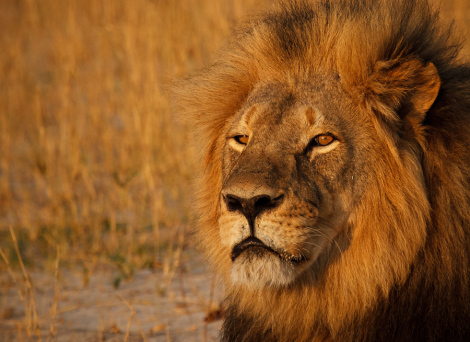
Portrait of Cecil by Ed Hetherington

http://www.huffingtonpost.com/michael-markarian/airlines-take-flight-from-trophy-hunting_b_7966170.html

by

Chief Program & Policy Officer, The Humane Society of the United States

The tragic death of Cecil the Lion — senselessly shot by an American dentist with a bow and arrow and left to suffer for hours before being shot again — has exposed the pay-to-slay subculture of wealthy people who spend a fortune to kill the grandest, most majestic animals in the world. The public outrage shows no signs of slowing down.

Virtually overnight, a cascade of major airlines has banned the transportation of spoils from the trophy killing industry — principally elephants, rhinoceros, lions, leopards, and buffalo, or the “Africa Big Five” sought for self-aggrandizement in the Safari Club International record books. Delta, United, American and others are all in flight from the destruction and death meted out by trophy hunters on the African continent.

But when will Congress get on board? Even now, there are lawmakers working quietly to appease the bullies and fat-cats of the trophy hunting corps. While most of the world is convulsed over Cecil, some members of Congress are springing into action to grant special favors for one of the smallest and most elite groups of trophy hunters in the world.

Walter Palmer is now a household name. What isn’t so widely known is that there are thousands of ultra-wealthy trophy hunters just like him, and that 41 of them are lobbying Congress for a wholly unprincipled bail-out that would blow a hole in the heart of the Endangered Species Act.

Bills in the House and Senate — the “Bipartisan Sportsmen’s Act” sponsored by Sens. Lisa Murkowski, R-Alaska, and Martin Heinrich, D-N.M., and the “SHARE Act” sponsored by Reps. Rob Wittman, R-Va., Tim Walz, D-Minn., Jeff Duncan, R-S.C., and Gene Green, D-Tex. — both provide a sweetheart deal to help 41 big-bucks, trophy-mad hunters import the heads of rare polar bears they shot in Canada. None of these millionaire trophy hunters, who paid as much as $50,000 each to shoot a polar bear, ate the meat. They just went on a head-hunting exercise in the Arctic, and paid a fortune to do so — all for the head and the hide and the bragging rights that go along with it.

U.S. law bars import of these trophies because polar bears are in terrible trouble with their very survival at stake, thanks to climate change, commercial trade, and over-hunting. These animals were killed during expensive trophy safaris in Canada at a time when the Bush Administration had proposed listing the polar bear as a threatened species — the U.S.’s contribution to conservation. These fat-cat hunters proceeded knowing that the door would be closed to polar bear trophy imports, but confident that they could always call upon friends in Congress to do their bidding and get them an exemption.

Indeed, Congress has several times granted similar import allowances — a de facto repeal of the import ban — sending a message to trophy hunters that they can continue killing imperiled species and eventually exert their influence to get approval to bring home their trophies. The cumulative impact of this corrosive pandering encourages more reckless killing of these animals around the globe.

The whole sordid business is fueled by competitive killing programs that give “hunting achievement” awards and “grand slams” for kills in specific categories. For example, hunters at the Safari Club International compete for the “North American 29” award, which requires killing a minimum of 29 species and subspecies of animals, including the polar bear, in North American habitat. They also strive to earn the “Bears of the World” award, which requires killing five bears, such the polar bear and Eurasian and Siberian brown bears, on a number of continents.

The U.S. Fish and Wildlife Service is now considering a rule to list the African lion as threatened under the Endangered Species Act. Should all the Walter Palmers of the world seeking the “Africa Big Five” award now rush to be among the last hunters to bag the king of the jungle? That acceleration of killing inverts the very purpose of the law.

These trophy hunters don’t care that African lion populations and polar bear populations are declining fast. They don’t care that time is running out to slow the mortality of these majestic creatures. But Congress should.

Trump Defends His Sons’ Sick Hobby Of Killing Innocent Animals

https://www.thedodo.com/trump-speaks-on-sons-hunting-1275724124.html

By Stephen Messenger

Unfortunately for one Republican presidential hopeful, the answer is: his sons.

Donald Trump was forced to weigh in on the issue this week after a gory photo of his trophy hunting sons resurfaced online, tying his family to the very practice that has sparked fierce backlash in recent days. When asked for his response at a press conference in Scotland this week, Trump was reportedly far from condemning of the fact that his sons had a hobby of killing innocent animals, too.

“My sons love to hunt,” The Telegraph and The Daily Mail report Trump said, though he reportedly refused to directly address shooting endangered animals. “They are members of the NRA, very proudly. I am a big believer in the Second Amendment. But my sons are hunters, Eric is a hunter and I would say he puts it on a par with golf, if not ahead of golf. My other son, Don, is a hunter. They’re great marksman, great shots, they love it. I em, like golf. I don’t do that.”

As benign as he makes it sound, Trump’s sons are hardly run-of-the-mill hunters. The family’s fortune has apparently been used to fund safaris to Africa, targeting beloved animals like elephants and leopards — hunting trips that can range in the tens of thousands of dollars.

While the senior Trump has stated before that he’s not a believer in hunting, his unwillingness to discourage the practice outright given the chance stands in contrast to the reaction of other public figures.

See below for more of The Dodo’s coverage on Cecil:

Lion Killer Dentist Writes Letter To Patients About His Passion For Hunting

Jimmy Kimmel Tears Into ‘A-hole’ Dentist Who Killed Cecil The Lion

Lion Killer Dentist Is Having The Worst Day Ever

Cecil’s Death Just Got More Depressing: His 12 Cubs Will Probably Die Now

We Can Do A Lot More To Save Lions Than Sign Petitions For Cecil

Trophy Hunting Deserves the Attention it Does Not Want

11825758_10153384818490861_9149004585855556291_n

http://www.bornfreeusa.org/weblog_canada.php> Born Free USA Canadian Blog by Barry Kent MacKay 07 Aug 2015

As most folks now know, after suffering for 40 hours, wounded by an arrow, an African lion given the name “Cecil” was shot again—this time fatally—with a rifle.

His tormentor was a dentist named Walter Palmer, from Minnesota, who had paid tens of thousands of dollars, travelling to distant Zimbabwe to kill animals: something he admits he loves to do. Cecil had been lured from a national park, which is illegal to do in Zimbabwe.

And, the world took note. Cecil was wearing a radio tracking collar. His body was skinned, the head removed.

Palmer’s guide was charged with poaching and so was the owner of the ranch where this outrage occurred.

Now, Zimbabwe wants to extradite Palmer from the U.S. to face similar charges. Palmer has been the subject of outrage, all the more so for having poached before, when he lied about where he had shot a black bear in the U.S. His life has been threatened, his property vandalized, his business closed for now, and he has fled into hiding, hounded by relentless vitriol and images of him posted on social media posing with various beautiful animals he has killed. He looks so pleased; the animals look so dead.

If there is a positive outcome to this situation, it may be to the degree that trophy hunting has received attention it would rather avoid.

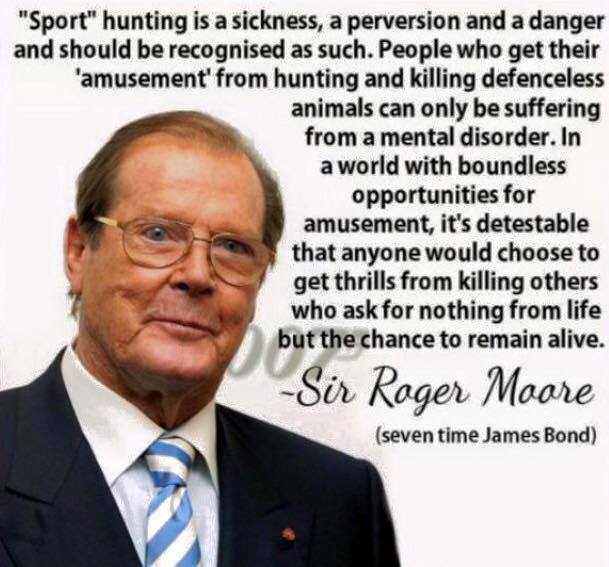
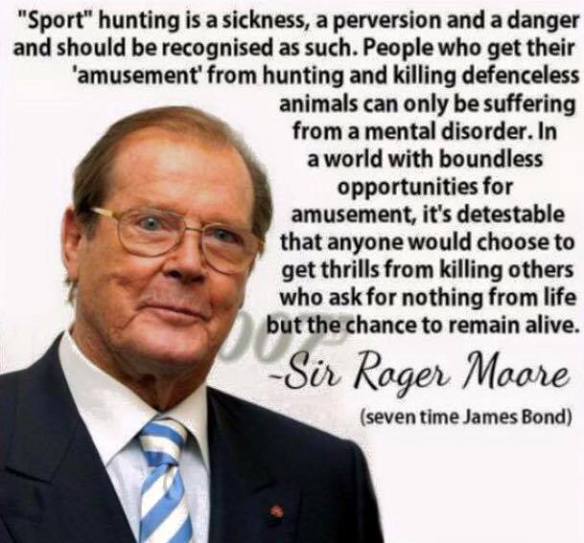
I am personally inclined to agree with British actor Sir Roger Moore, who said, “‘Sport’ hunting is a sickness, a perversion, and a danger and should be recognized as such… We know that we should protect the most vulnerable and helpless in society, not destroy them—much less derive pleasure from doing so.

Thankfully, those of us with a conscience are appalled by the idea of gunning down animals for the sake of a thrill or a photo. Interest in hunting in Great Britain and elsewhere is steadily declining, since decent people prefer to hike, take photographs, kayak, and generally enjoy the outdoors without killing other beings.”

Palmer had already scored the “super grand slam” of North American trophy hunting by killing all of the “top 29” North American species and subspecies.

And then, there is Sabrina Corgatelli, an American accountant who defended her own love of killing animals on a national TV show, saying, “There is a connection to the animal, and just because we hunt them doesn’t mean we don’t have a respect for them. Giraffes are very dangerous animals. They could hurt you seriously, very quickly.” This last comment was likely in reference to disgusting images of her posing triumphantly with a giraffe she had just killed. In her Facebook account of this event, she wrote, “I got an amazing old giraffe. Such an amazing animal!!!! I couldn’t be happier.”

There are hunters I’ve met who have no respect for the category of hunting known as “trophy” hunting, or even of baiting animals to lure them into range. Cecil was lured from the park refuge by the smell of a dead animal tied to a vehicle, at night, and shot when caught in the glare of a spotlight. We would never know but for the radio collar, put there by scientists from Oxford University studying lions in the nearby park. We have learned of other such lions being shot for the same reason. Indeed, lions are in serious decline, heading toward extinction.

Killing animals for trophies continues day after day around the world. It seems even reminiscent of those serial killers who take some trophy of their victims—some hair or a piece of clothing, perhaps—as if wanting to have a souvenir to aid memory of the event. Except, trophy hunting for animals is, too often, quite legal.

And, while they may not be able to admit it to themselves, I think that, at some rudimentary level, trophy hunters realize that their love of killing is an aberration to other people. Thus, they may try to excuse it with rationales that, thanks to Cecil’s sad plight, are now being held up to scrutiny. No giraffe threatens you, me, or Corgatelli. Even Cecil never bothered or threatened humans.

The more sophisticated defense is that trophy hunting brings essential revenue to places like Africa, to be used for conservation. But, it does no such thing. We have found that <http://www.bornfree.org.uk/animals/lions/projects/trophy-import-ban/> revenue from trophy hunting is a fraction of what tourism brings to Africa, and people travel to such places mostly to see (not kill) live (not dead) animals.

It is almost as if the trophy hunter somehow thinks that, with access to the art of taxidermy, the grace, beauty, power, and elegance of beautiful creatures can be possessed and owned as a reflection of their own competency. They don’t “get” how pathetic they are in the eyes of other people.

Some argue that trophy hunting removes geriatric animals who are past being able to contribute to the survival of the species. However, that was not true of Cecil, nor Corgatelli’s “old giraffe,” nor most other animals: often prime individuals. (That’s the whole idea.). And, at any rate, the slaughter still begs the question of “Why?” Why do you want to kill anything?

To shoot a warthog? A walrus? A giraffe? How can a person kill something so wonderfully alive and so evocative of the high plains and big skies as a pronghorn—for fun? No. I just don’t want to do that. Most people don’t. Those who do are the aberrant ones: the misfits, the insecure, the outright strange.

They are a minority… but not enough of a minority. They are killers in a world that’s in desperate need of protectors.

And, at Born Free, and in our offices everywhere—including mine up in Canada—that’s why we’re here.

Cecil the lion’s death highlights the work to be done to protect wildlife

August 5 at 7:31 PM

IN THE wake of the international outcry over the death of Zimbabwe’s most famous lion, the country’s wildlife authority has suspended the hunting of lions, leopards and elephants in the areas outside the park that the black-maned Cecil made his home before he was lured to his death. Conservationists hailed the move as a good first step. But more than a temporary stop in hunting in one African country will be needed if threatened and endangered species are to be saved.

Circumstances of the death of Cecil, a 13-year-old lion popular with tourists at Hwange National Park and being studied by scientists, are well known. Shot with an arrow after a dead animal was allegedly used to draw him out of his sanctuary, Cecil was tracked for 40 hours before being shot with a gun, skinned and beheaded. Walter Palmer, the American dentist who admitted killing Cecil, expressed regret, saying he relied on local guides and thought the hunt was legal. Officials in Zimbabwe and the United States are investigating.

What must not get lost in the hunt for justice for one celebrity lion is that Cecil’s death is part of a larger problem. The decline in population of African lions has been dramatic, from 500,000 to 600,000 at the turn of the 20th century to about 30,000 today. Other animals — elephants, rhinoceros, apes — are in equal, sometimes greater, danger. The Post’s Kevin Sieff pointed up the contrast in attention between Cecil’s killing and that of five nameless elephants slaughtered in Kenya by poachers marketing in ivory.

Hunting, legal and illegal, has not been the main cause of the decline in animal populations; that honor goes to the encroachment of civilization on natural habitats. Indeed, some hunting enthusiasts even argue that trophy hunting can be a boon to conservation by generating big fees to support sanctuaries, attract tourists and discourage local residents from killing animals or taking over their habitats.

Whether trophy hunting is beneficial to wildlife is a matter of some dispute. A 2009 report from the International Union for the Conservation of Nature said it had produced “mixed results.” Countries (Namibia is an example) that tightly regulate trophy hunting (paying close attention to the population of species), are vigilant about enforcement and are transparent about where the monies go can claim some overall benefits in helping wildlife. Too many countries, though, sell permits with lax regulations, no enforcement and no idea of the impact on animal populations.

 Portrait of Cecil by Ed Hetherington

The African Wildlife Foundation is asking all African governments to consider placing a moratorium on the trophy hunting of lions. Delta has joined other airlines in banning the shipment of big-game trophies on its flights. The United Nations has called on member states to increase efforts to fight poaching of endangered species, and the U.S. Fish & Wildlife Service has proposed listing lions as threatened under the Endangered Species Act. All are prudent moves that we hope will prove to be more than a sop to those mourning Cecil.