Killing Healthy Zoo Animals Is Wrong—And the Public Agrees

http://news.nationalgeographic.com/news/2014/03/140327-copenhagen-zoo-giraffes-lions-animals-deaths-science-world/

Scientist calls lion, giraffe deaths “zoothanasia”—or heartless elimination.

A photo of two lionesses at the Copenhagen Zoo.

Two lionesses are seen at the Copenhagen Zoo on March 26, not long after four other lions were put to death.

PHOTOGRAPH BY JENS DRESLING, POLFOTO/AP

Marc Bekoff

for National Geographic

Published March 27, 2014

The four lions killed by the Copenhagen Zoo this week, as well as  the healthy young giraffe named Marius put to death in February, didn’t have to die.

A global uproar has followed the deaths of two African lions and their two ten-month-old cubs. Their lives ended because the zoo wants to introduce a new male to the remaining females to bear more lions.

The same outcry was heard when a healthy young giraffe named Marius, who had the wrong genes for the facility’s breeding program, was killed with a bolt to his head—so as not to contaminate his body with poisons. The giraffe was publicly dissected and then fed to the zoo’s carnivores, including lions.

None of the deaths were euthanasia, which is a mercy killing when an animal is suffering or lingering near death and must be “put down,” as zoos always refer to such situations.

Rather, it was “zoothanasia,” or killing done by zoo workers because an animal is no longer needed for one reason or another and is deemed to be a disposable object rather than a sentient being. (Related: “Opinion: Killing of Marius the Giraffe Exposes Myths About Zoos.”)

The “Marius Effect”

Many people around the world were outraged by Marius’s death. I call this the “Marius Effect.”

Many of them had never previously voiced their opinion about the common killings of what are disparagingly called “surplus animals” by zoos, or had spoken out about other animal issues. (See “National Zoo Deaths: ‘Circle of Life’ or Animal Care Concerns?“)

While some workers at the zoo and elsewhere said the giraffe had to be killed because he didn’t fit into the zoo’s breeding program, and therefore couldn’t be used as a breeding machine (like dogs at a puppy mill), countless others disagreed. An online petition asking the zoo to hold off on the killing until another home was found received tens of thousands of signatures.

Marius was killed despite the fact that another facility had offered him a home in which he could live out his life in peace and safety.

Many others and I figured that the negative attention that the late Marius brought to the Copenhagen Zoo would serve as a catalyst to change the breeding policies of zoos in Europe. We thought those responsible for killing him would reassess what they did and question their killing ways—even if such killings were required by existing regulations put forth by the European Association of Zoos and Aquaria (EAZA). (Read more about zoos and saving rare species in National Geographic magazine.)

We couldn’t have been more wrong. Now, with the deaths of the four lions, the Copenhagen Zoo wants to become a lion mill, I would argue, and still seems to think killing healthy animals is perfectly okay.

All of the newborn lions whose kin died to make way for them will spend their lives in captivity, and some will undoubtedly be “zoothanized” in the future because they, too, will be classified as disposable “surplus” animals without the right genes to pass on to future captive lions.

The zoo also argued that the new male lion brought to the zoo would kill the youngsters and the captive group, and thus the group wouldn’t resemble a wild pride of lions, as if it previously had.

Of course, there is nothing natural about the cage in which they are kept.  While some might call it an enclosure or pretty it up by calling it “lion habitat,” it is still a cage in which future lions will be mercilessly crammed, from cradle to grave.

“Perversely Justified”

I see heinous acts like killing Marius and the four lions as a perfect subject for study for researchers in the field of anthrozoology, the scientific study of human-animal relationships.

These easily avoidable deaths, perversely justified “in the name of conservation,” are horrible lessons for youngsters. They run counter to global programs in humane education and compassionate conservation, in which the life of every individual animal is valued—and not just because they can serve us in any number of ways, such as by making more of themselves for future captive breeding. (See “Is Breeding Pandas in Captivity Worth It?“)

Zoos need to change their ways and respect the caged animals for whom they are responsible as long as an individual is healthy.

Surely, people who choose to go to the Copenhagen Zoo can find other ways to spend their time and money.

Marc Bekoff is professor emeritus of ecology and evolutionary biology at the University of Colorado, Boulder. He has published numerous scientific and popular essays and 25 books, including Ignoring Nature No More: The Case for Compassionate Conservation and Why Dogs Hump and Bees Get Depressed: The Fascinating Science of Animal Intelligence, Emotions, Friendship, and Conservation.

After giraffe uproar, Copenhagen zoo kills 4 lions

01bfb39948b2f313b238ba43f926ea25

http://www.chron.com/news/world/article/After-giraffe-uproar-Copenhagen-zoo-kills-4-lions-5347528.php

COPENHAGEN, Denmark (AP) — A Danish zoo that faced protests for killing a healthy giraffe to prevent inbreeding says it has put down four lions, including two cubs, to make room for a new male lion.

Citing the “pride’s natural structure and behavior,” the Copenhagen Zoo said Tuesday that two old lions had been euthanized as part of a generational shift. It said the cubs were also put down because they were not old enough to fend for themselves and “anyway would have been killed by the new male lion.”

Zoo officials hope the new male and two females born in 2012 will form the nucleus of a new pride.

Last month the zoo triggered a wave of protests by killing a 2-year-old giraffe, and feeding its remains to the lions as visitors watched.

Also: http://www.theguardian.com/world/2014/mar/25/danish-copenhagen-zoo-kills-four-lions-marius-giraffe

Cougars on the prowl, not increase, officials say

[This is from my old stomping grounds, the Methow Valley, where I lived for over 20 years and saw 4 out of the 5 cougars I’ve seen so far in my relatively short life (geologically speaking).]

Cougars on the prowl, not increase, officials say

By Ann McCreary

The recent series of cougar attacks on domestic animals may have people wondering if there are more cougars than usual in the Methow Valley. Not so, says a wildlife researcher who has studied cougars here for more than a decade.

While there may be an unusual concentration of cougar incidents in recent weeks, the big cats are simply doing what comes naturally and taking advantage of opportunities for an easy meal courtesy of humans, according to Rich Beausoleil, cougar and bear specialist for the Washington Department of Fish and Wildlife (WDFW).

Wildlife officials killed another cougar last Friday (Jan. 10) — the fourth in five weeks — after the cat killed a sheep at a home off East Chewuch Road near Winthrop.

“The numbers of sightings has been really high this year,” said Cal Treser, wildlife officer for the WDFW. “Last week I had nine cougar calls.”

“Every now and then we’ll see a cycle like this where [incidents] are all clumped together,” said Beausoleil. “We’re never going to put it all together and explain why these things happen. We know January is the month where all this increases. I don’t want people to jump to this notion that the cougar population is up.”

Beausoleil has 11 years of research to back his statement about cougar populations.  Last year he published a scientific paper that found the cougar population controls itself naturally, because they are extremely territorial animals.

Researchers found that adult cougars, especially males, have a natural drive to establish and defend territory, and will kill any other cougar that enters it. This creates a stable density in cougar populations that researchers found applies to cougars everywhere.

The recent problems associated with cougars killing sheep, goats, chickens and dogs are predictable, and will continue unless people take steps to protect their animals, Beausoleil said.

“The chickens running around the enclosure — that’s just bon bons on the landscape. You might as well have an ‘Eat at Joe’s’ sign,” Beausoleil said.

“It’s all about prevention,” he said. “The word I like to get out is you need to look around your property and say, how do I prevent a problem from happening before it happens? Don’t go and blame those ‘nuisance animals.’ Stop and say, ‘Why did this happen?’”


‘Game of calories’

For large carnivores, survival “is a game of calories,” Beausoleil said. Taking down a deer is hard and dangerous work and cougars are often injured in the process. “It’s a tough life out there and when you see something like a goat that just sits there and looks at you … you take it while you’ve got it,” he said.

Putting animals inside a barn or in a secure enclosure at night is a key step in preventing problems, Beausoleil said. “Goats are the No. 1 at-risk animal, sheep are second, third are chickens,” he said.

“This is the Methow Valley,” said Beausoleil. “Your backyard turns into wilderness. You need to be a part of that landscape and take the steps to live harmoniously with the critters that are around.”

Skip Smith lost two goats in recent weeks to a cougar that entered a livestock enclosure at his ranch on Highway 20 outside Winthrop. The 74-pound female cougar that killed the goats was tracked and shot last week.

After the second attack, Smith said he created a more secure pen to hold his sheep and goats at night. He increased the height of the fence to 8 feet and added three strands of electric wire around the top.

“The electric fence might help. If they jump up and touch that, it’s pretty hot,” Smith said.

Suggestions on ways to live with wildlife are available on the WDFW website, the Mountain Lion Foundation website, and the Western Wildlife Outreach website, Beausoleil said.

“These precautions cost money, and I know it can be a burden on people. I guess it comes down to values and the value you put on the natural world,” he said. “Cougars are the personification of wilderness and an unbelievable carnivore.”

Killing cougars that attack domestic animals “is a temporary solution,” said Beausoleil. His research shows that when a cougar dies or is removed from his territory, other cougars will move in until one establishes it as its own.

“The gun is just a Band-aid. As soon as one territory opens there is another cougar right behind it,” Beausoleil said.


‘Needless kill’

Killing cougars that attack livestock that aren’t adequately protected “gets frustrating to me because … it’s a needless kill and such an easy thing to prevent,” Beausoleil said.

January and July — “the worst days of winter and worst days of summer” — are predictable periods of problems with carnivores, Beausoleil said. This winter of low snow may have an added dimension, because deer are more widely scattered, rather than confined to more traditional winter ranges, and cougars may be more widely dispersed as a result.

The cougar that attacked the sheep last week was a 130-pound male in good health. “He hadn’t missed a meal.” Treser said.

“The cougar was living on the edge of the Methow Wildlife Area with plenty of mule deer for food. There’s no reason he should have taken a sheep. Maybe [he did] because the kill was easy as the sheep were confined in a corral,” Treser said.

Trackers with dogs were brought in and followed the cougar for five hours, until he was treed near the Methow River and shot.

“He was a beautiful cat,” Treser said.

Once a cougar has attacked livestock or pets in winter, the policy is to kill it because the cougar is likely to repeat the attacks. In other seasons, Treser said, he will often capture a cougar following an attack on livestock and relocate it. But in winter, snow and weather make it too difficult to relocate cougars to remote areas, he said.

The relocating doesn’t always work, Treser said. Late last summer a cougar killed a goat near Buzzard Lake, on the Okanogan side of Loup Loup Pass. Treser captured the cat, placed an ear tag on it, and released it above Ross Lake on the east side of the North Cascades.

“Eighteen days later he came back and killed a goat in the same pasture,” Treser said.

Cougars that turn to livestock and pets as prey are often unhealthy or injured, Treser said. “As they’re taking down large animals they break teeth, injure their feet, break claws off. It gets more difficult to take down a deer,” so they look for easier prey, he said.

The four cougars killed this year because of predation on domestic animals have all been healthy, Treser said.

For more on cougars in the Methow this winter, see Another cougar attack adds to high number of incidents,  Cougar sightings, encounters continue to add up in the valley,  Coming to terms with cougars, and Human, pet encounters with cougars increase each winter.

snrsslion

Sport Hunter Who Murdered Mother Cougar Lauded by Press

Hunter kills cougar, rescues newborn kittens

Posted 5:26 p.m. yesterday

More on this
Baker City Herald

By JAYSON JACOBY, Baker City Herald

BAKER CITY, Ore. — The mistake was unavoidable, but Todd Callaway didn’t stop to worry about his reputation as a hunter whose integrity is beyond reproach.

He just wanted to save the three cougar kittens.

And he did.

Callaway, 64, is both a hunter and a retired wildlife biologist for the Oregon Department of Fish and Wildlife’s (ODFW) Baker City office.

When he realized that the cougar he shot and killed on Thursday was a lactating female, he immediately started following the animal’s tracks in the snow, hoping to find its den and, possibly, kittens.

He found the den.

His flashlight beam showed three tiny kittens, each weighing about two pounds.

Callaway, who was hunting in the Lookout Mountain unit east of Baker City, called his former employer, ODFW.

The three kittens were taken to Baker City, where first a local veterinarian, and then Justin Primus, ODFW’s assistant district wildlife biologist, cared for them.

“(Primus) fed them every four hours,” said Brian Ratliff, the district wildlife biologist.

Ratliff estimates the kittens (also known as cubs) — two females and one male — are about two weeks old. Although their eyes were open, they were still covered with a film and the kittens were in effect blind, he said.

The kittens almost certainly would not have survived even one day without their mother, Ratliff said.

Cougars can have litters at any time of the year. Bearing young during winter can actually be advantageous for the cats, Ratliff said, because their main food source — deer — tend to be concentrated during winter, making it easier for the mother to find her own meals while nursing her kittens.

On Friday, Primus drove the three kittens to The Dalles, where he met another ODFW employee who transported the trio to the Oregon Zoo.

The kittens’ final home, though, will be the North Carolina Zoo in Asheboro, N.C., said Michelle Schireman, who has worked at the Oregon Zoo for 18 years and who also serves as the species coordinator for cougars for the Association of Zoos and Aquariums.

Schireman said she works closely with ODFW veterinarian Colin Gillin in cases when animals are orphaned.

Gillin called her on Thursday after learning that the kittens had been rescued in Baker City.

Schireman, through her work with the Association of Zoos and Aquariums, said she’s also in touch with zoos across the country and knows which facilities are looking for particular species.

In the case of the North Carolina Zoo, it had two male cougars in its exhibit, both about 18 years old.

One of the cougars died recently, and the other is in poor health, Schireman said.

“I had been in touch with the zoo and they were willing to take as many as three cubs,” Schireman said.

“Whenever possible I try to keep siblings together.”

She said the three kittens are in good health, and she expects they will be flown to North Carolina within a month or so.

“We’ve been feeding them every four hours, and when I came in for the early morning feeding today they looked really good,” Schireman said Monday.

Callaway was not allowed to keep the adult cougar because state law prohibits hunters from killing a female cougar that is accompanied by kittens that still have spots.

An Oregon State Police officer warned Callaway but did not issue a citation.

Ratliff said that’s not surprising because Callaway’s mistake was not only inadvertent, but also basically impossible to avoid.

The reason, Ratliff said, is that because the kittens are so young they had never left the den, which means there were no small cat tracks in the snow to alert hunters to the presence of kittens.

As for the adult female, it’s impossible at a distance to distinguish between a male and a female cougar, much less to determine that a female is lactating, Ratliff said.

Callaway said the cougar was running when he shot it.

After shooting the adult cougar, Callaway “did everything perfectly,” Ratliff said. “He did more than a lot of hunters would have done.”

Schireman said that during her 18-year tenure at the Oregon Zoo she has helped place 105 orphaned cougar cubs, counting the three from Baker County.

A majority of those animals were rescued in a state other than Oregon, she said.
http://www.wral.com/hunter-kills-cougar-rescues-newborn-kittens/13299097/

‘Carnivore cleansing’ is damaging ecosystems, scientists warn

http://www.theguardian.com/environment/2014/jan/09/carnivore-cleansing-damaging-ecosystems

Extermination of large predators such as wolves and bears has a cascading effect on delicate ecological balance

·  theguardian.com, Thursday 9 January 2014 19.00 GMT


Carnivore extermination damaging ecosystems : Hunters skin a wolf.

Hunters skin a wolf killed in a forest in the Ukraine. Humans have waged a long-standing war with large carnivores that kill livestock and threaten rural communities. Photograph: Vasily Fedosenko/Reuters

A plea to restore populations of some of the world’s most dangerous animals has been made by scientists who claim the loss of large carnivores is damaging ecosystems.

More than three-quarters of the 31 species of large land predators, such as lions and wolves, are in decline, according to a new study. Of these, 17 species are now restricted to less than half the territory they once occupied.

Large carnivores have already been exterminated in many developed regions, including western Europe and eastern United States – and the same pattern of “carnivore cleansing” is being repeated throughout the world, said scientists.

Yet evidence suggests carnivores play a vital role in maintaining the delicate balance of ecosystems which cannot be replaced by humans hunting the animals they normally prey on.

“Globally, we are losing our large carnivores,” said lead researcher Prof William Ripple, from the department of forest ecosystems and society at Oregon State University in the US.

“Many of them are endangered. Their ranges are collapsing. Many of these animals are at risk of extinction, either locally or globally. And, ironically, they are vanishing just as we are learning about their important ecological effects.”

Humans have waged a long-standing war with large carnivores that kill livestock and threaten rural communities.

But the international team from the US, Australia, Italy and Sweden called for a global initiative to conserve large predators.

The scientists suggested it could be modelled on the Large Carnivore Initiative for Europe, an expert group affiliated with the International Union for the Conservation of Nature (IUCN). It is committed to helping European predators including the wolf, lynx and brown bear reoccupy many of their former habitats.

Prof Ripple and his colleagues focused on seven key species whose ecological impact has been extensively studied – the African lion, leopard, Eurasian lynx, cougar, grey wolf, sea otter and dingo.

A review of the evidence showed how the decline of cougars and wolves from Yellowstone and other North American national parks led to an increase in browsing animals such as deer and elk.

This in turn had a cascading effect, disrupting vegetation growth and upsetting populations of birds and small mammals.

Studies of the European lynx, Australian dingo, lions and sea otters have shown similar effects, said the researchers whose findings were reported in the journal Science.

Lynx were strongly linked to the abundance of roe deer, red fox and hare, while in Africa the loss of lions and leopards had coincided with a dramatic increase in olive baboons, which threaten farm crops and livestock.

In the waters of south-east Alaska, a decline in sea otters hunted by killer whales had led to a rise in sea urchins and the loss of kelp beds.

Ecosystems had responded quickly where large carnivores had been returned to their former habitats, said Prof Ripple. Two examples were the reintroduction of wolves in Yellowstone and the Eurasian lynx in Finland.

“I am impressed with how resilient the Yellowstone ecosystem is,” said the professor. “It isn’t happening quickly everywhere, but in some places, ecosystem restoration has started there.”

The classic concept of predators being harmful is outdated, the scientists claimed.

Prof Ripple added: “Human tolerance of these species is a major issue for conservation. We say these animals have an intrinsic right to exist, but they are also providing economic and ecological services that people value.

“Nature is highly interconnected. The work at Yellowstone and other places shows how one species affects another and another through different pathways. It’s humbling as a scientist to see the interconnectedness of nature.”

Disruption of large carnivore populations had led to crop damage, altered stream structures, and changes to the abundance and diversity of birds, mammals, reptiles and invertebrates, said the scientists.

By keeping herbivores in check and allowing woody plants to flourish and store more carbon, carnivores also acted as a buffer against climate change.

The researchers accepted that getting human communities to accept the reintroduction of large carnivores was a “major sociopolitical challenge”.

They wrote: “It will probably take a change in both human attitudes and actions to avoid imminent large carnivore extinctions. A future for these carnivore species and their continued effects on planet Earth’s ecosystems may depend on it.”

http://www.theguardian.com/environment/2014/jan/10/rapid-loss-of-top-predators-a-major-environmental-threat

As Predators Vanish, Ecosystems Thrown Off Balance: Scientists

‘Ironically, they are vanishing just as we are learning about their important ecological effects’

  – Sarah Lazare, staff writer

African Leopard in Etosha National Park, Namibia (Photo: Patrick Giraud / Wikimedia Creative Commons)A steep decline in large predators is threatening endangered species and disrupting ecosystems from the tropic to the arctic, scientists warn.

Over 75 percent of the 31 large carnivore species—including lions, dingoes, wolves, otters, and bears—face shrinking numbers, according to a Friday report in the journal Science. Of these, 17 species now live in less than half of the ranges they previously occupied.

Human extermination, as well as a reduction in habitat and prey, are creating “hotspots” of decline, found the scientists—who reviewed studies and singled out the ecological effects of 7 large predators facing steep decline. While southeast Asia, southern and eastern Africa and the Amazon face dwindling numbers, much of western Europe and the eastern United States have already exterminated the huge bulk of their large predators.

“Globally, we are losing our large carnivores,” said William Ripple, lead author of the paper and a professor in the Department of Forest Ecosystems and Society at Oregon State University. “Many of them are endangered,” he said. “Their ranges are collapsing. Many of these animals are at risk of extinction, either locally or globally. And, ironically, they are vanishing just as we are learning about their important ecological effects.”

This decline is throwing off the balance of ecosystems across the globe, say the scientists.

The decrease of cougars and wolves in national parks in North America, including Yellowstone, leads “to an increase in browsing animals such as deer and elk. More browsing disrupts vegetation, shifts birds and small mammals and changes other parts of the ecosystem in a widespread cascade of impacts,” according to a summary of the findings.

In some areas of Africa, a plummet in lion and leopard populations has led to an increase in olive baboons, which take a toll on human crops and livestock, the scientists find.

The scientists—who hail from Australia, Italy, Sweden, and the United States—document similar effects across the globe.

“Human tolerance of these species is a major issue for conservation,” Ripple said. “We say these animals have an intrinsic right to exist, but they are also providing economic and ecological services that people value.”

“Nature is highly interconnected.”

http://www.commondreams.org/headline/2014/01/10-2

Large carnivore decline puts humans at risk

http://www.nbcnews.com/science/cry-wolf-large-carnivore-decline-puts-humans-risk-study-says-2D11880999

copyrighted Hayden wolf walking

by John Roach

A few years after wolves were reintroduced to the Northern Rockies in 1995, fifth-generation Montana rancher Rick Jarrett gave up on the parcel of federal land near Yellowstone National Park that he grazed for 20 years. The carnivores harassed his cattle so much that they stopped gaining weight. Skinny cattle don’t sell.

“It wasn’t worth being there anymore,” he told NBC News. To turn a profit, he now confines his livestock to several thousand acres on and around his ranch in Big Timber, where his cattle and sheep are free to pack on the pounds — for now. The wolves, he said, will eventually get there, too.

While Jarrett is bitter about having to live with wolves, such coexistence is increasingly necessary if the world hopes to reverse a downward spiral of its largest carnivores such as wolves as well as lions, tigers, and bears, according to a review study published Thursday in the journal Science.

As the carnivores decline, ecosystems and food chains that humans depend on for survival are unraveling and, in many cases, adding to the economic woes of everyone from farmers to ecotourism companies.

“We should be thinking of ourselves in the end because if enough important species go extinct and we lose enough ecosystem services and economic services, then humanity will suffer,” William Ripple, an ecologist at Oregon State University in Corvallis and the study’s lead author, told NBC News.

What to do? Ripple and 13 colleagues from around the world found that more than three quarters of Earth’s largest carnivores are in population declines. Most occupy only a fraction of their historic ranges and more than half are threatened with extinction.

 The paper’s main finding is familiar to wildlife conservationists — large carnivores are in trouble — but pays scant attention to the most important problem: “What are we going to do about it?” Craig Packer, an ecologist at the University of Minnesota who was not involved with the study, told NBC News.”I think that is a huge challenge.”

Finding solutions is complicated, Ripple noted. The study, he said, is meant to illustrate the plight of carnivores and what humans stand to lose if the creatures go extinct — information that could steer policy via, for example, a global committee focused on carnivore conservation.

In the paper, the researchers argue that humans are ethically obligated to conserve large carnivores — the animals have an intrinsic right to exist on planet Earth. They then back the argument with examples of the way the role carnivores play in the ecosystem help humans.

In Africa, for example, loss of leopards and lions has translated to an increase in baboon populations, which in turn are raiding farmers’ livestock and crops for food. “In extreme cases, the farm family needs to keep their children home to guard the crops instead of go to school,” Ripple said.

Other benefits of carnivores noted in the study include control of deer, elk, and moose populations, which in turn keep forest plants healthy for other critters, limit erosion, and enhance water quality. Parks full of wolves and bears also attract tourists, whose dollars boost local economies.

Wolf-specific tourism in Yellowstone National Park, the paper notes, brings in $22 to $48 million per year.

What’s more, the scientists add, regions where carnivores keep other animal populations in check are full of plants that soak up carbon from the atmosphere, helping to slow global climate change. Jarrett, the Montana rancher, doubted such arguments would foster better feelings toward wolves.

“Granted carbon sequestration is important,” he said, “but the benefit we are going to get from wolves … is so insignificant it isn’t even funny.”

Legitimate fears The reality, noted Packer, who is an expert on human-carnivore interactions and deeply involved in African lion conservation, is that humans naturally fear these animals, often for good reason.

“You cannot expect somebody living in rural Africa or rural Asia to risk being eaten by a lion or a tiger so that your moral sense is gratified back in California or Texas or New York,” he said. “Conservationists need to recognize that there are legitimate reasons why people want to get rid of these animals.”

To reduce human predation on lions, Packer advocates the controversial use of patrolled and maintained fences that serve as a physical barrier between people and wildlife.

Ultimately, he said, the conflict among humans about our relationship with carnivores comes down to emotion versus intellect. While arguments such as carnivores’ ability to buffer ecosystems against climate change are “interesting,” in the end, he said, emotion usually wins.

“You have to find ways that people feel safe and that people benefit economically.”

John Roach is a contributing writer for NBC News.

Another Hunter fatally shoots self

http://blogs.seattletimes.com/today/2013/12/hunter-fatally-shoots-self-in-duvall-accident/

Hunter fatally shoots self in Duvall accident

by Beth Kaiman

December 1, 2013

A King County Sheriff’s deputy conducting a trailhead check in the Duvall area discovered a man dead with a gunshot wound to the chest Saturday night.

The deputy found the body next to his vehicle about 9:20 p.m. Saturday near the 17000 block of Duvall-Monroe Road. Deputy Charlie Akers said in a statement it appears the man accidentally shot himself as he was putting away his gear after a day of hunting.

___________________________

Also in case you haven’t seen it, here’s an uplifting U-tube cartoon featuring Melissa Bachman, entitled, “What a Hunt”: https://www.youtube.com/watch?v=S-lfXCrJqB4

trophy


Melissa Bachman Poses With Dead Lion in SA

US hunter criticised over picture with dead lion in South Africa

Petition calls for TV presenter Melissa Bachman to be barred from returning to South Africa after participating in legal hunt

theguardian.com,              Friday 15 November 2013

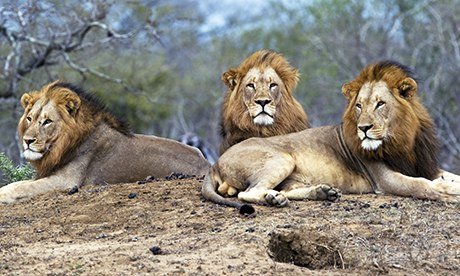
South African lions

South African lions. Photograph: Kim Sullivan/SplashdownDirect/Rex Features

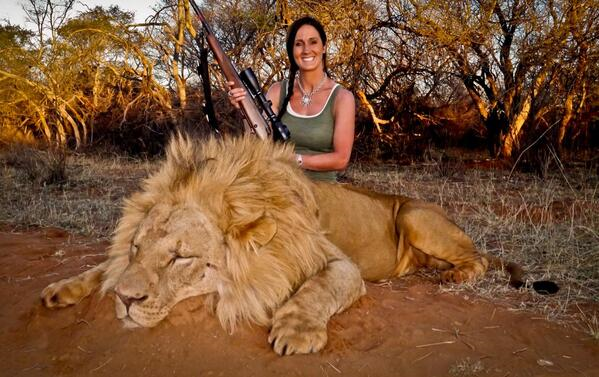
An American TV presenter has been condemned for tweeting a picture of herself standing over a dead lion and boasting that she hunted it on safari in South Africa.

More than 3,500 people signed an online petition calling for the self-declared “hardcore hunter” Melissa Bachman to be banned from returning to South Africa.

The Minnesota-based celebrity posted a photo of herself smiling next to the body of an adult lion after a hunt at the Maroi conservancy in the northern Limpopo province. The caption read: “An incredible day hunting in South Africa! Stalked inside 60 yards on this beautiful male lion … what a hunt!”

The style is a familiar one for Bachman, who has previously been photographed with what appears to be the carcass of a bear. She is no stranger controversy, having been removed as a contestant on the National Geographic show Ultimate Survival Alaska last year after more than 13,000 people signed a petition criticising the inclusion of the “heartless trophy hunter”.

Her lion tweet has provoked another angry backlash. One Twitter user, Gaye Davis, asked: “If it was beautiful why kill it?” Tim Flack, a South African, commented: “People like @MelissaBachman hunting lion in SA is everything that’s wrong with our hunting industry.”

A petition on Change.org urges the South African government to bar Bachman from the country. It says: “Melissa Bachman has made a career out of hunting wildlife for pure sport. She is an absolute contradiction to the culture of conservation, this country prides itself on. Her latest Facebook post features her with a lion she has just executed and murdered in our country.”

Supporters of hunting in South Africa argue that it raises funds from wealthy tourists which are then ploughed back into conservation efforts.

Lourens Mostert, game farm manager at the Maroi conservancy, confirmed that a lion was killed and said the hunt was legal. “If it isn’t right to hunt these lions, why does out government legally give us permission?” he told the Times newspaper. “This is not the only lion that has been hunted in South Africa this year.”

The barrage of criticism prompted Bachman to make her Twitter account private. Her personal bio reads: “I’ve been an avid hunter my entire life & now I’ve turned my passion into a career as a TV producer, host and writer. I’m a hardcore hunter doing what I love!”

BEING VEGAN – If I Were a Lion

September 21, 2013 | Filed under: Being Vegan | Posted by: Paul Graham
Las Vegas Informer

If I were a lion, people would often refer to me as “The King of the Beasts.”  We have been a part of stories, legend and lore from the very beginning.  We are majestic.  We have complex systems between us and are very social when we are resting, enjoying lots of head rubbing, touching, licking and purring.  We live in groups that we call “prides” of around 15 lions. Over the past 50 years or so life has become very difficult for us.  Most believe that our numbers are half of what they used to be, but our numbers are even lower than that.  There are only between 15,000 and 20,000 of us lions left in Africa, which is our primary habitat.  It is estimated that if things remain as they are, we all will be gone in as little as 20 years.

If I were a lion, I would be facing many challenges like habitat loss, conflict with humans, a smaller prey base, climate change and hunting.  We are allowed less and less to roam free.  The weather is simply not what it used to be and droughts are forcing us into smaller and smaller areas.  Men continue to hunt us, whether there are laws against it or not.  Trophy hunters from America killed over 500 of us last year alone.  Others hunt and kill us and sell our bones openly to Chinese markets for medicinal purposes. They can’t even prove that it helps people but people will buy it anyway. Pieces of us can be found cooked and served in restaurants throughout China and other places.  Because so many of us being killed are males, it is throwing off our entire system and is causing others in our prides to die as well.  It is the small-mindedness and great greed of men that are killing us off by the day.  When we are gone, who will they begin to hunt and come after?  Maybe they will begin to hunt each other.

If I were a lion, I could be captured and find myself in a zoo or circus.  They say that were are in the zoos for educational purposes, but what are people really learning?  To see how unhappy we are to be confined in such small areas and actually face the taunts of the people who are supposed to be there to learn about us and appreciate  us?  To pace back and forth, wanting every day to be back in the wild with our pride and the way things are supposed to be.  We are not meant to be caged.  Often times we are not treated well and when we grow old we can sometimes be sold to private parties for more captivity, experimentation or even to be eaten as part of some exotic dinner.  In the circus we are kept in even smaller cages where there is no room to even roam, just to lay and think about this miserable existence.  We are paraded out in front of people to put on a show.  What most don’t see or know about is how they beat and prod us to get us to do what they want.  Why do people bring their young to see a magnificent lion reduced down to this as some sort of cheap spectacle?  Then we are forced back to that small cage with not enough food or water and no protection from the elements. Why is this even allowed?

If I were a lion, I can see that the end is near.  While we have lived and thrived for centuries upon centuries, we are now going away primarily at the hands of men.  We have survived many things over the course of time, but we cannot seem to stem the tide on our own as every day we are being picked off one by one.  What will the day be like when no one will be able to say that a Lion King exists anymore?  People will tell their children about these remarkable creatures who used to roam this Earth.  “Why did they die Mommy…did they have to die?” No, we do not have to die.  We are not dying just on our own, we in fact are being killed…murdered for the pleasure and profit of men.  If I were a lion, I would need your help.  Help keep these hunters and poachers away and to protect our lands and habitats. Make the laws and back them up. Please allow us to do what we have always done.  Let us go from the cages of zoos, circuses and amusements we are kept in.  Back to the wild or at least a sanctuary.  It is not too late to change this, but if the kind and compassionate do not act…it will be.  And then we will be gone from this Earth only to be found in your story books forever more.

01bfb39948b2f313b238ba43f926ea25