

Listen up, ladies (and men who care about women’s rights, duh!), because this one’s for you:
As an animal rights activist AND a feminist, I’ve always felt that it’s important for us women and girls to recognize the connection between feminism and the treatment of cows used by the dairy industry. While this may sound like a stretch at first, here’s why:
All cows who are used for their milk are female—in case ya didn’t already know that!

Female cows don’t need to be milked. Female cows produce milk for the same reason that human women do: to feed THEIR babies. On factory farms, calves are torn away from their mothers so that the momma cow’s milk can be saved for human consumption (we’re the ONLY species that drinks another species’ milk regularly—so weird!). This is what it looks like:

Cows produce milk only after they’ve been pregnant. In order to get cows pregnant, farmers forcibly impregnate them on what the industry calls a “rape rack.” Uhhhhh … read that again. A rape rack. That’s literally what it’s called. Can you really consider yourself someone who stands up for all females if you condone farmers’ use of RAPE RACKS to impregnate cows—just so they can DRAG their babies away and repeat the whole thing again?
Female cows in the dairy industry are treated as nothing more than baby- and milk-making machines—with no regard for their emotional lives. If they were allowed to do so, mother cows would spend months with their young, teaching, nurturing, and bonding with them. On factory farms, all they can do is cry out for their babies as they’re violently dragged away. For the milk to make it to grocery-store shelves, cows are hooked up to milking machines for most of their lives. No “old MacDonald’s farm” here. When their milk production decreases and the cows are no longer profitable, they’re sent to slaughter.
If you still aren’t getting the connection, let me break it down for you: Women and girls EVERYWHERE are being used and abused. Many of us have grown up in male-dominated societies that tell us what to do with our bodies and how they should be used, and sadly, we’re often seen as nothing more than objects. Many women and girls are forced into situations where they lose control over their bodies—and far too often, other people think that they deserve this control. That’s what’s happening to cows on dairy farms every single day—all for a totally unnecessary and disgusting product.

You know that this is wrong, but the good news is that it’s SO easy to help. All you have to do is stick to dairy-free alternatives to milk and cheese, which is easier than ever!
1. Check this page out for tips on ditching dairy.
2. Get the scoop on vegan cheese here!
3. Take action here for cows used for their milk, then share this page by clicking the buttons below.
Read more: http://www.peta2.com/blog/feminism-dairy-milk/#ixzz3OSGPb7Fn
Hung and Christmas-decorated coyote stirs outrage

“I was mortified by it,” Svoboda says. “I like wildlife. I moved to Montana, because I love living among nature, and then you see sad things. It’s cruelty to animals, is what it is. It’s very disrespectful to animals.”
Sanders County Commissioner Carol Brooker, who represents the Plains area, says she doesn’t know a lot about the offending coyote, but she does know Svoboda isn’t the only one alarmed by bizarre decoration. According to Brooker, River Road is the second busiest thoroughfare in the county. Its traffic, she says, regularly includes school buses.
“It’s really unnerved a lot of people,” Brooker says.
While Brooker says there is an old ranching tradition of hanging dead coyotes to ward off other coyotes from vulnerable livestock, she doesn’t believe this to be the intention in this case.
“This particular place that this is hanging, I don’t think they have any livestock,” Brooker says, adding that the animal is in a yard, not on a ranch.
According to Brooker, the Sander County Sheriff’s Department is aware of the coyote but is unable to do anything about it, since it’s on private property. As for Svoboda, she says she took photos of the hung animal in an attempt to raise awareness.
“I thought maybe I would try to just let them know that somebody knows, that somebody saw it, and maybe it’s not okay to do that,”
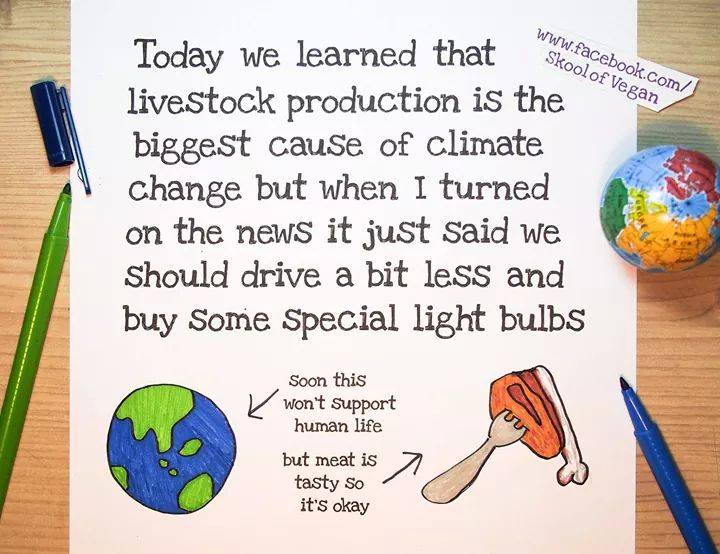
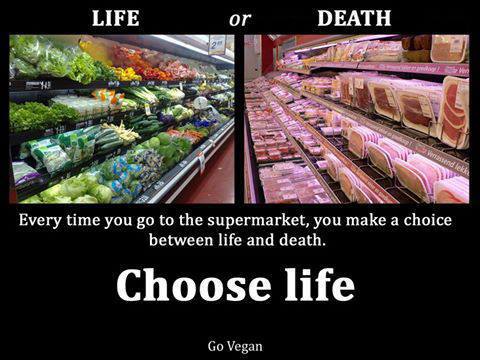
Practically everywhere you look lately are signs of a growing backlash against the progressive vegan movement. It seems people, many who’ve never tried going a day without eating animal products, are tired of being told vegetarian is healthier than flesh-eating and veganism is better still—its carbon footprint being only a fraction of the gargantuan impact of the standard American diet. Plus, vegans have the benefit of a clearer conscience than a person who contributes to animal suffering on a daily basis (assuming said person cares at all about animals). But many are comfortable with their meat addiction and don’t see any reason to ever change. And though they’re still the vast majority and therefore have nothing to fear from the efforts of outnumbered do-gooders, they see it as an attack on their right to be as hedonistic as they so desire and have begun a collective counterattack, just to show ‘em.
A prime example is the subject of a December 4, 2014, article in UT-San Diego. The piece by Michele Parente, cleverly entitled, “Meat trend has some seeing red,”
As in other major cities across the country, San Diego’s current mania for all things meat defies that other growing trend of eating only plant-based food. “I ordered double sausage out of spite,” one diner posted on Facebook, along with a photo of people eating at sidewalk tables, inches away from picketers. “For every animal you don’t eat, I’m going to eat three,” posted another.
Parente started the article out (glibly),
Meat is all the rage in San Diego right now and that’s got some people broiling.
A proliferation of pork-centric places has sprung up all over the county, along with eateries serving up all manner of beef, game, organ and exotic meats. Hungry for a meatier experience? How about a pre-dinner demonstration on how to butcher a whole animal or even the opportunity to slaughter your entrée yourself? And while the current carnivore craze is sating foodies…
What?! Wait a minute. Slow down there and let us un-hipsters catch up; just what the hell is a “foodie,” anyway? It sounds like some kind of baby talk to me. Well, I looked it up and as it turns out that’s not far off. According the Urban Dictionary’s first two definitions, a “foodie” is,
Foodie: A douchebag who likes food.
Douchebag – “I’m a big foodie.”
Non-doucher – “Really? I like food too, but I’m not a tool.”
- Foodie: A dumbed-down term used by corporate marketing forces to infantilize and increase consumerism in an increasingly simple-minded American magazine reading audience. The addition of the long “e” sound on the end of a common word is used to create the sensation of being part of a group in isolationist urban society, while also feminizing the term to subconsciously foster submission to ever-present market sources.
Though the terms “gastronome” and “epicure” define the same thing, i.e. a person who enjoys food for pleasure, these words are perceived by the modern American consumer as elitist due to their Latin root forms and polysyllabic pronunciation
If you’ve ever heard the postpartum cries of a newborn unwillingly evicted from the warmth of a watery womb, or witnessed the incessant tantrum of a terrible two-year old, you know that babies can be a bit self-centered. They don’t really seem to care about others around them; they just want whatever they don’t have, and you’d better figure out what that is—and fast. Meanwhile, in a similarly self-absorbed manner, “foodies” believe they are entitled to make the art of stuffing their gullet an “adventure,” eating whatever they want—or whomever they want—the rights or interests of the victims of their carnivorous quests be damned.
Popular pulp among narcissistic “locavores” is new book touting the alleged virtues of “adult onset hunting.” At the height of hedonism, these nouveau-savage self-actualizers not only find fulfillment in consuming wild animals but also in all forms of related carnage, including (but not limited to) stalking, shooting, snuffing out, dismembering and butchering them first.
Parente’s article continues,
…a small group of animal-rights activists holding “Meat is Murder” signs has been picketing S&M Sausage & Meat each week since it opened in Hillcrest about a month ago.
A recent DIY butchery event, provocatively called Death For Food, was canceled after an online campaign launched by lawyer and seal defender Bryan Pease attracted about 2,500 protesters and threats of a potential boycott against Suzie’s Farm, where the farm-to-guillotine-to-table dinner was scheduled to be held.
The restaurant, whose logo is a hog on its back, feet in the air and apple in the mouth, is an unabashed haven for adventurous meat eaters, offering everything from kangaroo hotlinks to alligator-antelope Andouille sausage and fried pig ears. “Anything we can find that used to be breathing… Its customers are equally unapologetic.
“The audience is quite frankly demanding and wants to be part of the experience,” Freeman said. “They want the thrill and adventure of dining they get with whole-animal (butchery).” “…it gives you an experience.”
The otherwise nauseating article does include a good quote from Stephanie Shaw, a PETA spokeswoman, that sums up the vegan message in a nutshell.
“Any restaurant that serves meat, whether it’s farm to table, whole-animal butchers or McDonald’s … is supporting the violent and untimely or unnecessary death of an animal that wanted to live,” Shaw said. “With every meal, we have the opportunity to choose cruelty or kindness.”

Published December 3, 2014
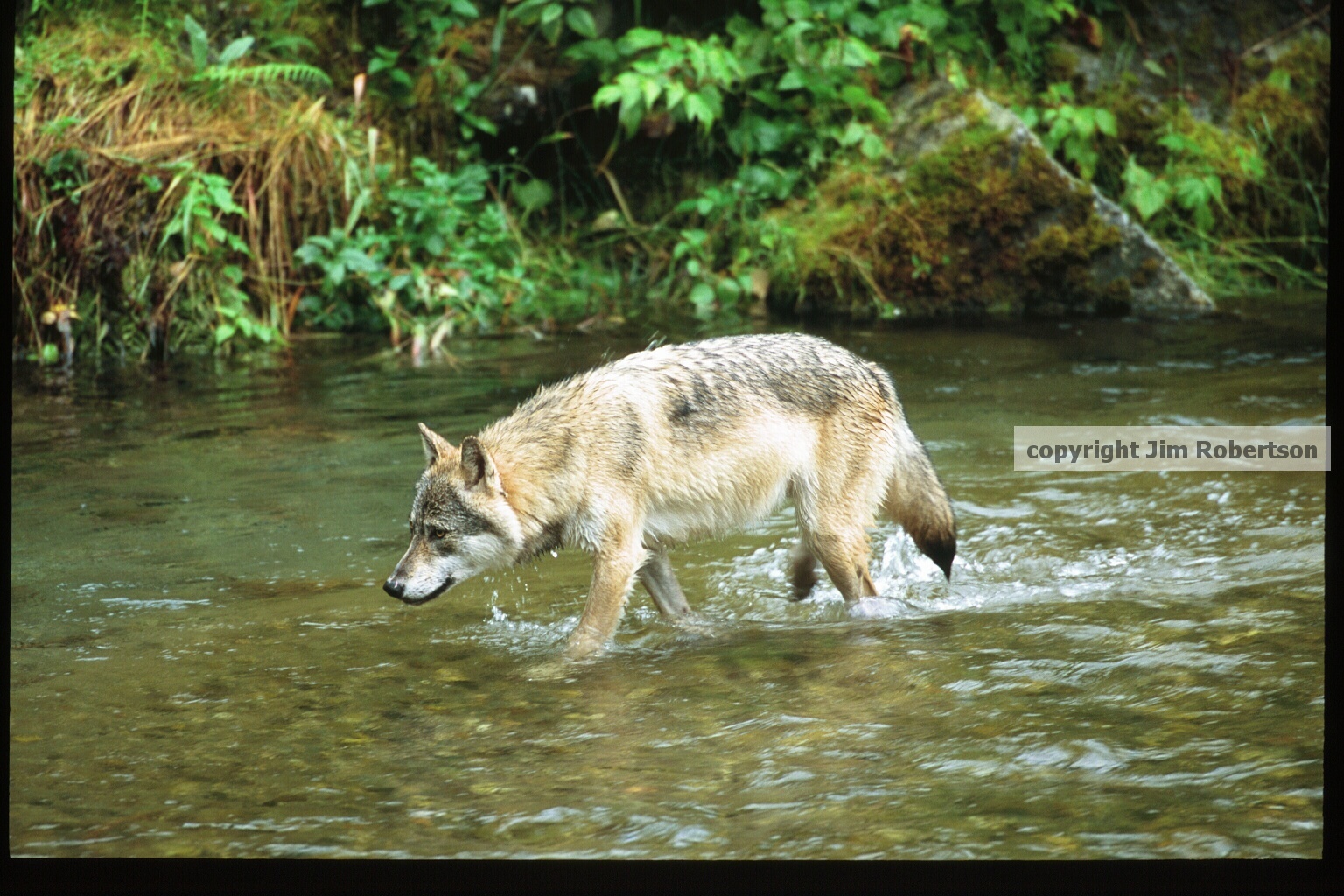
In late August, a government sharpshooter in a helicopter hovering above a wooded eastern Washington hillside killed the lead female wolf of the Huckleberry Pack. The aim was to end attacks by the wolf pack, which had killed more than two dozen sheep.
The research, published today in the scientific journal PLOS One, flies in the face of the common idea that the swiftest and surest way to deal with wolves threatening livestock is by shooting the predators. It adds to a growing understanding of how humans influence the complex dynamics driving these pack animals, sometimes with unexpected consequences.
As wolves spread across the West, triggering more encounters with sheep and cattle, and as two states host wolf-hunting seasons, the new research also adds more fuel to an already heated political debate about how to deal with wolves.
“The livestock industry, they’re not going to be happy with this,” said Rob Wielgus, a Washington State University ecologist and the study’s lead author.
Back From the Brink
Shooting wolves is a long-standing practice in the ranching world. It helped lead to the animal’s eradication in the western United States in the 1930s. Since the wolf’s reintroduction in the mid-1990s, government officials and ranchers have frequently reached for a gun to cope with livestock problems—killing more than 2,000 wolves by 2013.
In 2011, wolves were removed from federal protection under the Endangered Species Act in Idaho, Montana, and parts of Washington, Oregon, and Utah. (Wyoming got a similar stamp of approval in 2012, but a federal judge recently overturned that decision.) That has made it easier to shoot wolves—Idaho and Montana now even allow recreational hunting.
But there have never been any large-scale studies of whether killing wolves really helps protect livestock.
Enter Wielgus. He has a track record for turning conventional wisdom on its head when it comes to attempts to control predators. In 2008 he made news with research that found shooting cougars led to more attacks on livestock. When mature adults were killed, Wielgus said, less seasoned adolescents moved in and were more likely to prey on cows and sheep.
After wolves arrived in Washington in 2008, growing to 13 packs by 2013, Wielgus turned his attention to the newest carnivore on the block. He examined 25 years of data on killing of wolves and cases where wolves attacked cattle and sheep in Idaho, Montana, and Wyoming—the first states where wolves were reintroduced.
What the Data Say
Wielgus found that when a wolf was killed, the chances of livestock getting killed increased the following year in that state—by 5 to 6 percent for cattle and 4 percent for sheep. With each additional wolf killed, the chance of livestock attacks rose further. The trend didn’t reverse until more than a quarter of the wolves in the state were killed in a single year. Then livestock losses started to decline.
That level of wolf-killing happened several times even while wolves were federally protected, under rules that allowed shooting of wolves that threatened livestock. And it is happening now in Idaho and Montana. Last year, hunters killed 231 wolves in Montana and 356 in Idaho, helping to reduce the population to slightly more than 600 in each state. The Idaho legislature this year created a Wolf Depredation Control Board, a move critics say is aimed at pushing wolf numbers down to just above 150—a cutoff that could trigger renewed protection under the Endangered Species Act.
Wielgus isn’t certain why more livestock die when smaller numbers of wolves are killed. But he suspects it’s tied to changes in pack behavior. Packs are led by a male and female breeding pair. If one or both of those wolves is killed, the pack can break up, giving rise to several breeding pairs—and thus an uptick in the wolf population. Livestock losses decline only when enough wolves are killed to overwhelm their ability to keep up through reproduction.
The theory fits observations made in and around Yellowstone National Park. Wolf packs inside the park—where wolves aren’t shot—are large and complex, with wolves of a variety of ages living together, said Doug Smith, a lead wolf researcher at Yellowstone. Wolf packs elsewhere tend to be just a breeding pair and pups.
For Wielgus, the upshot of his study is that while killing a wolf might sometimes be necessary, as a routine practice it’s counterproductive and unsustainable. Either livestock losses go up or, if enough wolves are killed to reduce livestock deaths, wolf numbers eventually drop so low that wolves wind up back on the endangered species list. If the killing slows to less than 25 percent of the wolf population per year, his study suggests, depredation rates shoot back up.
“It’s a bit of a catch-22,” Wielgus said. “You can reduce them now, but you can only reduce them so far, and when you stop that heavy harvest, now you’re at maximum livestock depredation.”
Is There Another Way?
Reaction to the new study was split down predictable fault lines. Wolf conservationists pointed to it as evidence that shooting wolves to save livestock usually doesn’t make sense. “You have this very archaic paradigm of kill first, ask questions later,” said Suzanne Stone, senior northwest representative for the environmental group Defenders of Wildlife. Overall, people in the livestock industry are “still pretty rigid in their views that the only way to deal with predators is to kill them. And that’s not true. It actually works against them.”
Stone has run a program with sheep growers in one Idaho valley aimed at finding ways for sheep and wolves to coexist. The ranchers there resort to a number of tactics to protect roughly 30,000 sheep: monitoring wolves to avoid grazing the sheep near denning sites, using guard dogs, flashing bright lights to scare off wolves, stringing a wire hung with small strips of fabric around the flock at night, and increasing the number of people herding the animals.
Stone said the program is cheaper than dispatching a gunman in a helicopter. Fewer than 30 sheep have been lost to wolves in seven years, and no wolves have been killed.
Stan Boyd, executive director of the Idaho Wool Growers Association, said his group works with members to help them deter wolves without shooting the animals. But he still sees guns as critical tools, and he says wolf problems have declined recently as the number of Idaho wolves has gone down.
“Wolves get into livestock, we kill the wolves. And that works well,” Boyd said. “The professor can say whatever he wants. We’re not going to just let wolves run wild.”
In Washington state, the U.S. Fish and Wildlife Service, which paid for Wielgus’s research, is waiting for him to complete a broader examination of all options for managing wolves, said John Pierce, the agency’s chief wildlife scientist. “In the long run, we definitely would prefer to do nonlethal removal if we can figure out how it works,” Pierce said.
Meanwhile, all eyes are on the Huckleberry Pack. In the aftermath of the shooting of the lead female, will fewer sheep die in wolf attacks—or more?
<!–
–>
A Washington state rancher says he was left “high and dry” when state wildlife managers called off a wolf hunt to protect his 1,800 sheep.
The cancellation forced Dave Dashiell of Hunters, Wash., to move his flock or risk more attacks by the wolves, which had already killed 24 animals.
Washington Department of Fish and Wildlife managers had planned to kill four wolves from the Huckleberry pack but called off the helicopter hunt after one wolf was killed and pulled out trappers shortly after.
“We’re on pause right now, if something new develops — another series of depredations, perhaps even with a different producer and the same pack in neighboring areas — then we’ll reassess at that point,” department carnivore section manager Donny Martorello said.
A federal wildlife agent contracted by the state killed one adult female Aug. 23 from a helicopter. The helicopter hunt wasn’t as efficient as the department expected, Martorello said. The wolves were screened by thick trees or were on the Spokane Tribe of Indians reservation, where they couldn’t be killed. The department continued trapping until the start of the Labor Day weekend, then removed the traps because of the increase in recreational activities like camping and hunting in the area, he said.
The department still has the authority to kill more wolves in the vicinity of the sheep, Martorello said.
“Our ranch was left high and dry to try and handle the situation ourselves while at the same time having our hands tied due to the wolves’ state endangered species status,” Dashiell said in a Stevens County Cattlemen’s Association press release. Wolves in the area are protected under the Endangered Species Act.
Dashiell moved the sheep to a friend’s pasture, where they will stay until he can move them to a new grazing location far from the current site.
The department is working with Dashiell to determine his strategies for managing straggling sheep and will keep a range rider on the site, Martorello said.
The department is also communicating with other producers in the area.
“Having to make this kind of change in the middle of the summer has caused considerable stress, expense and hardship to our operation,” Dashiell said. “The grazing lease we had arranged with the private timber company was good until the middle of October and now we have to move our animals and try to find an alternate spot at the last minute.”
Martorello said there are no requirements in the department’s wolf management plan and protocols that producers move their livestock to alternate grazing sites to reduce conflict. It was an opportunity to break the pattern of repeated behavior, he said.
“In this particular case, with the producer nearing that period of time where they were moving sheep to a winter range, we wanted to work with the producer to see if we could expedite that process at all,” Martorello said. “We weren’t asking the producer to necessarily take a step he wasn’t going to take, but maybe to do that a little bit sooner.”
Dashiell has represented the Cattle Producers of Washington on the Washington Department of Fish and Wildlife wolf advisory group.
“But in the end all of the talk did very little to help a person in my situation,” he stated. “The Huckleberry wolf pack needs to be removed, not our sheep. By making us leave we are only passing the problem along to others in the area when the wolf finds their pets, animals and livestock.”
<!–
–>
OLYMPIA, Wash. (AP) – Hunters aboard a helicopter took aim at wolves that have been killing sheep in Stevens County in northeast Washington.
The Spokesman-Review reports state officials have OK’d the hunt for a portion of a wolf pack that’s killed at least 22 sheep this month.
The announcement comes after the state authorized a rancher to shoot the same wolves approaching his flock of 1,800 sheep.
But the state Fish and Wildlife Department says efforts to deter the pack have failed. So agency Director Phil Anderson says he authorized the killing of four wolves from the pack, which is estimated at up to 12 members.
By 4 p.m. Saturday, the newspaper reported that no wolves had been killed.
Conservation groups are opposed, saying killing wolves is not an effective way to protect livestock.




 Exposing the Big Game
