Killing wild animals spurs new debate

Slicing into a slab of chocolate cake on a picnic table at Hendricks     Park in south Eugene, Linda Gray said she wasn’t concerned about the possibility of a cougar roaming the area as she celebrated friend Betsy Priddle’s 71st birthday on Tuesday.

She was, however, upset about the fate of two cougars that were     trapped in the area and euthanized by the State Department of Fish and Wildlife, the first on March 11 and the second on Monday.

“If people go into areas where there are wildlife, they should expect to treat them with respect,” Gray asserted.

The cougars were euthanized largely because of a string of livestock     killings on a nearby property, where one man lost two goats and     three chickens over three consecutive nights. While landowners have     the right to kill animals on their property, state fish and wildlife     officials say they stepped in on behalf of people such as Gray and     Priddle who enjoy picnicking and hiking in the nearby park, some     with dogs or small children.

But Gray doesn’t see it that way, and on Tuesday offered alternative     solutions, beginning with preventing such attacks in the first     place.

“If you’re going to raise livestock in an area where there are     predators around, you need to protect your livestock,” she said.

A local wildlife advocate also questioned how the state has handled     the recent cougar incidents.

“I personally believe that this was a grave overreaction to set the     traps out to begin with,” said Brooks Fahy, executive director of     Predator Defense, a national wildlife advocacy group based in     Eugene. “There had been no complaints other than from this     individual” whose livestock was killed.

Fahy said the fish and wildlife department’s claims that it does not     relocate cougars due to potential territorial conflicts, spread of     disease and future livestock killings don’t necessitate killing an     animal. While relocation is difficult, he said cougars are not major     carriers of disease and that tales of repeated livestock killings     are purely “anecdotal.”

Fahy did agree, however, that adult cougars are typically unable to     adjust to captivity, as was the case with the second cougar, which     was trapped Friday and euthanized Monday after a state wildlife     veterinarian observed its behavior in captivity.

Fahy said he is concerned that even though Oregon lifted its bounty     on cougars in 1960 and has prohibited the use of packs of dogs for     hunting cougars and bears since 1994, the state’s annual cougar     killings continue to climb — citing fish and wildlife department     statistics, Fahy noted that 530 cougars were killed in Oregon last     year as a result of hunting and other causes, Fahy said.

“Cougars are being slaughtered in the state of Oregon on a historic     level,” he said.

The fish and wildlife department last year issued more than 55,000     hunting tags for cougars — up from 588 in 1994 — which accounted for     nearly 300 of last year’s cougar deaths, Fahy added. The department     says about 5,700 cougars currently reside in Oregon.

State officials say the increase in tags is directly linked to the     ban on hunting with hounds — since the dog packs had a higher     success rate than other hunting methods, the state says it can now     issue more tags with a relatively small increase in hunting     harvests.

But Fahy said the killing of large, dominant “trophy animals” could     be cause for even more conflict between cougars and humans.

“When you hammer a population, you end up with very young animals —     juveniles and sub-adults,” he said. “These are the animals that     stereotypically get into trouble, such as preying on livestock, or     even ending up in some of these (urban fringe) places, such as     Hendricks Park.”

Fahy acknowledged that the cougars’ close proximity to the park is     not ideal for either the animals or people, but said it’s not     uncommon for the transient animals to pass through the area.

“They’ve been there before,” he said. “Nothing’s happened.”

In the case of the recent cougar attacks, Fahy said, the man who     lost his chickens and goats could have taken more precautions to     protect his livestock, such as establishing an electric fence or     securing night housing — techniques of “basic husbandry,” he said.

He said he’s disappointed that what he sees as a lack of preparation     resulted in the death of two cougars — whose hides were offered back     to the livestock owner, John Schetzsle, per state law. Schetzsle has     said he plans to turn the hides into blankets.

“I find the whole thing grotesque,” Fahy said. “He’s going to     basically be rewarded for practicing poor husbandry.”

Schetzsle, who had secured his animals within a 5-foot-high fence     and constructed a small house for his goats last summer, had said he     believes the cougars got to his animals by scaling a nearby tree. He     could not be reached for further comment Tuesday.

But Schetzsle earlier this week said that he’s gathering friends     this weekend to build a stronger chicken coop, and that he plans to     add a door to his goathouse before bringing new goats to his small     farm in April. He’s using a boarded-up stable as a chicken coop in     the meantime.

Brian Wolfer, a state biologist for the department of fish and     wildlife, said Tuesday that his agency advises livestock owners to     take special precautions — such as locking animals up at night,     stationing a guard dog nearby and installing high fencing and a     motion light — but said the law doesn’t require such measures and     allows an owner to kill any predator that damages property.

Still, he added, eliminating one animal is only a temporary     solution.

“There are few situations where removing the cougar is going to be     the end of all problems,” Wolfer said. “When you remove that cougar,     another one will eventually take its place. If you don’t learn from     that experience and take some additional precautions, you’ll find     yourself in that same situation again.”

Indeed, a third cougar may still be in the area, having been caught     on a cougar cubtrail camera that was erected at Schetzsle’s residence by state     officials last week. Officials still have a trap on the premises in     hopes of capturing that animal, should it still be in the area — but     there was no word of the latest cougar being spotted or captured as     of Tuesday night.
Among Tuesday’s park users who said they hope the third cougar isn’t     captured and killed was 22-year-old Litisha Rollings of Springfield.

“These animals have souls. They’re intelligent beings,” she said.     “We put our habitat in their habitat — they’re going to mingle.”

Follow Kelsey on Twitter @kelseythalhofer. Email kelsey.thalhofer@registerguard.com.

Petition: Oppose Yellowstone National Park’s Bison Slaughter

In Defense of Animals

What a tragedy – Yellowstone National Park plans to slaughter 800 bison!

According to Yellowstone National Park’s spokesman Al Nash, the park is seeking “opportunities to capture any animals that move outside the park’s boundaries.” This means hundreds of America’s last wild bison are being brutally hazed into traps and sent to slaughter.

This atrocity has already started. It began in the early morning hours of February 7, when Yellowstone officials captured 20 bison and shipped the terrified animals to a slaughterhouse in Ronan, Montana. Other bison are currently being held in traps inside the park; forced to await their tragic fate.

This bison slaughter is happening because of an Interagency Bison Management Plan (IBMP) developed by the US Forest Service, USDA-Animal & Plant Health Inspection Service, Montana Department of Livestock, Montana Fish Wildlife & Parks, and the National Park Service/Yellowstone National Park.

Yellowstone’s bison are being murdered because of Montana’s livestock industry.

The IBMP plan is archaic, politically motivated, and represents only the interests of the Montana livestock industry, which has zero tolerance for wild animals like wolves and bison, who occasionally leave the park. They use false threats of bison allegedly posing a risk of brucellosis transfer to cattle as justification for the murders of hundreds of bison, although this has never been documented

What you can do:Please speak up for America’s last wild bison population. Tell Montana’s Governor, Steve Bullock, and the agencies involved in the bison massacre that you will not visit Yellowstone National Park, so long as the park’s bison are being killed at the request of the livestock industry. Demand a new Bison Management Plan.

Personalize and submit the form below to email your comments to:

  • Montana Governor, Steve Bullock
  • Policy Advisor for Natural Resources, Tim Baker
  • Yellowstone National Park Superintendent, Dan Wenke
  • Director of Montana Department of Fish, Wildlife and Parks (FWP), Jeff Hagener
  • Chief of the US Forest Service, Ti Tidwell
  • Associate Chief of the US Forest Service, Mary Wagner

Please Sign Petition Here:
https://secure2.convio.net/ida/site/Advocacy?cmd=display&page=UserAction&id=2573&autologin=true

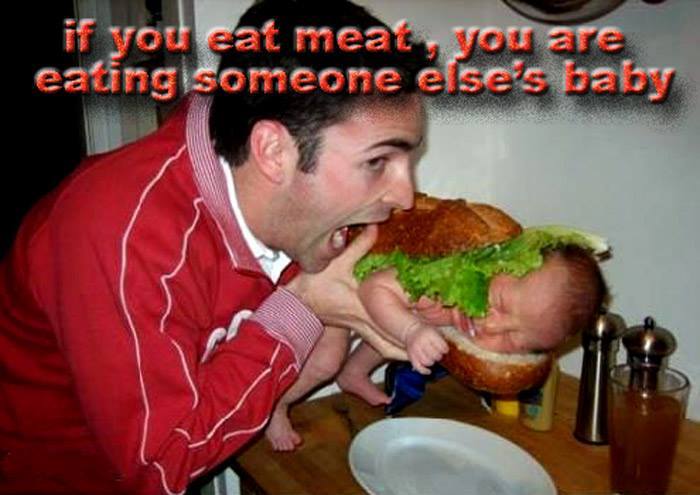
If You Eat Meat

1782018_10152293762567498_482181499_n

If you eat chicken or pork, you’re supporting extreme animal abuse on factory farms;

If you eat beef, you’re supporting the livestock industry that kills bison, elk and wolves;

If you eat fish, you’re supporting the demise of our living oceans;

If you hunt, your selfish food choice robs a life and cheats a natural predator;

If you eat meat, you’re part of the problem instead of the solution;

1797410_10201246274383855_1764880622_n

The Time to be Bold is Now

copyrighted wolf in river

The Time to be Bold is Now

By Brett Haverstick On February 8, 2014

Over the years, I have come to realize that the current wildlife management model in America, at the federal level, and particularly, the state level, is broken. The system is such, in which, politics trumps the best-available science, the special interest-minority overwhelms the democratic-majority and the almighty dollar is more powerful than ethics, heritage and legacy. Can this be found throughout the American political landscape? Of course, the answer is yes. But when applied to the current wolf slaughter taking place in the West, and in the Great Lakes, it fits perfectly. In fact, it embodies it.

During my brief time working in the conservation community, I have sadly concluded that both grassroots and national conservation groups, and every-day citizens, are limited to the degree, in which, they can enforce public lands laws, ensure that the best-available science is used and entrust that public sentiment is reflected in wildlife policy and management decisions. Recent examples of this include–with all, unfortunately, taking place in Idaho–are the Wolf-Coyote Derby in Salmon, the killing of two wolf packs in the Frank-Church River of No Return Wilderness by a 21st Century bounty hunter and the efforts of Governor C.L. “Butch” Otter to launch a predominantly tax-payer funded, $2-million dollar independent wolf control board to wipe out another 500-grey wolves. If this were to occur, wolves would be reduced to the bare-minimum of 150-wolves in Idaho (federally mandated), would not be able to fulfill their ecological niche, and most importantly, could be on the precipice of yet, another extinction.

The conservation community, and the American people at-large, is now approaching the crossroads. Do we continue to take the band-aid approach (attending public meetings, issuing action alerts, circulating petitions, and filing appeals/lawsuits) or do we step out-of-the-box and confront the root causes of the problem? While some may respectfully disagree with me, or question the feasibility of such a challenge, I advocate for the latter.

So what solutions do I offer? The 5 Keys to Reforming Wildlife Management in America, are as follows:
1.Restructuring the way state Fish & Game departments operate. Politics: western governors appoint agency commissioners, which essentially, tell the state departments what to do. This is cronyism at its worst. Economics: state departments are mostly funded by the sale of hunting/fishing tags or permits. These agencies are bound into serving the interest of “sportsmen” because it’s the hand that feeds them. Modern funding mechanisms, the application of best-available science and genuine public involvement are sorely lacking in these institutions and it must be addressed. Another option would be to empower the federal government to manage wildlife on federal public lands.
2.Removing grazing from all federal public lands. The “management” or “control” of native wildlife to benefit the livestock industry is ground zero. It is also well documented the damage that grazing causes when livestock infests wildlands. Livestock are non-native and largely responsible for soil compaction, a decrease in water retention and aquifer recharge, erosion, destruction of wetlands and riparian areas, flooding and a net-loss of biodiversity. Grazing enables invasive plant species to proliferate, which greatly affects the West’s historic fire regime.
3.Abolishing Wildlife Services. Hidden within the US Department of Agriculture, is a rogue agency that is essentially the wildlife killing-arm of the federal government. For over 100-years, this federal tax-payer supported agency has largely worked on behalf of the livestock industry and is responsible for the death of tens-of millions of native wildlife. Methods of killing include trapping, poisoning and aerial gunning. Conservation efforts are currently culminating into a potential Congressional investigation of this corrupt agency.
4.Banning trapping/snaring on all federal public lands. We must evolve as a society and move away from this barbaric, unethical, cruel and tortuous method(s) of killing native wildlife. Leg-hold traps, conibear traps and other devices are indiscriminate killers. Over the past couple years, there has been an increase in the number of dogs caught/killed by traps when recreating with their owners on public lands. When is an adult or child going to step into a leg-hold or body-gripping trap? Some states currently require individuals to check their traps every 72-hours, while other states only recommend that trappers check them, at all.
5.No killing of predators, except for extreme circumstances. For example, an aggressive and/or habituated bear may need to be killed after non-lethal measures have failed. Otherwise, non-lethal measures should be implemented in rare instances where there are actual human/predator conflicts. The best available science suggests that predators, including wolves, are a self-regulating species. In other words, predators don’t overpopulate. Instead, their populations naturally fluctuate, as do prey or ungulate populations. We need to better understand and embrace the trophic cascade effect predators have within ecosystems.

How do we take that ever-so-important first step, you may ask? We embark on this journey, together, on June 28 – 29, 2014 at Arch Park in Gardiner, Montana.

Speak for Wolves: Yellowstone 2014 is an opportunity for the American people to unite and demand wildlife management reform. It’s about taking a critical step towards stopping the grey wolf slaughter. It’s about hope, our collective-future and restoring our national heritage and legacy. The weekend-long event is family friendly and will feature prominent speakers, live music, education and outreach booths, children’s activities, food and drink vendors, video production crews and the screening of wildlife documentaries.

On June 28-29, 2014, Americans from all walks-of-life will converge at Arch Park in Gardiner, Montana to tell the government we need to reform wildlife management, at both the state and federal level. With your support and participation, this will be the event of the year in the northern Rockies. Together, we can make history and embark on restoring our wild national heritage. The time to be bold is now.

Cougars on the prowl, not increase, officials say

[This is from my old stomping grounds, the Methow Valley, where I lived for over 20 years and saw 4 out of the 5 cougars I’ve seen so far in my relatively short life (geologically speaking).]

Cougars on the prowl, not increase, officials say

By Ann McCreary

The recent series of cougar attacks on domestic animals may have people wondering if there are more cougars than usual in the Methow Valley. Not so, says a wildlife researcher who has studied cougars here for more than a decade.

While there may be an unusual concentration of cougar incidents in recent weeks, the big cats are simply doing what comes naturally and taking advantage of opportunities for an easy meal courtesy of humans, according to Rich Beausoleil, cougar and bear specialist for the Washington Department of Fish and Wildlife (WDFW).

Wildlife officials killed another cougar last Friday (Jan. 10) — the fourth in five weeks — after the cat killed a sheep at a home off East Chewuch Road near Winthrop.

“The numbers of sightings has been really high this year,” said Cal Treser, wildlife officer for the WDFW. “Last week I had nine cougar calls.”

“Every now and then we’ll see a cycle like this where [incidents] are all clumped together,” said Beausoleil. “We’re never going to put it all together and explain why these things happen. We know January is the month where all this increases. I don’t want people to jump to this notion that the cougar population is up.”

Beausoleil has 11 years of research to back his statement about cougar populations.  Last year he published a scientific paper that found the cougar population controls itself naturally, because they are extremely territorial animals.

Researchers found that adult cougars, especially males, have a natural drive to establish and defend territory, and will kill any other cougar that enters it. This creates a stable density in cougar populations that researchers found applies to cougars everywhere.

The recent problems associated with cougars killing sheep, goats, chickens and dogs are predictable, and will continue unless people take steps to protect their animals, Beausoleil said.

“The chickens running around the enclosure — that’s just bon bons on the landscape. You might as well have an ‘Eat at Joe’s’ sign,” Beausoleil said.

“It’s all about prevention,” he said. “The word I like to get out is you need to look around your property and say, how do I prevent a problem from happening before it happens? Don’t go and blame those ‘nuisance animals.’ Stop and say, ‘Why did this happen?’”


‘Game of calories’

For large carnivores, survival “is a game of calories,” Beausoleil said. Taking down a deer is hard and dangerous work and cougars are often injured in the process. “It’s a tough life out there and when you see something like a goat that just sits there and looks at you … you take it while you’ve got it,” he said.

Putting animals inside a barn or in a secure enclosure at night is a key step in preventing problems, Beausoleil said. “Goats are the No. 1 at-risk animal, sheep are second, third are chickens,” he said.

“This is the Methow Valley,” said Beausoleil. “Your backyard turns into wilderness. You need to be a part of that landscape and take the steps to live harmoniously with the critters that are around.”

Skip Smith lost two goats in recent weeks to a cougar that entered a livestock enclosure at his ranch on Highway 20 outside Winthrop. The 74-pound female cougar that killed the goats was tracked and shot last week.

After the second attack, Smith said he created a more secure pen to hold his sheep and goats at night. He increased the height of the fence to 8 feet and added three strands of electric wire around the top.

“The electric fence might help. If they jump up and touch that, it’s pretty hot,” Smith said.

Suggestions on ways to live with wildlife are available on the WDFW website, the Mountain Lion Foundation website, and the Western Wildlife Outreach website, Beausoleil said.

“These precautions cost money, and I know it can be a burden on people. I guess it comes down to values and the value you put on the natural world,” he said. “Cougars are the personification of wilderness and an unbelievable carnivore.”

Killing cougars that attack domestic animals “is a temporary solution,” said Beausoleil. His research shows that when a cougar dies or is removed from his territory, other cougars will move in until one establishes it as its own.

“The gun is just a Band-aid. As soon as one territory opens there is another cougar right behind it,” Beausoleil said.


‘Needless kill’

Killing cougars that attack livestock that aren’t adequately protected “gets frustrating to me because … it’s a needless kill and such an easy thing to prevent,” Beausoleil said.

January and July — “the worst days of winter and worst days of summer” — are predictable periods of problems with carnivores, Beausoleil said. This winter of low snow may have an added dimension, because deer are more widely scattered, rather than confined to more traditional winter ranges, and cougars may be more widely dispersed as a result.

The cougar that attacked the sheep last week was a 130-pound male in good health. “He hadn’t missed a meal.” Treser said.

“The cougar was living on the edge of the Methow Wildlife Area with plenty of mule deer for food. There’s no reason he should have taken a sheep. Maybe [he did] because the kill was easy as the sheep were confined in a corral,” Treser said.

Trackers with dogs were brought in and followed the cougar for five hours, until he was treed near the Methow River and shot.

“He was a beautiful cat,” Treser said.

Once a cougar has attacked livestock or pets in winter, the policy is to kill it because the cougar is likely to repeat the attacks. In other seasons, Treser said, he will often capture a cougar following an attack on livestock and relocate it. But in winter, snow and weather make it too difficult to relocate cougars to remote areas, he said.

The relocating doesn’t always work, Treser said. Late last summer a cougar killed a goat near Buzzard Lake, on the Okanogan side of Loup Loup Pass. Treser captured the cat, placed an ear tag on it, and released it above Ross Lake on the east side of the North Cascades.

“Eighteen days later he came back and killed a goat in the same pasture,” Treser said.

Cougars that turn to livestock and pets as prey are often unhealthy or injured, Treser said. “As they’re taking down large animals they break teeth, injure their feet, break claws off. It gets more difficult to take down a deer,” so they look for easier prey, he said.

The four cougars killed this year because of predation on domestic animals have all been healthy, Treser said.

For more on cougars in the Methow this winter, see Another cougar attack adds to high number of incidents,  Cougar sightings, encounters continue to add up in the valley,  Coming to terms with cougars, and Human, pet encounters with cougars increase each winter.

snrsslion

Reducing Gas Emissions from Livestock Key to Curbing Climate Change: Study

By James A. Foley

Jan 03, 2014

A study published recently in the journal Nature Climate Change highlights both the need for policy changes and greater emphasis on livestock management in order to curb climate change.

Although it’s well known that significant quantities of methane are produced by the burps and excrement of the world’s livestock, the study authors contend that inadequate attention is being paid to to the greenhouse gasses associated with ruminant animals such as cows, sheep, goats and buffalo.

“Because the Earth’s climate may be near a tipping point to major climate change, multiple approaches are needed for mitigation,” study leader William Ripple, a professor in the College of Forestry at Oregon State University. said in a statement. “We clearly need to reduce the burning of fossil fuels to cut CO2 emissions. But that addresses only part of the problem. We also need to reduce non-CO2 greenhouse gases to lessen the likelihood of us crossing this climatic threshold.”

Ripple and his colleagues suggest that an effective way to mitigate the effects these greenhouse gasses have on the environment is to reduce global populations of ruminant livestock.

At approximately 3.6 billion heads, the world population of ruminant livestock is about half the global human population. Moreover, about 25 percent of the Earth’s land area is dedicated to livestock grazing, and a third of all arable land is used to grow feed crops for livestock, the researchers write.

On the basis of pounds of food produced, cattle and sheep generate between 19 and 48 times more greenhouse gasses than protein-rich plant foods such as beans, grains, or soy products, the researchers found.

More: http://www.natureworldnews.com/articles/5514/20140103/reducing-gas-emissions-livestock-key-curbing-climate-change-study.htm#

15242-333e1363ed3eb6b53508d726e22a5fecb3cbcb4a168d4cea6cce61d8_w_240_px

Ranchers Insistence On Cheap Grazing Keeps Wolf Population In The Crosshairs

http://www.forbes.com/sites/jamesmcwilliams/2013/11/05/ranchers-insistence-on-cheap-grazing-keeps-wolf-population-in-the-crosshairs/

by James McWilliams

If the October headlines were any indication, the quickest way for a wolf to make the news is to get shot. The Jackson Hole News and Guide reported the story of a Wyoming hunter who bagged a wolf, strapped him atop his SUV, and paraded his trophy through Town Square. A Montana landowner shot what he thought was a wolf (it turned out to be a dog hybrid) amid concerns that the beast was harassing house cats. The Ecologist speculated that hunters were chasing wolves from Oregon, where hunting them is illegal, into Idaho, where it’s not, before delivering fatal doses of “lead poisoning.”

Predictably, these cases raise the hackles of animal right advocates and conservationists alike. Both groups typically view hunting wolves as a fundamental threat to a wolf population that, after a history of near extermination, is struggling to survive reintegration into the Northern Rockies. According to Michael Robinson, a conservation advocate with the Center for Biological Diversity, “Hunting is now taking a significant toll on wolf populations.”

While the anger directed toward irresponsible wolf hunters makes perfect sense, it should not obscure the essential reason for the wolf wars in the first place: livestock. Michael Wise, a history professor at the University of North Texas and the author of a forthcoming book on wolves on the Canadian border, says that “The challenge of wolf recovery is reintegrating the animals within a region that was transformed by industrial agriculture during the carnivore’s sixty-year absence.” Protecting migration corridors, expanding habitats, and fostering genetic diversity are integral to this goal. But, as Wise notes, “Opposing the wolf hunts does not address these larger issues.”

Understanding what would address these larger issues requires momentarily looking backward. Historically speaking, wolves got the shaft. When Lewis and Clark explored the American west at the dawn of the nineteenth century, thousands of wolves thrived across the Northern Rockies. Lewis admiringly called them “the shepherds of the buffalo.”

But the systemic destruction and commodification of their natural prey–including the buffalo, deer, elk, antelope, and bighorn sheep–as well as the subsequent replacement of wild animals with domesticated livestock, effectively transformed wolves–who wasted no time attacking helpless livestock–from innocent wildlife into guilty predators. Federally sponsored extermination programs–which included the U.S. Bureau of Biological Survey (later the U.S. Fish and Wildlife Service) hiring hunters to kill wolves en masse–succeeded so well that wolf numbers dropped to virtually nil by 1930. In such ways was the West won. (A similar battle continues, to an extent, in the attempt to remove wild horses today).

Six decades later, buffeted by the Endangered Species Act of 1973 and the emergence of a modern environmental movement, conservationists were working diligently to restore wolves to their former climes. But the livestock industry had, throughout the century, radically altered the old terrain, not to mention the rules governing it. Twentieth-century grazing practices denatured the wolf’s traditional habitat, reducing the landscape to ruins while securing ranchers’ presumed right to continue exploiting the wild west for tame animals. Michael Robinson, noting that the process of land degradation began in the nineteenth century, puts it this way: ”the west was picked clean of anything of value.”

Cattle had indeed wrecked havoc. They destroyed watersheds, trampled riparian vegetation, and turned grasslands to hardpan, triggering severe erosion. To top it off, the livestock industry spent the twentieth century securing cheap access to public lands through thousands of grazing permits now granted by the Bureau of Land Management and the U.S. Forest Service. Today, ranchers enjoy tax-supported access to 270 million acres of public land. Seventy-three percent of publicly-owned land in the west is currently grazed by privately owned livestock. Some of that grazing might be done responsibly. Most of it, according to the BLM itself, is definitely not.

No matter what the quality of prevailing grazing practices, one thing remains the same as it did a century ago: ranchers have a clear incentive to kill wolves. As environmental groups worked to form a united front in support of wolf reintegration in the mid-1990s, anti-wolf advocates articulated their opinions with vicious clarity. Hank Fischer, author of Wolf Wars and an advocate of wolf reintroduction, recalled the arguments he confronted as he pushed the pro-wolf agenda in Montana. “The Wolf is the Saddam Hussein of the Animal World,” read the placard of one protester. “How Would You Like to Have Your Ass Eaten by a Wolf?,” asked another.

Politically sanctioned release of pent-up vituperation against wolves came in 2012. It was then when gray wolves were completely removed from endangered species lists. Hunting season commenced with a bang in Idaho, Montana, and Wyoming. Recreational hunters and ranchers–not to mention the federal Wildlife Services–have since shot hundreds of wolves that ostensibly posed a threat to livestock. At times, such as last week, hunts have evinced grotesque, vigilante-like displays. According to James William Gibson, writing in The Earth Island Journal, “The Northern Rockies have become an unsupervised playpen for reactionaries to act out warrior fantasies against demonic wolves, coastal elites, and idiotic environmentalists.”

Fortunately, as the debate over wolf hunting rages, cooler heads are trying to prevail. Camilla Fox , Executive Director of Project Coyote, an organization dedicated to the peaceful coexistence of humans and animals, advocates policies that promote, in her words, “predator conservation and stewardship.”

Working closely with ranchers, she encourages them to have “tolerance and acceptance of wolves on the landscape.” She highlights several non-lethal methods of management, including using guard animals (such as Great Pyrenees and llamas) to deter wolves and coyotes from attacking livestock, better fencing, range-riders, fladry (flags that whip and flap in the wind), and grazing allotment buyouts, a solution that allows private parties to pay ranchers to relinquish their grazing permits. Project Coyote’s work has already had a dramatically successful impact on resolving conflicts between sheep owners and coyotes in Marin County, California.

Whatever techniques are eventually used to keep wolves off the headlines and in the wilderness, critics of wolf hunting should not lose sight of the fact that, while hunters are an easy (and perhaps legitimate) target for their ire, a lead poisoned wolf in 2013 is ultimately the victim of a century of disastrous decisions regarding land use–specifically, the use of livestock on the landscape. Eliminating grazing permits for western cattle ranchers would negatively impact no more than 10 percent of the beef industry in the United States. Ten percent! Seems a modest tonnage of flesh to sacrifice in order to save a species that symbolizes the beautiful essence of a landscape we have lost.

As Camilla Fox notes, “they do a lot better when we leave them alone.”

copyrighted Hayden wolf in lodgepoles

2013: The Year of the Big Backslide?

The year of our lord, 2013, could be known as the year of the big backslide, at least in terms of attitudes toward animals and the environment, as well as the general acceptance of scientific fact.

For example, CBS News reports that the number of Republicans who believe in evolution today has plummeted compared to what it was in 2009, according to new analysis from the Pew Research Center. A poll out Monday shows that less than half – 43 percent – of those who identify with the Republican Party say they believe humans have evolved over time, plunging from 54 percent four years ago. Forty-eight percent say they believe “humans and other living things have existed in their present form since the beginning of time,” up from 39 percent in 2009.

I can’t help but think this is because many people still aren’t comfortable admitting they’re animals. And this supremacist attitude is reflected in everything they do in regard to our fellow species.

Anyone who has been following the wolf issue since gray wolves were removed from the Endangered Species List in a handful of backward states has certainly noticed a rapid backslide pertaining to how wolves are perceived, treated and “managed” by those bent on dragging us back to the dark ages for animals—the Nineteenth Century—when concepts like bounties, culls and contest hunts were commonplace. Hunters and ranchers in the tri-state area surrounding Yellowstone National Park, as well as in the Great Lakes region, are doing everything they can to resurrect the gory glory days of the 1800s, and wolves are paying the ultimate price.

Meanwhile, in spite of great efforts to educate people about the myriad of problems associated with factory farming and the dependence on meat consumption in an ever more crowded human world, the number of ruminants raised for food on the planet today is at an all-time high of 3.6 billion, double what is was 50 years ago. Regardless of or our burgeoning human population, not only do we have a chicken in every pot in this country, we now have cow and sheep parts in every freezer and pig parts in practically every poke. This, of course, is all thanks to ever-worsening living conditions for farmed animals.

Professor William Ripple and co-authors of a research paper, “Ruminants, Climate Change, and Climate Policy,” prepared in Scotland, Austria, Australia and the United States, noted that about 25 percent of the earth’s land area is dedicated to grazing, and a third of all arable land is used to grow food for livestock, according to the report. Reducing the number of cattle and sheep on the planet, and thereby reducing the methane gas emissions they produce, is a faster way to impact climate change than reducing carbon dioxide alone, the report concluded. The researchers concluded that greenhouse gas emissions from cattle and sheep are 19 to 48 times higher per pounds of food produced than the gas emitted in the production of plant protein foods such as beans, grains or soy.

To get an idea of how unnatural and unsustainable 3.6 billion large ruminants is, think back to when vast bison herds blackened the plains. At that time there were only 50 million bison in all of North America. There are over 300 million human beef-eaters in the United States, every one of them expecting to see a fully stocked steak house, Subway or McDonald’s on every street corner.

Meanwhile, the media’s busily cooking up a spin to answer to meat’s culpability in this planet’s climate crisis. Articles on how methane from grass-eaters is a primary greenhouse gas are often accompanied by the suggestion that pigs and chickens don’t produce as much. In other words, don’t worry your little meat-addicted heads if this beef-cow-causing-global-warming thing becomes a recognized issue, you can just switch over to other non-ruminants’ carcasses—no one really expects you to become a vegetarian, after all.

One of the most outrageous spins ever concocted aired on a “Ted Talk” just last March. Allan Savory, a former Rhodesian provincial Game Officer, has been spreading the counterintuitive notion that to control desertification and stop global warming we need to turn even more cattle out onto arid land. This notion comes from a man who, as late as 1969 advocated for the culling of large populations of elephants and hippos because he felt they were destroying their habitat. Savory participated in the culling of 40,000 elephants in the 1950s, but he later concluded it did not reverse the degradation of the land and called the culling project “the saddest and greatest blunder of my life.” Now he’s trying to sell us on another blunder with even more destructive consequences. What will this guy do for an encore? Never mind, I don’t want to know.

Speaking of Africa, 2013 saw the fastest growing and second most populous continent on its way to adding another billion people to the planet. By the end of this century, 3/4 of the world’s growth is expected to come from Africa, and projections put its population at four billion—one billion in Nigeria alone. Most African countries will at least triple in population, as there are very high fertility rates and very little family planning in most regions. No one is quite sure how the continent will provide for that many hungry humans; only time will tell.

And even though China’s overwhelming population is already well past a billion, in 2013 they abandoned their one child policy and affectively doubled it by implementing a two child policy at the stroke of a pen.

Sorry, but this shit is scary, at least if you care about the plight of non-human species on this planet. Sure, cultural diversity is important—to people. But it sure as hell doesn’t trump biological diversity in the scheme of things. Regardless of what you may or may not believe about whether we were created in the image of a god, life on Earth as we know it will not go on if we humans are one of the only species left around.

The coming decades are going to test just what Homo sapiens are made of. Are we progressive and adaptable enough to learn to share the planet with others and become plant eaters, as some people have? Or is our incessant breeding and meat consumption going to put us into an all new classification—planet eater?

1535443_10151792030721493_1254752217_n