BLM Puts Owyhee Bighorns at Risk !

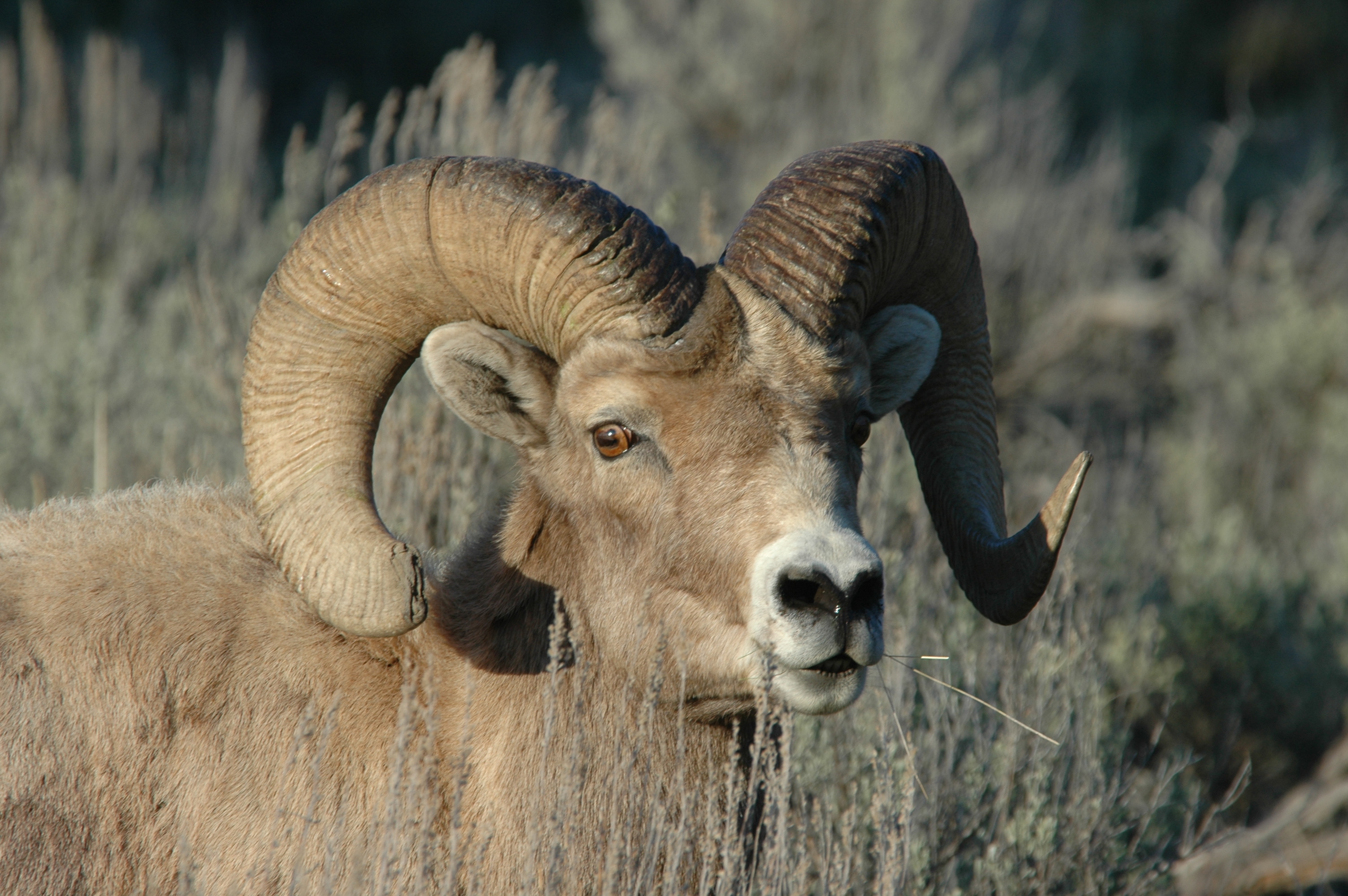
Sheep photo copyright Jim Robertson

Sheep photo copyright Jim Robertson

A recent Bureau of Land Management (BLM) proposal in the Owyhee Field Office of Idaho puts bighorn sheep at a high risk of disease transmission from domestic sheep grazing. Domestic sheep easily pass pneumonia to wild bighorn, devastating whole herds of the native ungulates through slow and painful death. Despite having spent untold thousands of taxpayer dollars to find a workable solution to keep the sheep herds apart, the BLM’s recent proposal to renew 15 livestock permits in the Jump Creek, Succor Creek, and Cow Creek watersheds of western Idaho simply ignores the science and rationalizes high levels of risk by claiming the risk is even higher elsewhere.

Western Watersheds Project’s members and supporters likely recall the Payette National Forest decision that eliminated sheep grazing on nearly 70,000 acres over three-years between 2010 and 2013. The most rewarding outcome of that decision came earlier this year, when the first bighorn ewe was spotted on one of the now-closed allotments for the first time in many decades!

On the Payette, the Forest Service limited the maximum risk of contact to just 4 percent, eliminating any possibility of allowing grazing that had a greater threat to bighorn. The BLM’s Owyhee decisions permit an annual risk of contact of over 21% on the Poison Creek Allotment! In addition, the risk increases to an astounding 45% if bighorn sheep ever reach population goals set by the Oregon and Idaho wildlife management agencies. Instead of basing the plan on conservation, BLM simply cited to other areas where it allows an even higher level of risk of contact (on the Three Fingers and Board Corrals allotments in Oregon where the risk of contact is 30% and 100%, respectively, see map).

The BLM fails to meet the objectives of the Owyhee RMP that requires protection and enhancement of bighorn populations and habitat and the reduction of the potential for disease transmission between wild and domestic sheep. The BLM should designate areas where the risk of contact threatens the viability of bighorn sheep populations as unsuitable for domestic sheep and goat grazing. Because bighorn sheep are mobile and routinely foray into new areas, this risk analysis must be conducted whenever bighorn sheep are detected in new areas outside of the previous risk analysis areas to determine the suitability of domestic sheep grazing.

WWP provided a protest of the proposed decision last week and we’re prepared to take this to court if we have to. BLM can’t just pick a number and accept the potential for domestic sheep to extirpate bighorn.

Although the protest period is over, you are welcome to contact Idaho BLM Acting State Director Tim Murphy at tmurphy@blm.gov or give him a call at (208) 373-4001 .

If domestic sheep can’t coexist with bighorn, permittees are welcomed to retire their allotments under the 2012 Consolidated Appropriations Act that mandates permanent closure upon relinquishment. Interested permittees should contact wwp@westernwatersheds.org for more information.

Tell the U.S. Senate that You Oppose Ranching Industry Bill: Western Wildlands are Not a Feedlot

From Wildearth Guardians

It’s another giveaway by the Congressional cowboy caucus to welfare ranchers.

The Senate Committee on Energy and Natural Resources is considering a bill that would exempt the ranching industry from numerous environmental laws and further elevate the cattle industry on western public lands above wildlife and water.

Tell Committee Chair Senator Ron Wyden of Oregon that ranching industry shouldn’t be given special treatment. And if your Senator is on the committee, tell her/him as well that you oppose giveaways to the livestock industry.

The so-called “Grazing Improvement Act” eliminates environmental review for grazing permits under the National Environmental Policy Act. The Act would also double the period of grazing permits from ten to twenty years! Both would further entrench grazing on public lands—imperiling hundreds of species including sage grouse, native trout and wolves.

At a time when our public wild lands in the west are critical for providing water and wildlife habitat and ensuring resilience to climate change we cannot afford more give-aways to the cattle industry.

Energy and Natural Resources Committee members need to hear from you.

Call Senator Wyden at (202) 224-5244 in Washington, DC, or (503) 326-7525 in Portland Oregon, and then sign on to our email letter today!

http://www.wildearthguardians.org/site/PageServer#.Uogsa77Tly0

Early snow–Not Wolves–kills thousands of cattle in S.D.

This sad story backs up what I wrote about the cruel treatment of cows in my recent post, Animal Industry = Animal Abuse.

It also highlights just one of the many ways that ranchers lose livestock which make the occasional wolf depredation pale in comparison. Because they can’t go out and trap or shoot a snowstorm, they shrug it off and accept their losses in stride. But if a wolf wanders through, it’s panic time. Scapegoating and killing a few wolves and coyotes must make them feel better about their powerlessness to stop a snowstorm.

Also, how many times do the deniers have to hear the word “record-breaking” before they take climate change seriously…

http://seattletimes.com/html/nationworld/2021983379_apusautumnstormsouthdakota.html

A record-breaking storm that dumped 4 feet of snow in parts of western South Dakota left ranchers dealing with heavy losses, in some cases perhaps up to half their herds, as they assess how many of their cattle died during the unseasonably early blizzard.

By CHET BROKAW Associated Press

Frozen cattle on Monday line Highway 34 east of Sturgis, S.D.

Enlarge this photoKRISTINA BARKER / AP

Frozen cattle on Monday line Highway 34 east of Sturgis, S.D.

PIERRE, S.D. —

A record-breaking storm that dumped 4 feet of snow in parts of western South Dakota left ranchers dealing with heavy losses, in some cases perhaps up to half their herds, as they assess how many of their cattle died during the unseasonably early blizzard.

Meanwhile, utility companies were working to restore power to tens of thousands of people still without electricity Monday after the weekend storm that was part of a powerful weather system that also buried parts of Wyoming and Colorado with snow and produced destructive tornadoes in Nebraska and Iowa. At least four deaths were attributed to the weather, including a South Dakota man who collapsed while cleaning snow off his roof.

Gary Cammack, who ranches on the prairie near Union Center about 40 miles northeast of the Black Hills, said he lost about 70 cows and some calves, about 15 percent of his herd. A calf would normally sell for $1,000, while a mature cow would bring $1,500 or more, he said.

“It’s bad. It’s really bad. I’m the eternal optimist and this is really bad,” Cammack said. “The livestock loss is just catastrophic. … It’s pretty unbelievable.”

Cammack said cattle were soaked by 12 hours of rain early in the storm, so many were unable to survive an additional 48 hours of snow and winds up to 60 mph.

“It’s the worst early season snowstorm I’ve seen in my lifetime,” said Cammack, 60.

Early estimates suggest western South Dakota lost at least 5 percent of its cattle, said Silvia Christen, executive director of the South Dakota Stockgrowers Association. Some individual ranchers reported losses of 20 percent to 50 percent of their livestock, Christen said. The storm killed calves that were due to be sold soon as well as cows that would produce next year’s calves in an area where livestock production is a big part of the economy, she said.

“This is, from an economic standpoint, something we’re going to feel for a couple of years,” Christen said.

Some ranchers still aren’t sure how many animals they lost, because they haven’t been able to track down all of their cattle. Snowdrifts covered fences, allowing cattle to leave their pastures and drift for miles.

“Some cattle might be flat buried in a snow bank someplace,” said Shane Kolb of Meadow, who lost only one cow.

State officials are tallying livestock losses, but the extent won’t be known for several days until ranchers locate their cattle, Jamie Crew of the state Agriculture Department said.

Ranchers and officials said the losses were aggravated by the fact that a government disaster program to help ranchers recover from livestock losses has expired. Ranchers won’t be able to get federal help until Congress passes a new farm bill, said Perry Plumart, a spokesman for Sen. Tim Johnson, D-S.D.

Meanwhile, more than 22,000 homes and businesses in western South Dakota remained without power Monday afternoon, according to utility companies. National Guard troops were helping utility crews pull equipment through the heavy, wet snow to install new electricity poles.

At least 1,600 poles were toppled in the northwest part of the state alone, and workers expect to find more, Grand River Electric Coop spokeswoman Tally Seim said.

“We’ve got guys flying over our territory, counting as they go. We’re finding more as we are able to access the roads. The roads have been pretty blocked on these rural country roads,” Seim said.

“One of our biggest challenges is getting access to areas that are still snowed in,” added Vance Crocker, vice president of operations for Black Hills Power, whose crews were being hampered by rugged terrain in the Black Hills region.

In Rapid City, where a record-breaking 23 inches of snow fell, travel was slowly getting back to normal.

The city’s airport and all major roadways in the region had reopened by Monday. The city’s streets also were being cleared, but residents were being asked to stay home so crews could clear downed power lines and tree branches, and snow from roadsides. Schools and many public offices were closed.

“It’s a pretty day outside. There’s a lot of debris, but we’re working to clear that debris,” said Calen Maningas, a Rapid City firefighter working in the Pennington County Emergency Operations Center.

Cleanup also continued after nine tornadoes hit northeast Nebraska and northwest Iowa on Friday, injuring at least 15 people and destroying several homes and businesses. Authorities also are blaming the weather for a car accident that killed three people along a slick, snow-covered road in Nebraska.

In South Dakota, the 19 inches of snow that fell in Rapid City on Friday broke the city’s 94-year-old one-day snowfall record for October by about 9 inches, according to the National Weather Service. The city also set a record for snowfall in October, with a total of 23.1 inches during the storm. The previous record was 15.1 inches in October 1919.

Snow Leopard Survival Threatened by Cashmere Industry

http://www.enn.com/top_stories/article/46440
From: Dr Charudutt Mishra, The Ecologist, September 19, 2013

As London Fashion Week concludes, Dr Charudutt Mishra explains how demand for cashmere is affecting Central Asian wildlife, and how enlisting the support of local people will be essential for the future of snow leopard conservation.

The mountains of Central Asia are where the endangered snow leopards live. The higher Himalayas, the Pamirs, the Tien Shan, the Altai, all remote and faraway, seemingly insulated from our consumerist lifestyles. Indeed, the main causes of the cat’s endangerment appear to arise largely from local activities – persecution in retaliation against predation on livestock, for instance. Understandable, as livestock continues to remain a precious resource for people in these climatically and topographically harsh mountain landscapes.

Living thousands of miles away, it is difficult to imagine that our daily choices, literally the clothes we choose to wear, are shaping the chances of survival – or extinction – of the snow leopard and several other species of the Central Asian mountains.

The surging global demand for cashmere, that wonderful soft and warm fibre, is compromising the survival prospects of the snow leopard, the saiga, and a host of other iconic species of the Himalayas and Central Asia. Yet, the same fashion industry is also bringing better livelihood opportunities for local people, our biggest partners and hope for wildlife conservation in these mountains. It sounds complex, and it is complex.

What exactly is going on, and what do we do?

In a recent paper I co-authored with my friend Joel Berger and our Mongolian colleague Buuveibaatar, we have tried to explore the complex pathways through which the largely Western demand for cashmere is affecting Central Asian wildlife. Cashmere is derived from the lightweight under hair of domestic goats, and the bulk of the global production comes from snow leopard landscapes of Central Asia.

Supplying the increasing global demand for cashmere is met with by increasing the goat population. So across large parts of Central Asia, we see an ongoing escalation of livestock populations, and changes in herd composition in favour of goats. Mongolia alone has seen an increase in its livestock population from approximately five million in 1990 to 14 million in 2010.

As domestic herds grow, they consume the bulk of the forage available in the mountain pastures, leaving behind inadequate food for the several species of wild herbivores that inhabit these mountains and arid zones that we have worked in. These include many wild relatives of livestock, such as the ibex, the blue sheep, and the argali that constitute an important genetic resource, in addition to being the natural prey species of the snow leopard and other predators such as the wolf.


Possible wolf kill in offing after recent cattle deaths in Wallowa County, OR

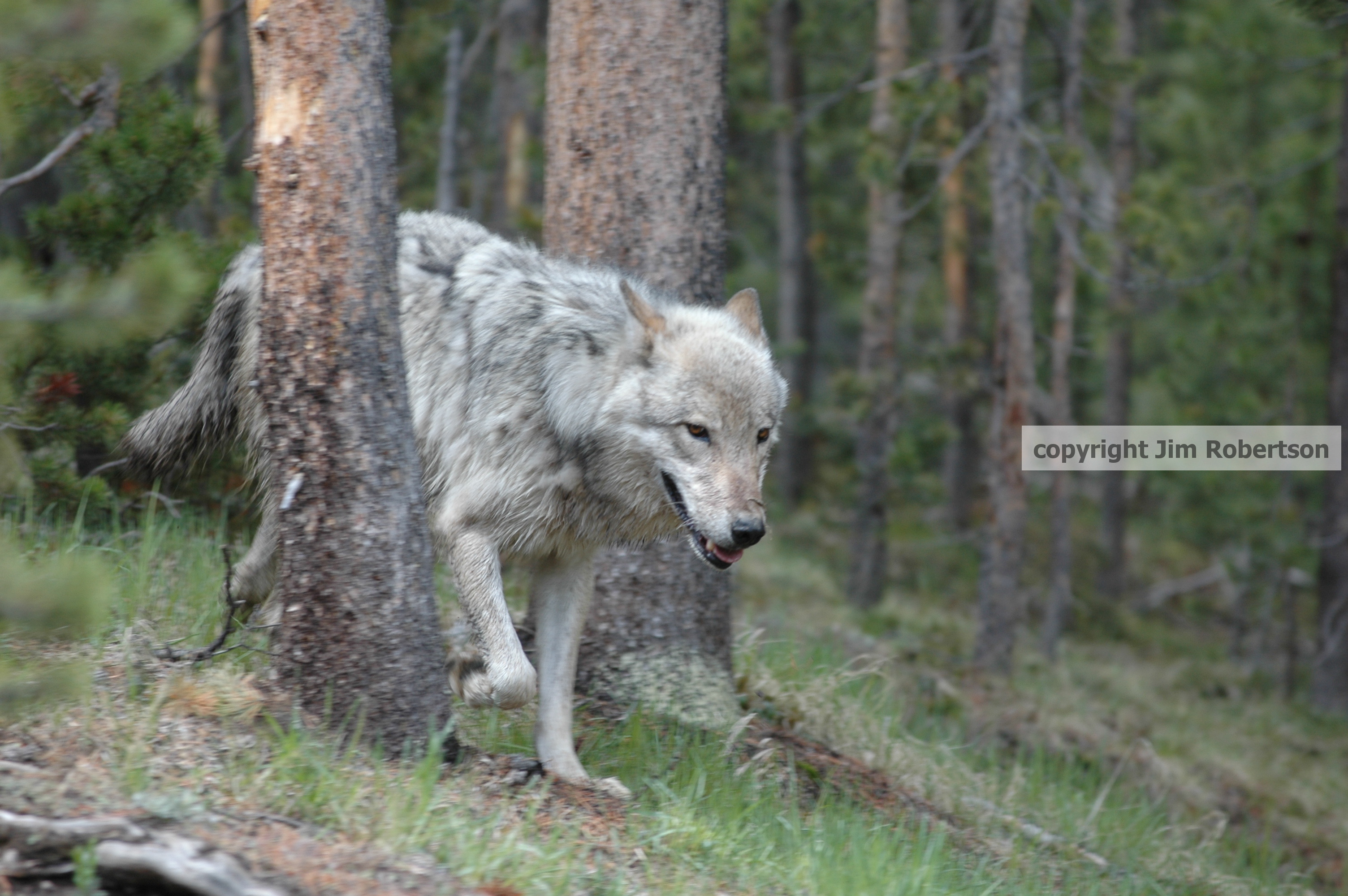
copyrighted Hayden wolf in lodgepoles

http://www.oregonlive.com/pacific-northwest-news/index.ssf/2013/08/possible_wolf_kill_in_offing_a.html

The Oregonian By Richard Cockle, The Oregonian
August 30, 2013

Two wolf attacks on cattle in Wallowa County could trigger a wolf “kill order” by Oregon wildlife officials for the first time in more than two years.

Earlier this month, wolves from the Imnaha pack injured a rancher’s cow on Upper Griffith Creek.

Last week, a horseback rider checking cattlefound the partially eaten carcass of a calf killed by a wolf along Upper Threebuck Creek.A radio-collar check showed OR-4, an Imnaha pack wolf, was in the area where the calf was discovered.

Meanwhile, the Umatilla River wolf pack northeast of Pendleton killed a goat that had been penned overnight close to the owner’s house with guard dogs nearby, said Michelle Dennehy, spokeswoman for the Oregon Department of Fish and Wildlife.

The Wallowa County attacks raised the tally of livestock deaths by the Imnaha pack to four within the past six months, enough for state wildlife biologists to begin considering “lethal controls,” Dennehy said.

Killing one or more wolves could be ordered under terms of a settlement last spring, but no decisions have been made, Dennehy said.

“I haven’t heard any discussion yet of what animals we might target, or how many,” she said.

The agreement grew out of 17 months of negotiations involving Gov. John Kitzhaber, the Oregon Cattlemen’s Association, the state Department of Fish and Wildlife and two major conservation groups after the Oregon Court of Appeals halted the killing of Oregon wolves by government hunters.

Oregon currently is home to at least 46 wolves in seven known packs — the Imnaha, Minam, Mount Emily, Snake River, Umatilla River, Walla Walla and Wenaha packs.

For the state to authorize killing a problem wolf, the affected rancher must have used at least one preventive measure to keep wolves away from livestock at least seven days before the incident.

Those can include flaggery, or strips of fabric tied to fences to frighten away wolves; burial of bone piles when cattle die naturally; guard dogs; and an increase in the presence of humans where cattle graze and wolves are known to range.

Nick Cady, spokesman for the Cascadia Wildlands environmental group, said lethal controls under the settlement are a “last resort” to deal with wolves and can occur only when livestock kills become chronic. His group helped negotiate the agreement.

If a wolf or wolves must be killed, it should be a “targeted removal” of specific animals preying on livestock, he said. Nevertheless, Cady doesn’t believe lethal controls are the best option.

Since Washington wiped out the cattle-killing Wedge pack of wolves north of Kettle Falls near the Canadian border last year, new wolves have moved in, and “they’ve been depredating again,” Cady noted.

Wolves were active this summer in northeastern Oregon. An injured calf was found July 2 in Wallowa County’s Upper Threebuck Creek drainage and was listed as a probable wolf attack, state biologists said. Calves were attacked by wolves in the same area April 22, May 10 and May 15, they said.

A calf carcass found in the Hayden Lake area of Wallowa County also suggests a possible wolf attack, they said. They also confirmed the death of a ewe sheep in the Weston Mountain area northeast of Pendleton around June 3 as a wolf kill.

Stop the badger slaughter and save British wildlife

SIGN THIS PETITION
Stop the badger slaughter and save British wildlife

Why this is important

In England, badgers are facing a scary predicament. Thousands of them have been sentenced to death.

The UK government believe that reducing their numbers will help stop the spread of a disease called bovine tuberculosis (TB). But they’re wrong.

Last year, a coalition of scientists told the government the badger cull would be ineffective at stopping the spread of this disease. In fact, they even think it’s likely to make things worse:

“As scientists with expertise in managing wildlife and wildlife diseases, we believe the complexities of tuberculosis transmission mean licensed culling risks increasing cattle TB rather than reducing it.”

Celebrities as far reaching as Queen guitarist Brian May, David Attenborough, Ricky Gervais, and Chris Packham have expressed their disgust at what seems to be the government’s way of appeasing farmers.

The public is finally realising that the government’s policy of killing off these badgers is mindless and likely driven by money. But they’re still going ahead with it. We need to make them see that what they’re doing is wrong.

Badgers have called Britain home for over 250,000 years. They’re shy but social animals who live in big families and are fastidiously clean. They are also a long-standing and beautiful part of British wildlife.

The government needs to know that we don’t accept the needless killing of these creatures.

So far in the UK we have an e-petition with over 250,000 signatures. But the government refuses to listen. David Cameron is staying silent.

So we need some help. This has got to go global. We need people all over the world to voice their protest and maybe, just maybe, we can get through to them.

Bovine TB is a terrible disease, but killing off healthy badgers isn’t the answer. The Wildlife Trusts knows that vaccination of the badger population is the solution. It will saves thousands of innocent lives. Our neighbouring country, Wales, is already vaccinating badgers to great effect

But we need the government to listen to us. Help them hear our cries!

Habituated wolf shot near Jardine, MT

The Billings Gazette

A young collared female gray wolf was shot by a Jardine-area resident on Saturday after the wolf had recently come in close proximity to a number of homes, killed a cat as well as several chickens, according to Montana Fish, Wildlife and Parks.

“It had shown up at a number of properties since April,” said Andrea Jones, FWP information officer.

Over the last few months the wolf displayed unusually bold behavior as attempts were made by FWP and residents to haze the animal. It was shot while eating a chicken. There will be no charges filed, Jones said, since the wolf was becoming increasingly more bold.

“It has not shown normal wolf behavior when confronted,” Jones said.

Until this spring, the wolf lived primarily in the northeast corner of Yellowstone National Park as a member of the Lamar Canyon pack. Young wolves often disperse to start their own packs. After leaving the pack it moved into the Jardine area. Jardine is located northeast of Gardiner and just north of the park boundary.

FWP investigated the wolf mortality in consultation with USDA-Wildlife Services. An FWP veterinarian will examine the wolf’s general condition but a necropsy is not planned at this time, Jones said.

Wolf shootings to protect livestock as well as wolf hunting are divisive issues that have prompted death threats in the past to those involved. Consequently, FWP was not releasing the name of the individual who shot the wolf.

Two other members of the Lamar Pack were shot last fall during Wyoming’s hunting season, one of which was the pack’s alpha female. All together, hunters in surrounding states shot 12 wolves last year that spent part of their time inside Yellowstone’s boundaries. Six of the 12 were collared wolves that park staff use to study wolf movements and interactions.

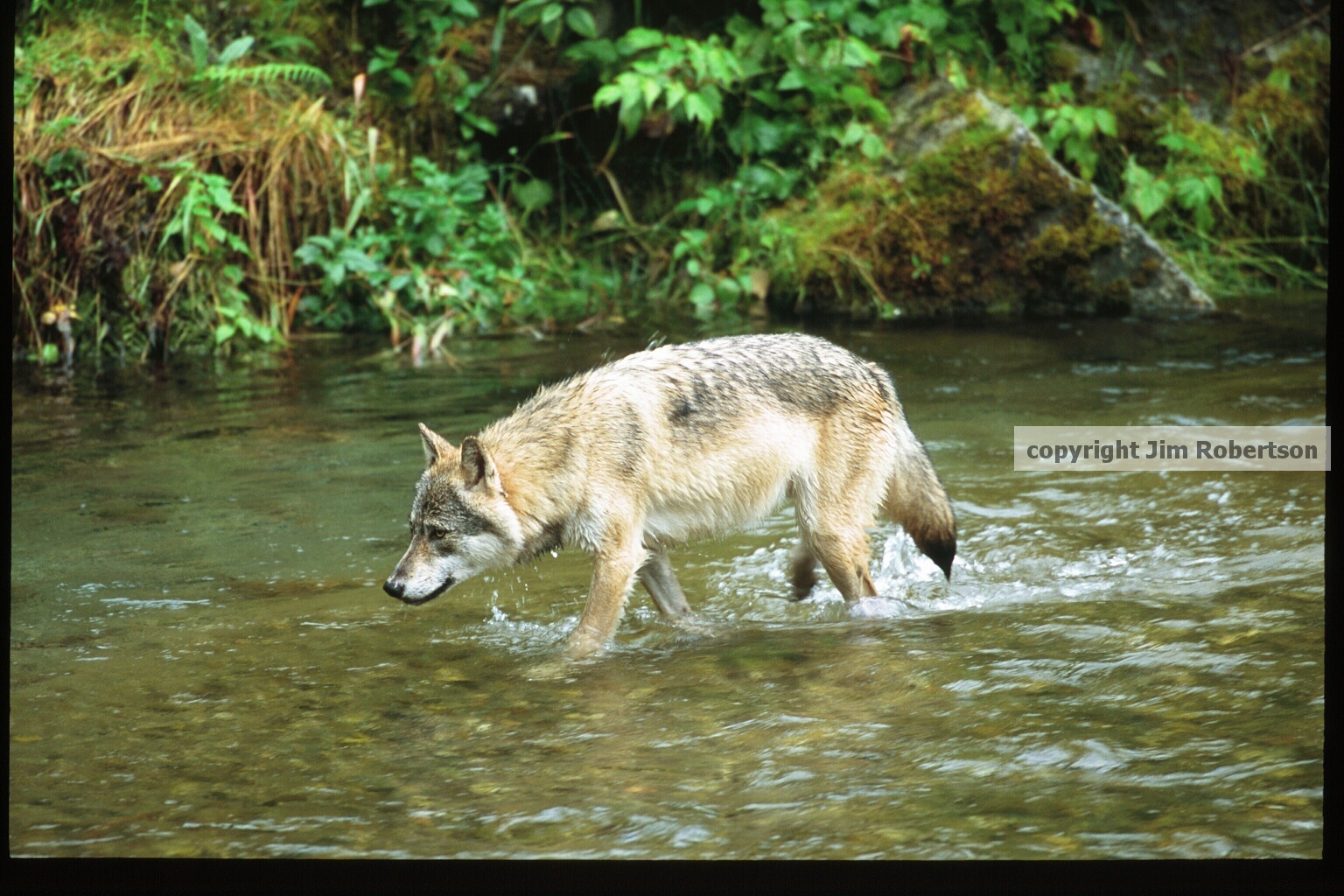
copyrighted wolf in water

Be the Wind

Upon awakening from a fitful sleep after a cold, windy night, it occurred to me that birds must have to keep an unconscious death-grip on the branch they’re perched on to hold their place until morning. It must be second nature to them; part of what makes them who they are.
Next the thought came to me that a bird’s nighttime death-grip on a perch is analogous to the death-grip “sportsmen’s” groups, “game” departments and the livestock industry have on our wildlife. Like a trembling bird, fearful for its future, animal exploiters must be afraid that if they loosen their grip, they’ll be blown away.

Well, they’re right.

It’s high time we be the wind that finally breaks loose their death-grip on wildlife once and for all, and for the good of all.

Text and Wildlife Photography ©Jim Robertson, 2013. All Rights Reserved

Text and Wildlife Photography ©Jim Robertson, 2013. All Rights Reserved

Anti-Hunt Q and A

The following are my answers to interview questions posed by a journalism student who so was moved after reading my book, Exposing the Big Game: Living Targets of a Dying Sport, that she decided to undertake a project on the psychology of hunting…

1. Have you come into contact with anyone (especially hunters) who has stated that your book changed their view on the game of hunting and the mistreatment of animals?

Answer: Yes, I’ve heard from several non-hunters who have thanked me for exposing the truth about big game hunting. No longer ambivalent about the unnecessary cruelty of sport hunting, they are now active anti-hunters.

But I have yet to meet a hunter introspective enough to allow anything to change their inbred, imbedded views on killing wildlife.

2. Have you received any ‘backlash’ since publishing this book?

Answer: For what, for urging hunters and trappers to be more compassionate to our fellow beings? No, and they haven’t received any backlash from me for tormenting and killing my friends the animals (aside from my book and blog).

Deep down hunters and trappers know what they are doing is wrong; they just hope we’ll continue to let them get away with it.

3. Are you friends with anyone who avidly hunts? Do any of your family members hunt?

Answer: Unfortunately.

4. In the beginning of the book, it states that you have always been a man of compassion towards animals. Why do you think that spreading the word of being kind to animals is important?

Answer: I’m going to answer that question with another question, a couple of other questions, actually: Why did the emancipators think freeing the slaves was important? My grandmother and great aunts were suffragettes, why did they fight for women’s right to vote? Why did people push to ban kiddie porn or crush videos? Why? Because speaking out for innocent victims of exploitation is the right thing to do.

5. What do you say to those who hunt for food and not sport? Many hunters believe that it is more humane to hunt for food than it is to buy meat from a slaughter house.

Answer: First of all, most people who claim to hunt for food not sport are living far above the poverty level. They are not starving and they don’t need to kill animals to survive. They do it because they want to—it’s “fun.” In many cases they spend far more on the hunt than it would cost them to get their food from the markets where they buy their beer, tobacco and Twinkies. They can boast all they want about “using the meat”—hell, even wolf or cougar hunters will claim that they plan to eat what they kill—but they’re just trying to make their trophy hunt seem palatable to the unwary public.

And the claim that hunting is more humane than what cows go through is exaggerated at best. While there’s absolutely no denying that what cows at the slaughterhouse are forced to endure is appallingly cruel, hunters conveniently forget that the animals they stalk are stressed out from the time they hear the first gunshots fired by someone sighting in their rifles for hunting season.

The myth of that “good clean shot” is a grim fairytale in most every case. Hunters expect to have to track down and finish off an animal they’ve shot or impaled with an arrow. In reality, “game” animals probably suffer longer than those at the slaughterhouse (though this is in no way meant to condone factory farming).

When it comes right down to it, hunters don’t give a shit about being humane, or they’d quit eating meat and join the millions of people who are living proof that human beings can live longer, healthier lives if they swear off flesh foods and get their nutrients from the plant kingdom.

Text and Wildlife Photography ©Jim Robertson, 2013. All Rights Reserved

Text and Wildlife Photography ©Jim Robertson, 2013. All Rights Reserved

Back To the Bad Old Days

What’s up with all the anti-wildlife legislation going on around the country these days? Everywhere you look there’s some state senator or representative introducing bills to keep non-human animals down and implement some new form of cruelty to punish them for the crime of not being born of our privileged species.

A few examples: a self-amused eastern Washington representative is calling for east-side wolves to be moved out of his district to the west side of the Cascade Mountains; at the same time Washington State politicians just introduced three bills to make it easier for ranchers to use lethal measures on wolves whenever they see fit; and of course you’ve heard that Montana’s public servants are on a rampage to get rid of their resident wolves. Now one of their legislators wants to lower the minimum hunting age for that state to nine years old.

Meanwhile, in Alaska, a senator just put forth legislation to instate a $100.00 bounty on sea otters! Never mind that these playful, aquatic mammals were nearly completely wiped out during the fur trade era, are critically endangered or extinct from much of their former range and are still listed in Alaska as Threatened or Endangered under the federal ESA, those poor, underpaid (sarcasm intended) commercial crab fishermen see them as competition. (Far from downtrodden, crabbers take pride in being the wealthiest of commercial fishermen; no doubt the senator who proposed the bounty is counting on a kickback into his campaign coffers from the crabbing industry for his otter oppression bill.)

And the list of detrimental anti-wildlife legislation goes on and on.

Is it just me, or have good ol’ boy state politicians stepped up the pace of non-human animal persecution? It’s as though they’re intentionally trying to drag us back to the bad old days of the 1800s, arguably this country’s most reckless period for uncontrolled animal exploitation—besides, perhaps, the present.

Take Action:

Not surprisingly, state legislators only take input from residents of their given state, but since there are bogus bills and measures cropping up across the country, there should be something to speak out against wherever you live. For instance, if you live in Washington State, contact your senator and urge them to oppose anti-wolf bills SB 5187, SB 5188 and SB 5193. Let them know:

  • These three bills would undermine the state’s wolf management plan by giving authority to the county legislators and local sheriffs over the state wildlife agency biologists, and would allow the public to override the state and kill wolves perceived to be a threat to livestock on public and private lands.
  • There are only 50 wolves in Washington.  Now is not the time to remove their protection.
  • Washington’s wolf management plan was created with massive public involvement and adopted unanimously by the Washington Wildlife Commission; powerful ranching advocates should not be allowed to undermine it.
Text and Wildlife Photography ©Jim Robertson, 2013. All Rights Reserved

Text and Wildlife Photography ©Jim Robertson, 2013. All Rights Reserved