Boycott Montana Beef

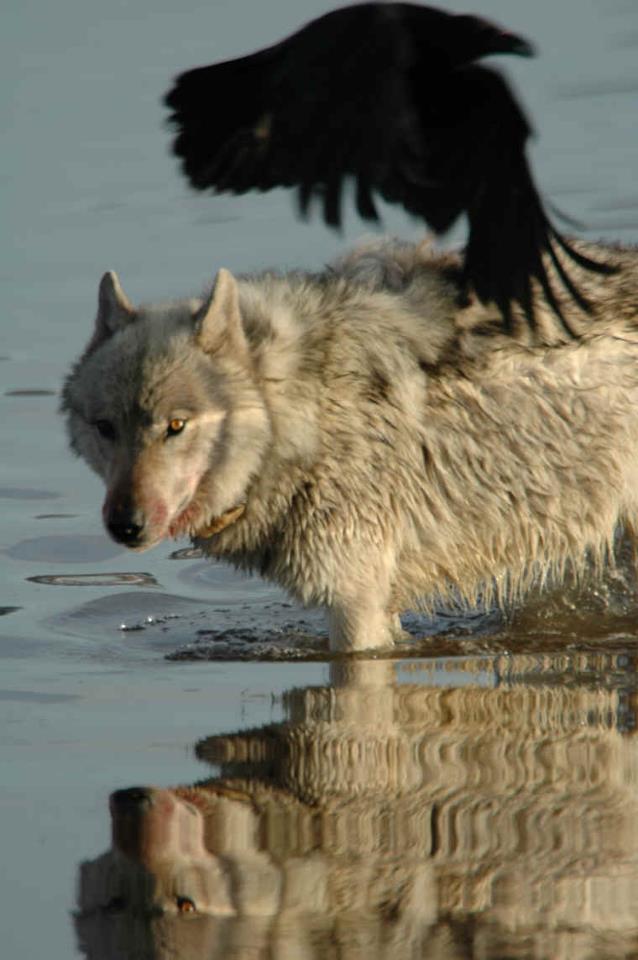
Beef cattle are the number one predator on wolves and bison in Montana.
Of course, the cows themselves are not directly to blame for the deaths of others; they too are victims of the same exploiters who are waging a war of extermination on wolves, bison and other native species, unparalleled since the ecologically reckless 1800s.

The government of Montana’s attitude toward wildlife is a disgrace—nothing short of reprehensible—for any state who calls themselves a gateway to Yellowstone National Park. Wildlife watchers should not have to concede to the will of hostile states; they have as much right to visit Montana as any beef buyer or trophy hunter.

Recently the state of Montana has turned up the heat on any wild species who might in any way be perceived as a threat to one of their biggest cash crops: cows. Don’t fall prey to the feel-good lure of “sustainable” grass-fed Montana beef. In order to sustain cattle, the livestock industry demands that wildlife be controlled by any and every lethal means imaginable.

It’s time to hit where it hurts. For the sake of wolves and bison and biodiversity, boycott Montana beef!

Text and Wildlife Photography ©Jim Robertson, 2013. All Rights Reserved

Text and Wildlife Photography ©Jim Robertson, 2013. All Rights Reserved

Silly Humans, Carrion is For Carnivores

Never before in the history of mammals have seven billion large, terrestrial, meat-eating members of one species ever single-handedly laid waste to so much of the Earth’s biodiversity. Human carnivorousness is killing the planet one species at a time, one ecosystem after another; one bison at a time, one wolf after another.

Every time you order a steak or grill a hamburger, you legitimize bison and wolf culling for the sake of livestock growers. If you really want to save the wolves and the bison, go vegan! And urge your friends and family and neighbors and co-workers to do the same.

Tell it to the world—it’s time to leave the predating to the predators!

Human beings can live much healthier on a plant-based diet, as their primate cousins always have. True carnivores, such as wolves, coyotes, cougars, marine mammals or members of the weasel family have to eat meat to survive. If you’re not willing to go vegan for your own health perhaps you could do it for the health of the planet; if not for the sake of the animals you eat, maybe for all the other species affected by your bill of fare.

Text and Wildlife Photography© Jim Robertson

Text and Wildlife Photography© Jim Robertson

Bye Bye Biodiversity

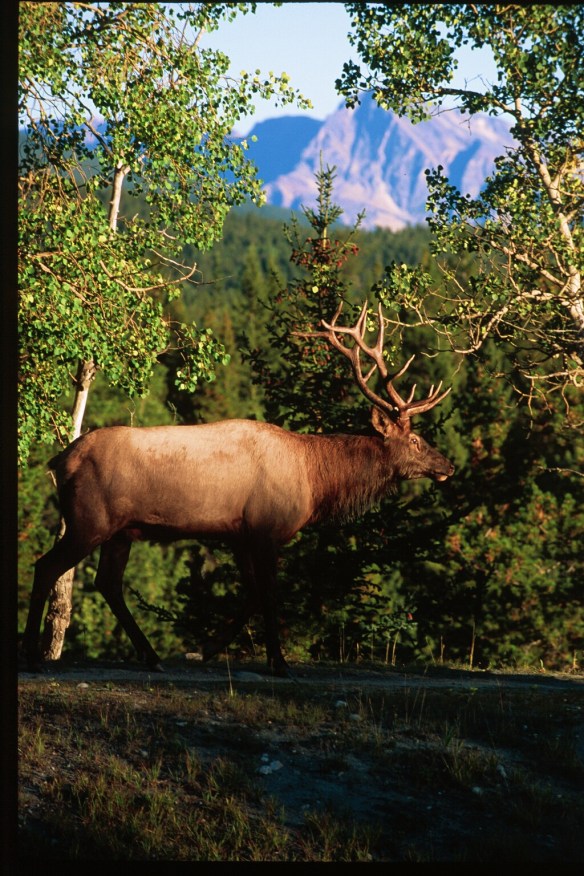
I’ve said it before and I’ll probably say it again, you can’t really be a wolf advocate or an elk advocate, or any kind of advocate for the environment, and continue to eat beef. That message was driven home by a new Montana Fish, Wildlife and Parks Department elk “management” proposal which includes reducing the numbers of not only elk, but also of wolves (who, logically, could have done some of the “management” for them) near Yellowstone National Park, all in the name of safeguarding cattle from the negligible threat of brucellosis—a disease which, in the past hundred years, has come full circle from livestock to wildlife and now back to livestock.

So far, it’s been the bison migrating out of Yellowstone during hard winters who have suffered the brunt of the rancher’s brucellosis paranoia. “Solutions” have included “hazing” bison back into the park and creating holding areas outside the park to warehouse bison before shipping them off to slaughterhouses—those nightmarish death camps where so many of their forcibly domesticated bovine cousins meet their ends. (In a country where some 60 million bison once roamed free, 97 million beef cattle are sent to slaughter each year.) Still other Yellowstone bison are murdered during newly imposed state “hunting” seasons—right outside the park.

Speaking of hunting, it’s interesting (to put it nicely) that hunters in Montana and Wyoming have claimed that elk populations in those states have declined as a result of the wolf reintroduction programs, yet the latest report suggests that elk numbers and density are “too high” (at least for rancher’s sensitivities) in parts of Montana.

Typical of state “game” department bureaucrats and their ideas of a “solution” to any perceived wildlife/livestock “conflict,” their preferred proposal is to reduce the number of wild animals—in this case, both elk and wolves!

It’s the kind of mentality that’s destroying the planet’s biodiversity at every turn: mile after mile of monoculture cornfields in Iowa (grown primarily to fatten cattle crammed onto feedlots)—places where, a century ago, 300 species of plants, 60 mammals, 300 birds and hundreds of insects would have lived—are now devoid of all other life forms other than cornstalks and an occasional tiny ant or a mushroom the size of an apple seed; cows grazing on pastures in Pennsylvania and Louisiana are dying from toxic fracking wastes that have made their way to the surface and meanwhile, arctic ice is melting faster than previously predicted, disrupting ocean currents and weather patterns life on Earth has come to depend on.

Call it “growth” or “progress” or just “our way of life,” but this locomotive is speeding towards a brick wall—yet we keep shoveling fuel into it like there’s no tomorrow…


Not that Montana FWP are likely to listen to anyone except fellow hunters and/or their cattle baron buddies, but the public comment period is now open, so feel free to let them know what you think about their elk “management” proposal here: http://fwp.mt.gov/hunting/publicComments/2012elkMgmtGuidelinesBrucellosisWG.html

You can view the working group’s recommendations by clicking on the “Interested Persons Letter” link on this webpage. That site also includes the opportunity to submit online comments about the recommendations. Written comments can be mailed to “FWP – Wildlife Bureau, Attn: Public Comment, P. O. Box 200701, Helena, MT 59620-0701. All comments must be received by 5:00 p.m. Mountain Standard Time on December 20, 2012

Text and Wildlife Photography ©Jim Robertson

Text and Wildlife Photography ©Jim Robertson

Over 7 Billion Served

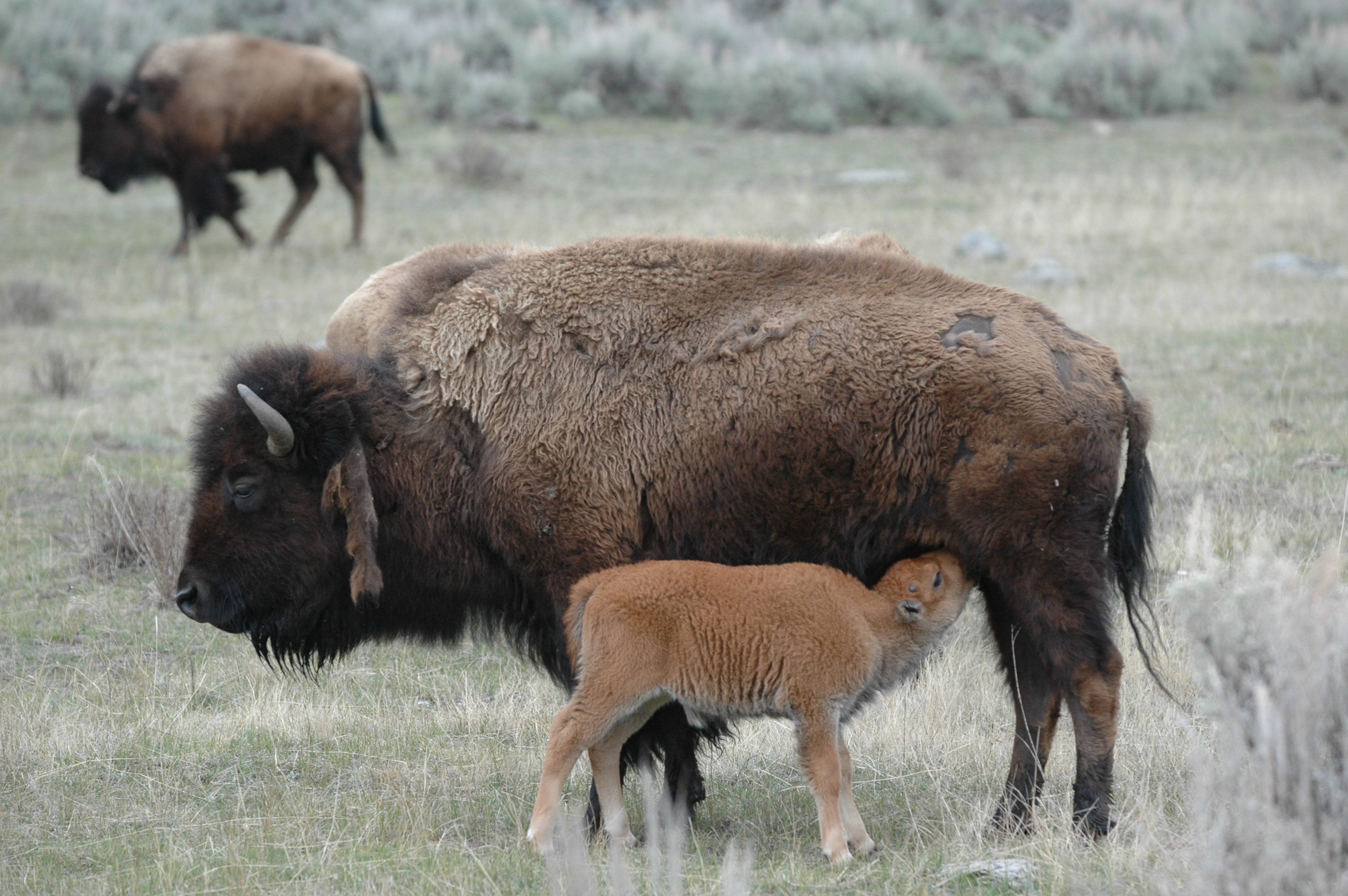
Bison calves are normally born in the spring or early summer. For the first few months of their lives they’re coat is an orange-ish color, turning progressively darker through the warm summertime, until by late August they are as dark as their parents and the other adult and sub-adult members of their herd.

So I was surprised to hear from my wolf-watching friend and former neighbor in southwest Montana that an orange bison calf was just seen in Yellowstone trailing an umbilical cord, a sure sign he was born within the past few days.

Not good timing, as nighttime temperatures hover in the teens now, and snow has already begun falling in the park. The snows will only get deeper and the temps colder for months to come. Life will be tough for the poor little calf this first winter; chances are good he won’t survive.

This is precisely the reason bison have evolved, as a rule, to being receptive to breeding exclusively in August. The ensuing gestation period assures that newborn calves are greeted with a full summer ahead of them. Nearly every animal species living above or below the equatorial belt has adapted to Earth’s changing seasons by only ovulating during a brief window of opportunity, thereby naturally limiting their populations.

Conversely, Homo sapiens can impregnate one another year-round. Our species has had it easy for so long—starting fires for warmth and skinning animals for clothes and shelter—that now human babies are  brought forth continuously, 24-7. At last report, 490,000 new humans per day are born to add to the 7 billion mostly carnivorous hominids already here.

Meanwhile, whenever bison herds in Yellowstone thrive enough to reach the arbitrary number of 3,000 total “head,” the park service and the Montana Department of Livestock implement a longer “hunting” (read: walk up and blast the benign, grazing, half-tame bison) season on them, or truck them off to the slaughterhouse—those nightmarish death camps where so many of the bison’s forcibly domesticated bovine cousins meet their ghastly ends in the name of human hedonism.

And people think we need to control their population?

Text and Wildlife Photography © Jim Robertson

Leave Wolves the Hell Alone

Northeastern Washington cattle rancher Len McIrvin has made it clear: he really hates wolves—especially members of the local Wedge pack. Though the rancher way of life depends on government handouts and write-offs, he’s been unwilling to accept compensation for the cows he claims to have lost to wolves, fearing it would legitimize protection of the natural predators.

It may not be fair to compare him and his son to poachers Bill White and son, who illegally killed most of the Lookout Pack (Washington’s first confirmed wolf pack to return home from Canada), since the McIrvins appear to operate above board by deferring to the state game department to do the dirty work for them. But they are all cut of the same cloth—cattle ranchers who think wolves serve no Earthly purpose and should be eliminated (once again).

It’s no wonder some ranchers feel they can get away with murder, so to speak. They’ve gotten used to having everything handed to them, ever since the government paid for the cavalry to wage war with the Indians and bankrolled bounties and poisoning campaigns against wolves to make room for their private ranches—and ensure “Manifest Destiny” (the doctrine or belief prevalent in the 19th century that the United States had the God-given right to expand into and possess the whole of the North American continent). But Western ranchers aren’t satisfied with keeping cows on their vast tracts of private land (possibly given to their ancestors free of charge back in the homesteading era); they want the Feds to throw in a few thousand acres of cleared national forest land so they can expand their claim out into the neighboring wildlife habitat.

The US Forest Service contends that grazing fees bring in funds as part of their “Multiple Use” policy, but ranchers contribute only about $1.35 per “Animal Unit Month” (a detached, depersonalizing term for a cow and calf pair feeding for four weeks on public forests). According to a 2005 Government Accounting Office report, that paltry one dollar and thirty-five cent fee covers only a tiny fraction of the grazing program’s administrative costs, making this in essence just another a subsidy program in disguise.

Still, McIrvin feels entitled to prevail upon his buddies in the game department and local politicians to do whatever they can to make the entire Wedge pack disappear. He recently told the Capital Press that the only compensation he’s interested in is a dead wolf for every dead calf, copping a Bill White-like attitude: “This isn’t a wolf problem, we always could take care of our own problems,” adding that the only acceptable option is trapping and poison. Now he’s at it again, making extreme statements in any paper that’ll print them. Yesterday he showed his hand by making this fanatical comment to the Seattle Times: “Wolves have never been compatible with raising livestock.”

Okay, so you want to be an extremist, eh, rancher? (I’m doing the Clint Eastwood talking to a chair bit now…) Go ahead, punk, make my day. Two can play at that game; I’ll show you extreme. Hows about you damned cattle barons gettin’ your cows off my national forest and leavin’ my wolves the Hell alone. The wolves were here first and your poor cows don’t want to be livin’ out on some steep, brushy clearcut anyway. In fact, maybe it’s time you got outta cattle-ranchin’ altogether and started growin’ some healthy, organic crops insteada turnin’ your introduced livestock out into the woods to tempt the wolves and compete with the native deer, elk and moose who belong there.

Text and Wildlife Photography © Jim Robertson

When in doubt, blame it on the wolf

The fate of a Washington wolf pack hangs in the balance

Late Friday, seven pro-wolf groups have sent a letter asking Governor Chris Gregoire and other state officials to end efforts to kill up to four “Wedge” wolf pack members, even as a team from Washington State Department of Fish and Wildlife (WDFW) heavies are on-site continuing their lethal wolf “management” efforts. The WDFW thugs have spent the past week in Northeast Washington, attempting to “remove” (lethally, of course) wolves from the besieged pack.

The good news is they’ve had no luck killing any wolves during the past week. However, biologists reported finding the decomposed body of a young wolf within the Wedge pack’s range in northern Stevens County. A WDFW wildlife veterinarian was unable to determine that wolf’s cause of death since the carcass was too badly decomposed.

Although lacking hard evidence of any wrongdoing against cattle by wolves, wildlife “managers” earlier this month “lethally removed” one female from the Wedge pack and shared wolf pack location information with the outspoken wolf-haters from the Diamond M Ranch. (I for one have a strong suspicion as to how the Stevens County wolf might have died.)

The letter to Governor Gregoire and other Washington state officials sent by the Western Environmental Law Center and signed by pro-wolf groups, such as The Humane Society of the United States and Conservation Northwest, charged that Washington Fish and Wildlife Department officers didn’t find conclusive evidence that wolves were responsible for attacks on cattle and are jumping to a lethal option too hastily.

Two of the three non-agency experts who peer-reviewed the field investigations were unconvinced the purported cattle attacks were the work of wolves, said Suzanne Stone of the Defenders of Wildlife.

“The reports and especially the photos indicate injuries uncharacteristic of wolves,” she said.

The following Incident Report, #WA – 12 – 007485, by a WDFW agent should give you an idea just how inconclusive the “evidence” of some of these alleged wolf “attacks” really is:

“On 08/02/12 at approximately 1430 Hrs. Officer Parker and I were on a routine patrol on the Churchill Mine road. We approached the cattle pens and observed Bill McIrvin and three other ranch hands. I could see that Bill and his ranch hands were busy with corralling and dealing with large calves in the holding area. I contacted Bill in an effort to introduce Officer Parker. Bill told us one of his calves had bite marks on it and wanted me to see them. Bill also had a bleached out bone that had been eaten/chewed on. Bill stated it was from one of his calves. I observed it. It had been chewed on one end of the bone. I could not determine exactly what had chewed on it or cause of death.

“Bill then moved a cow and calf into the corral for closer inspection. I could see that the calf seemed normal and healthy. I did see on the back right leg, middle of leg, a laceration, approximately 2” wide. I could see no other apparent wounds. The calf was cornered and handled by 4 men to where it was put on its side for me to look at the wound and possible bite4 marks. Once, the calf was down, Bill pointed out the obvious laceration (photo taken). It was approximately 2 to 3” long. No maggots and still a fresh opening through the hair/hide. Bill then pointed out a bite mark next to the laceration. Using my fingers and feeling through the hair, I could not see or confirm a bit mark was there. Bill then grabbed underneath and inside the back right leg. Bill wanted me to grab and feel in this area for another bite mark. I reached in with my fingers and began felling in the same spot as well. I used my fingers feeling through the hair and touching the hide and felt no bite marks. I observed no obvious bite marks or trauma in any areas inside the back rear legs. Bill then pointed out an area he believed the calf had been bitten on the forward chest area. I used my fingers and felt through the hair and hide and felt no bite marks. I observed no obvious signs of trauma in the forward chest area as well.

“I spoke with Bill regarding compensation. I asked Bill if he would reconsider accepting compensation for his calves. Bill stated he was not interested in compensation this year.

“…I explained to Sheriff Allen [with Stevens County Sheriff’s Office] that I had looked at the calf and did not believe it was a wolf encounter… based on no apparent bite marks, no trauma, one laceration, I could not determine what had caused the laceration.”

When in doubt, blame it on the wolf…