Exposing the Big Game

Forget Hunters' Feeble Rationalizations and Trust Your Gut Feelings: Making Sport of Killing Is Not Healthy Human Behavior

Exposing the Big Game

The Human Cost of ‘Culling’ Livestock and ‘Depopulating’ Farms

A Tyson Foods pork processing plant, temporarily closed due to an outbreak of the coronavirus, in Waterloo, Iowa, April 29, 2020. (Brenna Norman/Reuters)

It’s not always clear whether industry representatives regret the waste of life or just a waste of food.NRPLUS MEMBER ARTICLEUnfolding this month, in the background of the pandemic, is a “depopulation” of livestock farms — another surreal new term of the crisis to add to our list. It’s as detached and colorless a word as the industry could find for gassing, suffocating, or otherwise doing in the millions of animals whose appointments at the abattoir have been canceled by coronavirus outbreaks and who therefore, in the refrain of news coverage, have “nowhere to go.”

The system has its own unbending schedules and logic. No sheltering in place for factory-farmed pigs, cows, chickens, and other creatures when yet more troubles appear. When they can’t die on a kill line, because a slaughterhouse has closed, that just means they have to die somewhere else to get out of the way — even if, as in this case, they’re all bound for landfills, blast furnaces, or burial pits.

Culling is a grim necessity, we’re told, and industry representatives have been straining to convey a sense of loss, though it’s not always clear whether they regret the waste of life or just a waste of food. In an emergency conference call on the logistics of the cull, recorded online by pork producers, one speaker captured the feeling: “It’s a topic that makes us all sick to our stomachs.”

Among techniques discussed in that call, and left for farmers to apply according to cost and “depopulation efficiency,” were gunshot and electrocution (“preferred” methods), “manual blunt force trauma” (beating animals to death with blows to the head, also “preferred”), ventilation shutdown and poisoning by carbon monoxide or sodium nitrate (these approaches “permitted in constrained circumstances”). When the pork producers’ lead veterinarian turned to the details of setting up a “gas chamber,” you could understand how disoriented a rational person would feel.

By presidential directive, the meat industry is now to be considered an “essential” enterprise. This intervention will safeguard such assets as our “national pork reserve,” while reopening the slaughter plants and leaving the companies in their accustomed position of taking no responsibility for the consequences. Culling continues anyway, because with the merest pause the meat system convulses with “backlog,” requiring travails for which producers expect our sympathy.

So sorrowful is the task that Iowa’s governor and U.S. senators have requested federal support not only in “depopulation” itself but also in helping to cope with the emotional aftermath: “Providing mental health assistance to farmers, veterinarians and others involved in the difficult decisions and processes around euthanizing and disposing of animals is imperative.” The National Pork Producers Council, in various statements pleading for public understanding along with the federal cash payouts, likewise speaks of “tragic choices,” “gut-wrenching decisions,” and “devastating last resorts” — all pointing to euthanasia as “the most humane option.”

A grievous situation, from any angle. And it would be nice to think that, even in some fleeting moment of revelation, these people who run our factory farms and slaughterhouses had awakened to the reality that living creatures are never just commodities, that they warrant our moral concern, and their suffering, our compassion. More likely, in these expressions of disquiet, we have a massive case of compartmentalizing, in which the mind selectively acknowledges one kind of problem while failing to grasp others of equal moral gravity.

What is so “gut-wrenching” about culling, compared with practices that these same people accept as a matter of course, in unconstrained circumstances and in disregard of every consideration except their own convenience and profit? With the turn of a switch, and in a matter of minutes, half a million chickens may be gassed or suffocated in a single facility, only because industrial agriculture packs these afflicted fowl of the air into vast warehouses, the laying hens crammed into row after row of small and filthy cages. A depressing possibility, given that such miseries are the design of the same farmers doing the culling, is that all they really lament is the loss of time and money. And even that feeling passes quickly, as culling is turned to advantage, with higher prices following the short-term constriction in supply.

If “mass depopulation” makes for a sickening sight, even to factory farmers, then you would think that “mass confinement” of animals would long ago have had a similar effect. Under “intensive confinement,” another term of the trade, these culled animals have known a world of only concrete and metal, with all the privations, mutilations, and other cruelties that are the industry’s first resort, and with even the veterinarians hired only to refine the punishments. Indeed, every modern hog farm is a training ground in culling, as the weak and near-dead are routinely dragged to “cull pens,” while the others are kept alive, amid pathogenic disease and squalor, only by a reckless use of antibiotics. The externalized cost to public health being left, as always with factory farming, for others to deal with.

Such is the culling expertise of America’s pork producers that when China’s current swine-fever contagion began to spread, factory farmers in that country knew who to call. Our industry’s best minds in the field were dispatched to the scene, where even now millions of pigs are being gassed or buried alive.

Where was the industry’s concern for “humane options” when this regulatory change was advocated? Where was that alertness to “tragic choices” when it might have done some good? And does it give anyone a moment’s pause that pigs, slaughtered at a national rate of half a million a day, are highly intelligent and social creatures, at least as smart and sensitive as any dog facing the similar horrors of a Wuhan wet market?

The chairman of Tyson Foods last week, in an unctuous and self-pitying letter typical of the industry’s public pronouncements, expressed confidence that his company’s “core values” would see it through the crisis. Yet for years, that company and others have sought laws to prohibit anyone from taking pictures inside their facilities, lest we learn more about how things work in what industry executives prefer to call “protein production.” What are the core values of people in a massive enterprise that depends so heavily on concealment and euphemism?

How jarring to hear them now supplicating for “mental-health assistance” to soothe their emotional wounds, as if they felt some attachment to animals they have done nothing but abuse, employing methods they are afraid to let us see. And how absurd to find Tyson’s top man solemnly declaring that “the food supply chain is breaking” (meat, he informs us, is “as essential as healthcare”), as though we’re just one or two slaughterhouse shutdowns away from famine. Happily, the crop growers of America — the farmers who truly sustain our country, and who don’t need gas chambers when things go wrong — have got us covered.

Sometimes the failures in a system reveal the essence of the whole. Abnormal circumstances can clarify problems that pass for normal. Doubtless, in their “depopulation” measures, the livestock farmers themselves feel they have “nowhere to go,” forced by their own manias of consolidation and hyper-efficiency to make one harsh choice after another, all the conscientious alternatives long ago ruled out. Yet if somehow it troubles them, in their culling labors, to treat millions of living creatures as nothing — bulldozed away, like so much piled-up trash — then now’s a good moment, for all of us, to notice that the system is just as merciless when it is working to perfection.

Every one of those creatures, like billions of others, was marked for a bitter, frightened, pain-filled life anyway — and to what good end? It is all in service to a business whose ruthlessness to animals, utter indifference to workers, destructiveness to the environment, and manifold harm to human health combine to qualify it as perhaps the least essential industry in America, and among the most amoral.

By all means, give them their mental-health assistance. Add some ethics counseling, too. And just make certain that the treatment includes serious, intensive introspection.

State’s wolf population continues to grow

Posted 

The number of wolves in Washington has reached its highest level since they were essentially eliminated from the state in the 1930s, according to a report from the Department of Fish and Wildlife.

As of December 2019, there were an estimated 145 wolves across 26 packs living in the state.

Comparatively WDFW reported 133 wolves across 27 packs in 2018.

While this is a win for wolf conservation efforts, it also creates other challenges such as increased livestock attacks. Last year was a particularly rough year for livestock attacks, WDFW Director Kelly Susewind said in a press release.

“We are working with citizens and communities to strike a balance so both livestock producers and wolves can share the landscape and thrive in Washington,” she said.

“As the wolf population begins to recover, we’re going to see population growth slow in parts of the state where the local population is nearing capacity,” wolf specialist Ben Maletzke said.

In 2019, there were 21 documented wolf mortalities, 18 of which were by landowners protecting cattle, legal tribal harvests or by the WDFW in response to livestock attacks.

Fourteen cattle across the state were killed by wolves in 2019 and another 11 were injured. WDFW notes that 85% of the wolf packs have had no involvement in cattle attacks.

“We had more negative impacts to cattle and lethal removals last year than we’d like to see. It’s been a challenging situation, but ranchers are continuing to play an important role in reducing wolf-livestock conflict,” WDFW wolf policy lead Donny Martorello said.

Since 1980, gray wolves have been listed as an endangered species in Washington. In Western Washington they are protected by the federal Endangered Species Act, and in Eastern Washington they are managed by rules in the 2011 WDFW Wolf Conservation and Management Plan.

The meat we eat is a pandemic risk, too

Cattle inside a pen outside of El Centro, California, on February 11, 2015. 
Sandy Huffaker/Corbis via Getty Images

“If you actually want to create global pandemics, then build factory farms.”

Some experts have hypothesized that the novel coronavirus made the jump from animals to humans in China’s wet markets, just like SARS before it. Unsurprisingly, many people are furious that the markets, which were closed in the immediate wake of the outbreak in China, are already reopening. It’s easy to point the finger at these “foreign” places and blame them for generating pandemics. But doing that ignores one crucial fact: The way people eat all around the world — including in the US — is a major risk factor for pandemics, too.

That’s because we eat a ton of meat, and the vast majority of it comes from factory farms. In these huge industrialized facilities that supply more than 90 percent of meat globally — and around 99 percent of America’s meat — animals are tightly packed together and live under harsh and unsanitary conditions.

“When we overcrowd animals by the thousands, in cramped football-field-size sheds, to lie beak to beak or snout to snout, and there’s stress crippling their immune systems, and there’s ammonia from the decomposing waste burning their lungs, and there’s a lack of fresh air and sunlight — put all these factors together and you have a perfect-storm environment for the emergence and spread of disease,“ said Michael Greger, the author of Bird Flu: A Virus of Our Own Hatching.

To make matters worse, selection for specific genes in farmed animals (for desirable traits like large chicken breasts) has made these animals almost genetically identical. That means that a virus can easily spread from animal to animal without encountering any genetic variants that might stop it in its tracks. As it rips through a flock or herd, the virus can grow even more virulent.

Greger puts it bluntly: “If you actually want to create global pandemics, then build factory farms.”

For years, expert bodies like the World Health Organization and the Centers for Disease Control and Prevention have been warning that most emerging infectious diseases come from animals and that our industrialized farming practices are ratcheting up the risk. “Livestock health is the weakest link in our global health chain,” noted the Food and Agriculture Organization of the United Nations in a 2013 report.

We know from past experience that farmed animals can lead to serious zoonotic diseases (those transmitted from animals to humans). Just think back to 2009, when the H1N1 swine flu circulated in pig farms in North America, then jumped to humans. That novel influenza quickly became a global pandemic, killing hundreds of thousands of people.

To be clear, scientists believe the novel coronavirus originated in wild bats, not factory farms. But it has awakened us all to the crushing effect a pandemic can have on our lives. Now that we’ve come face to face with this reality, the question is: Do we have the political and cultural will to do something major — changing the way we eat — to sharply decrease the likelihood of the next pandemic?

What we talk about when we talk about pandemics

When we talk about the risk of pandemics, we’re actually talking about two different types of outbreaks. The first is a viral pandemic; examples include the 1918 influenza pandemic and Covid-19. The second is a bacterial pandemic; the prime example is the bubonic plague, the “Black Death” that wracked Europe in the Middle Ages.

Factory farming presents a risk in both these categories.

Sonia Shah, author of the 2017 book Pandemic, worries about viruses and bacteria alike. “When I was writing my book, I asked my sources what keeps them awake at night. They usually had two answers: virulent avian influenza and highly drug-resistant forms of bacterial pathogens,” she told me. “Both those things are driven by the crowding in factory farms. These are ticking time bombs.”

Let’s focus on avian influenza first. Bird flu is caused by viruses and it’s a massive risk coming out of factory farms (as is swine flu). That’s both because the birds in these farms are squeezed together by the thousands in close proximity and because they’re bred to be almost identical genetically. That’s a recipe for a highly virulent virus to emerge, spread, and kill rapidly.

“Factory farms are the best way to select for the most dangerous pathogens possible,” said Rob Wallace, an evolutionary biologist at the Agroecology and Rural Economics Research Corps in St. Paul, Minnesota. To explain why, he offered a crash course in zoonotic transmission, from the point of view of the pathogen.

“If you’re a pathogen in a host,” Wallace said, “you don’t want to kill your host too fast before you can get into the next host — otherwise you’re cutting off your own line of transmission. So there’s a cap on how much of a badass you can be. The faster you replicate, the more likely you end up killing your host before the next host can come along.”

If you’re deep in the wilderness or on a small farm, you (the pathogen) are not going to regularly come across hosts, so you’ve got to keep your virulence, or harm inflicted on the host, pretty low so that you don’t run out of hosts. “But if you get into a barn with 15,000 turkeys or 250,000 layer chickens, you can just burn right through,” Wallace said. “There’s no cap on your being a badass.”

This is part of why factory farms are a bigger risk for zoonotic outbreaks than the natural world or small farms.

The biologist added that because we’re increasingly trading poultry and livestock across international borders, we’re ramping up the danger even more. Strains that were previously isolated from each other on opposite sides of the world can now recombine.

“Take influenza,” Wallace said. “It has a segmented genome, so it trades its genomic parts like card players on a Saturday night. Usually, most hands are not too terrible, but some hands come out much more dangerous. An increase in the rate of recombination means an explosion in terms of the diversity of pathogens that are evolving.”

The world has already seen a really frightening example of this. Between 1997 and 2006, highly pathogenic strains of H5N1 bird flu were linked to poultry farms in China.

“Our entire understanding of how bad a pandemic could potentially be changed in 1997 with the emergence of the H5N1 avian influenza virus. All of a sudden, there was a flu virus that was killing over half the people it infected,” Greger said.

When people became infected with H5N1, it had a 60 percent mortality rate. For comparison, experts estimate that Covid-19’s mortality rate is probably somewhere in the neighborhood of 1 percent to 3 percent, though these estimates continue to evolve and vary widely by country and by age. (If you’re wondering why H5N1 didn’t become as big a deal as Covid-19, it’s because it mostly infected poultry rather than people; it wasn’t as good at infecting humans as the coronavirus unfortunately is.)

“These new bird flu viruses have been tied to the industrialization — the ‘Tysonization’ — of our poultry production,” Greger said, citing evidence that exporting the factory farming model to Asia led to an unprecedented explosion of viruses infecting birds and people starting in the 1990s.

It’s not only birds we need to worry about. Remember that pigs are also highly effective carriers of viruses. A decade before the swine flu struck in 2009, the Nipah virus emerged in Malaysian pig farms. It caused encephalitis (inflammation of the brain) in hundreds of people, killing about 40 percent of the patients who were hospitalized with serious neurological disease.

Factory farming and the urgent problem of antibiotic resistance

The other pandemic risk associated with factory farms has to do with “highly drug-resistant forms of bacterial pathogens,” as Shah put it — that is, antibiotic resistance.

When a new antibiotic is introduced, it can have great, even life-saving results — for a while. But as we start to use and overuse antibiotics in the treatment of humans, crops, and animals, the bacteria evolve, with those that have a mutation to survive the antibiotic becoming more dominant. Gradually, the antibiotic becomes less effective, and we’re left with a disease that we can no longer treat.

A farmer tends to his hogs in Polo, Illinois, on January 25.
 Brendan Smialowski/AFP via Getty Images

The CDC warned in a major report last year that the post-antibiotic era is already here: We’re living in a time when our antibiotics are becoming useless and drug-resistant bugs, like C. difficile and N. gonorrhoeae, can all too easily decimate our health. Every 15 minutes, one person in the US dies because of an infection that antibiotics can no longer treat effectively.

Yet we continue to dole out too many antibiotics, driving the resistance. Animal farmers use antibiotics copiously on livestock and poultry, sometimes to compensate for poor industrial farming conditions.

“With more spontaneous mutations,” he explained, “the odds increase that one of those mutations will provide resistance to the antibiotic that’s present in the environment.” Those resistant bacteria could become strains that spread all over the world. “That’s the biggest human health risk of factory farms.”

In fact, factory farming presents us with a double bacterial risk. Say a bacterial outbreak emerges among chickens. The poultry can pass that bacteria on to us humans, causing serious infection. We’d normally then want to use antibiotics to treat that infection, but precisely because we’ve already overused antibiotics on our farmed animals, the bacteria may be resistant to the antibiotic. If the infection happens to be one that transmits well between people, we can end up with an untreatable bacterial pandemic.

When asked how he’d compare the pandemic risks posed by factory farms with those posed by China’s wet markets carrying live animals, Lawrence said, “With factory farming, the opportunity to start a viral pandemic may be less, but the opportunity for acquiring an antibiotic-resistant bacterial infection is greater.”

Factory farms also put their workers’ health at risk — including from coronavirus

Another distressing reality of factory farming is the way it tends to treat not only animals but also human workers as widgets in a large machine.

The mistreatment of laborers was a problem long before Covid-19, but the current pandemic has thrown the problem into especially sharp relief. We’re seeing a jump in the number of coronavirus cases among workers at meat plants in the US. Hundreds of people have tested positive at Cargill and Smithfield plants, in states from Pennsylvania to South Dakota. A few have died.

NPR reported that in one case, a city mayor had to actually force Smithfield to close a plant: “The count of positive coronavirus tests among employees at the Sioux Falls plant reached 350. It represented almost 10 percent of all workers at the plant, and 40 percent of all Covid-19 cases in South Dakota.”

The Smithfield pork processing plant in Sioux Falls, South Dakota, accounts for 40 percent of all coronavirus cases in the state.
 Stephen Groves/AP

Laborers in meat plants are typically stationed very close together along processing lines, which makes social distancing all but impossible. Some workers have staged walkouts over the working conditions.

“The companies need them to be present, but Covid-19 is killing them. And it’s obvious why: They have to stand shoulder-to-shoulder with their coworkers while the rest of us are six feet apart,” said Leah Garcés, the president of Mercy for Animals.

Knowing that the country’s meat is being produced on the backs of laborers who are mistreated, we’ve got to ask: Is it really worth it? For Garcés, the answer is clear. “It’s a ridiculous sacrifice to make for a chicken,” she said.

How can we build a better food system post-coronavirus?

In the US, where meat has become entwined with national identity and the average citizen consumes more than 200 pounds of meat a year, most people are probably not going to give up meat entirely. So it’s worth asking: Is there a way to do livestock farming that diminishes the threat of zoonotic disease? And perhaps, in the process, also diminishes other problems with industrialized farming, like the impact on climate change and cruelty to animals?

The answer is yes. We can absolutely have a meat production system that is better for human health, the climate, and animal welfare — if we’re willing to abandon factory farming.

“The de-intensification of the livestock industry would go a long way toward reducing pandemic risk,” Greger said. “I mean decreasing long-distance live animal transport, moving toward a carcass-only trade, and having smaller and less-crowded farms. Basically, the animals could use a little social distancing, too.”

Greger said we should abolish confinement practices like gestation crates, where pigs are kept in spaces so small they can’t even turn around. “Even measures as simple as providing straw beddings for pigs can cut down on swine flu transmission rates,” he noted, “because they don’t have the immunosuppressant stress of living on bare concrete their whole lives.”

We also need to reintroduce more biodiversity into our farms. Raising animals that are slightly different from each other genetically (rather than selecting for specific genes) will build in immunological firebreaks to help prevent the spread of infectious diseases, Wallace said, adding, “On a very practical level, I would farm completely the opposite of how they’re doing it now.”

By “they,” he means factory farms. There are plenty of farmers who already prefer other methods, like regenerative agriculture, but who may lack the support they need to execute them because agribusiness has a lock-hold on many rural communities.

“There’s a lot of farmers who completely understand how the system works and object to it but just can’t get off the treadmill,” Wallace said. He suspects the pandemic is giving the issue new salience.

It may also shift mindsets around existing plans to stop factory farming, like the legislation proposed by Sen. Cory Booker (D-NJ) to impose a moratorium on the US’s biggest factory farms and phase them out altogether by 2040. In March, as the Covid-19 pandemic gained traction, the conservative magazine National Review carried a piece arguing that “if you reflect on this issue with an open mind, you’ll agree that ending factory farms is a good idea — even if Cory Booker thinks that it is.”

Moving away from industrialized farming can reduce the likelihood of a zoonotic outbreak, but to really remove the threat, Greger said we should be accelerating the movement toward plant-based meat, milk, and egg products.

Americans were already getting excited about plant-based products before the coronavirus came along, and there’s reason to think the pandemic will drive even more interest, both because the traditional meat supply chain is now under some strain and because of a growing awareness that factory farming is a pandemic risk.

Impossible Foods announced on April 16 that it’s expanding sales of its meatless burgers to 750 more grocery stores in the US. “We’ve always planned on a dramatic surge in retail for 2020 — but with more and more Americans eating at home, we’ve received requests from retailers and consumers alike,” said the company’s president Dennis Woodside in an emailed statement. “Our existing retail partners have achieved record sales of Impossible Burger in recent weeks.”

From Garcés’s perspective, increased public awareness of the link between factory farms and pandemics is a silver lining to the horrible Covid-19 pandemic. “In my whole career, I’m not sure we’ve had a better chance than this to have the eyes of the nation and the world on the way we’re using animals in our food system and the risk that puts to us as a species,” she said.

“We’ve been ringing the alarm bells for a long time. My deep hope is that now people will make the connection — factory farming is a catastrophic risk to our species — and that this permanently changes our behavior in the long term.”

WA Wolf Count Up, But Species Isn’t Out of Woods Yet

Nine Washington state wolves were removed because of conflicts with livestock in 2019. (WDFW/Flickr)

April 23, 2020

SEATTLE — Washington state’s wolf population is on the rise, according to a new count, but conservation groups say the species still has a long road to recovery.

Wolf numbers increased to at least 145 in 2019, up from 126 in 2018.

Zoe Hanley, Northwest representative for Defenders of Wildlife, says that’s good news but wolves aren’t out of the woods yet.

She says one concerning point in the Washington Department of Fish and Wildlife’s report is that nine wolves were removed because of their interactions with livestock or livestock depredation, and most conflicts occurred on public lands.

“It’s disappointing to see lethal removal in the same locations every year,” she states. “Wolves should have the right of way on our public lands.”

Defenders of Wildlife notes that in Oregon, where wolf management is similar, the state did not remove any wolves for interacting with livestock and depredation numbers were down 43% last year.

Hanley says there needs to be more proactive prevention methods in place, such as moving cattle away from high-use wolf areas.

Still, Hanley says it’s encouraging to see wolves recovering in the state.

“Wolves are extremely resilient and they’re so valued for their really positive impacts to the ecological systems and also the way that humans have a great way of relating to them, so we’re really excited that they’re coming back,” she states.

Wolves remain sparse in the western part of Washington, where they still are federally listed as endangered.

Commentary: WDFW’s deadly experiment

Washington Department of Fish and Wildlife (WDFW) is conducting an experiment that threatens not only domestic animals and livestock, but may increase risk to rural residents. Because no ethical authority would approve its experimental design, WDFW relies on untested anecdotal methods to further its experiment.

For more than 30 years, some researchers hypothesized that hunting of cougars —mountain lions — leads to increased livestock conflicts. With advanced research technologies enabling tracking the behavior of America’s lion, a picture of social organization emerged showing resident cats had well-defined territories with little or no overlap among resident males, but with males encompassing multiple female territories.

When a territory becomes vacant, several transient cats will move in to contest and take over the area. When adjoining areas lose resident cats, the resulting “social chaos” by the arrival of typically less-experienced cats may lead to an apparent increase in the cougar numbers and ensuing conflicts as those cats may take chickens, goats or pets for an easy meal.

Research in Washington, as in other states and British Columbia, shows a high correlation between cougar mortalities and verified conflicts. Studies suggest if adult cat deaths remained below about 14% of the adult cougar numbers in an area, cougar society remained stable, with minimal conflicts. Initially, WDFW decided to adopt a hunting paradigm that would maintain cougar social stability.

Rather than conservatively limiting harvest to 10% of the adult cats in a Game Management Unit (GMU) as recommended by WDFW biologists at the 10th Mountain Lion Workshop, administrators elected to set the harvest guidelines to target 16%, including juvenile cats even though juveniles and kittens suffer high natural mortalities of about 50% per year. WDFW created an unrestricted season, September through December, with no GMU limits on cougars killed.

In addition, WDFW extended cougar hunting season to seven months, Sept. 1 to April 30. Last season WDFW recorded a record 379 cougars killed. At the halfway point of this accounting year, Washington has 220 recorded cougar mortalities.

Initiative 655, passed by 63% of statewide voters in 1996, banned the use of hounds to hunt cougars, lynx, bobcats and bears. Since, some have argued that the cougar population has exploded. WDFW does not publicly dispel that conjecture, even though cougar mortalities are higher now than during any previous decades, the result of increasing cougar-tag sales more than 40-fold.

“Conventional wisdom,” advocated by some, and apparently by WDFW, would tell us that if we kill more cougars, we’ll have fewer problems. Several recent investigations of up to three decades of data show that hunting cougars correlates with increasing conflicts.

However, correlation does not imply causation. The only way that research biologists can show a causal link is to design a medical-style experiment with controls. What community would volunteer to be part of an experiment to kill more cats to test for an expected increase in conflicts? WDFW’s current policy surreptitiously has been doing just that!

In several eastern regions, WDFW allows harvest above management guidelines, and aggressively kills cougars when responding to complaints. WDFW is also allowing county sheriffs to call out hounds to kill cougars when someone calls in a cougar sighting.

The results are clear: more complaints. Will the complaints change when there is a real emergency, but law enforcement is unavailable because officers are out chasing a cat someone saw?

In 2011, while biologists were publishing results from millions of dollars of research, WDFW removed the goal “Promote development and responsible use of sound, objective science to inform decision-making” from its mission and goals statement. WDFW chooses to “manage” cougars with conventional wisdom and political expediency rather than best consensus science. The outcome is increasing complaints from residents in over-hunted areas, and record deaths in our cougar population.

Now, WDFW plans to increase cougar harvest to respond to complaints in the over-hunted regions. Instead of helping people coexist with cougars, WDFW increases turmoil by killing cougars.

Enough, WDFW! Use the science taxpayers paid for; quit aggravating conflicts!

Bob McCoy is an advocate for science and apex species. For the past decade he has volunteered for the Mountain Lion Foundation, and was recently elected to chair the board of directors. He lives in Sammamish and has lived in Washington state since 1962 other than seven years he served in the U.S. Navy as a naval aviator.

New Zealand begins genetic program to produce low methane-emitting sheep

‘Global first’ project will help tackle climate change by lowering agricultural greenhouse gases

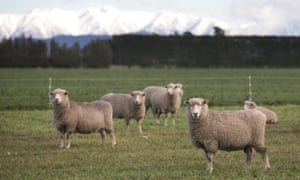
Sheep outside the city of Christchurch.
 The New Zealand livestock industry has begun a ‘global first’ program to breed low methane-emitting sheep. Photograph: Carly Earl/The Guardian

The New Zealand livestock industry has begun a “global first” genetic program that would help to tackle climate change by breeding low methane-emitting sheep.

There are about six sheep for each person in New Zealand, and the livestock industry accounts for about one-third of the country’s total greenhouse gas emissions.

The livestock industry’s peak body, Beef and Lamb New Zealand, already uses a measure called “breeding value” to help breeders select rams with characteristics they want to bolster within their flocks. Within two years breeders will be able to select rams whose traits include lower methane emissions.

“Farmers are more interested than I anticipated,” said a stud breeder, Russell Proffit. His family has been producing rams for more than 40 years.

“I’ve undertaken the [methane] measurements because I believe an animal that is healthy and doing well should produce less methane and I wanted to test that.

“I don’t know if that’s the case yet, but either way breeding for less methane complements what we are working to achieve on our stud. That is, more robust rams that require [fewer] inputs and make less demand on the environment.”

Breeders who want to produce low-methane rams will need to measure a portion of their flock in an accumulation chamber, where their gas emissions are measured. Sheep spend 50 minutes in the chamber, and must be measured twice with an interval of more than 14 days.

The resulting data is used alongside other genetic information to calculate a “methane breeding value”.

The pastoral greenhouse gas research consortium, which is jointly funded by the agricultural sector and the government, said the concept was to take advantage of variations in levels of methane emissions and research that found the differences were passed on to the next generation.

“This is a global first for any species of livestock,” the consortium’s general manager, Mark Aspin, said.

“Launching the methane breeding value gives New Zealand’s sheep sector a practical tool to help lower our agricultural greenhouse gases. This is significant. Up until now, the only option available to farmers wanting to lower their greenhouse gas emissions has been to constantly improve their overall farming efficiency.

“This takes us a step further – towards actually lowering sheep methane emissions, in keeping with the sector’s commitment to work towards reducing its greenhouse emissions.”

Progress via breeding could be about 1% a year, but it would be cumulative and have no negative impact on farm productivity.

Aspin said amounts of feed were the biggest factor that contributed to methane emissions, and the consortium was working on three technologies that aimed to reduce amounts of methane generated by feed.

“So by breeding sheep that produce less methane per mouthful eaten – as other methane-reducing technologies come on stream – the influence of these sheep on the national flock’s methane production becomes compounding.”

Beef and Livestock New Zealand’s chief executive, Sam McIvor, said recent research of 1,000 farmers found that information about reducing greenhouse emissions was among farmers’ top five priorities.

Inside the Outdoors: The wolves of Washington

An ever more interesting conversation, this discussion of wolves and their status, behavior, and management here in our state. There seems almost no action ranchers in now-wolf-country, and the wildlife managers of the Washington Department of Fish and Wildlife (DFW), can propose or take to deal with livestock depredation that doesn’t trigger protest and a court battle. The conflict over DFW policy has been bubbling over the past decade and more.

Over the years since the 2009 Draft Environmental Impact Statement (DEIS), titled “Wolf Conservation and Management Plan for Washington” was released, a number of wolves and entire packs have been killed after persistently preying upon domestic livestock. Nearly all of the lethal removals have been in and around the Colville National Forest in northeast Washington. The removals took place following one or another DFW policy — each of which required that stockmen carry out some extensive level of non-lethal means of separating livestock and wolves over some time period. The latest removal in the Colville area was in August, just before a restraining order was issued in a Seattle courtroom.

As a geographer and lifelong wildlife nut, the management goals for wolves in our state — in the context of other western state wolf recovery goals — seemed to me so unrealistic that conflicts were inevitable. Consider the following bit of western state geography (areas suitable wolf habitat are from the Federal Register (02/08/07, Vol. 72, Num. 26), and the human populations are from the 2007 U.S. Census Bureau.

Thus, in Washington we have a human population of four to thirteen times the other “wolf” states, a population density of five to nineteen times theirs, and “suitable habitat” only eleven to 15 percent of theirs. Yet, in each of the other states, the goal for delisting was 100 wolves (10 breeding pairs), while Washington’s goal was 15 breeding pairs/packs of wolves (about 150 animals) before delisting. The clock has been ticking ever louder over the past decade.

At last 2018 population survey, DFW biologists estimated Washington’s wolf population at a minimum of 126 individuals, 27 packs, and 15 successful breeding pairs.

The number of wolves across the state has reached a point that many are pushing for delisting of wolves from any statethreatened or endangered list, and turning wolf management over to DFW — similar to management in other western states. To that end, DFW officials have begun a broad public outreach effort.

In late summer wildlife officials scheduled a series of 14 open public meetings across the state to begin assessing possible changes to the state’s wolf-management policy. Within a week or two, officials changed those meetings to online discussions, citing a fear of violence rising from a number of unspecified threats of both violence and disruption.

After the Nov. 15 deadline, your next opportunity will come once the agency drafts an Environmental Impact Statement (EIS) in late 2020. That draft will evaluate actions, alternatives, and impacts related to long-term wolf conservation and management.

Want to know about the wolves here in Paradise? This coming Monday evening (Nov. 11) Steve Wetzel (DFW Wildlife Conflict Specialist), with DFW Statewide Wolf Biologist Ben Maletzke will be speaking of the Wolves of Kittitas County. This is the program for the monthly meeting of the 100-year-old Kittitas County Field & Stream Club, at the Hal Holmes Center, 7:00 p.m. You and your friends are welcome for what promises to be a very interesting Veteran’s Day evening.

Jim Huckabay is retired from the Department of Geography at Central

Experts project 72 grizzlies will die due to cattle conflicts

‘Really tough decision’ to authorize grazing where there’s chronic conflict, forest ranger says.

Federal wildlife officials foresee and have approved growing grizzly bear bloodshed on a sprawling complex of Bridger-Teton National Forest cattle grazing allotments recently permitted for the long haul.

The Bridger-Teton’s Pinedale District ranger, Rob Hoelscher, signed off in early October on a decision OK’ing the continuation of a historic grazing operation on 267 square miles of forestland that falls in the Upper Green and Gros Ventre river drainages. That decision instituted a number of minor changes, like giving the Upper Green River Cattlemen’s Association more flexibility in rotating its cows, tweaking utilization standards for vegetation heights and authorizing some new fencing.

A larger shift, however, is outlined in an accompanying document called a biological opinion, which estimates the federal action’s impact on a threatened or endangered species — in this case, the Greater Yellowstone Ecosystem’s grizzly bears. The updated overall estimate of grizzly bears that will be “incidentally taken” as a result of the Upper Green grazing, the April 2019 document says, is 72 bruins between the 2019 and 2028 grazing seasons.

Upper Green grazing

Phil McGinnis looks for cattle in one of the Upper Green River Cattlemen’s Association’s Bridger-Teton grazing allotments in 2016. Federal wildlife officials have authorized the incidental taking of up 72 grizzly bears in the area over the next 10 years.

“We had a number of conversations with the grizzly bear recovery coordinator and also with Wyoming Game and Fish,” said Nathan Darnall, the U.S. Fish and Wildlife Service’s deputy supervisor for Wyoming. “When we start talking numbers this large, we all have to pause for a second and ask if this number is sustainable.

“In looking at the grizzly population and looking at the future expansion of the population … we decided that this number, in concert with everything else, was sustainable,” he said.

The Greater Yellowstone grizzly population is estimated at around 700, though an undetermined number of Ursus arctos horribilis dwell on the fringes of the region outside where the species is carefully monitored.

“This is not going to jeopardize the population of bears in the Yellowstone Ecosystem,” Darnall said. “We’re not going to see numbers dipping below recovery levels, and we would still expect the population to increase.”

Darnall and his colleagues at Fish and Wildlife, who oversee grizzlies because they’re currently classified as “threatened” under the Endangered Species Act, produced the biological opinion.

The document points out that not all bears in the Upper Green cause trouble and that the Wyoming Game and Fish Department has documented bears with territories in the allotments that haven’t killed cattle.

“Nonetheless, bear conflicts with livestock increased an average of 10 percent each year,” the opinion says. “We believe this trend is likely to continue within the action area. Within the last nine years 37 grizzly bears were lethally removed from the action area due to conflicts with livestock.”

The all-time high mark for lethal action taken in response to dead cows came in 2018, when Wyoming had jurisdiction over the species during the grazing season, didn’t need Fish and Wildlife authorization, and opted to kill eight depredating grizzlies.

The 72 grizzlies authorized for removal over the coming decade is a large increase from the most recent estimate, in 2014. That year the “take” was set at a maximum of 11 bears over any rolling three-year period.

Grizzly bear removals
Capture locations of grizzly bears removed due to livestock conflicts within the Upper Green Allotment Complex.

The 69-page document puts numbers to the rising rate of ursine-bovine conflict that led to the higher estimate. Although ranchers reported a relative lull this summer in the slaughter of both cattle and bears, since the turn of the century conflict has soared in the Upper Green as grizzly range has expanded and filled in that portion of the Bridger-Teton.

Between 2010 and 2018, Game and Fish and federal wildlife managers confirmed 527 conflicts, almost exclusively cattle that were killed or maimed. The majority, the document says, occurred in the last five years, and they took place “throughout the action area.”

The 1,112-square-mile “action area” assessed in the document is much larger than the actual allotments, taking into account grizzlies estimated to inhabit areas up to 7.5 miles away from the allotments. The more than 9,000 cow/calf pairs and few dozen horses permitted to graze the expansive rangeland have proven a big attractant, according to grizzly bear GPS collar data cited in the opinion. One bear captured after killing cattle on the allotments, grizzly No. 499, denned clear across the mighty Wind River Range, 24 miles away on the Wind River Reservation. Another Upper Green grizzly captured for research, bear No. 754, denned 29 miles away near the east boundary of Grand Teton National Park.

This iteration of Fish and Wildlife’s biological opinion for the Upper Green did not estimate the grizzly population in the “action area” surrounding the allotments. In 2013 the agency put the number at somewhere between 51 and 60 grizzlies.

Fourth-generation Upper Green stockman Albert Sommers, who helps run the Cattlemen’s Association, has tried and failed to change his grazing protocols in a way that reduces grizzly conflict. The operation pencils out, he’s told the News&Guide, only because of Wyoming compensation programs. In 2016 and 2017 Sommers worked with the conflict-reduction group People and Carnivores to test a herding technique that bunched up his bovines at night. It had “no effect on depredation,” the Fish and Wildlife’s opinion said, and was discontinued.

“I still go to conferences,” Sommers told the News&Guide this summer, “and listen to ideas.”

Not all parties paying attention to the chronic conflict in the Upper Green are satisfied with a gruesome status quo that’s forecasted to worsen. Center for Biological Diversity employee Andrea Santarsiere, of Victor, Idaho, said that the Bridger-Teton grazing complex is “good habitat” that’s turned into a “population sink” bound to continually attract more bears, resulting in more conflict.

“It’s just a cyclical problem that they’re not going to be able to resolve without taking some conservation measures on the ground,” Santarsiere said.

Grizzly conflict map
The map compares grizzly bear/cattle conflicts in the Upper Green Allotment Complex between 2010-14 and between 2015-2018.

Mandatory conservation measures in the Bridger-Teton’s decision, she said, are “lacking terribly.”

“Pretty much everything that we asked for was ignored or significantly watered down,” she said.

During the “objection process” with the forest in early 2018, Santarsiere tried to make it mandatory for range riders to carry bear spray, but the language was turned into a recommendation. It was a similar story, she said, with carcass removal requirements that the conservation community sought.

“They have to move carcasses under the new decision if they are too close to roads where the public might be, which protects the public,” Santarsiere said. “But that’s not doing a lot to protect grizzly bears, because all they have to do is move them a little ways from the road.”

Hoelscher, the Bridger-Teton district ranger, said authorizing the mostly business-as-usual Upper Green grazing plans was a “really difficult decision.” He acknowledged that the regulations relating to grizzly conflict are largely unchanged.

“The permittees as well as the state have done a lot of trying to figure out what works, and what doesn’t,” Hoelscher said, “and they’re pretty much already doing about all they can do.”

“I feel it’s very important to maintain the lifestyles and the industry here locally for the permittees,” he said. “We’ll wait and see what comes out of this all.”

Santarsiere, who is an environmental attorney, said she’s considering her options.

Rogue Pack wolves strike again


Wolf OR-7 is pictured in southwest Oregon. AP Photo / USFWS

The Oregon Department of Fish and Wildlife has confirmed new kills by a group of Southern Oregon wolves called the Rogue Pack.

A 300-pound calf was found dead by a ranch hand last Friday, and a second 300-pound calf was found dead Saturday in the Rancheria area of Jackson County near the border with Klamath County, according to a press release issued by ODFW.

The Rogue Pack, which includes the famous wandering wolf OR-7, is suspected of killing more than a dozen livestock animals in western Jackson and eastern Klamath counties, according to ODFW.

The calf found dead at about 9 a.m. Friday was in a grass pasture on private land. Most of the muscle tissue from the hind legs as well as most organs had been consumed. The 5-month-old calf was estimated to have died within 12 hours of being discovered dead, ODFW said.

The calf had bite wounds on its legs, abdomen, shoulders and back. Bite marks, bleeding and muscle tissue trauma were similar to injuries observed on other calves attacked by wolves, the agency said.

“This depredation is attributed to wolves of the Rogue Pack,” ODFW said in a summary of its investigation.

The second calf was about 7 months old and was also in a pasture on private land. A ranch hand found its body at about 7 a.m. Saturday, and ODFW believes it also died within 12 hours of being found.

Unlike the first calf, the second calf’s carcass was largely intact, with about 95 percent of the muscle tissue and hide still remaining, ODFW said.

ODFW’s report attributed the second killing to the Rogue Pack, as well.

Ranchers in the Rogue Pack’s range have used a variety of tactics to try and fend off the wolves, including guard dogs, electric fences, lights, bright flags, noisemakers and a flailing, inflatable dancer like those sometimes used to attract people’s attention at car dealerships.

The devices have scared off wolves at first, until they become used to them.

Fixing Livestock Emissions Metrics

Are we looking at the livestock industry's GHG emissions holistically—and can a new framework help turn livestock into a solution for climate change?