Exposing the Big Game

Forget Hunters' Feeble Rationalizations and Trust Your Gut Feelings: Making Sport of Killing Is Not Healthy Human Behavior

Exposing the Big Game

Lawsuit claims WDFW is not following proper protocols

Photo courtesy Western Wildlife Conservation
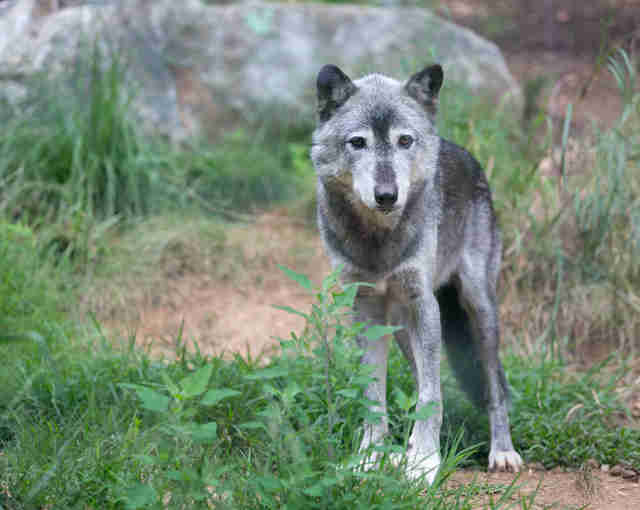
A Smackout Pack gray wolf, photographed by a wildlife camera.

By Ann McCreary

Two conservation groups have filed a lawsuit seeking to stop the Washington Department of Fish and Wildlife (WDFW) and its director, James Unsworth, from killing any more gray wolves, which are listed as an endangered species by the state.

The suit, filed Sept. 25 on behalf of the Center for Biological Diversity and Cascadia Wildlands, asserts that WDFW’s killing of wolves from the Smackout and Sherman packs in northeastern Washington relied upon a faulty protocol and failed to undergo required environmental analysis. The suit was filed in the Superior Court of Washington for Thurston County.

“We can’t sit by and watch Washington wildlife officials kill more wolves from the state’s small and recovering wolf population,” said Amaroq Weiss, West Coast wolf advocate for the Center for Biological Diversity. “Washingtonians overwhelmingly want wolves recovered, not killed. The Department of Fish and Wildlife needs to listen to public opinion and consider the dire environmental costs of killing more wolves.”

In June of this year, Fish and Wildlife officials adopted a revised “wolf-livestock interaction protocol” for determining when to kill wolves in response to livestock conflicts. The protocol provided for the state to kill wolves more quickly than in prior years. The lawsuit states that the protocol was adopted without any public input or environmental review, in violation of the state’s Environmental Policy and Administrative Procedure Acts.

“Reasonable minds can differ on when we should and should not be killing wolves, and whether the killing of the wolves in these two packs was justified,” said Nick Cady, legal director for Cascadia Wildlands. “But there is no question that we should be fully analyzing the efficacy of these actions, welcoming public and scientific input, and be able to hold the state accountable. This is a state agency spending taxpayer dollars.”

The department has since relied on the protocol to order killing of wolves from two packs, with two wolves from the Smackout pack and one wolf from the Sherman pack killed to date. At the time of the Sherman pack kill order, only two wolves could be confirmed as comprising the pack, one of which the department has now killed. The department has temporarily paused killing wolves from both packs, but will resume if there are more livestock losses.

“Overall, since 2012, the state has killed 18 state-endangered wolves, nearly 16 percent of the state’s current confirmed population of 115 wolves. Fifteen of the wolves killed since 2012 were killed on behalf of the same livestock owner,” said Weiss. “Those kills have now led to the near eradication of three entire wolf packs, including the Profanity Peak pack last year, and the Wedge pack in 2012. The rancher in question has been a vocal opponent of wolf recovery and has historically refused to implement meaningful nonlethal measures designed to protect his livestock from wolves,” Weiss said.

Washington’s wolves were driven to extinction in the early 1900s by a government-sponsored eradication program on behalf of the livestock industry. The animals began to return from neighboring Idaho and British Columbia in the early 2000s, and their population has grown to 20 confirmed packs as of the end of 2016.

Wolf recovery in Washington is still a work in progress, Weiss said. “Wolves remain absent from large areas of the state and although the population has been growing, it remains small and vulnerable. Given the continued endangered status of wolves, the state and livestock operators should stick to nonlethal methods as the sole means for reducing loss of livestock to wolves,” she said.

“We appreciate that many livestock owners already are using nonlethal methods,” said Weiss, “since the science shows such methods are more effective anyway.”

Plaintiffs are represented in the case by attorneys from the law firm Lane Powell.

Increased Methane Levels?: Cows Are to Blame, Says New Study

Increased Methane Levels?: Cows Are to Blame, Says New Study

Who is to blame for increased methane levels in the earth’s atmosphere: humans, or cows? For years, the question was posed tongue in cheek by skeptics of human-caused global warming. Methane is a hydrocarbon, which, at room temperature and normal pressure, appears as a colorless, odorless gas. It is also the main component of natural gas. In recent years, atmospheric methane levels have become a concern for environmentalists, who note that global methane levels have increased from roughly 1750 parts per billion in the early 2000s to 1830 parts per billion today. A new study claims to have found the source of the missing methane emissions: cows.

“Our results suggest that livestock methane emissions, while not the dominant overall source of global methane emissions, may be a major contributor to the observed annual emissions increases over the 2000s to 2010s,” conclude researchers in a new study published by Carbon Balance and Management, an academic journal.

The new study reevaluates estimates of the methane emissions produced by livestock in the U.S., finding that previous studies had underestimated these emissions by as much as 11 percent. Even more curiously, the researchers found that the largest increases in livestock methane emissions were in the northern tropics. The results of the study have the potential to impact how environmentalists and policy-makers treat agriculture when dealing with the problem of greenhouse gases.

The study used data from the U.S. EPA when considering the impacts of livestock raised around the world. As a result, it is one of the most comprehensive studies of the impact of livestock on global warming done to date.

The study showed that livestock played a large role in the increased methane levels observed recently. Cattle and other ruminants that break down food in the first of four stomachs, naturally produce methane as a product of digestion. While this has long been understood as a fact of biology, its impact on the environment has not been so fully studied. Increased consumption of meat in China and other parts of the world has increased the impact of methane emissions from livestock.

Using data from 2006 Intergovernmental Panel on Climate Change report, the researchers found that the report failed to account for changes in livestock breeding and management. In recent years, cattle have been bred to be larger and also, manure has been stored in open pits, which release methane into the air as they decay. Accounting for these two changes, global estimated emissions from livestock digestion went up 8.4 percent, while estimates for manure management went up 36.7 percent.

Methane has been a focus for environmentalists in recent years, after studies showed that atmospheric levels were increasing. Methane is released both by cows themselves and also by fermenting piles of manure, which release the gas as part of their natural decay process. Although the gas is naturally occurring, environmentalists are concerned about methane levels, believing the gas to be 25 times more potent as a warmer than carbon dioxide.

The study has the potential to significantly alter major industries in the U.S. For oil companies, methane is serious business. The gas is often found alongside deposits of oil. In many areas, these pockets of natural gas had been deemed not economically feasible to extract. As a result, for years, many companies had vented, or released, this methane into the atmosphere at drill sites. Since it remained unregulated, and therefore, unmeasured, the full impact of this practice was never realized.

The Obama administration attempted to clamp down on the practice through a rule that would curb the “wasteful release of natural gas” from wells operating on public and Native American lands. The oil industry complained about the decision, saying that it would increase production prices. After the inauguration, the Trump administration has since tried to repeal this rule but encountered resistance from Congress.

Washington continues to kill wolves that prey on livestock

 http://www.hcn.org/articles/wolves-washington-continues-to-kill-wolves-that-prey-on-livestock

The state’s increasing wolf population is creating a tangle between advocates, ranchers and politicians.


In late August, a range rider found a calf with bite wounds and lacerations dead on public grazing lands in Ferry County, Washington. The Sherman wolf pack was at it again. The newly-formed pack had already taken three other livestock animals over the last 10 months, forcing the Washington Department of Fish and Wildlife to authorize lethal action against it. Under the state’s wolf plan, on Sept. 1, Fish and Wildlife officials killed one of the wolves, in hopes the remaining wolves would change their behavior.

Earlier this summer, the agency killed two wolves from another pack, the Smackout, also due to livestock killings. Seven other wolves were removed from the Profanity Peak pack last fall. In a state where wolf recolonization is a relatively new phenomenon, the killings raised the hackles of wolf advocates — and questions about how the state will manage its new population.

“We’re earlier in recovery, and we’re the outlet for the frustration for activists that didn’t get what they wanted from Rocky Mountain states,” says Paula Sweeden, carnivore policy lead at Conservation Northwest, a group that works with ranchers, agency officials and other conservationists to compromise on wolf policy. “I think it’s because we’re a last bastion.” Both the Profanity Peak and Smackout pack killings brought widespread commentary from organizations and individuals skeptical that killing wolves stops depredations.

The Snake River wolf pack lopes through the snow in Hells Canyon National Recreation Area. While this pack has not been targeted, two other Oregon wolf packs have been targeted after repeated killings of cattle this year.
Oregon Department of Fish and Wildlife

The Sherman pack in Washington represents only the fifth time since 2008, when the state’s first wolf pack formed, that the agency has targeted a pack of wolves due to attacks on livestock. (By comparison, Wyoming killed 113 wolves in 2016, with much less outcry.) Washington’s wolf population has increased by 30 percent annually the past two years. That has heightened tensions between wolf advocates, ranchers and politicians.

Gray wolves are protected as endangered in western parts of Oregon and Washington, but they are delisted in the eastern regions where their populations have proliferated. In Washington, wolves are concentrated in the northeast corner of the state. Seventeen out of 20 of the state’s packs roam one district, No. 7. The district has a large population of ranchers, some of whom have received death threats for reporting livestock deaths and thereby instigating wolf killings. State Fish and Wildlife officials have also been threatened. “It’s a tough thing because our country is so divided right now, and more and more we have these kind of issues going on,” says Donny Martorello, a spokesman for the Washington Fish and Wildlife. “Imagine going home at night and having someone pull up to the house and taking pictures of your house at 2 a.m.”

Joe Kretz, a Republican who represents District 7, has been outspoken about the impacts wolves have on ranchers. In January, he co-sponsored a bill to protect the identities of ranchers reporting livestock deaths. Critics say the bill threatens transparency in the wolf-killing process and some argue that Fish and Wildlife already obfuscates too often.

In August, 14 conservation groups sent a letter to Fish and Wildlife, relaying their concerns. “We’re aware of the challenges the Department encounters with communications around controversial issues and appreciate the need for sensitivity,” the letter reads. “But it’s also clear that the Department can and should do much better.”

Wolves are more likely to kill or attack livestock in late summer and early fall, as they prepare for winter and teach their pups to hunt. This year, four wolf packs in Oregon and Washington have been targeted after repeated killings of cattle. It is clear that as wolves become more established, perennial conflicts will arise.

Still, Washington has no plans yet to revise its wolf management plan. Sweeden says some stakeholders think the plan does not need updating, since it has wolf population recovery goals “more robust than any other state, including Oregon.” To revisit the plan could weaken those goals. Instead, she thinks conflicts will level out as the packs disperse through the state, and as more ranchers and property owners take up deterrence methods.

Washington’s wolves are likely to continue to thrive, no matter what, Martorello says. After all, they’re doing that without much help already. Instead, the real question has more to do with the humans, and how they’ll adapt to a carnivore reclaiming the landscape.

Anna V. Smith is an assistant editor at High Country News. Follow @annavtoriasmith

OREGON REMOVES TWO MORE WOLVES FROM HARL BUTTE PACK

Last week, Oregon removed two more Harl Butte wolves from the pack after weeks of persistent livestock depredation. The Oregon Department of Fish and Wildlife (ODFW) have been carefully monitoring the pack via a single radio-collared wolf in the pack; the two selected wolves were non-breeding members, according to ODFW.

“We have discovered in the past few weeks working out in the field with this pack, that it’s actually larger than originally expected,” ODFW spokeswoman Michelle Dennehy told KBND. “We thought there were seven wolves plus three pups and we’ve since learned that there were ten wolves with three pups, so now there are eight wolves, and after this there will be six. So, we hope that has the impact that we’re looking for.”

Continued below

goHUNT Gear Shop

While ODFW has worked to keep livestock safe from the Harl Butte pack via non-lethal measures like electric fences, range riders, ranchers spending more time with livestock and wolf hazing, because this pack is so large, livestock continues to be in danger. The decision to remove problem wolves from the pack follows Oregon’s wolf management plan.

“We have a wolf plan that guides wolf management in Oregon,” says Dennehy. “Unfortunately, sometimes, wolves will kill livestock, and the Harl Butte wolf pack, which is in Wallowa county, killed livestock and that’s why we are going to kill an additional two members from this pack.”

State Just Decided To Kill Endangered Wolves — While They’re Still Raising Their Babies

https://www.thedodo.com/in-the-wild/washington-kill-smackout-pack-wolves

“They will essentially be destroying this pack.”

JULY 21, 2017

Gray wolf

WA state to kill more wolves to protect livestock–for the fourth time!

http://www.seattletimes.com/seattle-news/environment/washington-state-to-kill-more-wolves-to-protect-livestock/

The Washington State Department of Fish and Wildlife intends to kill wolves in the Smackout Pack in Stevens County beginning this week to protect two ranchers’ cattle grazing on public land.

The department’s intention is to kill members of the pack that has repeatedly preyed on livestock in Stevens County since 2015, said Jim Unsworth, the department’s director, in a news release.

The goal at this time is not to take out the entire pack. The department intends to assess results of incrementally killing the wolves before taking further action.

The decision to start killing pack members is consistent with policy set by the state’s wolf-management plan set in 2011, and in particular, policy that allows killing wolves that prey on livestock three times in a 30-day period or four times in a 10-month period.

That policy was developed last year by the Department of Fish and Wildlife (WDFW) and its 18-member Wolf Advisory Group, formed to represent the concerns of environmentalists, hunters, and livestock ranchers.

The state’s pack-removal policy has split environmental groups, with some supporting the policy and others dead set against it

 “While heart-rending it is our hope that this action … will cease further livestock depredations and prevent the need for additional lethal actions, protecting the integrity and future of this pack,” the nonprofit Conservation Northwest stated in a news release. “We see this as a test of the theory that early lethal intervention can disrupt depredating behavior.”

Others were outraged.

“The environmental community has been incredibly meek when it comes to this,” said Brooks Fahy of Predator Defense, a nonprofit wildlife conservation group. “This is outrageous. This is a cost of doing business: If you have cattle on public land, you suffer the losses.”

Ranchers in Stevens County have borne the brunt of wolf recovery in Washington. Many ranching families there — with deep ties to the land, their animals and the ranching tradition — operate on slim financial margins, and have had to make unwelcome adjustments in their practices to continue ranching in what has once again become wolf country. Some ranchers have trouble even keeping their animals up in the forest because of wolf harassment, and those are lands their operations depend on.
“We know they’re out there,” said Rhonda DalBalcon, who runs a ranch with her husband Kevin DalBalcon. “You can’t sleep at night when you know there’s wolves,” he said. (Steve Ringman and Corinne Chin / The Seattle Times)

Critics, including Fahy, argue that the rugged, remote wild lands of the Colville National Forest in northeastern Washington are perfect habitat for wolves, but not suited to livestock. “It’s high time we address this. It’s going to keep happening over and over. Get the cattle off the lands,” Fahy said. “Otherwise we are just going to be killing more and more wolves. We have to start the discussion.”

Delivered bright and early weekday mornings, this email provides a quick overview of top stories and need-to-know news.

Ranching has been a permitted use on national forest lands, including the Colville National Forest, for more than a century. The state’s wolf policy calls for coexistence of wolves and people, including livestock producers, on the landscape.

The Smackout pack is one of 20 wolf packs documented in Washington state by WDFW in 2016. At that time, the pack was estimated to consist of eight wolves, but it has since produced an unknown number of pups.

With four confirmed attacks on cattle since last September, the pack’s number is up, notes Don Dashiell, a member of the state’s Wolf Advisory Group and a Stevens County commissioner. “Let ’er go,” he said of the state’s removal effort. He said the state should take out half the pack now, and if that doesn’t work, keep going.

The pack’s latest depredation on livestock was discovered Tuesday, when an employee of the livestock owner found an injured calf with bite marks consistent with a wolf attack in a leased federal grazing area.

During the previous month, the rancher reported to WDFW that his employee had caught two wolves in the act of attacking livestock and the employee killed one of them.

The killing of the wolf — a state protected species — is allowed under state law that empowers livestock owners and their employees to protect their livestock by killing up to one wolf in areas where wolves are no longer listed under the federal Endangered Species Act.

The Smackout pack lives in the northeastern corner of the state, where wolves are not federally protected.

Wolves began their return to Washington in 2008 after being hunted, trapped and poisoned to local extinction. They are a state-protected species all over Washington — with exceptions to protect livestock — and are federally protected only in Western Washington. The state’s wolf population overall is growing at a rate of about 30 percent each year.

Martorello said both ranchers made efforts to protect their livestock using nonlethal deterrence. “Our goal is to change the pack’s behavior before the situation gets worse.”

Wolf recovery remains a very low risk to cattle ranching. Most packs in Washington do not kill livestock, even when sharing the landscape with cows and sheep, and very few cattle are documented as killed by wolves.

Most cattle are lost to accidents and illness and other causes not related to wildlife.

This is the fourth time the state has taken aim at wolves to protect cattle; it has previously targeted the Profanity Peak pack, the Wedge Pack and the Huckleberry pack.

Mitch Friedman, executive director for Conservation Northwest, predicted more heartache as the state’s wolf population grows.

“We want a healthy wolf population and healthy wolf packs, and we don’t see a way that doesn’t involve occasional trauma like this,” Friedman said. “We have less than a handful of serious conflicts — that is a pretty good batting average. That is success even though every incident will be traumatic, for the rancher, and for the people who love wolves.”

Chinese Chicken Is Headed To America, But It’s Really All About The Beef

Listen·3:18

Chicken meat for sale at a market in Anhui province, China.

VCG via Getty Images

Cooked chicken from birds grown and raised in China soon will be headed to America — in a trade deal that’s really about beef.

Commerce Secretary Wilbur Ross announced Thursday night that the U.S. was greenlighting Chinese chicken imports and getting U.S. beef producers access to China’s nearly 1.4 billion consumers. But the deal is raising concerns among critics who point to China’s long history of food-safety scandals.

The Chinese appetite for beef is huge and growing, but American beef producers have been locked out of that market since a case of mad cow disease cropped up in the U.S. in 2003. In response, many countries, including South Korea, Japan, Mexico and China, banned imports of U.S. beef.

China was the only one of those nations to not eventually lift its ban — and that’s a big deal.

“It’s a very big market; it’s at least a $2.5 billion market that’s being opened up for U.S. beef,” Ross said in announcing the trade deal.

Many people long had seen China’s refusal to lift its ban on U.S. beef imports as a negotiating tactic, a tit for tat aimed at allowing Chinese chicken imports into the United States. The negotiations that led to the new trade deal have been going back and forth for more than a decade, stalled at one point by worries in Congress over China’s food-safety practices.

American beef producers are rejoicing that the process has finally resulted in allowing them to send beef to China.

“After being locked out of the world’s largest market for 13 years, we strongly welcome the announcement that an agreement has been made to restore U.S. beef exports to China,” Craig Uden, president of the National Cattlemen’s Beef Association, said in a statement. “It’s impossible to overstate how beneficial this will be for America’s cattle producers, and the Trump administration deserves a lot of credit for getting this achieved.”

The U.S. should be cleared to export beef to China by mid-July. That’s also the deadline for the U.S. to finalize rules for the importation of cooked chicken products from China. Why cooked chicken instead of raw?

“For a country to be able to ship meat and poultry products into the U.S., they have to demonstrate that their food-safety inspection system is equivalent to the system here in the U.S.,” explains Brian Ronholm, who served as deputy undersecretary for food safety at the U.S. Department of Agriculture under the Obama administration.

“The equivalency determination process for China as it relates to processed [cooked] chicken products had been underway, and this deal expedites this process,” he says. “China also is seeking equivalency for their inspection system for slaughter facilities, but that will be a longer process.”

Given the many outbreaks of avian flu China has experienced, there are also worries that if raw Chinese poultry were processed in the U.S., it could potentially contaminate American plants or somehow spread to birds here in the States.

Tony Corbo, a senior lobbyist for the food campaign at Food & Water Watch, an environmental advocacy group, has been raising concerns about efforts to open the U.S. market to Chinese chicken imports for years. He questions the Chinese government’s ability to enforce food-safety standards, given its poor track record.

That record includes rat meat being sold as lamb, oil recovered from drainage ditches in gutters being sold as cooking oil, and baby formula contaminated with melamine that sickened hundreds of thousands of babies and killed six. In 2014, a Shanghai food-processing factory that supplied international restaurant brands including McDonald’s and KFC was caught selling stale meat, repackaged with new expiration dates.

Corbo points out that last December, China’s own Food and Drug Administration reported it had uncovered as many as a half-million cases of food-safety violations just in the first three quarters of 2016.

That said, the USDA has gone to China to inspect plants that would process the chicken to be shipped to America. But Corbo finds little comfort in that. “You don’t know from moment to moment how China is enforcing food-safety standards,” Corbo says.

In recent months, a team from the USDA’s Food Safety and Inspection Service has traveled to China to train Chinese officials in meat safety.

One thing Thursday’s trade deal did not address: U.S. poultry exports to China. The U.S. used to send a lot of chicken feet over to China, where they are a delicacy. But China banned U.S. chicken imports in 2015, after an outbreak of avian flu in the Midwest.

China “was a $750 million market just a few years ago, and now it’s essentially zero. It was one of our most important markets,” says Jim Sumner, president of the USA Poultry and Egg Export Council.

But Sumner isn’t worried about the new competition from Chinese chicken in the U.S. In fact, he welcomes it as an important step in reopening the Chinese market to U.S. poultry producers.

“Trade is a two-way street,” he says.

It’s not clear how soon after mid-July we can expect to see cooked chicken products from China in U.S. supermarkets. Sumner says he doesn’t expect the product to overwhelm store shelves, because the economics of raising chickens in China and then shipping them to America still favors U.S. producers.

Maria Godoy is a senior editor with NPR News and host of The Salt. She’s on Twitter: @mgodoyh

Slaughter Of Yellowstone Bison At The Center Of Culture War

In the same year that Congress voted to make bison the national mammal, Yellowstone National Park had its second largest cull ever — reducing the heard by more than 1,200 animals.

RAY SUAREZ, HOST:

Americans have always liked the idea of bison, but living with them is another matter. In the same year Congress made bison the national mammal, more than 1,200 were culled from the Yellowstone National Park herd. Amy Martin reports on why the U.S. is killing so many of the animals it also idealizes.

AMY MARTIN, BYLINE: Thirty miles north of Yellowstone is a place called Paradise Valley. Picture snowy peaks, a winding river, big sweeping meadows…

(SOUNDBITE OF COWS MOOING)

MARTIN: …And cows. Drusca Kinkie runs a cattle ranch here.

DRUSCA KINKIE: I think the concept of free-roaming bison will harm agriculture immensely.

MARTIN: The annual bison cull in Yellowstone attracts controversy every year, and this winter was the second biggest ever. But Kinkie supports the reduction of the herd.

KINKIE: There’s a disease issue with bison. They’ve been exposed to brucellosis.

MARTIN: Brucellosis is a bacterial disease, which elk and bison in the Yellowstone area originally caught from livestock. Kinkie says the threat of transmission back to cattle looms large. And it’s that fear that drove the state of Montana to sue Yellowstone in 1995, forcing the park to ship more animals to slaughter. But there’s more going on here than just disease. Bison are caught in the culture wars. Kinkie says she feels misunderstood.

KINKIE: You have all these people out there fighting for free-roaming bison. And it’s a concept. It’s a vision that they have. And we’re fighting for our ability to survive here and make a living as we have for the last 60, almost 70 years. And they don’t have anything to lose in their vision. And we have everything to lose in ours.

ROBBIE MAGNAN: Buffalo has taken care of Native Americans since the beginning of time.

MARTIN: Robbie Magnan says there is a lot to lose on the other side. He’s the director of the Fish and Wildlife Department for the Fort Peck Tribes in northeastern Montana. For him, the culture wars started much further back when Europeans first arrived in North America and more than 50 million wild bison roamed the continent.

MAGNAN: The federal government massacred them because they figured out that was the only way to bring the Indians down to their knees – it was destroy their economy. And that’s why they were almost wiped out.

MARTIN: Now, only about 30,000 bison are protected in North America and, of those, less than half are living in anything close to wild conditions. As Magnan drives up into the hills of the reservation, he says wild bison are an important part of the country’s heritage. That’s why he helped to develop an alternative to slaughter.

MAGNAN: Instead of massacring these animals when they migrate out of the park in the wintertime when they’re hungry, OK, let’s get them out alive and start other cultural herds going.

MARTIN: To do that, the Fort Peck Tribes built a 320-acre brucellosis-quarantined pasture surrounded by extra high fences. Here, the Yellowstone bison can be held and tested and many eventually declared brucellosis free. Last year, the National Park Service said it supported using the facility, but then Magnan says…

MAGNAN: After they found out it works, they quit it. And why quit something when you know it works?

MARTIN: The person responsible for answering that question is Sue Masica, who oversees this region of the park service. But she declined requests for an interview.

Those guys are moving.

UNIDENTIFIED MAN: How many did you count? Yeah, they’re going.

RICK WALLEN: I’m guessing there’s 200-plus.

MARTIN: Rick Wallen is the team leader for the park’s bison management program. He’s watching a large bison herd move quickly down the valley of the Yellowstone River. It’s a cold day and their dark shapes stand out against the snow. Despite the beauty, the mood is intense. For most of the year, Wallen studies these animals. But every winter, he manages their slaughter.

WALLEN: There is a cost, and that cost is more emotional for some than others. I’ve even had people on days that we were supposed to go there and do the work call and say, you know, I can’t do this anymore. I have to resign my position. I’m sorry.

MARTIN: Wallen thinks a better solution would be quarantine. That would allow him to do what he says is his job.

WALLEN: Protect the wild in wild bison. Otherwise, they go extinct.

MARTIN: That extinction comes in the form of domestication. Bison are increasingly raised as livestock and bred with cattle to make them more docile. Wallen says Yellowstone is a bulwark against this trend, a place where bison still have to use their instincts to survive in the wild. For NPR News, I’m Amy Martin in Yellowstone National Park.

Copyright © 2017 NPR. All rights reserved. Visit our website terms of use and permissions pages at www.npr.org for further information.

NPR transcripts are created on a rush deadline by Verb8tm, Inc., an NPR contractor, and produced using a proprietary transcription process developed with NPR. This text may not be in its final form and may be updated or revised in the future. Accuracy and availability may vary. The authoritative record of NPR’s programming is the audio record.

‘Stop the Yellowstone Massacre’: Group puts up billboards urging end to bison slaughter

The billboard is one of two that the Alliance for the Wild Rockies bought, the other being in Helena. Steve Kelly, a board member for Alliance for the Wild Rockies and the artist who painted the picture, said they hope people will see the signs and pressure Montana Gov. Steve Bullock into blocking the annual shipping of Yellowstone bison to slaughter for the year.

“It’s a horrendous thing,” Kelly said. “He’s the one who has the power to stop it.”

The signs went up this week, arriving after hundreds of bison have already been sent to slaughterhouses and while another few hundred wait their turn. Alliance for the Wild Rockies is one of several environmental groups that oppose shipping bison to slaughter, a practice government officials consider necessary to meet population reduction goals each year.

“The National Park Service needs to address bison overpopulation in Yellowstone National Park,” said Bullock spokeswoman Ronja Abel in an emailed statement.

The culling of Yellowstone’s bison herd happens because of a 17-year-old management plan rooted in fears of the disease brucellosis. Brucellosis can cause animals to abort their calves, and the livestock industry worries that if bison are allowed to roam farther outside of the park that the disease might be spread to cattle herds, though no case of bison transmitting the disease to cattle has been documented in the wild.

Reducing the population is one way they try to curtail the risk of brucellosis transmission. The management plan calls for a population of about 3,000 bison in Yellowstone. About 5,500 bison live there now, and officials want to kill about 1,300 from the herd through public hunting and ship to slaughter this year.

State wildlife officials believe hunters from five tribal nations and those licensed through the state have taken roughly 400 so far. The most recent update from Yellowstone National Park said that 179 bison had been sent to slaughter.

There is precedent for a governor blocking the shipment of bison to slaughter. In 2011, then-Gov. Brian Schweitzer issued an executive order blocking the shipment of any bison to slaughterhouses in Montana, a move that prevented the slaughter of roughly 500 bison.

Using the same powers, Bullock delayed shipments to slaughter earlier this year over a group of 40 bison originally meant for establishing a quarantine program at the Fort Peck Indian Reservation.

A quarantine program would take in bison from Yellowstone and keep them in isolation until they can be certified brucellosis free — a certification that would allow the animals to be taken elsewhere. Yellowstone National Park proposed setting up the quarantine operation at Fort Peck in 2016, a political stalemate over transporting bison through Montana stalled those plans. The park had decided to send those 40 bison to slaughter.

Bullock’s action resulted in a deal to send some of those bison to U.S. Department of Agriculture corrals near Corwin Springs and for the governor to lift the shipping ban.

Abel said in her statement that the state “recognizes culling efforts are not everyone’s preferred approach, and will continue to work directly with the U.S. Department of Interior and USDA’s Animal and Plant Health Inspection Service to look at future quarantine as an alternative to slaughter.”

Kelly said they want the governor to either revive the previous ban on shipments or write a new executive order. He said there is probably enough support for the action — aside from the state’s powerful agriculture lobby.

“Certainly there’s enough support,” Kelly said. “He’s just favoring the livestock lobby.”

Gas Sensing – Monitoring Agricultural Methane Emissions

Shutterstock | irin-k

The second most prevalent greenhouse gas emitted as a result of human activities is methane (CH4). In 2014, CH4 accounted for 11% of all US greenhouse gas emissions, and the majority of these emissions were the result of agriculture.

Methane is emitted from a wide range of natural sources including marshlands, livestock farming, and leakage from natural gas systems.1 Domestic livestock including sheep, goats, and cattle produce substantial amounts of CH4 due to the normal digestive processes in the ruminant stomach system.

Bacteria are present in gastrointestinal systems of ruminant animals, such as cattle, to help the breakdown of plant material. Some of the microorganisms (methanogens) use the acetate available from the plant material to produce methane.1,2

Whenever the animal defecates or eructates (burps), it simultaneously emits a substantial amount of methane. Rotting animal manure stockpiled for use by farms in fertilizing fields can be another potent source of the gas. From a global perspective, agriculture is the chief source of CH4 emissions, and methods to measure the effect and reduce the overall emissions are constantly being made.3

The Environmental Impact of Methane

Methane is an active part of the carbon cycle but the natural processes in soil and chemical reactions in the atmosphere that help to remove it from the environment are being overtaken by gas production and industrial-scale farming activities.4

In the atmosphere, methane has a lifetime that is much shorter than carbon dioxide (CO2), which is the best known greenhouse gas and lasts for about 12 years. However, CH4 traps radiation more efficiently than CO2.5 Over a hypothetical 100-year period, the impact of CH4 on climate change is over 25 times more than CO2.

Methane produces a dominant greenhouse gas effect, and approximately 44% of anthropogenic livestock emissions (3.1 Gigatonnes CO2 equivalents in a year) are in the form of CH4.

The rest of the emissions are shared between nitrous oxide (N2O, 29%) and carbon dioxide (CO2, 27%). Methane is more devastating to the climate than CO2, although it doesn’t remain in the atmosphere for as long. For effective reduction of the impact of climate change, CO2 and CH4 emissions must be addressed.6

Methane has a 25 times greater impact on climate change than CO2. Shutterstock | JeffreyRasmussen

Monitoring Agriculture Methane Levels

It is well known that dairy and beef herds are important producers of CH4. Protracted experiments involving a cow in a respiration chamber have to be conducted for several days to accurately determine the amount of the CH4 produced. One method being developed is the use of gas sensors in cow sheds and milking parlors to monitor the CH4produced by animals over a set time.

Although the respiration chamber is the benchmark, the gas sensor technique provides accurate and quick estimates of CH4 emissions which, in contrast to a respiratory chamber, do not disrupt agricultural activities.7

The emission measurements are generally made during ‘milking’, which is done 3 – 6 times daily. The data is invaluable for developing methane-reducing diets and identifying low emission cow species.


Cattle are a significant source of agricultural methane emissions. Shutterstock | andaq