Exposing the Big Game

Forget Hunters' Feeble Rationalizations and Trust Your Gut Feelings: Making Sport of Killing Is Not Healthy Human Behavior

Exposing the Big Game

Southern wildlife in jeopardy as giant tegu lizards invade Georgia and Florida

REIDSVILLE, Ga. — An invasive, giant, and dangerous lizard is creeping its way through southeast Georgia and beyond.

The Argentine black and white tegu lizards are originally from South America, and now they are wreaking havoc on wildlife throughout the South.

Daniel Sollengberge, senior wildlife biologist with the Georgia wildlife, said they never knew there was a population established in the wild until recently.
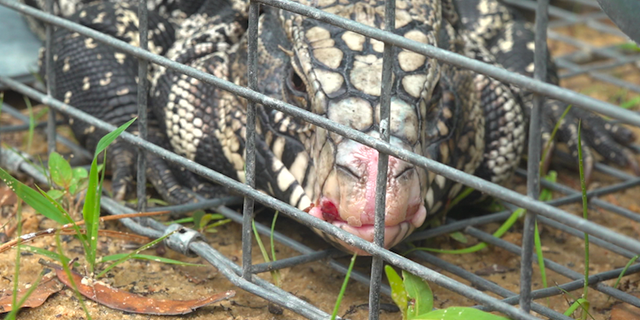
Tegu lizards are known to eat anything that they want, especially the eggs of other reptiles. 

Tegu lizards are known to eat anything that they want, especially the eggs of other reptiles.

“We presume that the animals started as the result of escaped or released pets in the area… there really common in the pet trade,” Sollengberger said.

After over a dozen sightings of the lizards in southeast Georgia, Tegus have become known as an invasive species particularly in Toombs and Tattnall counties.
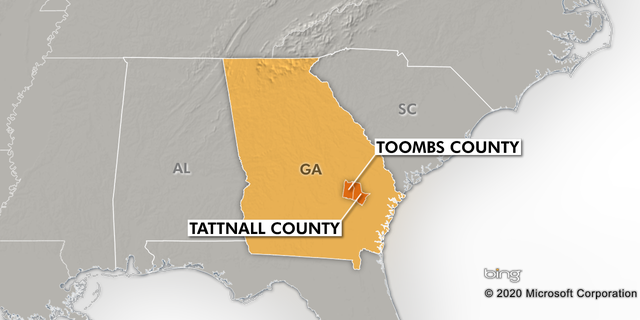
Map showing the two southeastern counties that have been invaded by Tegu lizards. 

Map showing the two southeastern counties that have been invaded by Tegu lizards.

Georgia Southern professor, Dr. Lance Mcbrayer studies the evolution of lizards and leads the U.S Geological Survey team.

“Already in 2020 we’ve caught five animals at this site right here,” Mcbrayer said.

The lizards can grow up to four feet long. As the number of lizards in southeast Georgia continue to increase, the geological survey team is racing to put down traps.

The traps are placed about 100 meters apart and members of the Geological team check them daily.
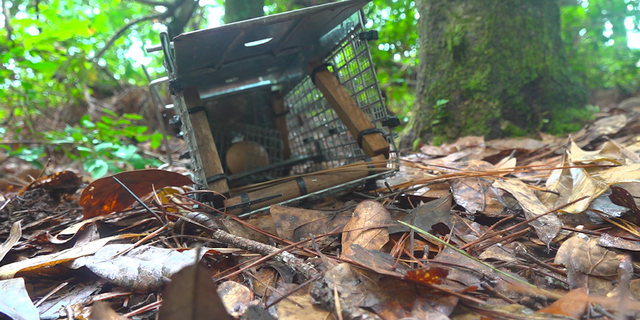
One trap in southeast Georgia that is set up to capture Tegu lizards. 

One trap in southeast Georgia that is set up to capture Tegu lizards.

Daniel Haro is a part of the geological team and works in the field about three to four times a week. “In general, right now, we have 85 and we’re going to get to 90… so, this week I’m hoping to place five more,” Haro said.

According to Georgia wildlife, the lizards don’t attack people unless provoked. However, with their strong jaws and sharp teeth, they will eat anything they can put in their mouth, especially eggs.
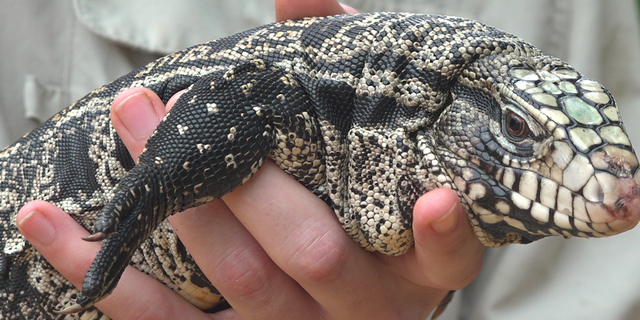
Crews hold Tegu lizards that was captured years ago. 

Crews hold Tegu lizards that was captured years ago.

“Whereby they’re damaging our gopher tortoise populations or bobwhite quail populations or turkey populations…the animal walks around and it hunts up nests on the ground,” Mcbrayer said.

On top of that, tegu lizards can lay up to 40 eggs, and once they hatch, they will be around 6 to 10 inches long.  “That’s our real concern… that there could be a very rapid increase in the number of tegus in just a few years,” Mcbrayer said.

The crew in southeast Georgia has not caught a juvenile tegu yet but, “all the habitat and the size of the animals we’re catching suggest that they’re reproducing – so that’s a problem,” Mcbrayer said.
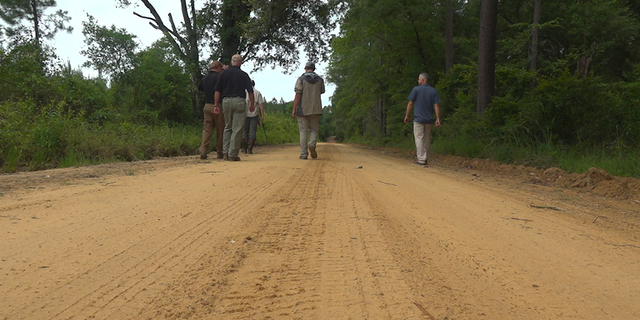
The U.S Geological survey team works to capture Tegu lizards in Reidsville, GA. 

The U.S Geological survey team works to capture Tegu lizards in Reidsville, GA.

Tegu lizards have established themselves as invasive species in Florida, too. “There’s at least three populations in Florida… the north side of the Everglades…one inland in St. Pete from Tampa … and now one in the Panhandle,” Mcbrayer said.
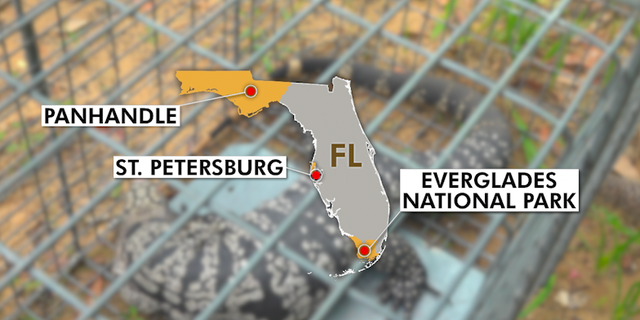
Map shows areas in Florida that have been impacted by Tegu lizards. 

Map shows areas in Florida that have been impacted by Tegu lizards.

The population of lizards in the South could spread rapidly because, unlike most lizards, Tegus move around.

“These animals can walk several miles in a day. They could walk 10 or 12vmiles just in a day or two,” Mcbrayer said.

As the population of lizards continues to grow, Mcbrayer says the lizards will spread if they aren’t stopped.

“These animals can be trapped or hunted humanely in safely,” Mcbrayer said. “We encourage anyone to do that to remove these animals from the wild.”
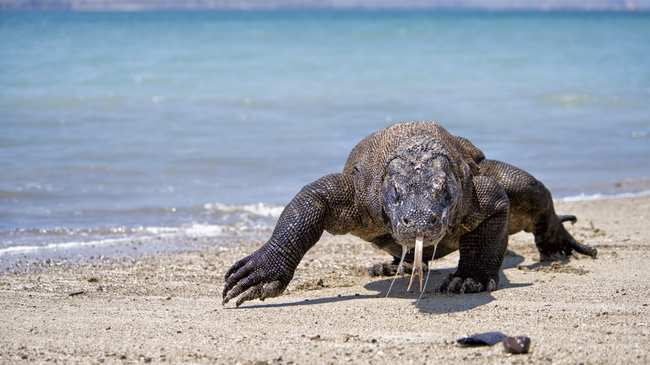
After a human shooting, Florida tempers its advice on hunting invasive iguanas

The Florida Fish and Wildlife Commission (FWC) wishes to inform state residents that they can kill green iguanas, which are not a native species, but they can’t go around shooting the creatures willy-nilly.

In a statement on July 25, the organization clarified confusion about its earlier guidance on hunting the invasive species, stating, “Unfortunately, the message has been conveyed that we are asking the public to just go out there and shoot them up. This is not what we are about; this is not the ‘wild west.’”

In early July, media reports noted that the FWC had declared “open season” on green iguanas. Some people interpreted the guidance as clearance to kill the creatures by any means necessary, although the agency’s website specifically states that they must be hunted humanely and are, like all nonnative, invasive species, protected by state anti-cruelty laws.

Now that a human has been shot in one resident’s quest to get rid of iguanas, the FWC is being more explicit, however. “If you are not capable of safely removing iguanas from your property, please seek assistance from professionals who do this for a living,” said FWC commissioner Rodney Barreto in the most recent statement.

On July 5, an iguana hunter armed with a pellet gun accidentally shot a swimming pool maintenance worker in a residential neighborhood of Boca Raton. E-Lyn Bryan heard a shout and saw blood squirting from a wound sustained by her “pool guy.” She told NBC 6 in south Florida, “We have iguanas everywhere. If neighbors are gonna be like the Wild West and shoot at everything, someone’s gonna get killed.” Bryan said her neighbors were “horrified” by the incident, which drew police and paramedics. “You need to protect your children. The kids fish back here all the time,” she warned.

While the latest FWC statement doesn’t specifically refer to the Boca Raton shooting, it is notable that it used the same “wild west” formulation as Bryan employed with the local press. The accident may not be the only reason for the agency’s course correction, however.

In a blog post on July 10, the Humane Society of the United States accused the agency of failing to provide sufficient guidance on what precisely “humane killing” entails. It predicted that the state’s efforts to curb the invasive species’ population growth would lead to the deaths of native iguanas as well. “Last year we reported that the commission had hired contractors from the University of Florida to trap and kill iguanas either with bolt guns or by smashing their heads against hard objects. Conscripting Florida residents to kill the animals amplifies that archaic approach and reinforces a troubling message—that animals seen as ‘pests’ or as a nuisance should be summarily killed,” the humane society wrote.

Green iguana populations are problematic because they “can cause considerable damage to infrastructure, including seawalls and sidewalks,” according to the FWC. The agency is now urging local homeowners to contact professionals who specialize in getting rid of the creatures rather than acting independently.

The company Iguana Busters, for example, which offers commercial and residential services in South Florida and the Florida Keys, promises that it “incorporates safe and humane techniques while removing the iguanas.” But its website offers no details on these methods.

Komodo Island Is Closing Because People Keep Stealing its Dragons

Tourists will be banned from visiting the Indonesian island as of January 2020.

Image via Shutterstock

This article originally appeared on VICE AU

The Indonesian government has announced it will close the island of Komodo to tourists next year in a bid to prevent people from stealing its dragons. In a meeting with the Ministry of Environment and Forestry last week, East Nusa Tenggara provincial administration spokesman Marius Jelamud declared that “Komodo island will be shut down temporarily in January 2020,” Tempo reports, with the closure expected to stay in place for at least 12 months.

The decision comes just days after East Java Police busted a smuggling ring that took 41 komodo dragons and tried to sell them on the international black market for 500 million rupiah (about AU$50,000) a piece. Senior Commander Akhmad Yusep Gunawan, special crimes unit head of the East Java Police, said five baby komodos had also been rescued from the group of alleged animal traffickers. “The criminals intended to ship the animals to three countries in Southeast Asia through Singapore,” Yusep told reporters last week, according to The Jakarta Post.

Indonesian authorities further arrested five smugglers on Java for allegedly trafficking komodo dragons along with bearcats, cockatoos, and cassowaries. “The suspect sold the komodos online through Facebook,” East Java police spokesman Frans Barung Mangera said in a statement, while police commissioner Rofiq Ripto Himawan told Channel News Asia that they were usually smuggled overseas to Asian buyers. “These animals are sold for traditional medicine,” said Rofiq. “Komodo dragons could be used to make an antibiotic.”

Considered to be the world’s largest lizard, komodo dragons are one of the most endangered species on the planet. The UNESCO World Heritage Komodo National Park, in East Nusa Tenggara, is the only place where the reptiles can be seen in their natural habitat—and while the remainder of the park will stay open to visitors throughout 2020, authorities are closing the gates on Komodo in the hope of launching a conservation program and bolstering the local dragon population. UNESCO figures state that there are currently about 5,700 komodos spread throughout the Park.

ADVERT