Exposing the Big Game

Forget Hunters' Feeble Rationalizations and Trust Your Gut Feelings: Making Sport of Killing Is Not Healthy Human Behavior

Exposing the Big Game

B.C. didn’t do enough to protect rare fishers in the Interior, board says

Fishers said to be at high risk of decline or elimination in Interior

A fisher is shown in this handout image. An investigation by British Columbia’s forest practices watchdog has found the provincial government didn’t take steps to protect a local species at risk when it allowed for extensive logging in the central Interior. (Loney Dickson/Handout/Canadian Press)

An investigation by British Columbia’s forest practices watchdog has found the provincial government didn’t take steps to protect a local species at risk when it allowed for extensive logging in the central Interior.

The Forest Practices Board says the investigation of a complaint by two trappers in the Nazko area has determined that the fisher is at a high risk of decline or elimination in the region.

The forest in the area near Quesnel was devastated by the pine beetle and the government allowed extensive salvage harvesting between 2002 to 2017, but the trappers complained that impacted the fisher and other fur-bearing mammals.

The animal is a member of the weasel family and is about twice the size of a marten.

A fisher kit is seen up a tree in an undated photo. (Holly Kuchera/Shutterstock)

Board chairman Kevin Kriese says it found the government didn’t take steps to ensure the protection of fisher habitat, and while forestry firms did make some efforts, it wasn’t sufficient given the unprecedented scale of salvage.

He says the board is concerned that unplanned salvage of fire-damaged stands could make a grave situation worse and it recommends the government take steps to restore the local fisher population.

Fishers like older forests stands with lots of large trees and the board says even areas of mostly dead timber may still provide habitat for them.

Read more from CBC British Columbia

Mankind has eaten into its year supply of natural resources – in just seven months

https://www.msn.com/en-us/weather/topstories/mankind-has-eaten-into-its-year-supply-of-natural-resources-%e2%80%93-in-just-seven-months/ar-BBvm0WW?ocid=spartandhp

Harry Cockburn 20 hrs ago
Logging machinery sits in a pine plantation in Angol city, south of Chile, June 8, 2016.© REUTERS/Gram Slattery Logging machinery sits in a pine plantation in Angol city, south of Chile, June 8, 2016. Humans have used up a full year’s worth of Earth’s ecological resources in just over seven months, its fastest rate ever, according to an annual environmental report.

“Earth overshoot day”, marks the date at which humanity’s demand on the planet exceeds that which it can regenerate in a year. This year it will fall on Monday 8 August, its earliest date yet.

Earth overshoot day is calculated by the international think tank Global Footprint Network, which measures the world’s demand for resources against ecosystems’ ability to supply them.

The organisation uses United Nations data on thousands of economic sectors, including the energy industry, transport, fisheries and forestry, and calculates the number of days of the year the earth is able to provide resources for humanity’s ecological footprint.

The remainder of the year corresponds to global overshoot.

According to the network, greenhouse gas emissions are the largest and fastest-growing environmental impact, accounting for 60 per cent of humanity’s entire ecological footprint.

“We continue to grow our ecological debt,” Pascal Canfin of WWF, told AFP in response to the annual update.

“From Monday August 8, we will be living on credit because in eight months we would have consumed the natural capital that our planet can renew in a year,” he added.

In 1993, Earth overshoot day fell on October 21. In 2003 it fell on September 22 and last year on August 13.

Back in the 1960s, humans only used about three-quarters of the earth’s annual replaceable resources.

But since the 1970s, economic and population booms combined with modern consumer demands have meant the planet has subsequently been in annual overshoot.

However, the speed at which we are depleting resources has dropped, the network said.

In a statement, Global Footprint Network said: “The rate at which Earth Overshoot Day has moved up on the calendar has slowed to less than one day a year on average over the past five years, compared to an average of three days a year since the overshoot began in the 1970s.”

https://www.msn.com/en-us/weather/topstories/mankind-has-eaten-into-its-year-supply-of-natural-resources-%e2%80%93-in-just-seven-months/ar-BBvm0WW?ocid=spartandhp


C’mon Nature, Show Us a Sign!

Sometimes I find myself wishing that Mother Nature would hurry up and get serious about this global warming thing already.

No, not just because I secretly want to see the human scourge shed off the face of the Earth. (Not today, anyway.)

What I am talking about is the fact that the very things that should be ending to stave off catastrophic climate change—as well as the ongoing sixth mass extinction—are actually increasing.graph

For example, breeding. Okay, that’s a given, but let’s talk specifics.

Here in the Pacific Northwest, logging the rainforest is not coming to a close in acknowledgement of a warming planet needing all the carbon sequestering (not to mention oxygen—oh yeah, and shade) she can get. Indeed, everywhere I look there’s a fresh new clear-cut, while load after load of precious trees are hauled off in carbon-spewing log trucks to massive ships bound for China.

Now, if timber companies were increasing their “harvest” of evergreens to make way for more fast-growing, deciduous trees like alders or maples that would be one thing. But considering that they routinely use Agent Orange defoliant to kill the natural progression of plants on their “tree farms,” I don’t think they have saving the planet on their minds. Quite the opposite.

As long as there are global warming deniers out there, loggers can continue cutting down the forests like there’s no tomorrow. And anyway, who knows, maybe there won’t be one. I’d call it a self-fulfilling prophecy, but they’re certainly not prophets (profit-makers, maybe).

Another obvious example of an industry that should be calling it quits, but is instead expanding its ruinous ways: Big Oil. While climate scientists are warning us that it’s time to just STOP, Shell has plans to start drilling in the fragile Chukchi Sea (crucial feeding grounds for the grey whales, just south of the Arctic Ocean). Meanwhile, the President is allowing offshore drilling in the Atlantic for the first time.

Perhaps, like the logging companies, the oil barons are seeing the writing on the wall that their days are numbered, so they’re out to get it while they can—before the damned enviros slap them with enough restrictions or regulations to put them out of business for good.

So when I say I wish Nature would show us a sign, I don’t mean another massive hurricane or super typhoon, world record drought or raging inferno. Apparently those aren’t enough to shake some people up and out of their denial-induced torpor. I’m not sure what it’ll take. A total reversal of the jet stream? The icecaps melting and Florida sinking overnight? Spontaneous combustion of the White House?

Whatever it’s gonna be I hope it happens soon, before business as usual makes the whole mess worse than it already is.

page20

Industrial logging invasion of the Tongass imminent! ‏

From Audubon.org

One of America’s most precious and endangered habitats is under siege — again.

Contrary to its own policies, the Obama Administration is rushing through a massive old-growth timber sell-off in the Tongass National Forest in Alaska — the largest sale of its kind in decades. This industrial level logging could put many vulnerable bird species at risk.

Audubon has joined with other conservation groups in federal court to stop this malicious sell-off of America’s globally important coastal temperate rainforest.

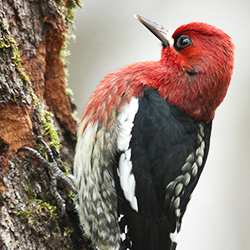
The ancient coastal woodlands of the Tongass are home to many bird species that depend on old-growth forests for their survival. Native species include nearly a third of the world’s Red-breasted Sapsucker population and at least 20% of the global population of pacific-slope flycatchers. Marbled Murrelets — listed under the Endangered Species Act in Washington, Oregon and California — are old-growth-dependent birds that rely on Tongass old growth to support healthy populations.

Perhaps most at-risk from the so-called Big Thorne timber sale is the Queen Charlotte Goshawk, an old-growth dependent raptor. Only 300 to 700 breeding pairs of these birds survive in the wild. The proposed timber sale would degrade goshawk habitat, perhaps past the point of no return.

The Big Thorne timber sale would put 120 million board feet of old-growth trees literally on the chopping block. What’s worse, this is only the first of four massive logging incursions proposed by the US Forest Service.

Four years ago, the Obama Administration said it was bringing to an end the era of massive and destructive logging in the Tongass. This latest sale, sadly, is a giant step in the wrong direction.

APA_2013_28905_229464_RogerBaker_Redbreasted_Sapsucker_K

Interpol launches most-wanted list of environmental fugitives

http://www.theguardian.com/environment/2014/nov/17/interpol-launches-first-appeal-for-environmental-fugitives?CMP=share_btn_fb

International policing agency’s public appeal targets nine dangerous fugitives suspected of crimes involving poaching and illegal logging

Interpol wanted Operation Infra-Terra (top row from left to right): Adriano Giacobone, Sudiman Sunoto, Bhekumusa Mawillis Shiba and Ben Simasiku; (bottom raw from left to right): Nicolaas Antonius Cornelis Maria Duindam, Ariel Bustamante Sanchez, Sergey Darminov and Feisal Mohamed Ali
Interpol wanted Operation Infra-Terra (top row from left to right): Adriano Giacobone, Sudiman Sunoto, Bhekumusa Mawillis Shiba and Ben Simasiku; (bottom raw from left to right): Nicolaas Antonius Cornelis Maria Duindam, Ariel Bustamante Sanchez, Sergey Darminov and Feisal Mohamed Ali Photograph: Photograph: Interpol

Interpol’s public appeal hopes to catch nine fugitives suspected of environmental crimes costing hundreds of millions of dollars, in a move to catapult the issue to the forefront of international law enforcement.

Stefano Carvelli, the head of Interpol’s fugitive investigative support unit, said that the offences were only the tip of the iceberg of an environmental crime wave, which agency reports have estimated to be worth $70bn-$213bn annually.

“If we talk about illegal logging, we have many pending cases,” he said. “We also have many serious biodiversity cases. The problem is very big, I can feel it. These are crimes with many, many different parameters.”

One fugitive, Ahmed Kamran, 29, is charged with smuggling over 100 live animals – including giraffes and impalas – from Tanzania’s Kilimanjaro airport to Qatar on a military airplane.

Sergey Darminov, 50, is thought to have led an illegal crab-fishing operation in Russia that netted $450m. Another, Adriano Giacobone, 57, is wanted on charges that include illegal transport and discharge of toxic waste, poisoning water beds, kidnapping, illegal detention, carrying of firearms, aggravated theft and violence against a police officer.

A joint Interpol-UNEP report earlier this year linked the revenues from environmental crime to extremist militias such as the Lords Resistance Army in Uganda, the Janjaweed in Sudan and al-Shabaab in Somalia.

While sources say there are indications connecting some of the fugitives under investigation to terrorist groups, Interpol will officially neither confirm nor deny them.

The law enforcement agency stresses that members of the public should report any sightings of the fugitives to Interpol or their national police force, and not approach them directly.

“We consider all of these people to be dangerous, especially because the nature of these crimes required the involvement of organised criminal networks,” Carvelli said.

The public appeal follows an inquiry by 23 officers into the whereabouts of 139 suspects wanted by 36 countries. The investigation has been code-named Operation Infra-Terra.

Since its launch last month, Operation Infra-Terra has raised the profile of Interpol’s environmental crimes unit, which focuses on illegal exploitation of the world’s flora and fauna, and hazardous waste dumping.

Past Interpol public appeals have focused on themes like fugitives in the Americas, and led to over 600 arrests. Officers working on Operation Infra-Terra now hope for similar results.

“Until recently, environmental offences were not even considered a crime by many countries but as the years have passed, they have realised that environmental crime is a serious internal threat to our societies,” said Andreas Andreou, a criminal intelligence officer with Interpol’s environmental security unit. “It involves organised criminal networks which smuggle drugs, weapons and people. If a poacher need guns, for instance, here we have a crossover with arms trafficking.’

Routes for trafficking ivory may also be used for trafficking weapons and the more profitable line may then be used to finance other ventures, Interpol say.

In the future, the agency intends to focus its activities geographically, with illegal logging and timber trade inquiries centred on the Americas, efforts to protect wildlife species – particularly tigers – undertaken in Asia, pollution investigations that pinpoint Europe, and a crackdown on the poaching of elephants and rhinos in Africa.

Rhinos have already disappeared from several Asian and African countries and 94% of rhino poaching takes place in just two countries – Zimbabwe and South Africa – where it has increased from an estimated 50 animals in 2007, to over 1,000 in 2013, due to the involvement of crime syndicates.

Between 20,000-25,000 elephants are killed every year in Africa, and forest elephant populations are thought to have declined by 62% between 2002-2011.

A letter co-signed by 81 MEPs was sent to the European commission last week calling for urgent action to address the problem.

“The unprecedented scale of illegal poaching is fuelling instability and driving many species to the brink of extinction,” the Liberal MEP Catherine Bearder said. “Unless we take action now, our grandchildren will only be able to see wild animals such as elephants, lions and rhinos in their history books.”

Persuading officials in some countries to address the problem remains an uphill battle, and stricter law enforcement efforts and penalties may be needed internationally, Interpol sources say.

The man accused of re-enacting Noah’s Ark in reverse

Ahmed Kamran is wanted for an environmental crime that resembles a macabre inversion of Noah’s Ark, re-enacted at Tanzania’s Kilimanjaro airport. Shortly before he jumped bail, witnesses told a Tanzanian court how Kamran, 29, paid for and oversaw the loading of more than 100 live animals and birds – including giraffes, impalas and wildebeest – onto a military plane bound for Qatar.

The animal cargo, worth $113,715, reportedly included: two lappet-faced vultures, two serval cats, two impalas, two black verreaux’s eagles, three elands, four giraffes, four ground hornbill, five spring hares, six oryx, seven kori bustard, 10 dik-dik, 20 Grant’s gazelle, 68 Thomson’s gazelle, and a secretary bird.

The smuggling operation in November 2010 was fraught and dramatic. Three giraffes died in a cage before being taken to the airport, according to one self-declared member of Kamran’s gang. “We went back to the game park and captured three giraffes and other animals and transported them into the cage of animals to compensate for the dead ones,” Maulid Hamis reportedly testified.

At the airport, Kamran and the plane’s pilot allegedly directed proceedings, which began when four men decamped from a minivan on the runway to unload the animal cargo. One witness said that he was threatened with the loss of his job when he asked why no national security agents were present at the airport that night. Although the passengers of the Qatar defence force airplane carrying the animals had no diplomatic passports, they were given clearance for take-off.

Three Tanzanian nationals and Kamran were charged over the incident, but Kamran skipped bail, and may now be in Kenya, Pakistan or Qatar. Interpol officers hope that a blotchy and pixelated photo of him may help to trigger a memory somewhere.

“Even the smallest detail, which you might think is insignificant, has the potential to break a case wide open when combined with other evidence the police already have,” said Ioannis Kokkinis, criminal intelligence officer with Interpol’s fugitive investigative support unit. “Sometimes all it takes is a fresh pair of eyes to bring new momentum to an investigation and provide the missing clue.”

What Happened to the Salmon

10349141_711297352262704_1510602528179153356_n
“What kind of person can cut an ancient forest to bloody stumps, bulldoze the meadows to mud, spray poison over the mess that’s left, and then set smudge fires in the slash? And when the wounded mountainside slumps into the river, floods tear apart the waterfalls and scour the spawning beds, and no salmon return, what kind of person can pronounce it an act of God — and then direct the bulldozers through the stream and into the next forest, and the next? I hope there’s a cave in hell for people like this, where an insane little demon hops around shouting, ‘jobs or trees, jobs or trees,’ and buries an ax blade in their knees every time they struggle to their feet.”
-Kathleen Dean Moore
…and then take it out on the seals and sea lions for feeding on the fish, as they’ve always done. This is what happened to the salmon spawning beds around here.

Rare Alaskan Wolves Considered for Endangered Species List

Greenpeace March 28, 2014

The U.S. Fish and Wildlife Service announced today that Alaska’s Alexander Archipelago wolves may need protection under the Endangered Species Act because of unsustainable logging in the Tongass National Forest and elsewhere in southeast Alaska. The agency will now conduct an in-depth status review of this rare subspecies of gray wolf, which lives only in the region’s old-growth forests.
wolfAlexander Archipelago wolf populations cannot survive in areas with high road density, which the logging industry relies on. Photo credit: Greenpeace

Today’s decision responds to a scientific petition filed in Aug. 2011 by the Center for Biological Diversity and Greenpeace. Following the status review and a public comment period, the agency will decide whether or not to list the species as threatened or endangered.
“The Alexander Archipelago wolf, one of Alaska’s most fascinating species, needs the protection of the Endangered Species Act if it’s to have any chance at survival,” said Rebecca Noblin, Alaska director of the Center of Biological Diversity. “The Endangered Species Act is the strongest law in the world for protecting wildlife, and it can save these beautiful wolves from reckless logging and hunting.”
Alexander Archipelago wolves den in the root systems of very large trees and hunt mostly Sitka black-tailed deer, which are themselves dependent on high-quality, old forests, especially for winter survival. A long history of clearcut logging on the Tongass and private and state-owned lands has devastated much of the wolf’s habitat on the islands of southeast Alaska.
“This gray wolf subspecies exists only in southeast Alaska, and its principle population has declined sharply in the last few years,” said Larry Edwards, Greenpeace forest campaigner and long-time resident of the region. “Endangered Species Act protection is necessary to protect the wolves, not least because of the Forest Service’s own admission that its so-called transition out of old-growth logging in the Tongass will take decades. The negative impacts on these wolves are very long-term and have accumulated over the past 60 years of industrial logging.”
The-4-timber-projects-(map)
Logging on the Tongass brings new roads, making wolves vulnerable to hunting and trapping. As many as half the wolves killed on the Tongass are killed illegally, and hunting and trapping are occurring at unsustainable levels in many areas. Despite scientific evidence showing that Alexander Archipelago wolf populations will not survive in areas with high road density, the Forest Service continues to build new logging roads in the Tongass. Road density is particularly an urgent concern on heavily fragmented Prince of Wales Island and neighboring islands, home to an important population of the wolves.
In 2013 the Alaska Board of Game authorized killing 80 percent to 100 percent of the wolves in two areas of the Tongass because habitat loss has reduced deer numbers so that human hunters and wolves are competing for deer—putting yet more pressure on the wolf population.
The Fish and Wildlife Service considered listing the wolf under the Endangered Species Act in the mid-1990s but then chose not to do so, citing new protective standards set out in the Forest Service’s 1997 Tongass Forest Plan. Unfortunately, as outlined in the conservation groups’ 2011 petition, the Forest Service has not adequately implemented those standards.
Today’s U.S. Fish and Wildlife Service 90-day finding on the Alexander Archipelago wolf determined that protecting this wolf as threatened or endangered “may be warranted” under three of the five “factors” specified in the Endangered Species Act:
1. present or threatened destruction of habitat
2. overutilization (e.g. from hunting and trapping)
3. the inadequacy of existing regulatory mechanisms