Exposing the Big Game

Forget Hunters' Feeble Rationalizations and Trust Your Gut Feelings: Making Sport of Killing Is Not Healthy Human Behavior

Exposing the Big Game

The truth about bovines, badgers and the spread of TB

Convention held that humans had caught tuberculosis from cattle – but the DNA record tells a different story
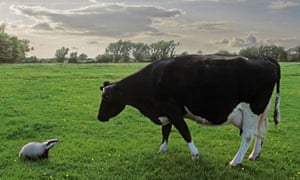
Badger and cow
 The UK’s proposed large-scale cull of badgers to control the spread of TB in cattle has been postponed. Photograph: Natural Visions/Alamy

Mycobacteria and TB have been in the news a lot recently. In fact, one particular species has been hogging the limelight: Mycobacterium bovis. As its name suggests, it likes to infect cows, but as we’re recently all too aware, it’s quite happy in badgers too.

There are about 120 species of mycobacteria. They’re rod-like bacilli with a thick, waxy cell wall. The “human” member of the Mycobacterium family (using this word conversationally, as Mycobacterium is of course a genus, not a family, taxonomically) is M tuberculosis. From its point of view, it’s very successful. From our point of view, it’s the most important bacterial disease that afflicts us, causing about one-and-a-half million deaths a year.

This is how TB is caught: you breathe in tiny droplets of fluid containing just a few bacilli. In your lungs, your own immune cells move in and swallow up the bugs – but this is exactly what they want. Inside the immune cell, the bacilli replicate and pile up. More immune cells pile in. If you’re lucky, the bacilli are held tight in this lump, this tubercle. If you’re unlucky, the bugs get out and the disease spreads – through your lungs (and you start coughing up droplets with bacilli in, ready to infect someone else), through your whole body, even getting into your bones.

But this isn’t the story written in the DNA of the bacilli. In 1999, an early genetic study cast doubt on the ancestor-descendant relationship between the bovine and human forms of TB. More studies confirmed the new story. If anything, the ancestor of both human and bovine forms must have been closer to the human form – with its larger chromosome. It’s even possible that cows caught TB from us (or at least, from another mammal that had caught “human” TB).

Using molecular clocks to date the age of M tuberculosis, looking for the last common ancestor of current versions of the bug, is problematic, and has produced a great range of dates from 15-40,000 years ago. All of these easily predate farming. However, this date is likely to just record a population crash in TB, probably because of a crash in the numbers of its host. Humans (and their ancestors) could have been suffering from TB for hundreds of thousands of years before then.

Earlier this year, filming for BBC2’s Prehistoric Autopsy series, I visited Göttingen, and the lab of Professor Michael Schultz. He showed me a fascinating fossil, a piece of a Homo erectus skull, found in a travertine tile factory in Turkey. Scientific articles can be dry, stuffy things, but the one in which Michael described the fossil includes this fantastic quote: “Given the nature of its discovery in a factory workshop, the hominin was unfortunately reduced to a standard rough-cut tile thickness of 35mm.”

Despite the rough treatment of the fossil, the bone was very well preserved, and on the inner surface of the skull, Michael showed me clusters of small pits – things that just shouldn’t be there in normal bone. They were quite clearly pathological, and Michael believed that the best explanation for them, given their appearance and their position inside the skull, was meningitis caused by M tuberculosis. Here was evidence for a human ancestor suffering from TB, half a million years ago.

Back to the present, and TB has scarcely been out of the news for the past few weeks. The Great Badger Cull has become one of the hottest political potatoes of the year. So what is the scientific evidence? Well, it seems pretty clear that badgers do help spread bovine TB. But that also seems to be where the certainty ends. Bovine TB in the UK has been going up and up – but how much of that is due to better diagnosis? And could culling badgers really help to reduce it? A study published in the journal Nature in 2006 showed that culling badgers reduced the rates of TB among cattle in the area where the cull took place – but increased it in neighbouring areas. In 2011, based on the results of previous trials, scientists advised the current government that culling 70% of badgers in large areas could result in a 16% reduction in bovine TB. For the government, that was enough.

But some scientists are now concerned that the cull – particularly if carried out by free shooting, which hasn’t been trialled, or if targets are missed – could make matters worse.

For this winter, the badgers are safe. Like Caesar presiding over a bizarre gladiatorial contest, environment secretary Owen Paterson granted the badgers a stay of execution, at the eleventh hour. There are just too many of them to make a 70% cull achievable this late in the year.

So the debate continues. It’s an argument about science, politics and economics. It centres on protecting food animals from harm, just as our ancestors have done since farming first got started. But, to me, it also raises interesting questions about how we see ourselves and other animals. It’s about how much we see ourselves as a “dominant” species, entitled to subjugate the needs of other animals beneath our own. It’s about how much room we demand as a human population (with a taste for milk and beef) and how much room we’re prepared to make for wildlife.

And let’s not forget, if it hadn’t been for us, cattle and badgers might not have had TB in the first place.

More on: Man Dies from Extremely Rare Disease After Eating Squirrel Brains

Man Dies from Extremely Rare Disease After Eating Squirrel Brains

Credit: Shutterstock

A man in New York developed an extremely rare and fatal brain disorder after he ate squirrel brains, according to a new report of the man’s case.

In 2015, the 61-year-old man was brought to a hospital in Rochester, New York, after experiencing a decline in his thinking abilities and losing touch with reality, the report said. The man had also lost the ability to walk on his own.

An MRI of the man’s head revealed a striking finding: The brain scan looked similar to those seen in people with variant Creutzfeldt-Jakob disease (vCJD), a fatal brain condition caused by infectious proteins called prions. Only a few hundred cases of vCJD have ever been reported, and most were tied to consumption of contaminated beef in the United Kingdom in the 1980s and 1990s. (In cows, vCJD is commonly called “mad cow disease.”)

But in this case, the man had another dietary habit that could have raised his risk for vCJD: His family said he liked to hunt, and it was reported that he had eaten squirrel brains, said Dr. Tara Chen, a medical resident at Rochester Regional Health and lead author of the report. It’s unclear if the man consumed the entire squirrel brain or just squirrel meat that was contaminated with parts of squirrel brain, Chen said. [27 Oddest Medical Cases]

Chen didn’t treat the patient, but she uncovered the case while writing a report on suspected Creutzfeldt-Jakob disease cases seen at her hospital in the last five years.

The report was presented on Oct. 4 at IDWeek, a meeting of several organizations focused on infectious diseases.

Creutzfeldt-Jakob disease (CJD) is a progressive neurological disorder that affects only about 1 in a million people each year worldwide, according to the National Institutes of Health (NIH). It’s a “debilitating disease” that progresses quickly and usually results in death within one year of diagnosis, Chen told Live Science. There is no treatment or cure.

The disease results from prion proteins that fold abnormally, leading to lesions in the brain.

There are three forms of Creutzfeldt-Jakob disease (CJD): one that is inherited, one that comes from exposure to infected tissue from the brain or nervous system (this form includes vCJD), and one type that is “sporadic” and does not appear to have a genetic or environmental cause.

The sporadic type is the most common, responsible for 85 percent of cases, according to the NIH.

Because CJD is so rare, doctors at Rochester Regional Health were surprised when four suspected cases of the disease occurred at the hospital within a six-month period, from November of 2017 to April of 2018. That number is higher than expected based on the population of the Rochester area, which has about 1 million people, said study co-author Dr. John Hanna, also a medical resident at Rochester Regional Health.

This high number of suspected CJD cases prompted Chen, Hanna and colleagues to conduct a review of suspected CJD cases occurring at their hospital from 2013 to 2018. (Five cases were identified, but two of those five ultimately tested negative for CJD.)

That’s when the doctors came across the case tied to squirrel brains. Tests indicated that this was a “probable” case of vCJD because of the MRI finding and a test that showed specific proteins in the patient’s cerebrospinal fluid, which often indicate the disease.

However, CJD can be confirmed only with a test of brain tissue on autopsy at death. Although the patient passed away after his diagnosis, Chen and colleagues are working to obtain access to his medical records to see if CJD was confirmed at autopsy. If so, such a confirmation would be highly unusual; only four confirmed cases of vCJD have ever been reported in the United States, according to the Centers for Disease Control and Prevention.

The review of the five cases revealed a concerning finding: Diagnosis of the condition was often delayed; in one case, about two weeks passed before doctors suspected that a patient had CJD. In that case, the patient, a 65-year-old woman, had undergone plasmapheresis, a blood-filtering procedure, and a gynecological surgery before her diagnosis.

Quick diagnosis of CJD is important, because infectious prions could contaminate equipment used on patients with the disease, and this might transmit the condition to others if the equipment is not properly cleaned.

Diagnosis may be delayed, in part, because CJD is rare and is not “on the tip of the physician’s mind” when assessing a patient, Hanna told Live Science. In addition, once doctors suspect CJD and order a cerebrospinal fluid test, it typically takes around two weeks to get the test results.

The report highlights the need for doctors to keep CJD diagnosis in mind and for hospitals to have “policies for infection control when it comes to CJD,” Hanna said.

Originally published on Live Science.

South Carolina wildlife officials consider new hunting rule to keep deadly deer disease at bay

A white-tailed deer standing in a forest. Photo Credit: iStock by Getty Images.

A deadly disease that’s threatening deer herds across the country is prompting South Carolina wildlife officials to reconsider which products hunters are allowed to use to lure trophy bucks.

The state Department of Natural Resources wants to introduce a regulation that would ban hunters from using scent lures that contain natural deer urine, according to Charles Ruth, a certified wildlife biologist and big game program coordinator with the wildlife agency.

“It would take about a year for us to file the regulation and go through the legislative process, but we’d like to see a ban on natural urine products by the 2019 deer hunting season,” Ruth told the Greenville Journal during a recent phone interview.

Many hunters use buck and doe urines to lure deer to their location or cover their scent, but the foul-smelling liquid is thought to contribute to the spread of chronic wasting disease, according to Ruth.

Chronic wasting disease is a contagious, neurological illness affecting deer, elk, and moose populations throughout North America, according to Ruth. That includes the white-tailed deer, a popular game species in South Carolina. Greenville County hunters alone harvested more than 3,000 white-tailed deer in 2017.

“We haven’t detected signs of chronic wasting disease in South Carolina yet, but we don’t want to look back several years from now and wonder if we did everything possible to prevent it,” Ruth said.

Since it was first documented in a captive mule deer in Colorado about 35 years ago, CWD has slowly spread to more than two dozen states and a number of Canadian provinces, according to SCDNR.

Ruth said the disease, which has no treatment or cure, is caused by deformed proteins called prions that replicate upon ingestion and attack the animal’s central nervous system, ultimately killing it.

“The incubation period for chronic wasting disease can range from a year to five years,” he said. “But if a deer contracts the disease, it’s going to eventually die. There’s no question about it.”

Scientists believe CWD prions likely spread from deer to deer through feces, saliva, blood, or urine, either through direct contact or indirectly through environmental contamination of soil, food, or water, according to Ruth. Once a deer contracts the disease and dies, its tissues become vectors. The prions can only be destroyed by burying them in a landfill or through incineration.

While there has never been a documented case of a human contracting the disease, the Centers for Disease Control and Prevention recommends that people do not consume meat from an infected animal.

Natural scent lures pose a risk to South Carolina’s deer population, because they are often produced by facilities that collect urine over a grate system, which doesn’t prevent contamination from feces or saliva, according to Ruth.

Collection facilities also have no way of knowing whether or not their deer are disease-free, because there is no certified live-animal test for CWD, nor is there a way to test urine for prions once it’s been collected, according to Ruth. These facilities also generally don’t treat their urine-based products with chemicals or heat to kill the infectious proteins, because these treatments would secondarily destroy the desired scent characteristics.

Several states, including Alaska, Arizona, Virginia, and Vermont, have enacted outright bans on urine-based attractants, while others have drafted regional bans and/or rewrote rules to allow only synthetic lures. These bans, however, have been met with opposition from some hunters — who dribble the foul-smelling fluid on foliage near their tree stands — and manufacturers, who market products like “Cold Blue” and “Buck Bomb.”

Ralph Brendle, owner and president of River Bend Sportsman’s Resort in Spartanburg County, said the proposed regulation to ban urine-based attractants in South Carolina wouldn’t likely impact his business. “We don’t use scent lures of any kind. We just hunt them naturally in the woods,” he said. “The only thing we do is set out some bait every now and then.”

Brian Sullivan, co-owner and manager of Toney Creek Hunting Plantation in Anderson County, said his company currently uses urine-based attractants for guided deer hunts but won’t likely seek out an alternative if South Carolina enacts the ban. “Synthetic lure doesn’t work nearly as good,” he said. “I’d just prefer not use it.”

Ruth said the proposed regulation to ban urine-based lures in South Carolina would need to be passed by the General Assembly and signed into law by the governor before it could be enforced. If approved, it would become one of many regulations instituted by the wildlife agency over the years to combat the spread of CWD.

A white-tailed deer standing in a field. Photo credit: iStock by Getty Images.

In an effort to help prevent the disease from entering South Carolina, SCDNR has banned the commercial transport of deer and other related species, such as elk and moose, since many cases of CWD have been linked to captive animals, according to Ruth.

The agency also continues to maintain regulations restricting the importation of whole carcasses or parts containing nervous system tissue from deer and elk harvested in the U.S. states and Canadian provinces where CWD has been documented, according to Ruth. If hunters dispose of these carcass parts in South Carolina, the disease agent could potentially infect deer in that area.

Ruth said South Carolina is far from any state where the disease has been diagnosed, but SCDNR has tested more than 6,000 deer from all 46 counties since 2002 and developed a response plan that’s designed to contain the spread of CWD should an outbreak occur.

Current research shows that CWD outbreaks can lead to significant declines in deer populations over time. In Wisconsin, for instance, the prevalence of the disease among adult male deer — those 2 ½ or older — has seen an annual growth rate of 23 percent since it was discovered in 2002.

John Quinn, an associate professor of biology at Furman University, said scientific understanding of the ecology and transmission of CWD in free-ranging wildlife is limited, but a major decline in South Carolina’s white-tailed deer population due to such a fatal disease would likely have ecological consequences.

The white-tailed deer is considered to be a keystone species, one whose very activities have an immediate effect on both the landscape and the natural habitats of other animals in the wild, according to Quinn.

White-tailed deer not only serve as prey for coyotes and other predators, but their feeding habits and preferences can affect the variety, quality, and structure of plants in a habitat, Quinn explained. While chronic browsing can kill or hinder the growth of preferred plants in an ecosystem, deer avoidance of non-native, invasive plant species can cause them to become more prevalent and spread faster.

“A loss of deer populations is going to change forest understory,” Quinn said.


Quinn said a decline in South Carolina’s white-tailed deer population would also likely lead to fewer hunters, which in turn would mean less dollars for SCDNR, which collects a large portion of its funding from hunting-license sales and federal excise taxes on firearms, ammunition, and other hunting equipment.

Deer hunting generates more than $200 million annually for the state’s economy, according to Ruth. South Carolina sells more than 700,000 recreational licenses each year to residents and out-of-state hunters and fishermen.

Recreational and commercial hunting licenses can be purchased online at dnrlicensing.sc.gov. Deer hunting on private lands in Game Zones 1 and 2, both of which include parts of Greenville County, runs through Jan. 1, 2019.

For more information, visit www.dnr.sc.gov.

Heart in mouth: Moose hunters worry parasite may ruin organ-eating tradition

Some New Brunswick hunters who eat the hearts of moose are wondering if they can keep the tradition alive after finding white spots on some of the organs this year.

“I’ve been hunting moose for 25 years and we always save the heart,” hunter Charles Leblanc wrote on Facebook. “We cook it up at the camp and everybody loves it. Has anyone else seen white spot on their moose heart this year? For us, it’s the first time.”

Leblanc lives in Cocagne but hunted this year near Harcourt.

– High-risk areas for Lyme disease expand to include Moncton

Two of the five moose he and his family killed had the white spots, which gave the seasoned hunter a bad feeling.

“Nobody wanted to take a chance and try them,” Leblanc said over the phone Wednesday.

The first infected heart he came across only had a few spots but the second one was full of them.

After his Facebook post, other hunters chimed in with similar experiences.

Tastes like liver

Eating moose heart has been a “treat” Leblanc has enjoyed since he began hunting with his father-in-law in 1993.

“It tastes best when cut thinly and cooked on a barbecue like a slice of steak,” Leblanc said.

“Everybody loves it. It’s basically like liver. It’s less strong than liver. You cut it all up and fry it in butter.”

Leblanc, whose diet depends on moose meat for part of the year, is concerned the white spots on the heart have greater consequences.

“My concern is, is there something wrong with the rest of the meat from that moose? We haven’t talked to the meat cutter yet. He might find those white spots in the meat.”

Parasite is likely

Although several ideas about the abnormalities have floated around online, wildlife pathologist Pierre-Yves Daoust suspects a parasite.

“The first thing that crossed my mind is parasitic larvae,” said the professor at University of Prince Edward Island. “There are number of different parasites that can do that.

“Most of them should not be a concern for human consumption.”

But with only a photo to study, Daoust said it’s hard to determine what parasite got into Leblanc’s moose hearts.

It appears to be at the intermediate stage, Doaust said, and would need the intestines of a carnivore, such as a wolf or a coyote, to mature.

“Most of these parasites could not do this to a human,” he said. “We’re not its final host.”

“Having said that, it would not be advisable for anyone to eat these cysts. But in all those cases, the cyst would be destroyed by proper cooking of the meat.”

Both Dr. Jim Goltz, veterinarian and pathologist for the New Brunswick government, and Bob Bancroft, a wildlife expert, agreed with the diagnosis.

“The structures are likely tapeworm cysts, but I’d need a specimen to be sure,” Goltz wrote in an email Wednesday.

“There are several possibilities here — most are immature stages of three tapeworm species that also infect dogs and wolves,” Bancroft said, also by email.

“These immature stages can be found on the lungs, liver, spleen, heart and kidneys.

“Each cyst has lots of immature tapeworms. I wouldn’t eat that heart and one should be careful to keep entrails away from dogs.”

Extent of infection not known

Daoust said he couldn’t speculate about much else because he hasn’t received many samples from hunters.

“Again, if these are parasitic larvae, they are not uncommon. But I could not tell you if there are 100 moose killed, there is only one affected like this.”

Luckily for Leblanc, Daoust said, there’s hope yet.

“I would not recommend that the entire carcasses be condemned,” he said. “It may not have affected the animal whatsoever.”

Do wolves, cougars help curb diseases?

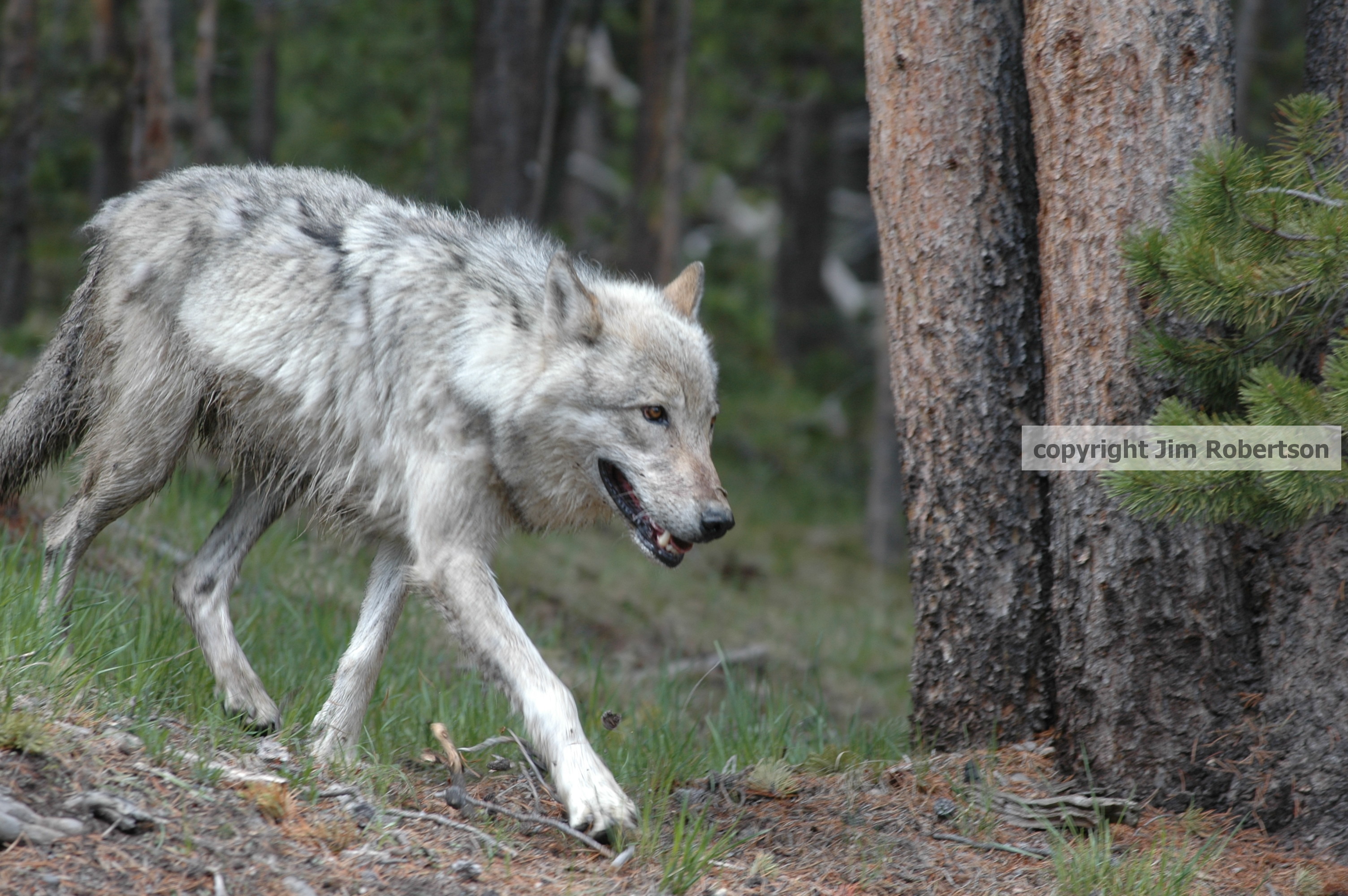
copyrighted Hayden wolf walking

April 2, 2014 4:30 am

The New West / By Todd Wilkinson

“Predators are bad for wildlife.” How often have Americans heard this refrain in public forums?

Pervasive as a belief in rural Western culture, it drives political discourse. It also is part of a nonstop feedback loop of social reinforcement, rife in barber shops, ammo stores, saloons, coffee klatches and outfitter camps.

But does it withstand scientific scrutiny? Do predators such as wolves and cougars “devastate” wildlife or do they help keep public game herds healthier?

Predator experts and others specializing in wildlife conservation medicine say it’s an important consideration when thinking about protocols for managing zoonotic diseases in the Greater Yellowstone Ecosystem.

I contacted biologist L. David Mech, one of the world’s foremost wolf authorities. He has written or contributed to hundreds of peer-reviewed scientific papers on wolves and prey.

“In the main, the preponderance of scientific evidence supports the view that wolves generally kill the old, the young, the sick and the weak,” Mech began. “There’s so much documented field data behind it.”

All the things humans treasure about every wild prey species — their physiology, agility and resilience — are reflections of the predators that made them adapt and evolve over eons.

Keeping domestic livestock healthy and fat often involves huge doses of antibiotics and, in some cases, growth hormones. Not so for free-ranging wildlife, especially wildlife not subjected to unnatural animal husbandry practices, such as artificially nourishing wild elk at crowded feedgrounds.

Wildlife professionals know such conditions elevate animal susceptibility to deadly pathogens like brucellosis, tuberculosis and chronic wasting disease, threatening ecological well-being.

Mech made a fascinating point: Wolves appear to target sick animals that, to the human eye, exhibit no overt symptoms of disease.

“There’s a lot more going on than we can detect,” Mech said. “They are killing animals that most people would say, ‘That animal looks pretty healthy to me,’ but in fact it isn’t.”

In 2003, Denver Post reporter Theo Stein interviewed scientists about CWD spreading though deer and elk in Colorado. Dr. Valerius Geist, who paradoxically has become a darling of anti-wolfers, made this assertion about the significance of wolves in containing CWD spread via proteins called prions.

“Wolves will certainly bring the disease to a halt,” he said. “They will remove infected individuals and clean up carcasses that could transmit the disease.”

Stein added that “Geist and Princeton University biologist Andrew Dobson theorize that killing off the wolf allowed CWD to take hold in the first place.”

Wolves aren’t alone. In a 2009 study titled “Mountain lions prey selectively on prion-infected mule deer,” researchers in Colorado discovered that “adult mule deer killed by mountain lions were more likely to be prion-infected than were deer killed more randomly … suggesting that mountain lions were selecting for infected individuals when they targeted adult deer.”

Researchers said, “Other studies indicate that predators like wolves and coyotes select prey disproportionately if they appear impaired by malnutrition, age or disease.”

In another study researcher N. Thompson Hobbs examined the potential impact of wolves on CWD-infected elk in Rocky Mountain National Park, where lobos are now absent.

Wolves, he found, could reduce average life spans of infected elk and therefore limit the amount of time infectious animals could spread disease to others.

“We suggest that as CWD distribution and wolf range overlap in the future, wolf predation may suppress disease emergence or limit prevalence,” Hobbs said.
Wyoming doesn’t accept this scientific reality. In Jackson Hole, where unnatural feeding of wapiti on the National Elk Refuge is contributing to persistent brucellosis infection and putting migrating elk at high CWD risk, wolves are killed under the ironic guise of “keeping elk herds healthy.”

In Wyoming’s “predator zone” which encompasses many of the state’s 22 elk feedgrounds, wolves can be killed at any time of day year round.

Are Wyoming, Idaho and Montana spending millions in tax dollars to eliminate the natural allies that help keep wildlife diseases such as brucellosis and CWD in check? Mech stays out of the political fray, though he says the value of predators is clear.

“Based upon everything I’ve seen over the course of my career, I generally stand behind the assertion that wolves make prey populations healthier,” he said. “The evidence to support it is overwhelming.”

Todd Wilkinson’s column appears every week in the News&Guide. He is author of “Last Stand: Ted Turner’s Quest to Save a Troubled Planet.”