BLM Fails to Protect Our Public Lands Against Lawless Welfare Ranchers

http://www.wildhorsepreservation.org/media/blm-fails-protect-our-public-lands-against-lawless-welfare-ranchers#

Public lands ranchers, many of whom decry the federal government while happily accepting federal grazing subsidies, continue to defy Bureau of Land Management (BLM) restrictions on livestock grazing. Emboldened by Cliven Bundy, who owes the federal government millions of dollars in grazing fees and whose trespass cattle are still illegally grazing on BLM land in southern Nevada, ranchers continue to thumb their nose at federal authority. As in the Bundy situation, the BLM continues to back down. While the agency has threatened to arrest wild horse advocates for the simple act of videotaping, it takes no action against lawless ranchers who flaunt grazing restrictions and offer up threats of violence in the form of armed militias. The BLM”s lack of action against these violators is an affront to law abiding citizens and American taxpayers whose drought-stricken, western public lands are rapidly being turned into a dust bowl, courtesy of welfare ranching. Please read on for the latest examples.

BLM allows grazing on closed allotment to avoid confrontation

During the first week of June, 2015, two Elko County Commissioners joined welfare ranchers Dan and Eddyann Fillippini in breaking federal law by turning out cattle in a drought stricken area of public lands where livestock grazing has been prohibited by the BLM. In response, the BLM did nothing. Instead the agency “negotiated” with these ranchers, who feel entitled to graze their livestock on our public lands and receive taxpayer-subsidized grazing rates that are a fraction of market rate. In a settlement dated June 5, 2015, the BLM agreed to allow the Fillippinis to leave their trespass cattle on the public lands that have been closed to livestock grazing because of the drought. In exchange, the Filippinis admitted to “willful” grazing trespass and will have to pay less than a week’s worth of “enhanced” grazing fees, which are still a fraction of market rate, thanks to our taxpayer subsidies  Since the settlement, the grazing fee has reverted to $1.65 per Animal Unit Month, which is at least 1/12th of the fee they would pay to graze their livestock on private lands and far cheaper for the Filippinis than keeping their cattle on their own private lands and feeding them hay. So, once again, the BLM rewarded welfare ranchers for illegal behavior and the destruction of our public lands.

Help Make Wildlife Services’ Worst Nightmare Come True

It’s finally happening–the last thing in the world USDA’s Wildlife Services wants!
Members of Congress and their staff have been invited to see our award-winning, whistle-blowing film, “EXPOSED: USDA’s Secret War on Wildlife,” at a special screening and panel discussion in D.C. It will be held:
Monday, June 15, 3:00-4:00 p.m.
2168 Rayburn Building (the Gold Room)
U.S. Capitol, Washington, D.C.
The panel discussion after the film will enable folks in D.C. to hear directly from a Wildlife Services’ whistle-blower, a victim, and proponents of reform.  It is our hope that legislation to reform this barbaric, unaccountable, and utterly misnamed predator control program will be introduced by Representative Peter DeFazio (D-OR) in the coming weeks.
I’ve attached the invitation we sent to the Hill.  Please forward this email to your members, friends, and anyone you think would be interested.  Let them know that this is the film Jane Goodall wants millions to see and urge them to ask their Representative to attend this important event.
I’d like to extend a special thanks to our event co-sponsors, without which it would not have happened:  Representative Peter DeFazio, the Congressional Animal Protection Caucus, the Animal Welfare Institute, Born Free USA, The Humane Society of the United States, Natural Resources Defense Council, and the International Fund for Animal Welfare.
Working together, we can expose the secret war against wildlife being waged on the taxpayer’s dime and hold Wildlife Services accountable at last.
Best,
Brooks

Brooks Fahy
Executive Director
brooks@predatordefense.org
(541) 937-4261 Office
(541) 520-6003 Cell

PREDATOR DEFENSE
Helping people & wildlife coexist since 1990
www.predatordefense.org

Control Cruel Special Interest Groups, Not the Wild Animals.

Letter from Rosemary Lowe to the Albuquerque Journal:
NM Game Dept. Killing Machine
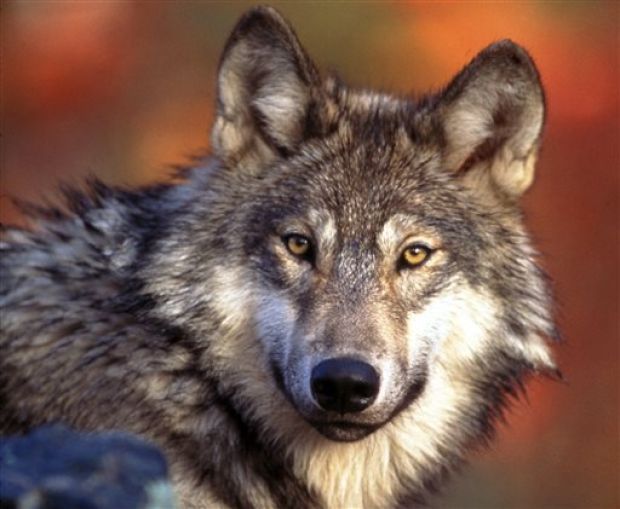
“Mexican Wolves belong on New Mexico lands, but there are special interests within the hunting & livestock industries which have a long history of prejudice about this (& other) wonderful native species. It is time to bring back the Lobo, and give it the priority & protection it needs. These cruel special interest groups need controlling, not the wild291789_400428663360054_2105335387_n animals.
The livestock industry grazes on public lands, at taxpayer expense, denuding & damaging water resources, native grasses, while demanding that the government slaughter native wild animals including wolves, bears, coyotes, mountain lions, & other innocent wildlife: a mindless hatred of so-called “predators.” Many of these species are in decline, despite the “pseudo-science” misinformation from the Game Dept.& other anti-wildlife interests.
Native wild animals are facing further declines as Climate Change worsens, affecting the health of remaining ecosystems, but the Game Dept. continues its antiquated “management” schemes to appease their special interest buddies.
Based upon the anti-wildlife mentality of the Game Dept. it does not belong in the 21st century. It must be abolished, if wildlife is to survive at all.

Arizona sues feds over regulations on Mexican gray wolves

528624c939a88_preview-620

Madeleine Winer, The Republic

The Arizona Game and Fish Department and the Attorney General’s Office have filed a lawsuit against the federal government, alleging it has failed to update its Mexican-wolf recovery plan.

The state is asking the secretary of the Department of the Interior and the U.S. Fish and Wildlife Service for a modern plan that would improve Arizona’s involvement in recovery efforts and establish a target number of Mexican wolves for the area.

“If you think about wildlife management, part of what you want is for a target number of animals for there to be a balance in the rest of the biotic community,” said Jim deVos, Arizona Game and Fish Department assistant director for wildlife management. “You don’t want to have too many of the one thing. We want a healthy population of wolves in balance with social, economic and wildlife needs in the state of Arizona.”

The current Mexican-wolf recovery plan, established in 1982, allowed the U.S. Fish and Wildlife Service to maintain a captive breeding program and re-establish the population with 100 Mexican wolves released into the Blue Range Wolf Recovery Area in Arizona and New Mexico in 1998. Currently, deVos said, 109 wolves inhabit Arizona.

The Game and Fish Department claims the 1982 plan fails to identify how many animals would constitute recovery of the population and allow the wolves to be removed from the list of endangered species in the future. For decades, there have been conflicts between ranchers and the wolves.

More: http://www.azcentral.com/story/news/local/arizona/2015/06/08/arizona-sues-feds-regulations-mexican-gray-wolves/28721223/

Biostitution: World’s oldest professions

11077925_428471050656229_1994090549220577260_n

http://foranimals.org/worlds-oldest-professions/

As the June meeting of the New Mexico Game Commission approaches, the so-called wildlife biologists of Game and Fish have modified their proposal on cougar trapping. Facing widespread opposition from editorials and letters in the Santa Fe New Mexican and Albuquerque Journal, culminating in a rally at the state capitol, they dropped their proposal to set cougar traps on public land. The new proposal would allow unrestricted cougar trapping on private land, while increasing other forms of cougar hunting on public land.

The career game managers who fancy themselves “biologists,” continue to serve the interests of ranchers and trappers, while ignoring the need to protect wildlife populations. The department’s original proposal had nothing to do with biology or any other science, as it was dropped in the face of public opposition. The current proposal is hardly better. And they continue to kill cougars while the proposal is up for discussion. Last week they killed a cougar in a Raton neighborhood for allegedly attacking a puppy, and they continue to set out cougar traps in Los Alamos.

Nothing has changed in the year since Scott Bidegain was forced to resign his position as Game Commission Chair after promoting an illegal cougar hunt. As a member of the New Mexico Cattle Growers Association Board of Directors, Bidegain personified the close connection between the livestock industry and the Game Commission.

For that matter, nothing has changed since the Game Commission was first set up in 1921, about the time President Warren Harding appointed NM rancher and former US Senator Albert Fall as Secretary of the Interior. Fall made a career out of opening up public lands to the oil industry in the notorious Teapot Dome Scandal.

With the support of hunting and livestock interests, New Mexico established a Game Commission to maintain populations of huntable wildlife in accord with the principles of the North American Model of Wildlife Conservation. The Rocky Mountain Elk Foundation has aptly summed up the model as follows:

Man has hunted since he walked the Earth. Every early culture relied on hunting for survival. Through hunting, man forged a connection with the land and learned quickly that stewardship of the land went hand-in-hand with maintaining wildlife – and their own way of life.

In the first half of the 20th century, leaders like Theodore Roosevelt and Aldo Leopold shaped a set of ideals that came to be known as the North American Model of Wildlife Conservation. They articulated the philosophy that all wildlife belong to all of us.

It is useless in any case to look to science to set public policy. In a Wildlife Society article titled An Inadequate Construct, Dr. Michael P. Nelson challenges the tenet of the North American Model which “asserts that Science is the Proper Tool for Discharge of Wildlife Policy.” Nelson states: “This is mistaken for equating a desire for policies informed by science with science discharging or determining, by itself, what policies ought to be adopted—a serious, but very common, error in ethical reasoning. Scientific facts about nature cannot, by themselves, determine how we ought to relate to nature or which policies are most appropriate.”

By making a career out of serving their political masters, New Mexico’s professional game managers have combined the world’s two oldest professions. To borrow a term popularized by Sea Shepherd Captain Paul Watson, the game managers are aptly described as biostitutes.

The current drought, exacerbated by anthropogenic climate change, is likely to continue for decades, threatening wildlife habitat. All wildlife is threatened, including species not officially recognized as endangered. It is time for the State of New Mexico to repeal outdated laws which view predators as threats to livestock. It is time to abolish the Game Commission.

One cormorant’s plea to stop the slaughter

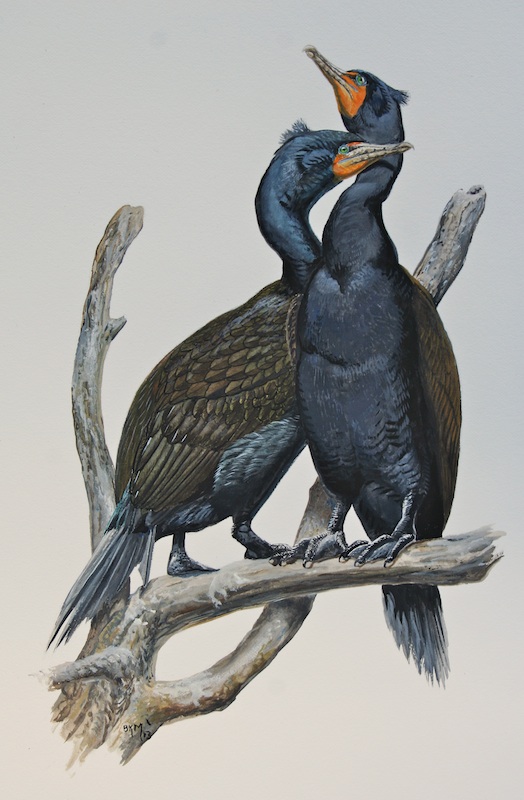
Painting Courtesy Barry Kent McKay

Painting Courtesy Barry Kent McKay

https://wordpress.com/post/35261376/new/

The Corps, the Cormorants, and the Cull

One cormorant’s plea to stop the slaughter

The U.S. Army Corps of Engineers recently approved a culling of the large mixed seabird colony on East Sand Island, near the mouth of the Columbia River. The plan aims to reduce the number of double-crested cormorants to 5,600 breeding pairs from roughly 13,000 by 2018, through a combination of hazing, oiling the eggs in 15,000 nests, and shooting approximately 11,000 individuals. The cull is necessary, says the Corps, because cormorants eat an average of 11 million young salmon and steelhead each year—up to 20 percent of hatchery releases—as the smolts migrate out to sea.

During the drafting of the environmental impact statement, the Corps received more than 150,000 public comments, of which about 98 percent opposed its plan. Here is one such letter, dredged up from the very bottom of the pile.

To Whom It May Concern:

I realize the comment period may be over, and that as of March 19, your plan has received the blessing of the necessary higher-ups. But I feel I have to speak out.

To begin, I admit that we are not the most beloved of birds. People kill more than 40,000 of us each year all over the country. And I get it. We have a taste for fish, and an enviable talent for catching them. When you make said fish freely available to us by raising great numbers of them all in one place and sending them downstream, we simply can’t help helping ourselves. (I am pretty sure that if you happened upon an all-you-can-eat buffet you would tuck in, too.) True, we sometimes drive out animals more couth than ourselves. We poop so much that trees sometimes die. But it is natural for us to travel in large groups, and make ourselves at home as we see fit. This is a behavior with which you, as part of the U.S. Army, are familiar, I think? But I’m just speculating here.

In any case, this brings me to the present circumstance. I don’t want to embarrass you, but you, people of the Corps, do remember that you created East Sand Island for birds, right? Back in the 1990s, thousands of Caspian Terns nested on Rice Island, a few miles upriver. They, too, ate millions of young salmon and steelhead. So you drove the terns to this island, which you had created out of sand. Once they settled in, they shifted their diet to other small fishes. (Terns are agreeable like that, bless their hearts.)

But we cormorants showed up, too. We took a look around and thought, Hey, nice island! What better place to pluck out the young hatchery fish sent out every year in tremendous, naïve waves to the sea! (You’ve dammed up so many other streams and rivers that there are few ways left for them to get around us. Thanks!) Our numbers increased. We started eating the—excuse me—your salmon. And yes, we eat a lot of them. So you tried to thwart our voracious appetites. You tried to make the island less homey. You confined us to ever-smaller areas, and surrounded us with walls, fences, and observation towers. Our colony now looks like a prison camp! But we didn’t leave. Indeed, we persevered in spite of your best efforts. What can I say? We are a hardy folk.

I can see how this might be frustrating for you. And by “this” I mean the nuances of ecology and all of its unintended consequences, its unforeseen contingencies. You are the Corps of Engineers, after all. You have a proud history of seeing the world as a place where Tab A goes into Slot B, just so. You see: salmon. You see: cormorants. You see: cormorants eating salmon. Subtract: cormorants. Problem: solved. Or so you assume. (Never mind that most of those extremely tasty smolts wouldn’t have made it back to their native hatcheries; that states like Montana and Washington actually consider hatchery steelhead and salmon harmful to wild genetic stocks.)

I can’t help but admire your resolve. Your decision-making has the solidity of concrete. Rest assured, I don’t write to critique the relative merits of your plans. I’ll leave that to others more qualified than I, such as the several biologists—including the one you yourself hired to study my comings and goings for nearly 20 years—who say you both misinterpret and misrepresent the data and therefore are not making the correct use of the best available science.

Granted, we do eat a lot of fish. Mea culpa. And I know it is easier and—and let’s be honest here—more viscerally satisfying to blast away at me and few thousand of my kin than it is to confront the full range of ecological complications for which you are responsible. (We are a far ranging species—we remember Katrina.) Yet I must remind you: Cormorants can’t build dams. It is not thanks to us that well over half of the Columbia salmon and steelhead runs are threatened or endangered. But now that you’re confronted with what to you seems a distasteful side effect of your work (to us it is glorious!), you go all ballistic. It hardly seems fair. We’re just doing what nature intended us birds to do.

Thank you for considering these comments. Perhaps we could discuss the issue one day over a little (wild) salmon. I hear Cabezon up in Northeast Portland serves a nice fillet.

From one rampant consumer to another,

DCCO

P.S. To all you sea lions yukking it up at the East Mooring Basin in Astoria: Stop laughing. Your time will come.

Update: On Monday, April 13, the U.S. Army Corps of Engineers received the necessary permits to proceed with the cull. The plans will wipe out 15 percent of the Double-crested Cormorants west of the Rocky Mountains. The Audubon Society of Portland plans to sue the Army Corps of Engineers, according to an April 14 press release. “We are deeply disappointed in the U.S. Fish and Wildlife Service for issuing these permits,” Audubon Society of Portland conservation director Bob Sallinger said in the release. “The pubic looks to the Fish and Wildlife Service to protect wild birds, not to permit wanton slaughter.”

Learn more about how you can help.

The Columbia Cormorant ‘Cull’ Begins

image

http://www.dailyastorian.com/Local_News/20150528/the-cull-begins-corps-shoots-cormorants-to-save-salmon

By JEFF BARNARD

Associated Press

Published:May 28, 2015 8:46AM

Armed with rifles equipped with silencers, government hunters have started shooting seabirds on an uninhabited island at the mouth of the Columbia River, to reduce their consumption of juvenile salmon migrating to the ocean.

The U.S. Army Corps of Engineers acknowledged Wednesday that wildlife control personnel from the U.S. Department of Agriculture’s Wildlife Services started over the weekend implementing the corps’ plan to cut by more than half the numbers of double-crested cormorants nesting on East Sand Island between Oregon and Washington, where they eat millions of juvenile salmon migrating to the ocean. The island is the biggest double-crested cormorant nesting site in North America, and some of the salmon are protected species.

Bob Winters, program manager for the corps, said a team of three to four wildlife control personnel armed with .22-caliber rifles would be killing birds on the island through August. The goal is to reduce the colony from about 14,000 breeding pairs to 5,600 pairs by 2018.

The Audubon Society of Portland has challenged the killing in a federal lawsuit that argues the corps is ignoring the biggest threat to salmon, hydroelectric dams on the Columbia. Conservation director Bob Sallinger called on the corps to allow independent observers on the island so the public can know how the killing is being carried out, and to call off the killing until the lawsuit has run its course.

“The idea of turning the largest cormorant colony in the United States into as shooting gallery and killing cormorants on the nest is a low point in terms of recent wildlife management efforts,” Sallinger said.

Winters said Wildlife Services personnel are focusing on portions of the colony where eggs have yet to hatch, so as not to create a situation where chicks are left without parents to feed them. Numbers of how many birds have been killed and eggs oiled to prevent them from hatching are to be posted on a corps website on Thursdays each week.

He added the corps has a contract with people who are verifying the culling is being done in accordance with the environmental impact statement.

With Friends Like the Obama Administration, Endangered Species Don’t Need Enemies

11259525_555836894555749_4295500415848445220_n

http://www.huffingtonpost.com/noah-greenwald/with-friends-like-the-oba_b_7339268.html

by

Endangered species program director, Center for Biological Diversity

From gray wolves to Cheat Mountain salamanders, the more than 1,500 endangered species in the U.S. face threats like never before. In addition to the ever-present threat of habitat loss caused by our growing footprint on the planet, species now face growing threats from climate change, invasive species, over-exploitation and pollution.

Given the growing magnitude of threat to endangered species, one would think the Obama administration would pull out all the stops to save our precious wildlife heritage. Instead, the administration and its U.S. Fish and Wildlife Service have quietly been rolling out a series of regulatory changes that threaten to cripple the Endangered Species Act, dramatic changes that would never have flown under the Bush administration.

Here’s a breakdown of those policies and why they matter:

In July 2014, the administration finalized a policy first conceived under the Bush administration that severely limits when species qualify for endangered species protection. Under the Act, a species qualifies as endangered if it is “in danger of extinction in all or a significant of portion of its range,” meaning that a species need not be at risk everywhere it occurs to receive protection.

The new policy, however, sets a much higher bar by requiring not only that a species be endangered in a portion of its range, but also that the loss of that one portion threatens the survival of the species as a whole. The policy also specifies that historic portions of a species’ range can never be considered significant.

If this policy had been in place when the Act was first passed, the bald eagle would never have been protected because although it had been wiped out across much of the lower 48 states, the Pacific Northwest and Alaska had strong populations that were not at risk of extinction.

Many other species that have similarly been wiped out or are at risk across large parts of the U.S. are sure to be denied protection because of this disastrous policy. Indeed, several already have, including the cactus ferruginous pygmy-owl and American wolverine.

The second regulatory change forwarded by the administration severely undermines protections for endangered species’ critical habitat. The Endangered Species Act requires protection of critical habitat for all endangered species. The designation of “critical habitat” has proven to be an essential tool with species that have designated habitat being twice as likely to be recovering as those without it.

Critical habitat protects species by prohibiting federal agencies from “adversely modifying” — that is, hurting — critical habitat for endangered species in actions they fund, permit or carry out. The Obama administration’s policy could enable more habitat destruction by redefining “adverse modification” as only those actions considered to potentially harm the entirety of a species’ designated critical habitat, a change that will give a green light to the many federal actions that destroy small portions of critical habitat. If enacted, the new proposal could allow the proliferation of projects that harm a species’ habitat without assurance that the cumulative effects will be taken into account — a particularly problematic development because the Fish and Wildlife Service already has a dismal record of tracking and limiting cumulative impacts on wildlife.

The third regulatory change proposed by the administration earlier this month lets federal agencies, such as the U.S. Forest Service or Bureau of Land Management, off the hook from quantifying or limiting the amount of harm to endangered species allowed under overarching management plans, including regional forest plans, plans for individual national forests, plans for BLM resource areas and many others.

This will all but ensure that cumulative impacts from individual timber sales, development projects, oil and gas drilling operations or other projects will never be considered or curbed, increasing the risk that species will be driven to extinction from a death by a thousand cuts.

The most recent proposal by the Obama administration limiting the scope of the Endangered Species Act was issued just this week. It would place crippling burdens on citizens filing petitions to protect species as threatened or endangered under the Endangered Species Act, ultimately making it more difficult for imperiled species to get lifesaving protections.

The proposed regulations bar petitions seeking protection for more than one species and require petitioners to provide advance notice of the petition to all states in the range of the species; to append any information from states to the petition itself; and to certify that all relevant information has been provided in the petition.

This disastrous proposal will not only make it less likely species will get the life-saving protections they need, but it’s fundamentally undemocratic, cutting the public out of endangered species management. Many environmental and other statutes allow citizens to petition the federal government for action. This proposal marks the first time that an administration has placed obstacles to citizens filing petitions for federal intervention and thus has the potential to set a very concerning precedent.

The Endangered Species Act was passed precisely because states were not doing enough to protect wildlife. In many cases, states remain opposed to protection of species. Forcing citizens to go through these very same states in seeking protection of species runs directly counter to the purpose of the Act.

In combination, these policies represent a rollback of endangered species protections that Tea Party Republicans in Congress couldn’t hope for in their wildest dreams, yet they’re being forwarded by the Obama administration perhaps as an attempt to appease critics of the Act.

If this is indeed the intent, it will fail because criticisms from states, industry and others do not come from a desire to see the Act work better but rather from a desire to see protections for endangered species watered down.

And if these changes are implemented, they’ll get their wish, effectively undermining the conservation law that has saved not only bald eagles and brown pelicans, but gray wolves, grizzly bears, humpback whales and many more.

WS Killls Thousands of Protected Birds Killed Annually

Excerpts from:

Shot and Gassed: Thousands of Protected Birds Killed Annually

Sunday, 24 May 2015 00:00
Written by 
Rachael Bale and Tom Knudson By Rachael Bale and Tom Knudson, Reveal from The Center for Investigative Reporting

http://www.truth-out.org/news/item/30956-shot-and-gassed-thousands-of-protected-birds-killed-annually

-Even in the best of times, migratory birds lead perilous lives. Today, with climate change and habitat loss adding to the danger, wildlife advocates say the government-sanctioned killing is a taxpayer-funded threat that the birds should not have to face, one that is hidden from the public and often puts the needs of commerce ahead of conservation.

-The total body count for a recent three-year period came to 1.6 million, including more than 4,600 sandhill cranes. Four populous species – brown-headed cowbirds, red-winged blackbirds, common grackles and Canada geese – accounted for two-thirds of the mortalities.

But many less common birds were killed, too, including 875 upland sandpipers, 479 barn owls, 79 wood ducks, 55 lesser yellowlegs, 46 snowy owls, 12 roseate spoonbills, three curlew sandpipers, two red-throated loons and one western bluebird.

-California, where American coots were killed by the thousands to protect golf courseimagesQB1DEJIT greens and fairways. Usually the birds are shot, but sometimes they’re fed bait laced with a chemical that makes them fall asleep. Then they’re rounded up and killed in portable carbon dioxide chambers in the backs of pickup trucks. In California, some robins also were killed to protect vineyards.

No. 3 was Arkansas, where more than 22,000 double-breasted cormorants and thousands of other fish-eating birds were killed at fish hatcheries and aquaculture facilities.

Most of the killing is carried out without public notice. Even many conservationists are unaware of it. But those who are familiar with the permit program mostly don’t like it. They say that nonlethal options – such as scaring birds away or making the landscape less bird-friendly – are not given enough consideration and that lethal action is too often the default option.

“Nonlethal methods should always be given preference in these kinds of situations,” said Mike Daulton, vice president of government relations for the National Audubon Society, one of the nation’s oldest and most powerful conservation organizations. “The Migratory Bird Treaty Act is one of America’s most important wildlife conservation laws, and it should be strongly and reasonably enforced to maintain healthy wild populations of America’s native birds.”

Allen at the Fish and Wildlife Service said allowing the killing of nuisance birds protected by the Migratory Bird Treaty Act isn’t antithetical to the service’s mission of conserving wildlife populations.

See the data: Birds killed under depredation permits in the United States

Birds and humans have clashed for generations, of course. That’s why farmers put out scarecrows. But as cities and agriculture have grown, the scope of the conflicts has expanded. Today, even green industries sometimes kill birds. The government estimates that wind farms will take the lives of 1 million birds every year by 2030. To make that legal, the Fish and Wildlife Service is considering a new permit system for the “incidental” killing of birds protected by the Migratory Bird Treaty Act.

That act, a cornerstone of U.S. conservation history, grew out of an era of excess and slaughter at the turn of the 20th century. Many of North America’s migratory birds were being decimated, not for food but for feathers and other body parts that were used to make ladies’ hats, which had become signs of luxury and sophistication. In 1916, the United States and Great Britain, on behalf of Canada, signed the Migratory Bird Treaty Act. It became illegal to kill or capture migratory birds, as well as to buy or sell them.

The U.S. government, however, later made an exception. If a migratory bird is causing economic damage (such as destroying crops), posing a risk to humans (airports) or doing some other type of damage, a landowner can ask the Fish and Wildlife Service to approve the “lethal take,” or killing, of the problem birds.

For generations, Wildlife Services has long specialized in killing wildlife – including migratory birds – that are considered a threat to agriculture, commerce and the public. In recent years, the agency’s practices have drawn volleys of criticism from wildlife advocates and some members of Congress, who say they are scientifically unsound, heavy-handed and inhumane.

The agency relies on traps, snares and poison that kill indiscriminately. In 2012, the Sacramento Bee reported that Wildlife Services had killed more than 50,000 animals by mistake since 2000, including federally protected bald and golden eagles; more than 1,100 dogs, including family pets; and several species considered rare or imperiled. The investigation also noted that a growing body of science has found the agency’s killing of predators “is altering ecosystems in ways that diminish biodiversity, degrade habitat and invite disease.”

The U.S. Department of Agriculture’s Office of Inspector General now is conducting an audit to determine if the agency’s lethal control is justified and effective.

“Wildlife Services depends on killing predators and depredating migratory birds for its existence. When that’s what you do for a living, you tend to encourage people to adopt that solution,” said Daniel Rohlf, an environmental lawyer and professor at Lewis and Clark Law School in Oregon.

When landowners do get a permit to kill birds, Wildlife Services often is contracted to do the work. That contributes to a tendency to look to lethal control, rather than find more creative, nonlethal solutions, Rohlf said.

More: http://www.truth-out.org/news/item/30956-shot-and-gassed-thousands-of-protected-birds-killed-annually

Wildlife Photography ©Jim Robertson

Wildlife Photography ©Jim Robertson

Happy Today … Gassed Tomorrow

IDA geese FB post ‏

https://www.facebook.com/indefenseofanimals/photos/a.10150796907537346.439113.5956327345/10153262971307346/?type=1&theater

 “Where do the wild geese go when they go away …?”

When Greg Brown wrote his song wondering where the wild geese go when they go away, he, as we do, probably had the image in mind of a group of these beautiful birds flying high up in the sky in their characteristic v-shaped flight pattern and their familiar crackling voices that always seem to have something to say.

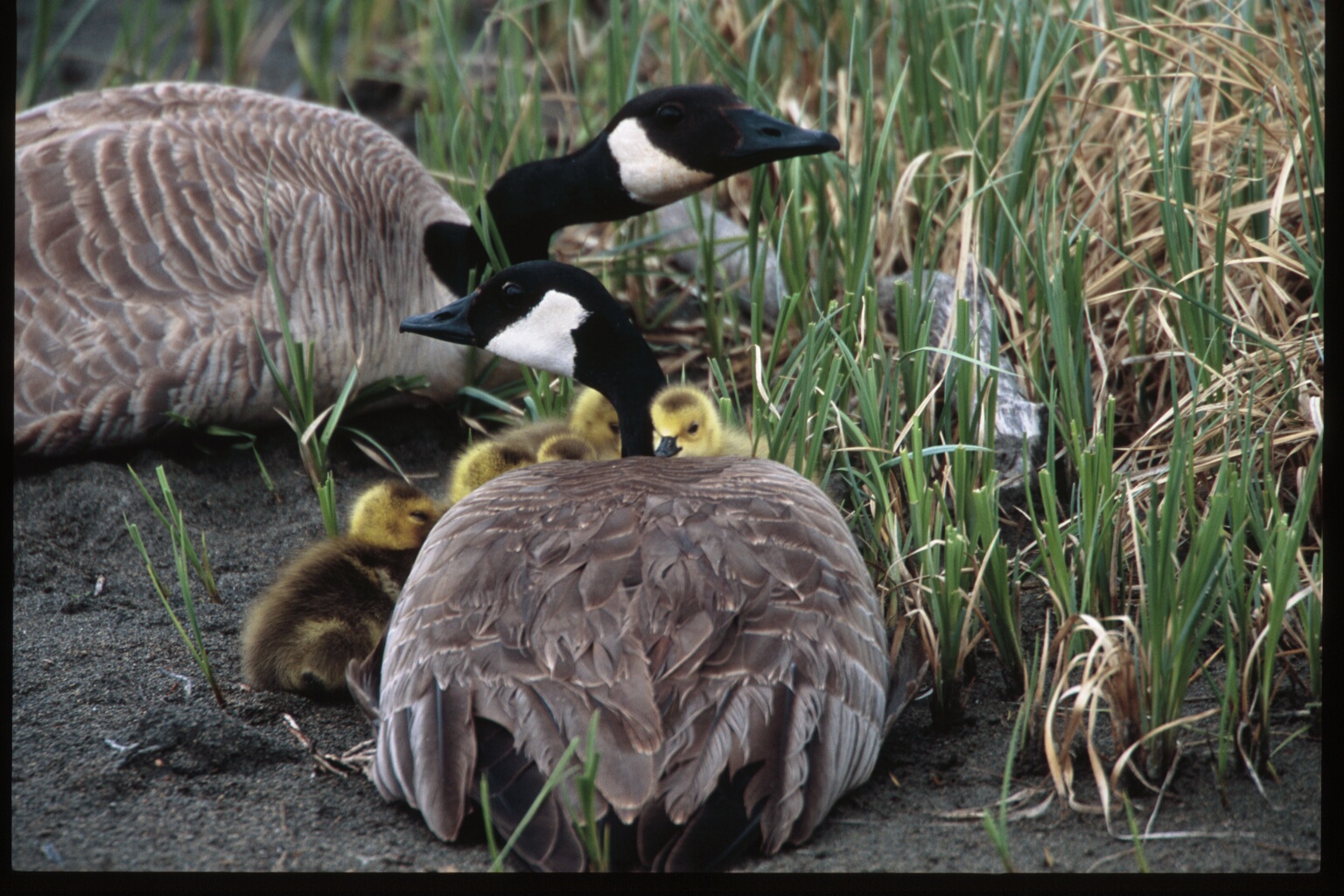
Tragically, many Canada geese families currently nesting near ponds in parks, airports and even in and near wildlife refuges, will be rounded up by USDA Wildlife Service agents (WS) during their molting period when they cannot fly. Entirely helpless, they will be separated from their goslings, causing shock and panic among the parent geese and goslings, who frantically call their loved ones in a final futile attempt to find each other.

Instead, these highly intelligent birds, in a terrifying state of confusion and panic, will be either mercilessly thrown into mobile gas chambers, left struggling for their lives over a long period of time while fighting for oxygen in vain, or packed into crates and trucked to a slaughterhouse to be brutally hung upside down with their throats slashed for their flesh.

Please stay tuned for our upcoming alerts to ask for your active involvement to help save Canada geese from a certain horrific death! Please make sure you have provided your state, as many of our alerts are regional in nature.

https://www.facebook.com/indefenseofanimals/photos/a.10150796907537346.439113.5956327345/10153262971307346/?type=1&theater