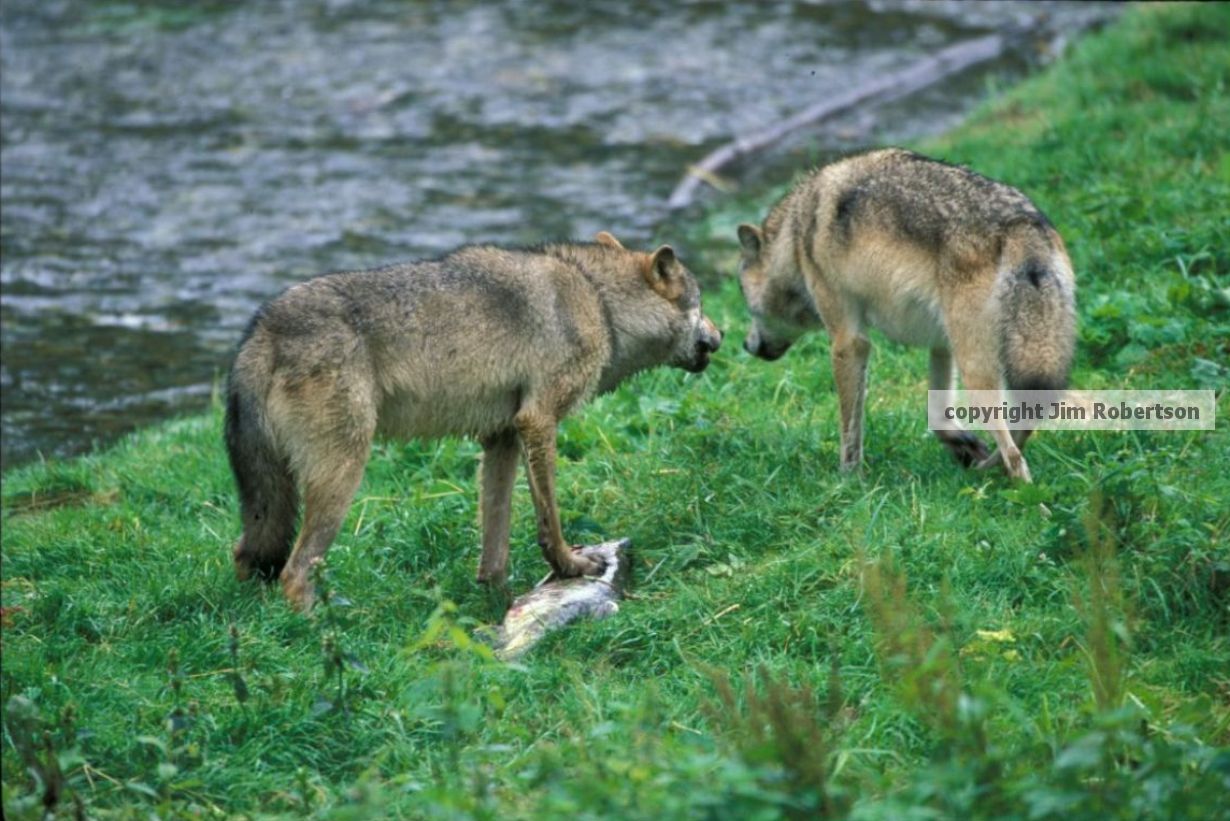
What’s next and when will it end? Idaho officials kill 19 wolves to boost elk herds

[Yesterday it was reported that Alaska killed 18 wolves to boost moose (for humans, of course), today, Idaho officials announced that they killed 19 wolves to boost elk herds (also for the benefit of humans). What’s next and when will it end?]

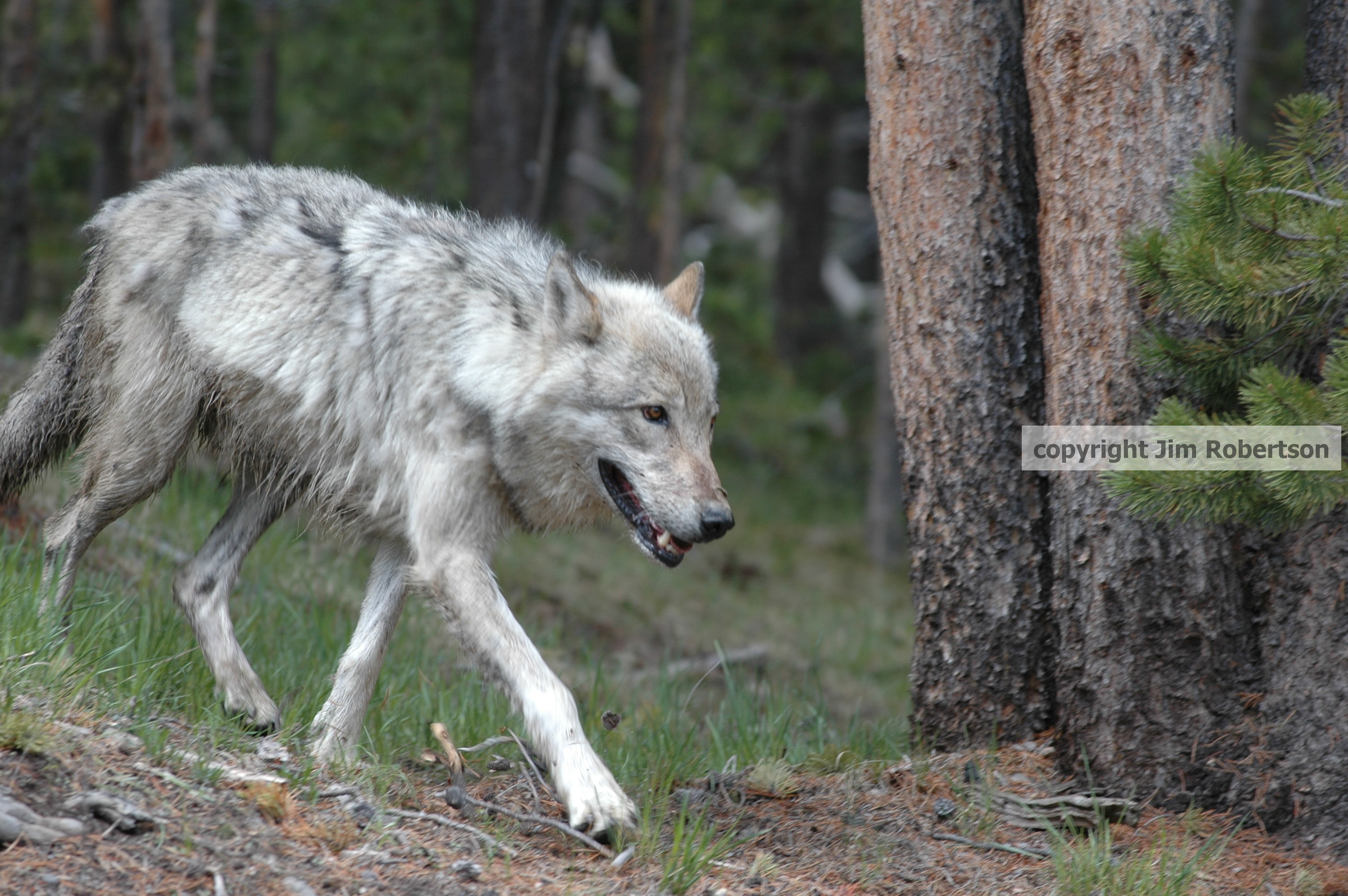
copyrighted Hayden wolf walking

LEWISTON, Idaho (AP) – Idaho officials say 19 wolves have been killed in northern Idaho in an effort to reduce wolf numbers and increase the elk population.

The Idaho Department of Fish and Game on Monday announced the killings carried out last month by the U.S. Department of Agriculture’s Wildlife Services in the Lolo Hunting Zone.

Jerome Hansen of Fish and Game tells the Lewiston Tribune in Lewiston that elk numbers in the region have dropped dramatically over the past 26 years.

Fish and Game says the area had an estimated 16,000 elk in 1989 but that the agency now believes the population could be as low as 1,000.

More: http://www.ktvb.com/story/news/local/regional/2015/03/10/elk-wolves-killed/24697063/

18 wolves shot near Interior AK village to boost moose population

http://www.adn.com/article/20150313/18-wolves-shot-near-interior-village-boost-moose-population

Dermot Cole

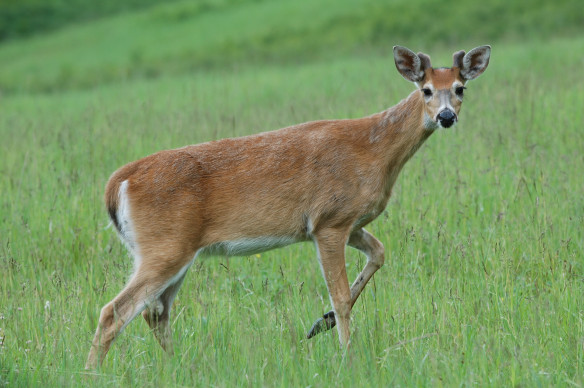
A Fallen Tradition is “Suffering”: MN Hunters’ Deer “Harvest” too High

Lawmakers to DNR: We want more deer up north

A panel of Minnesota lawmakers Wednesday told state wildlife officials they wanted to see more deer in the woods, especially up north.

A House committee hearing room served as the setting for what amounted to a stern talking-to by lawmakers echoing a refrain among many of the state’s half a million deer hunters: Deer populations in many areas have fallen unacceptably low, and the quality of a fall tradition is suffering.

“The deer hunters out there understand,” said Rep. Tom Hackbarth, R-Cedar, who chairs the Mining and Outdoor Recreation Policy Committee and is one of a number of deer hunters on the panel. “They go out there year after year. We know what’s going on, and we’re not seeing the deer. … What’s the problem? How did we get here? … I sat in the stand for five days and didn’t see a doe in the woods. We’ve got huge problems.”

Officials from the Department of Natural Resources got the message.

“Certainly, what we’ve heard is the harvest levels are unacceptable,” Steve Merchant, wildlife and populations manager for the DNR, told the committee.

When viewed over a century of data, the roughly 140,000 deer killed by hunters in the fall isn’t a small number. As recently as 1972, the deer population was so low that no hunting was allowed. But populations rebounded dramatically, and between 1990 and 2010, many years saw more than 200,000 deer taken.

However, the total harvest has fallen steadily since 2010. To protect the declining population, the DNR enacted strict regulations this fall, and the 2014 harvest was the lowest in two decades.

The state’s largest deer hunting advocacy group, the Minnesota Deer Hunters Association, wants to see the harvest rebound to 225,000 by 2019, Craig Engwall, the group’s executive director, told lawmakers. “With conservative seasons and good weather, we think we can achieve that,” he said.

That number prompts unease among DNR officials, who for several years sought 200,000 as a “sweet spot” for the total harvest but say severe winters have suppressed the population. While DNR Commissioner Tom Landwehr has publicly stated deer numbers should be allowed to increase in much of the state, the agency has blamed the back-to-back severe winters of 2012-2013 and 2013-2014 for populations plummeting in northern parts of the state.

Brooks Johnson, president of Minnesota Bowhunters Inc. and one of the DNR’s loudest critics, told lawmakers that DNR officials have “manipulated” data to justify a “hidden agenda” of shrinking the deer population beyond what was called for a decade ago, when concerns over an overabundance of deer prompted the state to loosen hunter rules to allow more animals to be shot. “Allowing the DNR to constantly alter numbers destroys all credibility moving forward,” Johnson said.

His allegations drew sharp skepticism from several lawmakers. Merchant and DNR Wildlife Section Chief Paul Telander said indeed the agency had wanted to swiftly reduce numbers in northern forests, where deer numbers had grown to levels where they were over-browsing on young trees and threatening to prevent the state from receiving accreditation for sustainable forest management.

It’s unclear whether legislation with wide support will emerge. Several lawmakers said they would support requiring the DNR to draft a statewide deer plan similar to its plans for ducks, pheasants, ruffed grouse and other game. Others suggested a wider “audit” of the way the DNR models deer populations, similar to a process Wisconsin underwent several years ago.

Other lawmakers said putting the DNR on the hot seat was all that was needed.

“I don’t think legislators know enough about wildlife to come up with legislation,” said Rep. Tony Cornish, R-Vernon Center. “I think the whole point was to put a fire under the DNR to tell them to get something done, and we did that.”

Wildlife Photography ©Jim Robertson

Wildlife Photography ©Jim Robertson

Oregon wolves a conservation success story/Delisting would be a mistake

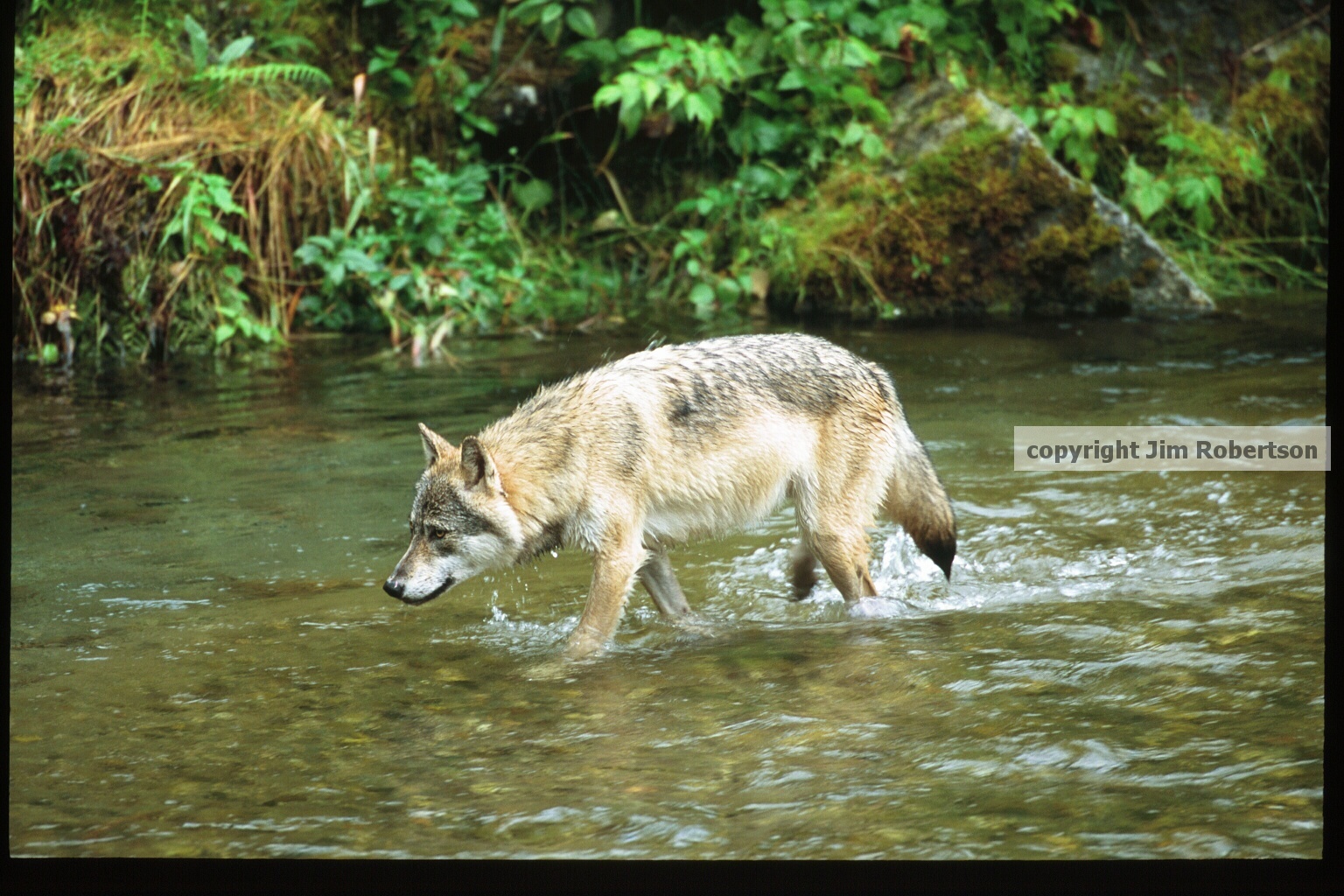
copyrighted Hayden wolf in lodgepoles

Oregon wolves a conservation success story, biologist says

 Eric Mortenson

Capital Press   March 6, 2015 

With nine packs and six pairs that may grow to form more, Oregon’s gray wolf population is increasing at a healthy pace.
SALEM — With nine known packs and six “start-up pairs” identified, Oregon’s gray wolves are continuing to increase and are spreading from the northeast corner of the state, the state’s wolf program coordinator reported to the state Department of Fish and Wildlife Commission Friday.

Wildlife biologist Russ Morgan said Oregon’s wolves are increasing at a pace identical to their recovery in the northern Rocky Mountains.

“From a conservation perspective this is very much a measure of success,” Morgan said.

The 2014 shows Oregon has a minimum of 77 wolves, including 26 known pups, in nine packs. More importantly, eight of those packs contained breeding pairs, meaning they had at least two pups that survived to the end of the year.

The numbers mean ODFW now moves into what’s known as Phase 2 of the Oregon Wolf Plan, the hard-fought compromise that governs wolf conservation and management in the state. It also means the agency can propose removing wolves from the state’s endangered species list. That’s likely to be a lengthy public process. More immediately, Phase 2 gives ranchers the right to shoot wolves caught in the act of biting, killing or chasing livestock.

State delisting would eliminate endangered species status for wolves in the eastern third of the state. Wolves in the rest of Oregon — all areas west of state Highways 395, 78 and 95 — remain covered under the federal Endangered Species Act, administered by the U.S. Fish and Wildlife Service. The federal jurisdiction includes the Southwest Oregon Cascades now inhabited by the well-traveled OR-7 and his mate and pups.

Oregon’s true wolf population is unknown but is certainly higher than 77, Morgan said. The state tracks wolves from signals emitted by radio collars, but only 33 wolves have been collared in a decade of work. Many of those collars have failed, or the wolves have died or been killed, leaving researchers with only 13 collared wolves at year’s end. Three radio-collared wolves dispersed out of state in 2014, Morgan said. One was killed in Idaho, one was killed in Montana, and the third is living in Washington, Morgan said.

In his remarks to the wildlife commission and in an interview, Morgan said five of the six pairs living outside designated packs are known to be male-female pairs, which could produce pups and expand to pack status.

“These pairs are very important, they really represent an increasing population,” Morgan said.

In comments to the commission, representatives of three hunting organizations said the state should continue following the wolf plan guidelines.

“Certainly the population growth has caused some issues, but we strongly support staying the course with your plan,” said Dave Wiley, representing the Rocky Mountain Elk Foundation.

Stephanie Taylor of Portland, who said she has an environmental science degree and hopes to become a wolf biologist, said it is “premature” to allow ranchers to take lethal measures against wolves.

Jerome Rosa, executive director of the Oregon Cattlemen’s Association, said the population increase means it is time to “think about the maximum number of wolves that will be acceptable.”

Rosa said the OCA is working on a idea to help fund endangered species programs with a self-imposed fee assessed to ranchers. “It would be unprecedented for our organization,” he said.

The OCA has previously said it expects more attacks on livestock this year if wolves remain on the endangered species list.

Conservation groups oppose delisting Oregon wolves too soon. Oregon Wild, a key player in formulating the wolf plan, said the wolf count represents “great progress” but does not represent biological recovery. Conservation director Doug Heiken has said the state needs to see better geographical distribution of wolves as well. He said that will happen over time if wolves are not prematurely delisted and “persecuted.”

NJ State inflating bear population total to justify expanded hunt

DSC_0104

http://www.nj.com/sussex-county/index.ssf/2015/03/nj_bear_hunt_animal-rights_group_doubt_population.html

BySeth Augenstein | NJ Advance Media for
March 04, 2015
Opponents of a bigger, longer bear hunt charged today that the state is
artificially inflating the number of bruins in New Jersey to placate
hunters, and have vowed to fight a plan to kill more bears each year.

The state’s Fish and Game Council unanimously approved a bear
“management” plan Tuesday that would open the majority of North Jersey
to the hunt adding a total of 633 square miles of new hunting grounds.

The plan would also lengthen the hunt to as much as 16 days each year,
including a week in October, instead of just the current 6-day December
season. The use of bows and arrows would also be allowed.

The bear population is the big contention point, as it has been for more
than a decade of courtroom battles and public protests.

“We’ll be considering all our options — including legal options,” added
Doris Lin, director of legal affairs for the Animal Protection League of
New Jersey.

Before the annual hunt started in 2010, the bear population was
estimated by the state at 3,400. About 1,900 were killed over the course
of the five yearly hunts, held each December.The state said there were
2,500 bears prior to the December 2014 hunt, officials
said at the time.

But when the plan for future hunts was unveiled Tuesday, the population
estimate was revised to its highest total yet: anywhere from 3,500 to
4,000. State biologists said it was data collected during the December
hunt that showed an unexpected surge in the population.

“They have high reproductive rates,” said Tony McBride, a supervising
wildlife biologist with the Division. “It’s all habitat quality.”

Black bear litters are larger here than the average in other parts of
North America, the state scientists say. Females bears in New Jersey
produce three bears per litter — compared to one or two per litter in
the western United States, said McBride.

But five or six cubs have been counted in some New Jersey litters,
according to the new bear management plan. The Garden State has the
perfect mix of southern and northern forests that provide a variety of
acorns and other natural foods which lead to much higher reproductive
rates, said McBride.

But skepticism from the critics abounds. Animal-rights groups allege the
Division of Fish and Wildlife changes its estimates to suit its
hunter-first plans.

The latest population estimates are a way to drum up public support for
the hunt, they contend.

“Whenever it’s convenient for them, they say the bear population is
going up or going down,” said Lin. “Now that they want to expand the
hunt, they say they’re up.”

“It’s hard to know what to say,” added Susan Russell, the wildlife
policy director of the Animal Protection League. “The hunters wanted to
get bowhunting, and they got bowhunting. This is what they wanted — and
they’re going to get it.”

The public will have its say on the new hunt and management plan. The
DEP commissioner must approve the plan, it must be published in the New
Jersey Register, and the public will have 60 days to comment – including
a hearing. Bothwill be announced by the DEP

An NJ Advance Media analysis of statewide bear complaints conducted in
December showed that Category I incidents — the most-serious and aggressive incidents
— increased significantly after the 2013 hunt, as the population
approached pre-hunt levels, according to Department of Environmental
Protection statistics.Aggressive-bear complaints were initially pushed
down by the first hunts, but later made a resurgence.

Dave Chanda, the director of the Division of Fish and Wildlife, told NJ
Advance Media that the approval of the new plan would be too late to
open for the October season this year.

Florida Reinstates Bear Hunting Season

http://www.npr.org/2015/02/28/389516451/to-curb-bear-population-florida-reinstates-hunting-season

To Curb Bear Population, Florida Reinstates Hunting Season

February 28, 2015

For the first time in two decades, Florida officials have scheduled a bear hunting season. It’s a response to a rise in bear attacks — but it has some environmentalists upset.

Experts say there’s plenty of room for humans and black bears to co-exist, but the smell of food is pulling the animals out of the woods and into neighborhoods.

If you want to understand the situation, take a trip to Franklin County, in the pandhandle. A few months ago, a bear attacked a teenager there while she walked her dog near a convenience store.


Kaitlin Goode, a biologist with the Florida Fish and Wildlife Conservation Commission, explains that garbage — strewn through the woods and across the road at a recycling center for appliances — is part of the problem. She says bears can’t help but drag tasty things back into the woods.

“These communities are backed right up to the forest, and it’s just a bear pump,” Goode says. The bears are flourishing in the woods, she says, “and they smell this. They might be in the middle of the woods, but they can smell this.”

Bears are making a comeback in the panhandle — where it’s mostly forest — and in the rest of Florida. In 2002 when the Fish and Wildlife Conservation Commission, or FWC, did its last population count, there were about 3,000 bears. Now they’re counting again.

Thomas Eason, the state director of Habitat Species Coordination at the FWC, says he expects the population to have grown significantly because of increased bear sightings.

“As you get more bears, particularly with more people, you start having more and more negative interactions,” he says. “And so, finding that balance point that we call cultural carrying capacity is important.”

To reduce human-bear conflicts, FWC wants new feeding rules and more bear-proof trash cans. Hunting is part of the plan, too.

The state hunt isn’t finalized and won’t be until the fall, but environmentalists are still upset. Kate MacFall of the Humane Society of the United States, says there’s no evidence a hunt will help.

“It’s a recreational activity that a small percentage of the population wants to do,” she says. “But in terms of decreasing human-bear conflicts, there is no science that supports that.”

MacFall says if wildlife officials want to reduce bear attacks, they need to focus on getting people to stop feeding bears — whether through intentional feeding or letting the animals go through the trash.

If none of these solutions work, the bears could be moved.

Caster is a 20-year-old black bear who lives at the Tallahassee Museum. During the fall, the bear needs to consume more than 15,000 calories daily. Mike Jones, an animal curator at the museum, says that drive for food is what landed Caster there.

“He started going to everybody’s houses and going in garages,” he says. “So the Fish and Wildlife Service relocated him and moved him about 150 miles away into a big swamp area.”

But Caster couldn’t stay away from people so officials moved him to a zoo.

He’s lucky. Last year, Florida Fish and Wildlife officials had to kill almost 50 bears that had started to associate humans with food.

DSC_0026

New Conservation Science is Misguided and Too Much About Us‏

 
New Conservation Science is Misguided and Too Much About Us

New Conservation Science is Misguided and Too Much About Us

By Marc Bekoff Ph.D. on February 21, 2015 in Animal Emotions
New Conservation Science argues conservation should focus on human self-interests. It is wrong-minded and ignores the magnificence of nature including the fact that animals and diverse ecosystems have intrinsic value and should be valued for who and what they are, not for what they can do for us. There are far too many of us and it shouldn’t be all about us.

NOAA removes the eastern Steller sea lion from the Endangered Species Act list, Oct. 2012

[This situation mirrors the removal of wolves from the ESA list. The attitude is, “It’s all here for humans, all other predators need not apply. Go away and find your own resources.”]…

http://alaskafisheries.noaa.gov/newsreleases/2013/easternssl102313.htm

NOAA removes the eastern Steller sea lion from the Endangered Species Act list

After public input and careful scientific review, NOAA Fisheries has found that the

Wildlife Photography ©Jim Robertson. All Rights Reserved

Wildlife Photography ©Jim Robertson. All Rights Reserved

eastern distinct population segment of Steller sea lions has recovered and can be removed from the list of threatened species under the Endangered Species Act. This is the first species NOAA has delisted due to recovery since the eastern North Pacific gray whale was taken off the list of threatened and endangered species in 1994.

“We’re delighted to see the recovery of the eastern population of Steller sea lions,” said Jim Balsiger, Administrator of NOAA Fisheries’ Alaska Region. “We’ll be working with the states and other partners to monitor this population to ensure its continued health.”

NOAA has concluded delisting is warranted because the species has met the recovery criteria outlined in its 2008 recovery plan and no longer meets the definition of a threatened or endangered species under the act. A threatened species is one that is likely to become endangered within the foreseeable future throughout all or a significant portion of its range. An endangered species is one that is in danger of extinction throughout all or a significant portion of its range.

The best available scientific information indicates the eastern Steller sea lion has increased from an estimated 18,040 animals in 1979 to an estimated 70,174 in 2010, the most recent year for which data are available. Eastern Steller sea lions will continue to be protected under provisions of the Marine Mammal Protection Act.

Steller sea lions were first listed as a threatened species under the ESA in 1990. In 1997, NOAA scientists recognized two distinct population segments of Steller sea lions: a western and an eastern segment. The eastern segment includes Steller sea lions from Cape Suckling, Alaska, south to California’s Channel Islands. The western population segment remains classified as endangered. NOAA is not proposing any changes to the status of the western Steller sea lion.

On June 29, 2010, NOAA Fisheries provided notice that it was initiating a status review of the eastern Steller sea lion and requested public comment. During the comment period, NOAA Fisheries received two petitions to delist the eastern Steller sea lion: one from the states of Washington and Oregon; and one from the State of Alaska.

On April 18, 2012, NOAA released a draft status review, which underwent independent peer review and proposed to remove eastern sea lions from the list of endangered and threatened wildlife. NOAA requested, received, and considered 1,144 public comments during the 60-day comment period.

With the delisting, federal agencies proposing actions that may affect the eastern Steller sea lions are no longer required to consult with NOAA Fisheries under section 7 of the ESA. However, NOAA Fisheries will continue to monitor the effects of proposed projects on the eastern population to ensure existing measures under the MMPA provide protection necessary to maintain recovered status.

NOAA Fisheries is proceeding carefully to ensure the eastern population segment remains strong. Working with affected states and other partners, NOAA has developed a post-delisting monitoring plan for this population. As a precautionary measure, the plan will be in effect for 10 years–twice the five year time requirement under the ESA. If implemented as intended, this plan takes the important steps necessary to maintain the recovered status of the eastern Steller sea lion.

The delisting of the eastern Steller sea lion will take effect 30 days after publication of the final rule in the Federal Register.

NOAA’s mission is to understand and predict changes in the Earth’s environment, from the depths of the ocean to the surface of the sun, and to conserve and manage our coastal and marine resources. Join us on Facebook, Twitter and our other social media channels at http://www.noaa.gov/socialmedia.

To learn more about NOAA Fisheries in Alaska, visit alaskafisheries.noaa.gov or www.afsc.noaa.gov.

Captain Paul Watson on B.C. Wolf Kill

copyrighted wolf argument settled

http://www.theglobeandmail.com/news/british-columbia/bc-sparks-controversy-by-bringing-back-wolf-hunt/article22547547/

Critics of the helicopter hunt say endangered caribou herds are in decline because of habitat loss, not wolf predation, and that shooting wolves in a pack can traumatize the rest of the family group.

B.C. sparks controversy by bringing back wolf hunt

The British Columbia government is back in the air shooting wolves nearly 30 years after it abandoned a controversial aerial hunt that triggered rallies in several U.S. cities and saw activists parachuting into the wilderness in an attempt to stop the kill.

The government is refusing to divulge how many animals it has shot during the first week of the helicopter hunt, but its plan to protect endangered caribou by eliminating nearly 200 wolves in the South Selkirks and South Peace regions is once again threatening to stir protests from activists, including Paul Watson.

Mr. Watson, perhaps the world’s most famous wildlife campaigner, said B.C.’s justification for the hunt is no more acceptable now than it was in the 1980s, when he first drew international attention to it.

“There are a lot of activists in British Columbia. I’m going to talk to them about reviving Friends of the Wolf,” Mr. Watson, head of the Sea Shepherd Conservation Society, said on Tuesday in an interview from Paris.

Mr. Watson founded Friends of the Wolf in 1984 to campaign against the hunt, which stopped in 1985, only to be revived briefly in 1987. Over four years, about 1,000 wolves were killed to reduce predation of moose, caribou and mountain sheep.

“Maybe we’ll have to make a big deal of it, like we did in 1984, ’85,” Mr. Watson said.

“I think it’s a complete disgrace,” he said of the hunt. “There’s no scientific evidence behind this. Wolves and their prey are very important and essential part of the ecosystem and we are constantly disrupting it.”

Ian McAllister, a wildlife photographer and head of Pacific Wild, said opposition to the wolf hunt is growing rapidly.

“I can say that in 20 years of wildlife work, I’ve never seen a reaction like what we are seeing right now. We’ve had one-and-a-half million people go through our website, we got something like 40,000 signatures [on a petition] urging government to reconsider this,” he said. “All our phone lines were jammed with people calling. They are just outraged about this.”

Mr. McAllister has spent years photographing wolf packs at close quarters. He said wolves are highly social, and shooting even one in a pack can traumatize the rest of the family group.

“To start killing and wounding numerous ones, day after day, it’s horrendous. It’s one of the most inhumane things humans could commit in the natural world. It’s unthinkable,” he said.

Sadie Parr of Wolf Awareness Inc., a B.C.-based non-profit foundation dedicated to public education, said the endangered caribou herds are in decline because of habitat loss, not wolf predation.

“This certainly is a conservation dilemma,” she said of the declining caribou herds. “It’s a very complicated problem. But we have to recognize we are in this situation because of us [humans], not because of anything wolves have done.”

Ms. Parr said she has been bombarded with requests for information since the hunt was announced last week.

“People are really, really upset, and rightfully so. This is barbaric and the world is paying attention,” she said.

The B.C. Ministry of Lands did not have a spokesperson available on Tuesday, but e-mailed a statement from Stan Boutin of the University of Alberta, who conducted an independent review of the wolf management plan.

“I support the B.C. government decision to use wolf control in an attempt to recover the herds,” he wrote. “Wolf control appears to be part of a broader recovery plan that also includes important measures to protect and recover habitat.”

But Green MLA Andrew Weaver said the government cannot verify its claim that wolves are the leading cause of caribou mortality.

“I am supportive of science-based initiatives that promote conservation but in this particular case, I cannot find the ‘evidence’ the government is apparently relying on,” he wrote in a letter to Lands Minister Steve Thomson.