If wolves could manage humans it might look like this:

DRAFT Management Plan for Humans (Homo sapiens) in British Columbia

By Ken S. Lupus et al., B.C. Ministry of Wild Wolves

(EXECUTIVE SUMMARY)copyrighted wolf in water
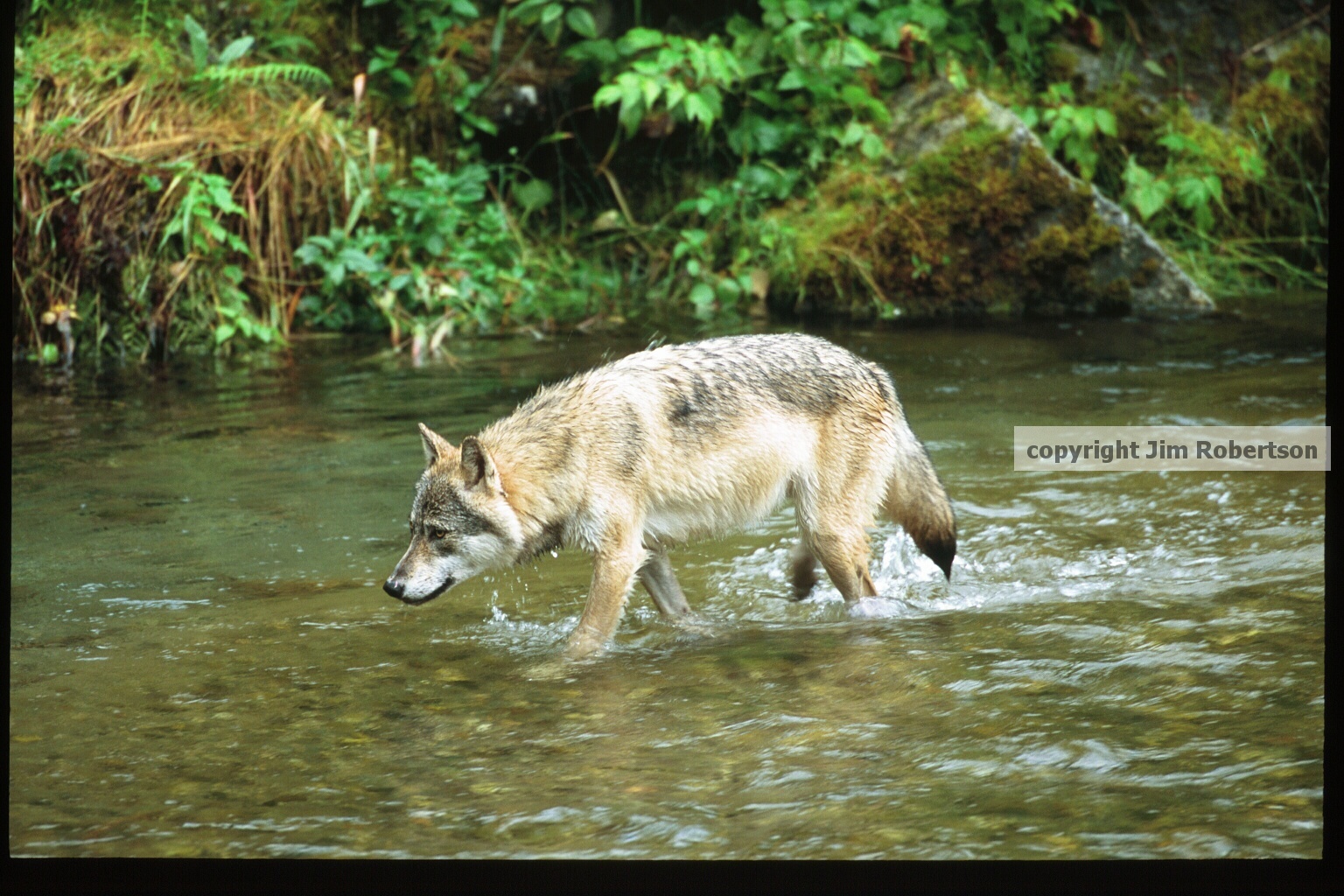
We model the structure of our plan after the B.C. government’s “Draft Management Plan For The Grey Wolf In British Columbia.” Although our plans are fundamentally different in how we decide to treat one another, we similarly assert that this document is premised on the best available scientific information. (Note: we consulted with Raincoast biologists and
large carnivore experts Drs. Chris Darimont and Paul Paquet).

Notably, however, our management plan for humans draws upon an additional and important dimension that shapes policy in advanced civilizations: commonly held ethical values.

As the province did, we begin with some straightforward conservation context. Based on their rapidly increasing numbers and range, humans have been categorized as not at risk by the Lupine Committee of Categorizing Other Animals We Have Never Harmed. We note, however, on the other hand-
and despite thousands of management plans by humans -global biodiversity is severely threatened as a result of human activities.

According to information shared by human sources, Homo sapiens play a very important role in maintaining so-called “game” populations, raising livestock among us wolves in formerly wild landscapes, and saving animals like caribou from rapid extinction due to resource extraction activities. On the other hand, some hunters, livestock groups and government-industrial complexes behind these ostensibly noble acts also comprise a significant threat to wolf safety and welfare. Accordingly, our plan must strike a balance to manage humans for conservation while minimizing conflicts with wolves.

We likewise adopt the same four management objectives stated by our simian colleagues, though with modified details. Topping this list is to ensure a self-sustaining population of humans throughout the species’ range. We suppose that we will have to accept this inevitability. We suspect, however, that this spells trouble for us. If human behaviour remains unaltered – and caribou continue to dwindle and ranchers continue to believe that some god created landscapes with only their cows in mind – we expect a future of increasing conflicts.

Our plan’s second objective is to provide for non-consumptive use of humans. Why not? No harm in setting up some eco-tourism by us wolves to partake in some human-watching. We need not look further than Yellowstone National Park, and Algonquin Park to know that humans can make a mint with sustainable wolf-based eco-tourism.

Unlike the province’s anachronistic seat-of-the pants wolf management plan, however, which was designed by more wanton predators, we have no plans for so-called “consumptive” use of humans. Although humans would be easy pickings, we are just not known to do this. And really, why would anyone kill something for any other reason than to eat?

For sport or for trophy? No thanks. Surely no advanced society would ever condone or endorse that sort of behaviour. Nor
would any real hunter. That just leaves a bad taste in our mouths (and to put how awful that is in perspective, we often eat poop).

Perhaps the most important part of our “Draft Management Plan For Humans In British Columbia” is to minimize the threat to wolf safety caused by humans. Whereas wolves pose a very limited threat to humans, the opposite is certainly not true. For instance, the B.C. government says that approximately 1,200 of us wolves were killed deliberately in 2010 by hunters and trappers for sport, trophy or profit.

While human “wildlife managers” are quick to point out that we wolves can replenish our numbers, even amidst such persecution, our concern is the suffering imposed on us. Imagine the pain when the hot metal of bullets shreds our viscera (or worse, our limbs) or the agony inflicted when one of
us is tormented by a leg-hold trap. Clearly, any management plan should address suffering among highly sentient animals.

Unfortunately, our plan to minimize threats to wolf safety has no details. Given all the technological advantages humans have acquired to use against wolves like high-powered rifles, helicopters, deadly poisons, traps, snares and explosive devices, predator calls to lure us and more, they simply have
the upper hand.

Finally, and again mirroring the B.C. government’s wolf management plan, our fourth objective is to control specific populations of humans where their activities are likely preventing the recovery of a species at risk (e.g.,
endangered populations of caribou). Whereas humans have hatched some vicious scapegoating campaigns and lethal plans for us as last ditch efforts to save caribou from logging or oil and gas extraction, we have yet to find successful methods to control these industries. We therefore appeal to our human friends within B.C. for help.

To conclude, we turn to history to muse about the future. It has taken decades to expunge, in part, the nonsense about wolves portrayed in human generated fairy tales (and not just children’s stories, but also adult constructs such as the perversely and ironically named “North American Model of Wildlife Conservation”). How many more decades will it take to do the same in provincial management plans for wolves?

This article was co-authored with Raincoast Conservation Foundation science director Dr. Chris Darimont and Raincoast senior scientist Dr. Paul Paquet.

Please Don’t Let Pedophiles Run the PTA

Things have been the way they are for so long that most people just accept them. But when you stop and think about it, having hunters be in charge of the wildlife departments is like appointing pedophiles to run the PTA. We must never lose sight of the fact that hunters have ulterior motives for our precious wildlife.

When hunters say they “care” about animals, well, they mean it in a lustful, self-serving sort of way. And when they use words like “love” and “respect,” they sound about as sincere as a spousal abuser, rapist or pedophile referring to the objects of their obsession.

Hunters have no business “managing” wildlife. They can’t seem to understand that the objects of their obsession are sentient beings with needs, wants and life experiences of their own. And every time game departments disrespect Mother Nature by calling for another “management action,” they are renouncing her healing ability and cheating her out of one more chance to restore her time-tested balance.

Text and Wildlife Photography ©Jim Robertson, 2014.

Text and Wildlife Photography ©Jim Robertson, 2014.

Ohio expands hours of youth deer-hunting season

[There are only around 8,000 wolves in the entire lower continental U.S., yet last year, young hunters checked nearly 9,200 white-tailed deer during the two-day season. How long, will it take a hunters and trappers to eliminate all the wolves?]
http://www.wkyc.com/story/sports/outdoors/2013/11/23/ohio-expands-hours-of-youth-deer-hunting-season/3685739/
The Associated Press

COLUMBUS — Ohio is slightly extending the hours during which young hunters

Wildlife Photography ©Jim Robertson

Wildlife Photography ©Jim Robertson

can take white-tailed deer during the two-day season this weekend.

The Ohio Department of Natural Resources says youngsters can hunt deer from 30 minutes before sunrise to 30 minutes after sunset on Saturday and Sunday. The hunters must have a hunting license and a deer permit. They’re required to wear hunter orange and be with an adult who isn’t hunting.

Last year, young hunters checked nearly 9,200 white-tailed deer during the two-day season.

Letter: Humans caused geese “problem”

The following is my Letter to the Editor, printed recently in a Seattle area paper…

Dear Editor,

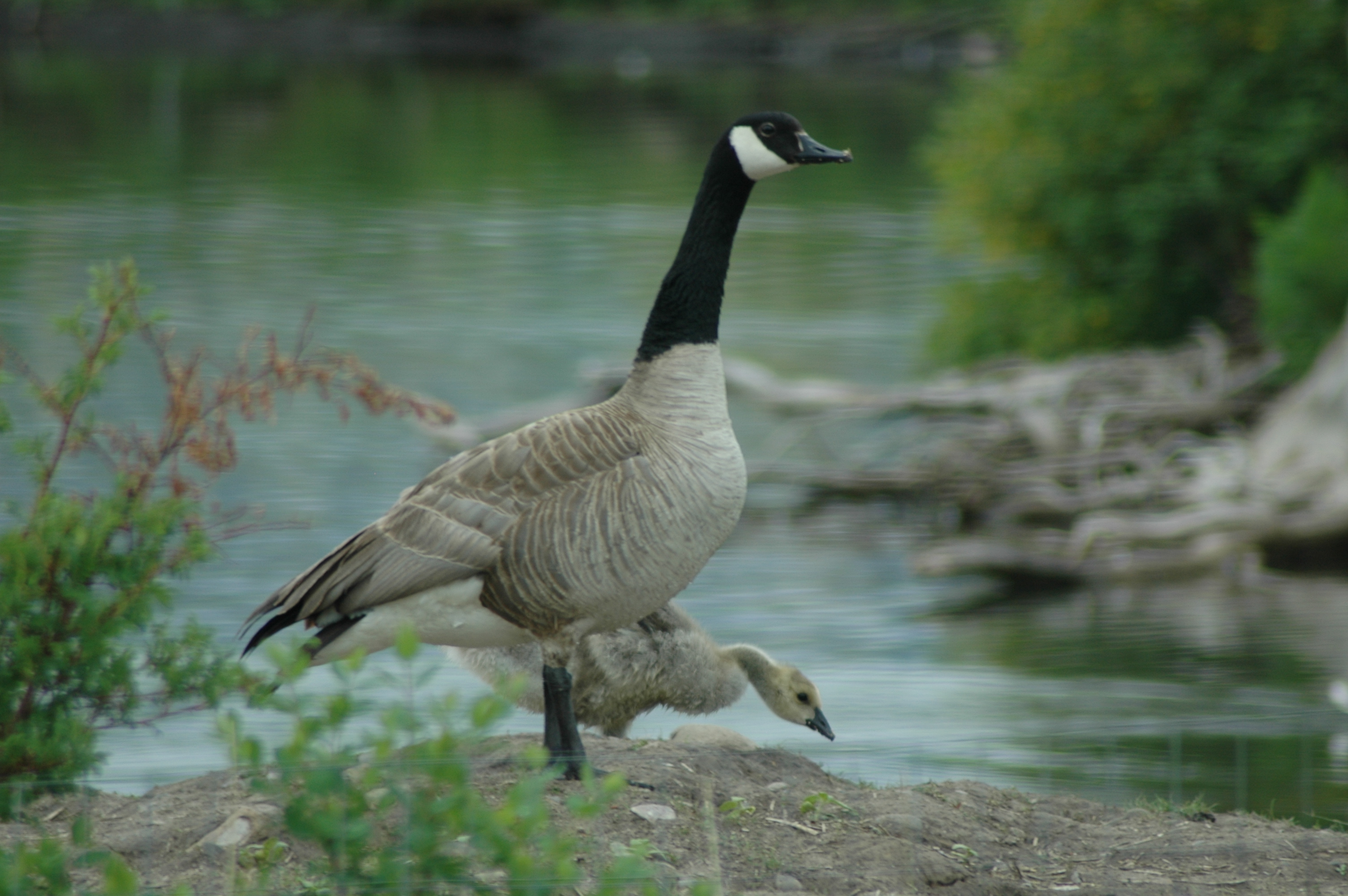
Whenever I read an article like “Canadian geese euthanized at Lake Sammamish State Park” (Aug.7, 2013) I’m appalled by how indifferently someone can report on the extermination of entire families of intelligent, social animals. If people knew geese as personally as I do, they would surely think the species every bit as worthy of respect as our own.

I’ve watched them go through their courtship and nest-building routines, seen a gander loyally guarding his mate while she dutifully incubated her eggs, day and night, throughout windstorms and heavy snowfalls during the fickle Montana spring and witnessed with delight the hatching and rearing of their precious chicks.

The goose situation is all the more maddening since, as with so many other so-called wildlife “problems,” it was brought on by humans themselves. The old growth forests that once grew to the water’s edge were felled years ago; shrubs like salmonberry or huckleberry as well as riparian vegetation that used to house frogs and provided cover for fish have been torn out and replaced with concrete bulkheads, backfill and manicured lawn grass.

The end result of this rampant manipulation is a strange new world, inhospitable for all but the most grass-loving of creatures. And it just so happens that geese, like humans, love mowed lawns. But rather than calling in the death-squad from “Wildlife Services” to fire up their gas chambers, why not try replacing some of the acres of grass with native vegetation? I guarantee the geese will move on to greener pastures.

Jim Robertson

Text and Wildlife Photography ©Jim Robertson, 2013

Text and Wildlife Photography ©Jim Robertson, 2013

Annals of Game Management

The only way humans can get chronic wasting disease is by eating deer So the obvious answer is: Don’t kill and eat deer, people! Meanwhile, hundreds of deer–who didn’t even have CJD–were cruelly mowed down by “game” “managers”!!

Michael Elton McLeod's avatarFirst Light Productions

Three years ago, wildlife biologists from the Texas Parks and Wildlife Department drove into the paddock of James Anderton’s Whitetail Ranch hunting reserve. Using rifles mounted on tripods they killed more than 70 of Anderton’s animals, shooting for hours, working the panicked herd back and forth across the paddock, picking them off one by one.….

    A white helicopter with what appeared to be a forward-looking infrared camera mounted to its nose flew lazy loops over the ranch, scanning for survivors.

    Texas wildlife officials were concerned that animals in the herd might be carrying a highly transmissible killer of deer known as chronic wasting disease (CWD).

    Anderton said the deer had been bought in Arkansas, a state with no documented cases of the disease so far. But he couldn’t provide evidence of the state of origin for every animal because he was locked in prison for wildlife trafficking. The FBI and…

View original post 274 more words

Recreational Hunting Redux: Cougar Fund Opts For No Killing

Killing cougars doesn’t solve the “problems” at hand and should stop right now

Published on March 8, 2013 by Marc Bekoff, Ph.D. in Animal Emotions

Government organizations, hunters, and trappers are notorious for wantonly and inhumanely killing millions of nonhuman animals (animals) in their widely ineffective attempt to manage and control “problem” individuals and groups (for detailed discussions and data see and and). Just today I read that more than 550 wolves have been “taken” by hunters and trappers in the Rockies alone this season.

This article continues here:  http://www.psychologytoday.com/blog/animal-emotions/201303/recreational-hunting-redux-cougar-fund-opts-no-killing