Celebrities Want to Tie Trade Pact to Dolphin Hunt

http://abcnews.go.com/Entertainment/wireStory/celebrities-tie-trade-pact-dolphin-hunt-22385320

WASHINGTON February 6, 2014 (AP)

Associated Press

A group of American celebrities and other activists want President Barack Obama to refuse to sign an international trade agreement until Japan bans the capture and slaughter of dolphins in the fishing town of Taiji.

Backing the effort are Oscar-winning performers Sean Penn, Cher, Susan Sarandon, Jennifer Hudson, Gwyneth Paltrow and Charlize Theron as well as TV stars Ellen DeGeneres and William Shatner, and many others.

The Oscar-winning 2009 documentary “The Cove” chronicled the dolphin roundup in Taiji and helped spark protests over the annual hunt and ensuing slaughter. Japanese law allows a hunting season for dolphins, and fishermen defend it as a tradition.

In a letter dated Wednesday that included dozens of names, hip-hop producer Russell Simmons asked the U.S. ambassador to Japan, Caroline Kennedy, to urge Obama not to sign the Trans-Pacific Partnership, or TPP, until Japan bans the hunt. Kennedy recently tweeted that she was deeply concerned about the dolphin hunt, which has drawn widespread news coverage.

Simmons’ letter said those signing don’t oppose the TPP but seek to make stopping the dolphin hunt a key factor in negotiations. The free trade agreement is being negotiated by 12 nations that account for about 40 percent of global gross domestic product.

The letter said that corporations have spent the past two years crafting language in the TPP “to serve their interests.”

“Should human compassion not be afforded the same privilege as business interests?” the letter stated. It added: “The world is looking to you, Ambassador Kennedy, and to our government to send a clear message to Japan that this atrocity must be banned now.”

After Kennedy’s tweet, a State Department spokeswoman told reporters that the U.S. was “concerned with both the sustainability and the humaneness of the Japanese dolphin hunts.”

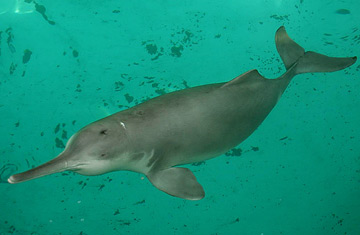
Simmons said more than 600 dolphins have been slaughtered since the hunting season360_yangtze_dolphin_0810 began Sept. 1. Anti-hunt activists reported that dozens of fishermen helped to herd about 250 dolphins into a cove one day last month. Of those, about 40 were eventually killed for their meat. At least 50 others were kept alive for sale to aquariums and others, and the remaining dolphins were released.
Urge School District to Ditch Massive Plastic Dump!

An estimated 20 million tons of plastic litter enter the world’s oceans

Photo Copyright Jim Robertson

Photo Copyright Jim Robertson

annually, killing more than 1 million seabirds and 100,000 marine mammals and turtles. Yet on February 8, Alvin Independent School District in Southeast Texas plans to release 10,000 plastic turtles into Mustang Bayou—a waterway that flows into the Gulf of Mexico. Foraging birds and other wildlife find small brightly colored pieces of degraded plastic irresistible, and many ingest the plastic or feed it to their babies. Their digestive systems become blocked, ultimately resulting in starvation (see more here). Alvin school officials claim to make dedicated efforts to retrieve all 10,000 plastic turtles at the end of its “turtle race” fundraisers, but a single one missed could have devastating consequences. Your voice is needed!

Please urge Alvin Independent School District officials to replace this event with one that won’t pose a threat to animals or the environment. And please forward this alert far and wide!

Polite comments can be sent to:
•Fred Brent
Superintendent
Alvin Independent School District
fbrent@alvinisd.net
•Alvin Independent School District Board of Trustees
twennerstrom@alvinisd.net
rmetoyer@alvinisd.net
charris@alvinisd.net
sstringer@alvinisd.net
mike@insurancetexas.net
cmccauley@alvinisd.net
ntonini@alvinisd.net

Read more: http://www.peta.org/action/action-alerts/urge-school-district-ditch-massive-plastic-dump/#ixzz2s0h2HR9G

Twenty-first Century Swastikas

For over half a century the Nazi swastika—that all too familiar symbol of hate—has been relegated to the dark corners of extremism, never to be openly displayed on a flag or uniform again. The Nazi credo was perhaps as confusing as it was complex, but generally, it was the definitive case of one group vilifying and scapegoating another.

Today, a similar type of blind hatred rules in areas where exploitive or extractive animal industries are considered a way of life. One can hardly drive a mile in parts of rural America without seeing emblems of extremism in the form of hateful bumper stickers touting selfish anti-wolf slogans like, “Smoke a Pack a Day” or, in areas where wolves are still extinct, “Did the coyotes get your deer?” Another popular hate-symbol adorning the back of all too many rural pickup trucks is simply a silhouette of a wolfNT wolf bumpr stickr inside a red circle with a slash through it.

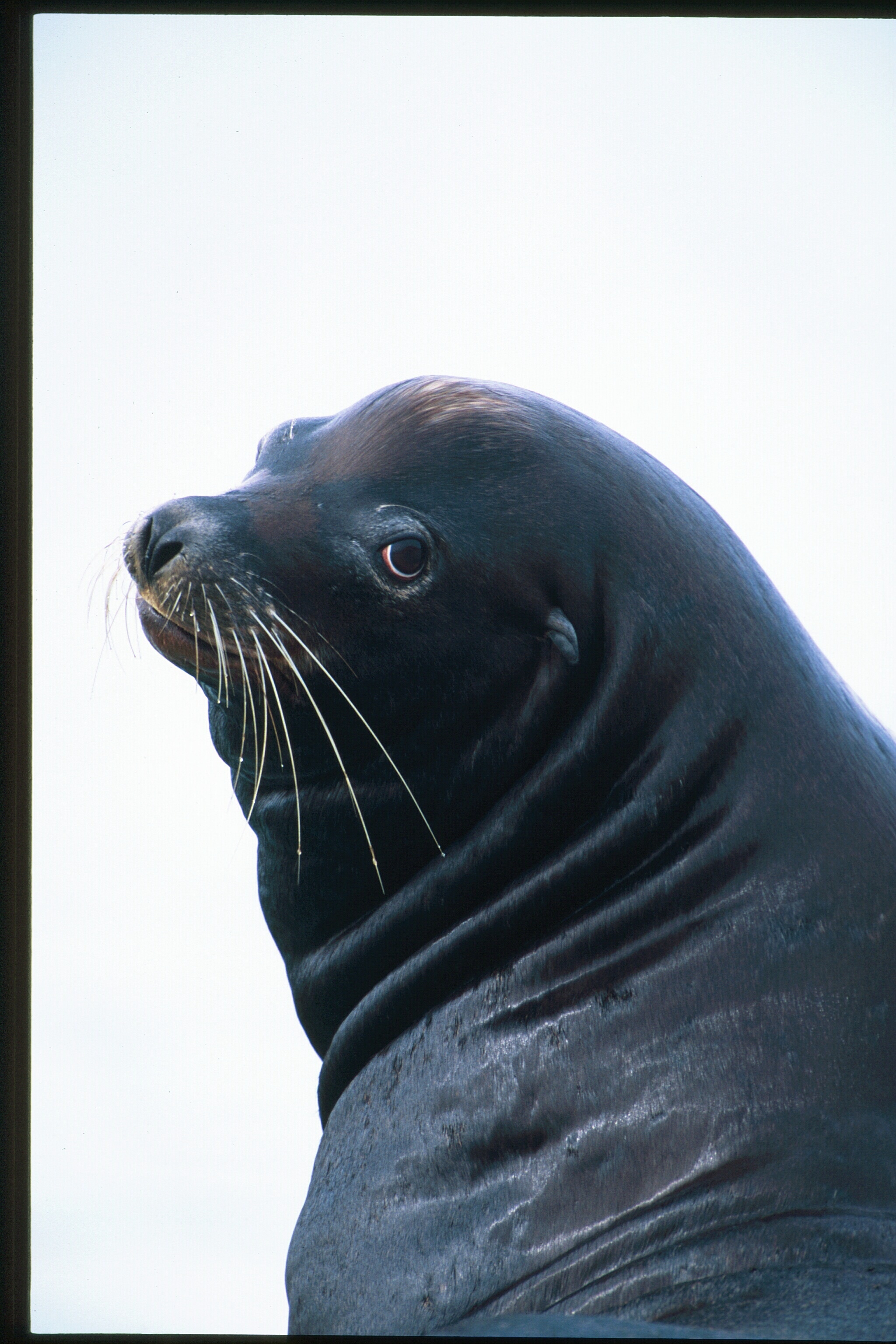
In certain towns along the Pacific Northwest coast, where commercial fishing is a dying “way of life” (because dams and overfishing had nearly wiped out the salmon), the trendy stickers of ignorance and intolerance feature a sea lion with a fish inside a red circle and slash. The message is clear, sea lions can starve and die off, the humans have claimed the fish for themselves.

And although sea lions are indeed starving and dying off, it isn’t happening fast enough for some small minded, self-serving fishermen who shoot them, in defiance of the Marine Mammal Protection Act, just as the wolves in the tri-state and Great Lakes regions become victims of those who claim all land animals as “resources” and can’t stand the competition from those natural predators. Blatant Nazism may be a thing of the past, but speciesist extremism is alive and well all across America.

DSC_0131


The Root of All Evil

Cattle ranchers in northeast Washington call for the renewed extermination of wolves, a species extinct from the area until recently thanks to shallow minds and destructive policies. Meanwhile, commercial fishermen take every opportunity to shoot protected seals and sea lions they view as competition for the fish their nets drag in by the thousands. And news that the Arctic sea ice has retreated to an all-time historic low, due to climate change wrought by the burning of fossil fuels, factory farming and a host of other human-induced hazards, only emboldens oil companies to drill offshore there and tempts industrialists from U.S., Canada, Beijing and beyond to use the fragile polar waters as a new shipping route.

It appears that Paul Ryan and Ayn Rand aren’t the only ones who think selfishness is a virtue.

Loath to share with other species what they see as their entitlements, animal exploiters think nothing of calling for the annihilation of long-besieged predators like wolves. Washington state rancher, Bill McIrvin told the Capital Press he is hoping for a total deletion of the Wedge Pack: “If we can get this pack removed, hopefully we’ll have long enough that people in Washington can wake up and see what’s going to happen to our game and our livelihood.”

The attitude, adopted by ‘wise use’ resource extractors across the board, goes something like, “Our ancestors massacred the wolves for our benefit, now the ‘game’ and the land are ours to do with as we see fit.” It’s the same self-centered stance taken by fishermen against marine mammals. Never mind that those intelligent Earthlings were mercilessly slaughtered during the nineteenth and twentieth centuries, today’s ocean exploiters see them as nothing more than rivals for ‘their’ fish. Meanwhile oilmen disregard all other animal life, and the very climate on which we all depend, in the single-minded veneration of the almighty dollar.

Yet, a dollar in and of itself is just a neutral marker of means. Money, like a gun, depends on human intent to unleash its devastating power.

No, I’m afraid to say, Mr. Ryan, selfishness is not a virtue—it’s the real the root of all evil.

Text and Wildlife Photography ©Jim Robertson

Compassion For All, Not Just the Endangered

On Friday I drove out to spend a peaceful, sunny afternoon at an ocean beach, but instead of finding serenity, I came across an emaciated female California sea lion. I learned from locals passing by that she had been seen there for the past 5 days!!  She was obviously sick or injured and had been starving for a long time. I couldn’t see any bullet holes, but there were over two dozen commercial fishing boats (trawlers) visible just offshore. There has been a rash of 20+ dead sea lions with gunshot wounds washing ashore this spring, and no one has any doubts that they’re being shot by the fishermen who view them as competition, the same way elk hunters in the Rockies see wolves. 

I called a nearby Aquarium who has been performing necropsies on the dead sea lions in the area, but they said they couldn’t (or wouldn’t) do anything about her. Everyone I spoke with to try to get some help for her said they couldn’t (or wouldn’t) get involved because they feared the National Marine Fisheries Service would “bankrupt” them with fines (no great threat to me as I’m pretty much broke anyway). The so-called Marine Mammal “Protection” Act makes no allowances for protecting injured sea lions–especially not a member of a species, such as the California sea lion, which isn’t currently endangered. 

When I told the people at the Aquarium that it might be a Northern sea lion (an animal on the list of endangered species, thanks to historic sealing and the ongoing over-fishing of their food supply), they showed a bit more interest, but still not enough to come out and do anything to ease her suffering. There was a strong undercurrent that no one would do anything to help a wounded animal which “competes” with fishermen for salmon and other commercially valuable fish. They told me there is a “hands off” approach regarding sea lions (no doubt because of what they eat). This is ironic since their policy of branding them with a hot iron, fitting them with cumbersome radio tracking devises and killing them if they are caught eating salmon at the dam upstream on the Columbia River is anything but “hands off.” 

It was a prime example of how the powers that be don’t allow any compassion for an individual animal whose species is not currently on the brink of extinction. Fisheries agency representatives have the same kind of detached attitude as land-based wildlife “managers,” showing no concern for individuals who may be suffering, only for animal populations as a whole. 

As you can see in the photos, the sea lion is starving. Judging by how little she was able to move around, she is surely unable to feed herself. I spent the afternoon shielding her from getting run over by the many rigs driving up and down the beach, and asking people not to stop and gawk (she would lift her head up whenever anyone pulled alongside her). I left for a while, and when I returned she appeared to have passed on. So I went home, but when I called on Sunday to someone who lives there to find out what happened to the body, he said she is STILL ALIVE! He nonchalantly echoed the attitude of the locals and the authorities alike, “She’ll either pull out of it, or she won’t.” 

Why isn’t there something we can do for her? There are plenty of veterinary and medical facilities nearby, but no one can legally help ease or end her suffering. The authorities say they don’t know who is shooting sea lions out at sea (and they’re not doing anything to try to find out), but they’d love to bust anyone they thought was “interfering” with “nature taking its course,” even if it’s for humane reasons. 

Earlier in the week I discovered a dead juvenile porpoise that had net marks above his tail. It most likely drowned in a fish net and was pitched overboard as bykill. These are just two of the many examples of the hidden cost of that fresh-caught salmon or fish filet in shrink wrap at your local market.