Cyberattack on food supply followed years of warnings

https://www.msn.com/en-us/news/us/cyberattack-on-food-supply-followed-years-of-warnings/ar-AAKJBMo?ocid=winp1taskbar

By Ryan McCrimmon and Martin Matishak – 1h agoLike|163

© David Zalubowski/AP PhotoA shopper surveys the overflowing selection of packaged meat in a grocery early Monday, April 27, 2020, in southeast Denver.

Security analysts from the University of Minnesota warned the U.S. Agriculture Department in late May about a growing danger — a cyber crime known as ransomware that could wreak more havoc on Americans’ food sources than Covid-19 did.

A week and a half later, the prediction became reality as a ransomware attack forced the shutdown of meat plants that process more than a fifth of the nation’s beef supply in the latest demonstration of hackers’ ability to interrupt a critical piece of the U.S. economy.

The hack of the global meatpacking giant JBS last weekend is also the starkest example yet of the food system’s vulnerability to digital threats, especially as internet technology and automation gain an increasing role across farmlands and slaughterhouses. But federal oversight of the industry’s cybersecurity practices remains light, despite years of warnings that an attack could bring consequences ranging from higher grocery prices to contaminated food.

Virtually no mandatory cybersecurity rules govern the millions of food and agriculture businesses that account for about a fifth of the U.S. economy — just voluntary guidelines exist. The two federal agencies overseeing the sector include the USDA, which has faced criticism from Congress for how it secures its own data. And unlike other industries that have formed information-sharing collectives to coordinate their responses to potential cyber threats, the food industry disbanded its group in 2008.

Now, food producers need to face the fact that disruptive cyberattacks are part of what Agriculture Secretary Tom Vilsack calls their “new reality.”© Susan Walsh/AP PhotoAgriculture Secretary Tom Vilsack speaks during an event at The Queen theater in Wilmington, Del.

National security threats to the agricultural supply chain haven’t received enough attention across the entire federal government, argued Rep. Rick Crawford (R-Ark.), who serves on both the House Intelligence and Agriculture committees.

“Too often agriculture is dismissed as: ‘It’s important but it’s not that big a deal,’” Crawford said in an interview. “If you eat, you’re involved in agriculture. We all need to recognize that it’s a vital industry and this [incident] illustrates that.”

The North American Meat Institute, which represents meatpackers, declined to comment on the state of the industry’s cybersecurity measures or potential changes following the hack.

The downside of ‘enormous technology’

The cry of alarm from the University of Minnesota’s Food Protection and Defense Institute arrived in the most unassuming of packages: as one of more than 180 official comments filed to the USDA related to a presidential order about securing the nation’s supply chains.

“Fast-spreading ransomware attacks could simultaneously block operations at many more plants than were affected by the pandemic,” the institute warned in its May 18 filing, noting that Covid-19 last year forced a shutdown of slaughterhouses that prompted fears of meat shortages and price spikes.

It was just the latest in a series of warnings from national security and law enforcement agencies, private cybersecurity companies and academic researchers.

In November, the cybersecurity firm CrowdStrike said in a report that its threat-hunting service had witnessed a tenfold increase in interactive — or “hands-on-keyboard” — intrusions affecting the agriculture industry over the previous 10 months. Adam Meyers, the company’s senior vice president of intelligence, said that of the 160 hacking groups or gangs the company tracks, 13 have been identified in targeting agriculture.

2018 report from the Department of Homeland Security examined a range of cyber threats facing the industry as it adopts digitized “precision agriculture,” while the FBI said in April 2016 that agriculture is “increasingly vulnerable to cyberattacks as farmers become more reliant on digitized data.”

The industry also offers plentiful targets: As the Department of Homeland Security’s cyber agency notes, the ag and food sector includes “an estimated 2.1 million farms, 935,000 restaurants, and more than 200,000 registered food manufacturing, processing, and storage facilities,” almost all under private ownership.

For decades, however, most farmers and foodmakers have prized productivity over all else, including security — trying to eke out profits in an industry with chronically narrow margins and meet the growing global demand for food. In the quest for efficiency, meat plants are ratcheting up their processing line speeds and investing in robotics to more quickly carve up carcasses. Farmers are adopting high-tech innovations like drones, GPS mapping, soil sensors and autonomous tractors, with vast data behind it all.

All that connectivity and automation comes at a cost.

Video: Alarming rise of ransomware attacks (ABC News)Play VideoAlarming rise of ransomware attacks

“This is part of the downside of having an enormous technology, enormous capacity to turn a lot of data and become more efficient,” Vilsack said. “There are risks associated with that.”

‘No industry is off limits’

The disruption to JBS, which controls nearly a quarter of America’s cattle processing, has raised concerns mainly about the impact on meat markets. USDA data shows wholesale beef prices have steadily ticked higher each day since the hack, with choice cuts climbing above $341 per hundred pounds as of Thursday morning.

Higher prices are just one of many potential consequences. Cyberattacks could also lead to the sale of tainted food to the public, financial ruin for producers, or even the injury and death of plant workers, according to the Food Protection and Defense Institute, a DHS-recognized group.

In its public comments to USDA, the institute highlighted gaping holes in the industry’s preparedness, including a general “lack of awareness throughout the sector” and scant guidance from government regulators. It also noted that large parts of the industry rely on decades-old, custom-written software that is essentially impossible to update, along with outdated operating systems like Windows 98.

“The agriculture industry probably lags behind some of the other industries that have been hit harder by cyber crime” like the financial sector, which has long been a prime target for criminals, said Michael Daniel, president and chief executive of the Cyber Threat Alliance, a nonprofit organization.

However, the JBS hack, just like the ransomware attack on Colonial Pipeline in May and the ensuing gasoline-buying panic, shows that “no industry is off limits,” he added. Ransomware operators “are going to go wherever they think they can extract money.”

Daniel, a cyber coordinator during the Obama administration, said he would recommend that industry executives take basic steps like assessing their companies’ digital preparedness and reviewing federal security guidelines.

“What I would be telling them is: You really need to be thinking about how you manage your cybersecurity risk, just like you manage commodity price risk, just like you manage natural disaster risk, just like you manage legal risk,” Daniel said.

The White House similarly advised all companies on Thursday to harden their defenses, including by installing the latest software updates and requiring extra authentication for anyone logging onto their systems.

Meyers, from CrowdStrike, said seriousness with which cybersecurity is regarded varies “depending on who you’re talking to in the ag industry.” He said multinational conglomerates that have intellectual property worth protecting make it a priority, but “as you get down the food chain, so to speak, they probably think about it less seriously.”

The JBS hack “is the big wake-up call for all these small, medium and large businesses. You can’t stick your head in the sand, and hope it’s not going to happen to you because it is,” Meyers said. “You need to be prepared, and you need to get yourself ready to fight. Because if you don’t, you’re going to be paying a ransom and somebody’s going to be eating your lunch.”

A call for Congress to act

Congress may need to step in to help fix the situation, said Crawford, the House member from Arkansas, who reintroduced legislation earlier this year that would establish an intelligence office within USDA. The office would serve as a conduit for the department to keep farmers informed of threats to their livelihood, including espionage and cyber operations by malign actors.

A key reason the industry isn’t prepared against dangers like ransomware is that the U.S. intelligence community hasn’t considered the national security threats to agriculture as much as it should, Crawford argued.

He added that communication must go both ways: Companies need to have their cyber experts share what they see with their government counterparts. No such requirements exist for the food and ag industry.

“What I would advise the private sector to do is be proactive on these things as possible,” according to Crawford, who is organizing a “business intelligence and supply chain integrity” forum this summer that will feature cybersecurity experts, government officials and representatives from the clandestine community to educate local businesses about digital threats.

USDA has not proposed any significant policy changes following the JBS attack, instead asking food and agriculture companies to take voluntary steps to safeguard their IT and infrastructure from cyber threats. Vilsack on Thursday pointed to guidelines from DHS’ Cybersecurity and Infrastructure Security Agency that companies can adopt for their own protection.

There’s no shortage of policy recommendations from experts in the field. Most proposals involve educating industry leaders and employees, setting minimum standards for cyber safety or improving coordination between companies and agencies.

Another step recommended by the Food Protection and Defense Institute: USDA and DHS should work with the industry to create a cyber threats clearinghouse — known as an “information sharing and analysis center” — to collaborate on studying and addressing digital risks.

Other critical industries, including the electricity and financial sectors, already have their own ISACs, but the food industry does not. Instead, some food and ag companies have joined a broader information-sharing group that covers the information technology industry, said Scott Algeier, executive director of the IT-ISAC.

“They wanted to engage with other companies but did not have an ISAC. So they applied to us,” said Algeier, whose organization also provides a threat-sharing forum for the elections industry.

The nonprofit Internet Security Alliance has called for federal grants and other incentives for food companies to step up their cyber defenses.

“Increasing cybersecurity will cost money, and finding the additional funding will not be simple for the sector since it is governed by tight margins and faces a highly competitive world market,” the group wrote on its website.

Helena Bottemiller Evich contributed to this report.

Microsoft may earn an Affiliate Commission if you purchase something through recommended links in this article.Continue reading

Impossible Foods clears legal battle over the ingredient that makes its meat ‘bleed’

https://www.theverge.com/2021/5/3/22418036/impossible-foods-legal-battle-key-ingredient-heme-fda

The contested ingredient is supposed to make Impossible Burgers “taste like meat.”By Justine Calma@justcalma  May 3, 2021, 6:32pm EDT

Share this story

Impossible Burger
Close-up shot of the Impossible Foods Company’s product Impossible Burger in Walnut Creek, California, January 11, 2021.

A San Francisco federal appeals court upheld a decision by the Food and Drug Administration to allow Impossible Foods to use “heme,” the additive the company says makes its products “taste like meat.”

Had Impossible Foods lost this legal battle, it could have dealt a heavy blow to the company. Genetically engineered heme is what sets its products apart from other competitors like Beyond Meat that don’t use the ingredient.HEME IS WHAT SETS ITS PRODUCTS APART FROM OTHER COMPETITORS

The FDA used a weaker legal standard than it should have to approve the use of heme, the nonprofit Center for Food Safety argued in a lawsuit it filed last year. It said the FDA made its decision based on safety standards for food additives rather than on standards for color additives, which stipulate that there needs to be “convincing evidence” that the color additive causes no harm. Heme is a red ingredient that makes Impossible Foods’ products appear to “bleed.”

The appeals court ruling said that the FDA had “substantial evidence” to deem heme in Impossible Foods safe to eat, Bloomberg reported today. It also allowed the FDA to rely on research commissioned by Impossible Foods in its decision-making.

Impossible Foods shared its own data with a food safety panel of experts from several universities for review and then conducted rat feeding studies to address questions from the FDA. “We have no questions at this time regarding Impossible Foods’ conclusion that soy leghemoglobin preparation is [generally recognized as safe] under its intended conditions of use to optimize flavor in ground beef analogue products intended to be cooked,” the FDA concluded in 2018.

The Center for Food Safety, on the other hand, said there needs to be more analysis. “FDA should have required additional independent testing to make sure that this new substance does not cause allergic reactions or other health problems in people,” Jaydee Hanson, policy director for the Center for Food Safety, said in a statement last year.

I Stopped Saying “Meat” and Here’s Why

18 February 2021

https://upc-online.org/alerts/210218_i_stopped_saying_meat_and_here_is_why.html

By Karen Davis, PhD, President of United Poultry Concerns

“As bad as it is to use euphemisms, it seems even worse when a word like ‘meat’ isn’t even thought of as a euphemism by people.” – Mike Spurlino

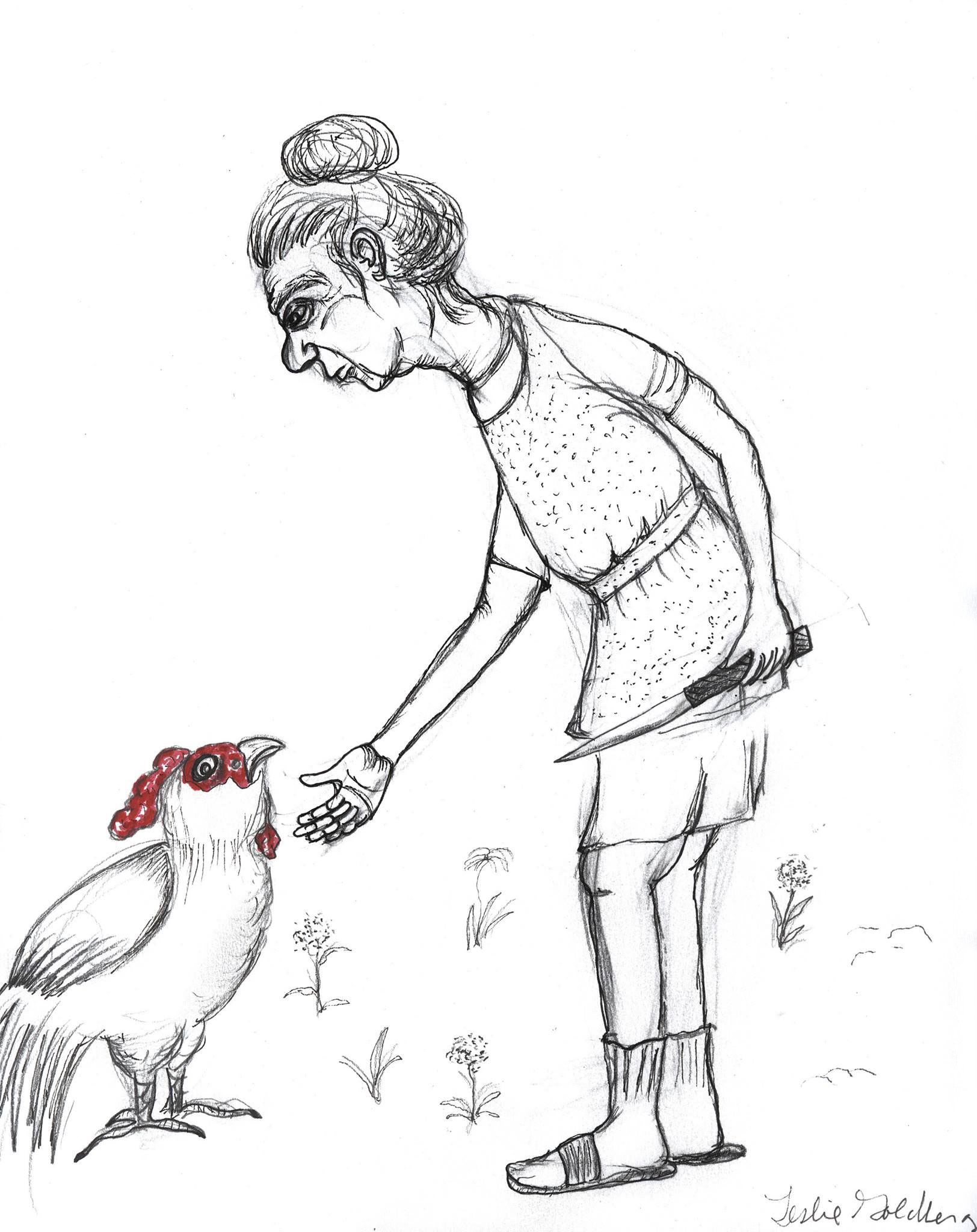
“The word meat is likely the most overused euphemism of them all.” – Craig ClineDrawing of woman with knife approaching a chicken, by Leslie Goldberg
Drawing by Leslie Goldberg. “With friends like these . . .”

When asked in the past if I ate meat, I used to say “No.” When pressed whether this included chicken and fish, I said “Yes.” Now when the question comes up, I say, “I don’t eat animals.”

In 1974 I stopped eating animals after reading Leo Tolstoy’s essay describing his visit to a Moscow slaughterhouse. Before that, I was, I regret, an avid meateater. I did not make the connection, before Tolstoy’s essay, between “meat” and animals. That essay, “The First Step,” changed everything. I instantly became one of those people who, in the words of former chicken slaughterhouse worker Virgil Butler and his partner Laura Alexander, “could no longer look at a piece of meat anymore without seeing the sad face of the suffering animal who had lived in it when the animal was still alive.”

Picturing the face of an animal in a piece of meat after Tolstoy’s revelation, I felt sick of meat, and now I am sick of the word “meat.” Why?

“Meat” versus “Flesh”

Philosopher John Sanbonmatsu writes in “Why ‘Fake’ Meat Isn’t“: “Only in recent decades have we come to associate the word ‘meat’ exclusively with the flesh of animals. The word derives from the Old English mete, for food, nourishment or sustenance.”

But do we in fact associate the word “meat” with the flesh of animals in modern industrial society? I think we do not. The word “meat” in contemporary experience is separate from the animals the “meat” comes from, whatever its association with animals and their flesh at a time when raising and slaughtering animals was an integral part of everyday life on farms and in cities and towns.

Unlike “meat,” the word “flesh” conjures more readily the fact of a once living creature. While the meat from an animal is indeed dead flesh, it evokes less an animal’s body and more just food, whatever the food’s origin. “Flesh” is more complex and inclusive by comparison. By standard definition, it is “the soft substance consisting of muscle and fat that is found between the skin and bones of an animal or a human.”

Consider further that in the Bible, “flesh” is not just a synonym for meat; rather, it encompasses living creatures, seemingly of all species, as in Isaiah 40.5: “And the glory of the Lord shall be revealed, and all flesh shall see it together.”

Forgetting “Meat” is Dead

So detached from the animals from whom “meat” is obtained are most people in modern society that I believe few even think about meat as something that is dead. What starts as the conscious employment of euphemism by exploiters and market manipulators morphs through conventional usage into a nearly or completely unconscious linguistic and perceptual event, similar to how the animals are transubstantiated literally into edible products called “meat,” divorced from living creatures and the violence that meat represents.

An article in the February 1, 2020 issue of TIME magazine, “How China Could Change the World by Taking Meat Off the Menu,” says that “Until recently, the primary motivation for people to shun meat was concern for animal welfare. Not anymore.” This article provides an encouraging look at the growing appeal of plant-based foods in industrialized countries. But, I wonder, when were the majority of people motivated to shun meat out of concern for animal welfare? Animal rights activist Cynthia Cruser wrote to me that the article “mentioned animal welfare only once, and referred to it as some irrelevant passé subject which has been replaced by really important matters.”

Animal Welfare, Animals’ Rights, Animal-Free

Indeed, the term “animal welfare” is itself a euphemism, akin to a dead metaphor, “which has lost the original imagery of its meaning by extensive, repetitive, and popular usage.” But the euphemism “animal welfare” is not only dead: it’s a lie that reduces the animals and their human-caused misery to an abstraction that amounts to nothing more at best than abusing animals less abusively, less traumatically, less horribly.

Those who speak approvingly of “animal welfare” compound the problem by defining it illogically as treating the animals “more humanely.” But you cannot treat animals who by definition are being treated inhumanely, “more humanely.” Animal welfare is an institutionalized term referring to animal use that, as such, precludes the animals so used from truly faring well.

Even the term “animal rights” can obstruct the animals from view. For this reason, Veda Stram, managing editor of the All-Creatures.Org newsletter and website, has proposed a shift from speaking of “animal rights” to saying “animals’ rights” in order to keep the animals in sight.

Of course, we can’t always avoid the term “meat” in our advocacy, but we could say flesh a little more often than we do, and we could put the animals into discussions of food more frequently. That said, it’s wonderful seeing the words “vegan” and “plant-based” appearing more and more often on food, household, and personal care products. Time was when these terms never appeared in a supermarket.

In addition to “vegan,” “plant-based,” and “plant-powered,” I like to call vegan products animal-free. This puts the animals into focus and links them to the concept of liberation – their liberation and ours. “Free” conveys a welcome release from all sorts of captivity: Animal-free, egg-free, dairy-free, meat-free sound inviting, compared with “eggless,” “meatless,” and the like, which evoke blandness and deprivation.

Knowing Where Your Food Comes From

Thinking about putting the faces of animals back into the “meat” as an escape from euphemism and the dissociation of meat from animals, I’m aware that this project is also that of people who, in the opposite direction, enjoy slaughtering their own animals. Such people describe their pleasure in turning a living creature into something dead. They refuse “not knowing where your food comes from” and tout their liberation from such ignorance.

Similarly, the belief that “if slaughterhouses had glass walls, we’d all be vegetarian” is contradicted by people who prefer to select their own animals to be killed in front of them or behind a blood-spattered curtain in a live or “wet” animal market. They are not deterred by the sight or smell of suffering or the cries of the animals being slaughtered. Asked about it, they state a preference for this experience over buying meat in a supermarket.

One Day, All Flesh May Be Free

There is no shortcut to getting the majority of people to care enough about the animals who suffer and die for food to stop eating them on that account alone, whether the animals are visible or invisible. It’s exasperating, but we cannot succumb to frustration. Rather than give up, we must realize that the journey toward animal liberation has only just begun, and that we must stay the course in pursuit of the day when all flesh will, with our persistence, we hope, see this glorious day together. – Karen Davis

KAREN DAVIS, PhD is the President and Founder of United Poultry Concerns, a nonprofit organization that promotes the compassionate and respectful treatment of domestic fowl including a sanctuary for chickens in Virginia. Inducted into the National Animal Rights Hall of Fame for Outstanding Contributions to Animal Liberation, Karen is the author of numerous books, essays, articles and campaigns. Her latest book is For the Birds: From Exploitation to Liberation: Essays on Chickens, Turkeys, and Other Domesticated Fowl (Lantern Books, 2019).

FOR THE BIRDS: FROM EXPLOITATION TO LIBERATION
by Karen Davis, PhD

Impossible Foods’ plant-based meat just got closer to the price of regular meat

The 20 percent price cut is part of a strategy to take plant-based meat mainstream.By Kelsey Piper  Feb 2, 2021, 11:35am EST0

https://www.vox.com/future-perfect/2021/2/2/22260454/impossible-foods-burger-plant-based-meat

Impossible Foods announced they’re cutting retail prices by 20 percent in a bid to compete with animal meat.

This story is part of a group of stories called

Finding the best ways to do good.

In the past few years, meatless meat products have taken off among consumers. But the meatless meat market is still only about 1 percent of the meat market. One of the biggest reasons: Plant-based meat products are considerably more expensive.

There are signs, though, that that’s changing. Impossible Foods products on grocery store shelves should get about 20 percent cheaper in upcoming weeks, the company announced Tuesday morning. The company will suggest to retailers that prices drop to $5.49 (from $6.99) for a two-patty package and $6.99 (from $8.99) for a 12-oz. package of ground Impossible beef in the US (actual prices will vary by location and by retailer).

The announcement follows a similar price cut Impossible Foods made for restaurant distributors at the start of the year, and it’s the latest attempt by plant-based meat makers to cut into meat’s big price advantage.

The pandemic has only underscored the importance of cutting into that price advantage and making meatless meat a mainstream alternative to factory-farmed meat. Slaughterhouses, long notorious for their terrible working conditions, have been coronavirus hotspots, in some cases because they responded to the coronavirus crisis by telling employees not to take any sick leave for any reason. And then there are the larger-scale problems that the pandemic reminded the world of: It is a public health hazard to raise animals for food in crowded conditions that can incubate and rapidly spread disease, and our farming practices risk starting the next global pandemic.

In light of those problems, consumers have shown greater interest in plant-based offerings. More and more traditional food companies have launched plant-based meat brands, more and more fast food and casual dining restaurants have added menu options, and major players in the field have raised a lot of money.

Having won the first battle — getting consumers interested enough to try plant-based foods, and investors interested enough to fund them — plant-based meat companies are setting their sights on a bigger challenge: getting plant-based meat products as cheap as animal meat products are. The plant-based meat industry has to be bigger to compete with animal products on price — and competing on price is a key component of getting bigger as an industry.

One pound of factory-farmed beef burgers at the Walmart near me costs just $2.80/pound. To give every person access to plant-based alternatives and to meaningfully transition away from factory farming, plant-based alternatives have to get just as cheap — without cutting any of the same corners.

Plant-based meat is still a long way away from the rock-bottom prices of animal meat. But Impossible Food’s 20 percent price cut is one more step toward making plant-based meat a reliable alternative to factory-farmed animal meat.

Why is meat so cheap anyway?

Meat in America is shockingly, unprecedentedly cheap.

The average price for a meat alternative sold in a grocers’ meat department in the US last year was $9.87/pound. The average price for beef? $4.82/pound. Chicken is even cheaper, at $2.33/pound.

That’s a big difference, and might go a long way toward explaining why even as consumer interest increases and the flavor profile of plant-based meats gets closer and closer to the flavor profile of animal meats, plant-based meats still make up only a very small share of sales.

“The animal industry has optimized its processes for a century,” Dennis Woodside, the president of Impossible Foods, told me.

“The most processed cheap forms of chicken are just insanely cheap, relative to historical standards and relative to other food products on the market,” Lewis Bollard, who researches farm animal welfare at the Open Philanthropy Project, told me last summer. “The chicken industry has managed to cut all their corners, they don’t pay their environmental bills, they don’t pay for a lot of the public health hazards they cause. They have managed to produce a product that is just artificially cheap and hard to compete with.”

But optimization is just one part of the story. The other is that the meat industry has accrued a lot of political power that they’ve leveraged to make meat cheap — and to make Americans eat a lot of it.

Animal agriculture is heavily subsidized by the federal government. That said, neither Bollard nor Zak Weston, a researcher at the Good Food Institute, thinks direct monetary subsidies were the main reason meat was so cheap.

More important are invisible forms of subsidization like not enforcing worker’s rights, exempting factory farms from animal cruelty laws, not requiring companies to engage in environmental cleanup, and not restricting risky practices — like antibiotic overuse — that impose costs on the whole world.

“It’s not the case that plant-based meat is weirdly expensive or labor intensive or something,” Weston previously told me. “The animal protein industry has spent decades wringing incredible efficiencies out of every part of the program. Animal meat gets to externalize a lot of its negatives — externalities like health care, ecological, worker welfare, animal welfare.”

In other words, if the animal meat industry were held accountable for the costs their products and their workings inflict on society, meat would be much more expensive.

Plant-based meat is getting cheaper, but it still doesn’t beat animal meat

Impossible’s 20 percent price cut is large in absolute terms, but price parity is still a long way away.

Nevertheless, industry experts are optimistic.

“We were thinking about cost reductions and getting to the cost structure of commodity ground beef from the very beginning,” David Lee, chief financial officer of Impossible Foods, previously told me. “We knew that if we had the best product at the same cost, then consumers would vote with their stomachs.”

In the past few years, they’ve already made progress. Last year, Impossible Foods slashed prices for restaurants by 15 percent. Now, they’re cutting recommended retail prices by 20 percent. Companies were wary of sharing with me specific figures on their costs, but based on Securities and Exchange Commission filings, Bollard estimates that Beyond’s cost of production has fallen from $4.50/pound in mid-2019 to $3.50/pound in mid-2020.

At a few outlets, such as Dunkin’, Beyond Meat’s Sausage Sandwich sells for the exact same price as the meat sausage sandwich. Beyond Meat executive Charles Muth says that Beyond’s products do much better when they’re listed at the same price as meat.

“The thing we like to say here,” Muth said last year, “is we’re changing the way consumers and shoppers think about what they eat. We don’t want pricing to be a barrier when they’re considering that. We’d like to take pricing out of that conversation as best as we can.”

There’s no single brilliant secret to making a mass-manufactured product cheaper. Instead, experts told me, it’s a matter of relentlessly making every element of the supply chain, the manufacturing process, and the distribution process work slightly better.

When a company is big enough, it can make ingredient purchases at scale, get expensive equipment that’s only worthwhile if it’ll be used to make an enormous number of products, have distribution centers in lots of different parts of the world to minimize transportation costs, and negotiate better deals for its supplies. There’s the potential for a virtuous cycle where lower costs recruit more consumers, who make further cost savings possible.

It’s those savings from scale that drove Impossible Foods’ latest price cuts. “Over the last year, we’ve more than doubled our production,” Woodside said. “The more that we are selling, the better utilization we have of our manufacturing lines, the better prices we get from our supplies, the more suppliers we can bring into the plant-based ecosystem.”

And while the ultimate goal of every plant-based foods expert I’ve spoken to is price parity with animal meat, price cuts make a big difference even before they reach that point. Cheaper plant-based meat means options for more consumers and more restaurants. It also means less demand for animal products at a time when prices are high, animal welfare is ignored, and Congress is investigating coronavirus outbreaks at slaughterhouses. There’s a long road ahead, but a 20 percent price cut is a substantial step forward.

The Contradiction of “Humane” Meat and Journalist Martha Rosenberg

22 July 2020

https://upc-online.org/videos/200721_the_contradiction_of_humane_meat_and_journalist_martha_rosenberg.html

UPC’s Hope for the Animals Podcast Episode 7 is packed with great information. Hope starts us off by exposing the contradictions inherent in labeling meat “humane.” Classifying the flesh of slaughtered animals as humane, or implying in the product marketing that the animals had a happy life, is a cognitive dissonance that most people don’t think about or don’t want to think about.

LISTEN TO EPISODE 7

Hope then has an informative interview with journalist and animal activist Martha Rosenberg who talks about her decades of reporting on the use of pharmaceuticals in animal agriculture. Martha and Hope discuss numerous aspects of animal agribusiness including: meat treated with ammonia gas, arsenic in turkey feed, antibiotic abuse and the potential impending catastrophe of human antibiotic resistance, and how conditions are so bad in slaughterhouses that even prisoners won’t work there.

We hope you are enjoying our new podcast. You can support the Hope for the Animals Podcast by leaving a positive rating or review wherever you listen to your podcasts. We appreciate the endorsement!

LISTEN TO EPISODE 7

Beyond Meat shares fall after McDonald’s ends Canadian trial of meatless burger

PUBLISHED THU, JUN 25 202010:49 AM EDTUPDATED 38 MIN AGOAmelia LucasKEY POINTS

https://www.cnbc.com/2020/06/25/beyond-meat-shares-fall-after-mcdonalds-ends-canadian-trial-of-meatless-burger.html

  • McDonald’s Canada stopped testing a meat-free burger made with a Beyond Meat patty on April 6.
  • The chain has no plans to bring back the menu item at this point.
  • McDonald’s has yet to test a vegan burger in the U.S.
The "P.L.T." sandwich is arranged for a photograph at a McDonald's Corp. restaurant in London, Ontario, Canada, on Wednesday, Jan. 8, 2020.

The “P.L.T.” sandwich is arranged for a photograph at a McDonald’s Corp. restaurant in London, Ontario, Canada, on Wednesday, Jan. 8, 2020.Cole Burton | Bloomberg | Getty Images

Shares of Beyond Meat fell 7% in morning trading after the CBC reported that McDonald’s stopped testing a burger made with its patties in Canada.

In a tweet to a consumer asking about the burger, McDonald’s Canada said that the test ended April 6. The chain has no plans to bring back the item at this time. 

McDonald’s stock was trading down 1%.https://platform.twitter.com/embed/index.html?creatorScreenName=CNBC&dnt=false&embedId=twitter-widget-0&frame=false&hideCard=false&hideThread=false&id=1255271846888574978&lang=en&origin=https%3A%2F%2Fwww.cnbc.com%2F2020%2F06%2F25%2Fbeyond-meat-shares-fall-after-mcdonalds-ends-canadian-trial-of-meatless-burger.html&siteScreenName=CNBC&theme=light&widgetsVersion=3f79a62%3A1592980045844&width=550px

“We can only comment generally and share that we were pleased with the test,” a Beyond spokesperson said in a statement to CNBC.

Beyond Meat CEO Ethan Brown told analysts in early May that the test concluded “for no negative reason at all.”

“I mean, we feel very good about our relationship with McDonald’s. And what’s going to be happening both, there and potentially elsewhere,” Brown said. “So, by the nature of it being a test, it had a beginning and an end.”

In September, McDonald’s joined the push for more meat alternatives in North America when it started testing the meat-free P.L.T. burger in southwestern Ontario. The test expanded to another 24 locations in January for a 12-week test.

McDonald’s said in a statement that there has been no change to its relationship with Beyond Meat.

“We’re evaluating learnings from our recent test to inform future menu options. As we look ahead, we will plan to bring plant-based options to the menu at the right time for customers in individual markets,” the company said.

Other international McDonald’s markets have found more success with meatless burgers. Restaurants in Germany, for example, have added veggie burgers made by Nestle to their menus.

In the United States, McDonald’s has yet to test a vegan burger. The coronavirus pandemic led the chain to streamline its menus temporarily and to push back product launches, including a new chicken sandwich.

Rival Burger King has been serving an Impossible Whopper nationwide for nearly a year. The Restaurant Brands International chain recently announced that it will be adding a meat-free breakfast sandwich to national menus.

Beyond’s stock, which has a market value of $8.9 billion, has risen nearly 84% so far this year. Shares of McDonald’s, which has a market value of $140 billion, has fallen 8% in 2020. 

WATCH NOWVIDEO01:28Beyond Meat launches cookout value pack in latest play for market shareTRENDING NOW

Burger King Sued by Vegans for Impossible Burger Contamination

BURGER KINGSUED BY VEGANS FOR IMPOSSIBLE BURGER CONTAMINATIONWe Want Burger Our Way!!!

Beyond Meat uses climate change to market fake meat substitutes. Scientists are cautious

[These articles never even mention the cruelty issue of animal agriculture, which is the main reason I, and other vegans, boycott meat…]
KEY POINTS
  • As concerns mount over the dangers of a rapidly warming planet, upstart food companies are targeting a major climate-damaging food: beef.
  • Beyond Meat and its privately held rival Impossible Foods have recently grabbed headlines and fast-food deals for their plant-based burgers that imitate the taste of beef.
  • They’ve also turned the environmental benefits of abstaining from meat into a key marketing tool for their products — drawing some skepticism from environmental researchers who say plant diets are healthier and less carbon emitting than producing processed plant-based products.
  • “Beyond and Impossible go somewhere towards reducing your carbon footprint, but saying it’s the most climate friendly thing to do — that’s a false promise,” said Marco Springmann, a senior environmental researcher at the University of Oxford.
GP: Impossible Burger at Burger King 190808
In this photo illustration, the new Impossible Whopper sits on a table at a Burger King restaurant on August 8, 2019 in Brooklyn, New York.
Drew Angerer | Getty Images

As concerns mount over the dangers of a rapidly warming planet, upstart food companies are targeting a major climate-damaging food: beef.

Beyond Meat and its privately held rival Impossible Foods have recently grabbed headlines and fast-food deals for their plant-based burgers that imitate the taste of beef.

They’ve also turned the environmental benefits of abstaining from meat into a key marketing tool for their products — drawing some skepticism from environmental researchers who say plant diets are healthier and less carbon emitting than producing processed plant-based products.

Animal agriculture is responsible for 14.5% of global greenhouse emissions, according to the United Nations’ Food and Agriculture Organization, with 65% of those emissions coming from beef and dairy cattle. Scientists warn that climate change will trigger an international food crisis unless humans change the way they produce meat and use land.

While companies producing imitation meat boast of the environmental benefits, some researchers point out that for people wanting to substantially lower their carbon footprint, having unprocessed plant-based diets instead of eating imitation products is healthier and better for the planet.

Beyond and Impossible use different sources of proteins to create their meatless meats. Beyond primarily works with protein from peas, while Impossible uses genetically modified soy.

“It makes sense to develop alternatives to beef, because we have to change our eating habits to more plant-based diets if we want to limit global warming to under 2 degrees Celsius. Impossible and Beyond tap into this market,” said Marco Springmann, a senior environmental researcher at the University of Oxford.

“However, while their processed products have about half the carbon footprint that chicken does, they also have 5 times more of a footprint than a bean patty,” he said. “So Beyond and Impossible go somewhere towards reducing your carbon footprint, but saying it’s the most climate friendly thing to do — that’s a false promise.”

VIDEO06:05
Is fake meat a healthier choice?

In fact, a recent landmark report from the Intergovernmental Panel on Climate Change, a group of UN scientists, said that shifting towards plant-based diets would be a critical way to mitigate and adapt to climate change, as simply cutting carbon emissions from automobiles and factories won’t be enough to avert an impending crisis.

“On the consumption side, with people in developed countries wanting more cheap meat, and now in developing countries people wanting cheaper meat — it’s pushing the planet in the wrong direction,” said Hans-Otto Portner, a climatologist who co-chairs the IPCC’s working group on impacts, adaptation and vulnerability.

“It’s not sustainable. It’s a warning signal. If the world wants to keep to the UN’s sustainable development goals by 2030, there is something wrong here, there is a mismatch.”

Millennials driving shift away from meat

On Beyond Meat’s website, “positively impacting climate change” is listed second, behind “improving human health.” The founders of both Beyond and Impossible have named the environment as the motivating factor for creating their businesses.

Mintel found that 16% of U.S. consumers avoid animal products for environmental reasons. That reasoning is much more common with the 18 to 34 year olds, with nearly a quarter of that demographic saying that rationale applied to them.

“There’s a large enough group of millennials where it’s worth it to them to pay for more for their food. They take into account the values of the company, whether it’s best for the environment,” said Kit Yarrow, a professor at Golden Gate University who researches consumer psychology.

Products from Beyond and Impossible target flexitarians – people are looking to consume less meat. For the same reason, if you look for a Beyond Burger in the grocery store, you’re more likely to find it in the meat case than next to other vegan or vegetarian options.

There has been a historical dietary shift away from beef in the U.S. American consumers eat about a third less beef than they did in the 1970s, according to the World Resources Institute.

Promoting dietary shifts can be complicated, and assessing the impact of these changes on an international scale involves making assumptions about agricultural practices, the ability to choose what you eat and market forces.

Still, if everyone in the U.S. were to reduce meat consumption by a quarter, and eat substitutes like plant proteins, it would save 82 million metric tons of greenhouse emissions each year, according to a new study in the journal Scientific Reports. If everyone went vegetarian, it would save 330 metric tons per year – roughly 5% saved.

Impossible’s website includes a 2019 lifecycle assessment report by the sustainability firm Quantis, which spells out the smaller environmental footprint of the Impossible Burger. It found that the Impossible Burger used 96% less land, 87% less water and 89% less greenhouse gas emissions.

Rachel Konrad, Impossible’s chief communications officer, said that the Impossible Burger also has public health benefits because of its reduced land, water and energy use.

“It doesn’t contribute to the antibiotics arms race or the well known risk of antibiotic resistance — one of the biggest threats to global health, food security, and development today,” Konrad said in a statement.

“If Beyond’s products help people switch from normal beef to a replacement, it’s not so bad. But it should not be the end goal,” Springmann said. “The carbon footprint of these processed plant-based products falls in between chicken and beef.”

Beyond commissioned its own lifecycle assessment, which was published in September 2018. The company has since tweaked the formula for its burgers. The report completed by the University of Michigan includes customers and consumers among the list of primary audiences for the study.

The study found that from cradle to distribution, the Beyond Burger generates 90% less greenhouse gas emissions and requires 46% less energy, 99% less water and 93% less land compared to a quarter pound of U.S. beef.

The data about U.S. beef production came from a 2017 lifecycle assessment by the National Cattleman’s Beef Association, a lobbying group for beef producers. Beyond and its vendors primarily contributed the data for the Beyond Burger.

Climate researchers called on corporations making these meat substitutes and touting environmental benefits to continue assessing the carbon footprint of their production methods.

“In principle, the processed meat substitutes makes production more efficient. In that respect, it’s a benefit, and these plant burgers could be an attractive product,” Portner said. “It also depends on the carbon footprint of [the company’s] production. That needs to be keyed into the picture.”

Springmann said that Beyond and Impossible need to better assess their carbon footprint, saying that these companies make claims about sustainability that they do not sufficiently back with data.

“At minimum, they should continually assess the carbon footprint of their companies,” he said.

GP: Beyond Meat inc. Debuts Initial Public Offering At Nasdaq MarketSite
Ethan Brown, founder and chief executive officer of Beyond Meat, center, celebrates with his wife Tracy Brown, center left, and guests during the company’s initial public offering (IPO) at the Nasdaq MarketSite in New York, on Thursday, May 2, 2019.
Michael Nagle | Bloomberg | Getty Images

New normal for plant-based burgers

Partnering with Beyond or Impossible allow restaurants or food service companies to tout a commitment to the environment, as Sodexo did in its August announcement.

“Sodexo is committed to providing customers with more plant-forward and sustainable options as part of their diet,” said Rob Morasco, senior director culinary development, Sodexo, when the company partnered with Impossible.

In recent years, consumers have increasingly put pressure on restaurants to become more environmentally friendly by swapping out plastic straws or using compostable to-go containers.

In turn, by serving an Impossible or Beyond burger, Burger King or Carl’s Jr. can normalize plant-based burgers for consumers because of their meat-oriented reputation, Yarrow said.

“People say all the time that they want to eat more fish or eat less sugar, but they don’t normally do it,” she said.

Last year, McDonald’s became the first restaurant chain to commit to science-based targets to reduce greenhouse gas emissions at its restaurants and offices by 36% by 2030. While the Golden Arches has yet to offer a plant-based burger at its U.S. restaurants, doing so could demonstrate its commitment to the targets.

Big Food companies jumping in on the plant-based food trend are also using the environmental angle.

For example, when Nestle announced that it would bring a meatless ground meat product to Europe last week, it said in a tweet that it was meeting consumer demand for food “with less impact on the environment.”

Beyond Meat did not respond to a request for comment.

Vegans are wary of Burger King’s Impossible Whopper after controversy over cooking process

https://www.cnbc.com/2019/08/08/vegetarians-torn-over-trying-burger-kings-impossible-whopper.html?__source=sharebar|facebook&par=sharebar&fbclid=IwAR23z_KIPE1ko2zdgOVN3ZGu6x4dfTCCv4tP-7ELbC76-XnIJoxLdqd_S5Q
KEY POINTS
  • Burger King’s plant-based Impossible Whopper is launching nationwide Thursday.
  • Some vegans and vegetarians are saying on social media they will not eat the meat-free burger because it is cooked on the same grill as chicken and beef.
  • Customers can request that their Impossible Whopper is cooked separately.
GP: Impossible Whopper Burger King Offers Meatless Whopper In Its St. Louis Locations
In this photo illustration, an ‘Impossible Whopper’ sits on a table at a Burger King restaurant on April 1, 2019 in Richmond Heights, Missouri.
Michael Thomas | Getty Images

Vegans and vegetarians have cheered as more and more restaurants, from Subway to White Castle, add plant-based protein options from Beyond Meatand its rival Impossible Foods.

But as Burger King launches its meat-free Impossible Whopper nationwide Thursday, some vegans and vegetarians are hesitant to try it.

The controversy started last week when the chain’s U.S. head, Chris Finazzo, told Bloomberg the vegan burger would be cooked on the same broilers as chicken and beef. Some people who do not eat meat do not want their food to come into contact with meat at all during the cooking process.

VIDEO01:12
Burger King taking plant-based Impossible Whopper national

A representative for Burger King, which is owned by Restaurant Brands International, said Thursday the chain has not changed how it plans to cook the burger.

Customers can request their Impossible Whopper be grilled on a different broiler than the meat. But vegans and vegetarians unaware of the option are now deciding if they want to try the Impossible Whopper.

Legacy!@heartbreakid_1

For anyone looking to eat the impossible whopper from Burger King, if you are Vegan do not eat that burger they cook it on the same grill as the regular dead cow burger! Is not vegan @BurgerKing

See Legacy!’s other Tweets

One Twitter user warned that the burger is being cooked on the same grill as “the regular dead cow burger.”

𝖆𝖑𝖑𝖎𝖊 Ⓥ@thatlilvegan

some vegans really wanna gate keep other vegans who get the Impossible Whopper from Burger King talking about “cross contamination” but those same peopl still go to coffee shops, grocery stores, & restaurants that serve non-vegan items too. 🤧

218 people are talking about this

Another pointed out that vegans still go to coffee shops, restaurants and grocery stores that serve nonvegan items.

Those who abstain from eating meat for religious reasons may follow more strict guidelines when it comes to cross-contamination with meat.

Cooking the Impossible Foods’ burgers, beef patties and chicken on the same grill makes it easier and more efficient for Burger King to offer the Impossible Whopper. The added complexity of a plant-based option is one reason keeping Burger King’s arch rival McDonald’s from offering a vegetarian-friendly burger. The Golden Arches has been trimming its menu to speed up service times — and customer satisfaction scores.

It is unlikely that the majority of customers buying the Impossible Whopper will even care that it is being cooked on the same grill. The growth in meat substitutes like the Impossible Burger is coming from flexitarians, a group of omnivores looking to cut down on their meat consumption. According to data from the NPD Group, 95% of plant-based burger buyers have also bought a beef burger within the last year.

VIDEO08:38
The rise of fake meat

Plant-based eating goes mainstream as Beyond Meat targets Canadian grocery shelves

Beyond Meat’s signature burger will soon be available on Canadian grocery store shelves (Beyond Meat)

1563
comments

A California company that was overwhelmed by demand for its meatless fast food burger is hoping to capitalize on the rising trend of vegetarianism and sell directly to Canadian grocery stores starting now.

Founded a decade ago in California, Beyond Meat first captured the attention of Canadians when the company signed a deal with burger chain A&W last year for a plant-based burger — one they claim looks and tastes like traditional patties, but is made entirely from vegetable-based proteins.

A&W was flooded by so much demand for the product that most locations sold out almost instantly, and has had trouble maintaining supply ever since. But Beyond Meat is pushing ahead with more expansion, confident those supply issues have been handled.

After focusing on getting its products into some 27,000 restaurants around the world, Beyond Meat has now turned its attention to selling directly to consumers. It has struck deals with major food chains like Loblaws, Sobeys, Metro and Longo’s that will see the company’s plant-based burger patties sold in thousands of Canadian grocery stores.

“On the heels of our successful launch with A&W … retail is the natural next step for our brand,” CEO Ethan Brown said in a release announcing the move.

Billions worth of burgers

Robert Carter, a Toronto-based consumer analyst with NPD group, said Beyond Meat tapped into what was a slowly growing movement toward plant-based eating, and became a leader almost overnight.

“I had seen the underpinnings, but even I didn’t expect it to be as popular as it is,” Carter said in an interview.

Carter said burgers comprise a $20-billion piece of Canada’s fast food industry, a figure that doesn’t include the ones that Canadians buy at the grocery store to take home and cook themselves. “We’re talking about a tens of billions of dollars market opportunity in North America,” he said. “To take a share of that from meat is massive.”

Embedded video

Beyond Meat

@BeyondMeat

Canada, the wait is almost over. The is coming to the meat case!

Learn more here ➡️ https://bit.ly/2DuaEcO 

84 people are talking about this

While fast growing, Beyond Meat is far from the only company in the space.

Market research firm Mintel estimates that the market for meat alternatives has almost doubled between 2013 and today, and restaurant chains have been trying to tap into that trend.

Burger King partnered with Impossible Foods to create the Impossible Whopper, a meatless alternative to the chain’s iconic offering. So far, it is only available in select markets, but it too has seen strong sales and is expected to become a permanent offering.

And earlier this month, Canada’s Maple Leaf Foods announced plans to spend $310 million to build a huge plant-based protein food processing facility in Shelbyville, Ind., which will produce the company’s Lightlife products, a line of plant-based food items. “We own the leading brands in the North American refrigerated plant-based protein market,” CEO Michael McCain said of the venture.

All of these companies are hoping to cash in on the growing trend towards plant-based eating, which has hit something of a tipping point because of consumers millennial-aged and younger. While they may be ahead for now, Beyond Meat “needs to capture as much as they can,” Carter said, “because the big players are going to get in on this game very quickly.”

He said it’s a market opportunity because younger consumers are much more aware of the food they eat, and want to consider the environmental and social impacts — on top of the taste and price.

“These guys have got a product that is so on trend right now,” he said, referring to the company’s eponymous burger. He said partnering with a fast food chain was a savvy opening move because it gets the product into the hands of potential testers who likely wouldn’t ordinarily consider buying it uncooked on a shelf.

Even calling it “plant-based,” as opposed to the outdated term “vegetarian,” has helped Beyond Meat win over consumers who’d never consider themselves to be the latter. “The messaging has been very well done,” Carter said.

So far Beyond Meat has focused on working with restaurants to sell its products, but it will soon go direct to consumers in the grocery aisle. (Pete Evans/CBC)

Calls for Canadian food innovation

Vegetarians aren’t the company’s target market.

“Whether you’re a hardcore carnivore or a strict vegan, you should be able to have our burgers, enjoy what you’re eating and feel great afterward,” said Brown, Beyond Meat’s CEO.

Nova Scotia-based chain Sobeys is first out of the gate on the grocery side in Canada, with the burger available in every region where the company operates as of Friday. Other chains will follow next month, Beyond Meat said.

Sylvain Charlebois, a professor in food distribution and policy at Dalhousie University, said the move away from meat is very much a trend — and Beyond Meat has jumped to the head of the pack — for now.

“Rarely in Canada have we seen a supplier orchestrate such a well-coordinated, timely invasion of a market through careful management and marketing,” he said. “Now grocers are drinking the proverbial plant-based Kool-Aid, all at once.”

His only beef is that he’d like to see a Canadian-made product growing so rapidly on Canadian shelves.

“It’s an American product, fostered and propelled by American entrepreneurial spirits,” he said. “Our way of thinking regarding food innovation suppresses any chance for a company to come up with a project like this. There are glimmers of hope, however, as startups are erupting all over the place and will bring a proper dosage of innovation, in due course.”