Exposing the Big Game

Forget Hunters' Feeble Rationalizations and Trust Your Gut Feelings: Making Sport of Killing Is Not Healthy Human Behavior

Exposing the Big Game

After Years of Abuse, the Earth Has Sent Its Bill Collectors

Does Mother Nature have a sense of irony?

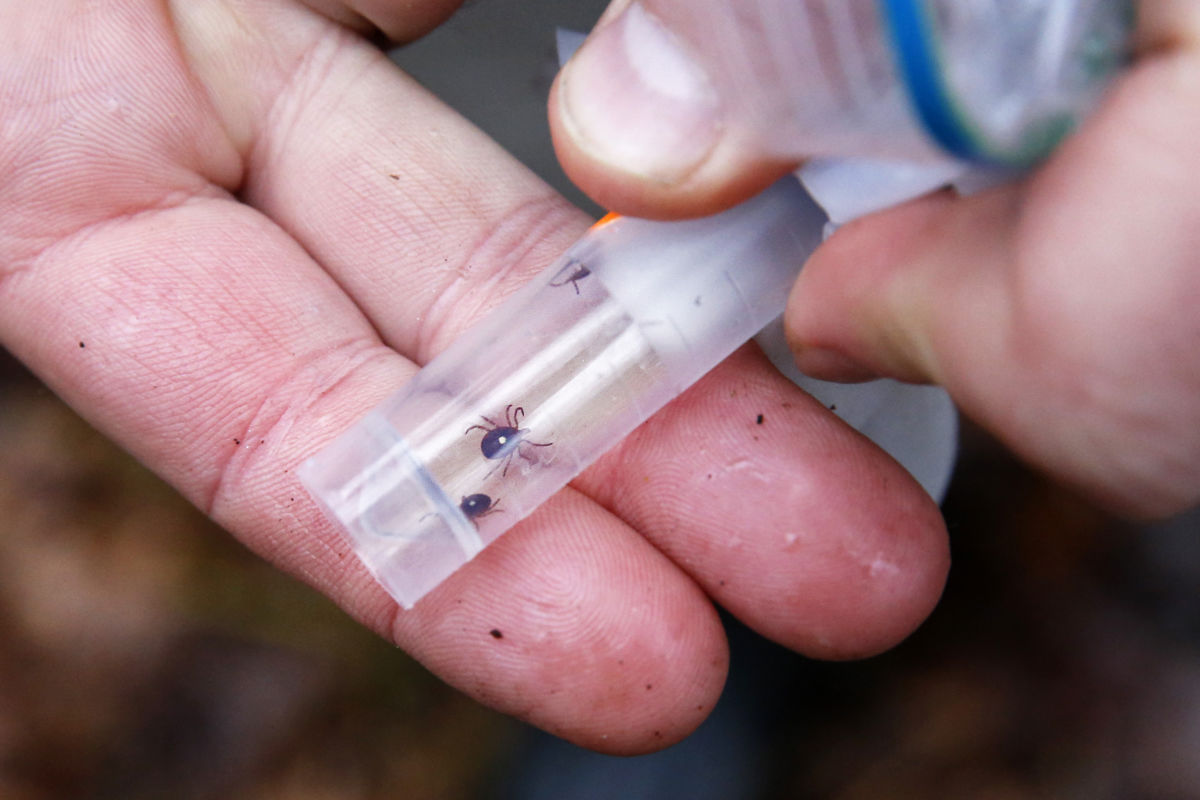
To answer that question, look no further than the lone star tick. Although the tick’s traditional range in the Southeast and Mid-Atlantic includes the eastern half of the Lone Star State of Texas, it gets its name from a white, star-like “splotch” on its back. But thanks to climate change, this nettlesome little critter is on the move. It’s moving into the Northeast as far as Maine. And it’s gone well past its usual bailiwick in the Ohio Valley to make its way into the upper Midwest and into Wisconsin.

It’s not surprising that ticks, like half of all species, are moving with the changing climate. What is surprising is what the lone star tick brings with it. No, it’s not Lyme disease, although warming-catalyzed deer ticks arespreading that debilitating malady into new areas. Instead, the lone star tick carries another little-known disease—alpha-gal syndrome.

That’s because alpha-gal syndrome often expresses itself hours after the infected person eats a big, juicy steak. Or pork chops. Or a cheeseburger. Yup, the lone star tick is spreading a meat allergy. It’s severe, too. One unfortunate victim profiled in Mosaic cannot risk eating the “meat of mammals and everything else that comes from them: dairy products, wool and fibre, gelatine from their hooves, char from their bones.” Alpha-gal’s delayed trigger also makes it hard to diagnose. People often don’t connect their symptoms with eating a meal they’ve eaten without consequence throughout their whole lives.

That’s a big deal in the U.S., where meat is king and it’s cheap and plentiful, thanks in no small part to industrial-grade agriculture. In 2018, Americans broke their previous record for meat consumption, gobbling down 222.2 pounds of meat and poultry per person, according a United States Department of Agriculture estimate. Americans’ beef consumption is four times higher than the world average, according to the World Resources Institute. The consumption of dairy was also on track to hit an all-time high in 2018.

To meet this insatiable demand for meat, Big Ag deploys heavily subsidizedindustrial-grade agriculture with massive feedlots that gobble up megatons of grains. These factory farms also suck up huge amounts of water. They generate epic amounts of ecosystem-denuding, water-contaminating runoff. And they produce billowing gigatons of greenhouse gases — both carbon dioxide (CO2) from the industrial complexities it takes to fuel these factory farms and methane from the noxious flatulence produced by many millions of animals. Then those animals are transported to die on increasingly mechanized slaughter-lines that whirl along at faster and faster speeds. Their carcasses get chilled or frozen and then shipped out by fleets of fossil-fueled trucks on their way to energy-sucking processing factories, to suburban supermarkets and to fast-food chains, where people often sit in running cars awaiting their share of the U.S.’s seemingly endless bovine bounty.

So, here’s where Mother Nature steps in.

Industrial agriculture — and meat production in particular — is a significant source of greenhouse gases. Americans trail only Uruguay and Argentina in per capita beef consumption, and the U.S. is by far the leader in climate-disrupting factory farming practices that, in turn, stoke anthropogenic climate change. But the changing climate across North America is catalyzing the expansion of tick populations. And now tick populations are spreading diseases like the alpha-gal red meat allergy to meat-gorging Americans.

How’s that for putting some irony in our diets?

The “Capitalism One” Credit Card

For most scientists, that’s a bridge too far. They’d understandably reject assigning “Mother Nature” with an anthropomorphic trait like a sense of irony. But this planet’s macro-ecological system does have an undeniable sense of accounting … and it keeps a running tally. From alpha-gal syndrome to herbicide resistance, from rising seas to superstorms, we’re watching Mother Nature’s accounting system repeatedly expose the fatal flaw driving economic growth during the Anthropocene era. That flaw is the fallacy of externalities.

The simple Wikipedia definition of an “externality” is a “cost or benefit that affects a party who did not choose to incur that cost or benefit.” Up to now, we’ve thought we were only imposing it — externalization, that is — to other human beings. Usually, externalities impact those who are too politically or economically powerless to fight back. That’s why they’re targeted. Whether through offshoring polluting factories; or dumping toxic waste into the commons like the rivers, lakes, the seas or the air; or locating poisonous industries in political and financially disempowered neighborhoods and towns, externalization is a quick, easy and profitable way to take the true cost of doing a business and make someone else pay for it.

Aren’t humans grand?

The idea of “externalities” doesn’t just reflect our willingness to abuse others for profit. It also reflects a collective delusion held by those with power — the belief that they can exempt themselves from the closed loop that is Earth’s accounting system.

In the case of climate change, think of it like a CO2 credit card. Let’s call it the “Capitalism One” card. We’ve been charging our skyrocketing carbon emissions to that card for many decades. Every car purchased, every plane ride taken, every Amazon Prime Delivery selected and every Big Mac picked up at the drive-through has externalized the true cost of that purchase. Missing are the greenhouse gases that never get calculated into the purchase price of anything. Instead, we charge that cost onto our collective Capitalism One card.

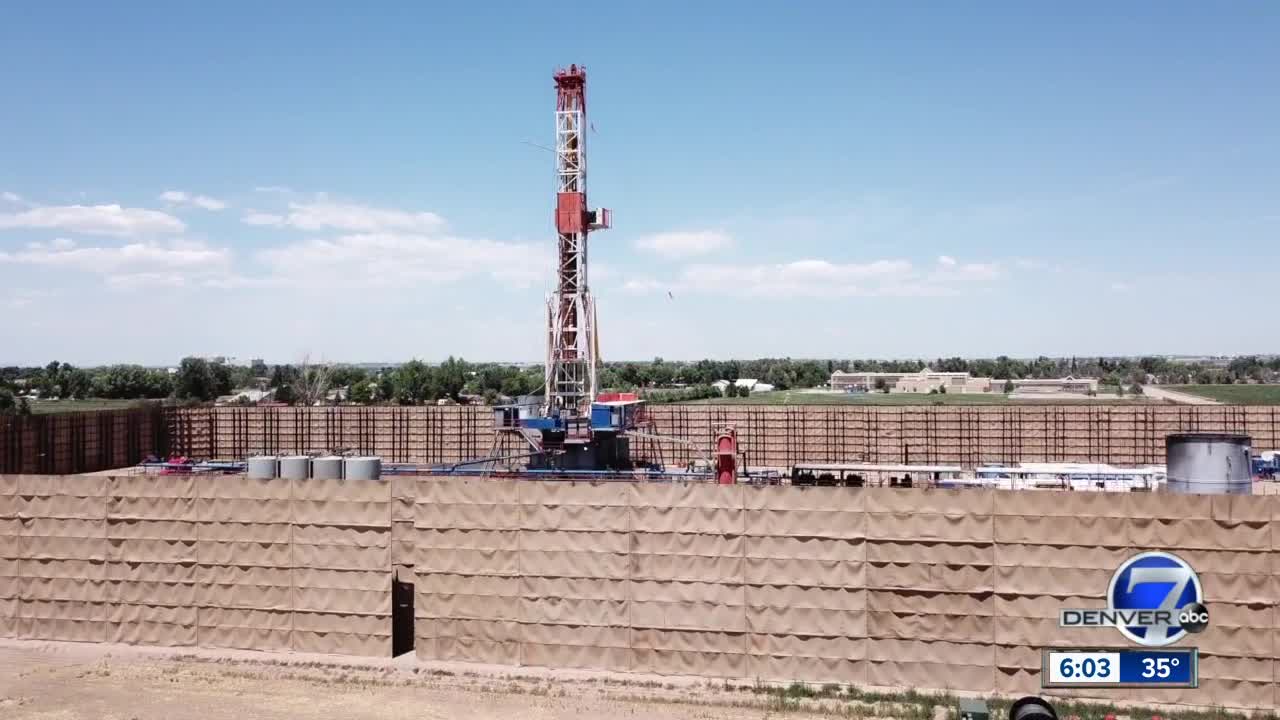
Just consider lone star ticks to be one of nature’s little bill collectors. Alpha-gal is the cost, with interest. The same goes for the earthquakes and contaminated water that come from fracking reinjection wells. We use hydraulic fracturing to forcefully break open natural subterranean formations, to release oil and gas that we blithely burn into climate-altering CO2 while also leaking climate-altering methane. Then, in an externality twofer, we take the wastewater from the process, which can become radioactive, and we “dispose” of it by re-injecting it into the ground through wells, which, in turn, Mother Nature “bills us” with contaminated waterearthquakesand health problems.

All the while our mantra remains “out of sight, out of mind and onto our Capitalism One card.”

Now think of the many trillions of dollars of wealth that has been charged on that card since the start of the Anthropocene era and, more directly, throughout the great acceleration of the industrial age. We’ve voraciously taken — and taken for granted — resources from the Earth and processed them to our own ends. Thanks to a toxic combination of convenient ignorance and willful, short-sighted indifference, we’ve simply loaded the true costs of those processes right back onto our de facto credit card, a.k.a. into the land, the air and the water.

Welcome to the Due Date

Have you heard of balloon payments? That’s kind of what bomb cyclonesare — big, one-time payments on a long-deferred account. These extreme, climate-fueled events also exhibited a tragic symmetry with the alpha-gal allergy when this spring’s bomb-cyclone-stoked flooding inflicted up to $3 billion worth of damage on livestock and farmland in the Midwest. This year saw two bomb cyclones — previously thought to be extremely “rare” weather events — within a few weeks’ time. They affected 25 states around the Midwestthe Great Plains and the Mountain West.

An AccuWeather analysis estimates the total cost of all the flooding will rise to $12.5 billion. It also led to government resource-draining “state of emergency” declarations in Wisconsin, Minnesota, Iowa, Missouri and Nebraska, with the last two being hit particularly hard. Beef Magazinecalled the bomb cyclone “devastating” because the “timing couldn’t be worse as many [farmers] are in the middle of calving season.” Some in Nebraska compared the devastation to the Dust Bowl, which, not coincidentally, happened to be a human-made disaster.

And that’s just the tip of a rapidly melting iceberg. The 2018 Pacific typhoon season hammered nations around Asia to the tune of $18.4 billion in damage. In 2018, natural disasters generated $80 billion in insured losses, which is “well above the inflation-adjusted average for the last 30 years of $41 billion,” according to the Munich Reinsurance Co. In 2017, the Munich Reinsurance Co. also found that insurance claims spiked to a record $135 billion due to the combination of Hurricanes Harvey, Irma and Maria with the wildfires in California, which also “created overall economic losses” of $330 billion. The U.S. Air Force is struggling with a $4 billion shortfall as it struggles to find the $5 billionit needs to remediate the massive damage done by 2018’s Hurricane Michael and this year’s bomb-cyclone-fueled flooding. New Orleans is now facing a $14 billion bill to counter the combo of rising sea levels and sinking levees that were rebuilt by the U.S. Army Corps of Engineers after Hurricane Katrina wiped them out in 2005.

The Government Accountability Office estimated in 2017 that climate change had already cost U.S. taxpayers over $350 billion during the preceding decade.

Even more dauntingly, researchers at the Pentland Centre for Sustainability in Business at Lancaster University in the United Kingdom estimated that the “climate-change-driven feedbacks in the Arctic” currently driving up the rate of warming could add “nearly $70 trillion to the overall costs of climate change — even if the world meets the Paris Agreement climate targets,” according to a report in National Geographic. To put that in perspective, global GDP in 2017 was $80 trillion.

Even the staid Bank of England recently warned of a “sudden and severe” loss of up to $20 trillion if and when “stranded assets” like “unburnable carbon” become worthless during the peak of the climate crisis. In other words, all the investments in hydrocarbons could be zeroed out by the maelstrom of climate change. The Bank of Canada recently echoed this warning and predicted both “fire sales” of these stranded assets and “transition risks” from climate-stoked decarbonization. The Bank of England also said climate change will trigger a “disorderly transition” to the new economic reality of a climate-altered world should the finance sector fail to “change investment and business practices to meet the needs of lower environmental impact,” according to a report in The Telegraph.

How’s that for a bill coming due?

Then in February of this year, analysts at Morgan Stanley said they expect climate change to “negatively affect dozens of industries like agriculture and oil-and-gas production in the short-term — and real estate, leisure and consumer retail in the long-term.” As Risk & Insurancereported, climate change is already “affecting food supply chains for products like chocolatevanillaavocadoscoffee and wine, changing how fine art is protected, and transforming the energy industry.”

Consumers and markets are adjusting, too. Even as ticks spread the alpha-gal meat allergy, Burger King is responding to growing demand for the plant-based Impossible Burger. It’s being “spread” nationwide, not by ticks but by franchisees, after a smashing test run in St. Louis. At the same time, Carl’s Jr. is featuring Beyond Meat’s plant-based meat-alternative. That success fueled its new initial public offering (IPO) to the tune of a $3 billion valuation. Essentially, IPOs are Wall Street’s first chance to render judgment on the viability of newly public business. In the case of Beyond Meat, it’s been dubbed the most successful IPO of 2019thus far. It even surpassed the much-anticipated IPOs of CO2-generatingrideshare companies Uber and Lyft. In fact, meat alternatives are becoming so popular that the meat industry is working at the state level to outlaw the use of the word “meat” on meat-alternative packaging.

That’s a sure sign tastes are changing.

Still, these are not the kind of shock-to-the-system changes some see as the only hope for averting the catastrophe predicted by Intergovernmental Panel on Climate Change if humanity does not meet the Paris Accord target of limiting global temperature increase to between 1.5 and 2°C. That, according to a report in Nature, would mean reducing our collective carbon emissions by almost half by 2030 and then achieving “carbon neutrality by 2050 to meet this target.”

But it is also not insignificant that elemental behaviors like eating are beginning to change, particularly as the people in the U.S. have finally crossed the tipping point from climate skepticism to climate dread. Like all human beings, Americans are starting to see, feel and pay for the impacts of our prolonged, supposedly externalized overuse of hydrocarbons.

Sadly, the distribution of the cost of human activity doesn’t always bend toward symmetry … or justice. This year, Mozambique suffered through two deadly cyclones — Idai and Kenneth — that left entire citiesunderwater, left many thousands stranded and racked-up billions in damage. In Mozambique and the Philippines and in climate-exposed places like Bangladesh, people who have contributed the least to the climate credit card often bear the brunt of our Capitalism One card’s unsettled account. They literally cannot afford it, either. It’s yet another example of the all-too-human cost of externalization.

The upshot, though, is that nature doesn’t just punish bad behavior with a huge bill. It pays dividends if and when we’re willing to settle our accounts. Mother Nature tends toward an ecologically balanced budget. The problem is that we are not just deeply in arrears, but, as Earth Overshoot Dayshows us each year, we are wantonly piling on even more debt. That’s the day when humanity “overshoots” what the planet can provide to us in one calendar year. Everything consumed after that threshold is crossed cannot be replenished and we are officially “in the red.” Last year, that day was August 1, the earliest ever. Those are debts we may never be able to repay. But that also means it is imperative that we begin paying as we go. We have to stop relying on our Capitalism One card to defer the true cost of what we exploit and consume.

And if not? Mother Nature will keep on tabulating the cost of our appetites and evolving new ways to collect on our debts. One way or another, our collective account will be settled because there are no externalities in nature.

Methane is a potent greenhouse gas. Could turning it into CO2 fight climate change?

Methane is a potent greenhouse gas. Could turning it into CO2 fight climate change?
Dairy cows graze in a pasture, producing methane in their guts. A group of scientists suggests that converting methane to carbon dioxide would be a counterintuitive way to fight climate change. (Darryl Dyck / Canadian Press)

Usually, choosing between the lesser of two evils is a dismal decision. But sometimes, it’s an opportunity.

A case in point: Turning methane (a powerful greenhouse gas) into carbon dioxide (also a planet-warming pollutant) could help fight climate change, researchers say.

It’s not that CO2 isn’t a problem — it’s the main problem. But on a molecule-for-molecule basis, methane traps more heat, so converting it into something less potent would reduce its climate impact.

In fact, by restoring the concentration of methane in the atmosphere to preindustrial levels, this counterintuitive strategy could eliminate about a sixth of human-caused warming, according to a paper published Monday in Nature Sustainability. And it would add only a few months’ worth of CO2 emissions to the atmosphere.

“In the grand scheme of carbon dioxide emissions, this would not be a deal-breaker,” said lead author Rob Jackson, an earth scientist at Stanford University.

Jackson, like most scientists, says the best strategy to combat climate change is to stop emitting greenhouse gases.

“Having said that, we’re not getting the job done on reducing emissions, so I think we need to look at some of these other approaches,” said Jackson, who chairs the Global Carbon Project, which tracks greenhouse gases.

Already, it’s clear that people will have to pull huge amounts of carbon dioxide out of the atmosphere to meet the goals of the Paris climate accord, which would limit global warming to less than 2 degrees Celsius above preindustrial levels.

Some scenarios call for removing up to 10 billion metric tons of the gas per year — a quarter of humanity’s annual emissions — by storing it in biomass or soil, or building facilities that directly capture the gas from the air.

“But no one’s talking about this for methane,” Jackson said. “That’s what we want to accomplish with this paper.”

Methane hasn’t caused as much warming as CO2, but humans have had a much bigger impact on the methane cycle, he said.

Over the last 200 years, we have more than doubled its concentration in the atmosphere by extracting fossil fuels, raising livestock, and allowing the gas to escape from landfills and wastewater treatment plants, among other activities. Today, methane levels are 1,860 parts per billion — and rising — compared with 750 ppb before 1800.

Methane also has a more acute warming effect. It traps about 84 times as much heat as CO2 over a 20-year period, and 28 times as much over the course of a century. (Its potency drops because it has a shorter lifetime in the atmosphere.) So turning a molecule of methane into a molecule of CO2 would slash its climate-altering capacity, Jackson and his coauthors say.

And the trade-off would be worth it, they argue. Restoring methane to its preindustrial concentration would involve a one-time conversion of 3.2 billion tons of the gas into CO2. That would increase CO2 levels — which were 280 ppm in preindustrial times and are currently 415 ppm — by less than 1 part per million.

“That’s one of the real selling points in my mind,” Jackson said.

So can it be done?

At this stage, the idea is mostly theoretical, but the authors are cautiously optimistic.

Researchers have started developing ways to oxidize methane into methanol, a valuable compound used for fuel and chemical manufacturing. The same reactions, if allowed to proceed further, could also be used to convert methane into carbon dioxide.

Edward Solomon, a Stanford chemist who worked on the new paper, studies one promising method of processing methane using minerals called zeolites. They catch the gas, and help with oxidation.

Researchers propose removing methane from the atmosphere by pulling air through large fans and using materials like zeolites to catalyze its conversion into carbon dioxide. Thousands of these arrays would be needed to restore preindustrial methane levels.
Researchers propose removing methane from the atmosphere by pulling air through large fans and using materials like zeolites to catalyze its conversion into carbon dioxide. Thousands of these arrays would be needed to restore preindustrial methane levels. (Stan Coffman)

The researchers envision using these kinds of materials in facilities like those being developed to remove CO2, which use fans to draw air into chambers where the gases are captured through chemical reactions.

The low concentration of methane means you’d have to process a lot of air to reduce atmospheric levels, Jackson said. “It would take many thousands of these arrays to make a dent,” he said, although it would be a much smaller effort than what’s been proposed for dealing with CO2.

And the economics could prove attractive — if countries eventually settle on a price for carbon emissions, either through a tax or a cap-and-trade system like the one in California.

Indeed, removing methane could be many times more lucrative than removing CO2, because the value of keeping a greenhouse gas out of the atmosphere typically depends on its heat-trapping ability.

Imagine a system in which the market will pay $50 for every ton of CO2 emissions that can be avoided. In the 100-year scenario in which methane is considered to be 28 times more powerful, the value of eliminating one ton of it would be $1,400. There’d be a small cost for emitting a little bit of CO2 in the conversion process, but even so, the take home would be about $1,250. (A bipartisan bill introduced in the House this year would impose a fee on carbon starting at $15 per ton of CO2 and increasing to more than $100 by 2030; models predict prices could climb as high as $500 later in the century.)

At the upper end of that range, researchers estimate that a methane removal facility the size of a football field could generate millions of dollars of income.

But that could be dangerous, warned Myles Allen, a climate scientist at Oxford University in the U.K. who was not involved in the paper.

Allen fears that, if there’s money to be made — or saved — removing methane from the atmosphere, some emitters may favor doing that instead dealing with CO2.

“That might make good business sense, but it would be terrible for the climate,” he said.

That’s because methane and carbon dioxide affect the climate in different ways.

Methane only stays in the atmosphere for about a decade, so its climate effects are short-lived. CO2, on the other hand, lingers for centuries. Thus, removing some methane might yield a small benefit right now, but won’t help solve the climate problem in the long run, Allen said.

Yet if carbon pricing schemes treat the gases as if they are interchangeable, then companies could offset their CO2 emissions by reducing methane emissions.

“You can imagine the world’s airlines getting on to this and getting all excited because suddenly it looks like they’ve got a very cheap pass and they can just carry on emitting,” he said. “And of course, they’ll just carry on causing global warming.”

Still, Allen agreed that we have to reduce the concentration of methane in the atmosphere. And he endorses the idea of developing technologies to offset the methane emissions that are difficult to eliminate, as the researchers also suggest in the paper.

Rice grows in a watery field near the city of Williams in the Sacramento Valley. Flooded soils produce methane, and rice cultivation represents about 10% of human-caused emissions.
Rice grows in a watery field near the city of Williams in the Sacramento Valley. Flooded soils produce methane, and rice cultivation represents about 10% of human-caused emissions. (Brian van der Brug / Los Angeles Times)

Raising cattle, growing rice and other seemingly essential activities produce the gas and they are unlikely to go away. “It’s hard for me to see any time in the near future when methane emissions will be zero,” Jackson said.

He and his colleagues will keep working to make methane conversion technology a reality, and they hope their paper will encourage others to try as well.

Jackson said part of his motivation is symbolic. Resetting methane concentrations to their preindustrial levels offers a way to “repair the atmosphere,” he said. And that might be inspiring.

“The notion of restoring the atmosphere sends a message of hope to people,” he said. “I would love to see something like this happen in my lifetime.”

Meating In The Middle: The Challenge of Lowering Greenhouse Gas Emissions On Farms

  5 HOURS AGO
Originally published on May 20, 2019 7:33 am

Cow guts are quite the factory. Grass goes in, microbes help break it down and make hydrogen, then other microbes start converting it to another gas. In the end, you get methane, manure and meat.

One of those things is not like the other. Methane emissions are considered the second-worst greenhouse gas after carbon dioxide, according to Stanford University professor Rob Jackson.

Agriculture is the leading producer of methane emissions in the U.S., with animal digestion producing almost as much as oil and gas operations. So, one way to reduce that is to just stop eating beef, right? That’s what researchers near and far believe, including Paul West at the University of Minnesota.

“As an individual, one of the biggest effects that we can have [to reduce greenhouse gas emissions from agriculture] is changing what we’re eating to eating a smaller amount of beef,” said West, who is co-director and lead scientist of the Global Landscapes Initiative, which aims to balance future food needs with ag sustainability.

However, West and Jackson also advocate for sustainable agriculture systems to mitigate climate change. Just don’t go getting rid of all those gassy ruminants. They’re likely a key part.

Various seedlings sprouted by the dozens in early May on PrairiErth Farm near Atlanta, Illinois.
CREDIT MADELYN BECK / HARVEST PUBLIC MEDIA

Beefing up on sustainability

Molly is not one to be left behind.

The old Great Pyrenees followed Dave Bishop’s Gator as he drove around his 350-acre operation called PrairiErth Farm. Here, Oreo cows coexist with all kinds of crops and vegetables either coming up in the fields or in hoop houses. And the friendly relationship between his two chickens and the cat? “It’s just not right!” he said, smiling and chuckling.

Dave Bishop stands in one of his hoop houses, which was heating up in the sunshine.
CREDIT MADELYN BECK / HARVEST PUBLIC MEDIA

In the mid-20th century, U.S. farms used to look a lot more like Bishop’s, but many were sold or consolidated as farmers looked to economies of scale to stay afloat.

Bishop bought this land in central Illinois as the ’80s farm crisis set in. But it was the 1988 drought that forced him to change his farm’s makeup.

“Everything burned up in the field and it became pretty apparent that we had to do something differently then,” he said. “So we just began looking for things to reduce costs. If I have livestock, I can generate some more fertility. If I have more than just corn and soybeans to sell, I have more diverse marketing opportunities.”

He’s turned to regenerative agriculture, which means creating a sustainable farming operation that isn’t too hard on the landscape and involves everything from cover crops to diverse crop rotations to drainage water management.

Climate change is a real concern of his, as is staying economically sound. That’s why he says any regenerative farm system needs to integrate animals and shift toward diversity in plants and livestock.

West also mentioned the need for crop diversity, saying that large-scale corn production is an issue in the Midwest — and not because farmers are seeing low prices on the billions of bushels grown each year.

“Even though we grow [corn] much more efficiently than a number of places around the world, because corn is a crop that is requiring a tremendous amount of fertilizer …it still affects our climate a lot,” he said.

Dave Bishop only has a few chickens, which roam about near the house and have a friendship with the cat.
CREDIT MADELYN BECK / HARVEST PUBLIC MEDIA

Remember the cow methane? Agriculture generates two other problematic greenhouse gases: carbon dioxide and nitrous oxide. The latter is boosted by excess nitrogen fertilizer applications, and is about 300 times more potent than carbon emissions (though it doesn’t last as long in the atmosphere as carbon or methane emissions).

The future of agriculture

Researchers are making inroads to reducing the amount of methane individual cows produce, feeding them seaweed or other kinds of supplements. Some are even looking to breed cows that naturally make less methane.

However, the animal’s gut microbes that produce methane also help the animal — cut out too many, and that could be toxic. Because of that, Jackson said, “there is no way, that I can see, where we reduce methane emissions completely.”

There are also some perennial crops on the horizon, like wheat and miscanthus (a grass that could be grown for biofuel), that can sequester more carbon because the root-dense soil won’t need to be disturbed to replant every year. Those will likely take years to be adopted by the agriculture sector, though.

In the meantime, Colorado State University professor Keith Paustian said we know enough to start making a dent in ag emissions.

He helped create some of the first methods to calculate greenhouse gas emissions from country to country. He also helped create the COMET-farm tool, which allows farmers to calculate their own greenhouse gas emissions and recommends ways to reduce them.

While the prospect of land use changes could help farms sequester more carbon emissions than they put off, he said that’s not the only solution for climate change or even reducing agriculture’s greenhouse gas emissions.

Brussels sprout starter plants sit in the sunshine at PrairiErth Farm. Exposing them to wind outside encourages them to grow stronger root systems, according to farmer Dave Bishop.
CREDIT MADELYN BECK / HARVEST PUBLIC MEDIA

Bishop at PrairiErth Farm said vilifying cows won’t help when it comes to finding more sustainable agriculture operations, which he said will need both plants and animals. Researchers need to listen to farmers, he said, and farmers need to listen to researchers, too.

Because at the end of the day, he said, it’s about making sure there’s food for the future, “so we’ve got to get this right.”

This story is part of a multi-newsroom collaborative project called “Middle America’s Low-Hanging Carbon: The Search for Greenhouse Gas Cuts from the Grid, Agriculture and Transportation.” The effort, led by nonprofit news organization InsideClimate News, includes 14 newsrooms in the Midwest, and aims to give readers local and regional perspectives on climate change. For more, go to the project page.

Follow Madelyn on Twitter @MadelynBeck8

New Zealand targets agricultural emissions in climate change bill

WELLINGTON (Reuters) – New Zealand’s government will introduce legislation to tackle climate change on Wednesday which includes a target for cutting methane emissions from livestock by at least 10 percent by 2030.

FILE PHOTO: A cattle farm is seen in Fernside outside Christchurch, New Zealand March 29, 2019. Picture taken March 29, 2019. REUTERS/Jorge Silva/File Photo

The agriculture sector slammed the bill as a threat to one of the largest contributors to New Zealand’s economy, though environmentalists say it is also a major polluter.

Prime Minister Jacinda Ardern, who has set a goal for the country to be carbon neutral by 2025, said on Wednesday the Climate Change Response (Zero Carbon) Amendment Bill is a “landmark action” on climate change.

The bill treats methane emissions from animals differently than other greenhouse gas emissions, but still targets a 10 percent reduction in biological methane by 2030, and a reduction of up to 47 percent by 2050.

Carbon emissions would be reduced to net zero by 2050, according to the legislation.

ADVERTISEMENT

“We’ve built a practical consensus across government that creates a plan for the next 30 years, which provides the certainty industries need to get in front of this challenge,” Ardern said in a statement.

Climate Change Minister James Shaw said the Zero Carbon Bill would make it a legally binding objective to help keep global warming below the 1.5 degrees Celsius rise forecast by U.N. experts between 2030 and 2052.

“Agriculture is incredibly important to New Zealand, but it also needs to be part of the solution,” Shaw said.

The U.N. says livestock farming alone is responsible for up to 18 percent of the greenhouse gases that contribute to global warming.

New Zealand’s main agriculture lobby group said the methane target would hurt the country and do little to help the climate.

ADVERTISEMENT

“This decision is frustratingly cruel, because there is nothing I can do on my farm today that will give me confidence I can ever achieve these targets,” said Andrew Hoggard, President of the Federated Farmers of New Zealand.

A meat industry group said it was alarmed by the target and warned of the negative impact on rural communities.

“This will impose enormous economic costs on the country and threaten many regional communities who depend on pastoral agriculture,” said Tim Ritchie, chief executive of the Meat Industry Association.

Cows and climate change: A closer look

Also: The skinny on meal kits

(Sködt McNalty/CBC)

726
comments

Hello there! This is our weekly newsletter on all things environmental, where we highlight trends and solutions that are moving us to a more sustainable world. (Sign up here to get it in your inbox every Thursday.)

This week:

  • The sustainability of meat
  • Behold the U.S. Climate Alliance
  • What’s in the box? Gauging the eco-friendliness of meal kits

Cows and climate change: A closer look

(Joe Klamar/Getty Images)

The extent to which meat production contributes to climate change is hotly contested. We highlighted some of the concernsin our last issue, but heard from some readers who felt it didn’t convey the full picture.

Earlier this year, when U.S. congresswoman Alexandria Ocasio-Cortez first started promoting the Green New Deal — the Democratic proposal to mobilize government to address climate change and income inequality — she made comments about the significant impact of “cow farts” on carbon emissions.

That concerned Frank Mitloehner, an esteemed animal science professor at the University of California, Davis, who tweeted at AOC, telling the rookie lawmaker that “meat/milk” was only responsible for four per cent of greenhouse gas emissions in the U.S.

In an interview with CBC, Mitloehner said agriculture is “often depicted in a negative way. And that’s unfortunate, because agriculture should be an important solution to [climate change], and could be. Plus, we all have to eat.”

Ocasio-Cortez’s comment reflected a broader concern about the amount of methane released in beef production. (For the record, bovine burps are the main culprit.) As far as greenhouse gases go, methane is in some ways more concerning than carbon dioxide — a 2014 assessment from the Intergovernmental Panel on Climate Change (IPCC) said methane traps heat 28 times more than CO2.

Mitloehner pointed out, however, that methane only stays in the atmosphere for about a decade. CO2, on the other hand, stays up there for 1,000 years or more. In a hypothetical scenario, Mitloehner said, if you operated a dairy with a steady herd of 1,000 cows over 50 years, after the first decade, “you’re not adding new, additional methane to the atmosphere.”

Researchers have been looking at a number of ways of reducing methane on farms — such as feeding cows seaweed — but Mitloehner said their impacts are still being studied.

While raising cattle provides income to farmers and food for the masses, it also has ecological benefits.

“From a natural resources perspective, Canadian beef producers are stewards to over 44 million acres [16 million hectares] of grasslands, and that plays a critical role in carbon storage,” said Monica Hadarits, executive director for the Canadian Roundtable on Sustainable Beef, a non-profit group that promotes the efforts of the beef industry to meet green goals.

A 2018 study by the Joint Research Centre in Nature Climate Change showed that soil is a highly effective sink for greenhouse gases — and the urine and manure of grazing cows are key to keeping soil healthy. But the study also said that farmers must balance the use of fertilizers in order to minimize the release of nitrous oxide, a greenhouse gas that is nearly 300 times as heat-trapping as CO2.

Mitloehner spends a fair amount of time on social media addressing misconceptions about the climate impacts of agriculture. Earlier this week, he tweeted at the BBC for overstating the environmental virtues of going vegan.

In terms of cutting carbon emissions, he said curbing our reliance on gasoline vehicles and air travel is far more consequential. As Mitloehner wrote in a tweet, fossil fuel-related activities are “the 800lb gorilla.”

— Andre Mayer

6 pressing questions about beef and climate change, answered

Cattle feed at a shed belonging to Kim Jin-cheon, 56, a farmer raising about 120 domestic cows, in Gapyeong, about 60 km (37 miles) east of Seoul, April 23, 2008. South Korea's decision to gradually open up to U.S. beef imports are set to hit local farmers hard, with some experts expecting around 14 percent fall this year in prices of home-grown cattle from a year earlier.  REUTERS/Jo Yong-Hak (SOUTH KOREA) - GM1E44N0XWA01

How friendly is your food?
Image: REUTERS/Jo Yong-Hak
This article is published in collaboration withEcoWatch

Beef and climate change are in the news these days, from cows’ alleged high-methane farts (fact check: they’re actually mostly high-methane burps) to comparisons with cars and airplanes (fact check: the world needs to reduce emissions from fossil fuels and agriculture to sufficiently rein in global warming). And as with so many things in the public sphere lately, it’s easy for the conversation to get polarized. Animal-based foods are nutritious and especially important to livelihoods and diets in developing countries, but they are also inefficient resource users. Beef production is becoming more efficient, but forests are still being cut down for new pasture. People say they want to eat more plants, but meat consumption is still rising.

All of the above statements are true even if they seem contradictory. That’s what makes the beef and sustainability discussion so complicated — and so contentious.

Here we look at the latest research (including from our recent World Resources Report) to address six common questions about beef and climate change:

1. How does beef production cause greenhouse gas emissions?

The short answer: Through the agricultural production process and through land-use change.

The longer explanation: Cows and other ruminant animals (like goats and sheep) emit methane, a potent greenhouse gas, as they digest grasses and plants. This process is called “enteric fermentation,” and it’s the origin of cows’ burps. Methane is also emitted from manure, and nitrous oxide, another powerful greenhouse gas, is emitted from ruminant wastes on pastures and chemical fertilizers used on crops produced for cattle feed.

More indirectly but also importantly, rising beef production requires increasing quantities of land. New pastureland is often created by cutting down trees, which releases carbon dioxide stored in forests.

2013 study by the U.N. Food and Agriculture Organization (FAO) estimated that total annual emissions from animal agriculture (production emissions plus land-use change) were about 14.5 percent of all human emissions, of which beef contributed 41 percent. That means emissions from beef production are roughly on par with those of India. Because FAO only modestly accounted for land-use-change emissions, this is a conservative estimate.

Beef-related emissions are also projected to grow. Building from an FAO projection, we estimated that global demand for beef and other ruminant meats could grow by 88 percent between 2010 and 2050, putting enormous pressure on forests, biodiversity and the climate. Even after accounting for continued improvements in beef production efficiency, pastureland could still expand by roughly 400 million hectares, an area of land larger than the size of India, to meet growing demand. The resulting deforestation could increase global emissions enough to put the global goal of limiting temperature rise to 1.5-2 degrees C (2.7-3.6 degrees F) out of reach.

2. Is beef more resource-intensive than other foods?

The short answer: Yes.

The longer explanation: Ruminant animals have lower growth and reproduction rates than pigs and poultry, so they require a higher amount of feed per unit of meat produced. Animal feed requires land to grow, which has a carbon cost associated with it, as we discuss below. All told, beef is more resource-intensive to produce than most other kinds of meat, and animal-based foods overall are more resource-intensive than plant-based foods. Beef requires 20 times more land and emits 20 times more GHG emissions per gram of edible protein than common plant proteins, such as beans. And while the majority of the world’s grasslands cannot grow crops or trees, such “native grasslands” are already heavily used for livestock production, meaning additional beef demand will likely increase pressure on forests.

3. Why are some people saying beef production is only a small contributor to emissions?

The short answer: Such estimates commonly leave out land-use impacts, such as cutting down forests to establish new pastureland.

The longer explanation: There are a lot of statistics out there that account for emissions from beef production but not from associated land-use change. For example, here are three common U.S. estimates we hear:

  • The U.S. Environmental Protection Agencyestimatedtotal U.S. agricultural emissions in 2017 at only 8 percent of total U.S. emissions;
  • 2019 studyin Agricultural Systems estimated emissions from beef production at only 3 percent of total U.S. emissions; and
  • 2017 studypublished in the Proceedings of the National Academy of Sciences estimated that removing all animals from U.S. agriculture would reduce U.S. emissions by only 3 percent.

While all of these estimates account for emissions from U.S. agricultural production, they leave out a crucial element: emissions associated with devoting land to agriculture. An acre of land devoted to food production is often an acre that could store far more carbon if allowed to grow forest or its native vegetation. And when considering the emissions associated with domestic beef production, you can’t just look within national borders, especially since global beef demand is on the rise. Because food is a global commodity, what is consumed in one country can drive land use impacts and emissions in another. An increase in U.S. beef consumption, for example, can result in deforestation to make way for pastureland in Latin America. Conversely, a decrease in U.S. beef consumption can avoid deforestation (and land-use-change emissions) abroad.

When these land-use effects of beef production are accounted for, we found that the GHG impacts associated with the average American-style diet actually come close to per capita U.S. energy-related emissions. A related analysis found that the average European’s diet-related emissions, when accounting for land-use impacts, are similar to the per capita emissions typically assigned to each European’s consumption of all goods and services, including energy.

4. Can beef be produced more sustainably?

The short answer: Yes, although beef will always be resource-intensive to produce.

The longer explanation: The emissions intensity of beef production varies widely across the world, and improvements in the efficiency of livestock production can greatly reduce land use and emissions per pound of meat. Improving feed quality and veterinary care, raising improved animal breeds that convert feed into meat and milk more efficiently, and using improved management practices like rotational grazing can boost productivity and soil health while reducing emissions. Boosting productivity, in turn, can take pressure off tropical forests by reducing the need for more pastureland.

Examples of such improved practices abound. For example, some beef production in Colombiaintegrates trees and grasses onto pasturelands, helping the land produce a higher quantity and quality of feed. This can enable farmers to quadruple the number of cows per acre while greatly reducing methane emissions per pound of meat, as the cows grow more quickly. A study of dairy farms in Kenyafound that supplementing typical cattle diets with high-quality feeds like napier grass and high-protein Calliandra shrubs — which can lead to faster cattle growth and greater milk production — could reduce methane emissions per liter of milk by 8–60 percent.

There are also emerging technologies that can further reduce cows’ burping, such as through feed additives like 3-nitrooxypropan (3-NOP). Improving manure management and using technologies that prevent nitrogen in animal waste from turning into nitrous oxide can also reduce agricultural emissions.

5. Do we all need to stop eating beef in order to curb climate change?

The short answer: No.

The longer explanation: Reining in climate change won’t require everyone to become vegetarian or vegan, or even to stop eating beef. If ruminant meat consumption in high-consuming countries declined to about 50 calories a day or 1.5 burgers per person per week — about half of current U.S. levels and 25 percent below current European levels, but still well above the national average for most countries — it would nearly eliminate the need for additional agricultural expansion (and associated deforestation), even in a world with 10 billion people.

Diets are already shifting away from beef in some places. Per capita beef consumption has already fallen by one-third in the United States since the 1970s. Plant-based burgers and blended meat-plant alternatives are increasingly competing with conventional meat products on important attributes like taste, price and convenience. The market for plant-based alternatives is growing at a high rate, albeit from a low baseline.

There are also other compelling reasons for people to shift toward plant-based foods. Some studieshave shown that red meat consumption is associated with increased risk of heart disease, type 2 diabetes, stroke and colorectal cancer, and that diets higher in healthy plant-based foods (such as whole grains, fruits, vegetables, nuts and legumes) are associated with lower risks. In high-income regions like North America and Europe, people also consume more protein than they need to meet their dietary requirements.

6. Would eating less beef be bad for jobs in the food and agriculture sector?

The short answer: Not necessarily.

The longer explanation: Given projected future growth in meat demand across the developing world, even if people in higher-income countries eat less beef, the global market for beef will likely continue to grow in the coming decades. The scenario in the chart above leads to a 32 percent growth in global ruminant meat consumption between 2010 and 2050, versus 88 percent growth under business-as-usual. In the U.S., despite declining per capita beef consumption, total beef production has held steadysince the 1970s. Burgeoning demand in emerging markets like China will lead to more export opportunities in leading beef-producing countries, although building such markets takes time.

In addition, major meat companies — including Tyson Foods, Cargill, Maple Leaf Foods and Perdue — are starting to invest in the fast-growing alternative protein market. They’re positioning themselves more broadly as “protein companies,” even as they work to reduce emissions from beef production in their supply chains through improved production practices.

Moving Toward a Sustainable Food Future

Beef is more resource-intensive than most other foods and has a substantial impact on the climate. A sustainable food future will require a range of strategies from farm to plate. Food producers and consumers alike have a role to play in reducing beef’s emissions as the global population continues to grow. And as we all work on strategies to curb climate change — whether in the agriculture sector, the energy sector or beyond — it’s important we rely on the best available information to make decisions.

Who emits more methane in Colorado: natural gas producers or cows?

Posted: 6:43 PM, Mar 29, 2019
Updated: 6:02 PM, Mar 29, 2019

CU mobile Solar Occultation Flux

BOULDER, Colo. — While lawmakers at the Colorado state capitol debate a bill to change the way oil and gas production is regulated in the state, researchers at the University of Colorado Boulder have come up with a way to better track methane emissions.

Methane is a greenhouse gas that traps heat in the environment and contributes to climate change.

“Methane is kind of complicated because it’s a global problem,” said Rainer Volkamer, an associate professor of chemistry at CU Boulder. “We want to be able to keep track of it and what are the important sources.”

Methane lives in the atmosphere for about ten years, traveling from the North Pole to the South Pole before eventually being destroyed in the tropics.

Colorado has two main sources of methane emissions: natural gas production and livestock.

“Methane is the same whether it’s emitted from oil and gas or whether it’s emitted from a cow.” Volkamer said.

For years, it has been difficult for industries to determine whether livestock or natural gas production emits more methane.

“They need to know what their impact is on the environment,” Volkamer said.

In the past, methane emissions were measured by an airplane.

However, Volkamer and others created the CU mobile Solar Occultation Flux to help measure methane emissions from the ground and determine exactly where they are coming from. It was developed as part of the Cooperative Institute for Research in Environmental Sciences (CIRES).

“With our technique, we could show that the majority is produced from oil and gas and that the agricultural sources are a significant minor source for methane in the region,” Volkamer said.

The conclusion came from data Volkamer and study co-author Natalie Kille, a PhD student at CU Boulder, gathered over a five-day period in 2015 and have been working to analyze.

The researchers measured not only methane, but also ethane emissions, which is co-emitted from oil and gas producers. On the livestock side, the box measures ammonia that is co-emitted from the cows. By measuring all three, researchers can determine who is emitting what.

The machine is tiny compared to its predecessors; it’s about the size of a car engine. It’s also a much more cost-effective way to measure methane.

“This instrument is a tenth of the cost of another instrument that fills an entire room and it’s mobile, so it’s cost-effective for that reason,” Volkamer said.

It is also, in principle, able to perform the same functions inside of an airplane if researchers want to use that method.

Beyond that, the technique can determine exactly what methane was created in Colorado and which emissions were created elsewhere to give the state a better idea of its contributions to climate change.

Eventually, this data could help natural gas producers, cattle farmers and state regulators figure out how to mitigate air pollution. The researchers are hoping to build on this data with a long-term study over several seasons to see how methane emissions change over time.

Ocasio-Cortez: We reacted to 9/11, so where’s the reaction on climate change?

U.S. Rep. Alexandria Ocasio-Cortez, D-N.Y., appeared on MSNBC Friday to address the Green New Deal with host Chris Hayes and discussed the dire world she’s convinced lies ahead for Americans if climate change is not addressed.

“So this issue is not just about our climate. First and foremost we need to save ourselves. Period. There will be no future for the Bronx. There will be no livable future for generations coming, for any part of this country in a way that is better than the lot that we have today if we don’t address this issue urgently and on the scale of the problem,” said Ocasio-Cortez.

POLL SHOWS: OCASIO-CORTEZ MOSTLY UNLIKED OR UNKNOWN

The freshman congresswoman believes America has seen dire situations before and mobilized, but mostly in connection with conflict and war. “Historically speaking, we have mobilized our entire economy around war. But I thought to myself it doesn’t have to be that way, especially when our greatest existential threat is climate change,” Ocasio-Cortez said.

“First and foremost we need to save ourselves. Period.”

— U.S. Rep. Alexandria Ocasio-Cortez, D-N.Y.

“And so to get us out of this situation, to revamp our economy to create dignified jobs for working Americans, to guarantee health care and elevate our educational opportunities and attainment, we will have to mobilize our entire economy around saving ourselves and taking care of this planet.”

Ocasio-Cortez also addressed critics of the Green New Deal legislation she’d co-sponsored, after MSNBC played a montage of Republicans and pundits, including some on Fox News, criticizing her and talking about “cow farts” and accusing her of wanting to take away their “hamburgers.”

“I didn’t expect them to make total fools of themselves,” Ocasio-Cortez said, saying she expected the criticism.

CLICK HERE TO GET THE FOX NEWS APP

The congresswoman also said Hurricane Maria and the devastation caused on Puerto Rico was a sign that climate change problems are “here,” invoking the Sept. 11, 2001, terror attacks and criticizing the government for the lack of response.

“You know that this is here. This is not something that’s coming. … On the events of September 11 2001, thousands of Americans died in one of the largest terrorist attack on U.S. soil. And our national response — whether we agree with that or not — our national response was to go to war in one, then eventually two countries. Three thousand Americans died in Puerto Rico in the aftermath of Hurricane Maria. Where’s our response?” Ocasio-Cortez said to loud applause.

Trees release flammable methane—here’s what that means for climate

There are more reasons than ever to conserve forests, but the surprising role of trees as a methane source adds a complication.

This article was created in partnership with the National Geographic Society.

In 1907, Francis W. Bushong, a chemistry professor at the University of Kansas, reported a novel finding in the journal Chemical and Physical Papers. He’d found methane, the main ingredient in natural gas, in a tree.

Years earlier, he wrote, he’d cut down some cottonwood trees and “observed the formation of bubbles in the sap upon the freshly cut trunk, stump and chips.” When he struck a match, the gas ignited in a blue flame. At the university, he replicated the flame test on a campus cottonwood and this time captured gas samples. The concentration of methane was not much below the level measured in samples from Kansas’s natural gas fields.

The finding was reported mainly as a novelty and faded into obscurity.

Tree methane is back, in a big way.


An expanding network of researchers has discovered methane flowing out of trees from the vast flooded forests of the Amazon basin to Borneo’s soggy peatlands, from temperate upland woods in Maryland and Hungary to forested mountain slopes in China.

Even as they strap $50,000 instruments to trees to record gas flows, more than a few of these researchers have been unable to resist using a lighter or match to produce the same blue flame that took Professor Bushong by surprise more than a century ago.

But the research now is driven by far more than novelty. Methane is second only to carbon dioxide in its importance as a greenhouse-gas emission linked to global warming. In a natural gas pipeline, methane is a relatively clean fossil fuel. But it is a powerful heat-trapping addition to the planet’s greenhouse effect when it accumulates in the atmosphere.

Methane released by a tree lights on fire.

Natural sources have always produced large amounts of the gas—currently on a par with those from agriculture. The main source is microbial activity in oxygen-deprived soggy soils and wetlands. (Increasingly, human-driven warming appears to be expanding wetlands, particularly in high latitudes, adding even more methane emissions.)

The full climate impact of methane from trees is nowhere near that of the tens of billions of tons of carbon dioxide released annually from smokestacks and tailpipes, or the methane from, say, humanity’s vast cattle herds or gas fields. But there is sufficient uncertainty in the estimates setting the “global methane budget” that trees could turn out to be a substantial source.

For the moment, this is a newly revealed frontier, said Kristofer Covey, a Skidmore College scientist focused on the chemistry and ecology of forests.

“At the global scale this could be huge”

“The emissions from an individual tree are small,” Covey said. “But there are several trillion trees. At the global scale this could be huge.” Covey organized an international workshop last spring to identify research priorities and just published a paper in New Phytologist that is, in essence, a call for help from a host of disciplines not yet focused on this issue. His coauthor is J. Patrick Megonigal, a tree researcher at the Smithsonian Environmental Research Center in Maryland.

New papers are being published month by month with remarkable rapidity, with each field measurement essentially constituting a new publishable finding.

“We’re very much still in the stamp collecting phase,” Covey said.

The findings are already challenging old norms. Dry upland forests were long assumed to be removing methane from the air through the action of a class of soil microbes called methanotrophs. But work by Megonigal and others is showing tree emissions can exceed that methane-scrubbing capacity.

Misled by “a flat world”

How did this effect, measured by Bushong in 1907 and noted informally by forestry scientists for generations, stay hidden so long?

For decades, scientists studying flows of methane between terrestrial ecosystems and the air had set their instruments on the ground, never thinking trees might be involved, said Vincent Gauci, a professor of global change ecology at Britain’s Open University and an author of a string of recent papers on trees’ methane role.

What everyone had missed is that the stems and trunks and leaves of trees are surfaces, too, and the gas can flow there as well. “We’d been looking at a flat world,” Gauci said.

No more. Much of the methane now found to be escaping from trees in such wet conditions is thought simply to be microbial methane pumped up and out as oxygen flows down to the roots. But Gauci and other scientists are finding many instances in which trees produce their own methane—sometimes from microbes in the heartwood or other tissues and in other cases from a remarkable direct photochemical reaction thought to be driven by the ultraviolet wavelengths in sunlight.

The tree emissions measured in some regions are enormous, with an international team led by Sunitha Pangala of Lancaster University last year estimating in Nature that just the trees in the Amazon’s seasonally flooded forests were the source of between 14 million and 25 million metric tons of the gas annually—an amount similar to estimates for methane emissions from tundra all around the Arctic.

It might not seem so surprising to think of trees in Amazon forests as conduits for this gas, given that soggy soils, peat bogs, and other low-oxygen environments are the domain of microbes that generate this gas. But other studies have found trees generating substantial methane even in dry upland ecosystems—in some cases within the trunk of the tree, not the soil.

Such findings have spurred even more work, and it seems that everywhere someone looks, the more consequential, and confounding, the picture becomes.

At every scale, from whole forests to clusters of similar trees in a forest to the dynamics in individual trees, the one constant is variation, said Megonigal, at the Smithsonian research center in Maryland.

Covey described forests where similar trees in similar soils have been measured with a fiftyfold difference in methane emissions.

Some trees have been measured to be emitting methane near the base and absorbing it higher up the trunk.

But that’s not the least of it. Closer analysis has found that a single tree can be absorbing methane near the base through microbial processes and emitting it higher up the trunk.

The study surveyed methane flows in trees in wet and dry soils from Central America and the Amazon to Britain and Sweden. Trees in wet soils uniformly were net emitters of methane but those in drier conditions in some regions actually were net absorbers of the gas.

Lessons for climate policy

The emerging findings on methane and forests are likely to stir discussions about next steps for climate policy related to forests, which has long focused on trees’ capacity to absorb and store carbon dioxide, with little attention to other properties.

“The thing we know about forests is that they sequester carbon,” Covey said. “That’s what you learn, what’s in a third grader’s cartoon drawing of a forest.”

The reality for climate is more complicated. “There is global warming but there’s no global forest,” he said.

The 2015 Paris Agreement on climate change supports forest projects as a way to draw down carbon dioxide emissions that countries have so far failed to constrain at the source. The United Nations has launched a Trillion Tree Campaign. There are a host of ways for companies and consumers to spend money on forest projects through “carbon offsets” to compensate for emissions from travel and the like.

In interviews, Covey and other researchers looking at the tree methane question stress they aren’t arguing that such efforts should pause, noting the many benefits of forest conservation, including carbon storage, resilience against floods, and safeguarding species-rich ecosystems.

Independent of climate diplomacy, countries around the world are working to accelerate forest conservation under a separate agreement, the Convention on Biological Diversity, to safeguard their value as home to vast arrays of species.

But the methane findings do highlight the importance of assessing the full range of climate impacts—for better or worse—of different forest and tree types in different regions. As with better understanding of forest ecology, this can then guide projects to maximize benefits and limit risks.

In recent years, other studies looking at the full impact of forests on the climate system have illuminated how a CO2-centered focus can miss significant additional cooling benefits of forests and—in some regions and forest properties—significant warming effects.

“For some forests all the arrows point in the same direction,” Covey said, describing the various ways trees can affect climate. “There are other places where the arrows don’t line up much.”

He and other researchers said a clearer view can improve climate models and also help insure that programs centered on the climate value of forests are as effective as possible.

In higher latitudes, the simple shift from light-reflecting open land to dark, rough-surfaced tree canopies can warm the local climate by absorbing more sunlight. Forests in the tropics are particularly valuable for local climate, cooling the air around them as their metabolic machinery results in enormous evaporation—and that also can result in more sun-blocking cloud cover and precipitation.

Other work has shown how a complicated array of volatile organic compounds emitted by trees react to create haze and clouds, influencing temperature and precipitation in a variety of ways. In 2014, debate erupted over over-distilled headlines implying that this work, particularly studies by the atmospheric chemist Nadine Unger, then at Yale, meant forests should not be saved.

No one interviewed for this story, including Unger, sees that as the case. Now at Exeter University, she said what’s needed are comprehensive assessments of forests and climate accounting for the full suite of properties.

What’s particularly notable now is that she and some of her past critics are all stressing that the prime focus of the world needs to be cutting emissions of carbon dioxide at the source, even as forests are saved for all the benefits they provide.

“Our best shot at achieving Paris Agreement global temperature targets is a laser focus on reducing CO2 emissions from energy-use in the wealthy mid-latitude countries,” Unger said.

Her point echoes a commentary by a range of scientists in the March 1 edition of Science on making sure “natural climate solutions”—including forest-focused projects—are not seen as an alternative to pursuing deep, prompt cuts in greenhouse-gas emissions. Both will be needed, they said.

William R. Moomaw, an emeritus professor of international environmental policy at Tufts University, said there will always be uncertainties in gauging the full mix of climate influences of forests. But that should not stand in the way of moving forward with programs to expand them or boost their carbon-holding capacity. The weight of evidence still points to forests as a key to maintaining a safe climate, Moomaw said.

Here’s how the footprint of the plant-based Impossible Burger compares to beef

A new analysis finds that the environmental cost of raising cattle is very, very high.

Here’s how the footprint of the plant-based Impossible Burger compares to beef
[Photos: Impossible Foods, Robert Bye/Unsplash]

The newest version of the Impossible Burger–the plant-based meat that uses food science to replicate the taste and feel of beef–has a carbon footprint 89% smaller than a burger made from a cow.

A new  analysis found that the burger also uses 87% less water than beef, uses 96% less land, and cuts water contamination by 92%. Those numbers are improvements on the last iteration of the burger, in part because the company has become more efficient as it grows and because it switched from wheat to soy as a key ingredient, because soy also yields more acres on a farm. But the majority of the impact simply comes from the fact that the product isn’t made from an animal.

“The best, fastest, easiest way to make meat more sustainable is to avoid the cow,” says Rebekah Moses, senior manager of impact strategy at Impossible Foods. “By making the Impossible Burger directly from plants, we have the luxury of bypassing the most inefficient stage in the entire food system.” Cows are known for their greenhouse gas-producing burps–the largest source of methane emissions in agriculture–but also require cattle feed that takes large amounts of land, water, fertilizer to grow, and often leads to deforestation. The cow’s manure is also another major of source of pollution.

The life-cycle analysis, which was verified by the sustainability consulting group Quantis, looked at each part of the plant-based burger’s production, from the water and energy used to produce heme, the ingredient that gives the flavor a blood-like taste, to the resources used to grow other ingredients like soy and potatoes, and produce the packaging. The product uses 4% of the land needed to produce beef. “That’s a very, very conservative estimate on our part–most cattle globally require far more land than that estimate,”Moses says. “It’s completely inefficient, and it’s why beef is the leading cause of deforestation in the Amazon. If most of the land that’s used for cattle feed were to be left alone, without the gassy animals, to re-vegetate and actually store carbon in trees and grasslands, it’s not an exaggeration to say that we could set the clock back on climate change through food choice alone.”

For an individual, the company calculated, swapping Impossible “meat” for a pound of ground beef saves seven pounds of greenhouse gas emissions, 90 gallons of water, and 290 square feet of land. Still, while some consumers might be choosing plant-based meat for environmental reasons, the startup isn’t relying on sustainability to sell the product. “What we really wanted was to create a delicious product that can compete with beef on taste and craveability,” she says. “That’s the primary motivator for most people, and that’s who we want to empower by providing a more planet-friendly option. Sustainability attributes are, for most consumers, a ‘nice to have’ in food choice, rather than the driving force of purchasing.”

ABOUT THE AUTHOR

Adele Peters is a staff writer at Fast Company who focuses on solutions to some of the world’s largest problems, from climate change to homelessness. Previously, she worked with GOOD, BioLite, and the Sustainable Products and Solutions program at UC Berkeley.

 More