Dogs Enter Wisconsin Wolf Hunt Monday

http://wuwm.com/post/dogs-enter-wisconsin-wolf-hunt-monday

by Susan Bence

Wisconsin’s second wolf hunt reaches a turning point December 2. Licensed hunters can now use up to six dogs to help track wolves. Wisconsin is the only state to allow the practice. Some celebrate the rules and others take to court.

Lucas Withrow started hunting with his dad years ago. Hunting with dogs runs deep in their family tradition. Today, Withrow raises and trains more than a dozen dogs on his property in Brodhead.

“I have a kennel of 15 hounds. Three or four dogs that I use on coyotes, and that’s all I run them on and the rest are pretty much a mix of bear and coon hounds. “

Hunting bear is Withrow’s passion.

Eight years ago, he joined the Wisconsin Bear Hunters Association and now represents the group on the DNR’s wolf advisory committee. Withrow says dogs will serve a valuable function in helping manage the state’s wolf population.

“The function would be to make sure that we use and utilize all opportunities to harvest the quotas that we are responsible for harvesting to help keep the population stable and healthy,” and Withrow adds, “it’s something else that we can enjoy with our dogs.”

Withrow rebuts criticism that the practice subjects dogs to potential violent injury or death.

“From my perspective, I would tell you a dog introduced into the woods with the intention of chasing of wolf, that’s part of the responsibility of assuming the hunt. When you assume the responsibility for pursuing the wolf, you assume the responsibility for what can happen.”

“Allowing dogs to get torn up by wolves for the enjoyment of their owners, seeking to pursue wolves in this fashion, violates animal cruelty law,” Jodi Habush Sinykin says.

She is a Milwaukee attorney and represents a collection of humane societies, conservation groups and what she calls, “mainstream hunters.” She successfully took the issue to court. Sinykin argued that the DNR failed to write rules to protect hounds used in hunting wolves.

At least during Wisconsin’s inaugural wolf hunt in 2012 – a judge issued an injunction against the use of dogs. The lawsuit now rests in the hands of the state court of appeals. Sinykin has been awaiting a decision for weeks.

“Without intervention from the Court of Appeals starting December 2, dogs will be used by their owners with the known risks of what transpires when dogs who are unleashed and unprotected and at significant distances from their handlers encroach on wolf territory,” explains Sinykin. “And as we know from 25 years of depredation payments is that dogs are maimed and killed by wolves.”

For those years, hunting wolves was illegal in Wisconsin because their numbers were scarce. During that time, if a wolf killed a dog, the state reimbursed the owner.

Now that wolves have shifted to ‘hunt and trap status’, the state will not compensate hunters, if their hounds are killed during the chase.

We may not find out how many dogs are killed during the hunt. The DNR wants hunters to report dog casualties, but they are not required to do so.

The season will end on February 28 or when hunters take the state quota of 251.

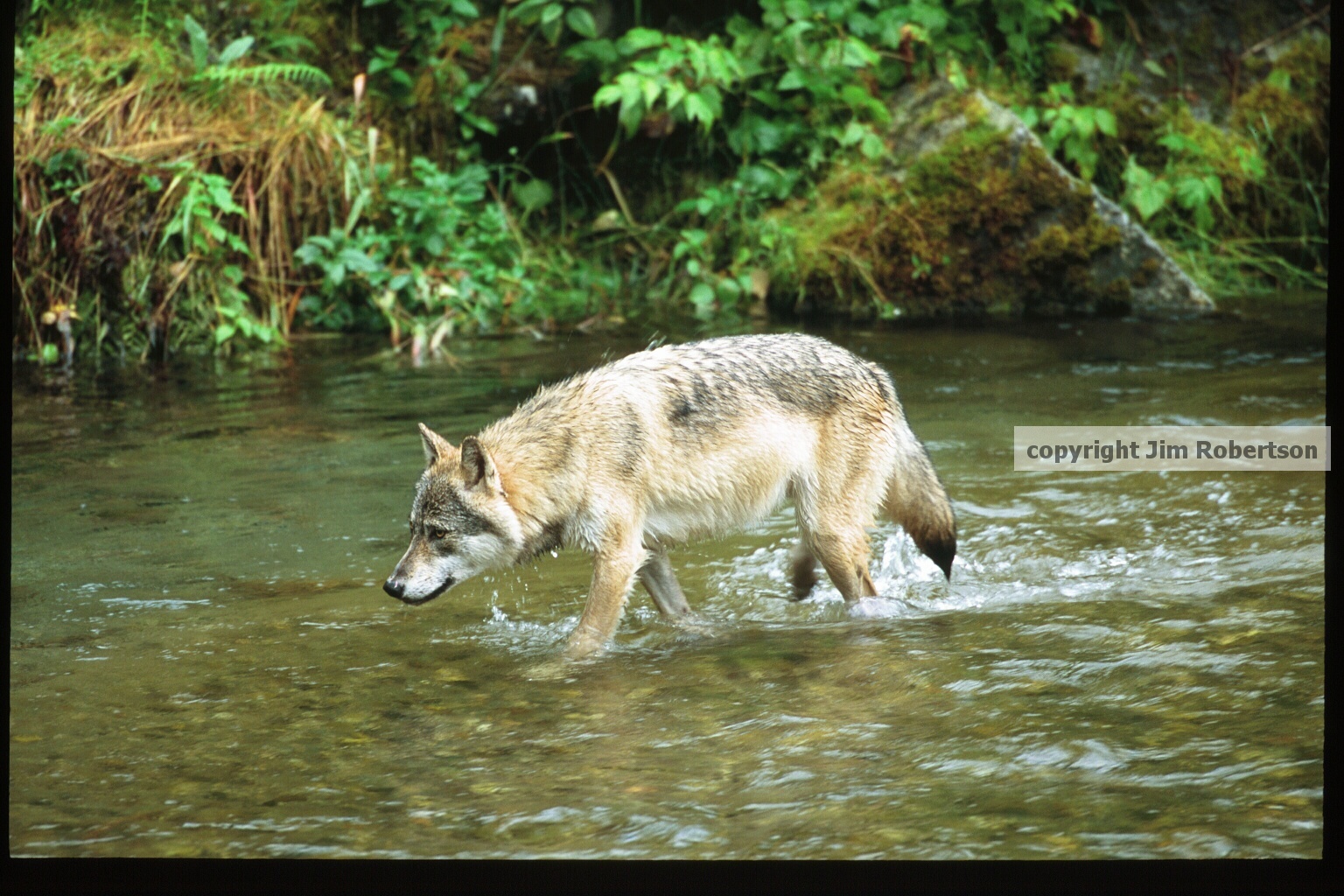
copyrighted wolf in river

Anti-wolf hunt group hopes to dispel evil fairy tale portrayal

Wolf Hunt Michigan.JPG
                    This file photo provided by the U.S. Fish and Wildlife shows a gray wolf.

Tim Skubick: Is the big bad wolf for real? Anti-wolf hunt group hopes to dispel evil fairy tale portrayal

By Tim Skubick | Politics Columnist for MLive.com
on December 03, 2013

If those who want to stop the next wolf hunt in Michigan fail, Walt Disney may be to blame.

One of the leaders of the Protect the Wolves coalition concedes the public’s view of wolves is based on “a lot of misinformation.”

Maybe it started at a tender young age with the reading of the classic, “The Three Little Pigs,” featuring none other than the “Big Bad Wolf.” Talk about a sinister label.

Jill Fritz in her pitch to protect the BBW does use that reference because she claims it’s wrong.

She argues the attitude that “wolves are snarling and stalking people and being very aggressive,” is not accurate. “That’s not consistent” she counters, because they are “shy animals and elusive.”

Hence the need for an image re-do. “There does need to be a lot of public education leading up to the election about wolf behavior,” she asserts.

So can we expect to see the three little pigs in an ad welcoming Mr. Wolf into their brick house via the front door and not the chimney?

The movement probably won’t go there but as they gather petition signatures to place the issue before you, they will have to find a message to soften the image.

It’s not that Michigan voters are unsympathetic to animals. They voted overwhelmingly to stop the killing of doves, but you don’t need to be Mort Neff (anybody remember him?) to realize the difference between a tiny dove and a mean-looking wolf.

The petition drive, of course, resulted when state lawmakers voted to render a previous petition drive null and void, even thought the pro-wolf lobby was this close to blocking a wolf hunting season.

Ms. Fritz contends many citizens were offended by the end-run by legislators, which is providing fuel for the petition drive fires.

“They are upset,” she explains while refusing to disclose how many signatures they have in hand.

Yet here comes another effort to mute this petition drive. The Citizens for Professional Wild Life Management are set to launch their own counter-petition drive to allow the state to control hunting seasons. So it’s possible voters will face dueling ballot questions next year, one to protect the wolves and another to render that amendment useless.

Then perhaps we can identify who is really afraid of the big bad wolf.

Watch “Off the Record with Tim Skubick” online anytime at video.wkar.org

Unfuckingbelievable… New Michigan group seeks to protect future wolf hunts

New Michigan group seeks to protect future wolf hunts with citizen-initiated legislation

copyrighted wolf in riverLANSING, MI — With Michigan’s first-ever wolf hunt well underway, a new coalition of conservationists and sportsmen is seeking to protect future hunts from a planned voter referendum.

A group calling itself Citizens for Professional Wildlife Management on Tuesday announced plans to launch a petition drive for citizen-initiated legislation that would affirm the Michigan Natural Resource Commissions’ ability to designate game species and issue fisheries orders.

Full story: http://www.mlive.com/politics/index.ssf/2013/11/new_michigan_group_seeks_to_pr.html

DNR: At least 11 wolves killed in Michigan hunt

November 25, 2013copyrighted wolf in water

Associated Press

LANSING, Mich. (AP) — At least 11 wolves have been killed during Michigan’s wolf hunt in the Upper Peninsula.

The state Department of Natural Resources updated the results Monday. The wolf season started on Nov. 15 and runs through December, unless 43 are killed before the end of the year.

It’s the first hunt in Michigan since the wolf was placed on the endangered species list nearly 40 years ago. A total of 1,200 people are licensed to participate with firearm, crossbow or bow and arrow.

The DNR had estimated the state’s wolf population at 658.

http://www.mininggazette.com/page/content.detail/id/414425/DNR–At-least-11-wolves-killed-in-Michigan-hunt.html?isap=1&nav=5014

___

Online:

Updates on wolf hunt from DNR: http://1.usa.gov/17EOq

Column: Michigan’s wolf hunt will do more harm than good

 The Jackson Citizen Patriot on November 12, 2013
copyrighted wolf in water
By Mark Muhich

Michigan’s first ever wolf hunt begins Nov. 15.

This wolf hunt is anti-scientific, anti-democratic and has little to do with hunting.  Legislative skull-doggery by Upper Peninsula State Senator Tom Casperson voided the constitutional right of Michiganders to petition their government.

Casperson  shifted the listing of “game species”, animals hunted in our state, to a politically appointed committee.  The Natural Resources Committee cannot be reviewed by the voting public, so the 250,000 citizens who signed the ballot initiative calling for a vote on the wolf hunt, were disenfranchised, told to keep quiet, and take a hike.

While hiking in Michigan there is one thing you need not fear; a wolf attack. There has never been in Michigan’s history an attack by wolves on humans. Of course Capserson’s fairy tales tell of children being cornered by wolf packs at school. Casperson has made numerous bogus claims on the floor of the State Senate in Lansing, though admittedly,  he is not sworn to tell the truth while speaking.

Worse, professional Department of Natural Resource biologists now confess to falsifying testimony to the State Senate.  The Legislature resolved that wolves should be de-listed from the endangered species act, and then included wolves on the schedule of game species in Michigan.

If the DNR had enforced its own regulations requiring farmers to bury within 24 hours the carcasses of  dead animals then many of the wolf attacks on cattle could have been avoided in the first place.

Cattlemen have every right to kill wolves that are attacking their herds. That is the law and always has been. The DNR pays farmers and ranchers for the loss of their livestock killed by wolves.

The upcoming wolf hunt is not designed to manage wolves in the wild; but it could make wolf attacks worse.  Wolves are pack animals, they depend on an intricate social network to survive. If an alpha wolf is slaughtered the pack disintegrates, turning the survivors into rogues.

Only one biologist sits on the NRC, which listed the wolves as “game species”, and hers was the sole committee vote against the wolf hunt.

Other respected northern Michigan scientists have argued against the wolf hunt. With the deer population holding steady in the U.P., and wolf populations slightly declining, an ecological balance in the forests of northern Michigan is served by the apex predator, wolves.

Many sportsmen also oppose the new wolf hunt.

Hunting ethics written by Teddy Roosevelt, the North American Wildlife Conservation Model, warned against “frivolous hunts” like Michigan’s wolf hunt.

Michigan’s wolf hunt ignores the science of wildlife management. Michigan wolves do not need “management,” they are management.

Sen. Casperson has snatched the constitutional right of citizens to petition their government. The DNR has failed to enforce its own rules. Michigan’s wolf hunt will do more harm than good, leaving Michigan’s forests weaker.  Put the wolf hunt to a vote of the people next year.

— Mark Muhich lives in Summit Township and is the conservation chairman of the Central Michigan Group Sierra Club.

Michigan’s wolf hunt: How half truths, falsehoods and one farmer distorted “reasons” for hunt

By John Barnes | jbarnes1@mlive.com MLive.com
on November 03, 2013

It is a mythical animal. Inspiring. Feared. Intelligent. Reviled. [It sounds like they’re talking about bigfoot.]

Once on the brink of extinction, the gray wolf’s comeback incopyrighted wolf in water Michigan is remarkable.

And now we will hunt them, a historic first in the state.

But an MLive Media Group investigation found that half-truths, falsehoods and a single farmer have distorted reasons for the hunt. Among them:

When state lawmakers asked Congress to remove wolf protections, they cited an incident in which three wolves were shot outside an Upper Peninsula daycare center where children had just been let out. That never happened, MLive found.

A leading state wolf specialist said there are cases where wolves have stared at humans through glass doors, ignoring pounding on windows meant to scare them. That never happened as well. The expert now admits he misspoke.

The Natural Resources Commission received more than 10,000 emails after seeking public comment, but there is no tally of how many were pro or con. The NRC chairman deleted several thousand, many of them identical, from all over the world. Most of the rest went unopened, a department spokesman said. They said anti-hunt groups launched an email blast so extensive the agency was overwhelmed.

And while attacks on livestock are cited as a reason to reduce wolf numbers, records show one farmer accounted for more cattle killed and injured than all other farmers in the years the DNR reviewed.

The farmer left dead cattle in the field for days, if not longer, a violation of the law and a smorgasbord that attracts wolves. He was given an electric fence by the state. The fence disappeared.  He was also given three “guard mules.”

Two died. The other had to be removed in January because it was in such poor condition. …

More here: http://www.mlive.com/news/index.ssf/2013/11/michigans_wolf_hunt_how_half_t.html

Near sellout: Licenses for Michigan’s first wolf hunt move briskly on first day of sale

Wolf photo.jpg
                    Once endangered, Michigan has an estimated 658 gray wolves. A Nov. 15 hunt in the Upper Peninsula will target 43 wolves total in three separate areas. Critics say it is unnecessary.
(photo Scott Flaherty/National Park Service)
By John Barnes on September 28, 2013 

Licenses for Michigan’s first managed wolf hunt sold briskly today, with 900 of the 1,200 available snatched up in 30 minutes.

As of 5 p.m. Saturday, only about 100 of the 1,200 licenses were still available, said Ed Golder, public information officer for the Michigan Department of Natural Resources. Licenses cost $100 for residents, $500 for non-residents.

“It went excellently,” said Golder of the first-come first-served sale that began at noon. The effort had been delayed to ensure proper procedures were in place to handle high demand online and at 1,400 retail outlets.

Even if there is a sellout, he urged hunters to check back as licenses may be returned if the buyer is ineligible, there are payment issues or cancellations.

While the Nov. 15 hunt will target just 43 wolves total in three Upper Peninsula locations, it has become highly controversial. Those on both sides of the issue accuse each other of spreading misinformation and half-truths.

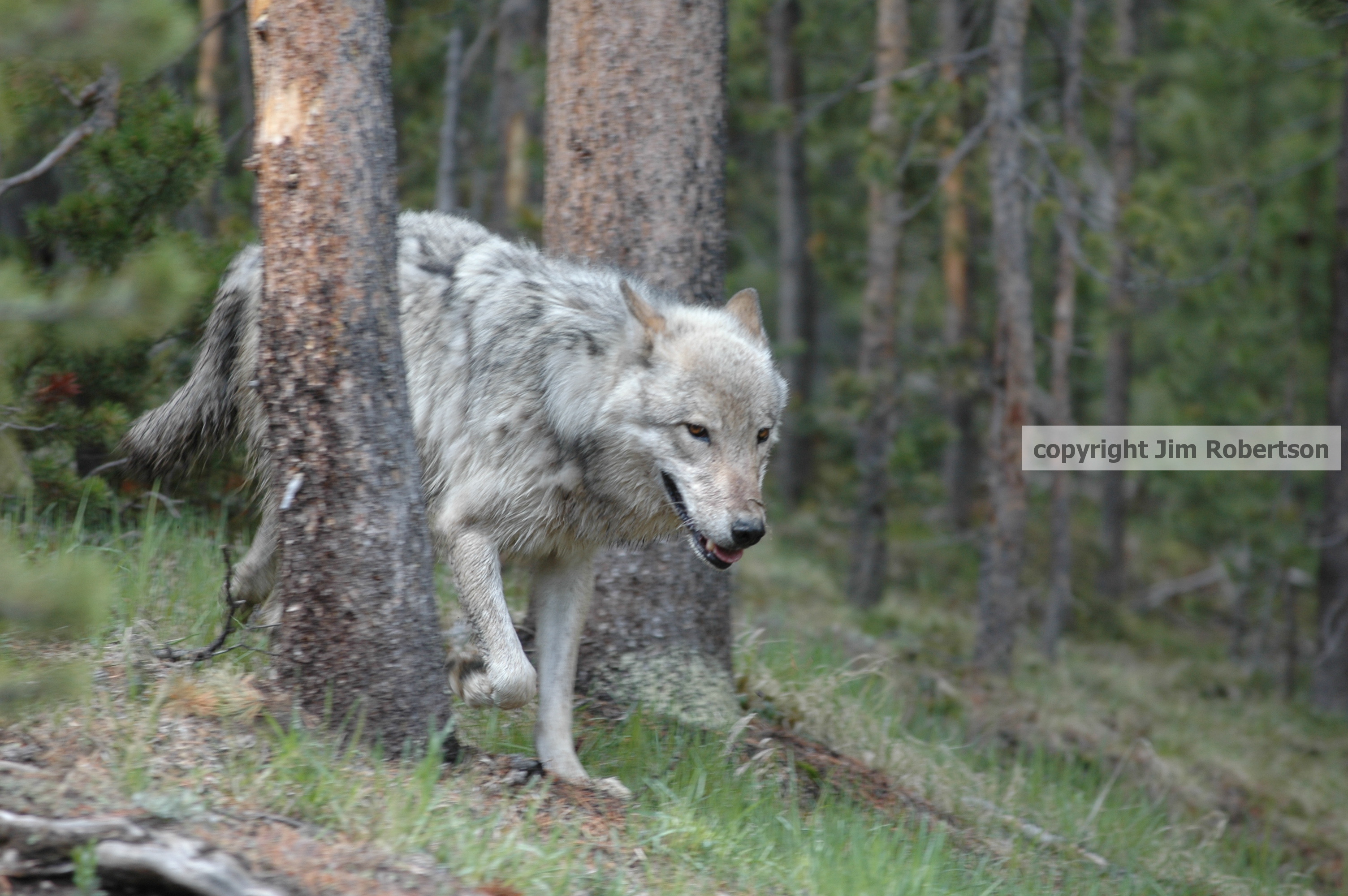
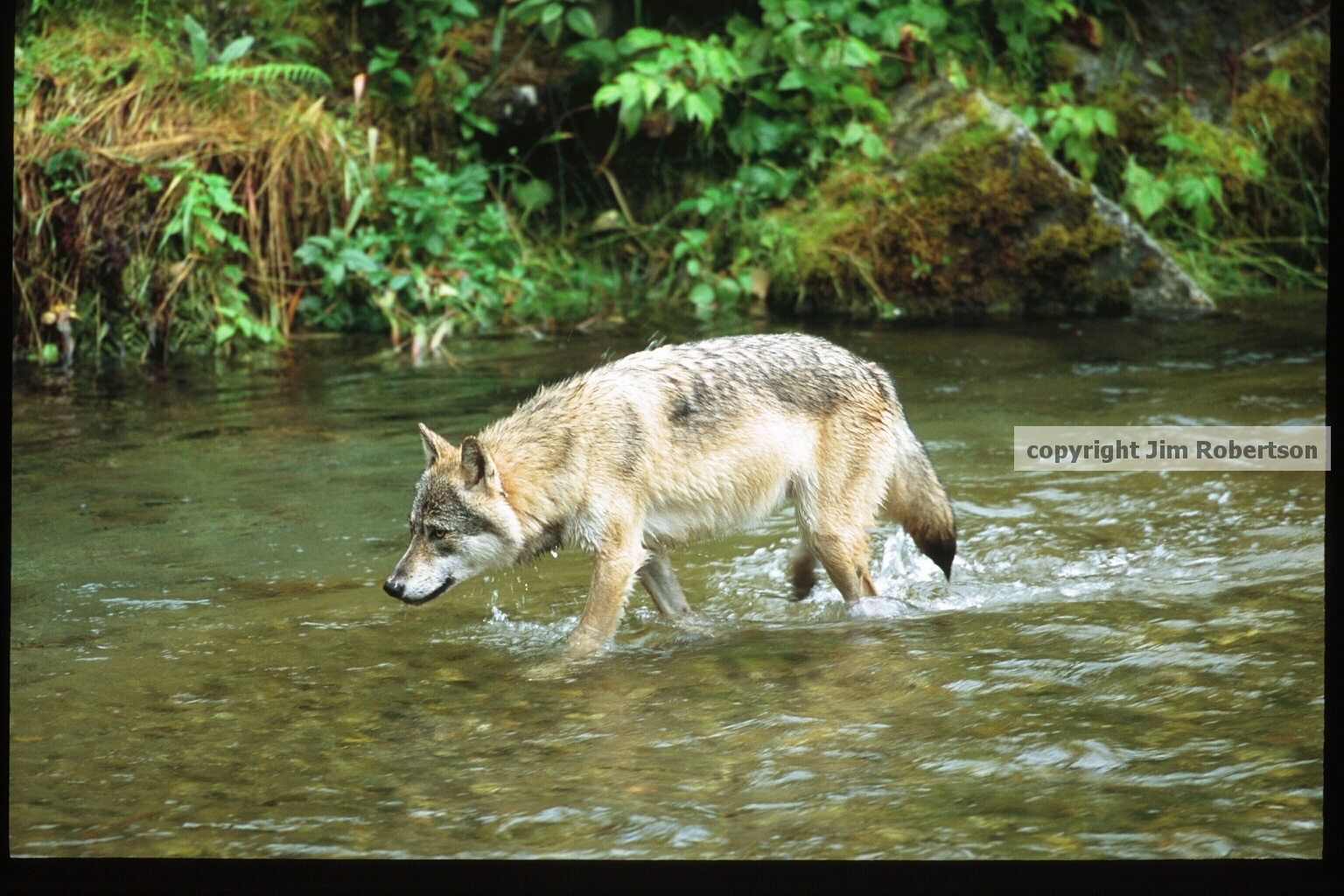
Wolf photo trail.jpgGenerally there are about five wolves in a pack dominated by an alpha male, though packs can be larger. Douglas Smith/National Park Service
The state says the hunt is a necessary tool to reduce wolves in areas where they have entered communities and to manage wolf numbers in areas where cattle and dogs have been killed.

There have been 155 such predation reports from 2010 through this week, some involving more than one animal. That’s about the same number as for the previous 14 years.

Critics say those numbers are grossly exaggerated, particularly by one farmer’s actions and his failure to properly use state-provided deterrents. They say the effort is little more than a trophy hunt, and that lethal and non-lethal means already exist to manage wolves.

“The facts speak for themselves and it just shows this is all politically motivated and has nothing to do with science,” said Nancy Warren, a resident of the western Upper Peninsula town of Ewen and the Great Lakes regional director for the preservationist National Wolfwatcher Coalition.

DNR wildlife biologist Brian Roell, a wolf specialist in Marquette, says critics “cherry pick facts and leave out facts.”

“This is another control for minimizing wolf conflicts, a very conservative approach for taking away 43 animals,” Roell said.

Gray wolves essentially disappeared from Michigan by the time they received endangered species status in 1978.

It would be a decade before the state counted just three wolves in 1988-89. Their numbers grew exponentially, peaking at 687 in 2010-11. The current census puts their number at 658.

The resurgence here and in Minnesota and Wisconsin led the U.S. Fish and Wildlife Service to lift protections for the gray wolf in January 2012.

Minnesota and Wisconsin allowed hunts last year. This will be the first controlled hunt in Michigan.

Critics hope it will be the last.

The ballot group Keep Michigan Wolves Protected is gathering signatures to put a referendum on next year’s ballot. The effort seeks to throw out a law that allowed the Natural Resources Commission this summer to designate wolves as a game animal.

The Legislature shifted that authority to the commission, essentially to get around a successful petition drive by the group that would have stopped this year’s hunt.

The group hopes to have enough signatures by March to support the new ballot measure.

The upcoming hunt will be limited to three areas in the Upper Peninsula. The areas and the number of wolves that can be killed are:

Zone A: A portion of Gogebic County including the city of Ironwood, 16.

Zone B: Portions of Baraga, Houghton, Ontonagon and Gogebic counties, 19.

Zone C: Portions of Luce and Mackinac counties, 8.

The hunt will run from Nov. 15 until Dec. 31, or until the target harvest for each area is reached.

Hunters will be required to report any wolf kills by phone on the day it occurs. Once the target number of wolves are killed in a specific hunting area, that unit will be closed to hunting. License holders will be required to check daily by phone or online to determine whether any zones have been closed.

Murder a Michigan Wolf = “harvest a nice prize”

Wolf licenses go on sale

Controversial wolf hunt set to begin

Licenses go on sale today in bid to thin packs in 3 areas of UP Detroit News Lansing Bureau

When licenses go on sale at noon today for the state’s first wolf hunting in more than four decades, Lester Livermore plans to be among those in line.

“It’s a real opportunity to harvest a nice prize,” said Livermore, 45, of Naubinway. The $100 resident license fee puts a “premium on the species” that “makes sure that individuals value that wildlife,” he said.

The state Department of Natural Resources wants hunters to cull 43 of an estimated 658 wolves in three areas of the Upper Peninsula. License sales will be limited to 1,200 and will cost nonresidents $500. The licenses could go quickly; no one knows what to expect.

A clerk at the Gander Mountain outlet in Marquette, the U.P.’s biggest city, said there hasn’t been much talk about the licenses. In Big Bay, Cram’s General Store clerk Shawn Chaperon said a few people have inquired about wolf hunting licenses.

“There are probably going to be 10 or 15 people show up” today to buy them, Chaperon predicted.

The season is Nov. 15 to Dec. 31, but will end whenever 43 wolves have been bagged. Successful hunters are required to report to area DNR stations within 72 hours.

Rules prohibit some techniques used for deer and bear, such as baiting, and wolves are tougher to hunt, said Department of Natural Resources spokesman Ed Golder.

“The experience from other states has shown that a lot of … effort goes into hunting wolves,” Golder said.

The hunt aims to modestly reduce growing wolf populations in three areas — or management units — where they’ve been preying on domestic animals.

“It’s structured around areas of wolf-related conflict where the problem is not addressed by other means,” Golder said.

At his U.P. farm in Greenland, Duane Kolpack said he has shot eight wolves, lost as many as 70 animals to them and favors the state’s upcoming wolf hunt.

Kolpack and his wife, Julie, are in Wolf Management Unit B, where the DNR wants hunters to take 19 wolves. The plan is to eliminate 16 in Unit A, the far western U.P., and eight in Unit C surrounding Engadine and Gould City in the southeastern U.P.

Yoopers who support the hunt are skeptical of the quotas. “I think (killing) 43 is kind of a joke,” Kolpack said. “I think there are 2,000-plus wolves in the U.P., and every pack is going to grow by five or six a year.”

Caught in middle

The Kolpacks and their four children are in the middle of the conflict. About three years ago, wolves began attacking the easier targets among their 700 cattle, sheep, goats and hogs.

“My wife chased one out of the barn,” Kolpack said. “It took a goat, and she chased it about half a mile down the road, but it never let go of the goat.”

Officially, the family has reported losing 50 animals to wolf predation. Duane Kolpack said he believes the real number is closer to 70; he’s not sure how many calves were dragged off into the woods.

While wolves were listed as endangered, the DNR supplied the Kolpacks with firecracker shells and mules to keep them at bay. After wolves were taken off the endangered list two years ago, Duane was free to use firearms to defend his herds.

The wolves have since become more cautious. But he said he recently was awakened at 3 a.m. when wolves went after his calves — and he chased them away by speeding across a dark field in his pickup.

Kolpack said he doesn’t think he’s made a big dent in the pack or packs living nearby.

Just west of Baraga, Bill Delene, his wife and two young daughters see wolves almost daily.

“My neighbor called just this Monday and said: Watch your kids, two big wolves just crossed your driveway,” he said. “The only concern I have personally is for my kids; I tell them, ‘If you see a wolf, run in the house.’ ”

Delene, a shift supervisor at the Baraga state prison, has captured thousands of wolf photos on cameras he places along trails. He also has accidently snared them in his coyote traps — as many as five in one day.

“Wolves have been increasing because our social, caring capacity has allowed it,” Delene said. “They’ve got to be wisely managed because if they’re not, at some point people are going to say enough is enough and take care of it themselves.”

Hunt sparks opposition

Jill Fritz, the Lansing-based state director of the Humane Society of the United States, called the hunt “unnecessary” and said existing measures — letting folks like Kolpack defend their animals against wolf attacks — are working fine.

A Humane Society-backed group, Keep Michigan Wolves Protected, is circulating petitions to outlaw wolf hunting. If successful, two proposals voiding state laws will be on the November 2014 ballot. The latest petition effort is being received with enthusiasm, Fritz said.

“While they’re signing, they’re sharing with us important aspects of the campaign … (including) how the Legislature did an end-around of the first petition,” she said.

Keep Wolves Protected says most wolf attacks on livestock forming the DNR’s justification for the hunt came from one farm near Matchwood.

That farm owner, John Koski, failed to follow through on DNR-recommended measures to protect his livestock and left animal carcasses in his fields — a natural draw for more wolves, the organization claims.

State Sen. Tom Casperson, the Escanaba Republican who spearheaded the legislative effort to legalize wolf hunting, described in a Senate speech the Kolpack family’s problems to blunt opponents’ criticism. He also mentioned an August incident when wolves killed nine beagles that an Ohio man and some friends were training in woods outside Rudyard.

Casperson said people living downstate, especially wolf hunt opponents, don’t sufficiently understand the challenges U.P. residents face.

“Those pushing hard that we shouldn’t have the hunt, I tell them: ‘How about I bring some down to you?’ ” Casperson said. “They say, ‘sure’ — but it doesn’t sound like they’re really sure about that.”

Wolf hunt rules

License cost: $100 for residents, $500 for nonresidents Wolf kill limits: Wolf Management Unit A (far western U.P.), 16; Unit B, 19; Unit C (southeastern U.P.), 8. One bagged wolf per person per season. Kill report rules: Successful hunters must report it by phone the same day and bring the carcass to a DNR check station within 72 hours. The DNR “seals” the wolf pelt and collects one tooth to learn the animal’s age and for genetic testing. The seal has to stay on the pelt until the hunter has it processed or tanned. Hunting season: Nov. 15 to Dec. 31 (same as deer season) or shorter. Hunting is prohibited when the limit is reached.
Source: Michigan Department of Natural Resources

From The Detroit News: http://www.detroitnews.com/article/20130928/METRO06/309270130#ixzz2gD8aomy6

copyrighted Hayden wolf in lodgepoles

(At Least) Michigan’s first wolf hunt will no longer include trapping

By Keith Matheny
Detroit Free Press staff writer

Michigan’s first-ever wolf hunt this fall and winter will no longer include trapping, after the state Natural Resources Commission rejected the use of steel-jaw leg traps on private and public land as part of the hunt.

The commission, for the second time in two months, approved a wolf hunt on July 11 for three zones of the Upper Peninsula. The second approval came in light of the passage of Public Act 21, a bill by Republican state Sen. Tom Casperson of Escanaba allowing the commission to designate animals as game species — a bill critics say was designed specifically to circumvent a petition drive to put the wolf hunt to a public vote.

The hunt approved in May allowed steel-jaw leg traps. But trapping was removed in the second approved hunt.

“The primary reason was just looking at starting conservatively with our approach in how we move forward with implementing public harvest of wolves as a management tool,” said Adam Bump, the Michigan Department of Natural Resources’ fur-bearing animal specialist.

But Jill Fritz, state director of the Humane Society of the United States, which is spearheading a second petition drive to try to repeal Casperson’s bill, suspects a different motive for dropping trapping from the hunt.

“It’s to make it more public-friendly, because they know Michiganders are horrified by the thought of this still-recovering species writhing and dying in traps,” she said.

Wolves were all but eradicated in much of the country by the 1930s. Michigan and other Great Lakes states lost almost all of their wolves by the end of the 1950s.

In 1973, Congress enacted the Endangered Species Act and officially protected the wolf that same year, sparking a resurgence in the wolf population. Michigan’s Upper Peninsula was known to have three wolves as recently as 1989. The population today stands at 653 wolves. The wolves have made an even more substantial recovery in Wisconsin (834 wolves) and Minnesota (3,000).

The U.S. Fish and Wildlife Service removed wolves from the federal endangered species list in January 2012, and several states, including Michigan, began planning for wolf hunting seasons.

Wisconsin and Minnesota established their initial wolf hunts last year, and trapping proved by far a more effective means of harvesting wolves than firearms hunting. In Minnesota, wolf takes by rifle were about 4% successful, compared with about 25% through trapping.

Michigan’s season will begin Nov. 15 and run through December, or until 43 wolves are harvested. Bump said the number was established with firearm hunting in mind.

“Our expectation is even with just hunting we will be able to achieve our targeted harvest,” he said.

Tony Hansen, spokesman for the Michigan United Conservation Clubs, said the coalition is disappointed that trapping was removed.

“It’s a viable, effective and scientific method to control wildlife populations,” he said.

Bump said the DNR will continue to use traps as necessary to take problem wolves throughout the year, and trapping will be reconsidered as part of the hunt in future years.

“The department’s position is trapping is a humane and effective wildlife management tool,” he said.

Nancy Warren, an Ontonagon County resident and Great Lakes regional director of the nonprofit National Wolfwatcher Coalition, is opposed to trapping — and the hunt in general.

The state is establishing the hunt to reduce conflicts between wolves and humans, such as wolves coming into towns or preying on cattle or pets. But Warren said the state’s own data on wolf depredations show the vast majority are occurring on one farm in her county, whose owner, John Koski, has been criticized for his actions and inaction that may contribute to wolf attacks on his livestock.

“When you take that farm out of the equation, there is no need for a wolf hunting season in this unit,” she said. “The truth is, some people want a hunting season; they want to kill wolves out of hatred, and they are using this as an excuse.”

Wolf hunting licenses go on sale starting Aug. 3 until Oct. 31, or when 1,200 licenses are sold. The licenses are $100 for Michigan residents and $500 for nonresidents and are available at authorized license agents, a number of DNR offices statewide or online at http://www.michigan.gov/huntdrawings.

copyrighted wolf in water

Upper Peninsula wolf hunt approved, again, by Michigan’s Natural Resources Commission

http://www.mlive.com/news/index.ssf/2013/07/wolf_hunt_michigan.html

by Fritz Klug

The Michigan Natural Resources Commission has again voted to allow a wolf hunt in parts of the Upper Peninsula this fall.

The commission voted 5 to 1 on Thursday to designate wolves as a game species and allow the hunt, starting in mid-November. While the wolves will be hunted this fall, an opposition group is working to block any future wolf hunting in the state through a second planned voter referendum.

“Managing wildlife through science is far better than managing wildlife through ballot questions, which some organizations support for Michigan,” said NRC Chair J.R. Richardson. “The conservative public harvest proposal approved by the NRC ensures the long-term presence of wolves while providing a valuable tool for managing conflicts between wolves and human populations.”

The NRC vote comes after a new law approved by the Michigan Legislature which gave the NRC the authority to establish new game species. While the NRC voted to allow the hunt earlier this year, it needed to vote again under terms of the new law. In May, the commission voted 6-1 to allow the hunt.

Members of the NRC are appointed by the governor.

The hunt will be limited to 43 wolves in three separate areas of the UP in an attempt to decrease population in those specific areas. There are an estimated 658 wolves in Michigan’s UP overall.

Supporters of the hunt say wolves are causing problems in the Upper Peninsula. There are reports of wolves killing livestock and pets. Residents also said wolves have become increasingly comfortable around humans and fear that they may attack small children.

Those opposed to the hunt, however, question if the wolf population — which was once endangered — could handle a hunt. They also say wolves are a natural resource and voters should decide if there should be a hunt.

“The voters of Michigan—not politicians and bureaucrats—should have their voices heard on whether our state’s fragile wolf population is needlessly hunted for trophies,” said Jill Fritz of Keep Michigan Wolves Protected, who is the state director for The Humane Society of the United States.

The organization Keep Michigan Wolves Protected has organized petition drives to get the wolf-hunting question on the 2014 ballot.

The group collected 250,000 signatures aimed at overturning the previous state law that allowed a wolf hunt. But the Legislature’s approval of a newer law made that effort moot, and opponents now would have to mount a second petition drive aimed at overturning the newer law — enacted earlier this year.

Earlier this month, the group submitted new language to stage a second petition drive aimed at banning wolf hunting in Michigan. Tomorrow, the Board of State Canvassers will meet and consider the ballot language.

“It would be extremely difficult” to finish the petition drive by the November vote, said Fritz.

During the meeting, several members of the public spoke against the wolf hunt.

The first referendum seeks to overturn Public Act 520 of 2012. The new referendum would seek to overturn Public Act 21 of 2013. Both measures could make the November 2014 ballot.

The Upper Peninsula is home to an estimated 658 wolves. That’s up from roughly 500 in 2008 and approximately 200 in 2000. The state counted just three wolves in 1989.

The thee zones for the fall hunt are:
1.A portion of Gogebic County including the city of Ironwood.
2.Portions of Baraga, Houghton, Ontonagon and Gogebic counties.
3.Portions of Luce and Mackinac counties.

There will be 1,200 licenses available for over-the-counter purchase starting Aug. 3. The hunt will begin Nov. 15.

Hunters will be required to report a killed wolf by phone on the day the wolf is killed. Once the target number of wolves are killed in a specific hunting zone, that unit is closed to hunting. Licensed hunters will be required to check daily by phone or online to determine whether any management units have been closed.