Exposing the Big Game

Forget Hunters' Feeble Rationalizations and Trust Your Gut Feelings: Making Sport of Killing Is Not Healthy Human Behavior

Exposing the Big Game

Teen hurt in MN hunting accident


http://www.valleynewslive.com/content/news/Teen-hurt-in-MN-hunting-accident-447646143.html

A 16-year-old boy is recovering from a duck hunting accident on the opening day of Minnesota’s waterfowl season.

Douglas County sheriff’s officials say the boy and a 17-year-old hunting partner were in a boat on North Union Lake when the accident happened Saturday.

Police say the 17-year-old believed his shotgun was empty and put it in a case, but it accidentally discharged when he leaned over the side of the boat to retrieve a duck.

The other boy was hit in the leg, but his injuries are not life-threatening.

Midwest, Wyoming lawmakers target wolf protections again

 https://www.washingtonpost.com/national/energy-environment/midwest-wyoming-lawmakers-target-wolf-protections-again/2017/02/26/5e4ce15c-fc50-11e6-9b78-824ccab94435_story.html?utm_term=.73e2d4001ac9
February 26
MINNEAPOLIS — Pressure is building in Congress to take gray wolves in the western Great Lakes region and Wyoming off the endangered list, which would allow farmers to kill the animals if they threaten livestock.

Representatives from Minnesota, Wisconsin, Michigan and Wyoming have asked House Speaker Paul Ryan of Wisconsin for a fast floor vote before the season during which most cows and sheep will give birth begins in earnest. That followed testimony before a Senate committee a week earlier from the president of the Wisconsin Farm Bureau Federation, who said producers need to be able to defend their livestock and livelihoods.

Meanwhile, both sides in the debate are waiting for a federal appeals court to decide whether to uphold lower court rulings that put wolves in the four states back on the list or to let the U.S. Fish and Wildlife Service return management of the species to the states, which it has wanted to do for years.

Here’s a look at some of the issues:

THE LETTER

 U.S. Rep. Collin Peterson of Minnesota, the ranking Democrat on the House Agriculture Committee, sent a letter co-signed by seven of his colleagues from the four states to House leaders urging a quick floor vote on a bill to return their wolves to state management. A key component of both is language that would prevent the courts from intervening.

The representatives said it’s urgent because calving season is when cows and calves are most vulnerable.

“As you know, cows and their calves can easily be worth several thousand dollars, so each instance of a wolf attack has devastating economic impacts on ranchers and their families. Currently, ranchers and farmers have no legal actions available to deal with gray wolf attacks because these predators are federally protected,” they wrote.

Peterson said in an interview that they very nearly passed a similar provision in the last Congress and that he thinks they have a decent shot at persuading Ryan to grant an early floor vote. Otherwise they’ll try to attach the language to a bigger appropriations bill later. The legislation is similar to what Congress used to delist wolves in Montana and Idaho in 2011 after courts blocked the federal government’s attempts to lift protections in those states.

“Wolves are not endangered,” Peterson said.

THE HEARING

The Senate’s Committee on Environment and Public Works held an informational hearing Feb. 15 billed as “Modernization of the Endangered Species Act.” Jim Holte, president of the Wisconsin Farm Bureau Federation, complained that it’s been illegal for farmers in the region to kill wolves that prey on their livestock since wolves went back on the list.

“As wolf populations continue to increase, interactions between farmers, their livestock, rural residents and wolves continue to escalate without a remedy in sight,” Holte testified.

THE COURTS

The U.S. Fish and Wildlife Service has long contended that wolves in Minnesota, Wisconsin, Michigan and Wyoming have recovered to the point where they’re no longer threatened, so hunting and trapping can be allowed under state control.

Gray wolves were once hunted to the brink of extinction in the lower 48 states, but they recovered under Endangered Species Act protections and reintroduction programs to the point where they now number around 5,500, according to the service. The combined gray wolf population of the three western Great Lakes states is now about 4,000, while Wyoming has roughly 400. The agency describes wolf numbers in those states as “robust, stable and self-sustaining.”

But federal courts have blocked multiple attempts to take them off the endangered list, most recently in 2014. The U.S. Court of Appeals for the District of Columbia Circuit last fall heard oral arguments in challenges to those rulings but hasn’t ruled on them yet.

THE OPPOSITION

Groups that support the federal protections say it’s premature to lift them because wolves are still missing from most of their historical range. They’ve been able to persuade the courts that the terms of the Endangered Species Act requires recovery in more than just a few states, even though the Fish and Wildlife Service disagreed.

Brett Hartl, government affairs director of the Center for Biological Diversity, said he’s skeptical that the latest congressional efforts will get much traction. He said Peterson and the other representatives who sent the letter are just sending a message to their constituents that they’re still trying.

Reward Offered in Minnesota Wolf Thrill Kill Case

Humane Society Wildlife Land Trust

The Humane Society of the United States and the Humane Society Wildlife Land Trust are offering a reward of up to $5,000 for information leading to the identification, arrest and conviction of the person or persons responsible for poaching three wolves, whose frozen bodies were found in a ditch along a northern Minnesota highway. This reward is in addition to a $2,500 offered by the U.S. Fish and Wildlife Service.

THE CASE: On Jan. 22, the Minnesota Department of Natural Resources tip line received a report of three wolf carcasses found in a pile in a ditch just off the shoulder on Hwy. 8 near Floodwood, about 35 miles southeast of Grand Rapids. The wolves appeared to have snare marks on their necks and evidence indicates that they may have been killed elsewhere and dumped near the road, possibly the night before the DNR received the report. The bodies were sent to USFWS’s forensics lab in Oregon to determine how the animals were killed.

A SERIOUS CRIME: Gray wolves are listed as threatened under the federal Endangered Species Act and cannot be killed except in defense of human life. Each violation is punishable with fines up to $25,000 and up to six months in prison.

Christine Coughlin, Minnesota state director for The HSUS, said: “There is no excuse for deliberately killing three members of a threatened species and discarding the animals like litter along the road for all to see.  The poacher responsible has callously wasted the lives of these wolves and removed them from their pack during breeding season, which can cause serious disruption in pack structure. We’re hopeful this reward will bring forward anyone with information about this heinous crime.”

Marla Wilson, acting executive director of the Humane Society Wildlife Land Trust, said: “Clearly the person responsible for killing these magnificent animals has no regard for the law that helped bring them back from the brink of extinction.” The Trust has a 120-acre wildlife sanctuary in Minnesota and Wilson notes that wolves are safe and welcome there.

THE INVESTIGATORS: The case is being investigated by USFWS and the Minnesota DNR. Anyone with information about this case is urged to call the DNR’s Turn in Poachers (TIP) line at 1-800-652-9093.

PROTECTING GRAY WOLVES: After habitat destruction and widespread poisoning, trapping and trophy hunting of wolves resulted in extirpation of the species from nearly all of their range in the lower 48 states, wolves were placed on the federal Endangered Species List in 1967.  Wolves were prematurely delisted in the Great Lakes region in 2012 following pressure from special interest groups. Trophy hunters and trappers killed over 400 Minnesota wolves in the 2012-2013 hunting season—the first public hunt in the state in over four decades. A federal judge re-listed the species in 2014, but efforts to strip wolves of protection continue. The HSUS is fighting these efforts, working to ensure that wolves make a full recovery and that wildlife management decisions are based on sound science—not unfounded fear and hatred.

Media Contact: Chloe Detrick, cdetrick@humanesociety.org, 202-658-9091

528624c939a88_preview-620

Wolves may be off endangered species list – again

528624c939a88_preview-620

http://blogs.mprnews.org/capitol-view/2015/06/wolves-may-be-off-endangered-species-list-again/

Republicans in the U.S. House of Representatives are pushing to take Minnesota’s gray wolves off the endangered species list.

Buried in the fiscal 2016 Interior and Environment Appropriations bill is language that would effectively require the secretary of the interior to reissue a federal rule that took gray wolves in the western Great Lakes, which includes Minnesota, off the list.

The bill also stipulates that the action would not be subject to judicial review.

Last year, a federal court decided that Minnesota’s gray wolves should be put back on the endangered species list.

U.S. Rep. Betty McCollum, D-Minn., said the provision amounts to “tremendous overreach” because the appropriations bill is meant to fund the Interior Department’s activities, not direct policy decisions.

“The judicial branch exists to provide oversight and review of our nation’s laws, and the idea that this Republican appropriations bill would try to circumvent that constitutionally critical process is wrong,” McCollum said.

McCollum, a Democrat, is on the House Appropriations Committee, and serves as the top Democrat on a subcommittee in charge of the interior and environment funding bill. Work on the legislation starts this week.

Save Dogs from the evil of Traps

11069999_796532557082212_7990787700535584970_n


ACTION ALERT: Do you have a story about a dog caught in a trap or snare even if it was not your dog? Many animals, including dogs, are unintentionally brutally killed or injured in snares. Contact Governor Dayton, share your story, ask him to eliminate wildlife snaring.

Gov. Dayton phone #: 651-201-3400, toll-free: 800-657-3717
Gov. Dayton contact form: http://bit.ly/1EDwQgh

Please share your story with us. It may be used to pass legislation. Email: info@howlingforwolves.org

_______________________________

Bill in Legislature tries to save dogs from accidental trappings

 by: DOUG SMITH , Star Tribune

  • March 18, 2015 – 10:27 AM

Dogs continue to be trap victims, and a controversial bill in the Legislature aims to change that

Rosie Nordby knew something was wrong when she stepped outside her rural Pequot Lakes home Nov. 29 to retrieve the family’s three dogs, and Lily, a chocolate Lab with a two-week-old litter of eight puppies, was missing.

“It was like she just disappeared,” Nordby recalled this week.

She and her husband, Daren, and three kids searched, called neighbors and then authorities, fearing their hunting dog had been stolen. That night, the family hand-fed Lily’s puppies to keep them alive.

Rosie Nordby found Lily the next day, dead in a body-gripping trap set in a ditch about 750 feet from her family’s house.

“I was heartbroken,” she said. “I’m glad it was me who found her and not my kids. It was traumatic.”

Lily was one of at least 34 dogs caught accidentally in traps in Minnesota last year and among five that were killed. Since 2012, the Department of Natural Resources says 75 dogs have been caught in traps and snares, and 17 died. A group pushing for trapping restrictions claims at least 25 dogs have been killed during that time.

The issue, which gained attention in 2012 when the Legislature tightened some trapping restrictions in response to dog deaths, is again being scrutinized. A bill was introduced this session that further stiffens trapping regulations to reduce or eliminate accidental dog deaths.

Gov. Mark Dayton’s administration has testified in support of the measure.

Supporters say the changes made three years ago haven’t stopped the accidental trapping of dogs.

“We need to do something so our pets don’t get killed anymore,” said Sen. John Hoffman, DFL-Champlin, author of the bill.

Hoffman’s bill would require body-gripping traps to be either completely submerged in water or have enclosures with smaller openings and larger recesses, or be placed at least 5 feet above ground. These methods would greatly reduce the chances of a dog being accidentally trapped, he said.

The Minnesota Trappers Association and the Minnesota Forest Zone Trappers Association both oppose the measure, saying the proposals would greatly limit the effectiveness of trappers.

“Trappers want this issue to go away more than anyone,” Gary Leistico, an attorney representing the Minnesota Trappers Association, testified Tuesday at a Senate hearing in St. Paul. “We’ll continue to work with everyone, but this bill … does much more than what it’s claimed to do. It would not allow meaningful trapping in Minnesota.”

The Minnesota Forest Zone Trappers Association also opposes the bill, as does Michael Tucker, who runs a wildlife removal service and is a member of the National Wildlife Control Operators Association. Tucker told legislators the bill would severely limit the ability of businesses like his to remove problem animals.

Trappers reduce predators of ground-nesting game birds, such as raccoons, skunks, mink, fox and coyotes, the groups say.

And a section in Hoffman’s bill requiring body-gripping traps used near water to be fully submerged would greatly reduce the taking of beavers, who cause damage to culverts and roads around the northern half the state, opponents say.


“You’re taking away the most effective way to trap beaver,” said Randy Goldenman of Zimmerman, who traps beaver for Sherburne County. “I catch up to 200 a year.”

Hoffman says his bill isn’t meant to be anti-trapping and wouldn’t inhibit trapping. “It will just make it safer for dogs and our pets,” he said.

The issue is an emotional one and drew impassioned testimony. Among those testifying in support was a handler for a search-and-rescue dog, the executive director of a Cloquet animal shelter that took in a dog injured in a trap and several hunters.

Loren Waalkens of Lake City, whose beagle, Frisbee, was caught in a body-grip trap in 2011, pleaded with senators to tighten regulations. Though he saved his dog with mouth-to-mouth resuscitation, he said Frisbee now has breathing problems related to the incident.

And Waalkens said when he hunts rabbits he’s constantly concerned his dogs will encounter another trap. “It’s taken the joy of hunting from me,” he said. “Please do something about this.”

Kurt Boerner, an upland bird hunter from Wayzata, said his English setter had a close encounter with a trap, and since then he’s been on a quest to tighten trapping laws. He’s quit hunting when trapping season begins and told outstate friends not to come to Minnesota to hunt during trapping season.

“The problem isn’t trappers, it’s the regulations,” he testified.

Tim McCauley of Fridley is a board member of Dog Lovers 4 Safe Trapping MN, which has pushed for tighter trapping laws, too. He no longer hunts public lands in Minnesota during the trapping season, either, for fear of losing a dog.

“I won’t take the risk,” he said in an interview. “It would ruin my life if I lost my dog.”

Restrictions passed in 2012 require trappers to use a 7-inch overhang when using baited body-gripping traps on public lands. The overhang is intended to prevent dogs from sticking their heads in the trap to reach the bait.

Trapping proponents say the restriction is working. But the DNR reports that since 2012, 15 dogs have been trapped in boxes with overhangs.

Rosie Nordby’s dog was caught in a body-grip trap recessed in a box. The trap was recessed 6 inches, meaning it wasn’t legal. Two of the five dog deaths in 2014 were in illegally set traps.

Some, including DNR officials, say even if the recess had been a legal 7 inches, it probably wouldn’t have saved Lily because of the trap’s location. Meanwhile, the trapper was cited.

“The fine was a whopping $100,” Nordby said.

A Fallen Tradition is “Suffering”: MN Hunters’ Deer “Harvest” too High

Lawmakers to DNR: We want more deer up north

A panel of Minnesota lawmakers Wednesday told state wildlife officials they wanted to see more deer in the woods, especially up north.

A House committee hearing room served as the setting for what amounted to a stern talking-to by lawmakers echoing a refrain among many of the state’s half a million deer hunters: Deer populations in many areas have fallen unacceptably low, and the quality of a fall tradition is suffering.

“The deer hunters out there understand,” said Rep. Tom Hackbarth, R-Cedar, who chairs the Mining and Outdoor Recreation Policy Committee and is one of a number of deer hunters on the panel. “They go out there year after year. We know what’s going on, and we’re not seeing the deer. … What’s the problem? How did we get here? … I sat in the stand for five days and didn’t see a doe in the woods. We’ve got huge problems.”

Officials from the Department of Natural Resources got the message.

“Certainly, what we’ve heard is the harvest levels are unacceptable,” Steve Merchant, wildlife and populations manager for the DNR, told the committee.

When viewed over a century of data, the roughly 140,000 deer killed by hunters in the fall isn’t a small number. As recently as 1972, the deer population was so low that no hunting was allowed. But populations rebounded dramatically, and between 1990 and 2010, many years saw more than 200,000 deer taken.

However, the total harvest has fallen steadily since 2010. To protect the declining population, the DNR enacted strict regulations this fall, and the 2014 harvest was the lowest in two decades.

The state’s largest deer hunting advocacy group, the Minnesota Deer Hunters Association, wants to see the harvest rebound to 225,000 by 2019, Craig Engwall, the group’s executive director, told lawmakers. “With conservative seasons and good weather, we think we can achieve that,” he said.

That number prompts unease among DNR officials, who for several years sought 200,000 as a “sweet spot” for the total harvest but say severe winters have suppressed the population. While DNR Commissioner Tom Landwehr has publicly stated deer numbers should be allowed to increase in much of the state, the agency has blamed the back-to-back severe winters of 2012-2013 and 2013-2014 for populations plummeting in northern parts of the state.

Brooks Johnson, president of Minnesota Bowhunters Inc. and one of the DNR’s loudest critics, told lawmakers that DNR officials have “manipulated” data to justify a “hidden agenda” of shrinking the deer population beyond what was called for a decade ago, when concerns over an overabundance of deer prompted the state to loosen hunter rules to allow more animals to be shot. “Allowing the DNR to constantly alter numbers destroys all credibility moving forward,” Johnson said.

His allegations drew sharp skepticism from several lawmakers. Merchant and DNR Wildlife Section Chief Paul Telander said indeed the agency had wanted to swiftly reduce numbers in northern forests, where deer numbers had grown to levels where they were over-browsing on young trees and threatening to prevent the state from receiving accreditation for sustainable forest management.

It’s unclear whether legislation with wide support will emerge. Several lawmakers said they would support requiring the DNR to draft a statewide deer plan similar to its plans for ducks, pheasants, ruffed grouse and other game. Others suggested a wider “audit” of the way the DNR models deer populations, similar to a process Wisconsin underwent several years ago.

Other lawmakers said putting the DNR on the hot seat was all that was needed.

“I don’t think legislators know enough about wildlife to come up with legislation,” said Rep. Tony Cornish, R-Vernon Center. “I think the whole point was to put a fire under the DNR to tell them to get something done, and we did that.”

Wildlife Photography ©Jim Robertson

Wildlife Photography ©Jim Robertson

Bill in Congress would remove protections for Great Lakes wolves

http://www.twincities.com/localnews/ci_27312693/bill-would-remove-protections-wolves-4-states-including

By Steve Karnowski
Associated Press

01/13/2015 12:01:00 AM CST | Updated:  

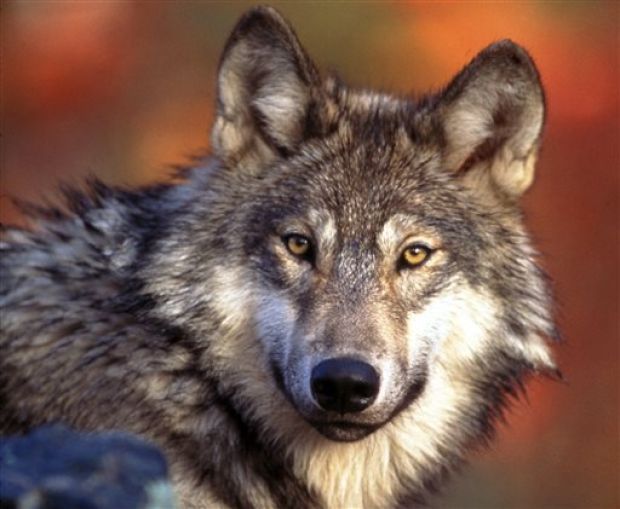
A gray wolf in an April 2008 photo provided by the U.S. Fish and Wildlife Service. (AP Photo/U.S. Fish and Wildlife Service, Gary Kramer, File)

A gray wolf in an April 2008 photo provided by the U.S. Fish and Wildlife Service. (AP Photo/U.S. Fish and Wildlife Service, Gary Kramer, File)

Several members of Congress are preparing legislation to take gray wolves in Minnesota, Wisconsin, Michigan and Wyoming off the endangered list in an attempt to undo court decisions that have blocked the states from allowing wolf hunting and trapping for sport and predator control.

U.S. Rep. Reid Ribble, R-Wis., is leading the effort, his office confirmed Tuesday. Co-sponsors include U.S. Reps. Collin Peterson, D-Minn., Dan Benishek, R-Mich., and Cynthia Lummis, R-Wyo.

“I am pursuing a bipartisan legislative fix that will allow the Great Lakes states to continue the effective work they are doing in managing wolf populations without tying the hands of the Fish and Wildlife Service or undermining the Endangered Species Act,” Ribble said in a statement.

Ribble spokeswoman Katherine Mize said he hasn’t decided exactly when to introduce the bill, but the lawmakers are circulating a draft.

The legislation is in response to a ruling by a federal judge in Washington, D.C., last month that threw out an Obama administration decision to “delist” wolves in the western Great Lakes region, where the combined wolf population is estimated at around 3,700. That followed a similar decision by a different federal judge in September that stripped Wyoming of its wolf management authority and returned that state’s wolves to federal protections under the Endangered Species Act.

Ribble’s bill uses a strategy that succeeded in taking wolves in Idaho and Montana off the endangered list after court challenges by environmentalists blocked those efforts.


Congress took matters into its own hands in 2011 and lifted the federal protections for wolves in those two states, which then allowed hunting and trapping to resume.

“The language we are looking at would be narrow and would address the recent court decision. It would not seek to change the Endangered Species Act, but would be designed to meet the need in our region for responsible stewardship of the wolf population,” Benishek said in a statement.

Peterson, the most senior member of Minnesota’s congressional delegation, said he didn’t know what the prospects are for this legislation, but he said they’re probably better than they were in 2011 given that Republicans now control the Senate. He said he’s working to line up support from other lawmakers.

U.S. District Judge Beryl Howell said in her 111-page ruling that the delisting, which took effect in 2012, was no more valid than the government’s three previous attempts over more than a decade. While wildlife managers in the three western Great Lakes states say their wolf populations are no longer endangered and can sustain limited hunting and trapping, Howell criticized the states’ regulatory plans as inadequate. She also said wolves still need federal protections because they haven’t repopulated all of their historic range.

Peterson said he has asked the U.S. Fish and Wildlife Service to appeal her decision and was confident it would be overturned.

Fish and Wildlife spokesman Gavin Shire said no decision has been made on appealing Howell’s December ruling but said the agency did not appeal the Wyoming decision within the 60-day limit. He said the service wasn’t aware of any proposed legislation to delist wolves and couldn’t comment on it.

Under Howell’s ruling, wolves reverted to “threatened” status in Minnesota and “endangered” in Wisconsin and Michigan. Sport hunting and trapping is banned again in all three states, and Wisconsin and Michigan government officials can’t kill wolves for preying on livestock or pets — only to protect human life.

Doug Peterson, president of the Minnesota Farmers Union, said he believes the ruling is already affecting farms and ranches, particularly smaller family farms where the loss of a cow or calf or two puts a big dent in incomes.

“At some point people are going to do what they’re going to do to protect their livestock. That ends up being a problem,” he said.

Minnesota Department of Natural Resources Urged to Stop the Trophy Hunting of Wolves

copyrighted wolf in water

http://www.humanesociety.org/news/press_releases/2014/11/mn-trophy-hunt-wolves-111714.html

Nov. 4 vote in nearby Michigan highlights overwhelming opposition to this needless killing

The Minnesota Department of Natural Resources is being urged to stop the trophy hunting of wolves, in the wake of the nation’s first statewide vote on wolf hunting in last week’s election.  In nearby Michigan on Nov. 4, voters overwhelmingly rejected two wolf hunting measures, Proposals 1 and 2, with the “no” side winning by a 10-point margin and a 28-point margin, respectively. On Proposal 2, the “no” side received more than 1.8 million votes, more than any candidate who won statewide office, and prevailed in 69 of Michigan’s 83 counties.

This was the first statewide vote on wolf hunting in any state since wolves were stripped of their federal protections under the Endangered Species Act, and since more than 2,200 wolves were killed across the Great Lakes and Northern Rockies regions over the last two years. The Humane Society of the United States is urging decision makers in Minnesota to pay attention to this vote in Michigan, and see how regular citizens feel about the trophy hunting and trapping of wolves.

The Michigan election results mirror public opinion polling showing that Minnesotans, by huge majorities, appreciate wolves and want them conserved. In 2012, before the first wolf trophy hunting season, the DNR conducted an online survey, and 79 percent of residents opposed wolf hunting and wolf trapping.

Howard Goldman, Minnesota senior state director of The HSUS, said: “Michigan and Minnesota are states with strong hunting and farming traditions, and the resounding votes in Michigan demonstrate that voters think trophy hunting and commercial trapping seasons for wolves are premature and unacceptable.  Nobody eats wolves, and there are already tools that exist to manage problem animals.” I’m confident that Minnesotans would have voted similarly if they had a chance to decide this issue directly.”

Minnesota is home to approximately 2,400 wolves and the DNR set this season’s hunting quota at 250 (30 more individuals than permitted in the last season). In 2013, a total of 602 wolves died, and the numbers of wolf packs have declined from 503 in 2008 to 470 in 2014 – a loss of 33 entire packs of wolves. Biologists warn that hunting this iconic species—even at low levels—harms not only the animals but also pack dynamics.   When fellow pack members are killed, wolf packs can disband, leading to starvation of the pack’s youngest members.

Wolves keep deer and other ungulate herds healthy and scientific studies show that because of wolf predation, both plant and animal communities become far more diverse. The Minnesota DNR’s own data show that wolves prey on miniscule numbers of livestock.

Goldman continued: “We want state lawmakers and the Minnesota DNR to take heed of the overwhelming votes in Michigan. Most voters want wolves and their packs protected from needless killing, and they recognize wolves bring economic and ecological benefits to the state.”

Minnesota permits cruel and unsporting trophy hunting methods to kill wolves, including trapping the animals with leghold traps and neck snares. The state also allows hunters to lure in wolves using electronic calls and bait.


Media Contact: Kaitlin Sanderson

Unfortunately the Bear Hunter Got Away

http://www.opposingviews.com/i/society/animal-rights/minnesota-hunter-mauled-black-bear-after-shooting-it

Black Bear Mauls Hunter Who Shot It

article image

A Minnesota hunter was mauled by an enormous black bear on Saturday morning after shooting it with a bow and arrow.

The unnamed man was hunting in dense woodland near Duxbury on Friday night when he shot the 525-pound bear. Fearing the bear’s meat would spoil in the day-time heat, the hunter and his friends waited four hours before following the animal’s blood trail.

The group tracked the bear for several miles in the darkness until they found it lying on the ground early Saturday morning. Suddenly, it charged and attacked the man who had shot it, who screamed before stabbing the animal 20 times with a hunting knife.

“I heard him screaming – felt like 10 minutes, but was probably two minutes,” Craig Lindstrom, a fellow hunter, said. “He kept stabbing it and it was pounding on him, a quarter of a ton – a 525-pound bear pounding on him.”

Using first-aid skills he had learned as a Chicago City firefighter, Lindstrom led his friend half a mile out of the woods and called the Pine County Sheriff’s Office.

“I thought he was dead 10 to 15 times,” Lindstrom said. “He would fall down and he told us about telling his parents, his fiancée, his kids – tell them I love them.”

The hunter suffered two broken arms along with wounds to his face, jaw, stomach and legs. He is currently at the North Memorial Medical Center and in stable condition.

The bear eventually died around 50 yards from where it was stabbed, and was dragged out of the woods by the remaining hunters.

Despite the brutal attack, Lindstrom and his friends said they won’t hesitate to hunt again in the future. Lindstrom hoped that his friend would recover in time for deer hunting season.

– See more at: http://www.opposingviews.com/i/society/animal-rights/minnesota-hunter-mauled-black-bear-after-shooting-it#sthash.0Jujcb8h.haFmSQlb.dpuf

What’s a Minnisota Wolf’s Life Worth? $4.00

From: Increase in wolf hunting permits, higher harvest level set for 2014

The DNR said it will make 3,800 hunting and trapping licenses available for the coming season, up from 3,500 last year, and will allow up to 250 wolves to be killed, up from 220 last year.

…the increase in permits also has angered wolf supporters who have been working to overturn the state’s recreational wolf hunt since it began in 2012, shortly after federal Endangered Species Act protections were removed.

“People need to know that no matter what they say, the DNR and the governor clearly don’t have the best interest of wolves in mind, to be having another season, with more wolves killed, so quickly after they were on the endangered species list,” said Maureen Hackett, a founder of Howling for Wolves. “The DNR has no idea what kind of mortality wolves are seeing for poaching and vehicles or other problems… so they really don’t know how many wolves are out there.”

Hackett said shooting or trapping individual wolves out of packs disrupts the pack social order and may end up causing more conflicts by dispersing the individual members.

“More than 60 percent of the wolves killed the first year were 2 years old or younger. They’re killing puppies,” Hackett added.

Last year, 3,434 hunters and trappers killed 237 wolves for a 6.9 percent success rate. In 2012, the state’s first ever wolf hunt, 6,127 hunters and trappers killed 413 wolves for a 6.7 percent success rate.

The first 2014 hunting season will run Nov. 8-23, the same as the northern deer hunting season. A second hunting season is set for Nov. 29 to Jan. 31, the same dates for the wolf trapping season. The seasons will close early if harvest quotas are reached.

Hunters and trappers can apply for 2014 wolf licenses, which are awarded in a lottery, starting Aug. 1.

To apply, applicants need to pay a $4 fee…

copyrighted wolf in water