
July 2, 2020 0 Comments
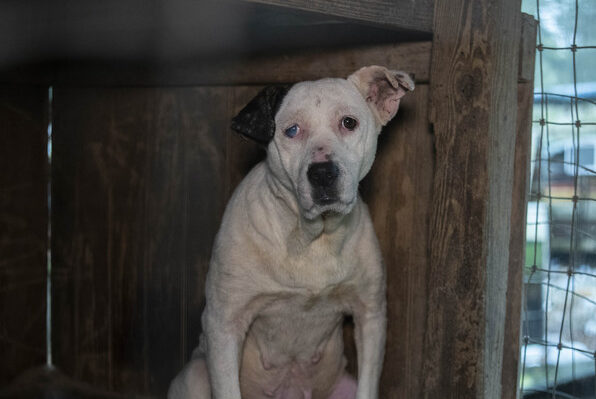
The Iowa law, signed on June 29, provides much-needed upgrades to the state’s animal cruelty law, including requiring outdoor shelter, grooming and veterinary care for dogs. Photo by Meredith Lee/The HSUSShare1KTweetRedditEmail1KSHARES
We have good news to share from Mississippi and Iowa, the only two states in the nation without a law on the books that would make acts of animal torture, like burning, drowning and intentional starvation, an automatic felony. Recently, Mississippi’s state legislature passed a bill that would do exactly this. And although we are still fighting for a similar outcome in Iowa, we are pleased to report that the state recently made its first significant update to its domestic animal cruelty law in 20 years.
The win in Mississippi is an especially proud moment for us here at the Humane Society of the United States, because we have led the battle for a felony animal cruelty law there for more than a decade. The final bill that passed the statehouse on July 1 mimics language from the federal PACT Act, which we also pushed for and which was signed into law last year. While the federal law allows prosecutors to bring federal felony charges when these acts occur within federal jurisdiction or when animals are moved across state lines, or the internet is used as part of a criminal enterprise, a state law is needed to prosecute those who commit violent acts against animals on Mississippi soil.
The bill that passed in the state increases the penalty for egregious animal abuse such as torture and intentional starvation from a misdemeanor to a felony, and prohibits ownership of dogs and cats for a period set by the court after conviction. It also addresses an oddity in the law that allows the defendant to be charged with just one misdemeanor no matter how many animals were abused.
We applaud Mississippi lawmakers for passing the bill, and we urge the governor to sign it into law. We are especially grateful to Mississippi state Sen. Angela Hill for her dedication to sponsor the bill year after year, and Sen. Brice Wiggins, Rep. Jill Ford, and Speaker Phillip Gunn for supporting and promoting its passage. A strong law against animal torture doesn’t just protect animals; it protects people of the state as well. We now know that violent behavior toward animals has been continuously linked with other forms of criminal violence, including child abuse and domestic violence, making it all the more important to catch and stop those who commit acts of animal abuse early.
The Iowa law, signed on June 29, provides much-needed upgrades to the state’s animal cruelty law, including requiring outdoor shelter, grooming and veterinary care for dogs. Puppy mill owners with a previous conviction for animal cruelty would face a felony penalty for abuse or neglect if the act causes serious injury or leads to the animal dying.
The law, which passed despite strong opposition from the American Kennel Club and puppy mill operators, including some who appear on the HSUS Horrible Hundred list, also strikes nonsensical language in a previous law that allowed charges to be filed only if a person committed abuse against an animal owned by another person and exempted owners from charges when they abused their own animals.
While these changes will certainly improve the quality of life for animals in Iowa, we are saddened that the Iowa General Assembly missed an opportunity to join the rest of the country in making the torture of companion animals an automatic felony. Language that would have done so was included in the original bill, but lawmakers beholden to Iowa’s agriculture industry pressured their colleagues to strip it from the bill. Most Iowans support such a law, and a Remington Research poll in December 2019 showed 69% of Iowans believe domestic animal torture should be a felony charge.
Iowa is now a glaring outlier in our nation where the justice system and all levels of government have, just in the past five years, made tremendous progress in recognizing the link between human and animal cruelty. In addition to the PACT Act becoming law last year, the FBI has added animal cruelty as a separate category in the National Incident Based Reporting System, classifying it as a crime against society, the same category as rape and murder. The National Sheriffs Association created its first Animal Cruelty Committee and houses the National Law Enforcement Center on Animal Abuse, ensuring that the country’s law enforcement community has the best knowledge and resources at its disposal to combat animal cruelty. The Joint Counterterrorism Assessment Team, made up of the FBI, Department of Homeland Security and National Counterterrorism Center, determined in July 2018 that premeditated animal cruelty is a possible warning sign for terrorism.
We congratulate Iowa on strengthening protections for animals, and we now urge lawmakers there to quickly pass a bill joining the rest of the nation in making animal cruelty an automatic felony. By ensuring that the worst acts of animal torture do not go unpunished, they would not just make their state more humane for its animals, but they would also be ensuring the long-term safety of their citizens.

 Exposing the Big Game