New Article: Outdoorsman seeks action after pet malamute shot, killed by wolf hunter

Nov. 21, 2013

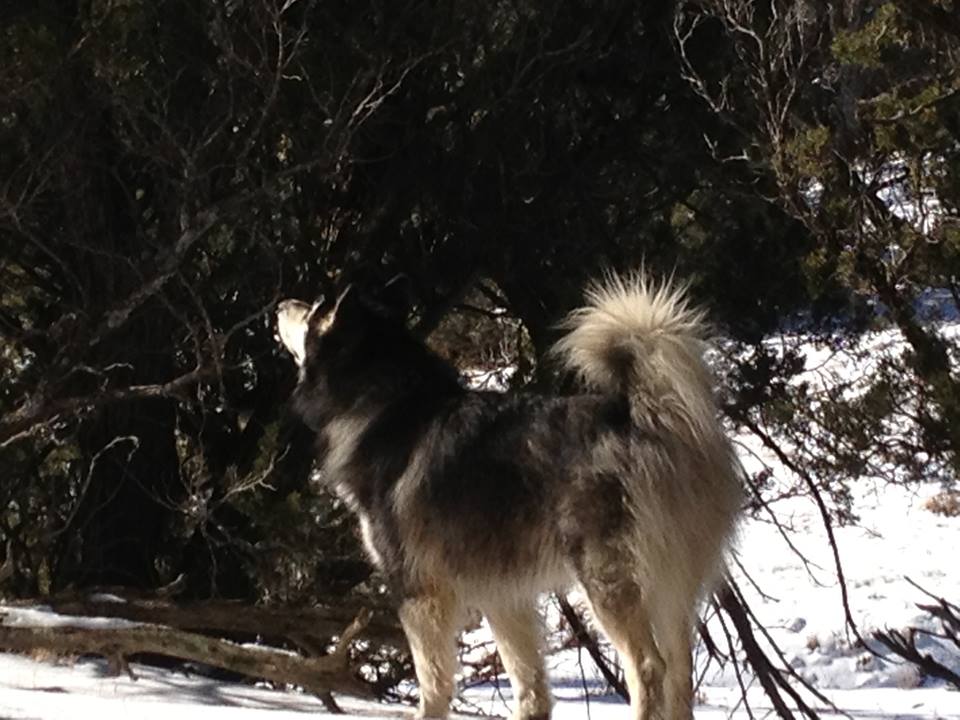
Layne Spence's pet malamute, Little Dave.

Layne Spence’s pet malamute, Little Dave.

Here’s the Great Falls Tribune article in its entirety:

Written by John S. Adams

Tribune Capital Bureau

http://www.greatfallstribune.com/apps/pbcs.dll/article?AID=/201311200500/NEWS01/311200023

HELENA –  Layne Spence went out into the woods west of Missoula on a Sunday afternoon to do what he loves to do best: recreate in Montana’s outdoors with his three beloved malamutes.

Spence, an avid outdoorsman, drove to the Lolo National Forest’s Lee Creek campground, an area the agency touts on its website for its “winter recreation opportunities such as cross-country skiing and snowmobiling.”

The area also is popular with hunters and trappers.

Spence parked his truck, turned on his dogs’ lighted collars, clipped into his cross-country skis and set off down the snow-covered forest road.

Within minutes of starting out on his trek with his dogs Rex, Frank and Little Dave, Spence said he heard a gunshot from up ahead. Spence said he looked up from road just as Little Dave’s hind leg was struck by a bullet. Spence said a man, dressed mostly in camouflage, was standing on the road approximately 30 yards ahead of him and was aiming a semiautomatic assault rifle in his direction.

Merriam-Webster defines an assault rifle as “any of various automatic or semiautomatic rifles with large capacity magazines designed for military use.”

“I started screaming at the top of my lungs, ‘No! No! Stop! Stop! You’re shooting my dog!,” Spence recalled, his voice still hoarse from yelling three days after the alleged incident.

Spence, a licensed emergency medical responder, said even though his dog was gravely wounded, he thought he had a chance to save him after the first shot. Even with a missing leg, Little Dave could live a full and happy life, Spence said later.

“I started running toward Little Dave, screaming the whole time and then I heard this ‘tat, tat, tat’ five or six more times,” Spence said. “Then Little Dave’s head just tilted over and he was dead.”

As Spence huddled over the body of his dead pet, the unidentified shooter approached him and told Spence he thought the dog was a wolf. According to Spence, the man asked if there was anything he could do. Spence he was distraught and screamed at the man to leave him alone.

“I was sitting there screaming, I was covered in blood, and I was trying to find my dog’s leg,” Spence recalled.

Spence said any responsible wolf hunter should have known his domestic dogs aren’t wolves. Spence said Little Dave bears a resemblance to the Ewok characters from the “Star Wars” films.

Local law enforcement authorities, state wildlife officials and U.S. Forest Service officials announced Tuesday that they spoke to the hunter involved in the incident.

According to a joint statement issued by the Missoula County Sheriff’s Office, the hunter broke no criminal or wildlife laws in the incident. Authorities said they are withholding the man’s name for his own safety.

“Based on the statements provided by both parties, it was determined that there was no malicious or purposeful intent to cause harm or injury to a domesticated animal on behalf of the hunter,” the statement read. “The Missoula County Attorney’s Office concurs with the Missoula County Sheriff’s Office that the facts of the incident do not fit the elements of any criminal statutes contained in Montana law …”

The Montana Department of Fish, Wildlife and Parks said the circumstances do not “constitute any egregious violation of Montana hunting regulations.”

“The incident was not enforceable by their agency because it involved a domesticated animal, rather than a game animal,” the statement read.

Debate ignites

Although authorities say no laws were broken, widespread news of the incident has outraged many outdoor enthusiasts and sparked debate over who is responsible for the safety of the nonhunting public and their pets on public lands during open hunting seasons.

Wolf hunting and trapping is legal in Montana, and so far 85 wolves have been killed during Montana’s 2013-2014 hunting and trapping season.

Hunters can hunt wolves with guns from Sept. 15 to March 15, and trapping runs from Dec. 15 to Feb. 28. Wolf hunters are only required to wear “hunter orange” during the five-week general rifle season. After Dec. 1, they can hunt until mid-March without wearing orange.

Matthew Koehler, executive director of the Missoula-based WildWest Institute, said as an environmentalist and a big-game hunter, he is deeply troubled by the reported actions of the hunter who allegedly shot Spence’s dog.

Koehler said state wildlife and law enforcement officials appear to be applying a different set of rules for wolf hunters than other big-game hunters.

“The first rule for any ethical hunter is to know your target,” Koehler said. “If FWP or law enforcement found out a hunter mistakenly shot a bull elk when the regulations only allowed the taking of antlerless elk, they would fine the hunter and perhaps even take away his license. It blows me away that in this case, authorities are apparently saying it’s OK for wolf hunters to shoot people’s pets on public lands and there are no consequences for those actions.”

Jerry Black is an anti-wolf hunting advocate who said Montana’s liberal wolf hunting laws put unreasonable onus on unarmed citizens to protect themselves and their pets from injury or death while recreating on public lands.

“What’s screwed up is this tragic incident shows that we as citizens out walking with our dogs, or out there hiking, fishing or skiing on public lands, it’s now our responsibility to not get shot,” Black said. “For six months out of the year, we’re under siege by wolf hunters who say it’s our responsibility to wear blaze orange.”

Changes coming?

Spence said he believes the man who shot Little Dave should lose his hunting privileges and have his guns taken away.

Spence said  the hunter violated hunting regulations, including shooting from a public roadway.

According to the 2013-2014 Montana wolf-hunting regulations, “it is illegal for anyone to hunt or attempt to hunt any wolf from, on or across any public highway or the shoulder, berm, barrow pit or right-of-way of any public highway …”

“I don’t want anything bad to happen to the guy. I just want an apology,” Spence said. “He has to be held accountable. I’m lucky to be alive. He was shooting right at me.”

Spence said he believes there needs to be stiff penalties on the books for hunters who endanger nonhunters or their pets through irresponsible actions. He said he hopes if anything good comes from the death of Little Dave, it will prevent future incidents like this from occurring.

“It could have happened to anyone. I could have had a child out there with me,” Spence said. “People need to be aware. I don’t want this to happen to anybody else.”

One state lawmaker is already talking about taking action in the 2015 Legislature.

Rep. Ellie Boldman Hill, D-Missoula, said on her Facebook page that she is considering proposing legislation making what happened on Sunday a crime. Hill is up for re-election in 2014.

Spence said he’s not opposed to hunting and has hunted in the past. However, Spence said he believes the use of a semiautomatic rifles should not be allowed for hunting.

Semiautomatic rifles are legal in Montana and no special permit is required to own them or hunt with them.

“Everybody has their Second Amendment right to bear arms, but irresponsibility and those kinds of weapons that allow you to fire off a bunch of rounds with a few quick squeezes of the trigger should be banned,” Spence said. “Assault weapons are not hunting rifles.”
Missoula Sherriff: No Harm, No Foul

Bureaucrats Pass the Buck

Here’s the latest news report from the great state of Montana:

MISSOULA — The Missoula County sheriff’s office has ended its investigation into the fatal shooting of a malamute on Lolo Pass by a hunter who apparently mistook it for a wolf.

Sheriff’s spokeswoman Paige Pavalone said Monday the agency passed the case over to the Department of Fish, Wildlife and Parks and the U.S. Forest Service, the Missoulian reported.

“There is no criminal activity here, and this is out of our jurisdiction,” Pavalone said. “We don’t have any witnesses and we’re not investigating the situation any further.”

Spokespersons for both FWP and the Forest Service had said Monday morning that they believed the case would be a criminal matter.

Photo by Oliver Starr

Photo by Oliver Starr

Hunting Is a Destructive Preoccupation

Not that it’s all that unusual considering the destructive nature of the so-called “sport,” but hunters seem to be chalking up a lot of cases of mistaken identity lately. A prime example: over the weekend in Montana, a hunter mistook someone’s dog for a wolf and shot it to death with his assault rifle, 20 yards from the dog’s guardian who yelled frantically for the shooter to stop.

Meanwhile today’s NY Daily News tells us of a “Long Island firefighter killed when mistaken for deer by friend in hunting tragedy” Their article reports:

A beloved Long Island firefighter was killed in an upstate hunting accident after a buddy mistook him for a deer, sources told the Daily News on Monday.

Charles Bruce, 52, was on an annual hunting trip with friends from the Malverne Fire Department when the tragedy unfolded about 10:20 a.m. Saturday in rural Westford, about 11 miles east of Cooperstown, law enforcement sources said.

“Unfortunately, it was a high-powered rifle. He was dead before he hit the ground,” Otsego County District Attorney John Muehl told The News.

“Charlie had a bad back, so he went back to his room to rest. And when he came back out, one guy saw a tree move and fired,” said a close friend of the victim’s who asked to remain anonymous.

The shooter was an active Malverne firefighter who moved on to a nonfirefighting role with the Department and is “destroyed” over the incident…

Photo Copyright Jim Robertson

Photo Copyright Jim Robertson

The shooter was “destroyed” emotionally; at the same time, his hunting partner, as well as the deer they shoot, are all destroyed literally.

Clearly, hunting is a pretty destructive preoccupation.

I don’t care how many hunter safety courses they attend, when it comes right down to the heat of the moment, trigger itch all too often takes the place of cool resolve or good judgment. Completely lost are notions of ethics or accuracy, not to mention target identification.

Update: Sheriff’s office: Shooting of dog near Lolo Pass wasn’t criminal

90823_Pred_ATACShttp://missoulian.com/news/local/sheriff-s-office-shooting-of-dog-near-lolo-pass-wasn/article_cbe9343c-5081-11e3-9f2f-001a4bcf887a.html

The hunter who shot a Missoula man’s dog on the assumption it was a wolf near Lee Creek campground on Sunday committed a tragedy but probably not a crime, according to county and state law enforcement officials.

“If we have any more information, if the guy comes forward, it will be investigated further,” Missoula County Sheriff’s Office spokeswoman Paige Pavalone said Monday. “This is an awful accident. But if it doesn’t fit into a state statute that we can enforce, it’s very difficult to investigate. We’re more than willing to help this person. We want to figure out what happened.”

But beyond taking the initial report from dog owner Layne Spence about the shooting, the sheriff’s office did not see evidence of a crime to be investigated, Pavalone said. The report was passed on to the state Department of Fish, Wildlife and Parks and the U.S. Forest Service, whose law enforcement agents reached the same conclusion Monday.

That’s because, according to the statement Spence gave to law enforcement, the shooter tried to apologize after mistaking the brown-and-white malamute dog for a wolf. Spence told the deputy that he told the man to leave him alone and the man left.

That conversation, according to Pavalone, made it extremely difficult to show criminal intent on the part of the shooter. Without criminal intent, the accidental shooting of a domesticated dog is not a crime. It could trigger a civil lawsuit over the loss of personal property, but the sheriff’s office does not investigate civil disputes.

Spence reported the killing of his dog, Little Dave, to the sheriff’s office Sunday afternoon. Spence told a deputy he was cross-country skiing on a road above the Lee Creek campground with his three malamute dogs when a hunter shot one of them on the road. According to the deputy’s report, Spence said Little Dave was wearing a collar with a light when it was shot about 20 yards in front of him.

“The hunter resumed fire and shot approximately four more times, killing the dog,” Pavalone quoted from Spence’s statement. The deputy confirmed the dog was wearing a lighted collar and was shot at least twice, in the neck and rear leg.

Spence told the deputy the hunter approached him and said he thought the dog was a wolf, according to the report. He said the hunter asked if there was anything he could do, but Spence said he was so distraught he told the man to leave. Spence told the deputy the hunter did not make any threatening gestures toward

On Monday, FWP Warden Capt. Joe Jaquith said his agency is strictly limited to crimes involving game animals. Because the dog was a domesticated pet, it would not fall under a game warden’s jurisdiction. And even though it was allegedly shot while standing in a forest road, and hunters may not shoot game animals on a road, that law doesn’t apply to domesticated pets.

Spence told the deputy the man was wearing camouflage with a hunter orange vest, and was pulling an orange sled. He told the deputy the man had a black rifle that appeared to be semiautomatic, but “didn’t believe it was an assault rifle,” Pavalone said, quoting the report. Spence had earlier told the Missoulian the shooter was carrying “an assault weapon.”

Spence could not be reached for comment on Monday. A phone number he previously gave the Missoulian was reported out of service or disconnected.

Wolf hunting is legal in Montana for any qualified hunter with an over-the-counter license. There is no rule prohibiting the use of military-style rifles in hunting, as long as they are legal for civilian ownership.

The U.S. Forest Service maintains the Lee Creek campground for non-motorized winter use. Lolo National Forest recreation manager Al Hilshey said the area is popular with cross-country skiers who like to bring their dogs.

Reporter Rob Chaney can be reached at 523-5382 or at rchaney@missoulian.com

Gotta love this comment”crowe – 3 hours ago
“Let me see if I understand this correctly: It’s not criminal to “mis-shoot” something? Not even a fine or license suspension?

And, it is the responsibility of those NOT HUNTING to avoid getting shot, not the people who are licensed by the state to hunt? However, wouldn’t an expert hunter and outdoorsman be able to recognize what it is they are hunting? “Sorry ma’am, but your horse should’ve been wearing a vest. I thought you were riding an elk.”

So, to take this a step further, how are wolves supposed to recognize commercial livestock from say, wild animals open for hunting, if we, the superior species, can’t do it?”

Former USFWS Whistleblower Says Wolves Illegally Introduced

Just FYI, so you know this is out there…

Non Native Wolves Illegally
Introduced, Says Whistleblower
Former USFWS Official Speaks of Malfeasance, Misappropriated Funds, and Transplanting Wrong Subspecies to Yellowstone

11/04/13

BY QUINCY ORHAI

Half a century after the last native Northern Rocky Mountain Timber Wolf, Canis lupus irremotus, was said to be hunted to extinction locally by public and private efforts, the U.S. Fish & Wildlife Service, in 1995, under then Director Mollie Beattie, presided over the introduction of the Canadian Gray Wolf, Canis lupus occidentalis, into the Northern Rocky Mountain eco-system.

According to whistleblower Jim Beers (former USFWS Chief of National Wildlife Refuge Operations), after Congress denied funding for his agency to carry out the Northern Rockies Wolf Recovery Project, the agency acted illegally as it brought the Canadian wolves into the Yellowstone ecosystem.

Speaking in Bozeman in May 2010, at the Gran Tree Inn, before Congress on wolf recovery issues in 1998 and 1999, and in October 2013 to the Montana Pioneer, Beers insisted that, after Congress denied USFWS funding for wolf recovery, the agency illegally expropriated Pitman-Robertson funds (federal excise taxes required by law to be distributed to the states as reimburse-ments), helping themselves to tens of millions of dollars.

When contacted by the Montana Pioneer for this article, Beers further stated, “The General Accoun-ting Office verified that at least $45 to $60 million was taken, diverted, by USFWS from P-R funds.”

Beers went on to say that the Pittman-Robertson excise taxes, by law, could only be used by State wildlife agencies for their wildlife restoration projects. “These funds were then used primarily…to pay bonuses to top USFWS managers that had no right to such funds [and] to trap wolves in Canada, import them, and release them into Yellowstone National Park.”

Beers, a 32-year veteran USFWS biologist, whose job included overseeing the Pitman-Robertson funds, alleges that the agency misapprori-ated monies for the trapping and transportation of Canadian wolves into the U.S. To conceal its misuse of the funds spent on the project, the true number of wolves imported, and the subspecies brought in, USFWS intentionally did not file mandatory paperwork, according to Beers, that would have established a paper trail. Or, he speculates, somehow that paperwork mysteriously disappeared.

Beers also alleges USFWS failed to file an appropriate and accurate Environmental Impact Statement. In recent comments to the Montana Pioneer, he elaborated, saying, “The EIS was and remains a document of lies, misinformation and woefully incomplete coverage of the matter.”

In print and in public speaking engagements, Beers has claimed the Wolf Recovery Project deliberately dismissed established wolf science and research, including known wolf depredation impacts on livestock and wildlife, and ignored the dangers parasites and diseases carried by wolves present to wildlife, livestock, pets, and humans.

The Canadian Gray Wolf, introduced into Yellowstone Park by USFWS 18 years ago, is widely described in scientific literature as thirty to fifty percent larger than the said-to-be extinct local native timber wolf. The initial 14 and subsequent transplanted wolves were captured in Canada, although wolves that were more genetically similar were available from surplus populations in Minnesota, as reveal-ed by the Smithsonian Institution, in a scholarly work titled: Physiological Basis for Establishing a Northern Rocky Mountain DPS [Distinct Population Segment Area].

The importation of Canadian Gray Wolves was criticized at the time by American biologists who believed the larger wolves would kill more elk, a position many now say has proved correct, and that the introduction of a non-native sub-species was of questionable legality when the smaller-sized native populations were beginning to recover naturally, on their own, positions similar to those advanced by the Farm Bureau’s of Idaho, Wyoming and Montana.

Although the official position of the government is that native wolves were locally extinct, according to Dr. Ralph Maughan, professor emeritus of political science at Idaho State University, with specialties in natural resource politics and public opinion, USFWS reported 48 native wild wolves in Montana in 1994, the year before the controversial introduction of the Canadian Gray Wolf into Yellowstone National Park—mostly timber wolves traveling down from Canada.

On his website, The Wildlife News, Maughan writes: “It’s reasonable to assume that without reintroduction, wolves would have naturally reestablished themselves in most of Montana [under the protection of the Endangered Species Act], but migration would have been slow with a lot of wolves up north before they made it to Yellowstone and Wyoming. Because these wolves were fully ‘endangered,’ rules governing them would have been a lot more strict than with those finally reintroduced in 1995.”

However, the larger and more aggressive central and northern Alberta, Canada wolves USFWS introduced here eliminated any survival chance of native wolves [as a result of competition or elimination], as USFWS knowingly violated the Endangered Species Act, according to Maughnan.
It was and is common scientific knowledge that the native male wolf (Canis lupus irremotus) of the Northern Rockies averaged 90 to 95 pounds at maturity. The wolf USFWS brought in as a replace-ment was a noticeably larger wolf (Canis lupus occidentalis) from north-central Alberta, with mature males topping 140 pounds, and some specimens weighing up to 175 pounds.

According to the Smithsonian study, the native wolf, which local residents claimed existed in small pockets in wilderness areas in the 1990s, generally roamed an area of about 100 square miles, hunting alone or in small groups of 4 or 5 at most. The non-native Canadian gray wolves USFWS introduced to the region typically hunted 300 or more square miles back in their home range, with packs often numbering 20 or more.

Under the direction of Mollie Beattie, USFWS developed the Environmental Impact Statement for the reintroduction of wolves. That EIS made a number of assumptions about bringing wolves back to Yellowstone and the Northern Rockies. Almost none of those assumptions has proven to be correct, according to Toby Bridges of the Montana Chapter of Sportsmen for Fish and Wildlife. Writing in 2010, on the group’s website, Bridges says: “Instead of getting just the 150 wolves Montanans agreed to back in the mid 1990s, the state is now home to likely 1,000 to 1,200 wolves… This year a minimum of 43,500 elk will be eaten alive or killed and left behind by wolves in the Northern Rockies…”

Bridges also states that “The U.S. Fish and Wildlife Service manipulated science, and replaced the native wolf of this region with a totally non-native…larger…and more aggressive wolf, and has consistently underestimated wolf numbers by half or one third of actual numbers.”

According to USFWS, “As of December 31, 2012, the most recent minimum wolf population size determined for Montana was 625 wolves in 147 packs, 37 of which were confirmed breeding pairs.”

Those numbers are inaccurate, says Bridges, because for the annual wolf count USFWS typically ignores wolf sightings by anyone except agency biologists, who are understaffed. Also, wolves typically are active in timbered areas where they are impossible to count from the air, says Bridges. Thus, the deceptive wording of the report: “minimum wolf population size determined.”

Norm Colbert, a veteran wildlife tracker who lives near Nye, Mont., in the area of the Rosebud wolf pack, told the Pioneer in February 2012 that at least several wolves comprised the nearby local pack, based on his repeated sightings of tracks and wolf related activity, while the official count listed the Rosebud pack as having consisted of only two wolves, a discrepancy, accoridng to Colbert’s estimates, that may fall 300 percent short of the actual number of wolves in the pack.
According to Bridges, writing on LoboWatch, in an article titled Voodoo Math Still Haunts Montana Wolf Control: “Other well respected wolf biologists have claimed that ‘real wolf biology’ and ‘real wolf reproductive rates,’ and allowing for natural and man induced mortality, puts the current wolf population somewhere much closer to the 2,000 mark. The sportsmen of this state, based on the degree of damage done to elk and other big game populations, say it’s even higher—perhaps as many as 3,000 wolves.”

One thing is clear to local ranchers losing livestock, and to local big game guides losing elk-hunting clients—the northern Yellowstone elk herd has declined by 80 percent from the 19,000 elk of 1995 (according to a Feb. 2013 aerial survey by the Montana Department of Fish, Wildlife and Parks and the National Park Service), that 1995 number of elk having been part of the justification for bringing wolves to Yellowstone in the first place.

What was not made clear at the time of the Canadian Wolf introduction, according to wolf critic Bridges, writing on Lobo Watch, was that “The reality of living with wolves is that wolves are extremely non-discriminating predators, killing just about anything that gets in front of them—the young, the healthy, the pregnant and the prime…the sick and weak.”
Bridges charges that “agenda driven biologists” within wildlife agencies avoid acknowledging that each “average” wolf accounts for the loss of some 25, or so, big game animals (or head of livestock) annually, just for sustenance, that each “average” wolf also kills just about as much game, known as “surplus killing,” without eating the kill, and that wolves are the primary carrier of the Echinococcus granulosus tapeworm, a parasite that infects game, pets, and humans with Hydatid cysts “that in turn makes these living things sick and weak.”

In the recent documentary film Crying Wolf, Exposing the Wolf Reintroduction to Yellowstone National Park, David Allen, President of the Rocky Mountain Elk Foundation, takes the issue a step further, stating, “The Northern Yellowstone elk herd was the showcase herd in the world…I believe that the reintroduction of wolves is, in many ways, an assault on the sportsmen and hunting culture. The North American model of wildlife conservation is built around the sportsman, since the days of Teddy Roosevelt. We have the most bountiful, successful wildlife resources in the world.”

With Crying Wolf, filmmaker Jeffrey King depicts the introduction of non-native Canadian gray wolves into the Northern Rockies ecosystem as destroying the livelihood of back-country residents by deva-stating free range ranching. According to the ranchers interviewed in the documentary, it is fast becoming uneconomical to raise livestock in areas where wolf packs range, and big game hunting and guiding opportunities and occupations are quickly disappearing from the rural Northern Rockies.

Veteran wolf biologist, John Gunson, formerly with the Alberta Fish and Wildlife Division, and also featured in Crying Wolf, echoed the concerns of sportsmen regarding elk hunting, saying, pointedly, “Really, there isn’t any room for harvest by man if you have a healthy wolf population.”

Regarding the introduction of wolves to the Northern Rockies, Ed Bangs, former Northern Rockies Wolf Recovery Coordinator for the U.S. Fish and Wildlife Service, is quoted as saying the following on the Montana Fish, Wildlife and Parks website, separating wolf science from wolf ideology: “Wolves and wolf management have nothing to do with wolves. I think the folks who didn’t like them still don’t like them, and the folks who did like them still do. Wolves are mainly a symbolic issue that relates to core human values…I think the only reason wolf reintroduction finally happened was that people with different values moved to Montana and diluted the strong agricultural influence. Plus, the economy changed from straight agriculture and natural resource consumption to areas such as tourism.”

In Defense Of Animals Offers $1,500 Reward In Grizzly Bear Killing

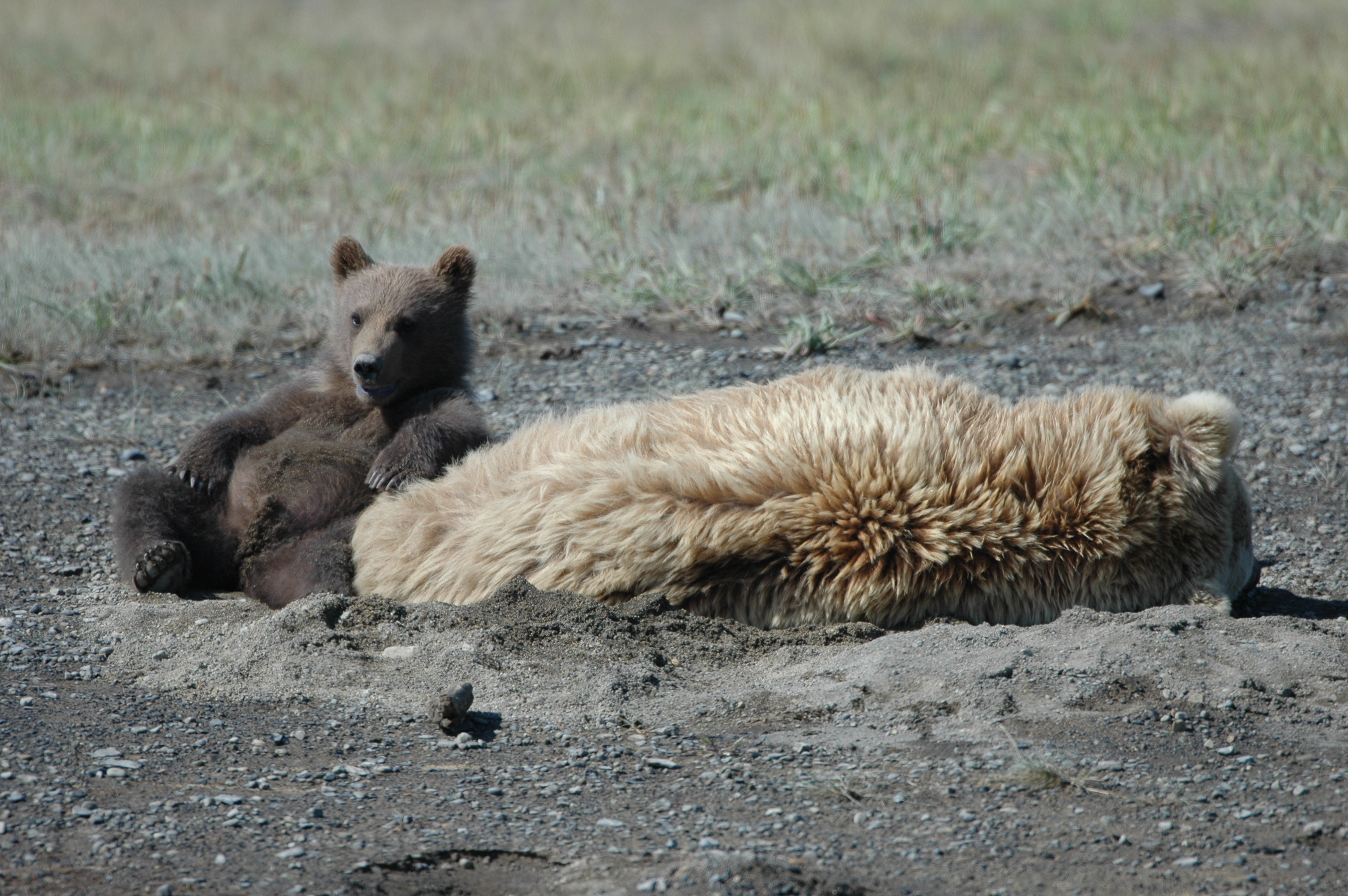
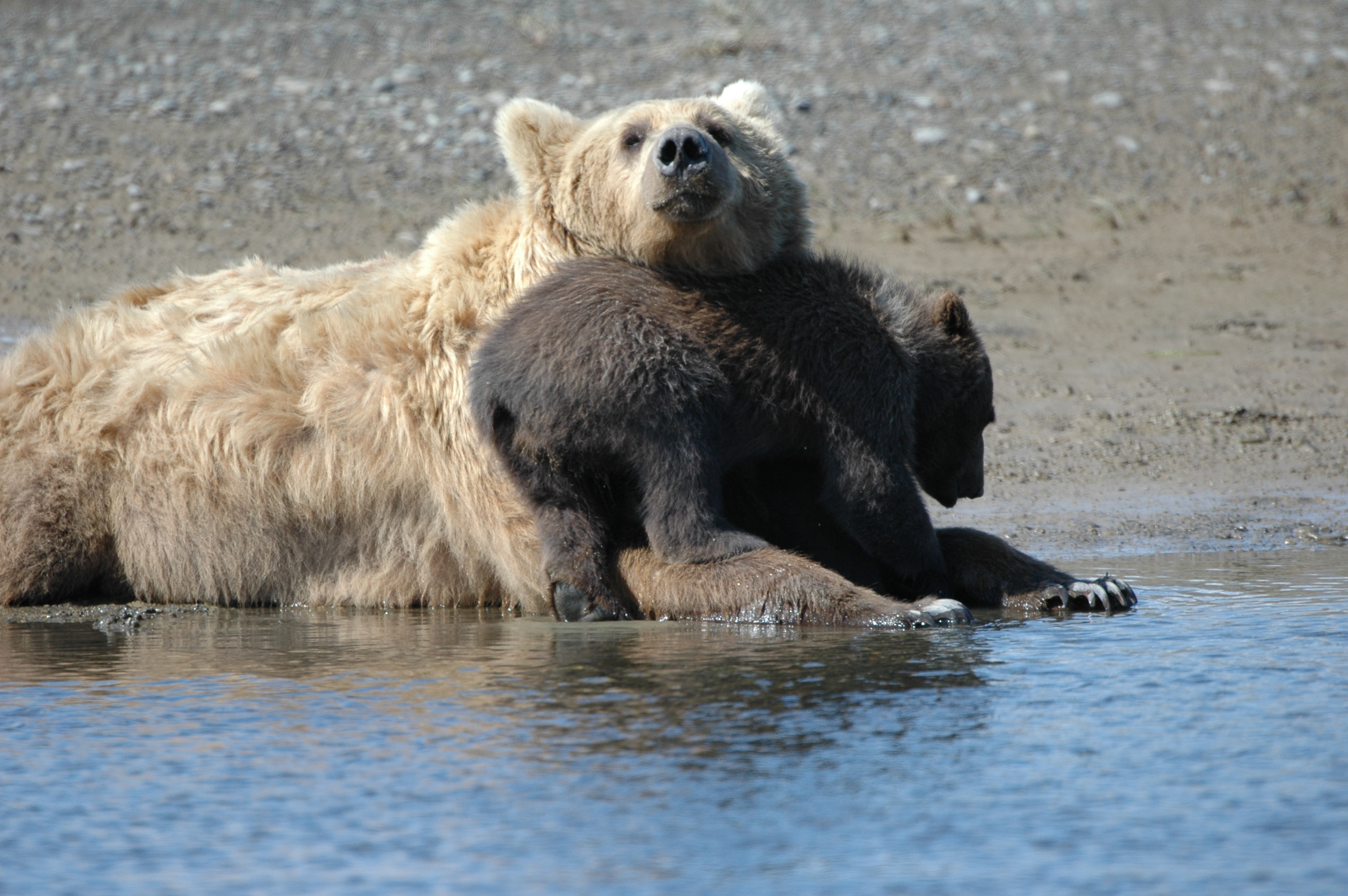
Photo of bears in the wild co Jim Robertson

Photo of bears in the wild co Jim Robertson

FOR IMMEDIATE RELEASE

Contact: Anja Heister, anja@idausa.org, 406-544-5727

In Defense Of Animals Offers $1,500 Reward In Grizzly Bear Killing

Momma grizzly bear with three young cubs shot and killed; cubs doomed to a life of captivity

Ovando, Mont. (November 14, 2013) In Defense of Animals (IDA), an international animal rights and protection organization, has offered a reward of $1500 for information leading to the arrest and conviction of the person who callously killed a grizzly bear mother of three cubs, leaving them orphaned.

The mother grizzly bear was found Sunday, November 3, killed by a single gunshot wound, approximately three and a half miles northeast of the rural community of Ovando. While one cub escaped, officials with Montana’s Fish, Wildlife and Parks (FWP) caught two of the mother’s female cubs, who are currently being held at the state-owned Wildlife Rehabilitation Center in Helena, Mont.

Adding insult to injury, Chris Servheen, Grizzly Bear Recovery Coordinator with the US Fish and Wildlife Service (USFWS), has decided to send the two bear cubs to lifelong imprisonment at the Bronx Zoo in New York.

“If they haven’t been causing problems with people, these cubs should be released back into the wild,” said renowned biologist and bear specialist, Dr. Lynn Rogers with the Wildlife Research Institute in Ely, Minn.

“In 2005, two grizzly bear cubs were sent to the Washington Park Zoo in Michigan City, Indiana, after their mother had been killed by FWP,” said IDA’s Director of the Wild and Free-Habitats Campaign and Montana resident, Anja Heister. She added, “the cubs can now be seen relentlessly walking in circles in their small enclosure. These cubs have lost everything, their mother, their freedom and dignity, and their health. Demoted to objects of entertainment, they have been suffering from captive psychosis, abnormal behavior indicative of significant mental suffering.”

“Whoever killed this grizzly bear has to be held accountable for robbing an entire family of grizzlies of their lives – causing the death of a grizzly mother, and sending two innocent cubs into life-long captivity, while likely causing great trauma to the cub who escaped,” said Heister.

Anyone with information on this incident is encouraged to call 1-800-TIP-MONT ( 1-800-847-6668 ). Callers can remain anonymous.

###

In Defense of Animals is an international animal protection organization located in San Rafael, Calif. dedicated to protecting animals’ rights, welfare, and habitat through education, outreach, and our hands-on rescue facilities in India, Africa, and rural Mississippi.

IN DEFENSE OF ANIMALS – 3010 KERNER BLVD. – SAN RAFAEL, CA 94901 – 415-448-0048

Please Consider a Donation To Help Find the Killer of a Mother Grizzly With 3 Cubs‏

Thanks to Jerry Black hadley911@aol.com

Photo Copyright Jim Robertson

Photo Copyright Jim Robertson

How to contribute to the reward  for information leading to the conviction of the person responsible for killing a mother grizzly bear near Ovando, Mt that left 3 orphaned cubs.  This will be in addition to the reward offered by the U.S. Fish and Wildlife Service and Montana Fish Wildlife and Parks.
After consulting with representatives from both agencies today, the recommendation by them was to set up the reward as follows:
Those wishing to contribute send me an email with a pledge for the amount you wish to contribute.
Example….I am pledging $_____ for the Ovando Mountain Grizzly Reward Fund.  Include your name and contact information.
I will keep these pledges until there is a conviction in this case.  I will then ask you to write me a check in that amount.  I’ll deposite the checks in my account and then have the bank draft a cashiers check for the total sum which I will send to Mr Brian Shinn  in Helena who manages these rewards for the agencies.  The agencies will then disburse the money to the person that provided the tip leading to the conviction.
In 2 weeks, I will send Brian an estimate of the amount of reward money I’ve received to that date.  He will issue a press release stating the amount of reward offered by us (concerned private citizens) and the reward offered by the US FWS and MFWP.
This is the way they’ve handled rewards in the past and it has proven to be successful.  It was also recommended by a friend who was involved in very large rewards (up to $80,000) for illegal killing of Mexican Wolves.
Additionally:
All donations will be confidential…I’m the only person who will see them.
There is no donation too small
My email is “Hadley911@aol.com”
Brian Shinn’s email is..”BShinn@Mt.Gov
Brian’s phone # is 406-227-7490
I hope all this makes sense.  It’s obviously my first attempt at something like this, but I’m determined to do whatever it takes to catch the person responsible for this killing.

Mother Grizzly Killed, Cubs Sent to Zoo

To give you an idea how maddening this is, here’s a quote from a friend in Montana who sent me this article:

“I’m devastated and so is my family. This bear and her cubs frequented my son-in-laws ranch on the North Fork of the Blackfoot. My 6 year old grandson watched her and her cubs as well as 4 other grizzlies on the ranch………….This is the kind of shit that happens all too often in Montana and why I call Montana ‘The Killing Fields’…….Some son of a bitch will pay for this.”

http://fwp.mt.gov/news/newsReleases/enforcement/nr_0172.html

FWP Seeks Information on Grizzly Bear Shooting Northeast of Ovando
       <!–

var addthis_pub=”fwpwebmaster”;var addthis_options = ’email, digg, delicious, reddit, linkedin’;
Bookmark and Share


Thursday, November 07, 2013 Enforcement – Region 2

State wildlife officials are looking for information on the shooting death of a grizzly bear found Sunday approximately three and a half miles northeast of Ovando.

Montana Fish, Wildlife & Parks (FWP) game wardens responded to a report of a dead adult female grizzly on Sunday, Nov. 3, and an initial investigation that evening found the bear had died of a gunshot wound.

The bear had three cubs of the year, and FWP was able to trap two of the cubs. The cubs will be placed in the Bronx Zoo. Multiple attempts to capture the third cub were unsuccessful.

FWP bear management specialist, Jamie Jonkel, notes that there is a chance that the lone cub could survive the winter on its own, and FWP may make additional attempts to locate the bear if it receives reports of sightings.

Anyone with information on this incident is encouraged to call 1-800-TIP-MONT (1-800-847-6668). Callers can remain anonymous and may be eligible for a reward up to $1,000 for information leading to a conviction.

Photo Copyright Jim Robertson

Photo Copyright Jim Robertson

Bowhunting for Wolves in Montana

Wolf puppies are legally arrowed to death in Montana: How arrows slowly kill

 http://www.examiner.com/article/wolf-puppies-to-be-legally-arrowed-to-death-montana-how-arrows-slowly-kill?cid=PROD-redesign-right-next

September 6, 2011

This season, hunters are allowed to kill 220 wolves — nearly triple the 2009 quota of 75.

Even if you agree with hunting, do you agree with the legal shooting of pups? This week in Montana, hunters are even allowed to shoot wolf puppies. Yes, puppies. And they can shoot them in the most agonizingly cruel way of all, using bow and arrow. And it’s all ‘legal’.

Worse, Mark Gamblin, spokesperson for Idaho Fish and Game, is already trying to justify bringing wolf-puppy season to his  own state next spring:

   “OK, I’ll try again. As I noted in my last post – in two (actually three – Lolo, Selway and Middlefork) wolf management zones, the 2011-2012 wolf hunting season extends until June 1 when new born pups will be technically legal to harvest/kill/take by wolf hunters. I think your point is: that is an example of how wolves are NOT managed like lions or bears. Without looking at all other hunting seasons I can’t say with certainty, but I can’t think of a routine hunting season that overlaps the birthing period of a wildlife species. With that said, if you or jon suggest that constitutes a violation of wildlife mangement or other priciples, please explain how. In those wolf management zones, the sesaon was extended to enhance the likelihood that the management prescription to reduce wolf numbers sufficiently to achieve elk population recovery objectives. That certainly is a high priority for the Lolo, Selway and Middlefork wolf management zones. Would a wolf hunter use a wolf tag on a new born pup, IF that hunter had the opportunity? What do you think? I’ll go first – Nope. Again, this is(drum roll)….. a red herring issue of very little consequence that gets some folks lathered up, but has little or no relevance to meaningful considerations for this wildlife management issue.

And finally, the old “what constitutes a meaningful trophy for the Idaho wolf hunter” discussion that you and I have engaged with since 2009.

You have a high level of certainty that you understand the desires, values and criteria for a “trophy” of thousands of Idaho hunters when it comes to ….. a wolf pelt. If you mean to say that hunters will not, cannot value the pelt of a 5 month or older wolf as a trophy or to use for other legitimate purposes – well I have to tell you that you are wrong. The legitimate value of a “trophy” to thousands of individual Idaho hunters cannot be described or catagorized by your personal values or preferences nor by mine of by any fixed set of criteria. It is enough that each hunter is given the choice to harvest/kill/take a wolf during the hunting season that runs from August 30 to March 1 in the majority of the state and until June 1 in the remaining 3 wolf management zones. The hunters who participate in this wolf hunting season will make their own decisions and if legal those decision will be entirely legitimate and ethical within the bounds established by the Idaho governmental electoral process. And yes, absolutely, one important objective of this hunting season is to significantly reduce the Idaho wolf population to achieve a broader balance of public wildlife and personal property benefits than can be achieved with the current Idaho wolf population. Hopefully, we will be able to report success after all of the data are collected and analyzed at the end of this hunting/trapping season. “

Whether you agree with arguments that support hunting for sport or so-called ‘management’ or not, most so-called ‘ethical’ hunters would agree a clean, fast kill is the goal – no matter what species is in the cross-hairs, and only in a ‘sportsmanlike way’ that gives the hunted animal a fair chance of escape.

While we won’t discuss the ethics of hunting per se, I do offer this video to consider – especially for those of strong Christian faith. Whatever your personal take on hunting, what is ‘sportsmanlike’ in arrowing puppies? Is it OK to kill babies using one of the slowest and most painful of hunting methods?

Dying from an archery wound can take – up to two WEEKS, according to Benke, and then only as a result of massive infection.

Does a puppy deserve to die this way? For that matter, does a deer, elk or any animal deserve to be sentenced to a long, agonizing death for the purposes of human ‘sport’?

Since the controversial politically-motivated delisting of endangered grey wolves resulted in open-season on wolves in several US states, including bow-hunting season beginning Sept. 3 in Montana, wolves have intentionally – and legally – been shot and killed  – Although the actual statistcs and the numbers reported keep changing.

Bowhunting season is considered legal and is permitted – although perhaps not for much longer now that this video has been released. And yes, unfortunately, certain backwards states are legalizing – even encouraging – the hunting of newborn wolf puppies as ‘trophies’. Even if you think it’s OK to hunt and kill truly helpless baby animals -puppies- for sport, is it OK to torture them first?

For some reason the general public seems to feel that bow-hunting is somehow more noble, more challenging, fair or more humane than hunting with firearms.

In this video a veteranarian describes the actual, prolonged and agonizing death these bow-shot animals actually experience.

Warning – This is graphic video. It was taken over the shoulder of a hunter – documenting his legal kill using a bow and arrow.

How many feel this kind of death is justifiable in the pursuit of ‘pleasure’? And what about for baby animals?

Should bow hunting remain legal?

For more information on open-season on wolves and the legal killing of puppies, click here.

For additional insights into why people seem to love to hunt, please see this recent study.

Map with known trap locations in Montana

From FootlooseMontana.org

The purpose of making trap locations available on this website is to warn people who may be recreating on public lands with companion dogs about the dangers of traps on public lands. Tampering with traps is illegal in the State of Montana

[But setting out the equivalent of indiscriminant land mines to clamp onto the foot or leg of anyone who happens along is perfectly legal. Also legal, according to Montana Trapping Regulations]: There is no trap check requirement in Montana.

Trappers may not check their traps for days at a time. Read the stories of animals we know suffered alone in traps for several days. How many other animals suffer consecutive cold nights struggling against steel jaws? You will not find out from trappers, who have no incentive to report inhumane abuses. Can you imagine your family dog or cat, scared and vulnerable, with its leg caught in a trap for four or five days—and bitter cold nights—at a time? [It happens far too often; I’ve seen it happen twice to two different dogs in different locations].

Unlike hunting, with specified bag limits and seasons, trappers may trap all year long and kill as much wildlife as they wish. Only five furbearer species—bobcat, fisher, river otter, swift fox and wolverine—are subject to quotas.  Every other animal in Montana—even endangered species—may be killed 365 days a year as incidental catch.

Trap locations noted on this map have been reported to Footloose Montana by people recreating on public lands. If you encounter traps on public lands, please call us at (406) 274-7878

Here’s the map: http://www.footloosemontana.org/trapping-season-2011-12/map/

Also see: https://exposingthebiggame.wordpress.com/2013/02/22/time-to-end-a-twisted-tradition/

538458_532697610088640_841278349_n